
uspto-grants-1998_03 · 10.6084/m9.figshare.5104873.v1 · US05723408
查看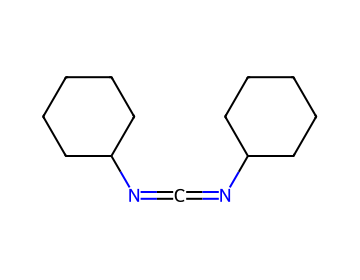
IDENTITY
COMPUTED
PROPERTIES
log Kow = 6.83 (est; value theoretical as compound reacts with water)
Heavy sweet odor
Crystalline mass
White crystals
Colorless crystalline solid
Reaction (NTP, 1992)
Moisture sensitive, reacts with water
Soluble in organic solvents
Corrosive to tissue
greater than 235 °F (NTP, 1992)
Flash Point > 235 °F
252 to 255 °F at 6 mmHg (NTP, 1992)
BP: 154-156 °C at 11 mm Hg
When heated to decomposition it emits toxic vapors of /oxides of nitrogen/.
93 to 95 °F (NTP, 1992)
34.5 °C
VP: 0.5 mm Hg at 98-100 °C, 2 mm Hg at 138-140 °C, 11 mm Hg at 154-156 °C
N,n'-dicyclohexylcarbodiimide is a white crystalline solid with a heavy sweet odor. (NTP, 1992)
Dry Powder
White solid with a sweet odor; [Hawley] White melt; mp = 33-36 deg C; [MSDSonline]
Set point = 29-30 °C
Incompatible with acids and oxidizers; emits toxic fumes when combusted
GHS
Danger
H302: Harmful if swallowed [Warning Acute toxicity, oral];H311: Toxic in contact with skin [Danger Acute toxicity, dermal];H317: May cause an allergic skin reaction [Warning Sensitization, Skin];H318: Causes serious eye damage [Danger Serious eye damage/eye irritation]
P261, P262, P264, P264+P265, P270, P272, P280, P301+P317, P302+P352, P305+P354+P338, P316, P317, P321, P330, P333+P317, P361+P364, P362+P364, P405, and P501 (click each P-code to see the statement)
Danger
HAZARDS
Chemical: Cyclohexanamine, N,N'-methanetetraylbis-
Cyclohexanamine, N,N'-methanetetraylbis- is listed on the EPA's Chemical Data Reporting (CDR) system. Manufacturers and importers of Cyclohexanamine, N,N'-methanetetraylbis- are required to report information about their production and use of this chemical to the EPA under the Toxic Substances Control Act (TSCA). (40 eCFR Part 711)
Status: Active Update: 17-02-2023 https://echa.europa.eu/registration-dossier/-/registered-dossier/12761
Dicyclohexylcarbodiimide: HSNO Approval: HSR004069 Approved with controls
Poison
This chemical is probably combustible. (NTP, 1992)
SYMPTOMS: Symptoms of exposure to this compound may include skin irritation and sensitization, severe eye irritation, irritation of the mucous membranes and upper respiratory tract, and subsequent allergic reactions. It can cause severe destruction of tissue, depending on the intensity and duration of exposure.;ACUTE/CHRONIC HAZARDS: This compound is highly toxic by inhalation. It is an irritant of the skin, mucous membranes and upper respiratory tract, and is a severe irritant of the eyes. It can be corrosive to tissues if exposure is in high concentrations or over extended periods of time. When heated to decomposition it emits toxic fumes of carbon monoxide, carbon dioxide, and NOx. (NTP, 1992)
A skin, eye, and respiratory tract irritant; High concentrations can be corrosive and very damaging to tissue; [CAMEO] Contact allergen; [Merck Index] An irritant; May cause serious eye injury; May cause skin sensitization; Can be absorbed through skin; Effects in high-dose animal studies include convulsions; [MSDSonline] Danger of skin sensitization; [MAK]
Amines, Phosphines, and Pyridines
N,N'-DICYCLOHEXYLCARBODIIMIDE is an amine. This compound is incompatible with acids and oxidizing agents. It reacts with water. (NTP, 1992)
May be sensitive to moisture.
Acute Tox. 4 (100%);Acute Tox. 3 (100%);Skin Irrit. 2 (20.6%);Skin Sens. 1 (100%);Eye Dam. 1 (100%);Aquatic Acute 1 (14.5%);Aquatic Chronic 1 (14.9%);Aquatic Chronic 4 (20.6%)
Eye damage - category 1;Skin sensitisation - category 1;Acute toxicity (dermal) - category 3;Acute toxicity (ingestion) - category 4
Acute toxicity (Oral) - Category 4;Acute toxicity (Inhalation: Dusts and mists) - Category 2;Skin corrosion/irritation - Category 2;Serious eye damage/eye irritation - Category 1;Skin sensitization - Category 1;Specific target organ toxicity - Single exposure - Category 2 (liver, kidney)
Acute Tox. 3 *;Acute Tox. 4 *;Eye Dam. 1;Skin Sens. 1
CSL00204
2-Methoxyprop-2-yl Hydroperoxide + Dicyclohexylcarbodiimide + 4-(Dimethylamino)pyridine + Dichloromethane + Cesium hydroxide + Dimethylformamide
"We would like to draw attention to a potential hazard associated with a procedure reported from our laboratories, "2-Methoxyprop-2-yl Hydroperoxide: A Convenient Reagent for the Synthesis of Hydroperoxides and Peracids," P. H. Dussault and A. Sahli [J. Org. Chem., 57, 1009 (1992). DOI: 10.1021/jo00029a043]. The procedure, which calls for room-temperature concentration of the ozonolysis-derived reagent before redissolution in an appropriate solvent, has been performed uneventfully on numerous occasions. Recently, however, several concentrated samples were observed to undergo rapid exothermic decomposition. In one case, an open vial containing a 2-g sample emitted a pillar of flame several feet high. We are currently investigating alternative procedures, including concentration of the reagent at 0 C. Extreme caution, including the rigorous use of safety shields, is warranted. The reagent should not be stored, but should be generated only as needed. Dilute solutions of excess reagent can be safely quenched with dimethyl sulfide, triphenylphosphine, or aqueous sodium sulfite." (reprint of full text)
Flammable,Pyrophoric
Not Available
10.1021/cen-v071n032.p002
SAFETY
Fires involving this material can be controlled with a dry chemical, carbon dioxide or Halon extinguisher. (NTP, 1992)
EYES: First check the victim for contact lenses and remove if present. Flush victim's eyes with water or normal saline solution for 20 to 30 minutes while simultaneously calling a hospital or poison control center. Do not put any ointments, oils, or medication in the victim's eyes without specific instructions from a physician. IMMEDIATELY transport the victim after flushing eyes to a hospital even if no symptoms (such as redness or irritation) develop.;SKIN: IMMEDIATELY flood affected skin with water while removing and isolating all contaminated clothing. Gently wash all affected skin areas thoroughly with soap and water. IMMEDIATELY call a hospital or poison control center even if no symptoms (such as redness or irritation) develop. IMMEDIATELY transport the victim to a hospital for treatment after washing the affected areas.;INHALATION: IMMEDIATELY leave the contaminated area; take deep breaths of fresh air. If symptoms (such as wheezing, coughing, shortness of breath, or burning in the mouth, throat, or chest) develop, call a physician and be prepared to transport the victim to a hospital. Provide proper respiratory protection to rescuers entering an unknown atmosphere. Whenever possible, Self-Contained Breathing Apparatus (SCBA) should be used; if not available, use a level of protection greater than or equal to that advised under Protective Clothing.;INGESTION: DO NOT INDUCE VOMITING. Corrosive chemicals will destroy the membranes of the mouth, throat, and esophagus and, in addition, have a high risk of being aspirated into the victim's lungs during vomiting which increases the medical problems. If the victim is conscious and not convulsing, give 1 or 2 glasses of water to dilute the chemical and IMMEDIATELY call a hospital or poison control center. IMMEDIATELY transport the victim to a hospital. If the victim is convulsing or unconscious, do not give anything by mouth, ensure that the victim's airway is open and lay the victim on his/her side with the head lower than the body. DO NOT INDUCE VOMITING. Transport the victim IMMEDIATELY to a hospital. (NTP, 1992)
SMALL SPILLS AND LEAKAGE: Should a spill occur while you are handling this chemical, FIRST REMOVE ALL SOURCES OF IGNITION, then you should dampen the solid spill material with 60-70% ethanol and transfer the dampened material to a suitable container. Use absorbent paper dampened with 60-70% ethanol to pick up any remaining material. Seal the absorbent paper, and any of your clothes, which may be contaminated, in a vapor-tight plastic bag for eventual disposal. Solvent wash all contaminated surfaces with 60-70% ethanol followed by washing with a soap and water solution. Do not reenter the contaminated area until the Safety Officer (or other responsible person) has verified that the area has been properly cleaned.;STORAGE PRECAUTIONS: You should keep this material in a tightly closed container under an inert atmosphere, and store it at refrigerated temperatures. (NTP, 1992)
SRP: The most favorable course of action is to use an alternative chemical product with less inherent propensity for occupational harm/injury/toxicity or environmental contamination. Recycle any unused portion of the material for its approved use or return it to the manufacturer or supplier. Ultimate disposal of the chemical must consider: the material's impact on air quality; potential migration in soil or water; effects on animal and plant life; and conformance with environmental and public health regulations.
Excerpt from ERG Guide 154 [Substances - Toxic and/or Corrosive (Non-Combustible)]:;IMMEDIATE PRECAUTIONARY MEASURE: Isolate spill or leak area in all directions for at least 50 meters (150 feet) for liquids and at least 25 meters (75 feet) for solids.;SPILL: Increase the immediate precautionary measure distance, in the downwind direction, as necessary.;FIRE: If tank, rail tank car or highway tank is involved in a fire, ISOLATE for 800 meters (1/2 mile) in all directions; also, consider initial evacuation for 800 meters (1/2 mile) in all directions. (ERG, 2024)
0.12 [mg/m3]
1.3 [mg/m3]
8.0 [mg/m3]
MINIMUM PROTECTIVE CLOTHING: If Tyvek-type disposable protective clothing is not worn during handling of this chemical, wear disposable Tyvek-type sleeves taped to your gloves.;RECOMMENDED RESPIRATOR: Where the neat test chemical is weighed and diluted, wear a NIOSH-approved half face respirator equipped with an organic vapor/acid gas cartridge (specific for organic vapors, HCl, acid gas and SO2) with a dust/mist filter. Splash proof safety goggles should be worn while handling this chemical. Alternatively, a full face respirator, equipped as above, may be used to provide simultaneous eye and respiratory protection. (NTP, 1992)
TOXICITY
TERRESTRIAL FATE: Based on a classification scheme(1), an estimated Koc value of 3X10+4(SRC), determined from a structure estimation method(2), indicates that dicyclohexylcarbodiimide is expected to have slight mobility in soil(SRC). However, dicyclohexylcarbodiimide reacts with water(3); in moist soils, dicyclohexylcarbodiimide can react (hydrate) to form dicyclohexylurea which has an estimated Koc of about 100(2) indicating high mobility in soil(1) for this degradation product(SRC). Volatilization of dicyclohexylcarbodiimide from moist soil surfaces is not expected to be an important fate process since the compound reacts with water(SRC). A 0-1% of theoretical BOD using activated sludge in the Japanese MITI test(4) suggests that biodegradation is not an important environmental fate process in soil(SRC).
AQUATIC FATE: Based on a classification scheme(1), an estimated Koc value of 3X10+4(SRC), determined from a structure estimation method(2), indicates that dicyclohexylcarbodiimide is expected to adsorb to suspended solids and sediment(SRC). However, dicyclohexylcarbodiimide reacts with water to form dicyclohexylurea(3). Therefore, adsorption to sediment and volatilization from water are not expected to be an important fate processes(SRC). According to a classification scheme(4), measured BCF values of <0.2 to <2.2 for carp (Carprinus carpio)(5) suggests bioconcentration in aquatic organisms is low(SRC). A 0-1% of theoretical BOD using activated sludge in the Japanese MITI test(5) suggests that biodegradation is not an important environmental fate process(SRC).
ATMOSPHERIC FATE: According to a model of gas/particle partitioning of semivolatile organic compounds in the atmosphere(1), dicyclohexylcarbodiimide, which has an estimated vapor pressure of 3.39X10⁻³ mm Hg at 25 °C(SRC), determined from a fragment constant method(2), is expected to exist solely as a vapor in the ambient atmosphere. Vapor-phase dicyclohexylcarbodiimide is degraded in the atmosphere by reaction with photochemically-produced hydroxyl radicals(SRC); the half-life for this reaction in air is estimated to be 19 hours(SRC), calculated from its rate constant of 4.4X10⁻¹¹ cu cm/molecule-sec at 25 °C(SRC) that was derived using a structure estimation method(2). Dicyclohexylcarbodiimide is moisture sensitive and reacts with water(3); therefore, removal from air may occur through contact with water vapor or precipitation(SRC).
Neurotoxin - Other CNS neurotoxin;Skin Sensitizer - An agent that can induce an allergic reaction in the skin.
The following link will take the user to the National Toxicology Program (NTP) Test Agent Search Results page, which tabulates all of the "Standard Toxicology & Carcinogenesis Studies", "Developmental Studies", and "Genetic Toxicity Studies" performed with this chemical. Clicking on the "Testing Status" link will take the user to the status (i.e., in review, in progress, in preparation, on test, completed, etc.) and results of all the studies that the NTP has done on this chemical.[Available from, as of June 21, 2012: http://ntp-apps.niehs.nih.gov/ntp_tox/index.cfm?fuseaction=ntpsearch.searchresults&searchterm=538-75-0]
Using a structure estimation method based on molecular connectivity indices(1), the Koc of dicyclohexylcarbodiimide can be estimated to be 3X10+4(SRC). According to a classification scheme(2), this estimated Koc value suggests that dicyclohexylcarbodiimide is expected to have slight mobility in soil. Dicyclohexylcarbodiimide reacts with water(3); in moist soils, dicyclohexylcarbodiimide can react (hydrate) to form dicyclohexylurea which has an estimated Koc of about 100(1) indicating high mobility in soil(2).
/CASE REPORTS/ Allergic contact dermatitis occurring in a 25 years old female biochemist was found to be due to occupational handling of dicyclohexylcarbodiimide (DCC). This was confirmed by patch testing. Though DCC is widely used in peptide chemistry as completing reagent, only a few publications report occupational allergic contact dermatitis.
/CASE REPORTS/ /Investigators/ report a case of a female laboratory worker in the chemical industry who acquired contact allergy to dicyclohexylcarbodiimide and N-hydroxyphthalimide. Both substances are used in the chemical synthesis of peptides. So far there have only been a few reports concerning contact allergy to these substances.
/CASE REPORTS/ Dicyclohexylcarbodiimide is a commonly used coupling agent found in protein synthesis. It is a potent allergic sensitizer found especially in the emerging industries involved in recombinant DNA synthesis. Chemists who work in research and development of this industry are especially at risk of development of contact dermatitis, unless they are careful and avoid skin contact. This report describes two chemists with allergic contact dermatitis from repeated contact with this compound in their work as research and development chemists. An appropriate concentration for patch testing is suggested.
/OTHER TOXICITY INFORMATION/ Dicyclohexylcarbodiimide (DCC) and diisopropylcarbodiimide (DIC) are two commonly used coupling reagents in protein synthesis resulting in exposure of individuals in chemical and pharmaceutical industries as well as research laboratories involved in protein synthesis and recombinant DNA techniques. The objectives of these studies were to determine the irritation and sensitizing potential of these two compounds when applied topically to...
Dicyclohexylcarbodiimide's production and use in industry as a stabilizing agent, coupling agent, condensing agent and widespread use during protein synthesis in the recombinant DNA industry and in the synthesis of polypeptides in the chemical and pharmaceutical industries(1) may result in its release to the environment through various waste streams(SRC).
AEROBIC: Dicyclohexylcarbodiimide, present at 100 mg/L, reached 0-1% of its theoretical BOD in 4 weeks using an activated sludge inoculum at 30 mg/L in the Japanese MITI test(1).
Dicyclohexylcarbodiimide BCF values of <0.2 to <2.2 were measured for carp (Carprinus carpio) exposed to 0.1 mg/L and 1 mg/L dicyclohexylcarbodiimide over a 6 week exposure period(1). According to a classification scheme(2), these BCF values suggests bioconcentration in aquatic organisms is low(SRC). Since dicyclohexylcarbodiimide reacts with water(3), bioconcentration in aquatic organisms is not expected to be an important fate process(SRC).
Dicyclohexylcarbodiimide reacts with water(1); therefore, volatilization from water or moist soil is not expected to be an important fate process(SRC). Dicyclohexylcarbodiimide has an estimated vapor pressure of 3.39X10⁻³ mm Hg at 25 °C(SRC), determined from a fragment constant method(2). Although this vapor pressure suggests little or no environmental importance of volatilization from dry soil(SRC), dicyclohexylcarbodiimide has a heavy sweet odor and presents a vapor-inhalation risk to humans(1); therefore, some volatization from dry surfaces may occur(SRC).
/LABORATORY ANIMALS: Acute Exposure/ Dicyclohexylcarbodiimide (DCC) and diisopropylcarbodiimide (DIC) are two commonly used coupling reagents in protein synthesis resulting in exposure of individuals in chemical and pharmaceutical industries as well as research laboratories involved in protein synthesis and recombinant DNA techniques. The objectives of these studies were to determine the irritation and sensitizing potential of these two compounds when applied topically to...Sensitization potential was assessed by the Mouse Ear Swelling Test (MEST) and the murine Local Lymph Node Assay (LLNA). Concentrations used in the contact hypersensitivity assays were determined by primary irritancy studies. DCC and DIC were identified as both irritants and contact sensitizers with the MEST being a more sensitive indicator of sensitization potential. The MEST identified DCC as a sensitizer at concentrations as low as 0.006% (w/v) 24 hr and 48 hr post challenge and DIC at 0.3% (w/v) and 1.5% (w/v) 24 and 48 hr post challenge, respectively. In the LLNA, the lowest concentrations yielding a significant response were 0.06% (w/v) for DCC and 10% (w/v) for DIC.
/LABORATORY ANIMALS: Chronic Exposure or Carcinogenicity/ Dermal administration of DCC and DIC in F344/N rats and B6C3F1 mice for 90-days induced skin irritation at the site of application in a dose-dependent manner. Microscopically, dose-dependent increases in epidermal hyperplasia and chronic inflammation were observed. We further evaluated the effects of dermal exposure of DCC and DIC in p53 haploinsufficient and Tg.AC mouse models. Results revealed the skin as the primary target of DCC and DIC exposure as indicated by dose dependent skin lesions (hyperplasia, inflammation and necrosis). DCC induced squamous cell papillomas in Tg.AC mice but did not induce any neoplastic lesions in p53 haploinsufficient mice. Dermal application of DIC did not induce any neoplastic lesions in Tg.AC mice and p53 haploinsufficient mice. Based on these studies, it was predicted that DIC would be negative and DCC positive for carcinogenic activity in the traditional two-year bioassay. In the subsequent studies, the carcinogenic potential of DIC only in F344 rats and B6C3F1 mice in a traditional 2-year chronic carcinogenicity bioassay was evaluated by the dermal route. Findings revealed the skin as the major target organ of toxicity in both sexes in rats and in male mice. There were no neoplastic lesions observed in rats or mice with the administration of DIC. In rats, there were clinical signs of toxicity in the highest dose-group which included ataxia, excitability, impaired gait, low muscle tone, abnormal breathing, lethargy, and seizures. This was accompanied by non-neoplastic lesions in the brain and lung only at the highest dose level. In conclusion, both DIC and DCC are dermal toxicants. DIC did not have any carcinogenic activity in transgenic mouse models or in the traditional NTP two-year carcinogenicity studies in F344 rats and B6C3F1 mice. DCC was positive in the Tg.AC mouse model.
/GENOTOXICITY/ ... Analysis of peripheral blood smears from male and female B6C3F1 mice exposed to 17.5-140.0 mg DIC/kg/day by skin painting for 13 weeks revealed dose-related increases in the frequency of micronucleated normochromatic erythrocytes (MN-NCE) in both sexes. Results of a similar 13-week peripheral blood micronucleus (MN) test with DCC (1.5-12.0 mg/kg/day) were also positive, although the increases in MN-NCE were not as great as those observed with DIC. In contrast to the positive results of the subchronic skin-painting studies in mice, acute bone marrow MN studies with DIC and DCC in male F344 rats, using intraperitoneal (i.p.) injection, yielded negative results. Both the acute and the subchronic exposures included doses that produced clinical signs of toxicity. Acute mouse bone marrow MN tests with DIC administered in single or triple i.p. injection protocols were subsequently conducted to determine if the differing responses between mice and rats were due to species or protocol differences. The results of these acute tests were negative or equivocal. Because the subchronic studies produced positive results, it was hypothesized that these carbodiimides required multiple treatments over an extended period of time to produce an increase in MN-erythrocytes. To confirm the original response, a second dermal subchronic study was conducted with DIC; the protocol was modified to include sequential blood samplings to permit monitoring MN frequencies over time. The data demonstrated a small but consistent induction of micronucleated erythrocytes in mice treated with DIC by skin painting.
/ALTERNATIVE and IN VITRO TESTS/ The effect of the alkylating reagent dicyclohexylcarbodiimide (DCCD) on mitochondrial Ca2+ content was studied. The results obtained indicate that DCCD at a concentration of 100 microM induces mitochondrial Ca2+ efflux. This reaction is accompanied by an increasing energy drain on the system, stimulation of oxygen consumption, and mitochondrial swelling. These DCCD effects can be partially suppressed by supplementing the incubation medium with 1 mM phosphate. By electrophoretic analysis on polyacrylamide-sodium dodecyl sulfate, it was found that DCCD binds to a membrane component with an Mr of 20 to 29 kDa.
The rate constant for the vapor-phase reaction of dicyclohexylcarbodiimide with photochemically-produced hydroxyl radicals has been estimated as 4.4X10⁻¹¹ cu cm/molecule-sec at 25 °C(SRC) using a structure estimation method(1). This corresponds to an atmospheric half-life of about 19 hours at an atmospheric concentration of 5X10+5 hydroxyl radicals per cu cm(1). Dicyclohexylcarbodiimide is reported to be moisture sensitive and it reacts with water(2); dicyclohexylcarbodiimide hydrates in water to form dicyclohexylurea.
NIOSH (NOES Survey 1981-1983) has statistically estimated that 28 workers (0 of these were female) were potentially exposed to dicyclohexylcarbodiimide in the US(1). Occupational exposure to dicyclohexylcarbodiimide may occur primarily through dermal contact with this compound at workplaces where dicyclohexylcarbodiimide is produced or used, but exposure through inhalation of vapor can also occur(SRC). Human exposure to dicyclohexylcarbodiimide could occur during handling of the compound that occurs during the synthesis of peptides and other compounds in the chemical, pharmaceutical, and recombinant DNA industries(2). Occupational contact dermatitis to dicyclohexylcarbodiimide has been reported in research laboratory workers since the late 1950s(2); occupational exposure through inhalation of vapors can also occur(2).
REGULATORY
Chemical: Cyclohexanamine, N,N'-methanetetraylbis-
Cyclohexanamine, N,N'-methanetetraylbis- is listed on the EPA's Chemical Data Reporting (CDR) system. Manufacturers and importers of Cyclohexanamine, N,N'-methanetetraylbis- are required to report information about their production and use of this chemical to the EPA under the Toxic Substances Control Act (TSCA). (40 eCFR Part 711)
Status: Active Update: 17-02-2023 https://echa.europa.eu/registration-dossier/-/registered-dossier/12761
Dicyclohexylcarbodiimide: HSNO Approval: HSR004069 Approved with controls
PHARMACOLOGY
The molecular mechanism of the electroneutral organic cation/H+ antiporter in renal brush border membrane vesicles was studied utilizing the prototypic organic cation N1-methylnicotinamide. The hydrophobic carbodiimide, N,N'-dicyclohexylcarbodiimide (DCCD), inactivated organic cation transport irreversibly with an IC50 of 2.6 microM at pH 7.5 and 40 nM at pH 6.0. On the other hand, the hydrophilic reagents, 1-ethyl-3-[3-(dimethylamino)-propyl]carbodiimide and N-ethoxycarbonyl-2-ethoxy-1,2-dihydroquinoline, did not affect organic cation transport. Substrate did not affect the rate of the DCCD inactivation which followed pseudo-first-order-kinetics. A double logarithmic plot of the apparent rate constants vs. the DCCD concentration gave a straight line with a slope of 0.8. The data are consistent with a simple bimolecular reaction mechanism and imply that one molecule of DCCD inactivates one carboxylate group per active transport unit and that the carboxylate group is critical for transport.
The hydrophobic carbodiimide dicyclohexylcarbodiimide (DCCD) has been shown to inhibit the catalytic (C) subunit of adenosine cyclic 3',5'-phosphate dependent protein kinase (EC 2.7.1.3) in a time-dependent, irreversible manner. The rate of inactivation was first order and showed saturation kinetics with an apparent Ki of 60 microM. Magnesium adenosine 5'-triphosphate (MgATP) was capable of protecting against this inhibition, whereas neither a synthetic peptide substrate nor histone afforded protection. Mg alone afforded some protection. When the catalytic subunit was aggregated with the regulatory subunit in the holoenzyme complex, no inhibition was observed. The inhibition was enhanced at low pH, suggesting that a carboxylic acid group was the target for interaction with DCCD. On the basis of the protection studies, it is most likely that this carboxylic acid group is associated with the MgATP binding site, perhaps serving as a ligand for the metal. Efforts to identify the site that was modified by DCCD included (1) modification with [14C]DCCD, (2) modification by DCCD in the presence of [3H]aniline, and (3) modification with DCCD and [14C]glycine ethyl ester. In no case was radioactivity incorporated into the protein, suggesting that the irreversible inhibition was due to an intramolecular cross-link between a reactive carboxylic acid group and a nearby amino group. Differential peptide mapping identified a single peptide that was consistently lost as a consequence of DCCD inhibition. This peptide (residues 166-189) contained four carboxylic acid residues as well as an internal Lys.
Dicyclohexylcarbodiimide (DCCD) specifically inhibits the F1F0-H+-ATP synthase complex of Escherichia coli by covalently modifying a proteolipid subunit that is embedded in the membrane. Multiple copies of the DCCD-reactive protein, also known as subunit c, are found in the F1F0 complex. ...
A spontaneous mutant of Methanothermobacter thermautotrophicus resistant toward the ATP-synthase inhibitor N,N'-dicyclohexylcarbodiimide (DCCD) was isolated. DCCD normally inhibits methanogenic electron-transport-driven ATP synthesis, however, the DCCD-resistant strain exhibited methanogenesis in the presence of 300 micromol/L DCCD. Total ATP synthesis was shown to be higher in the mutant strain, both in the presence and absence of DCCD. These results suggested a modification in the ATP-synthesizing system of the mutant strain. Using Blue Native PAGE combined with MALDI TOF/TOF mass spectrometry, increased concentrations of both the A(1) and A(o) subcomplexes of the A(1)A(o)-type synthase were identified in the mutant strain. However, no alterations were found in the structural genes (atp) for the A(1)A(o) ATP synthase. The results imply that DCCD resistance is a consequence of increased A(1)A(o) ATP synthase expression, and suggest that genes involved in regulating synthase expression are responsible for DCCD resistance.
USES
Used in chemical synthesis; [Hawley] Used as a coupling reagent in peptide chemistry; [Kanerva, p. 1781]
Dicyclohexylcarbodiimide is used in industry as a stabilizing agent, coupling agent, and condensing agent. It has widespread use during protein synthesis in the recombinant DNA industry and in the synthesis of polypeptides in the chemical and pharmaceutical industries.[DHHS/NTP; Toxicology Studies of Dicyclohexylcarbodiimide (CAS No. 538-75-0) in F344/N Rats, B6C3F1 Mice, and Genetically Modified (FVB Tg.AC Hemizygous) Mice and Carcinogenicity Study of Dicyclohexylcarbodiimide in Genetically Modified
Widely used reagent in the chemical and pharmaceutical industries; increasing use in field of bioenergetics; stabilizing agent in elastomers, natural rubber, and many types of polyolefins, polyesters, resins, fibers, cellulose esters, etc
2022: 14,109 lb;2021: 109,348 lb;2020: 13,669 lb
Production volumes for non-confidential chemicals reported under the Inventory Update Rule.[Table#8038]
Polymerization promoter
Preparation: ...Schmidt, Schnegg, US 2656383 (1953 to Bayer)
Petrochemical Manufacturing
Cyclohexanamine, N,N'-methanetetraylbis-: ACTIVE
ALIASES
REACTIONS
uspto-grants-1998_03 · 10.6084/m9.figshare.5104873.v1 · US05723408
查看
uspto-grants-1998_03 · 10.6084/m9.figshare.5104873.v1 · US05723620
查看
uspto-grants-1998_03 · 10.6084/m9.figshare.5104873.v1 · US05723666
查看
uspto-grants-1998_03 · 10.6084/m9.figshare.5104873.v1 · US05725798
查看
uspto-grants-1998_03 · 10.6084/m9.figshare.5104873.v1 · US05725798
查看
uspto-grants-1998_03 · 10.6084/m9.figshare.5104873.v1 · US05726124
查看
uspto-grants-1998_03 · 10.6084/m9.figshare.5104873.v1 · US05726159
查看
uspto-grants-1998_03 · 10.6084/m9.figshare.5104873.v1 · US05726191
查看