
uspto-grants-1998_03 · 10.6084/m9.figshare.5104873.v1 · US05728706
查看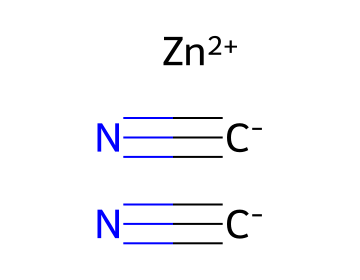
IDENTITY
COMPUTED
HAZARDS
Chemical: Zinc cyanide (Zn(CN)2)
Zinc cyanide: HSNO Approval: HSR006723 Approved with controls
IMAP assessments - Zinc cyanide (Zn(CN)2): Human health tier I assessment
CSL00046
N,N-DIMETHYLFORMAMIDE + 2-CHLORO-5-FLUOROPYRIMIDINE + ZINC CYANIDE
Violent thermal exotherm at >100oC
Harmful,Toxic
Heteroaryl chloride
Cyanation
SAFETY
Intermediate Oral: 0.3 mg/kg/day (L134) Chronic Oral: 0.3 mg/kg/day (L134)
TOXICITY
Zinc poisoning is treated symptomatically, often by administering fluids such as water or milk, or with gastric lavage. Antidotes to cyanide poisoning include hydroxocobalamin and sodium nitrite, which release the cyanide from the cytochrome system, and rhodanase, which is an enzyme occurring naturally in mammals that combines serum cyanide with thiosulfate, producing comparatively harmless thiocyanate. Oxygen therapy can also be administered. (L49, L97)
Chronic exposure to zinc causes anemia, atazia, lethargy, and decreases the level of good cholesterol in the body. It is also believed to cause pancreatic and reproductive damage. Exposure to high levels of cyanide for a short time harms the brain and heart and can even cause coma, seizures, apnea, cardiac arrest and death. Chronic inhalation of cyanide causes breathing difficulties, chest pain, vomiting, blood changes, headaches, and enlargement of the thyroid gland. Skin contact with cyanide salts can irritate and produce sores. (L49, L96, L97)
Inhalation (L96) ; oral (L96) ; dermal (L96)
Anaemia results from the excessive absorption of zinc suppressing copper and iron absorption, most likely through competitive binding of intestinal mucosal cells. Unbalanced levels of copper and zinc binding to Cu,Zn-superoxide dismutase has been linked to amyotrophic lateral sclerosis (ALS). Stomach acid dissolves metallic zinc to give corrosive zinc chloride, which can cause damage to the stomach lining. Metal fume fever is thought to be an immune response to inhaled zinc. Organic nitriles decompose into cyanide ions both in vivo and in vitro. Consequently the primary mechanism of toxicity for organic nitriles is their production of toxic cyanide ions or hydrogen cyanide. Cyanide is an inhibitor of cytochrome c oxidase in the fourth complex of the electron transport chain (found in the membrane of the mitochondria of eukaryotic cells). It complexes with the ferric iron atom in this enzyme. The binding of cyanide to this cytochrome prevents transport of electrons from cytochrome c oxidase to oxygen. As a result, the electron transport chain is disrupted and the cell can no longer aerobically produce ATP for energy. Tissues that mainly depend on aerobic respiration, such as the central nervous system and the heart, are particularly affected. Cyanide is also known produce some of its toxic effects by binding to catalase, glutathione peroxidase, methemoglobin, hydroxocobalamin, phosphatase, tyrosinase, ascorbic acid oxidase, xanthine oxidase, succinic dehydrogenase, and Cu/Zn superoxide dismutase. Cyanide binds to the ferric ion of methemoglobin to form inactive cyanmethemoglobin. (L48, L49, A49, L97)
Ingestion of large doses of zinc causes stomach cramps, nausea, and vomiting. Acute inhalation of large amounts of zinc causes metal fume fever, which is characterized by chills, fever, headache, weakness, dryness of the nose and throat, chest pain, and coughing. Dermal contact with zinc results in skin irritation. Cyanide poisoning is identified by rapid, deep breathing and shortness of breath, general weakness, giddiness, headaches, vertigo, confusion, convulsions/seizures and eventually loss of consciousness. (L49, L96, L97)
No indication of carcinogenicity to humans (not listed by IARC).
REGULATORY
Chemical: Zinc cyanide (Zn(CN)2)
Zinc cyanide: HSNO Approval: HSR006723 Approved with controls
PHARMACOLOGY
Zinc can enter the body through the lungs, skin, and gastrointestinal tract. Intestinal absorption of zinc is controlled by zinc carrier protein CRIP. Zinc also binds to metallothioneins, which help prevent absorption of excess zinc. Zinc is widely distributed and found in all tissues and tissues fluids, concentrating in the liver, gastrointestinal tract, kidney, skin, lung, brain, heart, and pancreas. In the bloodstream zinc is found bound to carbonic anhydrase in erythrocytes, as well as bound to albumin, _2-macroglobulin, and amino acids in the the plasma. Albumin and amino acid bound zinc can diffuse across tissue membranes. Zinc is excreted in the urine and faeces. Organic nitriles are converted into cyanide ions through the action of cytochrome P450 enzymes in the liver. Cyanide is rapidly absorbed and distributed throughout the body. Cyanide is mainly metabolized into thiocyanate by either rhodanese or 3-mercaptopyruvate sulfur transferase. Cyanide metabolites are excreted in the urine. (L49, L96)
USES
Zinc cyanide is used in organic synthesis. (L65)
Zinc cyanide (Zn(CN)2): ACTIVE
ALIASES
REACTIONS
uspto-grants-1998_03 · 10.6084/m9.figshare.5104873.v1 · US05728706
查看
uspto-grants-1998_03 · 10.6084/m9.figshare.5104873.v1 · US05731315
查看
uspto-grants-2006_08 · 10.6084/m9.figshare.5104873.v1 · US07084165B2
查看
uspto-grants-2006_08 · 10.6084/m9.figshare.5104873.v1 · US07084164B2
查看
uspto-grants-2006_08 · 10.6084/m9.figshare.5104873.v1 · US07084170B2
查看
uspto-grants-2006_08 · 10.6084/m9.figshare.5104873.v1 · US07087601B2
查看
uspto-grants-2006_08 · 10.6084/m9.figshare.5104873.v1 · US07091215B2
查看
uspto-grants-2006_08 · 10.6084/m9.figshare.5104873.v1 · US07094789B2
查看