
uspto-grants-1980_09 · 10.6084/m9.figshare.5104873.v1 · US04220573
查看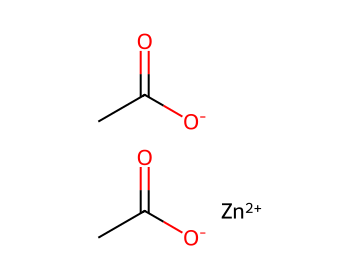
IDENTITY
COMPUTED
PROPERTIES
Between 6,0 and 8,0 (5 % solution)
1.74 at 68 °F (USCG, 1999) - Denser than water; will sink
4.04 g/cu cm (sphalerite); 4.09 g/cu cm (wurtzite)
1.735 @25 °C
Exists in two crystalline forms, alpha (wurtzite) and beta (sphalerite)
White to grayish-white or yellowish powder colorless cubic crystals
Solubility: 40 g/ 100 g water at 25 °C; 67 g/100 g water at 100 °C; 3 g/ 100 g alcohol at 25 °C /Zinc acetate dihydrate/
Insol in alkalies; sol in dil mineral acids
When heated to decomposition it emits toxic fumes of /zinc oxide/.
237 °C
Obtained in both anhydrous form and as a dihydrate. Both are white crystalline solids. The primary hazard is the threat posed to the environment. Immediate steps should be taken to limit spread to the environment. Used to preserve wood, to make other zinc compounds, as a food and feed additive.
Dry Powder; Liquid
Colourless crystals or fine, off-white powder
Colorless, white to greyish-white, or yellowish solid; [HSDB] White solid; [CAMEO] White powder; [MSDSonline]
Changes to alpha form at 1020 °C; sublimes at 1180 °C /beta/
White powder; mp: 237 °C (decomposes); density: 1.735 g/cu cm; solubility: 30.0 g/100 g water at 20 °C; soluble in ethanol /Zinc acetate dihydrate/
Heat of solution: -0.5 Btu/lb= -0.3 cal/g= -0.01X10+5 J/kg
White, monoclinic, crystalline plates; pearly luster; loses 2H2O at 100 °C /Zinc acetate dihydrate/
Crystallizes from dilute acetic acid; faint, acetous odor; astringent taste; slightly efflorescent; the aqueous solution is neutral to slightly acid to litmus; pH about 5-6 /Zinc acetate dihydrate/
GHS
This chemical does not meet GHS hazard criteria for 49.2% (348 of 708) of reports.
Danger
H302 (39.7%): Harmful if swallowed [Warning Acute toxicity, oral];H318 (20.6%): Causes serious eye damage [Danger Serious eye damage/eye irritation];H319 (11.4%): Causes serious eye irritation [Warning Serious eye damage/eye irritation];H400 (32.9%): Very toxic to aquatic life [Warning Hazardous to the aquatic environment, acute hazard];H410 (16.4%): Very toxic to aquatic life with long lasting effects [Warning Hazardous to the aquatic environment, long-term hazard];H411 (23.2%): Toxic to aquatic life with long lasting effects [Hazardous to the aquatic environment, long-term hazard]
P264, P264+P265, P270, P273, P280, P301+P317, P305+P351+P338, P305+P354+P338, P317, P330, P337+P317, P391, and P501 (click each P-code to see the statement)
Aggregated GHS information provided per 708 reports by companies from 25 notifications to the ECHA C&L Inventory. Each notification may be associated with multiple companies.;Reported as not meeting GHS hazard criteria per 348 of 708 reports by companies.;There are 24 notifications provided by 360 of 708 reports by companies with hazard statement code(s).;Information may vary between notifications depending on impurities, additives, and other factors. The percentage value in parenthesis indicates the notified classification ratio from companies that provide hazard codes. Only hazard codes with percentage values above 10% are shown. For more detailed information, please visit ECHA C&L website.
HAZARDS
Chemical: Acetic acid, zinc(2+) salt
Acetic acid, zinc salt (2:1) is listed on the EPA's Chemical Data Reporting (CDR) system. Manufacturers and importers of Acetic acid, zinc salt (2:1) are required to report information about their production and use of this chemical to the EPA under the Toxic Substances Control Act (TSCA). (40 eCFR Part 711)
Status: Active Update: 08-12-2022 https://echa.europa.eu/registration-dossier/-/registered-dossier/17716
Zinc acetate: Does not have an individual approval but may be used under an appropriate group standard
The New Jersey Worker and Community Right to Know Act requires public and private employers to provide information about hazardous substances at their workplaces. (N.J.S.A. 34:5A-1 et. seq.)
IMAP assessments - Soluble zinc salts: Human health tier II assessment
Not flammable
Inhalation causes mild irritation of nose and throat, coughing, and sneezing. Ingestion can cause irritation or corrosion of the alimentary tract, resulting in vomiting. Contact with dust causes irritation of eyes and mild irritation of skin. (USCG, 1999)
A skin, eye, nose, and throat irritant; [HSDB] Available in anhydrous and dihydrate forms; A mild skin, nose, and throat irritant; An eye irritant; [CAMEO] May cause mild to moderate skin and eye irritation, based on animal studies; [CHEMINFO] A skin and eye irritant; [eChemPortal: ERMA] An irritant; [MSDSonline] See Zinc.
Zinc acetate is an indirect food additive for use only as a component of adhesives.
Trace minerals added to animal feeds as nutritional dietary supplements are generally recognized as safe when added at levels consistent with good feeding practice. Zinc acetate is included on this list.
The Approved Drug Products with Therapeutic Equivalence Evaluations List identifies currently marketed prescription drug products, incl zinc acetate, approved on the basis of safety and effectiveness by FDA under sections 505 of the Federal Food, Drug, and Cosmetic Act.
Drug products containing certain active ingredients offered over-the-counter (OTC) for certain uses. A number of active ingredients have been present in OTC drug products for various uses, as described below. However, based on evidence currently available, there are inadequate data to establish general recognition of the safety and effectiveness of these ingredients for the specified uses: zinc acetate is included in skin protectant drug products (wound healing claims only).
Drug products containing certain active ingredients offered over-the-counter (OTC) for certain uses. A number of active ingredients have been present in OTC drug products for various uses, as described below. However, based on evidence currently available, there are inadequate data to establish general recognition of the safety and effectiveness of these ingredients for the specified uses: zinc acetate is included in diaper rash products.
Salts, Basic
Salts, basic, such as ZINC ACETATE, are generally soluble in water. The resulting solutions contain moderate concentrations of hydroxide ions and have pH's greater than 7.0. They react as bases to neutralize acids. These neutralizations generate heat, but less or far less than is generated by neutralization of the bases in reactivity group 10 (Bases) and the neutralization of amines. They usually do not react as either oxidizing agents or reducing agents but such behavior is not impossible.
Water soluble.
Persons in charge of vessels or facilities are required to notify the National Response Center (NRC) immediately, when there is a release of this designated hazardous substance, in an amount equal to or greater than its reportable quantity of 1,000 lb or 454 kg. The toll free number of the NRC is (800) 424-8802. The rule for determining when notification is required is stated in 40 CFR 302.4 (section IV. D.3.b).
Zinc acetate is designated as a hazardous substance under section 311(b)(2)(A) of the Federal Water Pollution Control Act and further regulated by the Clean Water Act Amendments of 1977 and 1978. These regulations apply to discharges of this substance. This designation includes any isomers and hydrates, as well as any solutions and mixtures containing this substance.
Toxic pollutant designated pursuant to section 307(a)(1) of the Federal Water Pollution Control Act and is subject to effluent limitations. /Zinc and compounds/
Acute Tox. 4 (39.7%);Eye Dam. 1 (20.6%);Eye Irrit. 2 (11.4%);Aquatic Acute 1 (32.9%);Aquatic Chronic 1 (16.4%);Aquatic Chronic 2 (23.2%)
Acute toxicity - category 4;Eye damage - category 1
SAFETY
INHALATION: move to fresh air; if exposure is severe, get medical attention.;INGESTION: induce vomiting, followed by prompt and complete gastric lavage, cathartics, and demulcents.;EYES: flush with water for at least 10 min.; consult physician if irritation persists.;SKIN: wash with soap and water. (USCG, 1999)
0.1 [mg/m3] (respirable fraction), 2 mg/m3 (inhalable fraction) for Zn inorg. cmpnds[German Research Foundation (DFG)]
If material on fire or involved in fire: Extinguish fire using agent suitable for type of surrounding fire. (Material does not burn or burns with difficulty.)
Keep in well-closed containers.
Finely divided ... zinc compounds, can be fire and explosion hazard if stored in damp places, sources of spontaneous combustion. /Zinc cmpd/
Environmental considerations: Land spill: Dig a pit, pond, lagoon, or holding area to contain liquid or solid material. /SRP: If time permits, pits, ponds, lagoons, soak holes, or holding areas should be contained with a flexible impermeable membrane liner./ Cover solids with a plastic sheet to prevent dissolving in rain or fire fighting water.
Environmental considerations: Water spill: Neutralize with agricultural lime (CaO), crushed limestone, or sodium bicarbonate. Add soda ash. Adjust pH to neutral (pH 7). Use mechanical dredges or lifts to remove immobilized masses of pollutants and precipitates or greater concentration.
SRP: The most favorable course of action is to use an alternative chemical product with less inherent propensity for occupational exposure or environmental contamination. Recycle any unused portion of the material for its approved use or return it to the manufacturer or supplier. Ultimate disposal of the chemical must consider: the material's impact on air quality; potential migration in soil or water; effects on animal, aquatic, and plant life; and conformance with environmental and public health regulations.
Chemical Treatability of Zinc; Concentration Process: Ultrafiltration; Chemical Classification: Metals; Scale of Study: Continuous flow, pilot scale; Type of Wastewater Used: Industrial wastewater; Results of Study: 0.38 ppm effluent concentration. /Zinc/
Chemical Treatability of Zinc; Concentration Process: Miscellaneous sorbents; Chemical Classification: Metals; Scale of Study: Literature review; Type of Wastewater Used: Unknown; Results of Study: Final concentration reduced to 0.1 ppb; SiO2 + CaO slags used. /Zinc/
The proprietary Sulfex process (Permutit Co) has been applied to zinc wastes. The process involves addition of ferrous sulfide, which gradually releases sulfide to precipitate the zinc ... . /Zinc/
For more Disposal Methods (Complete) data for ZINC ACETATE (11 total), please visit the HSDB record page.
If material not on fire and not involved in fire: Keep material out of water sources and sewers. Build dikes to contain flow as necessary. Keep up wind. Avoid breathing vapors or dusts. Wash away any material which may have contacted the body with copious amounts of water or soap and water.
SRP: The scientific literature for the use of contact lenses in industry is conflicting. The benefit or detrimental effects of wearing contact lenses depend not only upon the substance, but also on factors including the form of the substance, characteristics and duration of the exposure, the uses of other eye protection equipment, and the hygiene of the lenses. However, there may be individual substances whose irritating or corrosive properties are such that the wearing of contact lenses would be harmful to the eye. In those specific cases, contact lenses should not be worn. In any event, the usual eye protection equipment should be worn even when contact lenses are in place.
Prevention ... /of metal fume fever/ is a matter of keeping exposure of workers below level of concn currently accepted as satisfactory for working with the metal in industry, preferably by employment of proper local exhaust ventilation to collect fumes at their source. Acceptable respirators are avail commercially but should be used only under suitable conditions. /Zinc/
In all cases where zinc is heated to the point where fume is produced, it is most important to ensure that adequate ventilation is provided. Individual protection is best ensured by education of the worker concerning metal-fume fever & the provision of local exhaust ventilation, or, in some situations by wearing of supplied-air hood or mask.
Intermediate Oral: 0.3 mg/kg/day (L134) Chronic Oral: 0.3 mg/kg/day (L134)
7.5 [mg/m3]
83 [mg/m3]
500 [mg/m3]
Bu. Mines approved respirator; rubber gloves; chemical goggles (USCG, 1999)
... Recommended appropriate protective equipment including protective eyewear, long-sleeved shirts and long-legged pants, rubber gloves, and boots. /zinc salts/
/NISOH certified respirator/; Rubber gloves; Chemical goggles.
TOXICITY
Zinc poisoning is treated symptomatically, often by administering fluids such as water or milk, or with gastric lavage. (L49)
Organic zinc salts such as zinc aspartate, zinc orotate, zinc histidine and zinc acetate protected mice against the lethality of an acute intraperitoneal challenge with ethanol. A similar activity was also provided by salts of cobalt, zirconium, lithium, and magnesium. Organic zinc salts acted synergistically with sulfhydryl compounds in protecting the mice and potentiation between the two categories of agents was seen.
The effect of zinc on mercuric chloride induced lipid peroxidation in the rat kidney was investigated. The rats received zinc acetate (2.0 nmol/kg, po) for 2 days before being given mercuric chloride (15 umol/kg, sc) and were killed 6, 12, and 24 hr after the last injection. Lipid peroxidation occurred in the rat kidney 12 hr after mercury administration, and this mercury induced lipid peroxidation was significantly reduced by zinc pretreatment. A decrease in vitamin C and E contents in the kidney was observed 12 hr after the administration of mercury, and this decrease was prevented by zinc pretreatment. In the kidney of rats pretreated with zinc, the activities of the protective enzymes, glutathione peroxidase and glucose-6-phosphate dehydrogenase, were increased after mercury injection. Non-protein sulfhydryl content (mostly glutathione) also rose markedly.
In comparison with similar experiments in which no zinc acetate was used, the addition of small amounts of zinc acetate to sodium N-methyl-N-dithiocarboxyglucamine produces a significant increase in the amount of cadmium mobilized from the liver and kidneys of mice loaded ip with 10 mg cadmium chloride/kg 2 wk prior to the initiation of treatment. Neither treatment results in the transport of significant amounts of cadmium to the brain. The injection of zinc acetate alone did not produce this effect. Experiments in which zinc acetate in drinking water was administered to cadmium loaded animals showed that the liver and kidney cadmium levels were significantly increased, presumably via zinc mediated processes.
Wistar rats were injected (ip) either with 5 mg cis-diamminedichloro-platinum-II (cis-DDP)/kg, or pretreated with zinc acetate and then injected with cis-DDP. The zinc pretreatment significantly increased the binding of zinc (Zn) and copper (Cu) to both the renal and hepatic metallothioneins, but the proportion of cytosolic platinum associated with metallothioneins in the kidney tissue slightly reduced, and that in the liver showed no difference in comparison to rats treated with cis-diamminedichloro-platinum-II only. The results indicate that an increased cis-diamminedichloro-platinum-II biosynthesis the zinc pretreatment may not correspondingly increase the binding of intracellular Pt to cis-diamminedichloro-platinum-II. In the zinc acetate pretreated rats, the renal tissue and subellular Pt levels were significantly lower (p less than 0.01) than those in untreated rats, although the liver levels showed practically no difference.
For more Interactions (Complete) data for ZINC ACETATE (9 total), please visit the HSDB record page.
Chronic exposure to zinc causes anemia, atazia, lethargy, and decreases the level of good cholesterol in the body. It is also believed to cause pancreatic and reproductive damage. (L49)
TLm Pimephales promelas (fathead minnow) 0.88 ppm/96 hr (soft water) /Conditions of bioassay not specified/
LC50 Eisenia fetida (Earthworm, adult) contact on filter paper 13 ug/sq cm/48 hr (95% confidecne interval: 10-16 ug/sq cm)
LC50 Oncorhynchus mykiss (Rainbow trout) 0.55 mg/L/96 hr; flow through
LC50 Oryzias latipes (Medaka, killfish) 37 mg/L/24 hr; static, 10 °C
For more Ecotoxicity Values (Complete) data for ZINC ACETATE (13 total), please visit the HSDB record page.
Occupational hepatotoxin - Secondary hepatotoxins: the potential for toxic effect in the occupational setting is based on cases of poisoning by human ingestion or animal experimentation.
Inhalation (L49) ; oral (L49) ; dermal (L49)
Safe in the present practices of use and concentration. Ingredient, concentration, and use information are available in documents discoverable at https://cir-reports.cir-safety.org
Anaemia results from the excessive absorption of zinc suppressing copper and iron absorption, most likely through competitive binding of intestinal mucosal cells. Unbalanced levels of copper and zinc binding to Cu,Zn-superoxide dismutase has been linked to amyotrophic lateral sclerosis (ALS). Stomach acid dissolves metallic zinc to give corrosive zinc chloride, which can cause damage to the stomach lining. Metal fume fever is thought to be an immune response to inhaled zinc. (L48, L49, A49)
Ingestion of large doses of zinc causes stomach cramps, nausea, and vomiting. Acute inhalation of large amounts of zinc causes metal fume fever, which is characterized by chills, fever, headache, weakness, dryness of the nose and throat, chest pain, and coughing. Dermal contact with zinc results in skin irritation. (L49)
The assessment of zinc exposure can be accomplished through measurement of zinc. The presence of excess zinc ... can indicate high exposure to zinc; however, no information was found in the literature regarding the accuracy of these levels in predicting possible health effects. Blood Reference Ranges: Normal - average level 1200 ug/dl; Exposed - not established; Toxic - not established. Serum or Plasma Reference Ranges: Normal - average levels 100 ug/dl; Exposed - not established; Toxic - not established. Urine Reference Ranges: Normal - average levels 0.5 mg/g creatinine or 150 to 1200 ug/24 hours; Exposed - urinary concentrations of 600 to 700 ug/l were found in workers exposed to zinc oxide at levels of 3 to 5 mg/cu m; Toxic - greater than 1200 ug/24 hours has been indicated as a toxic urinary level of zinc; however no information was located relating to the severity of symptoms seen with high urinary zinc levels. /Zinc/
Respiratory Symptom Questionnaires: Questionnaires have been published by the American Thoracic Society and the British Medical Research Council. These questionnaires have been found to be useful in identification of people with chronic bronchitis, however certain pulmonary function tests such as FEV1 have been found to be better predictors of chronic airflow obstruction. /Zinc/
Chest Radiography: This test is widely used for assessing pulmonary disease. Chest radiographs have been found to be useful for detection of early lung cancer in asymptomatic people, especially for detection of peripheral tumors such as adenocarcinomas. However, even though OSHA mandates this test for exposure to some toxicants such as asbestos, there are conflicting views on its efficacy in detection of pulmonary disease. /Zinc/
Pulmonary Function Tests: The tests that have been found to be practical for population monitoring include: Spirometry and expiratory flow-volume curves; Determination of lung volumes; Diffusing capacity for carbon monoxide; Single-breath nitrogen washout; Inhalation challenge tests; Serial measurements of peak expiratory flow; Exercise testing. /Zinc/
For more Medical Surveillance (Complete) data for ZINC ACETATE (8 total), please visit the HSDB record page.
/HUMAN EXPOSURE STUDIES/ Researchers/ exposed groups of eight healthy women to 0, 15, 50, or 100 mg supplemental zinc as zinc acetate daily for 60 days (approximately 0, 0.25, 0.83, or 1.7 mg supplemental Zn/kg-day, assuming a reference female body weight of 60 kg) and evaluated effects on serum zinc and cholesterol levels. Zinc exposure resulted in significant, dose-related increases in serum zinc. In the highest exposure group only, plasma HDL-cholesterol was significantly reduced at 4 weeks of exposure, but not at any other timepoint examined. A direct correlation between dietary zinc and whole-blood copper was observed in treated subjects. The study authors noted that in the 50 and 100 mg groups, some bloating, nausea, and abdominal cramps were noted unless the supplement was taken with a large glass of water at mealtime.
/SIGNS AND SYMPTOMS/ ... Metal fume fever results from inhalation of fumes of zinc oxide produced when zinc is heated to high temperatures, such as during welding, metal cutting, or smelting zinc alloys. Victims complain of nausea and vomiting, chills and fever, muscular aches and pains, and weakness.
No indication of carcinogenicity to humans (not listed by IARC).
/LABORATORY ANIMALS: Acute Exposure/ The dermal irritancy of six zinc compounds was examined in three animal models, In open patch tests involving five daily applications, zinc chloride (1% aqueous solution) was severely irritant in rabbit, guinea-pig and mouse tests, inducing epidermal hyperplasia and ulceration; aqueous zinc acetate (20%) was slightly less irritant ... Epidermal irritancy in these studies is related to the interaction of zinc ion with epidermal keratin. The compounds studied were not consistently bacteriostatic in the three species tested.
/LABORATORY ANIMALS: Acute Exposure/ Rats were treated with zinc acetate for four days. The zinc doses were 5 mg Zn/kg and 10 mg Zn/kg body weight respectively. Two groups of the zinc acetate-treated rats were later challenged with a single dose of CCl4 (1.5 mL/kg body weight). Compared to control animals, the plasma of rats treated with CCl4 showed hyperbilirubinemia, hypoglycemia, hypercreatinemia and hypoproteinemia. When the animals were however supplemented with zinc in form of zinc acetate before being dosed with CCl4, the 5 mg Zn/kg body weight of zinc acetate reversed the hypoproteinemia induced by CCl4, whereas the 10 mg Zn/kg body weight of zinc acetate reversed the hypoglycemia, hyperbilirubinemia and hypercreatinemia induced by CCl4. The 10 mg Zn/kg body weight of zinc acetate is more consistent in protecting against CCl4 hepatotoxicity. The possible mechanisms of protection are highlighted.
/LABORATORY ANIMALS: Acute Exposure/ A study was conducted to determine whether divalent metal salts act antagonistically on nickel induced natural killer cell suppression. CBA/J mice were treated with nickel chloride, and/or zinc acetate. In mice injected with nickel chloride at doses of 9, 18, and 36 ug/g, significant suppression of natural killer activity was observed. The injection of nickel alone or in combination with zinc or calcium slightly reduced natural killer activity.
/LABORATORY ANIMALS: Acute Exposure/ Large doses produced violent vomiting, purgation, and abdominal pain and collapse. Wistar rats received 1.0 and 3.0 g/kg bw /of zinc acetate/. The treatment decreased hematocrit, caused an increase in erythrocyte count, and reduction in the percentage of neutrophils and monocytes.
For more Non-Human Toxicity Excerpts (Complete) data for ZINC ACETATE (20 total), please visit the HSDB record page.
REGULATORY
Chemical: Acetic acid, zinc(2+) salt
Acetic acid, zinc salt (2:1) is listed on the EPA's Chemical Data Reporting (CDR) system. Manufacturers and importers of Acetic acid, zinc salt (2:1) are required to report information about their production and use of this chemical to the EPA under the Toxic Substances Control Act (TSCA). (40 eCFR Part 711)
Status: Active Update: 08-12-2022 https://echa.europa.eu/registration-dossier/-/registered-dossier/17716
Zinc acetate: Does not have an individual approval but may be used under an appropriate group standard
The New Jersey Worker and Community Right to Know Act requires public and private employers to provide information about hazardous substances at their workplaces. (N.J.S.A. 34:5A-1 et. seq.)
Zinc acetate is an indirect food additive for use only as a component of adhesives.
Trace minerals added to animal feeds as nutritional dietary supplements are generally recognized as safe when added at levels consistent with good feeding practice. Zinc acetate is included on this list.
The Approved Drug Products with Therapeutic Equivalence Evaluations List identifies currently marketed prescription drug products, incl zinc acetate, approved on the basis of safety and effectiveness by FDA under sections 505 of the Federal Food, Drug, and Cosmetic Act.
Drug products containing certain active ingredients offered over-the-counter (OTC) for certain uses. A number of active ingredients have been present in OTC drug products for various uses, as described below. However, based on evidence currently available, there are inadequate data to establish general recognition of the safety and effectiveness of these ingredients for the specified uses: zinc acetate is included in skin protectant drug products (wound healing claims only).
Drug products containing certain active ingredients offered over-the-counter (OTC) for certain uses. A number of active ingredients have been present in OTC drug products for various uses, as described below. However, based on evidence currently available, there are inadequate data to establish general recognition of the safety and effectiveness of these ingredients for the specified uses: zinc acetate is included in diaper rash products.
Persons in charge of vessels or facilities are required to notify the National Response Center (NRC) immediately, when there is a release of this designated hazardous substance, in an amount equal to or greater than its reportable quantity of 1,000 lb or 454 kg. The toll free number of the NRC is (800) 424-8802. The rule for determining when notification is required is stated in 40 CFR 302.4 (section IV. D.3.b).
Zinc acetate is designated as a hazardous substance under section 311(b)(2)(A) of the Federal Water Pollution Control Act and further regulated by the Clean Water Act Amendments of 1977 and 1978. These regulations apply to discharges of this substance. This designation includes any isomers and hydrates, as well as any solutions and mixtures containing this substance.
Toxic pollutant designated pursuant to section 307(a)(1) of the Federal Water Pollution Control Act and is subject to effluent limitations. /Zinc and compounds/
(AZ) ARIZONA 5000 ug/l /Zinc/
(MN) MINNESOTA 2000 ug/l /Zinc/
EPA 5000 ug/l /Zinc/
EPA 2000 ug/l /Zinc, Lifetime health advisory/
PHARMACOLOGY
A - Alimentary tract and metabolism;A16 - Other alimentary tract and metabolism products;A16A - Other alimentary tract and metabolism products;A16AX - Various alimentary tract and metabolism products;A16AX05 - Zinc acetate
QA - Alimentary tract and metabolism;QA16 - Other alimentary tract and metabolism products;QA16A - Other alimentary tract and metabolism products;QA16AX - Various alimentary tract and metabolism products;QA16AX05 - Zinc acetate
Approximately 60-70% of the zinc in circulation is bound to albumin. Any condition that alters serum albumin concentration may have a secondary effect on serum zinc levels.
Zinc is involved in various aspects of cellular metabolism. It has been estimated that approximately 10% of human proteins may bind zinc, in addition to hundreds of proteins that transport and traffic zinc. It is required for the catalytic activity of more than 200 enzymes, and it plays a role in immune function wound healing, protein synthesis, DNA synthesis, and cell division. Zinc is an essential element for a proper sense of taste and smell and supports normal growth and development during pregnancy, childhood, and adolescence. It is thought to have antioxidant properties, which may be protective against accelerated aging and helps to speed up the healing process after an injury; however, studies differ as to its effectiveness. Zinc ions are effective antimicrobial agents even if administered in low concentrations. Studies on oral zinc for specific conditions shows the following evidence in various conditions: **Colds:** Evidence suggests that if zinc lozenges or syrup are taken within 24 hours after cold symptoms start, the supplement may shorten the length of colds. The use intranasal zinc has been associated with the loss of the sense of smell, in some cases long-term or permanently. **Wound healing:** Patients with skin ulcers and decreased levels of zinc may benefit from oral zinc supplements. **Diahrrea**: Oral zinc supplements can reduce the symptoms of diarrhea in children with low levels of zinc, especially in cases of malnutrition.
**Zinc has three primary biological roles**: _catalytic_, _structural_, and _regulatory_. The catalytic and structural role of zinc is well established, and there are various noteworthy reviews on these functions. For example, zinc is a structural constituent in numerous proteins, inclusive of growth factors, cytokines, receptors, enzymes, and transcription factors for different cellular signaling pathways. It is implicated in numerous cellular processes as a cofactor for approximately 3000 human proteins including enzymes, nuclear factors, and hormones. Zinc promotes resistance to epithelial apoptosis through cell protection (cytoprotection) against reactive oxygen species and bacterial toxins, likely through the antioxidant activity of the cysteine-rich metallothioneins. In HL-60 cells (promyelocytic leukemia cell line), zinc enhances the up-regulation of A20 mRNA, which, via TRAF pathway, decreases NF-kappaB activation, leading to decreased gene expression and generation of tumor necrosis factor-alpha (TNF-alpha), IL-1beta, and IL-8. There are several mechanisms of action of zinc on acute diarrhea. Various mechanisms are specific to the gastrointestinal system: zinc restores mucosal barrier integrity and enterocyte brush-border enzyme activity, it promotes the production of antibodies and circulating lymphocytes against intestinal pathogens, and has a direct effect on ion channels, acting as a potassium channel blocker of adenosine 3-5-cyclic monophosphate-mediated chlorine secretion. Cochrane researchers examined the evidence available up to 30 September 2016. Zinc deficiency in humans decreases the activity of serum _thymulin_ (a hormone of the thymus), which is necessary for the maturation of T-helper cells. T-helper 1 (Th(1)) cytokines are decreased but T-helper 2 (Th(2)) cytokines are not affected by zinc deficiency in humans. The change of _Th(1)_ to _Th(2)_ function leads to cell-mediated immune dysfunction. Because IL-2 production (Th(1) cytokine) is
The active moiety in zinc acetate is zinc cation. Regardless of the ligand, zinc blocks the intestinal absorption of copper from the diet and the reabsorption of endogenously secreted copper such as that from the saliva, gastric juice and bile. Zinc induces the production of metallothionein in the enterocyte, a protein that binds copper thereby preventing its serosal transfer into the blood. The bound copper is then lost in the stool following desquamation of the intestinal cells.
The mechanism of zinc's anticopper action is unique. It induces intestinal cell metallothionein, which binds copper and prevents its transfer into blood. As intestinal cells die and slough, the contained copper is eliminated in the stool. Thus, zinc prevents the intestinal absorption of copper.
The half-life of zinc in humans is approximately 280 days.
Zinc is released from food as free ions during its digestion. These freed ions may then combine with endogenously secreted ligands before their transport into the enterocytes in the duodenum and jejunum.. Selected transport proteins may facilitate the passage of zinc across the cell membrane into the hepatic circulation. With high intake, zinc may also be absorbed through a passive paracellular route. The portal system carries absorbed zinc directly into the hepatic circulation, and then it is released into systemic circulation for delivery to various tissues. Although, serum zinc represents only 0.1% of the whole body zinc, the circulating zinc turns over rapidly to meet tissue needs.
Zinc can enter the body through the lungs, skin, and gastrointestinal tract. Intestinal absorption of zinc is controlled by zinc carrier protein CRIP. Zinc also binds to metallothioneins, which help prevent absorption of excess zinc. Zinc is widely distributed and found in all tissues and tissues fluids, concentrating in the liver, gastrointestinal tract, kidney, skin, lung, brain, heart, and pancreas. In the bloodstream zinc is found bound to carbonic anhydrase in erythrocytes, as well as bound to albumin, _2-macroglobulin, and amino acids in the the plasma. Albumin and amino acid bound zinc can diffuse across tissue membranes. Zinc is excreted in the urine and faeces. (L49)
ZINC ACETATE
Copper Absorption Inhibitor [EPC]; Decreased Copper Ion Absorption [PE]
WOUND CREAM
Copper Absorption Inhibitor [EPC]; Decreased Copper Ion Absorption [PE]
Zinc is absorbed in the small intestine by a carrier-mediated mechanism. Under regular physiologic conditions, transport processes of uptake do not saturate. The exact amount of zinc absorbed is difficult to determine because zinc is secreted into the gut. Zinc administered in aqueous solutions to fasting subjects is absorbed quite efficiently (at a rate of 60-70%), however, absorption from solid diets is less efficient and varies greatly, dependent on zinc content and diet composition. Generally, 33% is considered to be the average zinc absorption in humans. More recent studies have determined different absorption rates for various populations based on their type of diet and phytate to zinc molar ratio. Zinc absorption is concentration-dependent and increases linearly with dietary zinc up to a maximum rate. Additionally zinc status may influence zinc absorption. Zinc-deprived humans absorb this element with increased efficiency, whereas humans on a high-zinc diet show a reduced efficiency of absorption.
The excretion of zinc through gastrointestinal tract accounts for approximately one-half of all zinc eliminated from the body. Considerable amounts of zinc are secreted through both biliary and intestinal secretions, however most is reabsorbed. This is an important process in the regulation of zinc balance. Other routes of zinc excretion include both urine and surface losses (sloughed skin, hair, sweat). Zinc has been shown to induce intestinal metallothionein, which combines zinc and copper in the intestine and prevents their serosal surface transfer. Intestinal cells are sloughed with approximately a 6-day turnover, and the metallothionein-bound copper and zinc are lost in the stool and are thus not absorbed. Measurements in humans of endogenous intestinal zinc have primarily been made as fecal excretion; this suggests that the amounts excreted are responsive to zinc intake, absorbed zinc and physiologic need. In one study, elimination kinetics in rats showed that a small amount of ZnO nanoparticles was excreted via the urine, however, most of the nanoparticles were excreted via the feces.
A pharmacokinetic study was done in rats to determine the distribution and other metabolic indexes of zinc in two particle sizes. It was found that zinc particles were mainly distributed to organs including the liver, lung, and kidney within 72 hours without any significant difference being found according to particle size or rat gender.
In one study of healthy patients, the clearance of zinc was found to be 0.63 ± 0.39 μg/min.
Zinc salts are not equal in solubility, which is important in zinc absorption. The solubility of zinc salts is affected by gastric pH. Healthy subjects were given a single oral dose of 50 mg elemental zinc as the acetate ... under either high (pH > 5) or low (pH < 3) intragastric pH conditions. The mean plasma zinc area under the curve for zinc acetate at low pH (AL) /and/ ... at high pH (AH) ... were 524 /and/ 378 ... ug/hr/dL ...
Absorption /of zinc acetate/ by the GI tract is variable in animals and poor in humans. Accumulation occurred in the liver and pancreas. Some regulation of intake and output of zinc probably takes place in the intestines. In rats and mice, metallothionein, a low-molecular-mass cytoplasmic metalloprotein, takes considerable part in this process. Excreted predominantly with feces. Urinary excretion is negligible.
USES
CIR ingredient: Zinc Acetate
Used as a wood preservative, mordant in dyeing, antiseptic, feed additive, cross-linking agent for polymers, catalyst, waterproofing agent, therapeutic styptic and astringent, and topical fungicide; Also used to make glazes for porcelain, to treat Wilson's disease, in dental cement for temporary fillings, in tobacco smoke filters, in adhesives for food contact, and as a reagent in testing for albumin, tannin, urobilin, phosphate, and blood; [HSDB] Used to make other zinc compounds; [CAMEO]
Working with Glues and Adhesives [Category: Other];Applying Wood Preservatives [Category: Other];Using Disinfectants or Biocides [Category: Clean];Textiles (Printing, Dyeing, or Finishing) [Category: Industry];Farming (Feed Additives) [Category: Industry]
Preserving wood; as mordant in dyeing; manutactures glazes for painting on porcelain; as a reagent in testing for albumin, tannin, urobilin, phosphate, blood.
Feed additive; cross-linking agent for polymers
Antihistamines were separated by TLC on metal salt-impregnated silica gel plates with ethanol/DMF/ammonium hydroxide as developing solvent and visualization with Dragendorff reagent. Of the metal salts used to impregnate the TLC plates, zinc acetate (1%) gave the best results.
2023: 50,000 - <250,000 lb;2022: 250,000 - <400,000 lb;2021: 400,000 - <550,000 lb;2020: 250,000 - <400,000 lb
(1985) 408X10+3 lb
(1986) >500 thousand-1 million pounds
(1990) >500 thousand-1 million pounds
(1994) >1 million-10 million pounds
For more U.S. Production (Complete) data for ZINC ACETATE (6 total), please visit the HSDB record page.
(2001) 1410 thousand metric tons zinc. /Apparent, all forms/
(2002) 1420 thousand metric tons zinc. /Apparent, all forms/
(2003) 1340 thousand metric tons zinc. /Apparent, all forms/
(2004) 1400 thousand metric tons zinc. /Apparent, all forms/
(2005) 1370 thousand metric tons zinc. /Apparent, all forms/
Binder
Other;Binder;Intermediate
... Anhydrous salt from zinc nitrate and acetic anhydride.
Action of acetic acid on zinc oxide
REAGENT, 99%; COMMERCIAL, 98.4%
USP, reagent, & technical grades /Dihydrate/
ACS, USP, technical, crystal grades; liquid grade, high purity, ready to use; crystal & anhydrous crystal form, technical grade
GALZIN, Zinc Acetate Capsules (25 mg zinc content) are #1 capsules with aqua blue opaque cap and body, imprinted "93-215." Packaged in bottles of 250 (NDC 57844-215-52). GALZIN, Zinc Acetate Capsules (50 mg zinc content) are #1 capsules with orange opaque cap and body, imprinted "93-208." Packaged in bottles of 250 (NDC 57844-208-52).
Food additives
Cosmetics -> Antimicrobial
All Other Chemical Product and Preparation Manufacturing;Adhesive Manufacturing;Textiles, apparel, and leather manufacturing;Plastics Product Manufacturing
Acetic acid, zinc salt (2:1): ACTIVE
ALIASES
REACTIONS
uspto-grants-1980_09 · 10.6084/m9.figshare.5104873.v1 · US04220573
查看
uspto-grants-1997_04 · 10.6084/m9.figshare.5104873.v1 · US05616806
查看
uspto-grants-2012_06 · 10.6084/m9.figshare.5104873.v1 · US08202865B2
查看
uspto-grants-2012_06 · 10.6084/m9.figshare.5104873.v1 · US08202865B2
查看
uspto-grants-2012_06 · 10.6084/m9.figshare.5104873.v1 · US08202865B2
查看
uspto-grants-1976_03 · 10.6084/m9.figshare.5104873.v1 · US03943143
查看
uspto-grants-1976_03 · 10.6084/m9.figshare.5104873.v1 · US03943143
查看
uspto-grants-1976_03 · 10.6084/m9.figshare.5104873.v1 · US03943143
查看