
uspto-grants-2010_06 · 10.6084/m9.figshare.5104873.v1 · US07741082B2
查看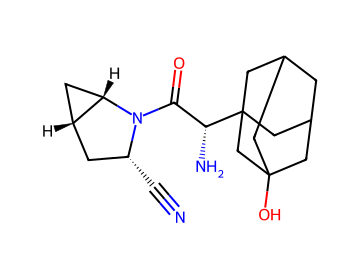
IDENTITY
COMPUTED
PROPERTIES
Sparingly soluble
Solid
White to yellow or light brown, non-hygroscopic, crystalline powder; sparingly soluble in water at 24 °C; slightly soluble in ethyl acetate; soluble in methanol, ethanol, isopropyl alcohol; acetonitrile, acetone, and polyethylene glycol 400 /Saxagliptin monohydrate/
GHS
Danger
H317 (100%): May cause an allergic skin reaction [Warning Sensitization, Skin];H334 (100%): May cause allergy or asthma symptoms or breathing difficulties if inhaled [Danger Sensitization, respiratory];H361fd (100%): Suspected of damaging fertility; Suspected of damaging the unborn child [Warning Reproductive toxicity];H372 (100%): Causes damage to organs through prolonged or repeated exposure [Danger Specific target organ toxicity, repeated exposure]
P203, P233, P260, P261, P264, P270, P271, P272, P280, P284, P302+P352, P304+P340, P318, P319, P321, P333+P317, P342+P316, P362+P364, P403, P405, and P501 (click each P-code to see the statement)
The GHS information provided by 1 company from 1 notification to the ECHA C&L Inventory.
HAZARDS
The Approved Drug Products with Therapeutic Equivalence Evaluations identifies currently marketed prescription drug products, including saxagliptin hydrochloride, approved on the basis of safety and effectiveness by FDA under sections 505 of the Federal Food, Drug, and Cosmetic Act. /Saxagliptin hydrochloride/
Skin Sens. 1 (100%);Resp. Sens. 1 (100%);Repr. 2 (100%);STOT RE 1 (100%)
SAFETY
Store at 20 deg - 25 °C (68 deg - 77 °F); excursions permitted to 15 deg - 30 °C (59 deg - 86 °F).
SRP: Expired or waste pharmaceuticals shall carefully take into consideration applicable DEA, EPA, and FDA regulations. It is not appropriate to dispose by flushing the pharmaceutical down the toilet or discarding to trash. If possible return the pharmaceutical to the manufacturer for proper disposal being careful to properly label and securely package the material. Alternatively, the waste pharmaceutical shall be labeled, securely packaged and transported by a state licensed medical waste contractor to dispose by burial in a licensed hazardous or toxic waste landfill or incinerator.
TOXICITY
Concomitant administration of single doses of saxagliptin (10 mg) and glyburide (5 mg) increased peak plasma concentrations of glyburide and saxagliptin by 16 and 8%, respectively; the AUC of glyburide was increased by 6% and that of saxagliptin was decreased by 2%. The manufacturer states that no dosage adjustments are required because of changes in systemic exposures when saxagliptin and glyburide are given concomitantly. However, in patients receiving saxagliptin concomitantly with a sulfonylurea antidiabetic agent, a reduced dosage of the sulfonylurea may be required to reduce the risk of hypoglycemia.
Concomitant administration of a single dose of saxagliptin (100 mg) and metformin hydrochloride (1 g) decreased the peak plasma concentration of saxagliptin by 21% and the AUC by 2%; metformin AUC and peak plasma concentration were increased by 20 and 9%, respectively.
Concurrent administration of saxagliptin (5 mg once daily for 21 days) and an estrogen-progestin combination contraceptive (ethinyl estradiol 35 mcg in fixed combination with norgestimate 0.25 mg once daily for 21 days) did not appreciably alter the steady-state pharmacokinetics of ethinyl estradiol or the primary active progestin component, norelgestromin.
Administration of a single dose of saxagliptin (10 mg) concurrently with a single dose of famotidine (40 mg) increased the peak plasma concentration of saxagliptin by 14% and AUC by 3%.
For more Interactions (Complete) data for Saxagliptin (8 total), please visit the HSDB record page.
In large clinical trials, rates of serum enzyme elevations were similar with saxagliptin therapy (;Likelihood score: E* (unproven but suspected rare cause of clinically apparent liver injury).
TERRESTRIAL FATE: Based on a classification scheme(1), an estimated Koc value of 440(SRC), determined from a structure estimation method(2), indicates that saxagliptin is expected to have moderate mobility in soil(SRC). The estimated pKa of saxagliptin is 7.90(3), indicating that this compound will exist partially in the cation form in the environment and cations generally adsorb more strongly to soils containing organic carbon and clay than their neutral counterparts(4). Volatilization of saxagliptin from moist soil surfaces is not expected to be an important fate process(SRC) given an estimated Henry's Law constant of 1.1X10⁻¹⁸ atm-cu m/mole(SRC), using a fragment constant estimation method(5). Saxagliptin is not expected to volatilize from dry soil surfaces(SRC) based upon an estimated vapor pressure of 4.2X10⁻¹¹ mm Hg at 25 °C(SRC), determined from a fragment constant method(2). Biodegradation data in soil were not available(SRC, 2014).
AQUATIC FATE: Based on a classification scheme(1), an estimated Koc value of 440(SRC), determined from a structure estimation method(2), indicates that saxagliptin is expected to adsorb to suspended solids and sediment(SRC). Volatilization from water surfaces iis not expected(3) based upon an estimated Henry's Law constant of 1.1X10⁻¹⁸ atm-cu m/mole(SRC), developed using a fragment constant estimation method(4). According to a classification scheme(5), an estimated BCF of 3(SRC), from an estimated log Kow of 0.98(2) and a regression-derived equation(2), suggests the potential for bioconcentration in aquatic organisms is low(SRC). Biodegradation data in water were not available(SRC, 2014).
ATMOSPHERIC FATE: According to a model of gas/particle partitioning of semivolatile organic compounds in the atmosphere(1), saxagliptin, which has an estimated vapor pressure of 4.2X10⁻¹¹ mm Hg at 25 °C(SRC), determined from a fragment constant method(2), is expected to exist solely in the particulate phase in the ambient atmosphere. Particulate-phase saxagliptin may be removed from the air by wet and dry deposition(SRC). Saxagliptin contains chromophores that absorb at wavelengths >290 nm(4) and, therefore, may be susceptible to direct photolysis by sunlight(SRC).
Saxagliptin is distributed into milk in rats at a milk-to-plasma ratio of approximately 1:1; it is not known whether saxagliptin is distributed into human milk. Caution is advised if the drug is administered in nursing women.
IDENTIFICATION AND USE: Saxagliptin is a dipeptidyl peptidase-4(DPP-4) inihibitor used in the treatment of type-2 diabetes. It has been indicated as an adjunct to diet and exercise to improve glycemic control in adults with type 2 diabetes mellitus in multiple clinical settings. HUMAN EXPOSURE AND TOXICITY: Treatment with saxagliptin provided significant improvements in A1C versus placebo. Cases of overdose have been reported but most were accidental. The majority of gliptin-exposed adult and pediatric/adolescent patients were safely managed at home and when evaluated in a healthcare facility, did not require hospitalization. Intentional self-harm-adult gliptin exposures were managed in a healthcare facility but rarely resulted in hospitalization or serious morbidity at doses up to 18 times the adult therapeutic dose. Saxagliptin in healthy subjects at doses up to 400 mg daily for 2 weeks, or 80 times the maximum recommended human dose (MRHD) had no dose-related clinical adverse reactions and no clinically meaningful effect on corrected QT interval (QTc) or heart rate. ANIMAL STUDIES: Saxagliptin produced adverse skin changes in the extremities of cynomolgus monkeys (scabs and/or ulceration of tail, digits, scrotum, and/or nose). Skin lesions were reversible at doses 20 times the MRHD but in some cases were irreversible and necrotizing at higher exposures. In developmental studies, higher doses of saxagliptin that elicited maternal toxicity also increased fetal resorptions (approximately 2069 and 6138 times the MRHD). Additional effects on estrous cycling, fertility, ovulation, and implantation were observed at approximately 6138 times the MRHD. Saxagliptin was not mutagenic or clastogenic with or without metabolic activation in an in vitro Ames bacterial assay, an in vitro cytogenetics assay in primary human lymphocytes, an in vivo oral micronucleus assay in rats, an in vivo oral DNA repair study in rats, and an oral in vivo/in vitro cytogenetics study in rat perip
Using a structure estimation method based on molecular connectivity indices(1), the Koc of saxagliptin can be estimated to be 400(SRC). According to a classification scheme(2), this estimated Koc value suggests that saxagliptin is expected to have moderate mobility in soil. The estimated pKa of saxagliptin is 7.90(3), indicating that this compound will exist partially in the cation form in the environment and cations generally adsorb more strongly to soils containing organic carbon and clay than their neutral counterparts(4).
/HUMAN EXPOSURE STUDIES/ The cardiovascular safety and efficacy of many current antihyperglycemic agents, including saxagliptin, a dipeptidyl peptidase 4 (DPP-4) inhibitor, are unclear. ... 16,492 patients with type 2 diabetes who had a history of, or were at risk for, cardiovascular events /were randomly assigned/ to receive saxagliptin or placebo and followed them for a median of 2.1 years. Physicians were permitted to adjust other medications, including antihyperglycemic agents. The primary end point was a composite of cardiovascular death, myocardial infarction, or ischemic stroke. A primary end-point event occurred in 613 patients in the saxagliptin group and in 609 patients in the placebo group (7.3% and 7.2%, respectively, according to 2-year Kaplan-Meier estimates; hazard ratio with saxagliptin, 1.00; 95% confidence interval (CI), 0.89 to 1.12; P=0.99 for superiority; P<0.001 for noninferiority); the results were similar in the "on-treatment" analysis (hazard ratio, 1.03; 95% CI, 0.91 to 1.17). The major secondary end point of a composite of cardiovascular death, myocardial infarction, stroke, hospitalization for unstable angina, coronary revascularization, or heart failure occurred in 1059 patients in the saxagliptin group and in 1034 patients in the placebo group (12.8% and 12.4%, respectively, according to 2-year Kaplan-Meier estimates; hazard ratio, 1.02; 95% CI, 0.94 to 1.11; P=0.66). More patients in the saxagliptin group than in the placebo group were hospitalized for heart failure (3.5% vs. 2.8%; hazard ratio, 1.27; 95% CI, 1.07 to 1.51; P=0.007). Rates of adjudicated cases of acute and chronic pancreatitis were similar in the two groups (acute pancreatitis, 0.3% in the saxagliptin group and 0.2% in the placebo group; chronic pancreatitis, <0.1% and 0.1% in the two groups, respectively). DPP-4 inhibition with saxagliptin did not increase or decrease the rate of ischemic events, though the rate of hospitalization for heart failure was increased. Altho
/HUMAN EXPOSURE STUDIES/ A single-dose, open-label study was conducted to evaluate the pharmacokinetics of saxagliptin (10 mg dose) in subjects with varying degrees of chronic renal impairment (N=8 per group) compared to subjects with normal renal function. The 10 mg dosage is not an approved dosage. The study included patients with renal impairment classified on the basis of creatinine clearance as mild (>50 to =80 mL/min), moderate (30 to =50 mL/min), and severe (<30 mL/min), as well as patients with end-stage renal disease on hemodialysis. ... The degree of renal impairment did not affect the Cmax of saxagliptin or its active metabolite. In subjects with mild renal impairment, the AUC values of saxagliptin and its active metabolite were 20% and 70% higher, respectively, than AUC values in subjects with normal renal function. Because increases of this magnitude are not considered to be clinically relevant, dosage adjustment in patients with mild renal impairment is not recommended. In subjects with moderate or severe renal impairment, the AUC values of saxagliptin and its active metabolite were up to 2.1- and 4.5-fold higher, respectively, than AUC values in subjects with normal renal function. To achieve plasma exposures of saxagliptin and its active metabolite similar to those in patients with normal renal function, the recommended dose is 2.5 mg once daily in patients with moderate and severe renal impairment, as well as in patients with end-stage renal disease requiring hemodialysis. Saxagliptin is removed by hemodialysis.
/HUMAN EXPOSURE STUDIES/ In a controlled clinical trial, once-daily, orally-administered Onglyza in healthy subjects at doses up to 400 mg daily for 2 weeks (80 times the MRHD) had no dose-related clinical adverse reactions and no clinically meaningful effect on QTc interval or heart rate.
/SIGNS AND SYMPTOMS/ In a pooled analysis of data from 5 studies, hypersensitivity reactions (e.g., urticaria, facial edema) were reported in 1.5% of patients receiving saxagliptin 2.5 or 5 mg daily. In addition, there have been postmarketing reports of serious allergic and hypersensitivity reactions (e.g., anaphylaxis, angioedema, exfoliative skin conditions). The onset of such reactions usually was within the first 3 months following treatment initiation; some reactions occurred after the first dose.
For more Human Toxicity Excerpts (Complete) data for Saxagliptin (10 total), please visit the HSDB record page.
Saxagliptin's production and use as an antidiabetic drug(1) may result in its release to the environment through various waste streams(SRC). Antidiabetic compounds are among the most prescribed pharmaceuticals(2).
Drug-Induced Liver Injury Severity and Toxicity (DILIst)
saxagliptin
DILI Negative
Oral
DOI:10.1016/j.drudis.2019.09.022
An estimated BCF of 3 was calculated in fish for saxagliptin(SRC), using a/n estimated/ log Kow of 0.98(1) and a regression-derived equation(1). According to a classification scheme(2), this BCF suggests the potential for bioconcentration in aquatic organisms is low(SRC).
The Henry's Law constant for saxagliptin is estimated as 1.1X10⁻¹⁸ atm-cu m/mole(SRC) using a fragment constant estimation method(1). This Henry's Law constant indicates that saxagliptin is expected to be essentially nonvolatile from water and moist soil surfaces(2). Saxagliptin is not expected to volatilize from dry soil surfaces(SRC) based upon an estimated vapor pressure of 4.2X10⁻¹¹ mm Hg(SRC), determined from a fragment constant method(3).
/LABORATORY ANIMALS: Acute Exposure/ Saxagliptin produced adverse skin changes in the extremities of cynomolgus monkeys (scabs and/or ulceration of tail, digits, scrotum, and/or nose). Skin lesions were reversible at > or = 20 times the MRHD but in some cases were irreversible and necrotizing at higher exposures. Adverse skin changes were not observed at exposures similar to (1 to 3 times) the MRHD of 5 mg. Clinical correlates to skin lesions in monkeys have not been observed in human clinical trials of saxagliptin.
/LABORATORY ANIMALS: Subchronic or Prechronic Exposure/ Diabetes mellitus is associated with a decrease in bone quality and an increase in fracture incidence. Additionally, treatment with anti-diabetic drugs can either adversely or positively affect bone metabolism. This study evaluated the effect of a 3-week oral treatment with saxagliptin on femoral microarchitecture in young male non-type-2-diabetic Sprague Dawley rats; and the in vitro effect of saxagliptin and/or fetal bovine serum (FBS), insulin or insulin-like growth factor-1 (IGF1), on the proliferation, differentiation (Runx2 and PPAR-gamma expression, type-1 collagen production, osteocalcin expression, mineralization) and extracellular-regulated kinase (ERK) activation, in bone marrow stromal cells (MSC) obtained from control (untreated) rats and in MC3T3E1 osteoblast-like cells. In vivo, oral saxagliptin treatment induced a significant decrease in the femoral osteocytic and osteoblastic density of metaphyseal trabecular bone and in the average height of the proximal cartilage growth plate; and an increase in osteoclastic tartrate-resistant acid phosphatase (TRAP) activity of the primary spongiosa. In vitro, saxagliptin inhibited FBS-, insulin- and IGF1-induced ERK phosphorylation and cell proliferation, in both MSC and MC3T3E1 preosteoblasts. In the absence of growth factors, saxagliptin had no effect on ERK activation or cell proliferation. In both MSC and MC3T3E1 cells, saxagliptin in the presence of FBS inhibited Runx2 and osteocalcin expression, type-1 collagen production and mineralization, while increasing PPAR-gamma expression. In conclusion, orally administered saxagliptin induced alterations in long-bone microarchitecture that could be related to its in vitro down-regulation of the ERK signaling pathway for insulin and IGF1 in MSC, thus decreasing the osteogenic potential of these cells.
/LABORATORY ANIMALS: Chronic Exposure or Carcinogenicity/ Saxagliptin did not induce tumors in either mice (50, 250, and 600 mg/kg) or rats (25, 75, 150, and 300 mg/kg) at the highest doses evaluated. The highest doses evaluated in mice were equivalent to approximately 870 (males) and 1165 (females) times the human exposure at the MRHD of 5 mg/day. In rats, exposures were approximately 355 (males) and 2217 (females) times the MRHD.
/LABORATORY ANIMALS: Developmental or Reproductive Toxicity/ Saxagliptin was not teratogenic at any dose tested when administered to pregnant rats and rabbits during periods of organogenesis. Incomplete ossification of the pelvis, a form of developmental delay, occurred in rats at a dose of 240 mg/kg, or approximately 1503 and 66 times human exposure to saxagliptin and the active metabolite, respectively, at the maximum recommended human dose (MRHD) of 5 mg. Maternal toxicity and reduced fetal body weights were observed at 7986 and 328 times the human exposure at the MRHD for saxagliptin and the active metabolite, respectively. Minor skeletal variations in rabbits occurred at a maternally toxic dose of 200 mg/kg, or approximately 1432 and 992 times the MRHD.
For more Non-Human Toxicity Excerpts (Complete) data for Saxagliptin (6 total), please visit the HSDB record page.
REGULATORY
The Approved Drug Products with Therapeutic Equivalence Evaluations identifies currently marketed prescription drug products, including saxagliptin hydrochloride, approved on the basis of safety and effectiveness by FDA under sections 505 of the Federal Food, Drug, and Cosmetic Act. /Saxagliptin hydrochloride/
PHARMACOLOGY
A10BH03
A - Alimentary tract and metabolism;A10 - Drugs used in diabetes;A10B - Blood glucose lowering drugs, excl. insulins;A10BH - Dipeptidyl peptidase 4 (dpp-4) inhibitors;A10BH03 - Saxagliptin
QA - Alimentary tract and metabolism;QA10 - Drugs used in diabetes;QA10B - Blood glucose lowering drugs, excl. insulins;QA10BH - Dipeptidyl peptidase 4 (dpp-4) inhibitors;QA10BH03 - Saxagliptin
The in vitro protein binding of saxagliptin and its active metabolite in human serum is negligible (<10%).
Post-administration of saxagliptin, GLP-1 and GIP levels rise up to 2- to 3- fold. Because it is very selective of DPP-4 inhibition, there are fewer systemic side effects. Saxagliptin inhibits DPP-4 enzyme activity for a 24-hour period. It also decreased glucagon concentrations and increased glucose-dependent insulin secretion from pancreatic beta cells. The half maximal inhibitory concentration (IC50) is 0.5 nmol/L. Saxagliptin did not prolong the QTc interval to a clinically significant degree.
Saxagliptin is a dipeptidyl peptidase-4 (DPP-4) inhibitor antidiabetic for the treatment of type 2 diabetes. DPP-4 inhibitors are a class of compounds that work by affecting the action of natural hormones in the body called incretins. Incretins decrease blood sugar by increasing consumption of sugar by the body, mainly through increasing insulin production in the pancreas, and by reducing production of sugar by the liver. [Bristol-Myers Squibb Press Release] DPP-4 is a membrane associated peptidase which is found in many tissues, lymphocytes and plasma. DPP-4 has two main mechanisms of action, an enzymatic function and another mechanism where DPP-4 binds adenosine deaminase, which conveys intracellular signals via dimerization when activated. Saxagliptin forms a reversible, histidine-assisted covalent bond between its nitrile group and the S630 hydroxyl oxygen on DPP-4. The inhibition of DPP-4 increases levels active of glucagon like peptide 1 (GLP-1), which inhibits glucagon production from pancreatic alpha cells and increases production of insulin from pancreatic beta cells.
Type 2 diabetes (T2D) is one of the major risk factors associated with Alzheimer's disease (AD). Recent studies have found similarities in molecular mechanisms that underlie the respective degenerative developments in the two diseases. Pharmacological agents, such as dipeptidyl peptidase-4 (DPP-4) inhibitors, which increase the level of glucagon-like peptide-1 (GLP-1) and ameliorate T2D, have become valuable candidates as disease modifying agents in the treatment of AD. In addition, endogenous GLP-1 levels decrease amyloid beta (Abeta) peptide and tau phosphorylation in AD. The present study examines the efficacy of Saxagliptin, a DPP-4 inhibitor in a streptozotocin (STZ) induced rat model of AD. Three months following induction of AD by intracerebral administration of streptozotocin, animals were orally administered Saxagliptin (0.25, 0.5 and 1 mg/kg) for 60 days. The effect of the DPP-4 inhibitor on hippocampal GLP-1 levels, Abeta burden, tau phosphorylation, inflammatory markers and memory retention were evaluated. The results reveal an attenuation of Abeta, tau phosphorylation and inflammatory markers and an improvement in hippocampal GLP-1 and memory retention following treatment. This remarkable therapeutic effect of Saxagliptin mediated through DPP-4 inhibition demonstrates a unique mechanism for Abeta and tau clearance by increasing GLP-1 levels and reverses the behavioural deficits and pathology observed in AD.
Saxagliptin inhibits dipeptidyl peptidase-4 (DPP-4), an enzyme that inactivates incretin hormones glucagon-like peptide-1 (GLP-1) and glucose-dependent insulinotropic polypeptide (GIP). Both saxagliptin and its active metabolite (5-hydroxy saxagliptin) are more selective for inhibition of DPP-4 than for DPP-8 or DPP-9. Saxagliptin increases circulating levels of GLP-1 and GIP in a glucose-dependent manner. GLP-1 and GIP stimulate insulin secretion from pancreatic beta-cells in a glucose-dependent manner (i.e., when glucose concentrations are normal or elevated). GLP-1 also decreases glucagon secretion from pancreatic alpha-cells, leading to reduced hepatic glucose production. Saxagliptin lowers fasting plasma glucose concentrations and reduces glucose excursions following a glucose load or meal in patients with type 2 diabetes mellitus.
Saxagliptin = 2.5 hours; 5-hydroxy saxagliptin = 3.1 hours;
Following a single oral dose of Onglyza 5 mg to healthy subjects, the mean plasma terminal half-life for saxagliptin and its active metabolite was 2.5 and 3.1 hours, respectively.
The metabolism of saxagliptin is primarily mediated by cytochrome P450 3A4/5 (CYP3A4/5). 50% of the absorbed dose will undergo hepatic metabolism. The major metabolite of saxagliptin, 5-hydroxy saxagliptin, is also a DPP4 inhibitor, which is one-half as potent as saxagliptin.
The metabolism of saxagliptin is primarily mediated by CYP3A4/5. In in vitro studies, saxagliptin and its active metabolite did not inhibit CYP1A2, 2A6, 2B6, 2C9, 2C19, 2D6, 2E1, or 3A4, or induce CYP1A2, 2B6, 2C9, or 3A4. Therefore, saxagliptin is not expected to alter the metabolic clearance of coadministered drugs that are metabolized by these enzymes. Saxagliptin is a P-glycoprotein (P-gp) substrate but is not a significant inhibitor or inducer of P-gp. ... The major metabolite of saxagliptin is also a DPP4 inhibitor, which is one-half as potent as saxagliptin.
8I7IO46IVQ
SAXAGLIPTIN ANHYDROUS
Established Pharmacologic Class [EPC] - Dipeptidyl Peptidase 4 Inhibitor
Mechanisms of Action [MoA] - Dipeptidyl Peptidase 4 Inhibitors
Saxagliptin anhydrous is a Dipeptidyl Peptidase 4 Inhibitor. The mechanism of action of saxagliptin anhydrous is as a Dipeptidyl Peptidase 4 Inhibitor.
SAXAGLIPTIN
Peptides which stimulate INSULIN release from the PANCREATIC BETA CELLS following oral nutrient ingestion, or postprandially.
Compounds that suppress the degradation of INCRETINS by blocking the action of DIPEPTIDYL-PEPTIDASE IV. This helps to correct the defective INSULIN and GLUCAGON secretion characteristic of TYPE 2 DIABETES MELLITUS by stimulating insulin secretion and suppressing glucagon release.
Following a 5 mg single oral dose of saxagliptin to healthy subjects, the mean plasma AUC values for saxagliptin and its active metabolite were 78 ng•h/mL and 214 ng•h/mL, respectively. The corresponding plasma Cmax values were 24 ng/mL and 47 ng/mL, respectively. Saxagliptin did not accumulate following repeated doses. The median time to maximum concentration (Tmax) following the 5 mg once daily dose was 2 hours for saxagliptin and 4 hours for its active metabolite. Bioavailability, 2.5 - 50 mg dose = 67%
Saxagliptin is eliminated by both renal and hepatic pathways. Following a single 50 mg dose of 14C-saxagliptin, 24%, 36%, and 75% of the dose was excreted in the urine as saxagliptin, its active metabolite, and total radioactivity, respectively. A total of 22% of the administered radioactivity was recovered in feces representing the fraction of the saxagliptin dose excreted in bile and/or unabsorbed drug from the gastrointestinal tract.
151 L
Renal clearance, single 50 mg dose = 14 L/h
A single-dose, open-label study was conducted to evaluate the pharmacokinetics of saxagliptin (10 mg dose) in subjects with varying degrees of chronic renal impairment (N=8 per group) compared to subjects with normal renal function. The 10 mg dosage is not an approved dosage. The study included patients with renal impairment classified on the basis of creatinine clearance as mild (>50 to =80 mL/min), moderate (30 to =50 mL/min), and severe (<30 mL/min), as well as patients with end-stage renal disease on hemodialysis. ... The degree of renal impairment did not affect the Cmax of saxagliptin or its active metabolite. In subjects with mild renal impairment, the AUC values of saxagliptin and its active metabolite were 20% and 70% higher, respectively, than AUC values in subjects with normal renal function. Because increases of this magnitude are not considered to be clinically relevant, dosage adjustment in patients with mild renal impairment is not recommended. In subjects with moderate or severe renal impairment, the AUC values of saxagliptin and its active metabolite were up to 2.1- and 4.5-fold higher, respectively, than AUC values in subjects with normal renal function. To achieve plasma exposures of saxagliptin and its active metabolite similar to those in patients with normal renal function, the recommended dose is 2.5 mg once daily in patients with moderate and severe renal impairment, as well as in patients with end-stage renal disease requiring hemodialysis. Saxagliptin is removed by hemodialysis.
Saxagliptin is eliminated by both renal and hepatic pathways. Following a single 50 mg dose of (14)-C-saxagliptin, 24%, 36%, and 75% of the dose was excreted in the urine as saxagliptin, its active metabolite, and total radioactivity, respectively. The average renal clearance of saxagliptin (~230 mL/min) was greater than the average estimated glomerular filtration rate (approximately 120 mL/min), suggesting some active renal excretion. A total of 22% of the administered radioactivity was recovered in feces representing the fraction of the saxagliptin dose excreted in bile and/or unabsorbed drug from the gastrointestinal tract.
Extracellular;Membrane
USES
MEDICATION
Preparation: J. A. Robl et al., World Intellectual Property Organization patent 0168603; eidem, United States of America patent 6395767 (2001, 2002 both to Bristol-Myers Squibb).
Table: Saxagliptin Hydrochloride Preparations [Table#8180]
Table: Saxagliptin Hydrochloride Combinations Preparations [Table#8181]
ALIASES
REACTIONS
uspto-grants-2010_06 · 10.6084/m9.figshare.5104873.v1 · US07741082B2
查看
uspto-grants-2014_03 · 10.6084/m9.figshare.5104873.v1 · US08664443B2
查看
uspto-grants-2014_03 · 10.6084/m9.figshare.5104873.v1 · US08664443B2
查看
uspto-grants-2014_03 · 10.6084/m9.figshare.5104873.v1 · US08664443B2
查看
uspto-grants-2014_03 · 10.6084/m9.figshare.5104873.v1 · US08664443B2
查看
uspto-grants-2015_12 · 10.6084/m9.figshare.5104873.v1 · US09199933B2
查看
uspto-grants-2012_07 · 10.6084/m9.figshare.5104873.v1 · US08222009B2
查看
uspto-grants-2013_01 · 10.6084/m9.figshare.5104873.v1 · US08361761B2
查看