
uspto-grants-1986_09 · 10.6084/m9.figshare.5104873.v1 · US04609661
查看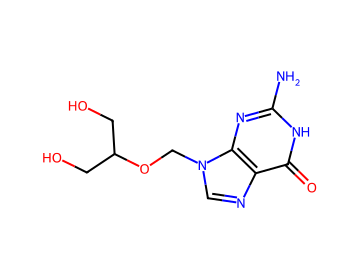
IDENTITY
COMPUTED
PROPERTIES
-1.66
log Kow = -1.66
-1.7
Crystals from methanol
White to off-white solid
4300
Ganciclovir sodium sterile powder occurs as a white to off-white, crystalline, lyophilized powder. Ganciclovir sodium has a solubility of 3 mg/mL in water at 25 °C and neutral pH. Both ganciclovir base and ganciclovir sodium are freely soluble in water at high pH (around 11). At more neutral pH, solubility is reduced, and crystallization may occur in concentrated solutions of the drug (exceeding 10 mg/ml). Ganciclovir sodium contains approximately 4 mEq of sodium per gram of ganciclovir. Following reconstitution with sterile water for injection, ganciclovir sodium solutions containing 50 mg of ganciclovir per mL have a pH of approximately 11 and are colorless. Following further dilution in 0.9% sodium chloride injection or 5% dextrose injection, solutions containing approximately 2.5 mg of ganciclovir per mL have a pH of approximately 10 and an osmolality of 310 mOsm/kg. /Ganciclovir sodium/
In water (25 °C): 4.3 mg/mL at pH 7
Aqueous solubility of the drug is relatively constant over a pH range of 3.5-8.5 but increases substantially in strongly acidic or basic solutions.
1.16e+01 g/L
>38.3 [ug/mL] (The mean of the results at pH 7.4)
250
250 °C (decomposes)
Crystalline monohydrate from water, MP: 248-249 °C (decomposes)
250 °C
-6.27
Solid
Ganciclovir capsules should be stored at 5-25 °C and ganciclovir sodium sterile powder should be stored at room temperature; exposure to temperatures exceeding 40 °C should be avoided. When stored as directed, the sterile powder has an expiration date of 3 years following the date of manufacture.
Following reconstitution with sterile water for injection, ganciclovir sodium solutions containing 50 mg of ganciclovir per ml are stable for 12 hr at 15-30 °C and should not be refrigerated since a precipitate may form. ... At a concentration of 10 mg or less of ganciclovir per ml, ganciclovir sodium is physically and chemically stable in the following iv solutions 0.9% sodium chloride, 5% dextrose, Ringer's, or lactated Ringer's. Solutions containing approximately 2.5 mg of ganciclovir per ml reportedly are physically and chemically stable for at least 5 days at 4-25 °C in 0.9% sodium chloride injection or 5% dextrose injection. Although sterility of the solutions was not assessed, results of a recent study indicate that ganciclovir is stable for up to 35 days when diluted in 0.9% sodium chloride or 5% dextrose to a concentration of 1 or 5 mg/ml and stored in polyvinyl chloride containers at 5 °C or 25 °C. In another study, ganciclovir was stable for up to 28 days when diluted in 0.9% sodium chloride or 5% dextrose to a concentration of 5 or 10 mg/ml and stored in polyvinyl chloride containers at 4 °C or -20 °C or stored in ADFuse syringes (Healthtek) at 4 °C. However, /it is/ recommended that diluted (10 mg or less of ganciclovir per ml) solutions of the drug be refrigerated at 2-8 °C and that unused portions of diluted ganciclovir solutions be discarded after 24 hrs since these solutions contain no preservatives. ... Freezing of diluted solutions of the drug is not recommended. Protection of diluted ganciclovir sodium solutions from usual room light is not necessary. The drug does not appear to adsorb appreciably to polyvinyl chloride containers.
pKa1 2.2; pKa2 9.4
Crystals from water, MP > 300 °C
GHS
Danger
H360 (93.5%): May damage fertility or the unborn child [Danger Reproductive toxicity]
P203, P280, P318, P405, and P501 (click each P-code to see the statement)
Aggregated GHS information provided per 46 reports by companies from 7 notifications to the ECHA C&L Inventory.;Information may vary between notifications depending on impurities, additives, and other factors. The percentage value in parenthesis indicates the notified classification ratio from companies that provide hazard codes. Only hazard codes with percentage values above 10% are shown. For more detailed information, please visit ECHA C&L website.
HAZARDS
Hazard Traits - Carcinogenicity; Developmental Toxicity; Reproductive Toxicity;Authoritative List - Prop 65;Report - regardless of intended function of ingredient in the product
Status: Cease Manufacture Update: 01-06-2016 https://echa.europa.eu/registration-dossier/-/registered-dossier/17541
Not flammable or combustible.
The Approved Drug Products with Therapeutic Equivalence Evaluations identifies currently marketed prescription drug products, including ganciclovir, approved on the basis of safety and effectiveness by FDA under sections 505 of the Federal Food, Drug, and Cosmetic Act.
The Approved Drug Products with Therapeutic Equivalence Evaluations identifies currently marketed prescription drug products, including ganciclovir sodium, approved on the basis of safety and effectiveness by FDA under sections 505 of the Federal Food, Drug, and Cosmetic Act. /Ganciclovir sodium/
Repr. 1B (93.5%)
SAFETY
Keep container tightly closed in a dry and well-ventilated place. Recommended storage temperature: 2 - 8 °C. Keep in a dry place.
Ganciclovir capsules should be stored at 5-25 °C and ganciclovir sodium sterile powder should be stored at room temperature; exposure to temperatures exceeding 40 °C should be avoided.
Pick up and arrange disposal without creating dust. Sweep up and shovel. Keep in suitable, closed containers for disposal. Prevent further leakage or spillage if safe to do so. Do not let product enter drains.
TOXICITY
Results of an in vitro study using H9 cells inoculated with HIV (strain HTLV-IIIB) indicate that ganciclovir antagonizes the antiretroviral activity of didanosine against HIV.
Results of an in vitro study using H9 cells inoculated with HIV (strain HTLV-IIIB) indicate that ganciclovir antagonizes the antiretroviral activity of zidovudine against HIV. ... Concomitant use of zidovudine with ganciclovir can increase the risk of hematologic toxicity. Both zidovudine and ganciclovir alone produce direct, dose-dependent inhibitory effects on myeloid and erythroid progenitor cells, and combined use of the drugs may result in additive or synergistic myelotoxic effects. In several studies in patients with AIDS and cytomegalovirus infections, profound, intolerable myelosuppression, evidenced principally as severe neutropenia, occurred in all patients receiving zidovudine (200 mg orally every 4 hr) concomitantly with ganciclovir (5 mg/kg iv 1-4 times daily); anemia also occurred in many of these patients. Severe hematologic toxicity, which required a reduction in zidovudine dosage, also occurred in more than 80% of patients receiving zidovudine (100 mg orally every 4 hr) concomitantly with ganciclovir (5 mg/kg iv 1-2 times daily). Several other patients with initially stable hematologic findings on ganciclovir alone, developed prolonged pancytopenia during concomitant therapy with oral zidovudine and iv ganciclovir. The increased risk of hematologic toxicity does not appear to be related to a pharmacokinetic interaction between ganciclovir and zidovudine since there is no evidence that concomitant use affects the pharrnacokinetic parameters of either drug.
Foscarnet has exhibited additive or synergistic antiviral activity with ganciclovir in vitro and/or in vivo against cytomegalovirus and herpes simplex virus type 2. In addition, combined therapy with the drugs may be effective in the treatment of cytomegalovirus infection resistant to either drug alone.
Although renal excretion of ganciclovir appears to occur principally via glomerular filtration, limited renal secretion of the drug also may occur. Therefore, ... the possibility that probenecid or other drugs that inhibit renal tubular secretion or reabsorption may interfere with the renal clearance and urinary excretion of ganciclovir should be considered.
For more Interactions (Complete) data for GANCICLOVIR (10 total), please visit the HSDB record page.
TERRESTRIAL FATE: Based on a classification scheme(1), an estimated Koc value of 10(SRC), determined from a structure estimation method(2), indicates that ganciclovir is expected to have very high mobility in soil(SRC). Volatilization of ganciclovir from moist soil surfaces is not expected to be an important fate process(SRC) given an estimated Henry's Law constant of 1.5X10⁻²³ atm-cu m/mole(SRC), using a fragment constant estimation method(3). Ganciclovir is not expected to volatilize from dry soil surfaces(SRC) based upon an estimated vapor pressure of 4.5X10⁻¹⁷ mm Hg at 25 °C(SRC), determined from a fragment constant method(4). Biodegradation data in soil were not available(SRC, 2013).
AQUATIC FATE: Based on a classification scheme(1), an estimated Koc value of 10(SRC), determined from a structure estimation method(2), indicates that ganciclovir is not expected to adsorb to suspended solids and sediment(SRC). Volatilization from water surfaces is not expected(3) based upon an estimated Henry's Law constant of 1.5X10⁻²³ atm-cu m/mole(SRC), developed using a fragment constant estimation method(4). According to a classification scheme(5), an estimated BCF of 3(SRC), from its log Kow of -1.66(6) and a regression-derived equation(7), suggests the potential for bioconcentration in aquatic organisms is low(SRC). Ganciclovir is not expected to undergo hydrolysis in the environment due to the lack of functional groups that hydrolyze under environmental conditions(3). Biodegradation data in water were not available(SRC, 2013).
ATMOSPHERIC FATE: According to a model of gas/particle partitioning of semivolatile organic compounds in the atmosphere(1), ganciclovir, which has an estimated vapor pressure of 4.5X10⁻¹⁷ mm Hg at 25 °C(SRC), determined from a fragment constant method(2), is expected to exist solely in the particulate phase in the ambient atmosphere. Particulate-phase ganciclovir may be removed from the air by wet or dry deposition(SRC). Ganciclovir contains chromophores that absorb at wavelengths >290 nm(3) and, therefore, may be susceptible to direct photolysis by sunlight(SRC).
/Ganciclovir/ appears to distribute into milk in animals.
Using a structure estimation method based on molecular connectivity indices(1), the Koc of ganciclovir can be estimated to be 10(SRC). According to a classification scheme(2), this estimated Koc value suggests that ganciclovir is expected to have very high mobility in soil.
/HUMAN EXPOSURE STUDIES/ In placebo controlled studies in transplant recipients, sepsis occurred in 6% of patients receiving ganciclovir and 2% of patients receiving placebo.
/HUMAN EXPOSURE STUDIES/ This study aimed to evaluate the effectiveness of ganciclovir (GCV) treatment for severe cytomegalovirus (CMV)-associated pneumonia in immunocompetent children. /The authors/ enrolled patients with CMV-associated severe pneumonia admitted to the Vietnam National Hospital of Pediatrics, Hanoi, Vietnam, from January 2010 to December 2011. On admission, though respiratory bacteria and viruses were not detected in tracheal aspirates, more than 5 x 10³ copies/mL of CMV-DNA were detected in both tracheal aspirates and in blood plasma. GCV was given intravenously at a dose of 10 mg/kg/24 hr for a duration of 14 days at most. The dose was then reduced to 5 mg/kg/24 hr until CMV-DNA was not detected in plasma. The main study variables included clinical symptoms, complete blood count, hepatic and renal function, chest X-ray, CMV viral load, duration of GCV treatment and outcome. Forty-three patients were enrolled in the study. The median age of patients was 57 (interquartile range (IQR) 45--85) days. Clinical and laboratory findings included anemia (67.4%), leukocytosis (90.7%), hepatosplenomegaly (60.5%), elevated liver enzymes (74.4%), decreased ratio of CD4:CD8-positive T lymphocytes (69.4%), and decreased serum IgG concentration (25.7%). The median duration of GCV treatment was 12 days (IQR 7-21). Thirty-seven patients (86.0%) showed normal chest X-rays at the end of treatment. One infant died (2.3%); the other children (97.7%) were discharged in good condition. There was no severe toxicity associated with GCV treatment. GCV is safe and effective for the treatment of severe CMV-associated pneumonia in children.
/SIGNS AND SYMPTOMS/ Neutropenia (absolute neutrophil count less than 1000/cu mm), which is potentially fatal, occurs in up to 25-50% of patients receiving ganciclovir and is the most common dose limiting adverse effect of the drug. The absolute neutrophil count declines to less than 500/cu mm in approximately 15-20% of patients receiving the drug for the treatment of cytomegalovirus infection. Neutropenia usually develops early in treatment (eg, during the first or seeond week of induetion therapy), but can occur at any time. ... Thrombocytopenia (platelet count less than 50,000/cu mm) also occurs frequently in patients receiving ganciclovir, developing in approximately 20% of patients who receive the drug for treatment of cytomegalovirus infection. Approximately 10% of patients develop platelet counts less than 20,000/cu mm. Interruption of ganciclovir therapy or a decrease in dosage usually results in increased platelet counts. Patients with low baseline platelet counts (less than 100,000/cu mm) appear to be more prone to develop this reaction. In addition, patients who are iatrogenically immunosuppressed appear to be at greater risk than AIDS patients of developing thrombocytopenia, which occurred in 46 and 14% of such patients, respectively, in one study. ... Less frequent adverse hematologic effects of ganciclovir include anemia and eosinophilia, occurring inapproximately 2% and less than 1% of patients, respectively, receiving the drug.
/SIGNS AND SYMPTOMS/ Rhegmatogenous retinal detachment can develop as a consequence of ganciclovir induced resolution of retinitis. Such detachment is thought to result from the hastening of the involutional stage of the disease in which the retina thins as necrotic tissue is mobilized and edema fluid resorbs; these changes predispose the retina to tears and detachment. Retinal detachment has been reported in up to 30% of ganciclovir treated patients with cytomegalovirus retinitis. ... This complication appears to occur more frequently in AIDS patients than in other immunosuppressed patients and may be related to the inability of AIDS patients to form firm scar tissue, secondary to impaired inflammatory responses, as the retina heals.
For more Human Toxicity Excerpts (Complete) data for GANCICLOVIR (24 total), please visit the HSDB record page.
Ganciclovir's production and administration as an antiviral(1) may result in its release to the environment through various waste streams(SRC).
Benchmark Dataset for the Liver Toxicity Knowledge Base (LTKB)
ganciclovir
Cytovene®
Antivirals
7
less-DILI-concern drugs
An estimated BCF of 3 was calculated in fish for ganciclovir(SRC), using a log Kow of -1.66(1) and a regression-derived equation(2). According to a classification scheme(3), this BCF suggests the potential for bioconcentration in aquatic organisms is low(SRC).
The Henry's Law constant for ganciclovir is estimated as 1.5X10⁻²³ atm-cu m/mole(SRC) using a fragment constant estimation method(1). This Henry's Law constant indicates that ganciclovir is expected to be essentially nonvolatile from moist soil and water surfaces(2). Ganciclovir is not expected to volatilize from dry soil surfaces(SRC) based upon an estimated vapor pressure of 2.9X10⁻¹⁷ mm Hg(SRC), determined from a fragment constant method(3).
/LABORATORY ANIMALS: Acute Exposure/ In acute toxicity studies in mice and dogs, the median acute iv dose of ganciclovir was 900 and 150-500 mg/kg, respectively. Death was associated with bone marrow suppression and renal dysfunction along with gastric (mucosal discoloration and evidence of sanguinous material) and intestinal (distention and reddening) pathologic changes. Toxic manifestations of a single 500 mg/kg iv dose in these animals included emesis, hypersalivation, anorexia, bloody diarrhea, inactivity, cytopenias, elevated liver function test results, testicular atrophy, elevated blood urea nitrogen, and obstructive nephropathy.
/LABORATORY ANIMALS: Acute Exposure/ There was no evidence of vascular irritation following injection of ganciclovir into the marginal ear veins of rabbits. ... Intravitreal injection of the drug in a limited number of animals ... did not appear to produce oculotoxic effects, although other local ocular effects occasionally were observed.
/LABORATORY ANIMALS: Acute Exposure/ In a study in rabbits, intravitreal injection of single ganciclovir doses ranging from 10-400 ug at concentrations of 1-20 ug/mL produced no discernible ophthalmologic or histologic changes in the eye or in electroretinographic B waves.
/LABORATORY ANIMALS: Chronic Exposure or Carcinogenicity/ An 18 month study in mice given oral ganciclovir dosages of 1 g/kg daily revealed an increased incidence of tumors in the preputial gland of males, in the nonglandular gastric mucosa of males and females, and in the reproductive tissues and liver of females. At an oral dosage of 20 mg/kg daily in this study, there was a slightly increased incidence of tumors in the preputial and harderian glands of males, in the nonglandular gastric mucosa of both males and females, and in the liver of females. All ganciclovir induced tumors were of epithelial or vascular origin, except for histocytic sarcoma of the liver. No carcinogenic effects were observed at an oral dosage of 1 mg/kg daily. Although the relevance of these findings to humans is not known since the nonglandular stomach and preputial, clitoral, and harderian glands have no human counterparts, ... ganciclovir still should be considered a potential carcinogen in humans.
For more Non-Human Toxicity Excerpts (Complete) data for GANCICLOVIR (13 total), please visit the HSDB record page.
Ganciclovir is not expected to undergo hydrolysis in the environment due to the lack of functional groups that hydrolyze under environmental conditions(1). Ganciclovir contains chromophores that absorb at wavelengths >290 nm(1) and, therefore, may be susceptible to direct photolysis by sunlight(SRC).
Occupational exposure to ganciclovir may occur through inhalation and dermal contact with this compound at workplaces where ganciclovir is produced or used. Use data indicate that the general population may be exposed to ganciclovir via medical administration of this compound for the treatment of viral infection. (SRC)
REGULATORY
Hazard Traits - Carcinogenicity; Developmental Toxicity; Reproductive Toxicity;Authoritative List - Prop 65;Report - regardless of intended function of ingredient in the product
Status: Cease Manufacture Update: 01-06-2016 https://echa.europa.eu/registration-dossier/-/registered-dossier/17541
The Approved Drug Products with Therapeutic Equivalence Evaluations identifies currently marketed prescription drug products, including ganciclovir, approved on the basis of safety and effectiveness by FDA under sections 505 of the Federal Food, Drug, and Cosmetic Act.
The Approved Drug Products with Therapeutic Equivalence Evaluations identifies currently marketed prescription drug products, including ganciclovir sodium, approved on the basis of safety and effectiveness by FDA under sections 505 of the Federal Food, Drug, and Cosmetic Act. /Ganciclovir sodium/
PHARMACOLOGY
J05AB06
J - Antiinfectives for systemic use;J05 - Antivirals for systemic use;J05A - Direct acting antivirals;J05AB - Nucleosides and nucleotides excl. reverse transcriptase inhibitors;J05AB06 - Ganciclovir
S - Sensory organs;S01 - Ophthalmologicals;S01A - Antiinfectives;S01AD - Antivirals;S01AD09 - Ganciclovir
QS - Sensory organs;QS01 - Ophthalmologicals;QS01A - Antiinfectives;QS01AD - Antivirals;QS01AD09 - Ganciclovir
QJ - Antiinfectives for systemic use;QJ05 - Antivirals for systemic use;QJ05A - Direct acting antivirals;QJ05AB - Nucleosides and nucleotides excl. reverse transcriptase inhibitors;QJ05AB06 - Ganciclovir
1 to 2%
Ganciclovir is a synthetic nucleoside analogue of 2'-deoxyguanosine that inhibits replication of herpes viruses both <i>in vitro</i> and <i>in vivo</i>. Sensitive human viruses include cytomegalovirus (CMV), herpes simplex virus -1 and -2 (HSV-1, HSV-2), Epstein-Barr virus (EBV) and varicella zoster virus (VZV), however clinical studies have been limited to assessment of efficacy in patients with CMV infection. Ganciclovir is a prodrug that is structurally similar to acyclovir. It inhibits virus replication by its encorporation into viral DNA. This encorporation inhibits dATP and leads to defective DNA, ceasing or retarding the viral machinery required to spread the virus to other cells.
Ganciclovir's antiviral activity inhibits virus replication. This inhibitory action is highly selective as the drug must be converted to the active form by a virus-encoded cellular enzyme, thymidine kinase (TK). TK catalyzes phosphorylation of ganciclovir to the monophosphate, which is then subsequently converted into the diphosphate by cellular guanylate kinase and into the triphosphate by a number of cellular enzymes. <i>In vitro</i>, ganciclovir triphosphate stops replication of herpes viral DNA. When used as a substrate for viral DNA polymerase, ganciclovir triphosphate competitively inhibits dATP leading to the formation of 'faulty' DNA. This is where ganciclovir triphosphate is incorporated into the DNA strand replacing many of the adenosine bases. This results in the prevention of DNA synthesis, as phosphodiester bridges can longer to be built, destabilizing the strand. Ganciclovir inhibits viral DNA polymerases more effectively than it does cellular polymerase, and chain elongation resumes when ganciclovir is removed.
Although the exact mechanism(s) of action of ganciclovir has not been fully elucidated, it appears that the drug exerts its antiviral effect on human cytomegalovirus and the other human herpesviruses by interfering with DNA synthesis via competition with deoxyguanosine for incorporation into viral DNA and by being incorporated into growing viral DNA chains. The active phosphorylated form of ganciclovir can both competitively inhibit viral DNA polymerase and be incorporated into growing DNA chains as a false nucleotide, thus interfering with chain elongation (prematurely terminating DNA synthesis) and/or resulting in formation of a mutant DNA chain and thereby inhibiting viral replication. Ganciclovir triphosphate apparently has no effect on viral protein or RNA synthesis. Cellular alpha-DNA polymerase also is inhibited by the drug, but generally at concentrations higher than those required for inhibition of viral DNA polymerase. In human bone marrow cells, the IC50 (concentration of drug that produces 50% inhibition of cell division) has been reported as 9.95 ug/ml.
Unchanged ganciclovir does not appear to possess antiviral activity. Instead, the antiviral activity appears to depend principally on intracellular conversion of the drug to ganciclovir triphosphate. The formation of ganciclovir monophosphate appears to be the rate limiting step in the formation of ganciclovir triphosphate. In vitro in herpes viruses, ganciclovir triphosphate functions both as substrate for, and a preferential inhibitor of, viral DNA polymerase and as a false nucleotide base. In cells infected with herpes simplex virus type 1 or 2 or varicella-zoster virus, ganciclovir is converted to ganciclovir monophosphate via virus-coded thymidine kinase. The pathway for conversion to the monophosphate in cells infected with Epstein-Barr virus or cytomegalovirus is unclear; these viruses do not code for thymidine kinase, and a cellular deoxyguanosine kinase, found in the cytosol and in mitochondria, may be involved. In cytomegalovirus infected cells, increased concentrations of deoxyguanosine kinase (mitochondrial origin) have been detected, suggesting that the virus may induce production of the enzyme. Subsequent phosphorylation occurs via cellular kinases (including guanylate kinase, phosphoglycerate kinase, and nucleoside diphosphate kinase) to the diphosphate and then the active triphosphate form.
Ganciclovir appears to be principally virustatic rather than virucidal in action. Following removal of the drug from the culture medium in vitro, viral DNA synthesis, which previously was inhibited, resumes, resulting in restored viral replication. In addition, clinical evidence of reactivated disease suggests that ganciclovir acts principally to suppress virus activity and that eradication of the virus does not appear to occur.
2.5 to 3.6 hours (mean 2.9 hours) when administered intravenously in adults. 3.1 to 5.5 hours when administered orally in adults. Renal function impairment causes a marked increase in half life (9 to 30 hours intravenously, 15.7 to 18.2 hours orally).
Plasma concentrations of ganciclovir appear to decline in a biphasic manner. In adults with normal renal function, the half-life of ganciclovir in the initial distribution phase averages 0.23-0.76 hr and the half-life in the terminal elimination phase averages 2.53-3.6 hr. Plasma concentrations of the drug may be higher and the elimination half-life prolonged in patients with impaired renal function. In adults with moderate to severe renal impairment (creatinine clearances less than 50 ml/min/1.73 sq m), the terminal half-life of ganciclovir ranged from 4.4-30 hr, depending on the degree of impairment.
The elimination half-life of ganciclovir from the vitreous humor after intravitreal injection was estimated to be 13.3 hr in a patient with cytomegalovirus retinitis.
In rabbits, the elimination half-life from vitreous humor after intravitreal injection of a single 400 ug dose was 8.6 hr.
Little to no metabolism, about 90% of plasma ganciclovir is eliminated unchanged in the urine.
With the exception of intracellular phosphorylation of the drug, ganciclovir does not appear to be metabolized appreciably in humans.
P9G3CKZ4P5
GANCICLOVIR
Established Pharmacologic Class [EPC] - Cytomegalovirus Nucleoside Analog DNA Polymerase Inhibitor
Mechanisms of Action [MoA] - DNA Polymerase Inhibitors
Nucleoside Analog [EXT]
Established Pharmacologic Class [EPC] - Nucleoside Analog Antiviral
Agents used in the prophylaxis or therapy of VIRUS DISEASES. Some of the ways they may act include preventing viral replication by inhibiting viral DNA polymerase; binding to specific cell-surface receptors and inhibiting viral penetration or uncoating; inhibiting viral protein synthesis; or blocking late stages of virus assembly.
Poorly absorbed systemically following oral administration. Bioavailability under fasting conditions is approximately 5%, and when administered with food, 6 to 9% (about 30% with a fatty meal).
Renal excretion of unchanged drug by glomerular filtration and active tubular secretion is the major route of elimination of ganciclovir.
0.74 ± 0.15 L/kg
128 +/- 63 mL/min [Patients with Renal Impairment (Clcr=50-79 mL/min)];57+/- 8 mL/min [Patients with Renal Impairment (Clcr=25-49 mL/min)];30 +/- 13 mL/min [Patients with Renal Impairment (Clcr<25 mL/min)];4.7+/- 2.2 mL/min/kg [pediatric patients, aged 9 months to 12 years]
Ganciclovir is absorbed poorly from the GI tract. Following oral administration of an aqueous solution of ganciclovir sodium, 7% or less of a 10 to 20 mg/kg dose appears to be absorbed, based on urinary recovery, and relative oral bioavailability appears to decrease with increasing dose and multiple administration. Plasma ganciclovir concentrations required for therapeutic antiviral activity currently are not known. Although peak plasma ganciclovir concentrations achieved after oral administration of 20 mg/kg every 6 hr have exceeded the in vitro ID50 (concentration of the drug required to produce 50% inhibition of viral plaque formation) of many strains of cytomegalovirus, the ID50 for many other susceptible strains of the virus exceed peak plasma concentrations achievable with this oral dosage; therefore, iv administration of the drug currently is preferred. In a study in several adults with acquired immunodeficiency syndrome and cytomegalovirus retinitis receiving an oral ganciclovir dosage of 20 mg/kg every 6 hr, peak plasma concentrations of the drug were achieved within 1 hr and averaged about 0.76 ug/ml at steady state; steady state trough plasma concentrations prior to a dose averaged about 0.27 g/ml. /Ganciclovir sodium/
In a limited number of immunocompromised patients with cytomegalovirus infections and normal renal function who received a ganciclovir dosage of 5 mg/kg every 12 hr by iv infusion over 1 hr, peak plasma concentrations of the drug obtained at the end of the infusion and averaged 9.5-11.6 ug/ml (range: 3.1-24.1 ug/ml) and trough plasma concentrations obtained just prior to a dose averaged 1.6 ug/ml (range: 0.11-3.5 ug/ml). Somewhat lower peak and trough concentrations (averaging 6.6-8.3 and 0.56-1 ug/ml, respectively) were achieved after the first dose. Peak and trough plasma concentrations of the drug following iv infusion over 1 hr of 2.5 mg/kg every 8 hr averaged 4.09-5.36 (range: 1.66-7.78 ug/ml) and 0.33-1.07 ug/ml (range: 0.2-1.66 ug/ml), respectively, in immunocompromised patients with cytomegalovirus infections and normal renal function. In a limited number of such patients receiving 5 mg/kg every 8 hr by iv infusion over 1 hr, peak and trough plasma concentrations averaged 6.53-11.41 and 1.13-2.23 ug/ml, respectively. Accumulation of the drug does not appear to occur in patients with normal renal function receiving iv dosages of 3-15 mg/kg daily in divided doses. /Ganciclovir sodium/
Cytoplasm;Membrane
USES
MEDICATION
Antiviral Agents
Use (kg; approx.) in Germany (2009): >25;Consumption (g per capita; approx.) in Germany (2009): 0.000305;Calculated removal (%): 75.1
2-O-(Acetoxymethyl)-1,3-di-O-benzylglycerol is condensed with N2,9-diacetylguanine in the presence of a catalytic amount of p-toluenesulfonic acid in sulfolane. The desired isomer is crystallized from toluene, debenzylated over 20% palladiumhydroxide, and deacetylated with concentrated NH4OH/methanol.
Preparation: J. P. Verheyden, J. C. Martin, United States of America patent 4355032 (1982 to Syntex)
Vials, containing granciclovir sodium equivalent to 500 mg ganciclovir.
Parenteral: Sterile, for iv infusion, 500 mg (of ganciclovir), Cytovene, Syntex. /Ganciclovir sodium/
Cymevan; Cymevene; Cytovene; Denosine. /Ganciclovir sodium/
Zirgan (ganciclovir ophthalmic gel) ganciclovir 1.5 mg (0.15%).
Nucleoside analog structurally related to acyclovir
ALIASES
REACTIONS
uspto-grants-1986_09 · 10.6084/m9.figshare.5104873.v1 · US04609661
查看
uspto-grants-1986_09 · 10.6084/m9.figshare.5104873.v1 · US04609661
查看
uspto-grants-1986_09 · 10.6084/m9.figshare.5104873.v1 · US04612314
查看
uspto-grants-1986_09 · 10.6084/m9.figshare.5104873.v1 · US04612314
查看
uspto-grants-1986_09 · 10.6084/m9.figshare.5104873.v1 · US04612314
查看
Training data from https://doi.org/10.1039/C8SC04228D (6/10) · 10.1039/C8SC04228D
查看
uspto-grants-1982_10 · 10.6084/m9.figshare.5104873.v1 · US04355032
查看
uspto-grants-1998_11 · 10.6084/m9.figshare.5104873.v1 · US05840890
查看