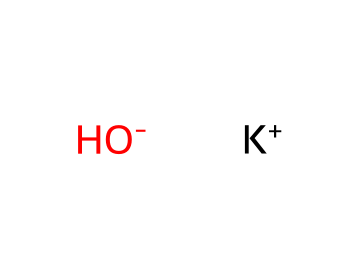
Potassium Hydroxide 分子结构式
HCID14797

Potassium Hydroxide

HKO56.106 g/molCAS 1310-58-3

IDENTITY

结构与身份

标准SMILES
[K+].[OH-]
InChIKey
KWYUFKZDYYNOTN-UHFFFAOYSA-M
分子式
HKO
平均分子量
56.106 g/mol
单同位素质量
55.96644633

IDENTITY

标识信息

中文名
氢氧化钾
英文名
Potassium hydroxide
分子式
KOH
分子量
56.11

ALIASES

名称与别名

钾灰苛性钾氫氧化鉀氢氧化钾钾碱(误)苛性钾,钾灰氢氧化钾小丸药用氢氧化钾氢氧化钾试液氢氧化钾盐湖KOHCAUSTIC POTASHPOTASHPotassium hydroxide pelletsPOTTASIUM HYDROXIDEPOTASIUM HYDROXIDEKaliumhydroxidPotassioPOTASSIUM HYDRATEPotassiuM hydroxyde

PROPERTIES

物理化学性质

熔点
361 °C · 361 °C (lit.)
沸点
1320 °C · 1320°C
密度
1.45 g/mL · 1.450 g/mL at 20 °C
蒸气压
1 mm · 1 mm Hg ( 719 °C)
折射率
20 · n20/D 1.421
闪点
52 °F · 52 °F
储存条件
5 °C · Store at +5°C to +30°C.
溶解度
2 O: · H2O: 1 M at 20 °C, clear, colorless
形态
powder
比重
1.09 · 1.09
颜色
white
气味 (Odor)
Odorless
PH值
10.98 · 10.98(1 mM solution);11.95(10 mM solution);12.88(100 mM solution);
爆炸极限值(explosive limit)
3.5 · 3.5-15.0%(V) (ethanol)
水溶解性
soluble
比热容
1.23 J/ · Cp(crystal): 1.23 J/(g·K); Cp(gas): 0.88 J/(g·K), at 25℃
敏感性
Air Sensitive & Hygroscopic
Merck
14 · 14,7640
暴露限值
2 mg/m3 · MAC:2 mg/m3
介电常数
3.3 · 3.3(Ambient)
稳定性
Stable, but very hygroscopic. Dissolves exothermically in water. Incompatible with most metals, strong acids, acid chlorides, organic materials, zinc, aluminium, nitroalkanes, nitrobenzene, chlorine dioxide. Reacts vigorously with a wide variety of other materials. Readily absorbs water and carbon dioxide from the air.
化妆品成分功效
BUFFERING
InChI
1S/K.H2O/h;1H2/q+1;/p-1
InChIKey
KWYUFKZDYYNOTN-UHFFFAOYSA-M
SMILES
[OH-].[K+]
LogP
-1.38 · -1.380 (est)
CAS 数据库
1310 · 1310-58-3(CAS DataBase Reference)
NIST化学物质信息
1310 · Potassium hydroxide(1310-58-3)
EPA化学物质信息
1310 · Potassium hydroxide (1310-58-3)
外观性质
白色晶体,易潮解。
外观性状
白色斜方结晶,工业品为白色或淡灰色的块状或棒状。 易溶于水,溶于乙醇,微溶于醚。
溶解性
溶于水、乙醇,微溶于醚。
Dielectric constant
3.3 · 3.3(Ambient)

SAFETY

安全数据

F
3
TSCA
TSCA listed
毒性
LD50 orally in rats: 1.23 g/kg (Smyth)
RTECS号
TT2100000
警示词
危险
WGK Germany
1
包装类别
II
危险等级
8
存储类别
8A - Combustible corrosive hazardous materials
安全说明
7-16-36/37-45-36/37/39-26-61
海关编码
28259090
自燃温度
425 °C (ethanol)
防范说明
P234-P260-P280-P301+P312-P303+P361+P353-P305+P351+P338
危险品标志
C,F,T,Xi
危险性描述
H290-H302-H314
危险性类别
Acute Tox. 4 OralEye Dam. 1Met. Corr. 1Skin Corr. 1A
危险类别码
34-35-22-11-39/23/24/25-23/24/25-36/38-36/37-67-52/53
REACH 注册登记
Active
毒害物质数据
1310-58-3(Hazardous Substances Data)
职业暴露限值
Ceiling: 2 mg/m3
危险性符号(GHS)
GHS05,GHS07
危险品运输编号
UN 1814 8/PG II/III (POTASSIUM HYDROXIDE SOLUTION)

PRICE

试剂价格

A18854 · 2500g
氢氧化钾Potassium hydroxide1038元
A16199 · 2500g
氢氧化钾,片状, 85%Potassium hydroxide, flake, 85%678元

REFERENCE

毒性防护

毒性ADI不作限制性规定(FAO/WHO,2001)。LD50365mg/kg(大鼠,经口)。GRAS(FDA,§184.1631,2000)。

毒性氢氧化钾对组织有烧灼作用,可溶解蛋白,形成碱性变性蛋白。溶液或粉尘溅到皮肤上,尤其溅到黏膜,可产生软痂。溶液浓度越高,温度越高,作用越强。溅入眼内,不仅可损伤角膜,而且能使眼深部组织损伤。最高容许浓度为0.5 mg/m3。工作时应防止触及皮肤和眼睛,如不慎触及时,可用流水洗涤受损部位,然后湿敷5%的醋酸、酒石酸、盐酸或柠檬酸溶液;如溅人眼内,应用流水或生理盐水仔细缓慢洗涤10~30 min,然后点入2%的奴佛卡因或0.5%的地卡因溶液。操作时应穿由结实布制作的工作服,戴橡皮手套、袖套、围裙,穿胶鞋等劳保用品,手上宜涂敷中性和疏水软膏。

急性毒性口服- 大鼠 LD50: 273 毫克/ 公斤

刺激数据皮肤- 兔子 50 毫克/ 24小时 重度; 眼- 兔子 1 毫克/ 24小时 中度

职业标准TWA 2 毫克/ 立方米); STEL 2 毫克/ 立方米

REFERENCE

化学性质

化学性质白色斜方结晶,工业品为白色或淡灰色的块状或棒状。 易溶于水,溶于乙醇,微溶于醚。

REFERENCE

应用领域

用途氢氧化钾主要用作钾盐生产的原料,如高锰酸钾、碳酸钾等。在医药工业中,用于生产钾硼氢、安体舒通、沙肝醇、黄体酮和丙酸睾丸素等。在轻工业中用于生产钾肥皂、碱性蓄电池、化妆品(如冷霜、雪花膏和洗发膏)。在染料工业中,用于生产还原染料,如还原蓝RSN等。在电化学工业中,用于电镀、雕刻等。在纺织工业中,用于印染、漂白和丝光,并大量用作制造人造纤维、聚酯纤维的主要原料。此外,还用于冶金加热剂和皮革脱脂等方面。

REFERENCE

制备方法

生产方法隔膜电解法原料氯化钾在化盐槽溶化成饱和溶液,加热至90℃时分别加入碳酸钾、苛性钾、氯化钡除去钙、镁和硫酸根等杂质,经沉降除渣、盐酸中和、精制的含氯化钾280~315 g/L的氯化钾溶液经预热到70~75℃后进行电解,得氢氧化钾、氯气和氢气。隔膜法所得氢氧化钾浓度为10%~11%,需通过蒸发浓缩和冷却澄清,制得含45%~50%氢氧化钾溶液;也可继续在熬碱锅中浓缩,经脱色,制得固体氢氧化钾,或经制片成片状氢氧化钾产品。其2KCl+2H2O[电解]→2KOH+C12↑+H2↑水银电解法电解液的配制同隔膜电解法。电解室中以石墨(或金属)作阳极,水银作阴极,电解产生的氯气送氯气干燥工序,生成的钾汞齐流人解汞室。大部分未反应的氯化钾以淡盐水状态经处理后,返回原料溶解工序。钾汞齐与清水反应生成氢氧化钾和氢气。因解汞室出来的氢氧化钾浓度为45%~50%,可作为液体氢氧化钾产品,也可再经熬碱锅蒸浓成固碱或制成片状氢氧化钾产品。其电解及钾汞齐解汞2KCl+2Hg2→2Hg2K+Cl22Hg2K+2H2O→2KOH+H2+4Hg

REFERENCE

包装储运

可燃性危险特性遇酸中和放热; 遇水放热

储运特性库房通风低温干燥; 与易燃物、可燃物、酸类分开存放。

UPSTREAM / DOWNSTREAM

上下游产品信息

上游原料

二水合氯化钡氟化钾碳酸钾氢氧化钾溶液盐酸氢气氢氧化钠氯化钡氯化钾石墨钾汞齐

下游产品

4-(苄硫基)-3-硝基苯甲醛聚氧乙烯月桂醚4-[(2-呋喃甲基)硫代]-3-硝基苯甲醛硬脂酸钾酒石酸钾草酸钾邻苯二甲酸氢钾2-烯丙基环己酮2-氨基-4-三氟甲基苯腈有机硅防水剂对乙氧基苯乙酸2-溴-6-(1H-吡唑-1-基)吡啶D-氨基葡萄糖盐酸盐抗静电剂 F6954-(环己硫基)-3-硝基苯甲醛2-苄氨基吡啶山梨酸钾异丁基黄原酸钾2-羟基-1,2,3-丙三羧酸钾盐3,5-二溴-2-乙氧基苯甲醛偏钒酸钾抗静电剂PK乳酸钾2-(2,4-二硝基苯氧基)乙醇四氟铝酸钾5-羟甲基脲嘧啶柠檬酸钾胡椒酸结冷胶1,2,3,4-四氢-9H-吡啶[3,4-B]并吲哚4-异丙氧苯甲酸吡咯烷酮盐酸盐3-ACETYL-2-METHYLQUINOLINE-4-CARBOXYLIC ACID草酸钛钾2,3-二甲基吡嗪4-((4-氯苯基)硫代)-3-硝基苯甲醛电子级硅酸钾2,3-二甲基噻吩正戊基黄原酸钾还原灰M氢氧化钾 试剂级价格

Potassium hydroxide, solution appears as an clear aqueous solution. Corrosive to metals and tissue. Noncombustible. Used in chemical manufacturing, petroleum refining, cleaning compounds.

COMPUTED

结构计算性质

极性表面积
1 Ų
氢键供体
1
氢键受体
1
可旋转键
0
重原子
2
形式电荷
0
复杂度
2

PROPERTIES

实验与物化性质

Chemical Classes

Other Classes -> Bases

Corrosives

Cosmetics

Cosmetic ingredients (Potassium Hydroxide) -> CIR (Cosmetic Ingredient Review)

Buffering

pH

Strongly alkaline (1 % solution)

pH = 13.5 (0.1 Molar aq soln)

SpringerMaterials Properties

nuclear quadrupole moment

Odor

Odorless

Food Additives

FORMULATION AID, FUMIGANT, PH CONTROL AGENT, PROCESSING AID, STABILIZER OR THICKENER, WASHING OR SURFACE REMOVAL AGENT -> FDA Substance added to food

Density

1.45 to 1.50 at 68 °F (USCG, 1999)

2.04 at 59 °F (USCG, 1999) - Denser than water; will sink

2.044 g/cu cm

Colorless, strongly basic, soapy, caustic liquid whose density depends on the concentration (g/cu cm at wt%): 1.092 at 10; 1.188 at 29; a.291 at 30; a.395 at 40; 1.514 at 50 /Aqueous potassium hydroxide/

2.04 g/cm³

2.04

Color/Form

White or colorless, orthorhombic, deliquescent pieces, lumps, or sticks having crystalline fracture

White or slightly yellow lumps, rods, pellets

White rhombic crystals

Solubility

107 g/100 cc at 59 °F (NTP, 1992)

Soluble

Very soluble in water. Freely soluble in ethanol

Solubility in water, 121 g/100 g water at 25 °C

Solubility in water (g KOH/100 g H2O): 97 at 0 °C; 103 at 10 °C; 112 at 20 °C; 126 at 30 °C; 178 at 100 °C

Soluble in 0.9 part water, about 0.6 part boiling water

Corrosivity

Corrosive

Animal Drugs

Pharmaceuticals -> UK Veterinary Medicines Directorate List

Boiling Point

greater than 266 °F at 760 mmHg (USCG, 1999)

2408 °F at 760 mmHg (NTP, 1992)

1,320

1327 °C

1324 °C

2408 °F

GHS

GHS分类

GHS Classification

Danger

H302: Harmful if swallowed [Warning Acute toxicity, oral]

P260, P264, P270, P280, P301+P317, P301+P330+P331, P302+P361+P354, P304+P340, P305+P354+P338, P316, P321, P330, P363, P405, and P501 (click each P-code to see the statement)

This chemical does not meet GHS hazard criteria for < 0.1% (3 of 4709) of reports.

Danger

H290 (20.9%): May be corrosive to metals [Warning Corrosive to Metals]

HAZARDS

危害信息

Regulatory Information

Chemical: Potassium hydroxide (K(OH))

Regulation (EC) No 178/2002 (amended)

Potassium hydroxide (K(OH)) is listed on the EPA's Chemical Data Reporting (CDR) system. Manufacturers and importers of Potassium hydroxide (K(OH)) are required to report information about their production and use of this chemical to the EPA under the Toxic Substances Control Act (TSCA). (40 eCFR Part 711)

Status: Cease Manufacture Update: 01-05-2018 https://echa.europa.eu/registration-dossier/-/registered-dossier/24316

Potassium hydroxide: HSNO Approval: HSR001546 Approved with controls

The New Jersey Worker and Community Right to Know Act requires public and private employers to provide information about hazardous substances at their workplaces. (N.J.S.A. 34:5A-1 et. seq.)

Other Safety Information

IMAP assessments - Potassium hydroxide: Human health tier II assessment

DOT Label

Corrosive

Corrosive

Fire Hazards

Excerpt from ERG Guide 154 [Substances - Toxic and/or Corrosive (Non-Combustible)]:

Excerpt from ERG Guide 154 [Substances - Toxic and/or Corrosive (Non-Combustible)]:

· Non-combustible, substance itself does not burn but may decompose upon heating to produce corrosive and/or toxic fumes.

· Non-combustible, substance itself does not burn but may decompose upon heating to produce corrosive and/or toxic fumes.

· Non-combustible, substance itself does not burn but may decompose upon heating to produce corrosive and/or toxic fumes.

· Non-combustible, substance itself does not burn but may decompose upon heating to produce corrosive and/or toxic fumes.

Fire Potential

When wet, attacks metals such as aluminum, tin, lead & zinc to produce flammable hydrogen gas.

Health Hazards

Causes severe burns of eyes, skin, and mucous membranes. (USCG, 1999)

Causes severe burns of eyes, skin, and mucous membranes. (USCG, 1999)

· TOXIC and/or CORROSIVE; inhalation, ingestion or skin contact with material may cause severe injury or death.

· TOXIC and/or CORROSIVE; inhalation, ingestion or skin contact with material may cause severe injury or death.

· TOXIC and/or CORROSIVE; inhalation, ingestion or skin contact with material may cause severe injury or death.

· TOXIC and/or CORROSIVE; inhalation, ingestion or skin contact with material may cause severe injury or death.

Hazards Summary

Liquid causes second or third degree burns after short contact. [CHRIS] Potassium hydroxide 30-70% is highly corrosive to skin; [Quick CPC] A corrosive substance that can cause pulmonary edema; [ICSC] See Sodium hydroxicde.

DOT ID and Guide

1813 154

1814 154

1813 154

1814 154

1813 154(dry, solid)

1814 154(solution)

FDA Requirements

Substance added directly to human food affirmed as generally recognized as safe (GRAS).

Potassium hydroxide used as a general purpose food additive in animal drugs, feeds, and related products is generally recognized as safe when used in accordance with good manufacturing or feeding practice.

Reactive Group

Bases, Strong

Bases, Strong

EC Classification

Symbol: C; R: 22-35; S: (1/2)-26-36/37/39-45

UN Classification

UN Hazard Class: 8; UN Pack Group: II

SAFETY

安全与防护

Fire Fighting

Excerpt from ERG Guide 154 [Substances - Toxic and/or Corrosive (Non-Combustible)]:

Excerpt from ERG Guide 154 [Substances - Toxic and/or Corrosive (Non-Combustible)]:

In case of fire in the surroundings, use appropriate extinguishing media.

First Aid Measures

Fresh air, rest. Refer immediately for medical attention.

Remove contaminated clothes. Rinse skin with plenty of water or shower for at least 15 minutes. Refer immediately for medical attention.

First rinse with plenty of water for several minutes (remove contact lenses if easily possible), then refer for medical attention.

Rinse mouth. Do NOT induce vomiting. If within a few minutes after ingestion, one small glass of water may be given to drink. Refer immediately for medical attention.

Accidental Release Measures

· CALL 911. Then call emergency response telephone number on shipping paper. If shipping paper not available or no answer, refer to appropriate telephone number listed on the inside back cover.

· ELIMINATE all ignition sources (no smoking, flares, sparks or flames) from immediate area.

· CALL 911. Then call emergency response telephone number on shipping paper. If shipping paper not available or no answer, refer to appropriate telephone number listed on the inside back cover.

· ELIMINATE all ignition sources (no smoking, flares, sparks or flames) from immediate area.

· CALL 911. Then call emergency response telephone number on shipping paper. If shipping paper not available or no answer, refer to appropriate telephone number listed on the inside back cover.

· ELIMINATE all ignition sources (no smoking, flares, sparks or flames) from immediate area.

First Aid

(Act quickly])

EYES: First check the victim for contact lenses and remove if present. Flush victim's eyes with water or normal saline solution for 20 to 30 minutes while simultaneously calling a hospital or poison control center. Do not put any ointments, oils, or medication in the victim's eyes without specific instructions from a physician. IMMEDIATELY transport the victim after flushing eyes to a hospital even if no symptoms (such as redness or irritation) develop.

General First Aid:

General First Aid:

General First Aid:

General First Aid:

Safe Storage

Separated from food and feedstuffs, strong acids and metals. Store only in original container. Dry. Well closed. Store in an area without drain or sewer access.

Exposure Control and Personal Protection

· Wear positive pressure self-contained breathing apparatus (SCBA).

· Wear positive pressure self-contained breathing apparatus (SCBA).

· Wear positive pressure self-contained breathing apparatus (SCBA).

· Wear positive pressure self-contained breathing apparatus (SCBA).

Fire Fighting Procedures

Suitable extinguishing media: Use water spray, alcohol-resistant foam, dry chemical or carbon dioxide.

Wear self-contained breathing appartus for firefighting if necessary.

Storage Conditions

Keep container tightly closed in a dry and well-ventilated place. Absorbs carbon dioxide (CO2) form air. Air sensitive. Strongly hygroscopic. Storage class (TRGS 510): Non-combustible, corrosive hazardous materials.

Cleanup Methods

Personal precautions, protective equipment and emergency procedures: Wear respiratory protection. Avoid dust formation. Avoid breathing vapors, mist or gas. Ensure adequate ventilation. Evacuate personnel to safe areas. Avoid breathing dust...

Pick up and arrange disposal without creating dust. Sweep up and shovel. Keep in suitable, closed containers for disposal.

Prevent further leakage or spillage if safe to do so. Do not let product enter drains. Discharge into the environment must be avoided.

Nonfire Spill Response

Excerpt from ERG Guide 154 [Substances - Toxic and/or Corrosive (Non-Combustible)]:

Excerpt from ERG Guide 154 [Substances - Toxic and/or Corrosive (Non-Combustible)]:

Disposal Methods

SRP: Recycle any unused portion of the material for its approved use or return it to the manufacturer or supplier. Ultimate disposal of the chemical must consider: the material's impact on air quality; potential migration in air, soil or water; effects on animal, aquatic and plant life; and conformance with environmental and public health regulations. If it is possible or reasonable use an alternative chemical product with less inherent propensity for occupational harm/injury/toxicity or environmental contamination.

Neutralization & discharge to sewer: Carefully dissolve in water and neutralize with dilute acetic acid. Flush to sewer with lots of water, regulations permitting or dispose of through a licensed contractor. Consider use of waste caustic for neutralizing plant acid wastes.

Spillage Disposal

Personal protection: chemical protection suit including self-contained breathing apparatus. Do NOT let this chemical enter the environment. Sweep spilled substance into covered plastic containers. Carefully collect remainder. Then store and dispose of according to local regulations.

TOXICITY

毒理信息

Target Organs

Eyes, skin, respiratory system

Ecotoxicity Values

LC50; Species: Gambusia affinis (mosquito fish); Concentration: 80 mg/L for 96 hr /Conditions of bioassay not specified in source examined/

TLm Mosquito fish 80 ppm/24 hr fresh water. /Conditions of bioassay not specified/

Adverse Effects

Dermatotoxin - Skin burns.

Exposure Routes

Serious local effects by all routes of exposure.

inhalation, ingestion, skin and/or eye contact

Toxicity Summary

The CIR Expert Panel concluded that ... Potassium Hydroxide is safe in hair straighteners and depilatories under conditions of recommended use; users should minimize skin contact.  These ingredients are safe for all other present practices of use and concentration described in this safety assessment when formulated to be nonirritating.

Safe for use in cosmetics, with qualifications

IDENTIFICATION AND USE: Potassium hydroxide (KOH) is commercialized as a solid or as solutions with varying concentrations. It is used in soap manufacture; drain and pipeline cleaners; bleaching agents; manufacture of potassium carbonate and tetrapotassium pyrophosphate, an electrolyte in alkaline storage batteries and some fuel cells, absorbent for carbon dioxide and hydrogen sulfide; dyestuffs; liquid fertilizers; food additive; herbicides; electroplating; mercerizing; and paint removers. HUMAN EXPOSURE AND TOXICITY: Potassium hydroxide causes direct local effects on the skin, eyes and gastrointestinal tract after direct exposure. If KOH aerosols/mists occur, they will cause direct local effects on respiratory tract. Solutions with concentrations higher than 2% are corrosive, while concentrations of about 0.5 to about 2.0 % are irritating. The irritant effects are reported as coughing, wheezing, conjunctivitis, tearing, and irritation. Children may be accidentally exposed to commercial cleaning products. In a retrospective clinical study with 168 children after alkaline substance ingestion, 9 children (5.3%) developed gastric outlet obstruction. The fatal complications from an alkaline battery foreign body (containing potassium hydroxide 45%) in the esophagus of a 2.5 year old male, resulting in corrosive burns of the esophagus, necrosis, perforation, communication between the esophagus and the trachea and subsequent death, is reported. A total of 23 burns of the eye due to NaOH or KOH were admitted to the eye clinic of the RWTH Aachen in Germany from 1985 to 1992. In 17 cases the accident happened during work, while 6 cases occurred at home using NaOH/KOH as drain cleaner. The alkali burns were of special interest because of the rapid and deep penetration of alkali into the ocular tissues. A 4-year old boy who had a button battery lodged in his nose for approx. 24 hrs had local tissue corrosion, with a small perforation, caused presumably by the 25% KOH electrolyte. An epidemiological study about potash mining workers failed to correlate the exposure to potash to a number of diseases evaluated, including lung cancer. However, there is also a strong association between lye stricture of the esophagus and esophageal squamous cell carcinoma, with a long latent period of eventually several decades. ANIMAL STUDIES: In an acute toxicity study for KOH, the LD50 (intubation) of male rats was 365 mg/kg. Hemorrhaging of the stomach and intestine and adhesions of abdominal organs (stomach, pancreas, spleen, liver and small intestine) were seen following administration of both lethal and sub-lethal doses. Surviving animals showed evidence of hyper excitability, followed by apathy and weakness throughout the 14-day post-exposure period. Other clinical signs were increased respiration rate, ruffled fur, eye closing and bloody nasal exudate. All deaths occurred within 72 hours of dosing. KOH has a moderate acute oral toxicity, which is essentially due to its corrosivity. The observed systemic effects could be regarded as secondary effects. Draize skin tests in rabbits, with gauze covering and application of 0.1 mL during 24 hours, qualified a 5% KOH solution as mildly irritating on intact skin and highly irritating on abraded skin. A 10% KOH solution was qualified as corrosive on both intact and abraded skin as the result of a Draize occlusive test on rabbits with 4 hours exposure to 0.5 mL of the solution. The results of an Ames assay study with Salmonella typhimurium TA 97 and TA 102, with and without metabolic activation and up to 1 mg KOH/plate, were negative. The clastogenic activity of KOH was studied in an in vitro chromosomal aberration test using Chinese hamster ovary (CHO) K1 cells. No clastogenic activity was found at KOH concentrations of 0, 8 and 12 mM, which corresponded with initial pH values of 7.3, 9.8 and 10.4, respectively. A long-term study (reliability 3) of 25-46 weeks, consisting of painting 3-6% KOH solutions on mouse skin, has been performed. The results were ca. 15% occurrence of cancer at the application site. An old long-term study (reliability 3) of 25-46 weeks, consisting of painting 3-6% KOH solutions on mouse skin, has been performed. The results were 15% occurrence of cancer at the application site. Doses of 2.35-235 mg/kg bw/day in mice and 3.1-310 mg/kg bw/day in rats were administered to groups of 21-24 animals by single daily oral intubation. Body weights were recorded during 17 days for mice, with a post exposure period of 2 days and during 20 days for rats, with a post exposure period of 5 days. No significant effects were observed on mice and rat's survival and reproductive organs, or on offspring survival, weight, sex ratio and congenital defects.

Signs and Symptoms

Cough. Sore throat. Burning sensation. Shortness of breath.

Redness. Pain. Serious skin burns. Blisters.

Redness. Pain. Blurred vision. Severe burns.

Abdominal pain. Burns in mouth and throat. Burning sensation in the throat and chest. Nausea. Vomiting. Shock or collapse.

irritation eyes, skin, respiratory system; cough, sneezing; eye, skin burns; vomiting, diarrhea

ICSC Environmental Data

This substance may be hazardous to the environment. Special attention should be given to aquatic organisms.

Human Toxicity Excerpts

/HUMAN EXPOSURE STUDIES/ Potassium hydroxide (KOH) is a strong alkali that has long been known to digest proteins, lipids, and most other epithelial debris of skin scrapings to identify fungal infections. To our knowledge, KOH has never been used for the treatment of molluscum contagiosum (MC). We evaluated 35 children with MC for the clinical effectiveness of treatment with topical 10% KOH aqueous solution. The solution was applied by the parents of affected children, twice daily, on each MC lesion. The therapy was continued until all lesions underwent inflammation and superficial ulceration. Thirty-two of 35 patients achieved complete clinical cure after a mean treatment period of 30 days. Three children discontinued treatment: two reported severe stinging of the lesions and refused further applications; the other, with giant MC lesions, developed a secondary infection with prolonged treatment. Therapy with KOH was found to be effective and safe in the treatment of MC in children.

/SIGNS AND SYMPTOMS/ Acute poisoning: ... ingestion of alkali is followed by severe pain, vomiting, diarrhea, & collapse. The vomitus contains blood and desquamated mucosal lining. If death does not occur in the first 24 hours, the patient may improve for 2-4 days and then have a sudden onset of severe abdominal pain, boardlike abdominal rigidity, and rapid fall of blood pressure indicating delayed gastric or esophageal perforation. ... Esophageal stricture can occur weeks, months, or even years later to make swallowing difficult. Carcinoma is a risk in later life. /Alkalies/

/SIGNS AND SYMPTOMS/ Acute poisoning: ... alkalies penetrate skin slowly. Extent of damage ... depends on duration of contact. ... Chronic poisoning: (from skin contact) a chronic dermatitis may follow repeated contact with alkalies. /Alkalies/

/SIGNS AND SYMPTOMS/ There are great many accounts of accidental and suicidal ingestion of the sodium and potassium hydroxides... Death results from shock, perforation of the esophagus, aspiration from the esophagus into the trachea, pneumonitis, mediatinitis, or inanition and infection.

For more Human Toxicity Excerpts (Complete) data for POTASSIUM HYDROXIDE (31 total), please visit the HSDB record page.

Non-Human Toxicity Excerpts

/LABORATORY ANIMALS: Acute Exposure/ There are no data from which to derive a dose-effect or dose-response relationship for occupational exposure to potassium hydroxide. Eye irritation has been studied in rabbits. A 5% solution was corrosive to the eye, and a 0.1% solution had no effect.

/LABORATORY ANIMALS: Acute Exposure/ In a Draize rabbit test (reliability 3) with gauze covering and application of 0.5 mL of KOH solutions during 4 hours, the 1% solution was not corrosive, whereas the 2% solution was corrosive. There was no post-exposure assessment of the lesion.

/LABORATORY ANIMALS: Acute Exposure/ A 10% KOH solution was qualified as corrosive on both intact and abraded skin as the result of a Draize occlusive test on rabbits with 4 hours exposure to 0.5 ml of the solution. The results with guinea pigs were similar.

/LABORATORY ANIMALS: Acute Exposure/ In a classical rabbit Draize test with gauze covering, application of 0.5 mL of KOH 5% during 4 hours gave a PDII (primary dermal irritation indices) result of 4.8 (moderately irritating). A 10% solution was severely irritating. With 19 mm diameter Hill Top Chamber pad covering during 1 or 4 hours and 0.2 mL applied, the 5 and 10% KOH solutions were qualified as severely irritating.

For more Non-Human Toxicity Excerpts (Complete) data for POTASSIUM HYDROXIDE (10 total), please visit the HSDB record page.

Probable Routes of Human Exposure

According to the 2012 TSCA Inventory Update Reporting data, 38 reporting facilities estimate the number of persons reasonably likely to be exposed in manufacturing, processing, or use of potassium hydroxide in the United States may be as low as <10 workers and as high as 9999 workers per plant; the data may be greatly underestimated due to confidential business information (CBI) or unknown values(1).

NIOSH (NOES Survey 1981-1983) has statistically estimated that 1,966,611 (800,041 of these were female) were potentially exposed to potassium hydroxide in the US(1). Occupational exposure to potassium hydroxide may occur through inhalation and dermal contact with this compound at workplaces where potassium hydroxide is produced or used(SRC).

Antidote and Emergency Treatment

Immediate first aid: Remove patient from contact with the material. Ensure that adequate decontamination has been carried out. If patient is not breathing, start artificial respiration, preferably with a demand valve resuscitator, bag-valve-mask device, or pocket mask, as trained. Perform CPR if necessary. Immediately flush contaminated eyes with gently flowing water. Do not induce vomiting. If vomiting occurs, lean patient forward or place on the left side (head-down position, if possible) to maintain an open airway and prevent aspiration. Keep patient quiet and maintain normal body temperature. Obtain medical attention. /Inorganic Bases/Alkaline Corrosives and Related Compounds/

Basic treatment: Establish a patent airway (oropharyngeal or nasopharyngeal airway, if needed). Suction if necessary. Watch for signs of respiratory insufficiency and assist ventilations if necessary. Administer oxygen by nonrebreather mask at 6 to 12 L/min. Monitor for pulmonary edema and treat if necessary ... . Monitor for shock and treat if necessary ... . For eye contamination, flush eyes immediately with water. Irrigate each eye continuously with 0.9% saline (NS) during transport ... . Do not use emetics. For ingestion, rinse mouth and administer 5 mL/kg up to 200 mL of water for dilution if the patent can swallow, has a strong gag reflex, and does not drool ... . Do not attempt to neutralize. Cover skin burns with dry sterile dressings after decontamination ... . /Inorganic Bases/Alkaline Corrosives and Related Compounds/

Advanced treatment: Consider orotracheal or nasotracheal intubation for airway control in the patient who is unconscious, has severe pulmonary edema, or is in severe respiratory distress. Early intubation, at the first signs of upper airway obstruction, may be necessary. Positive-pressure ventilation techniques with a bag valve mask device may be beneficial. Consider drug therapy for pulmonary edema ... . Monitor cardiac rhythm and treat arrhythmias as necessary ... . Start IV administration of D5W /SRP: "To keep open", minimal flow rate/. Use 0.9% saline (NS) or lactated Ringer's (LR) if signs of hypovolemia are present. For hypotension with signs of hypovolemia, administer fluid cautiously. Consider vasopressors if patient is hypotensive with a normal fluid volume. Watch for signs of fluid overload ... . Use proparacaine hydrochloride to assist eye irrigation ... . /Inorganic Bases/Alkaline Corrosives and Related Compounds/

Non-Human Toxicity Values

LD50 Rat oral 363 mg/kg bw/day

LD50 Rat oral 273 mg/kg bw/day

LD50 Rat oral 1230 mg/kg bw/day

REGULATORY

法规信息

FDA Requirements

Substance added directly to human food affirmed as generally recognized as safe (GRAS).

Potassium hydroxide used as a general purpose food additive in animal drugs, feeds, and related products is generally recognized as safe when used in accordance with good manufacturing or feeding practice.

FIFRA Requirements

Residues of potassium hydroxide are exempted from the requirement of a tolerance when used in accordance with good agricultural practice as inert (or occasionally active) ingredients in pesticide formulations applied to growing crops or to raw agricultural commodities after harvest. Use: neutralizer.

Residues of potassium hydroxide are exempted from the requirement of a tolerance when used in accordance with good agricultural practice as inert (or occasionally active) ingredients in pesticide formulations applied to animals. Use: neutralizer. Limit: Meeting Food Chemicals, Codex specifications.

As the federal pesticide law FIFRA directs, EPA is conducting a comprehensive review of older pesticides to consider their health and environmental effects and make decisions about their continued use. Under this pesticide reregistration program, EPA examines newer health and safety data for pesticide active ingredients initially registered before November 1, 1984, and determines whether the use of the pesticide does not pose unreasonable risk in accordance to newer safety standards, such as those described in the Food Quality Protection Act of 1996. Pesticides for which EPA had not issued Registration Standards prior to the effective date of FIFRA '88 were divided into three lists based upon their potential for human exposure and other factors, with List B containing pesticides of greater concern than those on List C, and with List C containing pesticides of greater concern than those on List D. Potassium hydroxide is found on List D. Case No: 4065; Pesticide type: fungicide, herbicide, antimicrobial; Case Status: RED Approved 09/92; OPP has made a decision that some/all uses of the pesticide are eligible for reregistration, as reflected in a Reregistration Eligibility Decision (RED) document.; Active ingredient (AI): Potassium hydroxide; AI Status: The active ingredient is no longer contained in any registered pesticide products ... "cancelled."

CERCLA Reportable Quantities

Persons in charge of vessels or facilities are required to notify the National Response Center (NRC) immediately, when there is a release of this designated hazardous substance, in an amount equal to or greater than its reportable quantity of 1000 lb or 454 kg. The toll free number of the NRC is (800) 424-8802. The rule for determining when notification is required is stated in 40 CFR 302.4 (section IV. D.3.b).

Clean Water Act Requirements

Potassium hydroxide is designated as a hazardous substance under section 311(b)(2)(A) of the Federal Water Pollution Control Act and further regulated by the Clean Water Act Amendments of 1977 and 1978. These regulations apply to discharges of this substance. This designation includes any isomers and hydrates, as well as any solutions and mixtures containing this substance.

PHARMACOLOGY

药理信息

Pharmacodynamics

The corrosiveness of potassium hydroxide renders it a very useful agent in the decomposition/removal soft tissue and hair removal. It is incorporated into some nail products, shaving creams, and soaps.

Mechanism of Action

The exact mechanism of action of KOH is not known but the speculated one is that topical application of KOH digests keratin, and induces inflammation. The mechanism of skin injury by alkali substances such as potassium hydroxide is by the saponification of fat, causing fatty tissue to lose its function with increased damage due to a heat reaction. Extraction of water from cells occurs due to the hygroscopic (absorbent) nature of alkali. Dissolution of proteins also occurs, allowing for deeper penetration of OH- ions and resulting in various chemical reactions. The alkali penetrates the skin quickly, saponifies plasma membranes, denatures collagen proteins, and leads to vascular thromboses in the conjunctiva and other parts of the eye. The resulting corneal burns include scarring and opacification of the cornea with resulting in vision loss, corneal neovascularization, ulcer formation, and perforation. Other consequences of untreated or very severe alkali burns include epithelial erosions, secondary glaucoma, and causes the destruction of conjunctival mucus cells, causing dry eyes, trichiasis (misdirected eyelash hairs), and other ocular conditions. In the gastrointestinal tract, after oral ingestion, burns may result. The mechanism of injury is liquefactive necrosis. The thrombosis of gastrointestinal blood vessels also contributes to tissue damage. When the alkali enters the stomach, gastric acid may neutralize the strong base, which can limit the extent of the injury. Perforation of the stomach can sometimes occur with peritonitis and caustic injury to the surrounding organs including the colon, pancreas, liver, and spleen.

The mechanism of injury by alkali skin burns is by saponification of fat, which causes fatty tissue to lose its function with increased damage due to heat reaction; extraction of considerable water from cells due to the hygroscopic nature of alkali; and dissolution of proteins, permitting so deeper penetration of OH- ions and further chemical reactions.

A systemic (non-acute) oral intoxication by KOH is not expected. Regarding the potassium toxicity, the LD50 value in rats of KCl, 3.020 g/kg bw/day is much higher than that of KOH, in the range of 0.273 - 0.365 - 1.230 g KOH/kg bw/day. This demonstrates that the acute toxicity of KOH is probably due to the corrosivity caused by the OH- ion (pH value), and less to systemic toxic effects of the K+ ion. Under non-irritating conditions, the potassium doses are much lower than those used in acute toxicity studies, and therefore not relevant from the point of view of the systemic toxicity of potassium. Furthermore, the uptake of potassium, via exposure to potassium hydroxide, is much less than the oral uptake with therapeutic doses of KCl for treating potassium deficiency, of up to 10 g/day. Moreover, the oral uptake of potassium from food, from natural origin or from food additives, is likely to be also much higher.

Metabolism/Metabolites

KOH in aqueous solution is entirely dissociated into K+ and OH- ions. Due to the neutralization of OH- by gastric HCl and the quick and efficient blood pH regulation mechanisms (buffer capacity of extra cellular body fluids, respiratory and renal compensation mechanisms), an alkalosis due to the OH- ions after KOH oral dosage in non-irritating conditions is prevented.

KOH in aqueous solutions is completely dissociated into K+ and OH- ions. Due to the neutralization of OH- by gastric HCl and the quick and efficient blood pH regulation mechanisms (buffer capacity of extra cellular body fluids, respiratory and renal compensation mechanisms), an alkalosis due to the OH- ions after KOH oral dosage in non-irritating conditions is prevented.

...In every case, it should be realised that aerosols of KOH are not stable. They are rapidly transformed due to an uptake of carbon dioxide from the atmosphere resulting in the formation of potassium bicarbonate and potassium carbonate. Cooper et al. (1979) reported that the transformation of respirable NaOH aerosols into carbonate aerosols could occur in seconds...

MeSH Pharmacological Classification

Substances used for the detection, identification, analysis, etc. of chemical, biological, or pathologic processes or conditions. Indicators are substances that change in physical appearance, e.g., color, at or approaching the endpoint of a chemical titration, e.g., on the passage between acidity and alkalinity. Reagents are substances used for the detection or determination of another substance by chemical or microscopical means, especially analysis. Types of reagents are precipitants, solvents, oxidizers, reducers, fluxes, and colorimetric reagents. (From Grant &amp; Hackh&apos;s Chemical Dictionary, 5th ed, p301, p499)

Absorption, Distribution and Excretion

KOH in aqueous solutions completely dissociates into K+ and OH- ions. Because of the neutralization of OH- by gastric HCl and the rapid blood pH regulation action (buffer capacity of extracellular body fluids, respiratory and renal compensation mechanisms), an alkalosis due to the OH- ions after KOH oral dosage in non-irritating conditions is thus prevented. The uptake of potassium, in potassium hydroxide form, is much less than the oral uptake with therapeutic doses of KCl for treating potassium deficiency, of up to 10 g/day. Furthermore, the oral uptake of potassium from food/natural sources or from food additives is likely to be also much higher.

Interesting observations are also that alkalosis promotes renal excretion of K+, and that, for preventing hyperkalemia, extra cellular potassium is taken up by cells in exchange for hydrogen ions (Saxena, 1989). In other words, these compensating effects of K+ and OH- would attenuate the systemic effect of KOH.

...It can also be stated that the substance will neither reach the foetus nor reach male and female reproductive organs in effective toxic concentrations. Therefore, no risk for reproductive toxicity is expected.

Under normal handling and use conditions (non-irritating) neither the concentration of potassium in the blood nor the pH of the blood will be increased above normal limits and therefore KOH is not expected to cause systemically toxic levels in the blood. The renal excretion of K+ can be elevated and the OH- ion is neutralised by the bicarbonate buffer system in the blood...

Alkalies penetrate skin slowly. /Alkalies/

Ammonium hydroxide penetrates fastest, followed by sodium hydroxide, potassium hydroxide, and finally calcium hydroxide.

USES

用途与制造

Uses

CIR ingredient: Potassium Hydroxide

Used to make liquid soaps; it is also used in paint, varnish removers, and drain cleaners; it is used in electroplating, photoengraving, and lithography. [ACGIH] Used as a wet etchant in semiconductor manufacturing at standard concentrations of 50% or 10%; [CSH, p. 46]

Acid and Alkali Cleaning of Metals [Category: Clean]

Lithography printing [Category: Hobbies]

For potassium hydroxide (USEPA/OPP Pesticide Code: 075602) there are 0 labels match. /SRP: Not registered for current use in the U.S., but approved pesticide uses may change periodically and so federal, state and local authorities must be consulted for currently approved uses./

The active ingredient is no longer contained in any registered pesticide products ... "cancelled."

Impurities

/Potential/ impurities: sodium oxide, sodium carbonate, sodium chloride, sodium chlorate, ferrous oxide, mercury, sodium sulfate, silicon dioxide, aluminum oxide, calcium oxide, magnesium oxide, manganese, nickel, and copper.

U.S. Exports

(1972) 6.36X10+9 GRAMS

(1975) 8.35X10+9 GRAMS

(1984) 8.99X10+9 g.

(1994) 60,000 tons

U.S. Imports

(1972) 1.45X10+9 GRAMS

(1975) 6.53X10+9 GRAMS

(1984) 1.60X10+10 g.

(1994) 55,000 tons

U.S. Production

2023: 1,000,000,000 - <2,500,000,000 lb

(1972) 1.54X10+11 GRAMS

(1975) 1.91X10+11 GRAMS

(1984) 2.25X10+11 G. /88 to 92% POTASSIUM HYDROXIDE - LIQUID/

Demand: 1986: 245,000 tons; 1987: 250,000 tons; 1991 /projected/: 270,000 tons. (Includes imports; 16,000 tons were imported in 1986.)

For more U.S. Production (Complete) data for POTASSIUM HYDROXIDE (8 total), please visit the HSDB record page.

Consumption Patterns

29% AS A CHEM INT FOR POTASSIUM CARBONATE; 19% AS A CHEM INT FOR SOAPS; 19% AS A CHEM INT FOR TETRAPOTASSIUM PYROPHOSPHATE; 10% AS A CHEM INT FOR OTHER INORG POTASSIUM CHEMICALS; 8% AS A CHEM INT FOR LIQUID FERTILIZERS; 5% IN MFR OF DYESTUFFS; 4% IN MFR OF HERBICIDES; 6% FOR MISC USES (1975)

Potassium Carbonate, 25%; Liquid Fertilizers, 15%; Soap, 10%; Potassium Phosphates, 9%; Synthetic Rubber, 5%; Pesticides, 3%; Potassium Permanganate, 2%; Exports, 5%; Other Chemicals and Misc uses, 26% (1984)

Potassium carbonate, 25%; potassium phosphates (including TKPP), 10%; liquid fertilizers, 8%; soaps, 7%; potassium chemicals (including potassium silicate, permaganate and cyanide), 30%; miscellaneous (including oil and gas, metal treatment, batteries and water treatment), 18%; exports, 2%.

Potassium chemicals (including potassium acetate, cyanide, permanganate and silicate), 35%; potassium carbonate, 25%; liquid fertilizer, 12%; soaps, 12%; potassium phosphates (including tetrapotassium pyrophosphate), 7%, miscellaneous, 9%.

Consumer Uses

Solvent

Industry Uses

Ion exchange agent

Methods of Manufacturing

Potassium hydroxide is produced industrially by the electrolysis of potassium chloride.

Largely water-free, ca. 90-95% potassium hydroxide (caustic potash) is obtained by evaporating potassium hydroxide solution. The residual content of 5-10% H2O is bound as a monohydrate.

Formulations/Preparations

Grades: Commercial, ground, flake, fused (88-92%), purified by alcohol (sticks, lumps and drops), reagent, highest purity, United States Pharmacopeia, liquid (45%), FCC.

Available as 50%-Rayon, 50%-Commercial, 73%-Commercial, and Flake.

Marketed as dehydrated solid (90-92% potassium hydroxide) and as a liquor (45-50% potassium hydroxide).

2 Liquid grades sold: rayon and commercial.

POTASSIUM HYDROXIDE ... CONTAINS NOT LESS THAN 85.0% OF TOTAL ALKALI, CALCULATED AS POTASSIUM HYDROXIDE ... & INCL NOT MORE THAN 3.5% OF POTASSIUM CARBONATE ...

Household Products

Information on 291 consumer products that contain Potassium hydroxide in the following categories is provided:

Use Classification

EPA Safer Chemical Functional Use Classes -> Processing Aids and Additives

Safer Chemical Classes -> Green circle - The chemical has been verified to be of low concern

Food additives

Food Additives -> ACIDITY_REGULATOR -> JECFA Functional Classes

Food Additives -> ACIDITY_REGULATOR -> JECFA Functional Classes

Cosmetics -> Buffering

ALIASES

名称与别名

共 158 条
POTASSIUM HYDROXIDE1310-58-3Caustic potashPotash lyePotassium hydrateHydroxyde de potassiumPotassaPotasse caustiqueCaustic-potashKali causticumCaswell No. 693Cyantek CC 723Potassium hydroxide (K(OH))KaliumhydroxidCCRIS 6569Potassio (idrossido di)Potassium (hydroxyde de)WZH3C48M4TEPA Pesticide Chemical Code 075602INS NO.525

REACTIONS

相关反应

25,359
HRID 830 反应方程式

uspto-grants-1998_03 · 10.6084/m9.figshare.5104873.v1 · US05723413

查看
HRID 831 反应方程式

uspto-grants-1998_03 · 10.6084/m9.figshare.5104873.v1 · US05723413

查看
HRID 899 反应方程式

uspto-grants-1998_03 · 10.6084/m9.figshare.5104873.v1 · US05723462

查看
HRID 934 反应方程式

uspto-grants-1998_03 · 10.6084/m9.figshare.5104873.v1 · US05723472

查看
HRID 996 反应方程式

uspto-grants-1998_03 · 10.6084/m9.figshare.5104873.v1 · US05723409

查看
HRID 1093 反应方程式

uspto-grants-1998_03 · 10.6084/m9.figshare.5104873.v1 · US05723497

查看
HRID 1096 反应方程式

uspto-grants-1998_03 · 10.6084/m9.figshare.5104873.v1 · US05723497

查看
HRID 1111 反应方程式

uspto-grants-1998_03 · 10.6084/m9.figshare.5104873.v1 · US05723497

查看