
uspto-grants-1998_03 · 10.6084/m9.figshare.5104873.v1 · US05723288
查看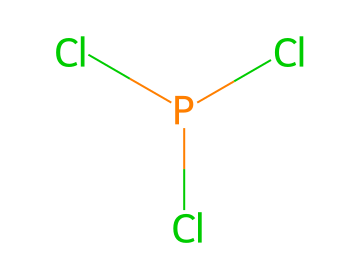
IDENTITY
COMPUTED
PROPERTIES
Pungent
Smells like hydrochloric acid
1.574 at 69.8 °F (EPA, 1998) - Denser than water; will sink
1.574 at 21 °C
Relative density (water = 1): 1.6
1.58
1.574 @25 °C
1.58
0.65 cP at 0 °C; 0.438 cP at 50 °C
Clear colorless, fuming liquid
Colorless to yellow, fuming liquid.
Reacts with water (NIOSH, 2024)
Reacts with water, ethanol; soluble in benzene, chloroform, ether
Soluble in carbon tetrachloride
Solubility in water: reaction
Reacts
Corrodes most common construction materials.
169 °F at 760 mmHg (EPA, 1998)
76.1 °C
76 °C
169 °F
76 °C @760 [mm Hg]
169 °F
When heated to decomposition it emits toxic fumes of /hydrogen chloride and phosphorus oxide/.
DECOMPOSED BY WATER OR ALC.
... If involved in a fire decomposes to produce hydrogen chloride, phosphoric acid, phosphine.
-170 °F (EPA, 1998)
-93.6 °C
-112 °C
-170 °F
-93 °C
-170 °F
4.75 (EPA, 1998) - Heavier than air; will sink (Relative to Air)
4.75 (air= 1)
Relative vapor density (air = 1): 4.75
4.75
Phosphorus trichloride ... can be detected at about 0.5 mg/cu m.
100 mmHg at 69.8 °F (EPA, 1998)
120.0 [mmHg]
120 mm Hg at 25 °C
Vapor pressure, kPa at 21 °C: 13.3
100 mmHg at 69.8 °F
120 [mm Hg] @25 °C
GHS
Danger
H300: Fatal if swallowed [Danger Acute toxicity, oral];H314: Causes severe skin burns and eye damage [Danger Skin corrosion/irritation];H330: Fatal if inhaled [Danger Acute toxicity, inhalation];H373 **: May causes damage to organs through prolonged or repeated exposure [Warning Specific target organ toxicity, repeated exposure]
P260, P264, P270, P271, P280, P284, P301+P316, P301+P330+P331, P302+P361+P354, P304+P340, P305+P354+P338, P316, P319, P320, P321, P330, P363, P403+P233, P405, and P501 (click each P-code to see the statement)
This chemical does not meet GHS hazard criteria for 3.5% (12 of 345) of reports.
HAZARDS
Water-reactive material (WR);Toxic/poison by inhalation (TIH/PIH)
Chemical: Phosphorus trichloride
Status: Active Update: 30-08-2022 https://echa.europa.eu/registration-dossier/-/registered-dossier/14467
Phosphorus trichloride: HSNO Approval: HSR003065 Approved with controls
The New Jersey Worker and Community Right to Know Act requires public and private employers to provide information about hazardous substances at their workplaces. (N.J.S.A. 34:5A-1 et. seq.)
IMAP assessments - Phosphorus trichloride: Human health tier I assessment;IMAP assessments - Phosphorus trichloride: Environment tier I assessment
Poison Inhalation Hazard Corrosive
This material will react violently with water, producing heat and toxic and corrosive fumes. When heated to decomposition, it emits highly toxic fumes of chlorides and phosphorus oxides. It may ignite other combustible materials. Reacts violently with water. Reacts explosively with acetic acid, aluminum, chromyl chloride, diallylphosphite and allyl alcohol, dimethyl sulfoxide, fluorine, hydroxylamine, iodine monochloride, lead dioxide, nitric acid, nitrous acid, organic matter, potassium, and sodium. Avoid contact with water, steam, or acids. Hazardous polymerization may not occur. (EPA, 1998)
· EXCEPT FOR ACETIC ANHYDRIDE (UN1715), THAT IS FLAMMABLE, some of these materials may burn, but none ignite readily.;· May ignite combustibles (wood, paper, oil, clothing, etc.).;· Substance will react with water (some violently), releasing corrosive and/or toxic gases and runoff.;· Flammable/toxic gases may accumulate in confined areas (basement, tanks, hopper/tank cars, etc.).;· Contact with metals may evolve flammable hydrogen gas.;· Containers may explode when heated or if contaminated with water.;· Substance may be transported in a molten form.
Not combustible. Many reactions may cause fire or explosion. Gives off irritating or toxic fumes (or gases) in a fire.
Reacts with water to form hydrochloric acid, which reacts with most metals to form flammable hydrogen gas.
... Phosphorus trichloride /is/ ... strongly corrosive and may set fire to combustible material /eg fibrous organic matter (wood, etc)/.
Not combustible, but if involved in a fire decomposes to produce hydrogen chloride, phosphoric acid, phosphine.
Not combustible. Many reactions may cause fire or explosion.
This material is highly toxic; it may cause death or permanent injury. Contact is highly irritating to the skin, eyes, and mucous membranes, and the material is an irritant through oral and inhalation exposure. (EPA, 1998)
· CORROSIVE and/or TOXIC; inhalation, ingestion or contact (skin, eyes) with vapors, dusts or substance may cause severe injury, burns or death.;· Fire will produce irritating, corrosive and/or toxic gases.;· Reaction with water may generate much heat that will increase the concentration of fumes in the air.;· Contact with molten substance may cause severe burns to skin and eyes.;· Runoff from fire control or dilution water may cause environmental contamination.
Liquid causes second or third degree burns after short contact; [CHRIS] Highly corrosive to skin; [Quick CPC] Rats develop nephrosis and pulmonary edema after 4 hour exposures in the range of 100 ppm; 23 workers exposed to 1.8 to 27 ppm complained of eye and throat irritation; mild bronchitis was common and irritant asthma developed in some of the workers; [ACGIH] Toxic to the liver in a chronic study of animals; [Desai, H. Phosphorus and Phosphorus Compounds. In: Sullivan J, Krieger G (eds).Hazardous Materials Toxicology.Baltimore:Williams & Wilkins,1992;939] A corrosive substance that can cause pulmonary edema; [ICSC] A lachrymator; [CHEMINFO]
1809 137
1809 137
Acids, Strong Non-oxidizing;Reducing Agents, Strong
Symbol: T+, C; R: 14-26/28-35-48/20; S: (1/2)-7/8-26-36/37/39-45
UN Hazard Class: 6.1; UN Subsidiary Risks: 8; UN Pack Group: I
SAFETY
Spray cooling water on containers that are exposed to flames until well after fire is out. Do not get water inside containers.;This material will not burn. Use carbon dioxide or dry chemical on fires involving phosphorus trichloride. Do not use water. (EPA, 1998)
NO hydrous agents. NO water. In case of fire in the surroundings, use appropriate extinguishing media. In case of fire: keep drums, etc., cool by spraying with water. NO direct contact with water.
Fresh air, rest. Half-upright position. Artificial respiration may be needed. Refer for medical attention.
Remove contaminated clothes. Rinse skin with plenty of water or shower. Refer for medical attention .
First rinse with plenty of water for several minutes (remove contact lenses if easily possible), then refer for medical attention.
Rinse mouth. Do NOT induce vomiting. Refer for medical attention .
· CALL 911. Then call emergency response telephone number on shipping paper. If shipping paper not available or no answer, refer to appropriate telephone number listed on the inside back cover.;· Keep unauthorized personnel away.;· Stay upwind, uphill and/or upstream.;· Ventilate closed spaces before entering, but only if properly trained and equipped.
· Do not touch damaged containers or spilled material unless wearing appropriate protective clothing.;· Stop leak if you can do it without risk.;· Use water spray to reduce vapors; do not put water directly on leak, spill area or inside container.;· Keep combustibles (wood, paper, oil, etc.) away from spilled material.;Small Spill;· Cover with DRY earth, DRY sand or other non-combustible material followed with plastic sheet to minimize spreading or contact with rain.;· Use clean, non-sparking tools to collect material and place it into loosely covered plastic containers for later disposal.;· Prevent entry into waterways, sewers, basements or confined areas.
Warning: Phosphorus trichloride is a corrosive agent. Contact with eyes may result in severe damage to the cornea, conjunctiva, and blood vessels. Caution is advised.;Signs and Symptoms of Phosphorus Trichloride Exposure: Acute exposure to phosphorus trichloride may result in irritation and burning of the skin, eyes, and mucous membranes. Light- headedness, drowsiness, slurred speech, pupillary dilation, increased salivation, dysphagia (difficulty swallowing), abdominal pain, and spontaneous vomiting may occur. Stridor (high-pitched, noisy respirations), dyspnea (shortness of breath), and pulmonary edema are also common. Apathy and mental confusion may develop, with progression to coma and death.;Emergency Life-Support Procedures: Acute exposure to phosphorus trichloride may require decontamination and life support for the victims. Emergency personnel should wear protective clothing appropriate to the type and degree of contamination. Air-purifying or supplied-air respiratory equipment should also be worn, as necessary. Rescue vehicles should carry supplies such as plastic sheeting and disposable plastic bags to assist in preventing spread of contamination.;Inhalation Exposure:;1. Move victims to fresh air. Emergency personnel should avoid self-exposure to phosphorus trichloride.;2. Evaluate vital signs including pulse and respiratory rate, and note any trauma. If no pulse is detected, provide CPR. If not breathing, provide artificial respiration. If breathing is labored, administer oxygen or other respiratory support.;3. Obtain authorization and/or further instructions from the local hospital for administration of an antidote or performance of other invasive procedures.;4. Transport to a health care facility.;Dermal/Eye Exposure:;1. Remove victims from exposure. Emergency personnel should avoid self-exposure to phosphorus trichloride.;2. Evaluate vital signs including pulse and respiratory rate, and note any trauma. If no pulse is detected, provide CPR. If not breathing, provide artificial respiration. If breathing is labored, administer oxygen or other respiratory support.;3. Remove contaminated clothing as soon as possible.;4. If eye exposure has occurred, eyes must be flushed with lukewarm water for at least 30 minutes.;5. Wash exposed skin areas thoroughly with water.;6. Obtain authorization and/or further instructions from the local hospital for administration of an antidote or performance of other invasive procedures.;7. Transport to a health care facility.;Ingestion Exposure:;1. Evaluate vital signs including pulse and respiratory rate, and note any trauma. If no pulse is detected, provide CPR. If not breathing, provide artificial respiration. If breathing is labored, administer oxygen or other respiratory support.;2. DO NOT induce vomiting or attempt to neutralize!;3. Obtain authorization and/or further instructions from the local hospital for administration of an antidote or performance of other invasive procedures.
General First Aid:;· Call 911 or emergency medical service.;· Ensure that medical personnel are aware of the material(s) involved, take precautions to protect themselves and avoid contamination.;· Move victim to fresh air if it can be done safely.;· Administer oxygen if breathing is difficult.;· If victim is not breathing:;-- DO NOT perform mouth-to-mouth resuscitation; the victim may have ingested or inhaled the substance.;-- If equipped and pulse detected, wash face and mouth, then give artificial respiration using a proper respiratory medical device (bag-valve mask, pocket mask equipped with a one-way valve or other device).;-- If no pulse detected or no respiratory medical device available, provide continuous compressions. Conduct a pulse check every two minutes or monitor for any signs of spontaneous respirations.;· Remove and isolate contaminated clothing and shoes.;· For minor skin contact, avoid spreading material on unaffected skin.;· In case of contact with substance, remove immediately by flushing skin or eyes with running water for at least 20 minutes.;· For severe burns, immediate medical attention is required.;· Effects of exposure (inhalation, ingestion, or skin contact) to substance may be delayed.;· Keep victim calm and warm.;· Keep victim under observation.;· For further assistance, contact your local Poison Control Center.;· Note: Basic Life Support (BLS) and Advanced Life Support (ALS) should be done by trained professionals.;Specific First Aid:;· For corrosives, in case of contact, immediately flush skin or eyes with running water for at least 30 minutes. Additional flushing may be required.
(General first aid procedures);Eye: Irrigate immediately - If this chemical contacts the eyes, immediately wash (irrigate) the eyes with large amounts of water, occasionally lifting the lower and upper lids. Get medical attention immediately.;Skin: Water flush immediately - If this chemical contacts the skin, immediately flush the contaminated skin with water. If this chemical penetrates the clothing, immediately remove the clothing and flush the skin with water. Get medical attention promptly.;Breathing: Respiratory support;Swallow: Medical attention immediately - If this chemical has been swallowed, get medical attention immediately.
Provision to contain effluent from fire extinguishing. Separated from food and feedstuffs. See Chemical Dangers. Dry. Well closed. Ventilation along the floor.
The vapor is heavier than air ... A harmful contamination of the air can be reached very quickly on evaporation of this substance at 20 °C.
Severe health hazard. May be fatal if inhaled ... Corrosive ...
Reacts violently with fire extinguishing agents such as water ... Reacts violently with water producing heat and decomposition products including hydrochloric acid and phosphorous acid, causing fire and explosion hazard.
· Wear positive pressure self-contained breathing apparatus (SCBA).;· Wear chemical protective clothing that is specifically recommended by the manufacturer when there is NO RISK OF FIRE.;· Structural firefighters' protective clothing provides thermal protection but only limited chemical protection.
TIH (Toxic Inhalation Hazard) - Term used to describe gases and volatile liquids that are toxic when inhaled. Some are TIH materials themselves, e.g., chlorine, and some release TIH gases when spilled in water, e.g., chlorosilanes. [ERG 2016].
0.1 [ppm]
Evacuation: If fire becomes uncontrollable or container is exposed to direct flame - consider evacuation of one-third (1/3) mile radius.
If material on fire or involved in fire: Use dry chemical, dry sand, or carbon dioxide. Do not use water on material itself. If large quantities of combustibles are involved, use water in flooding quantites of water. Apply water from as far a distance as possible.
... Use water spray to knock down acid vapors.
NO hydrous agents. NO water ...
Provision to contain effluent from fire extinguishing. Separated from food and feedstuffs. See Chemical Dangers. Dry. Well closed. Ventilation along the floor.
Store in cool, dry, well-ventilated location. Separate from acids, alkalies, organics, alkali metals.
Environmental considerations: water spill: Neutralize with agricultural lime (CaO), crushed limestone (CaCO3), or sodium bicarbonate (NaCO3). Use mechanical dredges or lifts to remove immobilized masses of pollutant and precipitates. Adjust pH to neutral (pH=7).
Environmental considerations: air spill: Apply water spray or mist to knock down vapors. Vapor knockdown water is corrosive or toxic and should be diked for containment.
Environmental considerations: land spill: Dike surface flow using soil, sand bags, foamed polyurethane, or foamed concrete. Absorb bulk liquid with fly ash or cement powder. Neutralize with agricultural lime (CaO), crushed limestone (CaCO3), or sodium bicarbonate (NaHCO3).
Releases may require isolation or evacuation. Use water spray to cool and disperse vapors and protect personnel.
For more Cleanup Methods (Complete) data for PHOSPHORUS TRICHLORIDE (6 total), please visit the HSDB record page.
Excerpt from ERG Guide 137 [Substances - Water-Reactive - Corrosive]:;Do not touch damaged containers or spilled material unless wearing appropriate protective clothing. Stop leak if you can do it without risk. Use water spray to reduce vapors; do not put water directly on leak, spill area or inside container. Keep combustibles (wood, paper, oil, etc.) away from spilled material.;SMALL SPILL: Cover with DRY earth, DRY sand or other non-combustible material followed with plastic sheet to minimize spreading or contact with rain. Use clean, non-sparking tools to collect material and place it into loosely covered plastic containers for later disposal. Prevent entry into waterways, sewers, basements or confined areas. (ERG, 2024)
SRP: The most favorable course of action is to use an alternative chemical product with less inherent propensity for occupational exposure or environmental contamination. Recycle any unused portion of the material for its approved use or return it to the manufacturer or supplier. Ultimate disposal of the chemical must consider: the material's impact on air quality; potential migration in soil or water; effects on animal, aquatic, and plant life; and conformance with environmental and public health regulations.
Spillage should be handled only by an operator wearing full protective clothing and full-face mask/positive-pressure breathing apparatus. Absorbed spillage and residues should be buried in an approved landfill, away from water sources.
TOXICITY
Eyes, skin, respiratory system
Occupational hepatotoxin - Secondary hepatotoxins: the potential for toxic effect in the occupational setting is based on cases of poisoning by human ingestion or animal experimentation.;Nephrotoxin - The chemical is potentially toxic to the kidneys in the occupational setting.;Dermatotoxin - Skin burns.;Lacrimator (Lachrymator) - A substance that irritates the eyes and induces the flow of tears.;Toxic Pneumonitis - Inflammation of the lungs induced by inhalation of metal fumes or toxic gases and vapors.
The substance can be absorbed into the body by inhalation and by ingestion.
inhalation, ingestion, skin and/or eye contact
/AQUATIC SPECIES/ LC100s /of phosphorus trichloride are/ 57 mg/L/7 days /for/ sturgeon /and/ 65 mg/L/48 hr /for/ sturgeon (Acipenser), carp (Cyprinus carpio), perch (Percidae), Esox lucius (northern pike), and Leuciscus leuciscus (dace). NOEC /at/ pH 3.3 to 7.0 /and/ 22 to 24 °C /is/ 10 to 40 mg/L/30 days /for/ sturgeon, carp, perch, Esox lucius and Leuciscus leuciscus.
/AQUATIC SPECIES/ Aquatic toxicity range: 10 to 100 mg/L.
Sore throat. Cough. Burning sensation. Nausea. Vomiting. Shortness of breath. Laboured breathing. Symptoms may be delayed.
Pain. Redness. Blisters. Skin burns.
Pain. Redness. Watering of the eyes. Severe deep burns. Loss of vision.
Burning sensation. Abdominal pain. Shock or collapse. Further see Inhalation.
irritation eyes, skin, nose, throat; pulmonary edema; eye, skin burns
/SIGNS AND SYMPTOMS/ The signs of poisoning in 23 workers exposed to phosphorus trichloride at concentrations ranging from 1.8 to 27 ppm. Symptoms included burning eyes and throat, irritation of pharyngeal mucous membranes, and mild bronchitis; these changes occurred within 2 to 6 hours after exposure. Symptoms from subacute poisoning included irritation of the pharynx, coughing, dyspnea, and severe asthmatic bronchitis, which occurred 1 to 8 weeks after exposure. In workers who had at least 1 year exposure, emphysema was sometimes found. Both acute and subacute poisonings were frequently accompanied by fever and moderate leukocytosis and neutrophilia.
/SIGNS AND SYMPTOMS/ ... The corrosive effect /of phosphorus trichloride/ is complete destruction of skin or mucous membrane. /From table/
/SIGNS AND SYMPTOMS/ In a report of 17 persons exposed to phosphorus trichloride and its hydration products, those closest to the spill experienced burning eyes, lacrimation, nausea, vomiting, dyspnea, and cough. Pulmonary function tests showed decrements in vital capacity, maximal breathing capacity, and forced expiratory volume in direct correlation to the distance from the accident.
/SIGNS AND SYMPTOMS/ Phosphorus trichloride will cause severe burns upon direct dermal contact.
For more Human Toxicity Excerpts (Complete) data for PHOSPHORUS TRICHLORIDE (13 total), please visit the HSDB record page.
/LABORATORY ANIMALS: Acute Exposure/ /In/ rabbits /on contact of phosphorus trichloride caused/ thickening in skin folds, bleeding /and/ irreversible necrosis in the eye, causing loss of vision.[European Chemicals Bureau; IUCLID Dataset, Phosphorus trichloride (7719-12-2) (2000 CD-ROM edition). Available from, as of November 03, 2006: http://esis.jrc.ec.europa.eu/]
/LABORATORY ANIMALS: Acute Exposure/ Cats and rabbits /were exposed to phosphorus trichloride by/ inhalation. At 0.004 mg/L for 6 hr minor symptoms /were seen/. With 0.01 to 0.02 mg/L no serious symptoms within 1 hr, 0.3 to 0.5 mg/L serious destructions within the first hour /were seen/. With 0.8 mg/L mortality /occurred/ within 5 to 36 hr, with 3.5 mg/L within 3 hr. Effects /included/ salivation, rhinitis, dyspnea, conjunctivitis, corneal opacities, edema of the respiratory tract.[European Chemicals Bureau; IUCLID Dataset, Phosphorus trichloride (7719-12-2) (2000 CD-ROM edition). Available from, as of November 03, 2006: http://esis.jrc.ec.europa.eu/]
/LABORATORY ANIMALS: Acute Exposure/ ... Working with cats & guinea pigs /investigators/ found that a concentration of 0.7 ppm produced only slight illness in 6 hr. 2 to 4 ppm did not produce severe symptoms in 1 hr, but serious disturbances resulted from 1 hr at 50 to 90 ppm. Effects of phosphorous trichloride were considered 5 to 10 times as intense as would result from hydrogen chloride produced by hydrolysis.[American Conference of Governmental Industrial Hygienists. Documentation of the TLV's and BEI's with Other World Wide Occupational Exposure Values. CD-ROM Cincinnati, OH 45240-1634 2005., p. 1]
/LABORATORY ANIMALS: Acute Exposure/ Expt in cats concn of 2 to 4 ppm in air in course of 6 hr has caused resp difficulty and conjunctivitis. At 23 to 90 ppm in air in course of 6 hr corneas became clouded and systemic effects were severe.[Grant, W.M. Toxicology of the Eye. 3rd ed. Springfield, IL: Charles C. Thomas Publisher, 1986., p. 736]
For more Non-Human Toxicity Excerpts (Complete) data for PHOSPHORUS TRICHLORIDE (14 total), please visit the HSDB record page.
... People with pre-existing respiratory disease /should/ not work with respiratory irritants such as phosphorus trichloride ...
Basic treatment: Establish a patent airway (oropharyngeal or nasopharyngeal airway, if needed). Suction if necessary. Watch for signs of respiratory insufficiency and assist ventilations if necessary. Administer oxygen by nonrebreather mask at 10 to 15 L/min. Monitor for pulmonary edema and treat if necessary ... . Monitor for shock and treat if necessary ... . For eye contamination, flush eyes immediately with water. Irrigate each eye continuously with 0.9% saline (NS) during transport ... . Do not use emetics. For ingestion, rinse mouth and administer 5 ml/kg up to 200 ml of water for dilution if the patient can swallow, has a strong gag reflex, and does not drool ... . Cover skin burns with dry sterile dressings after decontamination ... . /Chlorine and related compounds/
Advanced treatment: Consider orotracheal or nasotracheal intubation for airway control in the patient who is unconscious, has severe pulmonary edema, or is in severe respiratory distress. Positive-pressure ventilation techniques with a bag valve mask device may be beneficial. Consider drug therapy for pulmonary edema ... . Monitor cardiac rhythm and treat arrhythmias if necessary ... . Start IV administration of D5W /SRP: "To keep open", minimal flow rate/. Use 0.9% saline (NS) or lactated Ringer's (LR) if signs of hypovolemia are present. For hypotension with signs of hypovolemia, administer fluid cautiously. Consider vasopressors if patient is hypotensive with a normal fluid volume. Watch for signs of fluid overload ... . Use proparacaine hydrochloride to assist eye irrigation ... . /Chlorine and related compounds/
Basic treatment: Establish a patent airway (oropharyngeal or nasopharyngeal airway, if needed). Suction if necessary. Watch for signs of respiratory insufficiency and assist ventilations if necessary. Administer oxygen by nonrebreather mask at 10 to 15 L/min. Monitor for pulmonary edema and treat if necessary ... . Monitor for shock and treat if necessary ... . Anticipate seizures and treat if necessary ... . For eye contamination, flush eyes immediately with water. Irrigate each eye continuously with 0.9% saline (NS) during transport ... . Do not use emetics. For ingestion, rinse mouth and administer 5 ml/kg up to 200 ml of water for dilution if the patient can swallow, has a strong gag reflex, and does not drool ... . Administer activated charcoal ... . If product was ingested, protect yourself from contact with vomitus as it may cause burns. /Phosphorus and related compounds/
Advanced treatment: Consider orotracheal or nasotracheal intubation for airway control in the patient who is unconscious, has severe pulmonary edema, or is in severe respiratory distress. Positive-pressure ventilation techniques with a bag valve mask device may be beneficial. Consider drug therapy for pulmonary edema ... . Monitor cardiac rhythm and treat arrhythmias if necessary ... . Start IV administration of D5W /SRP: "To keep open", minimal flow rate/. Use 0.9% saline (NS) or lactated Ringer's (LR) if signs of hypovolemia are present. For hypotension with signs of hypovolemia, administer fluid cautiously. Watch for signs of fluid overload ... . Treat seizures with diazepam or lorazepam ... . Monitor for signs of hypoglycemia (decreased LOC, tachycardia, pallor, dilated pupils, diaphoresis, and/or dextrose stick or glucometer readings below 50 mg/dl) and administer 50% dextrose if necessary. Draw blood sample before administration ... . Use proparacaine hydrochloride to assist eye irrigation ... . /Phosphorus and related compounds/
For more Antidote and Emergency Treatment (Complete) data for PHOSPHORUS TRICHLORIDE (8 total), please visit the HSDB record page.
LC50 (rat) = 104 ppm/4 hr
LD50 Rat oral 550 mg/kg
LC50 Rat inhalation 104 ppm/4 hr
LC50 Rat Inhalation 0.592 mg/L/4 hr
LC50 Rat inhalation 584 mg/cu m/4 hr
For more Non-Human Toxicity Values (Complete) data for PHOSPHORUS TRICHLORIDE (7 total), please visit the HSDB record page.
REGULATORY
Chemical: Phosphorus trichloride
Status: Active Update: 30-08-2022 https://echa.europa.eu/registration-dossier/-/registered-dossier/14467
Phosphorus trichloride: HSNO Approval: HSR003065 Approved with controls
The New Jersey Worker and Community Right to Know Act requires public and private employers to provide information about hazardous substances at their workplaces. (N.J.S.A. 34:5A-1 et. seq.)
Persons in charge of vessels or facilities are required to notify the National Response Center (NRC) immediately, when there is a release of this designated hazardous substance, in an amount equal to or greater than its reportable quantity of 1000 lb or 454 kg. The toll free number of the NRC is (800) 424-8802. The rule for determining when notification is required is stated in 40 CFR 302.4 (section IV. D.3.b).
Releases of CERCLA hazardous substances are subject to the release reporting requirement of CERCLA section 103, codified at 40 CFR part 302, in addition to the requirements of 40 CFR part 355. Phosphorus trichloride is an extremely hazardous substance (EHS) subject to reporting requirements when stored in amounts in excess of its threshold planning quantity (TPQ) of 1,000 lbs.
Phosphorus trichloride is designated as a hazardous substance under section 311(b)(2)(A) of the Federal Water Pollution Control Act and further regulated by the Clean Water Act Amendments of 1977 and 1978. These regulations apply to discharges of this substance. This designation includes any isomers and hydrates, as well as any solutions and mixtures containing this substance.
Phosphorus trichloride
1
15000
3.48
45
A Commercial Grade
PHARMACOLOGY
Phosphorus trichloride /reacts/ with the water component of the tissues /it/ first contact. The resulting hydrogen chloride and phosphorus oxyacid ions, if absorbed, join the body pools of these ions. Phosphate, chloride, and hydrogen ions are easily excreted by the kidneys by normal physiological mechanisms.
The substance can be absorbed into the body by inhalation or by ingestion.
Phosphorus trichloride /reacts/ with the water component of the tissues /it/ first contact. The resulting hydrogen chloride and phosphorus oxyacid ions, if absorbed, join the body pools of these ions. Phosphate, chloride, and hydrogen ions are easily excreted by the kidneys by normal physiological mechanisms.
USES
Used to produce pesticides, gasoline additives, plasticizers, dyes, and textile-finishing agents; also used as a chlorine donor and catalyst in chemical reactions; [ACGIH]
Semiconductor Manufacturing [Category: Industry];Textiles (Printing, Dyeing, or Finishing) [Category: Industry];Toxic Gas from Spilling Chemical in Water [Category: Other]
Making phosphorus oxychloride, int for organophosphorus pesticides, surfactants, phosphites (reactions with alcohols and phenols), gasoline additives, plasticizers, dyestuffs; chlorinating agent; catalyst; preparing rubber surfaces for electrodeposition of metal; ingredient of textile finishing agents.
As an intermediate or reagent in the manufacture of many industrial chemicals, ranging from insecticides to synthetic surfactants to ingredients for silver polish.
Phosphorus trichloride is mainly used for the manufacture of phosphoryl chloride, phosphorus pentachloride, thiophosphoryl chloride, and phosphonic acid. It is the starting material in the production of organophosphorus compounds. ... Phosphorus trichloride is an important intermediate in the production of phosphate ester insecticides. ... In organic chemistry, phosphorus trichloride is used as a chlorinating agent and catalyst.
Phosphorus trichloride ... is used ... during the chemical synthesis of ... pharmaceuticals ... and /to make/ the surfactants that are used during deposition of metallic coatings. It is used to treat polypropylene before drying in the manufacture of knitted fabrics.
PRODUCT MAY CONTAIN UNREACTED PHOSPHORUS.
TECHNICAL GRADE PHOSPHOROUS TRICHLORIDE HAS AN IMPURITY OF 1 PPM IRON.
The commercial product contains ca. 99% phosphorus trichloride, the main impurity being phosphoryl chloride.
Impurities that may be present in small amounts (<0.1%) include the arsenic and bromine analogues of phosphorus trichloride. The presence of these impurities and the hydrolysis products does not change the overall toxicity of technical phosphorus trichloride.
(1972) NONE
(1975) NEGLIGIBLE
(1984) 1.60X10+9 G /PHOSPHORUS OXYCHLORIDE AND TRICHLORIDE/
(1972) NEGLIGIBLE
(1975) NEGLIGIBLE
(184) 8.02X10+7 G.
(1972) 5.76X10+10 GRAMS
(1975) 7.5X10+10 GRAMS
(1984) 8.14X10+10 G.
In 2004, participating countries declared 170.3 metric tons of phosphorus trichloride and reported that no metric tons of this schedule 3 B6 chemical were destroyed.
50% IS USED IN THE PRODUCTION OF PHOSPHORUS OXYCHLORIDE; 23% FOR PESTICIDES; 12% FOR PHOSPHITE AND PHOSPHATE ESTERS AND SALTS; 6% IN SURFACTANTS AND STABILIZERS; 9% IN MISC APPLICATIONS (1972).
CAPTIVE APPLICATIONS CONSUME OVER 40% OF PHOSPHORUS TRICHLORIDE.
END USE PATTERN-MERCHANT MARKET ONLY: PHOSPHITES, 37%; CHEMICAL INTERMEDIATES, 33%; ALKYL ARYL PHOSPHATES, 12%; QUATERNARIES, 10%; AGRICULTURAL, 5%; PHARMACEUTICALS, 4%; SURFACTANTS, 3% (1984-ESTIMATE).
CHEMICAL PROFILE: Phosphorus trichloride. Pesticide intermediate, 35%; phosphorus oxychloride, 25%; plastics additive (including flame retardants, plasticizers and antioxidants), 20%; phosphorous acid (mainly for water treatment chemicals), 10%; miscellaneous (including lube oil and paint additives and exports), 10%.
CHEMICAL PROFILE: Phosphorus trichloride. Demand: 1987: 102,000 tons; 1988: 104,000 tons; 1992 /projected/: 112,000 tons (Includes exports, which were about 2,000 tons in 1987; imports are negligible).
Prepared from red phosphorus and dry chlorine in the presence of refluxing PCl3.
In a Hoechst continuous process, molten white phosphorus and gaseous chlorine react in previously produced phosphorus trichloride. The formation of phosphorus pentachloride is prevented by the presence of a small excess of phosphorus. The heat of reaction, ca. 10 times the heat of evaporation, keeps the system at its boiling point, and the phosphorus trichloride distills off. The vapors are fractionated as reflux takes place, and the PCl3 condenses in air-cooled condensers. The rate of removal of PCl3 (i.e. the production rate) is equivalent to the feed rate of phosphorus and chlorine. The process is controlled by the boiling temperature, which is determined by the phosphorus content. The rate of chlorine flow is fixed, and the phosphorus feed rate is adjusted manually. The phosphorus trichloride produced contains no free phosphorus and needs no further treatment.
Phosphorus trichloride (PCl3) is made by reacting yellow phosphorus with chlorine ...
Grade; technical; 99.9%
TECHNICAL GRADE PHOSPHOROUS TRICHLORIDE HAS A MIN ASSAY OF 99.75%.
Phosphorous trichloride: ACTIVE
Chemical Weapons Convention Schedule 3 B6 precursor.
Phosphorus trichloride is an effective chlorinating agent, which makes an ideal intermediate in preparing surfactants for mild, bar-type synthetic detergents. Phosphorus trichloride converts fatty acids into fatty acid chlorides.
ALIASES
REACTIONS
uspto-grants-1998_03 · 10.6084/m9.figshare.5104873.v1 · US05723288
查看
uspto-grants-1998_03 · 10.6084/m9.figshare.5104873.v1 · US05723641
查看
uspto-grants-1998_03 · 10.6084/m9.figshare.5104873.v1 · US05728853
查看
uspto-grants-1998_03 · 10.6084/m9.figshare.5104873.v1 · US05728853
查看
uspto-grants-1998_03 · 10.6084/m9.figshare.5104873.v1 · US05728853
查看
uspto-grants-1998_03 · 10.6084/m9.figshare.5104873.v1 · US05728853
查看
uspto-grants-1988_02 · 10.6084/m9.figshare.5104873.v1 · US04725599
查看
uspto-grants-2006_08 · 10.6084/m9.figshare.5104873.v1 · US07091214B2
查看