
uspto-grants-2015_05 · 10.6084/m9.figshare.5104873.v1 · US09029533B2
查看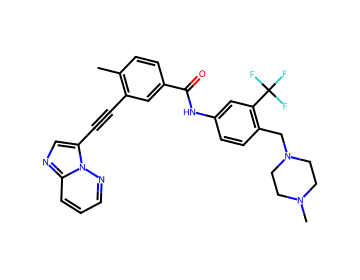
IDENTITY
COMPUTED
PROPERTIES
Dangerous products of decomposition: thermal ecomposition may produce toxic gases such as carbon monoxide, carbon dioxide, and nitrogen oxides.
Stable if stored as directed; avoid strong oxidizing agents
2.77 and 7.8
Most amides hydrolyze to acids extremely slowly at 25 °C and pH 7 with half-lives measured in centuries.
Off-white to yellow powder. MW: 569.02. pKa1 = 2.77; pKa2 = 7.8. Solubility: 7790, 3.44, and 0.16 ug/mL in pH 1.7, 2.7, and 7.5 buffers /Ponatinib hydrochloride/
GHS
Danger
H301 (100%): Toxic if swallowed [Danger Acute toxicity, oral];H311 (50%): Toxic in contact with skin [Danger Acute toxicity, dermal];H331 (50%): Toxic if inhaled [Danger Acute toxicity, inhalation];H360FD (50%): May damage fertility; May damage the unborn child [Danger Reproductive toxicity];H372 (50%): Causes damage to organs through prolonged or repeated exposure [Danger Specific target organ toxicity, repeated exposure]
P203, P260, P261, P262, P264, P270, P271, P280, P301+P316, P302+P352, P304+P340, P316, P318, P319, P321, P330, P361+P364, P403+P233, P405, and P501 (click each P-code to see the statement)
Aggregated GHS information provided per 2 reports by companies from 2 notifications to the ECHA C&L Inventory. Each notification may be associated with multiple companies.;Information may vary between notifications depending on impurities, additives, and other factors. The percentage value in parenthesis indicates the notified classification ratio from companies that provide hazard codes. Only hazard codes with percentage values above 10% are shown. For more detailed information, please visit ECHA C&L website.
HAZARDS
The Approved Drug Products with Therapeutic Equivalence Evaluations identifies currently marketed prescription drug products, including ponatinib hydrochloride, approved on the basis of safety and effectiveness by FDA under sections 505 of the Federal Food, Drug, and Cosmetic Act. /Ponatinib hydrochloride/
Drug Name: Iclusig; FDA Application No.: (NDA) 203469; Active Ingredient: Ponatinib hydrochloride; Company: Arid; Original Approval or Tentative Approval Date: December 14, 2012; Chemical Type: 1 New molecular entity (NME); Review Classification: Priority review drug, orphan drug. /Ponatinib hydrochloride/
Emits toxic fumes such as carbon monoxide, etc.
Acute Tox. 3 (100%);Acute Tox. 3 (50%);Acute Tox. 3 (50%);Repr. 1B (50%);STOT RE 1 (50%)
SAFETY
Suitable extinguishing agents: water spray, carbon dioxide, dry chemical powder or foam. Protective equipment: wear self-contained breathing apparatus and protective clothing to prevent contact with skin and eyes.
Accidental release measures: After Inhalation: cordon off area of spill; wear self-contained breathing apparatus, protective clothing and heavy rubber gloves. Measures for cleaning/collecting: absorb solutions with finely- powdered liquid-binding material (diatomite, universal binders); decontaminate surfaces and equipment by scrubbing with alcohol; dispose of contaminated material /in accordance with prevailing country, federal, state and local regulations/.
SRP: Expired or waste pharmaceuticals shall carefully take into consideration applicable DEA, EPA, and FDA regulations. It is not appropriate to dispose by flushing the pharmaceutical down the toilet or discarding to trash. If possible return the pharmaceutical to the manufacturer for proper disposal being careful to properly label and securely package the material. Alternatively, the waste pharmaceutical shall be labeled, securely packaged and transported by a state licensed medical waste contractor to dispose by burial in a licensed hazardous or toxic waste landfill or incinerator.
Information for safe handling: avoid inhalation and contact with skin, eyes and clothing; material may be an irritant.
Handling should only be performed by personnel trained and familiar with handling of potent active pharmaceutical ingredients.
Personal protective equipment as follows: Breathing equipment: NIOSH/MSHA-approved respirator. Protection of hands: chemical-resistant rubber gloves. Eye protection: chemical safety goggles.
TOXICITY
Ponatinib is a BCR-ABL tyrosine kinase inhibitor (TKI) approved for the treatment of chronic myeloid leukemia and Philadelphia chromosome-positive acute lymphoblastic leukemia in patients resistant or intolerant to prior TKIs. In vitro studies suggested that metabolism of ponatinib is partially mediated by CYP3A4. The effects of CYP3A4 inhibition on the pharmacokinetics of ponatinib and its CYP3A4-mediated metabolite, AP24567, were evaluated in a single-center, randomized, two-period, two-sequence crossover study in healthy volunteers. Subjects (N = 22) received two single doses (orally) of ponatinib 15 mg, once given alone and once coadministered with daily (5 days) ketoconazole 400 mg, a CYP3A4 inhibitor. Ponatinib plus ketoconazole increased ponatinib maximum plasma concentration (C(max)) and area under the concentration-time curve (AUC) compared with ponatinib alone. The estimated mean ratios for AUC0-8, AUC0-t, and C(max) indicated increased exposures to ponatinib of 78%, 70%, and 47%, respectively; exposure to AP24567 decreased by 71%. Exposure to AP24567 was marginal after ponatinib alone (no more than 4% of the exposure to ponatinib). These results suggest that caution should be exercised with the concurrent use of ponatinib and strong CYP3A4 inhibitors and that a ponatinib dose decrease to 30 mg daily, from the 45 mg daily starting dose, could be considered.
... Ponatinib at pharmacologically relevant concentrations produced synergistic cytotoxicity with ABCB1 and ABCG2 substrate chemotherapy drugs and enhanced apoptosis induced by these drugs, including daunorubicin, mitoxantrone, topotecan, and flavopiridol, in cells overexpressing these transport proteins. ...
In large clinical trials, elevations in serum aminotransferase levels during ponatinib therapy occurred in up to 56% of patients and were above 5 times upper limit of normal (ULN) in 8% of patients. While these abnormalities were reversible in most patients, they were prolonged or severe in some. Instances of clinically apparent liver disease and progressive hepatic failure and death were reported in clinical trials of ponatinib, although the clinical features of the liver injury have not been well described. The latency until onset can be rapid and most cases have had a hepatocellular pattern of serum enzyme elevations. Because of the potential for serious hepatotoxicity, routine monitoring of liver tests is recommended during ponatinib therapy and dose modification or discontinuation recommended for ALT or AST elevations above 3 times ULN. Thus, ponatinib therapy is associated with a high rate of transient serum aminotransferase elevations and is reported to cause rare instances of severe hepatic injury, but there have been no cases described in the literature.;Reactivation of hepatitis B has been reported with imatinib and nilotinib therapy of CML, but not with ponatinib. Reactivation typically occurs in an HBsAg positive person treated with the tyrosine kinase inhibitor for 3 to 6 months, presenting with jaundice, marked serum aminotransferase elevations and an increase in HBV DNA levels. Reactivation of hepatitis B can be severe, and fatal instances have been reported after imatinib and nilotinib therapy. Screening of patients for HBsAg and anti-HBc is sometimes recommended before starting cancer chemotherapy and those with HBsAg offered prophylaxis with oral antiviral agents, such as lamivudine, tenofovir or entecavir. Whether reactivation occurs with ponatinib therapy is unknown.;Likelihood score: E* (unproven but suspected cause of clinically apparent liver injury).
/SIGNS AND SYMPTOMS/ Arterial and venous thrombosis and occlusions have occurred in at least 27% of Iclusig treated patients, including fatal myocardial infarction, stroke, stenosis of large arterial vessels of the brain, severe peripheral vascular disease, and the need for urgent revascularization procedures. Patients with and without cardiovascular risk factors, including patients age 50 years or younger, experienced these events. Monitor for evidence of thromboembolism and vascular occlusion. Interrupt or stop Iclusig immediately for vascular occlusion. A benefit-risk consideration should guide a decision to restart Iclusig therapy. Heart failure, including fatalities, occurred in 8% of Iclusig-treated patients. Monitor cardiac function. Interrupt or stop Iclusig for new or worsening heart failure. Hepatotoxicity: Hepatotoxicity, liver failure and death have occurred in Iclusig-treated patients. Monitor hepatic function. Interrupt Iclusig if hepatotoxicity is suspected.
/SIGNS AND SYMPTOMS/ Hepatotoxicity and acute hepatic failure with fatal outcome have been reported in patients receiving ponatinib; liver biopsies predominantly showed hepatocellular necrosis.6 Fulminant hepatic failure resulting in death following 1 week of therapy was reported in one ponatinib-treated patient in the premarketing clinical trial. Elevations in serum aminotransferase (ALT or AST) concentrations were reported in 56% of patients receiving ponatinib in the premarketing clinical trial; median time to onset of these elevations was 46 days.6 Severe hepatotoxicity has been reported in all the disease cohorts; however, fatal cases have only been reported in patients with blast phase chronic myelogenous leukemia (CML) or Philadelphia chromosome-positive (Ph+) acute lymphocytic (lymphoblastic) leukemia (ALL).
/CASE REPORTS/ Overdoses with Iclusig were reported in clinical trials. One patient was accidentally administered the entire contents of a bottle of study medication via nasogastric tube. The investigator estimated that the patient received 540 mg of Iclusig. Two hours after the overdose, the patient had an uncorrected QT interval of 520 ms. Subsequent ECGs showed normal sinus rhythm with uncorrected QT intervals of 480 and 400 ms. The patient died 9 days after the overdose from pneumonia and sepsis.
/CASE REPORTS/ Ponatinib is a bcr-abl tyrosine-kinase inhibitor used to treat resistant and refractory chronic myeloid leukemia and Philadelphia chromosome-positive acute lymphoblastic leukemia that express bcr-abl. Neutrophilic panniculitis has been described in rare cases of patients on other tyrosine-kinase inhibitors in the same class as ponatinib.
/LABORATORY ANIMALS: Acute Exposure/ In a phototoxicity study, there was no evidence of cutaneous phototoxicity. Low level phototoxic reactions were observed in the form of lenticular epithelial hyperplasia at 5 mg/kg, and in the form of corneal oedema and inflammatory changes, and lenticular epithelial hyperplasia at 10 mg/kg.
/LABORATORY ANIMALS: Acute Exposure/ Under the experimental conditions, ponatinib had no clinically relevant effects on the CNS or pulmonary function. Ponatinib at 3, 10, and 30 mg/kg produced increases in urine output and electrolyte excretions without affecting pH or electrolyte concentrations. Ponatinib at 3, 10, and 30 mg/kg did not affect gastrointestinal motility in rats but did cause a non-dose dependent decrease in gastric emptying.
/LABORATORY ANIMALS: Subchronic or Prechronic Exposure/ /Cynomolgus monkeys received oral doses of 0, 1, 2.5 or 5 mg/kg/day with a 28 day recovery./ Mortality: 5 mg/kg: Three animals (2M, 1F) euthanized in moribound condition during study (days 19, 21 and 22). 5 mg/kg: Dry flaky skin, mild to marked skin erythema at a large number of anatomical sites. Ocular discharge. Decreased thyroid hormone T3 levels and increased T4 levels. Pancreas diffusely thickened due to either diffuse fibrosis or insterstitial oedema. Acinar cell necrosis or atrophy in pancreas. All early descendants had lymphoid depletion in thymus. Degeneration of germ cell epithelium of testes, decrease numbers of spermatids. Increased follicular atresia in ovaries and atrophy of the uterine endometrium follicles. > o r= 2.5 mg/kg: Pancreas: Acinar cell necrosis, atrophy or regeneration. Lymphoid depletion in thymus, spleen , lymph nodes and gut associated lymphoid tissue. Granulamotous inflammation of the lung. > or = mg/kg: Dose-dependent decrease in body weight and/or body weight gain. Lower food consumption. Systolic heart murmurs in all dose groups (LD 1M, MD 1F, HD 1M+1F). Increase excretion of urinary protein, no microscopic correlates. At the end of recovery period, atrophy of thyroid gland in one male at 5 mg/kg, increased urinary protein at all doses. No microorganisms or evidence for infectious agents were apparent microscopically. /From table/
/LABORATORY ANIMALS: Subchronic or Prechronic Exposure/ /Rats received oral doses of 0, 1.5, 3 or 6 mg/kg/day for 28 days with 28 days of recovery./ Seven (2 males, 5 females) of the 30 animals at 6 mg/kg/day in the toxicology portion of the study were found dead/sacrificed in moribund condition between dose Days 5 and 9. Because of poor health, dosing of animals in this high dose group was stopped. Three (1 male, 2 females) of 30 animals at 3 mg/kg/day in the toxicology portion of the study were found dead/sacrificed in moribund condition between Days 9 and 13. One animal (a male) of 30 animals at 1.5 mg/kg/day in the toxicology portion of the study was found dead on Day 28. 6 mg/kg: Hyperplasia of bone marrow. Minimal to marked necrosis of thymus. Sporadic necrosis of the glandular and non-glandular mucosa of the stomach. > or = 3 mg/kg: rough hair coats; inappetance; thinness; lethargy; hunched posture; cold skin; dry, red material (porphyrin staining) on the eyes, nose, face, and forepaws; scant feces; urine staining; dark yellow urine; eye squint; and labored breathing. Dry, flaky skin of forepaws. Reduced body weight gain and food consumption. Hyperplasia of epiphyseal plate of the femur. > or = 1.5 mg/kg: Slight increases in neutrophils, monocytes and eosinophils and decreases in lymphocytes; most pronounced in 3 and 6 mg/kg groups. Transient and minor increases in ALT, AST, BUN, glucose and triglycerides. Slight decrease in thyroid hormone T3. With the exception on lower body weight gain in males at 3 mg/kg, all findings were reversible. /From table/
For more Non-Human Toxicity Excerpts (Complete) data for Ponatinib (6 total), please visit the HSDB record page.
Use of ponatinib in patients with moderate to severe hepatic impairment (Child-Pugh class B or C) should be avoided unless the anticipated net benefit of initiating therapy outweighs the risk of toxicity.
/SRP:/ Immediate first aid: Ensure that adequate decontamination has been carried out. If patient is not breathing, start artificial respiration, preferably with a demand valve resuscitator, bag-valve-mask device, or pocket mask, as trained. Perform CPR if necessary. Immediately flush contaminated eyes with gently flowing water. Do not induce vomiting. If vomiting occurs, lean patient forward or place on the left side (head-down position, if possible) to maintain an open airway and prevent aspiration. Keep patient quiet and maintain normal body temperature. Obtain medical attention. /Poisons A and B/
/SRP:/ Basic treatment: Establish a patent airway (oropharyngeal or nasopharyngeal airway, if needed). Suction if necessary. Watch for signs of respiratory insufficiency and assist ventilations if needed. Administer oxygen by nonrebreather mask at 10 to 15 L/min. Monitor for pulmonary edema and treat if necessary ... . Monitor for shock and treat if necessary ... . Anticipate seizures and treat if necessary ... . For eye contamination, flush eyes immediately with water. Irrigate each eye continuously with 0.9% saline (NS) during transport ... . Do not use emetics. For ingestion, rinse mouth and administer 5 mL/kg up to 200 mL of water for dilution if the patient can swallow, has a strong gag reflex, and does not drool ... . Cover skin burns with dry sterile dressings after decontamination ... . /Poisons A and B/
/SRP:/ Advanced treatment: Consider orotracheal or nasotracheal intubation for airway control in the patient who is unconscious, has severe pulmonary edema, or is in severe respiratory distress. Positive-pressure ventilation techniques with a bag valve mask device may be beneficial. Consider drug therapy for pulmonary edema ... . Consider administering a beta agonist such as albuterol for severe bronchospasm ... . Monitor cardiac rhythm and treat arrhythmias as necessary ... . Start IV administration of D5W /SRP: "To keep open", minimal flow rate/. Use 0.9% saline (NS) or lactated Ringer's if signs of hypovolemia are present. For hypotension with signs of hypovolemia, administer fluid cautiously. Watch for signs of fluid overload ... . Treat seizures with diazepam or lorazepam ... . Use proparacaine hydrochloride to assist eye irrigation ... . /Poisons A and B/
◉ Summary of Use during Lactation;No information is available on the clinical use of ponatinib during breastfeeding. Because ponatinib is more than 99% bound to plasma proteins, the amount in milk is likely to be low. However, its half-life is about 24 hours and it might accumulate in the infant. National Comprehensive Cancer Network guidelines recommend avoiding breastfeeding during ponatinib therapy and the manufacturer recommends withholding breastfeeding for 6 days following the last dose.;◉ Effects in Breastfed Infants;Relevant published information was not found as of the revision date.;◉ Effects on Lactation and Breastmilk;Relevant published information was not found as of the revision date.
REGULATORY
The Approved Drug Products with Therapeutic Equivalence Evaluations identifies currently marketed prescription drug products, including ponatinib hydrochloride, approved on the basis of safety and effectiveness by FDA under sections 505 of the Federal Food, Drug, and Cosmetic Act. /Ponatinib hydrochloride/
Drug Name: Iclusig; FDA Application No.: (NDA) 203469; Active Ingredient: Ponatinib hydrochloride; Company: Arid; Original Approval or Tentative Approval Date: December 14, 2012; Chemical Type: 1 New molecular entity (NME); Review Classification: Priority review drug, orphan drug. /Ponatinib hydrochloride/
PHARMACOLOGY
L01XE24
L - Antineoplastic and immunomodulating agents;L01 - Antineoplastic agents;L01E - Protein kinase inhibitors;L01EA - Bcr-abl tyrosine kinase inhibitors;L01EA05 - Ponatinib
QL - Antineoplastic and immunomodulating agents;QL01 - Antineoplastic agents;QL01E - Protein kinase inhibitors;QL01EA - Bcr-abl tyrosine kinase inhibitors;QL01EA05 - Ponatinib
> 99% bound to plasma proteins.
Ponatinib is a multi-target kinase inhibitor. Its primary cellular target is the Bcr-Abl tyrosine kinase protein which is constitutively active and promotes the progression of CML. This protein arises from the fused Bcr and Abl gene- what is commonly known as the Philadelphia chromosome. Ponatinib is unique in that it is especially useful in the treatment of resistant CML because it inhibits the tyrosine kinase activity of Abl and T315I mutant kinases. The T315I mutation confers resistance in cells as it prevents other Bcr-Abl inhibitors from binding to the Abl kinase. Other targets that ponatinib inhibits are members of the VEGFR, PDGFR, FGFR, EPH receptors and SRC families of kinases, and KIT, RET, TIE2, and FLT3. A decrease in tumour size expressing native or T315I mutant BCR-ABL have been observed in rats.
Ponatinib is a kinase inhibitor. Ponatinib inhibited the in vitro tyrosine kinase activity of ABL and T315I mutant ABL with IC50 concentrations of 0.4 and 2.0 nM, respectively. Ponatinib inhibited the in vitro activity of additional kinases with IC50 concentrations between 0.1 and 20 nM, including members of the VEGFR, PDGFR, FGFR, EPH receptors and SRC families of kinases, and KIT, RET, TIE2, and FLT3. Ponatinib inhibited the in vitro viability of cells expressing native or mutant BCR-ABL, including T315I. In mice, treatment with ponatinib reduced the size of tumors expressing native or T315I mutant BCR-ABL when compared to controls.
Gain-of-function mutations of membrane receptor tyrosine kinase KIT especially gate-keeper D816V point mutation in KIT render kinase auto-activation, disease progression, and poor prognosis. D816V KIT is found in -80% of the patients of systemic mastocytosis (SM), and is resistant to the first and the second generations of tyrosine kinase inhibitors (TKIs). The purpose of this investigation was aimed at exploring whether ponatinib (AP24534), a novel effective TKI against T315I Bcr-Abl was active against D816V KIT. /The researchers/ discovered that ponatinib abrogated the phosphorylation of KIT harboring either V560G (sensitive to imatinib) or D816V mutation (resistant to imatinib) and the downstream signaling transduction. Ponatinib inhibited the growth of D816V KIT expressing cells in culture and nude mouse xenografted tumor. Ponatinib triggered apoptosis by inducing the release of cytochrome c and AIF, downregulation of Mcl-1. Furthermore, ponatinib abrogated the phosphorylation of beta-catenin at site Y654, suppressed the translocation of beta-catenin, inhibited the transcription and DNA binding of TCF and the expression of its targets (e.g. Axin2, c-Myc, and cyclin D1). Moreover, ponatinib was highly active against xenografted D816V KIT tumors in nude mice and significantly prolonged the survival of mice with aggressive SM or mast cell leukemia by impeding the expansion and infiltration of mast cells with imatinib-resistant D814Y KIT. ...
The BCR-ABL inhibitor imatinib has revolutionized the treatment of chronic myeloid leukemia. However, drug resistance caused by kinase domain mutations has necessitated the development of new mutation-resistant inhibitors, most recently against the T315I gatekeeper residue mutation. Ponatinib (AP24534) inhibits both native and mutant BCR-ABL, including T315I, acting as a pan-BCR-ABL inhibitor. Here, we undertook a combined crystallographic and structure-activity relationship analysis on ponatinib to understand this unique profile. While the ethynyl linker is a key inhibitor functionality that interacts with the gatekeeper, virtually all other components of ponatinib play an essential role in its T315I inhibitory activity. The extensive network of optimized molecular contacts found in the DFG-out binding mode leads to high potency and renders binding less susceptible to disruption by single point mutations. The inhibitory mechanism exemplified by ponatinib may have broad relevance to designing inhibitors against other kinases with mutated gatekeeper residues.
Ponatinib is a novel tyrosine kinase inhibitor with potent activity against BCR-ABL with mutations, including T315I, and also against fms-like tyrosine kinase 3. We tested interactions between ponatinib at pharmacologically relevant concentrations of 50 to 200 nmol/L and the MDR-associated ATP-binding cassette (ABC) proteins ABCB1, ABCC1, and ABCG2. Ponatinib enhanced uptake of substrates of ABCG2 and ABCB1, but not ABCC1, in cells overexpressing these proteins, with a greater effect on ABCG2 than on ABCB1. Ponatinib potently inhibited [(125)I]-IAAP binding to ABCG2 and ABCB1, indicating binding to their drug substrate sites, with IC(50) values of 0.04 and 0.63 umol/L, respectively. Ponatinib stimulated ABCG2 ATPase activity in a concentration-dependent manner and stimulated ABCB1 ATPase activity at low concentrations, consistent with it being a substrate of both proteins at pharmacologically relevant concentrations. The ponatinib IC(50) values of BCR-ABL-expressing K562 cells transfected with ABCB1 and ABCG2 were approximately the same as and 2-fold higher than that of K562, respectively, consistent with ponatinib being a substrate of both proteins, but inhibiting its own transport, and resistance was also attenuated to a small degree by ponatinib-induced downregulation of ABCB1 and ABCG2 cell-surface expression on resistant K562 cells. Ponatinib at pharmacologically relevant concentrations produced synergistic cytotoxicity with ABCB1 and ABCG2 substrate chemotherapy drugs and enhanced apoptosis induced by these drugs, including daunorubicin, mitoxantrone, topotecan, and flavopiridol, in cells overexpressing these transport proteins. Combinations of ponatinib and chemotherapy drugs warrant further testing.
After oral administration of 45 mg ponatinib once daily for 28 days in cancer patients, the terminal elimination half-life is 24 hours (range of 12 - 66 hours).
The terminal half-life of ponatinib in plasma after an IV dose was 9.7 hr in the rat and 5.3 hr in the monkey.
The geometric mean (range) terminal elimination half-life of ponatinib was approximately 24 (12 to 66) hours following Iclusig 45 mg oral administration once daily for 28 days in patients with cancer.
At least 64% of a ponatinib dose undergoes phase I and phase II metabolism. CYP3A4 and to a lesser extent CYP2C8, CYP2D6 and CYP3A5 are involved in the phase I metabolism of ponatinib in vitro. Ponatinib is also metabolized by esterases and/or amidases.
In vivo, ponatinib was hydrolysed by non-specific esterases or amidases at the amide bond to an acid and aniline. AP24600 was the major metabolite in rat and human plasma but was a trace level metabolite in monkey plasma. In rat, monkey and human plasma, the amide hydrolysis metabolite AP24600 was 263%, < 1% and 58.4% of the ponatinib levels. In rats, the metabolism of ponatinib was mainly to the N-desmethyl metabolite AP24567, which was excreted in feces, and AP24600 (and its downstream metabolites) which was excreted in urine. In monkey feces drug-related radioactivity was present mostly as the parent compound or as N-desmethyl ponatinib (M42), hydroxy ponatinib (M31), a double lactam at piperazine moiety (M35) and N-oxide ponatinib (M36). In human feces, ponatinib accounted for 23.7% of the radioactivity and there was extensive metabolism of ponatinib. Other metabolites identified in human feces were hydroxy ponatinib, N-desmethyl ponatinib, and several minor metabolites resulting from two or more modifications.
At least 64% of a ponatinib dose undergoes phase I and phase II metabolism. CYP3A4 and to a lesser extent CYP2C8, CYP2D6 and CYP3A5 are involved in the phase I metabolism of ponatinib in vitro. Ponatinib is also metabolized by esterases and/or amidases.
4340891KFS
PONATINIB
Established Pharmacologic Class [EPC] - Kinase Inhibitor
Mechanisms of Action [MoA] - Protein Kinase Inhibitors
Ponatinib is a Kinase Inhibitor. The mechanism of action of ponatinib is as a Protein Kinase Inhibitor.
Substances that inhibit or prevent the proliferation of NEOPLASMS.
Protein kinase inhibitors that inhibit TYROSINE PROTEIN KINASES.
The absolute bioavailability of ponatinib is unknown. Peak concentrations of ponatinib are observed within 6 hours after Iclusig oral administration. Food does not affect absorption of food. The aqueous solubility of ponatinib is pH dependent, with higher pH resulting in lower solubility. When 45 mg of ponatinib is given to cancer patients, the pharmacokinetic parameters are as follows: Cmax = 73 ng/mL; AUC = 1253 ng•hr/mL;
Ponatinib is mainly eliminated via feces. Following a single oral dose of [14C]-labeled ponatinib, approximately 87% of the radioactive dose is recovered in the feces and approximately 5% in the urine.
After oral administration of 45 mg ponatinib once daily for 28 days in cancer patients, the steady state volume of distribution is 1223 L. Ponatinib is a weak substrate for P-gp and ABCG2.
Ponatinib is greater than 99% bound to plasma proteins in vitro. The geometric mean (CV%) apparent steady state volume of distribution is 1223 liters (102%) following oral administration of Iclusig 45 mg once daily for 28 days in patients with cancer. Ponatinib is a weak substrate for both P-gp and ABCG2 [also known as BCRP] in vitro. Ponatinib is not a substrate for organic anion transporting polypeptides (OATP1B1, OATP1B3) and organic cation transporter 1 (OCT1) in vitro.
Exposure increased by approximately 90% (median) (range: 20% to 440%) between the first dose and presumed steady state. Ponatinib is mainly eliminated via feces. Following a single oral dose of (14)C-labeled ponatinib, approximately 87% of the radioactive dose is recovered in the feces and approximately 5% in the urine.
The absolute bioavailability of ponatinib is unknown. Peak concentrations of ponatinib are observed within 6 hours after Iclusig oral administration. Following ingestion of either a high-fat or low-fat meal by 22 healthy volunteers, plasma ponatinib exposures (AUC and Cmax) were not different when compared to fasting conditions. The aqueous solubility of ponatinib is pH dependent, with higher pH resulting in lower solubility.
Ponatinib Inhibition of BCR-ABL
USES
MEDICATION
Antineoplastic Agents; Protein Kinase Inhibitors
Oral: Tablets, film-coated: 15 or 45 mg (of ponatinib) Iclusig (Ariad).
ALIASES
REACTIONS


