
uspto-grants-2010_06 · 10.6084/m9.figshare.5104873.v1 · US07737295B2
查看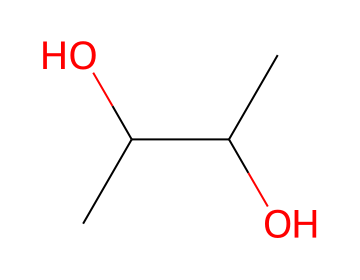
IDENTITY
COMPUTED
PROPERTIES
log Kow = -0.92
-0.92
Odorless
Sweet taste
1.045 at 20 °C/20 °C
0.121 sq m/sec at 25 °C
Nearly colorless, crystalline solid or liquid
In water, miscible at 20 °C
Miscible with water
Easily soluble in low molecular mass alcohols and ketones.
Soluble in alcohol, ether
1000 mg/mL at 20 °C
85 °C
85 °C (185 °F) - closed cup
185 °F - open cup
BP: 182 °C at 1 atm
182.00 °C. @ 760.00 mm Hg
Hazardous decomposition products formed under fire conditions - Carbon oxides.
When heated to decomposition it emits acrid smoke and fumes.
19 °C
25 °C
3.1 (Air = 1)
GHS
This chemical does not meet GHS hazard criteria for 94.5% (208 of 220) of all reports.
Not Classified;Reported as not meeting GHS hazard criteria by 208 of 220 companies (only 5.5% companies provided GHS information). For more detailed information, please visit ECHA C&L website.
Aggregated GHS information provided per 220 reports by companies from 3 notifications to the ECHA C&L Inventory.;Reported as not meeting GHS hazard criteria per 208 of 220 reports by companies.;There are 2 notifications provided by 12 of 220 reports by companies with hazard statement code(s).;Information may vary between notifications depending on impurities, additives, and other factors. The percentage value in parenthesis indicates the notified classification ratio from companies that provide hazard codes. Only hazard codes with percentage values above 10% are shown. For more detailed information, please visit ECHA C&L website.
Warning
H227: Combustible liquid [Warning Flammable liquids]
P210, P280, P370+P378, P403, and P501 (click each P-code to see the statement)
HAZARDS
Chemical: 2,3-Butanediol
Commission Regulation (EC) No 1565/2000 (Repealed by Com. Implementing Reg. (EU) No 872/2012)
Status: Active Update: 15-08-2019 https://echa.europa.eu/registration-dossier/-/registered-dossier/10060
2,3-Butylene glycol: Does not have an individual approval but may be used under an appropriate group standard
Evaluation - Chemicals that are unlikely to require further regulation to manage risks to environment
Flammable when exposed to heat or flame.
Emergency treatment: Glycols; [HSDB] Intraperitoneal dose of 3920 mg/kg was lowest dose to produce ataxia in rats; [RTECS] May cause irritation; [MSDSonline]
Chemical: 2,3-Butanediol; Green circle - The chemical has been verified to be of low concern based on experimental and modeled data.
1 - Materials that, under emergency conditions, can cause significant irritation.
1 - Materials that must be preheated before ignition can occur. Materials require considerable preheating, under all ambient temperature conditions, before ignition and combustion can occur.
0 - Materials that in themselves are normally stable, even under fire conditions.
Not Classified
Incompatible materials: Acid chlorides, acid anhydrides, oxidizing agents, chloroformates, reducing agents, zinc.
Incompatible with oxidizing materials.
SAFETY
Suitable extinguishing media: Use water spray, alcohol-resistant foam, dry chemical or carbon dioxide.
Advice for firefighters: Wear self-contained breathing apparatus for firefighting if necessary.
Use water spray to cool unopened containers.
To fight fire, use alcohol foam, carbon dioxide, dry chemical.
Keep container tightly closed in a dry and well-ventilated place. Hygroscopic.
ACCIDENTAL RELEASE MEASURES: Personal precautions, protective equipment and emergency procedures: Avoid breathing vapors, mist or gas. Remove all sources of ignition. Beware of vapors accumulating to form explosive concentrations. Vapors can accumulate in low areas. Environmental precautions: Prevent further leakage or spillage if safe to do so. Do not let product enter drains. Methods and materials for containment and cleaning up: Contain spillage, and then collect with an electrically protected vacuum cleaner or by wet-brushing and place in container for disposal according to local regulations. Keep in suitable, closed containers for disposal.
SRP: Recycle any unused portion of the material for its approved use or return it to the manufacturer or supplier. Ultimate disposal of the chemical must consider: the material's impact on air quality; potential migration in air, soil or water; effects on animal, aquatic and plant life; and conformance with environmental and public health regulations. If it is possible or reasonable use an alternative chemical product with less inherent propensity for occupational harm/injury/toxicity or environmental contamination.
Product: This combustible material may be burned in a chemical incinerator equipped with an afterburner and scrubber. Offer surplus and non-recyclable solutions to a licensed disposal company; Contaminated packaging: Dispose of as unused product.
ACCIDENTAL RELEASE MEASURES: Personal precautions, protective equipment and emergency procedures: Avoid breathing vapors, mist or gas. Remove all sources of ignition. Beware of vapors accumulating to form explosive concentrations. Vapors can accumulate in low areas. Environmental precautions: Prevent further leakage or spillage if safe to do so. Do not let product enter drains.
Precautions for safe handling: Avoid inhalation of vapor or mist. Keep away from sources of ignition - No smoking. Take measures to prevent the build up of electrostatic charge.
Appropriate engineering controls: Handle in accordance with good industrial hygiene and safety practice. Wash hands before breaks and at the end of workday.
Gloves must be inspected prior to use. Use proper glove removal technique (without touching glove's outer surface) to avoid skin contact with this product. Dispose of contaminated gloves after use in accordance with applicable laws and good laboratory practices. Wash and dry hands.
Eye/face protection: Safety glasses with side-shields conforming to EN166. Use equipment for eye protection tested and approved under appropriate government standards such as NIOSH (US) or EN 166(EU).
Skin protection: Handle with gloves.
Body Protection: Impervious clothing. The type of protective equipment must be selected according to the concentration and amount of the dangerous substance at the specific workplace.
Respiratory protection: Where risk assessment shows air-purifying respirators are appropriate use a full-face respirator with multipurpose combination (US) or type ABEK (EN 14387) respirator cartridges as a backup to engineering controls. If the respirator is the sole means of protection, use a full-face supplied air respirator. Use respirators and components tested and approved under appropriate government standards such as NIOSH (US) or CEN (EU).
TOXICITY
Erythrocytes were stored at 4 degrees C in solutions of phosphate-buffered saline containing 2,3-butanediol and 4% (w/w) trehalose, sucrose, sorbitol, or mannitol. The 2,3-butanediol contained 96.7% (w/w) racemic mixture of the levo and dextro isomers and only 3.1% (w/w) of the meso isomer (2,3-butanediol 97% dl). The concentrations of 2,3-butanediol were 30 and 35% (w/w). A solution of 30% 2,3-butanediol showed relatively low toxicity. Hemolysis was only 2% after 5 hr, but increased to 6% after 21 hr and reached 60% after 46 hr. Adding 4% (w/w) of one of the above compounds drastically decreased the toxicity. The two most efficient were the sugars trehalose and sucrose. With 30% 2,3-butanediol and 4% of any of the four compounds, hemolysis was about 0.6% after 2 days of storage. Furthermore, with trehalose or sucrose, hemolysis remained below 3% for 1 month. With sorbitol or mannitol, hemolysis slowly increased to 2% after 7 days and then increased rapidly. Even with 35% 2,3-butanediol, solutions containing trehalose or sucrose showed low toxicity. Hemolysis was also measured after redilution to buffered solution without 2,3-butanediol and without the additive, to mimic perfusion of organs with cryoprotectants and washing. Minima of hemolysis were observed after a few days of storage. The present solutions also have high glass-forming tendencies. They could be of great interest for organ vitrification.
... A 16 hr pretreatment with either 2-butanone (2.1 mL/kg, orally) or 2,3-butanediol (2.12 mL/kg, orally) markedly enhanced the hepatotoxic response to CCl4 (0.1 mL/kg, ip), as measured by serum glutamic pyruvic transaminase activity and hepatic triglyceride content. In vivo, limited formation of 3-hydroxy-2-butanone occurred after this dose of 2,3-butanediol.
TERRESTRIAL FATE: Based on a classification scheme(1), an estimated Koc value of 1(SRC), determined from a structure estimation method(2), indicates that 2,3-butanediol is expected to have very high mobility in soil(SRC). Volatilization of 2,3-butanediol from moist soil surfaces is not expected to be an important fate process(SRC) given an estimated Henry's Law constant of 2.9X10⁻⁸ atm-cu m/mole(SRC), based upon its vapor pressure, 0.24 mm Hg(3), and assigned value for water solubility of 1X10+6 mg/L (miscible)(4). 2,3-Butanediol is not expected to volatilize from dry soil surfaces(SRC) based upon a its vapor pressure(3). Using anaerobic test conditions, 75-100% biodegradation was reported(5), suggesting that biodegradation may be an important enviornmental fate process in soil under anoxic conditions(src).
AQUATIC FATE: Based on a classification scheme(1), an estimated Koc value of 1(SRC), determined from a structure estimation method(2), indicates that 2,3-butanediol is not expected to adsorb to suspended solids and sediment(SRC). Volatilization from water surfaces is not expected(3) based upon an estimated Henry's Law constant of 2.9X10⁻⁸ atm-cu m/mole(SRC), derived from its vapor pressure, 0.18 mm Hg(4), and assigned value for water solubility of 1X10+6 mg/L (miscible)(5). 2,3-Butanediol is not expected to undergo hydrolysis in the environment due to the lack of functional groups that hydrolyze under environmental conditions(3). According to a classification scheme(6), an estimated BCF of 3(SRC), from its log Kow of -0.92(7) and a regression-derived equation(2), suggests the potential for bioconcentration in aquatic organisms is low. Using anaerobic test conditions, 75-100% biodegradation was reported(8), suggesting that biodegradation may be an important enviornmental fate process in soil and water under anoxic conditions.
ATMOSPHERIC FATE: According to a model of gas/particle partitioning of semivolatile organic compounds in the atmosphere(1), 2,3-butanediol, which has a vapor pressure of 0.24 mm Hg at 25 °C(2), is expected to exist solely as a vapor in the ambient atmosphere. Vapor-phase 2,3-butanediol is degraded in the atmosphere by reaction with photochemically-produced hydroxyl radicals(SRC); the half-life for this reaction in air is estimated to be 16 hours(SRC), calculated from its reported rate constant of 2.36X10⁻¹¹ cu cm/molecule-sec at 25 °C(3). 2,3-Butanediol does not contain chromophores that absorb at wavelengths >290 nm(4) and, therefore, is not expected to be susceptible to direct photolysis by sunlight(SRC).
2,3-Butanediol is a volatile constituent of sweet corn with concentrations >5,000 ppb in canned cream, canned kernel, and frozen kernel and >3,000 ppb in fresh kernel corn(1). 2,3-Butanediol and meso-2,3-butanediol were detected as volatile constituents of microwave oven-produced popcorn with concentrations of 800 ppb and 1200 ppb, respectively(2). It was detected as a volatile constituent in two different brands of rice cakes with concentrations of 62 ppb and 38 ppb(3). 2,3-Butanediol was detected among volatile components in two of three samples of commercial fermented soybean curds with concentrations of 244.3 ppb and 333.5 ppb(4) and was detected among volatile components of whole and ground grains (sorghum)(5). 2,3-Butanediol was detected as a volatile constituent in rotten mussels collected from the Oarai coast in Ibaraki, Japan on July 31, 1985 with a concentration of 14.2 ppm(6).
2,3-Butanediol was detected in muskmelon (Cucumis melo cv Athena) fruit at 0.47 ppm, it was not detected in muskmelon essence, samples were collected in Florida(1). 2,3-Butanediol was detected in pink guava fruit (Psidium guajava L), it was not detected in guava essence, samples were collected in Florida(2). Balsamic vinegars, aged 0-25 years, collected from Modena and Reggio Emilia, Italy, contained 2,3-butanediol at 110-1561 mg/kg(3). The concentration of 2,3-butanediol in white wines from Muscat Lefko (Vitis vinifera) grapes from the Islands of Samos was reported as 130-2986 mg/L(4). 2,3-Butanediol was detected in red wines (Cabernet Sauvignon, Campbell Early, Shiraz, Cabernet Sauvignon/Merlot) from France, Korea, Australia and California(5). In wine samples collected from Basilicata and Campania, Italy, 2,3-butanediol was detected at 385.1-725.4 and 297.9-479.5 mg/L, respectively(6). 2,3-Butanediol was identified, not qualified, in Manchego-type cheese from Madrid, Spain(7).
Neurotoxin - Acute solvent syndrome
The Panel also concluded that the available data are insufficient to make a determination that ... 2,3-Butanediol ... is safe under the intended conditions of use in cosmetic formulations.
The available data are insufficient to support safety
IDENTIFICATION AND USE: 2,3-Butanediol is nearly colorless, crystalline solid or liquid. 2,3-Butanediol is used as a crosslinking agent for naphthalene-1,5-diisocyanate in the production of specific hard-rubber products. Derivatives of 2,3-butanediol are important as intermediates in the pharmaceutical industry. 2,3-Butanediols have some interest as humectants and in the synthesis of polymers and plasticizers. HUMAN STUDIES: For erythrocytes a solution of 30% 2,3-butanediol showed relatively low toxicity. Hemolysis was only 2% after 5 hr, but increased to 6% after 21 hr and reached 60% after 46 hr. ANIMAL STUDIES: Effects of 2,3-butanediol on the central nervous system (CNS) were investigated by using the analysis of EEG (electroencephalogram) spectral powers recorded at the frontal cortex in rats. It was found that 2,3-butanediol treatment led to increase in EEG spectral powers by oral and intravenous administrations at relatively low doses. From these findings it can be concluded that 2,3-butanediol has a potent CNS depressant effect. 2,3-Butanediol was not embryotoxic when examined in cultured 10-day rat embryo. 2,3-Butanediol has a negative regulatory effect on rats innate immunity response.
2,3-Butanediol is found in the fruit of sweet pepper plants (Capsicum annuum; Solanaceae)(1).
EPA has released the Interactive Chemical Safety for Sustainability (iCSS) Dashboard. The iCSS Dashboard provides an interactive tool to explore rapid, automated (or in vitro high-throughput) chemical screening data generated by the Toxicity Forecaster (ToxCast) project and the federal Toxicity Testing in the 21st century (Tox21) collaboration. /The title compound was tested by ToxCast and/or Tox21 assays/[USEPA; ICSS Dashboard Application; Available from, as of July 27, 2017: http://actor.epa.gov/dashboard/]
2,3-Butanediol was qualitatively identified as a component of garden waste volatiles collected from headspace gas in three waste collection trucks in Denmark(1). An unspecified isomer of butanediol was qualitatively identified as a volatile component at 1 of 5 hazardous waste sites(2). 2,3-Butanediol was detected in 3 of 7 samples of scrape tire pyrolysis at 5, 64 and 250 mg/kg scrap tire(3).
Using a structure estimation method based on molecular connectivity indices(1), the Koc of 2,3-butanediol can be estimated to be 1(SRC). According to a classification scheme(2), this estimated Koc value suggests that 2,3-butanediol is expected to have very high mobility in soil(SRC).
2,3-Butanediol is a volatile constituent of sweet corn(1), fermented soybean curds(2), whole and ground grains(3), and rotten mussels(4). 2,3-Butanediol is produced in the fermentation of many fruits and grains(5). 2,3-Butanediol is found in the fruit of sweet pepper plants (Capsicum annuum)(6).
/ALTERNATIVE and IN VITRO TESTS/ Erythrocytes were stored at 4 degrees C in solutions of phosphate-buffered saline containing 2,3-butanediol and 4% (w/w) trehalose, sucrose, sorbitol, or mannitol. The 2,3-butanediol contained 96.7% (w/w) racemic mixture of the levo and dextro isomers and only 3.1% (w/w) of the meso isomer (2,3-butanediol 97% dl). The concentrations of 2,3-butanediol were 30 and 35% (w/w). A solution of 30% 2,3-butanediol showed relatively low toxicity. Hemolysis was only 2% after 5 hr, but increased to 6% after 21 hr and reached 60% after 46 hr. Adding 4% (w/w) of one of the above compounds drastically decreased the toxicity. The two most efficient were the sugars trehalose and sucrose. With 30% 2,3-butanediol and 4% of any of the four compounds, hemolysis was about 0.6% after 2 days of storage. Furthermore, with trehalose or sucrose, hemolysis remained below 3% for 1 month. With sorbitol or mannitol, hemolysis slowly increased to 2% after 7 days and then increased rapidly. Even with 35% 2,3-butanediol, solutions containing trehalose or sucrose showed low toxicity. Hemolysis was also measured after redilution to buffered solution without 2,3-butanediol and without the additive, to mimic perfusion of organs with cryoprotectants and washing. Minima of hemolysis were observed after a few days of storage. The present solutions also have high glass-forming tendencies. They could be of great interest for organ vitrification.
2,3-Butanediol's production and use as a solvent for dyes, in resins, as an intermediate, and as a blending agent(1) may result in its release to the environment through various waste streams(SRC).
REGULATORY
Chemical: 2,3-Butanediol
Commission Regulation (EC) No 1565/2000 (Repealed by Com. Implementing Reg. (EU) No 872/2012)
Status: Active Update: 15-08-2019 https://echa.europa.eu/registration-dossier/-/registered-dossier/10060
2,3-Butylene glycol: Does not have an individual approval but may be used under an appropriate group standard
PHARMACOLOGY
...The clearance rate for ... 2,3-butanediol was independent of dose for the two doses used (0.4 and 0.8 g/kg) and ... the half-life ... /was/ 3.45 hr ... .
2-Butanol, 3-hydroxy-2-butanone, and 2,3-butanediol were identified as metabolies in the serum of guinea pigs injected ip with methyl ethyl ketone.
... Glucuronides of 2,3-butanediol /were found/ in the urine of rabbits equivalent to about 20% of the dose given.
In a controlled experiment 15 (79%) of 19 severely alcoholic men but only 1 of 22 controls had a serum concentration of greater than or equal to 5 umol/L 2,3-butanediol after ingestion of distilled spirits. Another diol, 1,2-propanediol, was found in a concentration of greater than or equal to 5 umol/L in all patients' specimens after drinking; but it was also present in lower concentrations in the reference specimens of most of the patients. These data are consistent with the experimental evidence that ethanol can be metabolized in rats to produce 2,3-butanediol and with the epidemiological hypothesis that severely alcoholic men metabolize ethanol by a different pathway than do control subjects.
Understanding the capacity of Paenibacillus polymyxa DSM 365 to tolerate increasing concentrations of 2,3-butanediol (2,3-BD) is critical to engineering a 2,3-BD-overproducing strain. Hence, we investigated the response of P. polymyxa to high 2,3-BD concentrations. In fed-batch cultures (6-L bioreactor) 2,3-BD was accumulated to a maximum concentration of 47 g/L despite the presence of residual 13 g/L glucose in the medium. Concomitantly, accumulation of acetoin, the precursor of 2,3-BD increased after maximum 2,3-BD concentration was reached, suggesting that 2,3-BD was reconverted to acetoin after the concentration tolerance threshold of 2,3-BD was exceeded. Cultures of P. polymyxa were then challenged with levo-2,3-BD (20, 40 and 60 g/L) at 0h in a glucose medium, and a concentration dependent growth inhibition response to levo-2,3-BD was observed. The growth of P. polymyxa was completely inhibited by 60 g/L levo-2,3-BD. Furthermore, P. polymyxa was challenged with incremental 2,3-BD concentrations (20, 40 and 60 g/L at 12, 24 and 36 hr, respectively) to mimic 2,3-BD accumulation during fermentation. Interestingly, 2,3-BD was reconverted to acetoin when its concentration reached 60 g/L, possibly to alleviate 2,3-BD toxicity. Collectively, our findings indicate that 2,3-BD-mediated toxicity is a major metabolic impediment to 2,3-BD overproduction, thus, making it an important metabolic engineering target towards rational design of a 2,3-BD-overproducing strain.
The metabolism of diacetyl (2,3-butanedione), acetoin (3-hydroxy-2-butanone), and 2,3-butanediol, which are metabolites of acetaldehyde, was quantitatively investigated using rat liver homogenate, liver perfusion, and in vivo experiments. Diacetyl and acetoin were reduced to 2,3-butanediol in these experiments, but acetoin and 2,3-butanediol were scarcely oxidized to diacetyl, indicating that the reduction reaction to 2,3-butanediol from diacetyl occurs actively in rat liver. The formation of acetoin from diacetyl required either NADH or NADPH as a reductant, while the reduction of acetoin to 2,3-butanediol required NADH. Acetoin and 2,3-butanediol were more readily accumulated than diacetyl in brain tissue.
In a controlled experiment 15 (79%) of 19 severely alcoholic men but only 1 of 22 controls had a serum concentration of greater than or equal to 5 umol/l 2,3-butanediol after ingestion of distilled spirits.
Adrenal Cortex;Epidermis;Fibroblasts;Intestine;Neuron;Platelet;Spleen;Testis;Thyroid Gland
Cytoplasm
USES
CIR ingredient: 2,3-Butanediol
Used in resins, as a solvent for dyes, as a blending agent, and as a crosslinking agent for naphthalene-1,5-diisocyanate in the production of specific hard-rubber products; [HSDB]
For 2,3-butanediol (USEPA/OPP Pesticide Code: 642202) there are 0 labels match. /SRP: Not registered for current use in the U.S., but approved pesticide uses may change periodically and so federal, state and local authorities must be consulted for currently approved uses./
Resins, solvent for dyes, intermediate, blending agent.
2,3-Butanediol (at least 80% meso isomer, the rest racemic mixture) is used as a crosslinking agent for naphthalene-1,5-diisocyanate in the production of specific hard-rubber products (Vulkollan). Derivatives of 2,3-butanediol are important as insecticides (Sapecron: acetal with methylcarbamate of salicylic aldehyde) and as intermediates in the pharmaceutical industry. 2,3-Butanediols have some interest as humectants and in the synthesis of polymers and plasticizers.
Non-confidential 2016 Chemical Data Reporting (CDR) information on the production and use of chemicals manufactured or imported into the United States. Chemical: 2,3-Butanediol:;Table: National Aggregate Production Volume (pounds) [Table#3185]
After removal of butadiene and isobutene from crack gases, a C4 hydrocarbon fraction, called C4 raffinate II, is obtained, which contains approximately 77% butenes and 23% of a mixture of butane and isobutane. By chlorohydrination of this fraction with a solution of chlorine in water and subsequent cyclization of the chlorohydrins with sodium hydroxide, a butene oxide mixture of the following composition is obtained: 55% trans-2,3-butene oxide, 30% cis-2,3-butene oxide, and 15% 1,2-butene oxide. Hydrolysis of this mixture (50 bar, 160-220 °C, reaction enthalpy deltaH= -42 kJ/mol) yields a mixture of butanediols which is separated by vacuum fractionation. In order to avoid the formation of polyethers during the hydrolysis, an excess of water must be used. ... By this reaction sequence, meso-2,3-butanediol is obtained from trans-2-butene via trans-2,3-butene oxide; the racemic mixture of R,R- and S,S-2,3-butanediol is formed analogously from cis-2-butene via cis-2,3-butene oxide.
Preparation of D(-)- and L(+)-forms from corresponding D- and L-mannitols. /D(-)- and L(+)-forms/
Preparation of meso-form from trans-2,3-epoxybutane and of DL-form from cis-2,3-epoxybutane. /Meso and DL form/
Manufacture of D(-)-form by fermentation of carbohydrate solutions with organisms of the Bacillus subtilis group: Vergnaud, United States of America patent 2529061 (1950 to Usines de Melle). /D(-)-form/
For more Methods of Manufacturing (Complete) data for 2,3-Butanediol (14 total), please visit the HSDB record page.
Grade: 99%
The commercial product is usually either the meso- or the D(-)-form.
EPA Safer Chemical Functional Use Classes -> Solvents
Safer Chemical Classes -> Green circle - The chemical has been verified to be of low concern
2,3-Butanediol: ACTIVE
ALIASES
REACTIONS
uspto-grants-2010_06 · 10.6084/m9.figshare.5104873.v1 · US07737295B2
查看
uspto-grants-2010_06 · 10.6084/m9.figshare.5104873.v1 · US07737295B2
查看
uspto-grants-2008_09 · 10.6084/m9.figshare.5104873.v1 · US07419984B2
查看
uspto-grants-2008_09 · 10.6084/m9.figshare.5104873.v1 · US07419984B2
查看
uspto-grants-2013_09 · 10.6084/m9.figshare.5104873.v1 · US08535511B2
查看
uspto-grants-2014_09 · 10.6084/m9.figshare.5104873.v1 · US08846972B2
查看
Training data from https://doi.org/10.1039/C8SC04228D (2/10) · 10.1039/C8SC04228D
查看
Training data from https://doi.org/10.1039/C8SC04228D (2/10) · 10.1039/C8SC04228D
查看