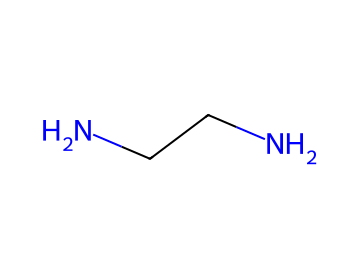
Ethylenediamine 分子结构式
HCID3301

Ethylenediamine

ethane-1,2-diamine

C2H8N260.1 g/molCAS 107-15-3

IDENTITY

结构与身份

标准SMILES
NCCN
InChIKey
PIICEJLVQHRZGT-UHFFFAOYSA-N
分子式
C2H8N2
平均分子量
60.1 g/mol
单同位素质量
60.06874826

IDENTITY

标识信息

中文名
乙二胺
英文名
Ethylenediamine
分子式
C2H8N2
分子量
60.1

ALIASES

名称与别名

乙二胺双酮嗪乙亚胺乙烯二胺乙撑二胺二氨基乙烷2-乙二胺水中乙二胺[伸]乙二胺抗癌-161EDAETHANE-1,2-DIAMINE1,2-DIAMINOETHANE1,2-ETHANEDIAMINE1,2-EthylenediamineEthylendiamineDiaminoethaneH2NCH2CH2NH2Ethyleendiamine1,2-Diaminoethan

PROPERTIES

物理化学性质

熔点
8.5 °C · 8.5 °C (lit.)
沸点
118 °C · 118 °C (lit.)
密度
0.899 g/mL · 0.899 g/mL at 25 °C (lit.)
蒸气密度
2.07 · 2.07 (vs air)
蒸气压
10 mm · 10 mm Hg ( 20 °C)
折射率
20 · n20/D 1.4565(lit.)
闪点
93 °F · 93 °F
储存条件
Flammables area
溶解度
ethanol: soluble(lit.)
酸度系数(pKa)
10.712 · 10.712(at 0℃)
形态
Liquid, Fuming In Air
颜色
colorless to pale yellow
比重
0.899 · 0.899
气味 (Odor)
Strong ammoniacal odor; ammonia-like mild and ammoniacal odor.
PH值
12.2 · 12.2 (100g/l, H2O, 20℃)
爆炸极限值(explosive limit)
2 · 2-17%(V)
水溶解性
miscible
比热容
2.87 J/ · Cp(liquid): 2.87 J/(g·K), at 25℃
敏感性
Air Sensitive
Merck
14 · 14,3795
BRN
605263 · 605263
Henry's Law Constant
1.69 · 1.69(x 10-9 atmm3/mol) at 25 °C (Westheimer and Ingraham, 1956)
介电常数
16 · 16.0(18℃)
暴露限值
10 ppm · ACGIH:TLV-TWA 10 ppm (25 mg/m3)OSHA:PEL-TWA 10 ppm (25 mg/m3)NIOSH:REL-TWA 10 ppm
主要应用
cleaning productscosmeticsenvironmentalfood and beveragespersonal care
InChI
1S/C2H8N2/c3-1-2-4/h1-4H2
InChIKey
PIICEJLVQHRZGT-UHFFFAOYSA-N
SMILES
NCCN
LogP
-1.6 at · -1.6 at 20℃
CAS 数据库
107 · 107-15-3(CAS DataBase Reference)
NIST化学物质信息
107 · Ethylenediamine(107-15-3)
EPA化学物质信息
107 · Ethylenediamine (107-15-3)
外观性质
无色或微黄色粘稠液体,有类似氨的气味。
外观性状
无色透明的粘稠液体,有氨臭。 能溶于水和乙醇,微溶于乙醚,不溶于苯。
溶解性
溶于水、醇,不溶于苯,微溶于乙醚。
Dielectric constant
16 · 16.0(18℃)
化妆品成分功效
NOT REPORTED

SAFETY

安全数据

F
10-34
TSCA
TSCA listed
毒性
LD50 orally in rats: 1.16 g/kg (Smyth)
RTECS号
KH8575000
警示词
危险
WGK Germany
2
包装类别
II
危险等级
8
存储类别
3 - Flammable liquids
安全说明
23-26-36/37/39-45
海关编码
29212110
自燃温度
716 °F
防范说明
P210-P273-P280-P303+P361+P353-P304+P340+P310-P305+P351+P338
危险品标志
C
危险性描述
H226-H302+H332-H311-H314-H317-H334-H412
危险性类别
Acute Tox. 3 DermalAcute Tox. 4 InhalationAcute Tox. 4 OralAquatic Chronic 3Eye Dam. 1Flam. Liq. 3Resp. Sens. 1BSkin Corr. 1BSkin Sens. 1B
危险类别码
10-21/22-34-42/43
REACH 注册登记
Active
毒害物质数据
107-15-3(Hazardous Substances Data)
职业暴露等级
A
职业暴露限值
TWA: 10 ppm (25 mg/m3)
危险性符号(GHS)
GHS02,GHS05,GHS06,GHS08
危险品运输编号
UN 1604
立即威胁生命和健康浓度
1,000 ppm

PRICE

试剂价格

A12132 · 500ml
乙二胺, 99%Ethylenediamine, 99%352元
42726 · 800ml
乙二胺Ethylenediamine, 99+%, AcroSeal™, Thermo Scientific Chemicals5030元

REFERENCE

化学性质

化学性质无色透明的粘稠液体,有氨臭。 能溶于水和乙醇,微溶于乙醚,不溶于苯。

REFERENCE

应用领域

用途用于医药、农药、染料、塑料、橡胶等工业

用途乙二胺又名1,2-二氨基乙烷,是杀菌剂代森铵、代森锌、代森锰锌的中间体,也是杀虫剂吡虫啉的原料。

用途乙二胺是重要的化工原料,广泛用以制造有机化合物、高分子化合物、药物等,用于生产农药杀菌剂(代森锌、代森铵)、杀虫剂、除草剂、染料、染料固色剂、合成乳化剂、破乳剂、纤维表面活性剂、水质稳定剂、除垢剂、电镀光亮剂、纸的湿润强化剂、粘接剂、金属螯合剂EDTA、环氧树脂固化剂、橡胶硫化促进剂、酸性气体的净化剂、照相显影添加剂、超高压润滑油的稳定剂、焊接助熔剂、氨基树脂、乙二胺脲醛树脂等等。还用于有机溶剂和化学分析试剂,以及用于铍、铈、镧、镁、镍、钍、铀等金属的鉴定,锑、鉍、镉、钴、铜、汞、镍、银和铀的测定等。

用途用于治疗牛皮癣,对恶性淋巴瘤、头颈部肿瘤、软组织肉瘤也有一定的缓解作用

用途用作分析试剂、有机溶剂、抗冻剂和乳化剂

用途用作分析试剂、环氧树脂固化剂,也用于有机合成及制药工业

REFERENCE

制备方法

生产方法1.二氯乙烷氨化法将1,2-二氯乙烷和液氨送入反应器中,在120-180℃温度和1.98-2.47MPa压力下,进行热氨解反应,将反应液蒸发一部分水分和过量的氨、然后送入中和器,用30%液碱中和,再经浓缩、脱盐、粗馏得粗乙二胺、粗三胺和多胺混合物,最后再将粗乙二胺在常压下精馏得乙二胺成品,其含量为70%,再加压精馏可得90%的成品。反应过程还副产二乙撑三胺,继续反应还生成三乙撑四胺,四乙撑五胺等多乙撑多胺。2.乙醇胺氨化法将乙醇胺、钴催化剂和水加入反应器,然后往其中通入氨和氢,在20MPa和170-230℃下进行反应,5-10h后,可制得乙二胺,其转化率达69%。反应过程的副反应还生成二乙撑三胺、哌嗪、氨乙基哌嗪、羟乙基哌嗪等。3.环氧乙烷氨化法。此外,从生产医药产品六水哌嗪的母液中,也可分馏得到乙二胺。

生产方法其制备方法有二氯乙烷法和乙醇胺法。(1)二氯乙烷法由二氯乙烷与氨直接合成,在钼钛不锈钢反应管道内进行,反应温度控制在160~190℃,压力为2.452 MPa,反应时间1.5min,反应后的合成液经蒸发一部分水分和过量氨进人中和器,用30%碱液中和,然后经浓缩、脱盐、粗馏得粗乙二胺、粗三胺、粗多胺等混合物,最后再将粗乙二胺在常压精馏得乙二胺成品,其含量70%,在加压下蒸馏可得90%纯度的产品。反应方程式如图:$SClCH2CH2Cl+2NH4OH→HCl·H2NCH2CH2NH2·HCl+2H2O[2NaOH]→NH2CH2CH2NH2+2Nacl(2)乙醇胺法将乙醇胺、氨和循环物料蒸发成气相混合物通入固定床反应器,反应在氢气流中进行,反应温度为300℃,压力为25 MPa,反应生成物部分冷凝后分出气相的氨和氢气,经压缩返回反应器,液相反应物经脱氨后脱水塔后进入精馏塔,从塔顶蒸出乙二胺和哌嗪,进一步分解得乙二胺成品。NH2CH2CH2OH+NH3→NH2CH2CH2NH2+H2O

REFERENCE

毒性防护

急性毒性口服- 大鼠 LD50: 500 毫克/ 公斤; 吸入- 小鼠 LC50: 300 毫克/ 立方米

刺激数据皮肤- 兔子 10 毫克/ 24小时 重度; 眼睛- 兔子 0.75 毫克/ 24小时 重度

职业标准TWA 25毫克/ 立方米; STEL 35 毫克/ 立方米

REFERENCE

包装储运

爆炸物危险特性与空气混合可爆

可燃性危险特性遇明火、高温、氧化剂较易燃; 燃烧产生有毒氮氧化物烟雾

储运特性库房通风低温干燥; 与氧化剂、酸类分开存放

灭火剂干粉、二氧化碳、泡沫、1211灭火剂

UPSTREAM / DOWNSTREAM

上下游产品信息

上游原料

乙醇胺氨水N-氨乙基哌嗪哌嗪(六水)哌嗪1,2-二氯乙烷多胺三胺二氯乙烷多乙烯多胺羟乙基哌嗪

下游产品

2-甲基吡嗪乙撑双硬脂酰胺西苯唑啉2-硝基亚氨基咪唑烷N,N'-二苯磺酰基乙二胺N-乙酰基乙二胺双咪苯脲4-Boc-2-哌嗪酮双甘肽洛非西定乙二胺二盐酸盐2,3-二乙基吡嗪羟乙基乙二胺N,N'-二苄基乙二胺二醋酸盐酸萘乙二胺盐酸酸洗缓蚀剂,咪唑啉阳离子化合物5-(氨基甲基)吲哚2-咪唑烷酮尼凡丁N-氨乙基-3-氨丙基甲基二甲氧基硅烷2-乙基-3-甲基吡嗪N,N-二甲基,对十八烷基苯磺酰胺丙基铵基丙磺酸盐DPE-III型无氰镀锌光亮添加剂乙二胺二乙酸酯N,N,N',N'-四(2-羟基丙基)乙二胺N-月桂酰基-N'-羟乙基-N'-羧甲基乙二胺三乙醇胺盐EQD-3添加剂XD-1无氰镀锌添加剂5,6,7,8-四氢喹喔啉代森钠活性翠蓝 M-G3,3'-亚乙基-双(四氢-4,6-二甲基-2H-1,3,5-硫二氮苯-2-硫酮)莫索尼啶N-月桂酰基-N'-羟乙基乙二胺丙酸盐2-甲基-3-异丁基吡嗪2,3-二甲基吡嗪环氧固化剂柴油加氢脱蜡 (临氢降凝) 催化剂 (系列)2-苯基咪唑啉活性兰198乙二胺 试剂级价格

Ethylenediamine appears as a clear colorless liquid with an ammonia-like odor. Flash point of 91 °F and a melting point of 47 °F. Corrosive to tissue. Vapors are heavier than air. Produces toxic oxides of nitrogen during combustion. Density 7.5 lb / gal. Used to make other chemicals and as a fungicide.

COMPUTED

结构计算性质

XLogP
-2
极性表面积
52 Ų
氢键供体
2
氢键受体
2
可旋转键
1
重原子
4
形式电荷
0
复杂度
6

PROPERTIES

实验与物化性质

Chemical Classes

Nitrogen Compounds -> Amines, Aliphatic

Corrosives

Drugs

Pharmaceuticals -> Listed in ZINC15

pH

11.9 @ 25 °C (25% soln)

SpringerMaterials Properties

15N nuclear magnetic resonance spectrum

Pesticides

Pesticide -> EPA IRIS

LogP

log Kow = -2.04 @ pH 13

-2.04

-1.2

Odor

Ammonia-like

Food Additives

TRACER -> FDA Substance added to food

Density

0.898 at 77 °F (EPA, 1998) - Less dense than water; will float

0.898 @ 25 °C/4 °C

Saturated liquid density: 56.650 lb/cu ft; liquid heat capacity: 0.694 Btu/lb-F; saturated vapor pressure: 0.216 lb/sq in; saturated vapor density: 0.00228 lb/cu ft (all at 70 °F)

Relative density (water = 1): 0.9

0.91

1.46 @ 20°C

Viscosity

0.0154 cP @ 25 °C

0.0154 cP at 25 °C

Color/Form

Water-white liquid

Colorless, viscous liquid ... [Note: A solid below 47 degrees F].

Solubility

greater than or equal to 100 mg/mL at 63 °F (NTP, 1992)

Crystals; sublimes without melting; freely sol in water; practically insol in alc /Dihydrochloride/

Sol in benzene unless insufficiently dried; slightly sol in ether

SOL IN ALL PROPORTIONS IN ETHYL ALCOHOL; VERY SOL IN WATER

Water solubility = 1X10+6 mg/l

Miscible with water, oxygenated and aromatic solvents

GHS

GHS分类

GHS Classification

Danger

H226: Flammable liquid and vapor [Warning Flammable liquids]

P210, P233, P240, P241, P242, P243, P260, P261, P264, P270, P271, P272, P280, P284, P301+P317, P301+P330+P331, P302+P352, P302+P361+P354, P303+P361+P353, P304+P340, P305+P354+P338, P316, P317, P321, P330, P333+P317, P342+P316, P362+P364, P363, P370+P378, P403, P403+P235, P405, and P501 (click each P-code to see the statement)

This chemical does not meet GHS hazard criteria for < 0.1% (1 of 2078) of reports.

Danger

H226 (> 99.9%): Flammable liquid and vapor [Warning Flammable liquids]

HAZARDS

危害信息

Regulatory Information

Chemical: 1,2-Ethanediamine

Hazard Traits - Respiratory Toxicity

Commission Regulation No 844/2012

1,2-Ethanediamine is listed on the EPA's Chemical Data Reporting (CDR) system. Manufacturers and importers of 1,2-Ethanediamine are required to report information about their production and use of this chemical to the EPA under the Toxic Substances Control Act (TSCA). (40 eCFR Part 711)

Status: Active Update: 02-03-2023 https://echa.europa.eu/registration-dossier/-/registered-dossier/15765

Substance: Ethylenediamine

Other Safety Information

IMAP assessments - 1,2-Ethanediamine: Environment tier I assessment

DOT Label

Corrosive Flammable Liquid

Fire Hazards

Burning rate: 2.2 mm/minute. When exposed to heat or flame, the material has a moderate fire potential. The material can react readily with oxidizing materials. Containers may explode in heat of fire. Material emits nitrogen oxides when burned. Avoid carbon disulfide, silver perchlorate, imines, oxidizing materials. Stable. Hazardous polymerization may not occur. (EPA, 1998)

· Flammable/combustible material.

Flammable. Gives off irritating or toxic fumes (or gases) in a fire. Above 34 °C explosive vapour/air mixtures may be formed.

Fire Potential

FLAMMABLE LIQUID WHEN EXPOSED TO HEAT, FLAME OR OXIDIZERS.

Contact with ... chlorinated organic cmpd may cause fires ... .

Health Hazards

Vapor inhalations at a concentration of 200 ppm for 5 to 10 minutes will lead to nasal irritation and produce a tingling sensation. Inhalation at concentrations of 400 ppm or greater leads to severe nasal irritation. Respiratory irritation may result. Many individuals are hypersensitive to ethylenediamine exposure; therefore, safe threshold limits are difficult to set. (EPA, 1998)

· May cause toxic effects if inhaled or ingested.

Hazards Summary

Liquid causes second degree burns after contact for a few minutes; [CHRIS] Corrosive to skin; [Quick CPC] Ethylenediamine is used in topical creams and suppositories, e.g., nystatin cream and aminophylline suppositories. Allergic contact dermatitis has been reported in a pharmacist and in healthcare workers. [Marks, p. 85-7] Allergic contact dermatitis in healthcare workers reported after exposure to intravenous aminophylline preparations containing ethylenediamine; [Kanerva, p. 1520] Occupational asthma reported in shellac handler and photographer; [Malo] Can cause pulmonary edema after an acute inhalation exposure; [ICSC] Danger of skin and airway sensitization; [MAK] Humans complain of nasal irritation after inhaling concentrations of 200 ppm for 5-10 minutes. [CAMEO] A lachrymator; [CHEMINFO]

DOT ID and Guide

1604 132

1604 132

FDA Requirements

Ethylenediamine is an indirect food additive for use only as a component of adhesives.

Reactive Group

Amines, Phosphines, and Pyridines

EC Classification

Symbol: C; R: 10-21/22-34-42/43; S: (1/2)-23-26-36/37/39-45

UN Classification

UN Hazard Class: 8; UN Subsidiary Risks: 3; UN Pack Group: II

SAFETY

安全与防护

Fire Fighting

Wear full protective clothing including gloves and boots. If necessary to enter closed area, wear full-faced gas masks with self-contained breathing apparatus. Use water spray, dry chemical, alcohol foam, or carbon dioxide. Do not use water in case of drum or tank fires. If a leak or spill has not ignited, use water spray to reduce the vapors and dilute spills to nonflammable mixtures. Use water to keep fire-exposed containers cool. (EPA, 1998)

Use water spray, powder, alcohol-resistant foam, carbon dioxide. In case of fire: keep drums, etc., cool by spraying with water.

First Aid Measures

Fresh air, rest. Refer immediately for medical attention.

Remove contaminated clothes. Rinse skin with plenty of water or shower. Refer immediately for medical attention.

First rinse with plenty of water for several minutes (remove contact lenses if easily possible), then refer for medical attention.

Rinse mouth. Do NOT induce vomiting. Give one or two glasses of water to drink. Refer immediately for medical attention.

Accidental Release Measures

· CALL 911. Then call emergency response telephone number on shipping paper. If shipping paper not available or no answer, refer to appropriate telephone number listed on the inside back cover.

· ELIMINATE all ignition sources (no smoking, flares, sparks or flames) from immediate area.

First Aid

Signs and Symptoms of Acute Ethylenediamine Exposure: Acute exposure to ethylenediamine may result in cough, difficulty in breathing, irritation of the lungs, and pneumonia. Nausea, vomiting, and diarrhea are often seen. Contact with ethylenediamine may result in redness, pain, irritation, and burns.

General First Aid:

(General first aid procedures)

Safe Storage

Fireproof. Separated from strong oxidants, acids, chlorinated organic compounds and food and feedstuffs. Cool. Well closed. Store only in original container.

Exposure Control and Personal Protection

· Wear positive pressure self-contained breathing apparatus (SCBA).

Fire Fighting Procedures

Use water spray, dry chem, "alcohol resistant" foam, or carbon dioxide. Use water spray to keep fire-exposed containers cool. Solid streams may be ineffective and spread material.

Do not use water in case of drum or tank fires.

Storage Conditions

Outside or detached storage is preferred. Avoid oxidizing materials, acids, and sources of halogens. Store in a cool, dry, well-ventilated location.

Cleanup Methods

1. Remove all ignition sources. 2. Ventilate area of spill or leak. 3. If in the liq form, absorb on paper towels. Evaporate in a safe place (such as a fume hood). Allow sufficient time for evaporating vapors to completely clear the hood ductwork. Burn the paper in a suitable location away from combustible materials. Large quantities can be collected and atomized in a suitable combustion chamber equipped with an appropriate effluent gas cleaning device. ... 4. If in the solid form, collect, allow to melt, and dispose of the liq as above.

Overspread /spill with/ sufficient sodium bisulfate and sprinkle water.

Nonfire Spill Response

Excerpt from ERG Guide 132 [Flammable Liquids - Corrosive]:

Disposal Methods

SRP: At the time of review, criteria for land treatment or burial (sanitary landfill) disposal practices are subject to significant revision. Prior to implementing land disposal of waste residue (including waste sludge), consult with environmental regulatory agencies for guidance on acceptable disposal practices.

Ethylenediamine may be disposed of by atomizing in a suitable combustion chamber equipped with an appropriate effluent gas cleaning device.

Catalytic /destruction/ of waste gases from ethylenediamine production is described.

Removal of ethylenediamine from wastewater using ion exchange is described.

Spillage Disposal

Remove all ignition sources. Personal protection: complete protective clothing including self-contained breathing apparatus. Ventilation. Collect leaking and spilled liquid in covered containers as far as possible. Absorb remaining liquid in sand or inert absorbent. Then store and dispose of according to local regulations. Collect the spilled substance into containers. The container should be made of the same material as the original container.

TOXICITY

毒理信息

Interactions

Ethylenediamine (EDA) (31.6-1000 mg/kg, ip) inhibited the convulsive effects of pentylenetetrazol (100 mg/kg, ip) in mice. EDA (100-1000 mg/kg, ip) incr the convulsion threshold to the iv infusion of 3 convulsants in the order pentylenetetrazol > bicuculline > strychnine.

A 37-yr-old pt sensitized to ethylenediamine by topical use of a steroid cream for scaly rash, developed an itchy morbilliform rash affecting the whole body following piperazine citrate therapy for threadworms.

Target Organs

Skin, respiratory system, liver, kidneys

Ecotoxicity Values

LC50 Pimephales promelas (fathead minnow) 115.7 mg/l/96 hr @ 22 °C (95% confidence limit 98.6-131.6 mg/l) /Static bioassay/

TLM: ORYZIAS LATIPES 1000 MG/L/24 HR /CONDITIONS OF BIOASSAY NOT SPECIFIED/

Toxicity Threshold (Cell Multiplication Inhibition Test) Uronema parduczi Chatton-Lwoff (protozoa) 52 mg/l /Conditions of bioassay not specified/

Toxicity Threshold (Cell Multiplication Inhibition Test) Scenedesmus quadricauda (green algae) 0.85 mg/l /Conditions of bioassay not specified/

For more Ecotoxicity Values (Complete) data for ETHYLENEDIAMINE (9 total), please visit the HSDB record page.

Environmental Fate

TERRESTRIAL FATE: Based on a classification scheme(1), an average Koc value of 4766(2) indicates that ethylenediamine is expected to have slight mobility in soil(SRC). Volatilization of ethylenediamine from moist soil surfaces is not expected to be an important fate process(SRC) given a Henry's Law constant of 1.73X10⁻⁹ atm-cu m/mole(3). The potential for volatilization of ethylenediamine from dry soil surfaces may exist based upon a vapor pressure of 12.1 mm Hg(4). However, adsorption to soil may attenuate volatilization(SRC). Based on screening studies(5-7), biodegradation is expected to be the most important degradation process for this compound but no experimental rates in soil are available. Ethylenediamine may also form stable complexes with metal ions(8) in soil, but again, experimental data are lacking(SRC).

AQUATIC FATE: Based on a classification scheme(1), an average Koc value of 4766(2) indicates that ethylenediamine is expected to adsorb to suspended solids and sediment in water(SRC). Volatilization from water surfaces is not expected(3) based upon a Henry's Law constant of 1.73X10⁻⁹ atm-cu m/mole(4). As ethylenediamine has two primary amine groups, at the pH range found in most environmental waters, it is expected to be partially protonated; the dissociated form will not volatilize. According to a classification scheme(5), an estimated BCF of less than 1(SRC), from its log Kow(6) and a regression-derived equation(7), suggests the potential for bioconcentration in aquatic organisms is low. Based on screening studies(8-10), biodegradation is expected to be the most important degradation process for this compound but no experimental rates in water are available. Complexation of ethylenediamine with transition metals(11) in the water or reaction with humic materials(12) is possible(SRC).

ATMOSPHERIC FATE: According to a model of gas/particle partitioning of semivolatile organic compounds in the atmosphere(1), ethylenediamine, which has a vapor pressure of 12.1 mm Hg at 25 °C(2), is expected to exist solely as a vapor. Vapor-phase ethylenediamine is degraded in the atmosphere by reaction with photochemically-produced hydroxyl radicals(SRC); the half-life for this reaction in air is estimated to be 6 hours(SRC), calculated from its rate constant of 6.3x10⁻¹¹ cu cm/molecule-sec at 25 °C(3) using a structure estimation method(3). As ethylenediamine is miscible in water(4), washout by rain will also be an important removal process(SRC).

Food Survey Values

... Amines from decomposing fish ... /Amines/

Adverse Effects

Dermatotoxin - Skin burns.

Exposure Routes

The substance can be absorbed into the body by inhalation, through the skin and by ingestion.

inhalation, skin absorption, ingestion, skin and/or eye contact

Signs and Symptoms

Cough. Sore throat. Shortness of breath. Burning sensation. Wheezing. Shortness of breath.

Redness. Pain. Burning sensation. Skin burns.

Redness. Pain. Blurred vision. Severe burns.

Burns in mouth and throat. Sore throat. Burning sensation. Abdominal pain. Shock or collapse.

irritation nose, respiratory system; sensitization dermatitis; asthma; liver, kidney damage

EPA IRIS Information

Ethylene diamine

Medical Surveillance

... A complete history and physical exam /is required/ ... to detect existing conditions that might place the exposed employee at increased risk, and to establish a baseline for future health monitoring. Persons with a history of asthma, allergies, or unknown sensitization to ethylenediamine would be expected to be at incr risk from exposure. Exam of the resp system, liver, and kidneys should be stressed. The skin should be examined for evidence of chronic disorders. ... Should be repeated on an annual basis.

Soil Adsorption/Mobility

Ethylenediamine has two primary amine groups and at the pH range found in most soils it is expected to be partially protonated given a pKa1 of 10.7 and a pKa2 of 7.6(1). An average Koc of 4766 (range=2071 to 6160) was measured for ethylenediamine in six different soils; five were from the vadose zone and one from an aquifer (saturated zone)(2). pH values ranged from 6.0 to 9.6 and the fraction of organic carbon from 0.0024 to 0.0391 for this group of soils. Soils with increased cation exchange capacity and organic content had greater affinity for ethylenediamine(2).

TSCA Test Submissions

Ethylenediamine (CAS # 107-15-3) was evaluated for acute oral toxicity in groups of Fischer 344 rats (5/sex/group) administered single oral doses of 200, 400, 800, 1200, and 1800 mg/kg bodyweight as a monohydrochloride or dichlorohydride salt in water. Mortality was attributed to treatment at doses of 1800 mg/kg (9/10) and 1200 mg/kg (2/10); An LD50 was not calculated. Clinical signs observed in the 1200 mg/kg group included emaciation, bluish extremities and diarrhea. Upon necropsy, no gross pathology was observed.

REGULATORY

法规信息

FDA Requirements

Ethylenediamine is an indirect food additive for use only as a component of adhesives.

Atmospheric Standards

This action promulgates standards of performance for equipment leaks of Volatile Organic Compounds (VOC) in the Synthetic Organic Chemical Manufacturing Industry (SOCMI). The intended effect of these standards is to require all newly constructed, modified, and reconstructed SOCMI process units to use the best demonstrated system of continuous emission reduction for equipment leaks of VOC, considering costs, non air quality health and environmental impact and energy requirements. Ethylenediamine is produced, as an intermediate or a final product, by process units covered under this subpart.

CERCLA Reportable Quantities

Releases of CERCLA hazardous substances are subject to the release reporting requirement of CERCLA section 103, codified at 40 CFR part 302, in addition to the requirements of 40 CFR part 355. Ethylenediamine is an extremely hazardous substance (EHS) subject to reporting requirements when stored in amounts in excess of its threshold planning quantity (TPQ) of 10,000 lbs.

Persons in charge of vessels or facilities are required to notify the National Response Center (NRC) immediately, when there is a release of this designated hazardous substance, in an amount equal to or greater than its reportable quantity of 5000 lb or 2270 kg. The toll free number of the NRC is (800) 424-8802; In the Washington D.C. metropolitan area (202) 426-2675. The rule for determining when notification is required is stated in 40 CFR 302.4 (section IV. D.3.b).

Clean Water Act Requirements

Ethylenediamine is designated as a hazardous substance under section 311(b)(2)(A) of the Federal Water Pollution Control Act and further regulated by the Clean Water Act Amendments of 1977 and 1978. These regulations apply to discharges of this substance. This designation includes any isomers and hydrates, as well as any solutions and mixtures containing this substance.

DHS Chemicals of Interest (COI)

Ethylenediamine

1

20000

Toxic chemical that can be released at a facility.

State Drinking Water Guidelines

(FL) FLORIDA 10,000 ug/l

PHARMACOLOGY

药理信息

Mechanism of Action

Ethylenediamine (EDA) acted as a gamma-aminobutyric acid (GABA) agonist by enhancing (3)H-labeled diazepam binding to well-washed rat forebrain membrane prepn in a bicuculline-sensitive manner, although its potency was 700-800 fold less than that of gamma-aminobutyric acid. Ethylenediamine was more than 3750-fold weaker than gamma-aminobutyric acid as a displacer of (3)H-gamma-aminobutyric acid bound to membrane receptors & was more than 40-fold weaker than gamma-aminobutyric acid at (3)H-gamma-aminobutyric acid uptake sites. Its most potent action was as an inhibitor of beta-alanine uptake into rat cerebral cortex slices.

The release of (3)H gamma-aminobutyric acid (GABA) from Mueller (glial) cells was studied in the rat retina by a double isotope-labeling technique in which Mueller cells are preloaded with (3)H-gamma-aminobutyric acid while a population of neurons is prelabeled with (14)C-labeled glycine. The effects of 2 depolarizing agents, high K+ and veratridine, and the gamma-aminobutyric acid mimetic, ethylenediamine (EDA), on transmitter release from glial cells and neurons were simultaneously determined. Ethylenediamine released (3)H-gamma-aminobutyric acid readily, whereas little (14)C-glycine release was observed.

Biological Half-Life

Ethylenediamine has a short half life of ~0.55 hours.

Metabolism/Metabolites

Male rats were dosed with (14)C-ethylenediamine (EDA) at 5, 50, or 500 mg/kg by oral, endotracheal, and iv routes. Six to 9% of the admin radioactivity was eliminated via expired air in the form of (14)CO2. n-Acetylethylenediamine, a major metabolite, accounted for approx half of the urinary radioactivity. Depending on the dosage level, 2-49% of the radioactivity was unchanged parent cmpd. The route of admin did not appear to change the metabolic profile.

FDA Pharmacological Classification

60V9STC53F

ETHYLENEDIAMINE

Established Pharmacologic Class [EPC] - Standardized Chemical Allergen

Physiologic Effects [PE] - Increased Histamine Release

Physiologic Effects [PE] - Cell-mediated Immunity

Chemical Structure [CS] - Allergens

Absorption, Distribution and Excretion

After oral administration its bioavailability is about 0.34, due to a substantial first-pass effect.

Renal excretion of the unchanged substance amounts to only about 18% after intravenous and 3% after oral administration.

Vd = 0.133 l/kg

/Diamines/ are absorbed through the skin. /Diamines/

Male rats were dosed with (14)C-ethylenediamine (EDA) at 5, 50, or 500 mg/kg by oral, endotracheal, and iv routes. Urinary excretion was the primary route of elimination accounting for 42 to 65% of the admin radioactivity. Fecal excretion was 5-32%, depending upon the route. Six to 9% was eliminated via expired air in the form of CO2. At 48 hr, 11-21% of radioactivity remained in the various organs & the carcass. Thyroid, bone marrow, liver, and kidney contained relatively higher concn. The route of admin did not appear to change the metabolic profile. As the dosage incr from 5 to 50 to 500 mg/kg, there was a pattern of accumulation of ethylenediamine with a corresponding decr of metabolite formation.

Plasma concn of ethylenediamine (EDA) were examined after oral and iv admin of aminophylline (theophylline and ethylenediamine mixture) to 3 healthy subjects. Ethylenediamine was not detectable after 2 hr.

Tissue Locations

Kidney

Cellular Locations

Cytoplasm

USES

用途与制造

Uses

Used in the manufacture of chelating agents, fungicides, waxes, polyamide resins, and corrosion inhibitors. [ACGIH] Used as an emulsifier, an inhibitor in antifreeze solutions, and an additive to pharmaceuticals and textile lubricants; [Merck Index] Used in photography (color developing baths); [www.ci.tucson.az.us/arthazards/medium.html]

Textiles (Fiber & Fabric Manufacturing) [Category: Industry]

For Ethylenediamine (USEPA/OPP Pesticide Code: 004205) there are 0 labels match. /SRP: Not registered for current use in the U.S., but approved pesticide uses may change periodically and so federal, state and local authorities must be consulted for currently approved uses./

Solvent for casein, albumin, shellac, and sulfur; emulsifier; stabilizing rubber latex; as inhibitor in antifreeze solutions; in textile lubricants; pharmaceutic aid (aminophylline injection stabilizer)

In prepn of dyes, synthetic waxes, resins, insecticides and asphalt wetting agents

Use in manuf of weed killers; use in manuf of surfactants, emulsifying agents, wetting agents, dispersants, corrosion inhibitors, detergents, and textile surface treatments

Impurities

The ammonia-dichloroethane reaction yields the entire family of ethyleneamines: EDA, DEDA, DETA, TETA, TEPA, PEHA and AEP. The percent yield of each amine is determined by the ratio of dichloroethene to ammonia.

U.S. Exports

(1972) 7.31X10+9 G

(1975) 1.43X10+9 G

(1984) 1.13X10+10 g

U.S. Imports

(1972) NEGLIGIBLE

(1975) 2.33X10+8 G

(1984) 1.09X10+9 g

U.S. Production

2023: 100,000,000 - <500,000,000 lb

1,2-Diaminoethane is produced in large quantities, 26,509,000 kg in 1993.

(1972) 2.70X10+10 G

(1975) 3.0X10+10 G

Consumption Patterns

CHEMICAL PROFILE: Ethylenediamine. Exports (mainly for carbamate fungicides), 45%; chelating agents (mainly EDA tetraacetic acid tetrasodium salt), 25%; oil and gas additives, 5%; polyamides, 5%; aminoethylethanol-amine-based surfactants, 5%; ethylene (bis)stearamide, 5%; others, including urethane additives, 10%.

CHEMICAL PROFILE: Ethylenediamine. Demand: 1987: 75 million lb; 1988: 77 million lb; 1992 /projected/: 85 million lb. (Includes exports, but not imports, totalling 4 to 5 million lb in 1987, or potential demand for the new Air Products facility).

Chemical Profile: Ethylenediamine. Exports (mainly for carbamate fungicides and tetraacetylethylenediamine (TAED)), 45%; chelating agents (mainly ethylenediaminetetraacetic acid (EDTA) and tetrasodium salt), 25%; lube oil and gas additives, 5%; nonreactive polyamide resins, 5%; aminoethylethanolamine-based surfactants, 5%; ethylene(bis)stearamide, 5%; others, including urethane additives, 10%.

Chemical Profile: Ethylenediamine. Demand: 1990: 80 million pounds; 1991: 82 million pounds; 1995: 90 million pounds. (Includes exports, which in 1990 are estimated at about 35 million pounds).

Lube oil additives, 35%; wet strength resins, 12%; chelating agents, 11%; epoxy curing agents, 9%; surfactants, 8%; polyamide resins, 6%; oil field chemicals, 5%; miscellaneous, including ethylene bis(stearamide), 14% /Ethyleneamines including EDA/

Consumer Uses

Other

Industry Uses

Chelating agent

Methods of Manufacturing

Catalytic reaction of ethylene glycol or ethylene dichloride and ammonia (Ni or Cu catalysts are used)

Ethylenediamine is produced mainly by reacting ethylene chloride with aqueous or liquid ammonia at about 100 °C.

The reaction of ethanolamine with ammonia ... In a continuous procedure, ethanolamine, ammonia, and hydrogen are passed over a cobalt catalyst at 20 MPa and 150-230 °C.

Reaction of ethylene oxide with ammonia

Formulations/Preparations

USEPA/OPP Pesticide Code 004205; Trade Names: Busan 881, component of (with 039002 and 063301), NCI-C60402.

Grades: Technical; USP, 97%; soln of various strenghts.

Grades or Purity: 99+%

Household Products

Information on 3 consumer products that contain Ethylenediamine in the following categories is provided:

General Manufacturing Information

Computer and Electronic Product Manufacturing

1,2-Ethanediamine: ACTIVE

Method of purification is redistillation

Guard against sticking of ground-glass joint due to strong alkaline.

ALIASES

名称与别名

共 140 条
ethylenediamineEthane-1,2-diamine107-15-31,2-Diaminoethane1,2-EthanediamineEthylene diamineEthylendiamineedamineDimethylenediamine1,2-EthylenediamineAethaldiaminAethylenediaminEthyleendiamineEthylene-diaminebeta-Aminoethylamine1,2-DiaminoaethanAlgicode 106LAmerstat 2741,2-Diamino-ethaan1,2-Diamino-ethano

REACTIONS

相关反应

2,597
HRID 705 反应方程式

750 AstraZeneca ELN dataset

查看
HRID 1146 反应方程式

uspto-grants-1998_03 · 10.6084/m9.figshare.5104873.v1 · US05723511

查看
HRID 1407 反应方程式

uspto-grants-1998_03 · 10.6084/m9.figshare.5104873.v1 · US05725841

查看
HRID 1928 反应方程式

uspto-grants-1998_03 · 10.6084/m9.figshare.5104873.v1 · US05728369

查看
HRID 2159 反应方程式

uspto-grants-1998_03 · 10.6084/m9.figshare.5104873.v1 · US05728708

查看
HRID 2160 反应方程式

uspto-grants-1998_03 · 10.6084/m9.figshare.5104873.v1 · US05728708

查看
HRID 2384 反应方程式

uspto-grants-1998_03 · 10.6084/m9.figshare.5104873.v1 · US05728878

查看
HRID 3011 反应方程式

uspto-grants-1998_03 · 10.6084/m9.figshare.5104873.v1 · US05731468

查看