
uspto-grants-1998_03 · 10.6084/m9.figshare.5104873.v1 · US05723649
查看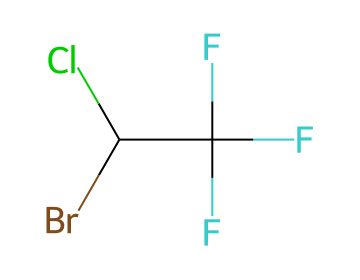
IDENTITY
COMPUTED
PROPERTIES
2.3
log Kow = 2.30
2.7
2.30
-1.71
Characteristic, sweetish, not unpleasant odor
1.871 at 68 °F (NTP, 1992) - Denser than water; will sink
1.871 at 20 °C/4 °C
Relative density (water = 1): 1.87
1.87
1.87
Colorless, volatile liquid
0.1 to 1.0 mg/mL at 64 °F (NTP, 1992)
4070
Miscible with petroleum ether, other fat solvents
In water, 4,070 mg/L at 25 °C
3.81e+00 g/L
Solubility in water, g/100ml: 0.45
122.4 °F at 760 mmHg (NTP, 1992)
50.2
50.2 °C
50 °C
122.4 °F
122 °F
Halothane is decomposed by sunlight and should be stored in dark colored bottles.
When heated to decomposition it emits very toxic fumes of /hydrogen fluoride, hydrogen chloride and hydrogen bromide/.
-180 °F (NIOSH, 2024)
50-50.5
-118 °C
-118 °C
-180 °F
-180 °F
6.8 (calculated) (NTP, 1992) - Heavier than air; will sink (Relative to Air)
Relative vapor density (air = 1): 2.87
6.8
243 mmHg at 68 °F (NTP, 1992)
302.0 [mmHg]
Vapor pressure: 243 mm Hg @ 20 °C
302 mm Hg at 25 °C (extrapolated)
Vapor pressure, kPa at 20 °C: 32.4
243 mmHg
Index of refraction = 1.3697 at 0 °C/D
GHS
This chemical does not meet GHS hazard criteria for 6% (3 of 50) of reports.
Danger
H315 (84%): Causes skin irritation [Warning Skin corrosion/irritation];H318 (94%): Causes serious eye damage [Danger Serious eye damage/eye irritation];H335 (84%): May cause respiratory irritation [Warning Specific target organ toxicity, single exposure; Respiratory tract irritation];H341 (14%): Suspected of causing genetic defects [Warning Germ cell mutagenicity];H360 (84%): May damage fertility or the unborn child [Danger Reproductive toxicity]
P203, P261, P264, P264+P265, P271, P280, P302+P352, P304+P340, P305+P354+P338, P317, P318, P319, P321, P332+P317, P362+P364, P403+P233, P405, and P501 (click each P-code to see the statement)
Aggregated GHS information provided per 50 reports by companies from 7 notifications to the ECHA C&L Inventory. Each notification may be associated with multiple companies.;Reported as not meeting GHS hazard criteria per 3 of 50 reports by companies.;There are 6 notifications provided by 47 of 50 reports by companies with hazard statement code(s).;Information may vary between notifications depending on impurities, additives, and other factors. The percentage value in parenthesis indicates the notified classification ratio from companies that provide hazard codes. Only hazard codes with percentage values above 10% are shown. For more detailed information, please visit ECHA C&L website.
HAZARDS
Chemical: Ethane, 2-bromo-2-chloro-1,1,1-trifluoro-
Hazard Traits - Developmental Toxicity;Authoritative List - Prop 65;Report - regardless of intended function of ingredient in the product
Halothane: Does not have an individual approval but may be used under an appropriate group standard
The New Jersey Worker and Community Right to Know Act requires public and private employers to provide information about hazardous substances at their workplaces. (N.J.S.A. 34:5A-1 et. seq.)
IMAP assessments - Ethane, 2-bromo-2-chloro-1,1,1-trifluoro-: Human health tier I assessment;IMAP assessments - Ethane, 2-bromo-2-chloro-1,1,1-trifluoro-: Environment tier I assessment
Class 9
Literature sources indicate that this chemical is nonflammable. (NTP, 1992)
Not combustible. Gives off irritating or toxic fumes (or gases) in a fire.
Non-flammable
Excerpt from NIOSH Pocket Guide for Halothane:;Exposure Routes: Inhalation, skin absorption, ingestion, skin and/or eye contact;Symptoms: Irritation eyes, skin, respiratory system; confusion, drowsiness, dizziness, nausea, analgesia, anesthesia; cardiac arrhythmias; liver, kidney damage; decreased audio-visual performance; In Animals: reproductive effects;Target Organs: Eyes, skin, respiratory system, cardiovascular system, central nervous system, liver, kidneys, reproductive system (NIOSH, 2024)
See WASTE ANESTHETIC GASES Halothane is in the list of Some volatile substances which may be abused by inhalation published on the web site of the U.N. International Drug Control Programme, indicating its potential to cause narcosis in workers. [Reference #1] Inhalation of high concentrations can cause CNS depression, cardiac arrhythmias, and liver injury; [ICSC] TLV Basis is developmental effects, liver damage, and CNS impairment; [ACGIH]
Manufacturers, packers, and distributors of drug and drug products for human use are responsible for complying with the labeling, certification, and usage requirements as prescribed by the Federal Food, Drug, and Cosmetic Act, as amended (secs 201-902, 52 Stat. 1040 et seq., as amended; 21 U.S.C. 321-392).
The Approved Drug Products with Therapeutic Equivalence Evaluations List identifies currently marketed drug products, incl halothane, approved on the basis of safety and effectiveness by FDA under sections 505 and 507 of the Federal Food, Drug, and Cosmetic Act.
Halogenated Organic Compounds;Fluorinated Organic Compounds
Zakhari S, Aviado DM; Cardiovascular Toxicology of Aerosol Propellants, Refrigerants and Related Solvents; Target Organ Toxicology Series: Cardiovascular Toxicology, XII+ 388 pages; Raven Press: New York, NY 281-326 (1982). Review of the toxicology of aerosol propellants, refrigerants and related solvents on the cardiovascular system of humans.
Edling C; Anesthetic Gases; Occupational Hazards in the Health Professions DK Brune and C Edling, Editors; Boca Raton Florida CRC Press Inc 121-30 (1989). A review of occupational hazards due to anesthetic gases in the operating room were reviewed, including mutagenic effects, cytogenic effects, reproductive effects, teratogenic effects, carcinogenic effects, and effects on the nervous system, liver, kidneys, and bone marrow.
Baeder C, Albrecht M; Embryotoxic/Teratogenic Potential of Halothane; Interna Arch Occup Environ Health 62 (4): 263-71 (1990). A survey of the effects of halothane as reported in the literature from 1976 through 1987 was presented.
McDougal JN et al; Dermal Absorption of Organic Chemical Vapors in Rats and Humans; Fundamental and Applied Toxicology 14 (2): 299-308 (1990). The transdermal kinetics of eight organic chemical vapors were examined in male Fischer 344 rats and the results compared to data from human volunteers.
For more Special Reports (Complete) data for 2-BROMO-2-CHLORO-1,1,1-TRIFLUOROETHANE (7 total), please visit the HSDB record page.
HALOTHANE is sensitive to exposure to light. Incompatible with oxidizing materials. Tarnishes or corrodes most metals, with the exception of chromium, nickel and titanium. When moisture is present, it attacks aluminum, brass and lead, but not copper. Contact causes rubber and some plastics to deteriorate rapidly. (NTP, 1992)
Decomposes on heating. This produces toxic and corrosive fumes including hydrogen bromide, hydrogen chloride and hydrogen fluoride. Decomposes under the influence of light.
SAFETY
Fires involving this material can be controlled with a dry chemical, carbon dioxide or Halon extinguisher. A water spray may also be used. (NTP, 1992)
In case of fire in the surroundings, use appropriate extinguishing media. In case of fire: keep drums, etc., cool by spraying with water.
Fresh air, rest. Refer for medical attention.
Remove contaminated clothes. Rinse skin with plenty of water or shower.
First rinse with plenty of water for several minutes (remove contact lenses if easily possible), then refer for medical attention.
Rinse mouth. Do NOT induce vomiting. Refer for medical attention .
EYES: First check the victim for contact lenses and remove if present. Flush victim's eyes with water or normal saline solution for 20 to 30 minutes while simultaneously calling a hospital or poison control center. Do not put any ointments, oils, or medication in the victim's eyes without specific instructions from a physician. IMMEDIATELY transport the victim after flushing eyes to a hospital even if no symptoms (such as redness or irritation) develop.;SKIN: IMMEDIATELY flood affected skin with water while removing and isolating all contaminated clothing. Gently wash all affected skin areas thoroughly with soap and water. If symptoms such as redness or irritation develop, IMMEDIATELY call a physician and be prepared to transport the victim to a hospital for treatment.;INHALATION: IMMEDIATELY leave the contaminated area; take deep breaths of fresh air. If symptoms (such as wheezing, coughing, shortness of breath, or burning in the mouth, throat, or chest) develop, call a physician and be prepared to transport the victim to a hospital. Provide proper respiratory protection to rescuers entering an unknown atmosphere. Whenever possible, Self-Contained Breathing Apparatus (SCBA) should be used; if not available, use a level of protection greater than or equal to that advised under Protective Clothing.;INGESTION: DO NOT INDUCE VOMITING. Volatile chemicals have a high risk of being aspirated into the victim's lungs during vomiting which increases the medical problems. If the victim is conscious and not convulsing, give 1 or 2 glasses of water to dilute the chemical and IMMEDIATELY call a hospital or poison control center. IMMEDIATELY transport the victim to a hospital. If the victim is convulsing or unconscious, do not give anything by mouth, ensure that the victim's airway is open and lay the victim on his/her side with the head lower than the body. DO NOT INDUCE VOMITING. IMMEDIATELY transport the victim to a hospital. (NTP, 1992)
(General first aid procedures);Eye: Irrigate immediately - If this chemical contacts the eyes, immediately wash (irrigate) the eyes with large amounts of water, occasionally lifting the lower and upper lids. Get medical attention immediately.;Skin: Soap wash promptly - If this chemical contacts the skin, promptly wash the contaminated skin with soap and water. If this chemical penetrates the clothing, promptly remove the clothing and wash the skin with soap and water. Get medical attention promptly.;Breathing: Respiratory support;Swallow: Medical attention immediately - If this chemical has been swallowed, get medical attention immediately.
Keep in the dark. Ventilation along the floor.
5.0 [ppm]
Not combustible. Gives off irritating or toxic fumes (or gases) in a fire.
Store below 40 °C (104 °F), preferably between 15 and 30 °C (59 and 86 °F), unless otherwise specified by manufacturer. Store in a tight, light resistant container.
Keep in the dark. Ventilation along the floor.
Ventilation. Collect leaking liquid in sealable containers. Absorb remaining liquid in sand or inert absorbent and remove to safe place. (Extra personal protection: self-contained breathing apparatus).
Results of personal air sampling surveys of nitrous oxide and halothane in operating theaters and recovery areas at 27 hospitals performed between 1980 and 1984 were reported. Exposures for different groups of workers during general surgical procedures with and without anesthetic gas scavenging were compared. The survey covered 40 theaters and 18 recovery areas. Geometric mean nitrous oxide exposures with consistent scavenging and without scavenging, respectively, were: anesthetists, 71 and 211 ppm; surgeons, 50 ppm and 150 ppm; other staff, 24 ppm and 70 ppm; and all staff, 32 ppm and 94 ppm. Geometric mean halothane exposures with consistent scavenging and without scavenging respectively, were: anesthesiologists, 1.1 ppm and 4.0 ppm; surgeons, 0.6 ppm and 1.3 ppm; other staff, 0.7 ppm and 1.3 ppm; and all staff, 0.7 ppm and 1.7 ppm. Geometric mean nitrous oxide and halothane exposures for recovery staff not entering the theater were 27 ppm and 0.6 ppm, respectively; no recovery areas had scavenging. Geometric mean nitrous oxide exposures for anesthetists and for other staff excluding surgeons, respectively, were: 373 ppm and 203 ppm with zero air changes per hr, 202 ppm and 64 ppm with 10 to 15 air changes/hr, 124 ppm and 45 ppm with 15 to 20 air changes per hr, and 128 ppm and 40 ppm with more than 20 air changes/hr. Mean exposures to halothane and nitrous oxide were significantly greater with passive versus active scavenging for all staff and staff other than surgeons and anesthetists. With scavenging, 40 percent of nitrous oxide results were below 25 ppm while 88% of halothane results were below 2 ppm for all staff. It was concluded that good general ventilation and effective gas scavenging systems are essential for control of exposure to inhalation anesthetics in operating theaters.
SMALL SPILLS AND LEAKAGE: If you spill this chemical, FIRST REMOVE ALL SOURCES OF IGNITION. Then, use absorbent paper to pick up all liquid spill material. Your contaminated clothing and absorbent paper should be sealed in a vapor-tight plastic bag for eventual disposal. Solvent wash all contaminated surfaces with 60-70% ethanol followed by washing with a soap and water solution. Do not reenter the contaminated area until the Safety Officer (or other responsible person) has verified that the area has been properly cleaned.;STORAGE PRECAUTIONS: You should protect this material from exposure to light. Keep it away from oxidizing materials and store it under refrigerated temperatures. (NTP, 1992)
Because of recent discovery of potential ozone decomposition in the stratosphere by fluorotrichloromethane, this material should be released to the environment only as a last resort. Waste material should be /recovered and/ returned to the vendor, or to licensed waste disposal company.
Personal protection: self-contained breathing apparatus. Ventilation. Collect leaking and spilled liquid in sealable containers as far as possible. Absorb remaining liquid in sand or inert absorbent. Then store and dispose of according to local regulations.
Sufficient exhaust and general ventilation should be provided to keep vapor concn below recommended levels. /fluorocarbons/
Inhalation of fluorocarbon vapors should be avoided. /fluorocarbons/
Forced air ventilation at the level of vapor concentration together with the use of individual breathing devices with independent air supply will minimize the risk of inhalation. Lifelines should be worn when entering tanks or other confined spaces. /Fluorocarbons/
Enclosure of process materials and isolation of reaction vessels and proper design and operation of filling heads for packaging and shipping /are administrative controls that may be instituted to limit occupational exposure to fluorocarbons during manufacture, packaging, and use/. /Fluorocarbons/
For more Preventive Measures (Complete) data for 2-BROMO-2-CHLORO-1,1,1-TRIFLUOROETHANE (17 total), please visit the HSDB record page.
TOXICITY
2-Bromo-2-chloro-1,1,1-trifluoroethane has been qualitatively detected in human blood samples of patients suspected of inhalation abuse of this compound(1).
In the event of overdosage, or what may appear to be overdosage, drug administration should be stopped, and assisted or controlled ventilation with pure oxygen initiated. There is no specific antidote. Treatment should be aimed at maintaining respiratory function (by moving the patient to fresh air or inserting an emergency airway with respiratory support) and cardiovascular function. Cases of internal ingestion must be treated symptomatically. (L1712)
A report of malignant hyperthermia in a 19 month old boy who was anaesthetised with halothane and then received suxamethonium.
Significantly impaired psychophysiological performance has been demonstrated in volunteers exposed for 4 hr to 120 mg/cu m (15 ppm) halothane plus 615 mg/cu m (500 ppm) nitrous oxide ... .
The effects of non-depolarizing muscle relaxants such as gallamine and tubocurare are enhanced by halothane and if required they should be given in reduced dosage. Antibiotics such as streptomycin that possess neuromuscular blocking activity should also be used with caution. Morphine increases the depressant effects of halothane on respiration and its use during anaesthesia may be followed by post-operative nausea and vomiting. Chlorpromazine also enhances depressant effect of halothane.
Halothane may prevent or reduce trimethaphan-induced tachycardia.
For more Interactions (Complete) data for 2-BROMO-2-CHLORO-1,1,1-TRIFLUOROETHANE (27 total), please visit the HSDB record page.
Eyes, skin, respiratory system, cardiovascular system, central nervous system, liver, kidneys, reproductive system
Damage or injury to the liver.
Prospective, serial blood testing often demonstrates minor transient elevations in serum aminotransferase levels in the 1 to 2 weeks after major surgery and anesthesia with halothane and other halogenated anesthetics. Appearance of ALT levels above 10 times the upper limit of normal, however, is uncommon and points to significant hepatotoxicity. Clinically apparent, severe hepatic injury from halothane is rare, occurring in ~1/15,000 cases after initial exposure, but in ~1/1,000 cases after repeated exposures. The injury is marked by acute elevations in serum aminotransferase levels (5- to 50-fold) and appearance of jaundice within 2 to 14 days of surgery. There are usually minimal increases in alkaline phosphatase levels. Fever occurs before onset of jaundice in a high proportion of patients and eosinophilia in up to 30%. Rash and arthralgias can also accompany the onset of hepatic injury. The acute liver injury may be self-limited and resolve within 4 to 8 weeks, but can be severe and lead to acute liver failure. A strong risk factor is previous exposure to any of the halogenated anesthetics and particularly a history of halothane hepatitis or unexplained fever and rash after anesthesia with one of these agents. Other risk factors are hypotension, older age, obesity and concurrent use of CYP 2E1 inducers. The differential diagnosis of acute liver injury after surgery and anesthesia is sometimes difficult, and a clinical picture similar to halothane hepatitis can be caused by shock or ischemia, sepsis, other idiosyncratic forms of drug induced liver injury and acute viral or herpes hepatitis. Indeed, many cases of severe liver injury arising soon after surgery and attributed to halothane or other halogenated anesthetics in the literature probably represent liver injury from shock and ischemia. Factors favoring the diagnosis of ischemic hepatitis are rapid onset after surgery, extremely high values for ALT, AST and LDH, and subsequent rapid fall in serum enzymes.;Likelihood score: A (well known cause of clinically apparent liver injury).
TERRESTRIAL FATE: Based on a classification scheme(1), an estimated Koc value of 425(SRC), determined from a measured log Kow of 2.3(2) and a regression derived equation(3), indicates that 2-bromo-2-chloro-1,1,1-trifluoroethane is expected to have moderate mobility in soil(SRC). Volatilization of 2-bromo-2-chloro-1,1,1-trifluoroethane from moist soil surfaces is expected to be an important fate process(SRC) given a Henry's Law constant of 0.0203 atm-cu m/mole(4). The potential for volatilization of 2-bromo-2-chloro-1,1,1-trifluoroethane from dry soil surfaces exists(SRC) based upon its extrapolated vapor pressure of 302 mm Hg(5). Biodegradation data were not available(SRC).
AQUATIC FATE: Based on a classification scheme(1), an estimated Koc value of 425(SRC), determined from a measured log Kow of 2.3(2) and a regression derived equation(3), indicates that 2-bromo-2-chloro-1,1,1-trifluoroethane is not expected to adsorb to suspended solids and sediment(SRC). Volatilization from water surfaces is expected(3) based upon a Henry's Law constant of 0.0203 atm-cu m/mole(4). Using this Henry's Law constant and an estimation method(3), volatilization half-lives for a model river and model lake are 1 hour and 6 days, respectively(SRC). According to a classification scheme(5), an estimated BCF of 12(SRC), from its log Kow(2) and a regression-derived equation(6), suggests the potential for bioconcentration in aquatic organisms is low(SRC). 2-Bromo-2-chloro-1,1,1-trifluoroethane is an alkyl halide which is susceptible to hydrolysis; however, it appears to be stable in water and hydrolysis does not appear to be environmentally relevant(7). Biodegradation data were not available(SRC, 2005).
ATMOSPHERIC FATE: According to a model of gas/particle partitioning of semivolatile organic compounds in the atmosphere(1), 2-bromo-2-chloro-1,1,1-trifluoroethane , which has an extrapolated vapor pressure of 302 mm Hg at 25 °C(1), is expected to exist solely as a vapor in the ambient atmosphere. Vapor-phase 2-bromo-2-chloro-1,1,1-trifluoroethane is degraded in the atmosphere by reaction with photochemically-produced hydroxyl radicals(SRC); the half-life for this reaction in air is estimated to be 1 year(SRC), calculated from its rate constant of 4.5X10⁻¹⁴ cu cm/molecule-sec at 25 °C(2). Due to its long atmospheric lifetime, some percentage of 2-bromo-2-chloro-1,1,1-trifluoroethane is expected to diffuse slowly into the stratosphere where it will undergo direct photolysis by UV-C radiation, releasing radicals that contribute to damage of the ozone layer(2).
Neurotoxin - Acute solvent syndrome;Occupational hepatotoxin - Secondary hepatotoxins: the potential for toxic effect in the occupational setting is based on cases of poisoning by human ingestion or animal experimentation.;Reproductive Toxin - A chemical that is toxic to the reproductive system, including defects in the progeny and injury to male or female reproductive function. Reproductive toxicity includes developmental effects. See Guidelines for Reproductive Toxicity Risk Assessment.;ACGIH Carcinogen - Not Classifiable.
The substance can be absorbed into the body by inhalation of its vapour and by ingestion.
inhalation, skin absorption, ingestion, skin and/or eye contact
inhalation
Halothane causes general anaethesia due to its actions on multiple ion channels, which ultimately depresses nerve conduction, breathing, cardiac contractility. Its immobilizing effects have been attributed to its binding to potassium channels in cholinergic neurons. Halothane's effect are also likely due to binding to NMDA and calcium channels, causing hyperpolarization. Halothane induces a reduction in junctional conductance by decreasing gap junction channel opening times and increasing gap junction channel closing times. Halothane also activates calcium dependent ATPase in the sarcoplasmic reticulum by increasing the fluidity of the lipid membrane. Also appears to bind the D subunit of ATP synthase and NADH dehydogenase. Halothane also binds to the GABA receptor, the large conductance Ca<sup>2+</sup> activated potassium channel, the glutamate receptor and the glycine receptor.
Confusion. Dizziness. Drowsiness. Nausea. Unconsciousness.
Dry skin. Roughness.
Redness. Pain.
See Inhalation.
irritation eyes, skin, respiratory system; confusion, drowsiness, dizziness, nausea, analgesia, anesthesia; cardiac arrhythmias; liver, kidney damage; decreased audio-visual performance; In Animals: reproductive effects
Asymptomatic - mild liver damage, nausea, vomitting, abdominal pain, loss of appetite.
An investigation was made to determine the relationship between the halothane concn in five operating rooms in two hospitals in Italy during routine surgical operating activities and the corresponding urinary concn of halothane in 39 male and 19 female members of the operating room staffs, including anesthetists, surgeons, and nurses. Samples of urine were collected anaerobically from all subjects at the beginning and end of the 4 hr exposure period and analyzed for their halothane concn. Measurements of the time weighted average environmental halothane concn in the breathing zone were made by use of diffusive personal samplers. Breathing zone environmental halothane concn for the 58 subjects ranged from 0.35 to 74.9 mg/cu m, with a median value of 10.38 mg/cu m. Halothane was observed in the urine of all 58 subjects and ranged from 0.5 to 22.4 ug/l, with a median value of 6.55 ug/l. A significant correlation was noted between halothane urine concn and the time weighted average breathing zone concn. Calculations were made of biological exposure limits corresponding to the threshold values proposed in the literature. These limits were calculated to be 92, 6.5, and 3.9 ug/l, corresponding to environmental exposures of 50, 2, and 0.5 ppm, respectively. It was concluded that the urinary halothane concn provides an appropriate biological index of the magnitude of exposure during the production time of urine. This proposed method of measuring halothane urinary concn can be easily and rapidly performed.
REGULATORY
Chemical: Ethane, 2-bromo-2-chloro-1,1,1-trifluoro-
Hazard Traits - Developmental Toxicity;Authoritative List - Prop 65;Report - regardless of intended function of ingredient in the product
Halothane: Does not have an individual approval but may be used under an appropriate group standard
The New Jersey Worker and Community Right to Know Act requires public and private employers to provide information about hazardous substances at their workplaces. (N.J.S.A. 34:5A-1 et. seq.)
Manufacturers, packers, and distributors of drug and drug products for human use are responsible for complying with the labeling, certification, and usage requirements as prescribed by the Federal Food, Drug, and Cosmetic Act, as amended (secs 201-902, 52 Stat. 1040 et seq., as amended; 21 U.S.C. 321-392).
The Approved Drug Products with Therapeutic Equivalence Evaluations List identifies currently marketed drug products, incl halothane, approved on the basis of safety and effectiveness by FDA under sections 505 and 507 of the Federal Food, Drug, and Cosmetic Act.
PHARMACOLOGY
N - Nervous system;N01 - Anesthetics;N01A - Anesthetics, general;N01AB - Halogenated hydrocarbons;N01AB01 - Halothane
QN - Nervous system;QN01 - Anesthetics;QN01A - Anesthetics, general;QN01AB - Halogenated hydrocarbons;QN01AB01 - Halothane
N01AB01
Halothane is a general inhalation anesthetic used for induction and maintenance of general anesthesia. It reduces the blood pressure and frequently decreases the pulse rate and depresses respiration. It induces muscle relaxation and reduces pains sensitivity by altering tissue excitability. It does so by decreasing the extent of gap junction mediated cell-cell coupling and altering the activity of the channels that underlie the action potential.
Halothane causes general anaethesia due to its actions on multiple ion channels, which ultimately depresses nerve conduction, breathing, cardiac contractility. Its immobilizing effects have been attributed to its binding to potassium channels in cholinergic neurons. Halothane's effect are also likely due to binding to NMDA and calcium channels, causing hyperpolarization.
The precise mechanism by which inhalation anesthetics produce loss of perception of sensations and unconsciousness is not known. Inhaled anesthetics act at many areas of the CNS. The Meyer-Overton theory suggests that the site of action of inhaled anesthetics may be the lipid matrix of neuronal membranes or other lipophilic sites. Anesthetics may cause changes in membrane thickness, which in turn effects the gating properties of ion channels in neurons. Interference with the hydrophobic portion of neuronal ion channel membrane proteins may be an important mechanism.
In vitro muscle contracture tests for malignant hyperthermia screening are routinely performed using standardized protocols. In the present study online monitoring of halothane concn in the gas phase was demonstrated to be an improved test standard. The kinetics of halothane concn and their effect on in vitro muscle contracture tests were evaluated in two test baths, I and II, which contained 3 and 18 ml Krebs-Ringer solution, respectively. The equilibration kinetics for halothane was significantly faster in bath I (half-life = 8.2 sec) compared with bath II (half-life = 25.6 sec). Twenty one pairs of muscle bundles from 21 potentially malignant hyperthermia susceptible patients were investigated, each test bath receiving one bundle from each pair. The variance of muscle contractures was significantly increased in test bath I compared with test bath II. However, there was no influence on malignant hyperthermia diagnosis, suggesting that, within the ranges of half-life = 8.2 sec-25.6 sec, the test bath volumes need not be standardized.
Volatile anesthetics inhibit phagocytic cell function, yet little is known about their effects on target tissues or on the target tissue response to stimulated phagocytes. Experiments were performed to determine how exposure to halothane and isoflurane changes rat pulmonary artery endothelial cell viability in response to the toxic oxygen metabolites produced by stimulated phagocytic cells. Rat pulmonary arterial endothelial cells were grown in monolayer culture. The monolayers were treated with phorbol myristate acetate stimulated human neutrophils at an effector-to-target ratio of 20:1 after equilibration with 0.4% or 1.7% halothane or 0.7% or 2.8% isoflurane. As measured by percent specific release of incorporated (51)Cr label (mean + or - standard error), cytotoxicity in the presence of 1.7% halothane (75.3 + or - 3.4%) was significantly greater (p< 0.02) than cytotoxicity in 5% carbon dioxide in air (44.7 + or - 3.3%) and in 0.4% halothane (57.3 + or - 4.7%). Also, cytotoxicity in 1.7% halothane was significantly greater than in 0.4% halothane (p< 0.02). It was found that rat pulmonary arterial endothelial cells incubated in isoflurane exhibited significantly greater release of (51)Cr than cells incubated in the MAC equivalent concn of halothane: 78.2 + or - 2.6% in 0.7% isoflurane (p= 0.0004) and 83.8 + or - 1% in 2.8% isoflurane (p= 0.005). Because early neutrophil cytotoxicity has been found to be mediated primarily by hydroxyl radical and hydrogen peroxide, hydrogen peroxide production by similar numbers of phorbol myristate acetate stimulated neutrophils under similar exposure conditions was measured. In carrier gas, phorbol myristate acetate stimulated neutrophils produced 20.5 + or - 1.3 nmole hydrogen peroxide/1X10+6 cells/hr. At the higher concn of halothane, hydrogen peroxide production actually was inhibited in comparison with carrier gas (15.4 + or - 1.4 nmole hydrogen peroxide/1X10+6 cells/hr in 1.7% halothane and 16.8 + or - 0.8 in 2.8% halothane)
Peripheral blood mononuclear cells from patients with halothane hepatitis are unusually susceptible to damage from phenytoin metabolites generated by an in vitro drug metabolising system. In order to provide more information about the nature of this susceptibility factor, the effect of removing calcium ions from the incubation medium of the test system was examined. Phenytoin metabolites were generated by incubating phenytoin with beta-naphthoflavone induced rat liver microsomes in the presence of 1,1,1-trichloropropene oxide, an epoxide hydrase inhibitor. When peripheral blood mononuclear cells from patients who had recovered from halothane hepatitis were incubated in this system and the maintained in calcium ion-containing tissue culture medium (without alpha-tocopherol) for 16 hr, cell death, as measured by trypan blue exclusion, was greatly increased (53% and 78% at 0.06 mmol/l and 0.12 mmol/l phenytoin, respectively) compared with control incubations (1,1,1-trichloropropene oxide omitted). Removal of calcium ions from the tissue culture medium effectively abolished reactive metabolite-induced cell death. Resting cytosolic free calcium ion concn in peripheral blood mononuclear cells was also measured using the quin-2 fluorescence method and total calcium ion content was measured by atomic absorption spectrometry. Although variability appeared greater among patients, mean values for these parameters among 12 patients with halothane hepatitis did not differ from controls. It is concluded that enhanced permeability of peripheral blood mononuclear cells to extracellular calcium ion may be an important factor in the pathogenesis of drug metabolite induced cell death in patients susceptible to halothane hepatitis. Such permeability to calcium ion is not evident in resting cells and presumably results from an interaction between electrophilic metabolites and the pumps which regulate cell calcium homeostasis.
For more Mechanism of Action (Complete) data for 2-BROMO-2-CHLORO-1,1,1-TRIFLUOROETHANE (7 total), please visit the HSDB record page.
Halothane is metabolized in the liver, primarily by CYP2E1, and to a lesser extent by CYP3A4 and CYP2A6.
Anywhere from 10 to 30 percent of inhaled halothane is metabolized, and metabolites may be detected in the urine for a period of several days after inhaling halothane. Various intermediate metabolites have been isolated; however, trifluoroacetic acid is the principal end-product isolated from the urine.
Halothane biotransformation by cytochrome p 450 produces reactive intermediates along both oxidative (acyl chloride) and reductive (free radical) pathways that ultimately generate the metabolites trifluoroacetic acid and flouride, respectively. Inhibiting oxidative metabolism with deuterated halothane reduces resultant injury in our guinea pig model of acute halothane hepatoxicity. To elucidate whether covalent binding of reactive intermediates to proteins (oxidative pathway) or lipids (reductive pathway) is a mechanism of necrosis, male outbred Hartley guinea pigs (600-725 g), N = 8, were exposed to either 1% (v/v) halothane or deuterated halothane at either 40% or 10% oxygen for 4 hr. One-half of the animals were killed immediately after exposure for binding studies; the remainder at 96 hr post exposure for evaluation of hepatotoxicity. Covalent binding of halothane intermediates to liver protein or lipid was determined by measuring the fluoride content of the bound moieties. The use of deuterated halothane and/or 10% oxygen during exposure led to 63-88% reductions (p< 0.01) in plasma trifluoroacetic acid concn (halothane-40% oxygen = 546; 73 mM, N = 8) which were accompanied by 33-60% decreases (p< 0.01) in binding to liver proteins (halothane-40% oxygen = 1.36; 0.26 nmoles bound fluoride/mg protein, N = 4), 78-84% decreases (p< 0.05) in 48 hr plasma ALT levels (halothane- 40% oxygen = 308; 219, control = 23 + 3, N = 4) and a total amelioration of centilobular necrosis.
Free radicals were detected from the in vitro metabolism of halothane (rat liver microsomes) by the PBN spin trapping method. The detected radical species include the 1-chloro-2,2,2-trifluoro-1-ethyl radical (I), as determined by mass spectral analysis, and lipid type radicals assigned by high resolution ESR spectroscopy with the use of d14-deuterated PBN. The lipid derived radicals are a carbon centered radical with the partially assigned structure CH2R and an oxygen centered radical of the OR' type. From the mass spectral analysis of the spin adduct mixture there is also evidence for a halocarbon double adduct of PBN of the type I-PBN-I.
An analogue of HCFC-123, the common inhalation anesthetic halothane (2-bromo-2-chloro-1,1,1-trifluoroethane), is metabolized by hepatic CYP2E1 to trifluoroacetyl chloride, causing trifluoroacetylation of liver proteins. These include cytochrome P450 itself and other enzymes, many of which have been identified as residing in the lumen of the endoplasmic reticulum and involved in the maturation of newly synthesized proteins. Both halothane and HCFC-123 induce peroxisome proliferation and increased beta-oxidation in rat liver cells. They are also highly effective in inducing excess uncoupled cytochrome P450 activity in rabbit liver microsomes, thus increasing hepatic oxygen consumption and facilitating the oxidation of other cytochrome P450 substrates.
For more Metabolism/Metabolites (Complete) data for 2-BROMO-2-CHLORO-1,1,1-TRIFLUOROETHANE (7 total), please visit the HSDB record page.
Gases or volatile liquids that vary in the rate at which they induce anesthesia; potency; the degree of circulation, respiratory, or neuromuscular depression they produce; and analgesic effects. Inhalation anesthetics have advantages over intravenous agents in that the depth of anesthesia can be changed rapidly by altering the inhaled concentration. Because of their rapid elimination, any postoperative respiratory depression is of relatively short duration. (From AMA Drug Evaluations Annual, 1994, p173)
Most halothane is excreted by the lung unchanged. At least 12% of an absorbed dose is metabolized to chlorine, bromine, and trifluoroacetic acid, with toxic intermediates suspected of causing or contributing to hepatoxicity. Halothane is stored in fatty tissue and has been detected in the expired air of obese patients up to 2 weeks after exposure.
Urinary oxalate crystals were detected in 6 of 14 patients given halothane.
It is not known if halothane is distributed into breast milk.
60 to 80% Excreted unchanged by exhalation.
Inhalation anesthetics cross placenta.
Cytoplasm;Extracellular;Membrane
USES
Used as an anesthetic; [HSDB]
Medication (vet)
Medication
Anesthetic
For the induction and maintenance of general anesthesia
Bromination of 2-chloro-1,1,2-trifluoroethylene to form 1,2-dibromo-1-chloro-1,2,2-trifluoroethane, isomerization of the product with anhydrous aluminum chloride to 1,1-dibromo-1-chloro-2,2,2-trifluoroethane, and reduction of the latter with hydrogen (catalyzed by platinum); the antimony chloride-catalysed reaction of hydrogen fluoride with 1,2-dibromo-1,1,2-trichloroethane.
Preparation from a mixture of F3CCH2Cl and FCCBrCl: Suckling, Raventos, US 2921098 (1960 to I.C.I.); by rearrangement of F2BrCCHFCl: Scherer, Kuhn, US 2959624 (1960 to Hoechst); from BrClCHCBrCl2: Chapman, McGinty, GB 805764 (1958 to I.C.I.); from Br2ClCCF3: McGinty, US 3082263 (1963 to I.C.I.)
Grade: USP
Animal Drugs -> FDA Approved Animal Drug Products (Green Book) -> Active Ingredients
... /The use of chlorofluorocarbons for aerosol sprays/ was prohibited in 1979 except for a few specialized items, because of their depleting effect on stratospheric ozone. /Chlorofluorocarbons/
ALIASES
REACTIONS
uspto-grants-1998_03 · 10.6084/m9.figshare.5104873.v1 · US05723649
查看
uspto-grants-1998_03 · 10.6084/m9.figshare.5104873.v1 · US05723649
查看
uspto-grants-1998_03 · 10.6084/m9.figshare.5104873.v1 · US05731475
查看
uspto-grants-1998_03 · 10.6084/m9.figshare.5104873.v1 · US05731475
查看
uspto-grants-1996_06 · 10.6084/m9.figshare.5104873.v1 · US05527972
查看
uspto-grants-1996_06 · 10.6084/m9.figshare.5104873.v1 · US05527972
查看
uspto-grants-1997_09 · 10.6084/m9.figshare.5104873.v1 · US05670697
查看
uspto-grants-1997_09 · 10.6084/m9.figshare.5104873.v1 · US05670697
查看