
uspto-grants-1998_03 · 10.6084/m9.figshare.5104873.v1 · US05726306
查看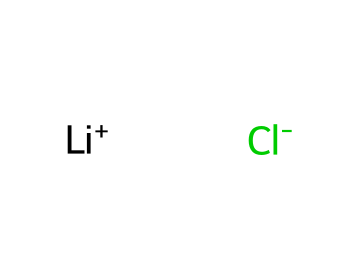
IDENTITY
COMPUTED
PROPERTIES
Aqueous solution: neutral or slightly alkaline
-2.7
Sharp saline taste
2.068 at 77 °F (NTP, 1992) - Denser than water; will sink
2.07 g/cu cm
Relative density (water = 1): 2.1
2.07 @25 °C
Deliquescent, cubic crystals, granules or crystalline powder
White cubic crystals or powder; hygroscopic
Very soluble (NTP, 1992)
84.5 g/100 g water at 25 °C; soluble in ethanol, acetone, pyridine
25.10 G SOL IN 100 CC ALC @ 30 °C; 42.36 G SOL IN 100 CC METHANOL @ 25 °C; 4.11 G SOL IN 100 CC ACETONE @ 25 °C; 0.538 G SOL IN 100 CC AMMONIUM HYDROXIDE @ 33.9 °C
Very soluble in water alcohols, ether, pyridine, nitrobenzene
In water (g/100g): 83.2 at 20 °C, 89.8 at 40 °C, 98.4 at 60 °C, 111.9 at 80 °C, 128.3 at 100 °C; in ethanol: 2.5 g/100g at 25 °C; in methanol: 17 g/100g at 25 °C
Solubility in water, g/100ml: 76.9
May become corrosive upon contact with water or moist surfaces
2417 to 2480 °F at 760 mmHg (NTP, 1992)
1383 °C
1360 °C
1350 °C @760 [mm Hg]
When heated to decomposition it emits toxic fumes of /chloride/.
1121 °F (NTP, 1992)
610 °C
613 °C
610 °C
1 mm Hg at 547 °C
1 [mm Hg] @547 °C
INDEX OF REFRACTION: 1.662
GHS
This chemical does not meet GHS hazard criteria for 5.2% (61 of 1175) of reports.
Warning
H302 (92.7%): Harmful if swallowed [Warning Acute toxicity, oral];H315 (67.7%): Causes skin irritation [Warning Skin corrosion/irritation];H319 (79.7%): Causes serious eye irritation [Warning Serious eye damage/eye irritation];H335 (13.9%): May cause respiratory irritation [Warning Specific target organ toxicity, single exposure; Respiratory tract irritation]
P261, P264, P264+P265, P270, P271, P280, P301+P317, P302+P352, P304+P340, P305+P351+P338, P319, P321, P330, P332+P317, P337+P317, P362+P364, P403+P233, P405, and P501 (click each P-code to see the statement)
Aggregated GHS information provided per 1175 reports by companies from 31 notifications to the ECHA C&L Inventory. Each notification may be associated with multiple companies.;Reported as not meeting GHS hazard criteria per 61 of 1175 reports by companies.;There are 30 notifications provided by 1114 of 1175 reports by companies with hazard statement code(s).;Information may vary between notifications depending on impurities, additives, and other factors. The percentage value in parenthesis indicates the notified classification ratio from companies that provide hazard codes. Only hazard codes with percentage values above 10% are shown. For more detailed information, please visit ECHA C&L website.
HAZARDS
Chemical: Lithium chloride (LiCl)
Lithium chloride (LiCl) is listed on the EPA's Chemical Data Reporting (CDR) system. Manufacturers and importers of Lithium chloride (LiCl) are required to report information about their production and use of this chemical to the EPA under the Toxic Substances Control Act (TSCA). (40 eCFR Part 711)
Status: Active Update: 30-01-2023 https://echa.europa.eu/registration-dossier/-/registered-dossier/5223
Lithium chloride: Does not have an individual approval but may be used under an appropriate group standard
IMAP assessments - Lithium chloride: Human health tier II assessment
Flash point data for this chemical are not available. It is probably combustible. (NTP, 1992)
Not combustible.
SYMPTOMS: Symptoms of exposure to this compound may include vomiting, profuse diarrhea, ataxia, coma, convulsions and local irritation of the skin, eyes and mucous membranes.;ACUTE/CHRONIC HAZARDS: This compound is a mild irritant. (NTP, 1992)
A skin and eye irritant; Low toxicity; [CAMEO] See Lithium.
Non-Redox-Active Inorganic Compounds
Nordic Council of Ministers/Arbetslivsinstitutet/The Nordic Expert Group for Criteria Documentation of Health Risks from Chemicals; 131 Lithium and Lithium Compounds NR 2002:16. Available at http://ebib.arbetslivsinstitutet.se/ah/2002/ah2002_16.pdf as of February 9, 2007
The reproductive and developmental effects of exposure to lithium were evaluated, and toxicologic info related to several specific lithium salts incl lithium-carbonate, lithium-chloride, lithium-citrate, and lithium-hypochlorite was presented. The Institute for Evaluating Health Risks (IEHR) evaluative process was used for this evaluation. Human environmental, medical and occupational exposures were described.[Moore, JA; Repro Tox 9 (2): 175-210 (1995)]
European Chemicals Bureau; IUCLID Dataset, Lithium Chloride (CAS # 7447-41-8). Available from the Database Query page at: http://ecb.jrc.it/esis/esis.php as of February 7, 2007.
These materials have weak oxidizing or reducing powers. Redox reactions can however still occur. For example, CO2, which is often regarded as chemically inert, vigorously oxidizes the strong reducing agent Mg if the two are heated together. The majority of compounds in this class are slightly soluble or insoluble in water. If soluble in water, then the solutions are usually neither strongly acidic nor strongly basic. These compounds are not water-reactive. Some do react with acids: carbonates generate carbon dioxide and heat when treated with acids; fluorides, sulfites and sulfides generate toxic gases (hydrogen fluoride, sulfur dioxide and hydrogen sulfide, respectively) when treated with acids.
The solution in water is corrosive to metals.
Very hygroscopic. Very soluble in water.
Acute Tox. 4 (92.7%);Skin Irrit. 2 (67.7%);Eye Irrit. 2 (79.7%);STOT SE 3 (13.9%)
Acute Tox. 4 (100%);Skin Irrit. 2 (100%);Eye Irrit. 2 (100%);STOT SE 3 (95.5%)
Acute toxicity (ingestion) - category 4;Eye irritation - category 2A;Specific target organ toxicity (repeated exposure) - category 1
Acute toxicity (Oral) - Category 4;Skin corrosion/irritation - Category 2;Serious eye damage/eye irritation - Category 2A;Reproductive toxicity - Category 2;Specific target organ toxicity - Single exposure - Category 2 (nervous system);Specific target organ toxicity - Repeated exposure - Category 2 (nervous system, kidney);Hazardous to the aquatic environment (Acute) - Category 3;Hazardous to the aquatic environment (Long-term) - Category 3
Reproductive toxicity - Category 1A, Additional category for effects on or via lactation
Acute toxicity (Oral) - Category 4;Skin corrosion/irritation - Category 2;Serious eye damage/eye irritation - Category 2A;Reproductive toxicity - Category 1A, Additional category: Effects on or via lactation;Specific target organ toxicity - Single exposure - Category 1 (nervous system), Category 3 (narcotic effects);Specific target organ toxicity - Repeated exposure - Category 1 (nervous system)
SAFETY
Fires involving this material can be controlled with a dry chemical, carbon dioxide or Halon extinguisher. (NTP, 1992)
In case of fire in the surroundings, use appropriate extinguishing media.
Fresh air, rest. Refer for medical attention.
Remove contaminated clothes. Rinse skin with plenty of water or shower.
First rinse with plenty of water for several minutes (remove contact lenses if easily possible), then refer for medical attention.
Rinse mouth. Induce vomiting (ONLY IN CONSCIOUS PERSONS!). Refer for medical attention .
EYES: First check the victim for contact lenses and remove if present. Flush victim's eyes with water or normal saline solution for 20 to 30 minutes while simultaneously calling a hospital or poison control center. Do not put any ointments, oils, or medication in the victim's eyes without specific instructions from a physician. If symptoms (such as redness or irritation) develop, immediately transport the victim to a hospital.;SKIN: IMMEDIATELY flood affected skin with water while removing and isolating all contaminated clothing. Gently wash all affected skin areas thoroughly with soap and water. If symptoms such as redness or irritation develop, IMMEDIATELY call a physician and be prepared to transport the victim to a hospital for treatment.;INHALATION: IMMEDIATELY leave the contaminated area; take deep breaths of fresh air. If symptoms (such as wheezing, coughing, shortness of breath, or burning in the mouth, throat, or chest) develop, call a physician and be prepared to transport the victim to a hospital. Provide proper respiratory protection to rescuers entering an unknown atmosphere. Whenever possible, Self-Contained Breathing Apparatus (SCBA) should be used; if not available, use a level of protection greater than or equal to that advised under Protective Clothing.;INGESTION: DO NOT INDUCE VOMITING. If the victim is conscious and not convulsing, give 1 or 2 glasses of water to dilute the chemical and IMMEDIATELY call a hospital or poison control center. Be prepared to transport the victim to a hospital if advised by a physician. If the victim is convulsing or unconscious, do not give anything by mouth, ensure that the victim's airway is open and lay the victim on his/her side with the head lower than the body. DO NOT INDUCE VOMITING. IMMEDIATELY transport the victim to a hospital. (NTP, 1992)
Dry. Well closed.
Bromine trifluoride rapidly attacks ... lithium chloride ...
0.2 [mg/m3], inhalable fraction, as Li[German Research Foundation (DFG)]
SMALL SPILLS AND LEAKAGE: If you spill this chemical, you should dampen the solid spill material with water, then transfer the dampened material to a suitable container. Use absorbent paper dampened with water to pick up any remaining material. Seal your contaminated clothing and the absorbent paper in a vapor-tight plastic bag for eventual disposal. Wash all contaminated surfaces with a soap and water solution. Do not reenter the contaminated area until the Safety Officer (or other responsible person) has verified that the area has been properly cleaned.;STORAGE PRECAUTIONS: You should store this chemical under refrigerated temperatures, and protect it from moisture. (NTP, 1992)
SRP: The most favorable course of action is to use an alternative chemical product with less inherent propensity for occupational exposure or environmental contamination. Recycle any unused portion of the material for its approved use or return it to the manufacturer or supplier. Ultimate disposal of the chemical must consider: the material's impact on air quality; potential migration in soil or water; effects on animal, aquatic, and plant life; and conformance with environmental and public health regulations.
Personal protection: particulate filter respirator adapted to the airborne concentration of the substance. Sweep spilled substance into covered containers. If appropriate, moisten first to prevent dusting. Carefully collect remainder. Then store and dispose of according to local regulations.
Wear safety goggles.
Evaporation at 20 °C is negligible; a harmful concentration of airborne particles can, however, be reached quickly when dispersed.
Protective gloves.
TOXICITY
The aim of the present study was to investigate the effect of lithium on acute morphine-induced tolerance and dependence in an in vitro model of isolated guinea pig ileum which has been extensively used for the assessment of these effects of opioids. Morphine inhibited electrically stimulated twitch of ileum in a concentration-dependent manner (pD(2)=7.27+ or -0.16). Tolerance to this effect was induced by the incubation of ileum with 2xIC(50) of morphine for 2 hr that induced a degree of tolerance of 14.7. The co-incubation of ileum with morphine and lithium chloride (1 mM) reduced the degree of tolerance significantly (p<0.001) and restored the sensitivity of ileum to the morphine inhibitory effect. Lithium chloride can also reduce the expression of tolerance to morphine significantly (p<0.01). Dependence was induced by incubation with 4xIC(50) of morphine for 2 hr and was assessed based on naloxone-induced contractions (10(-5 )M). Lithium chloride (1 mM) can attenuate the development but not the expression of dependence to morphine as shown by the significant decrease in naloxone-induced contractions (p<0.05). ...
... Ovariectomized mice received estradiol dipropionate (2 ug per 100 g; sc) once a week or vehicle and drank tap water with 0.05% lithium chloride or plain tap water for 2 or 30 days. In animals treated with estradiol and lithium for a month, the incidence of atypical endometrial hyperplasia was significantly higher. In animals treated with estradiol and lithium for 2 days or for a month, uterine mass, the number of mitotic cells and BrdU-labelled cells in luminal epithelium, glandular epithelium, stromal and myometrial cells was markedly greater, whereas the levels of estrogen receptors-alpha, beta-catenin and glycogen synthase kinase-3beta were markedly lower in all uterine compartments, than in those in mice received estradiol with no lithium to drink. ...
Mitochondrial preparations were made from male Wistar rat brains, and monoamine oxidase activity and protein content were measured. Varying concn of the enantiomers of tranylcypromine (+) and (-)-tranylcypromine were incubated with the enzyme source before the addition of substrate, and then the incubation was continued for 20 min at 37 °C. Substrates were either beta-phenylethylamine (0.03, or 0.21 mM) or serotonin (0.11 or 0.50 mM). Lithium was either added to the incubation medium at a concn of 1.5 mM/l (in vitro condition) or to the food at gradually incr concn for 3-4 wk (ex vivo condition), so that the serum lithium level at the time of testing was 0.6 to 0.9 mM/L. The (+)-enantiomer was 25 times more potent than its antipode as a monoamine oxidase inhibitor. Lithium enhanced the inhibitory effect of (-)-tranylcypromine on monoamine oxidase, but the effect depended significantly on the concn of substrate used (treatment x concn interaction. In the presence of (-)-tranylcypromine, Li significantly reduced the metabolism of beta-phenylethylamine under in vitro and ex vivo conditions as well as the metabolism of serotonin under in vitro conditions. Li failed, however, to influence the activity of monoamine oxidase significantly in the presence of (+)-tranylcypromine. /Lithium/
Eighteen cases of increased serum lithium concentrations after the addition of one of the cyclooxygenase (COX) 2 inhibitors to stable lithium therapy were retrieved from the U.S. Food and Drug Administration's Adverse Event Reporting System (AERS), 13 with rofecoxib and 5 with celecoxib. Serum lithium concentration increases of up to 99% and 448% with concomitant celecoxib and rofecoxib use, respectively, were reported. Thirty-six English-language literature articles report interactions between lithium and various NSAIDs. ... increased serum lithium concentration reports exist for aspirin, sulindac and 14 other NSAIDs, including celecoxib and rofecoxib. ... /Lithium therapy/
LC50; Species: Oncorhynchus mykiss (Rainbow trout,Donaldson trout); Conditions: fresh water, temperature 12 to 13 °C, pH 6.9 to 7.8, hardness 92 to 110 mg/L CaCO3, dissolved oxygen 9.3 to 10.1 mg/L; renewal; Concentration: 9280 ug/L (95% confidence limit: 6680 to 12300ug/L) for 28 days /total/
LC50; Species: Pimephales promelas (Fathead minnow); Conditions: fresh water; flow through, temperature 24.5 to 25 °C, pH 7.2 to 7.5, hardness 56 to 70 mg/L CaCO3, conductivity 160 to 270 umhos/cm, dissolved oxygen 6.8 to 8.6 mg/L; Concentration: 8700 ug/L (95% confidence limit: 5400 to 15000ug/L) for 26 days /total/
LC50; Species: Pimephales promelas (Fathead minnow); Conditions: fresh water; flow through, temperature 24.5 to 25 °C, pH 7.2 to 7.5, hardness 56 to 70 mg/L CaCO3, conductivity 160 to 270 umhos/cm, dissolved oxygen 6.8 to 8.6 mg/L; Concentration: 1200 ug/L for 26 days /total/
EC50; Species: Pimephales promelas (Fathead minnow); Conditions: fresh water; flow through, temperature 24.5 to 25 °C, pH 7.2 to 7.5, hardness 56 to 70 mg/L CaCO3, conductivity 160 to 270 umhos/cm, dissolved oxygen 6.8 to 8.6 mg/L; Concentration: 6400 ug/L (95% confidence limit: 5680 to 7360ug/L) for 26 days Effect: development normal; normal /total/
EC50; Species: Pimephales promelas (Fathead minnow); Conditions: fresh water; flow through, temperature 24.5 to 25 °C, pH 7.2 to 7.5, hardness 56 to 70 mg/L CaCO3, conductivity 160 to 270 umhos/cm, dissolved oxygen 6.8 to 8.6 mg/L; Concentration: 1000 ug/L for 26 days Effect: development normal; normal /total/
Neurotoxin - Other CNS neurotoxin;Nephrotoxin - The chemical is potentially toxic to the kidneys in the occupational setting.
The substance can be absorbed into the body by inhalation of its aerosol and by ingestion.
IDENTIFICATION AND USE: Lithium chloride is a white cubic crystalline material. It is soluble in water, ethanol, acetone, pyridine and nitrobenzene. It is used to manufacture mineral waters; in pyrotechnics; soldering aluminum; in refrigerating machines. It is used as a dessicant. HUMAN EXPOSURE AND TOXICITY: Acute poisoning in man reported after 4 doses of 2 g each of lithium chloride, causing weakness, prostration, vertigo, and tinnitus. Chronic toxicity symptoms following ingestion of nonlethal doses of lithium chloride with low-sodium chloride diets are thirst and polyuria. Human volunteers (28 males, 25 females) were exposed to lithium chloride in spa water at a for 20 minutes/day, five days/week for two consecutive weeks. Serum lithium levels were compared to those of a control group of volunteers similarly exposed in spas without lithium. There were no differences between the serum lithium levels between lithium exposed volunteers and controls at any time interval (before lithium exposure and one hr after each weekly exposure). It is concluded that lithium is not absorbed through the skin during spa use. PAH-stimulated lymphocyte cultures from healthy adult volunteers were exposed to concentrations of lithium chloride. Tritiated thymidine was then added four hrs before harvesting. The mitotic index increased. The incidence of chromosomal breaks, gaps and satellite associations was increased in the presence of lithium chloride in the media. Acute intoxication can occur in the initial phase in a course of therapy, but also at any point of time during long-lasting treatment or after an acute overdose. Signs of toxicity include: anorexia, dry mouth, nausea, vomiting, diarrhea, tremor of the hands, faintness of musculature, thirst, leukocytosis, and concentration and memory disturbances (especially with older people). These phenomena are often seen in the initial phase of a course of treatment and usually disappear when treatment continues, except with the trem
/BIRDS and MAMMALS/ ...Adult male Roseringed parakeets (Psittacula krameri) were... injected, intramuscularly, twice daily (07:00 and 19:00 hr) with lithium chloride at a dosage of 0.5 mEq/Kg bw either for 5 or 10 days. A significant decrease in both the absolute and relative testicular weights was evident in the lithium-treated birds as compared to those of the saline-injected control animals. Light microscopic studies of the testis in the lithium-treated animals showed a wide range of degenerative changes. These included a) a significant reduction in the diameter of seminiferous tubules; b) necrosis and exfoliation of most of the germ cells in the seminiferous tubular lumen with the exception of the spermatogonia; and c) a significant reduction in the number of mature spermatozoa in the tubular lumen. These degenerative changes were dependent on the duration of lithium treatment and were evident when the plasma lithium concentrations were well below the human therapeutic range. ...
/AQUATIC SPECIES/ /A 24 hour static bioassay was conducted in three species of fish: Oncorhynchus kisutch, Oncorhynchus tschawytscha, and Ptychocheilus orefonensis/. Acclimatized fish were transferred to vessels in 4 L of water (3 fish per vessel) about 2 hrs prior to addition of test article. This species was exposed to 5 and 10 ppm (0.009-0.017 mg/L) lithium chloride and observed for 24 hours. The times at which a fish lost its equilibrium or died were noted. At a concentration of 10 ppm death was seen at 6.5-11 hrs and 2.5-6.5 hrs for Oncorhynchus kisutch and Oncorhynchus tschawytscha, respectively. In two separate tests /with Ptychocheilus oregonensis/, no signs of toxicity were observed at either 5 or 10 ppm lithium chloride. In a third test at 10 ppm death was seen at 2.5-6.5 hrs. The lower limit of these ranges indicate the time that the last observation was made before death. The upper limit indicates the time that death was noted. Loss of equilibrium was not observed.
/OTHER TERRESTRIAL SPECIES/ The chronic admin of lithium chloride during the embryogenesis of Bufo arenarum /toad/ has resulted in a teratological development and in some cases an irreversible blockade of morphogenesis. These results vary according to the embryonic stage, the duration of the treatment and the concn used. The histological analysis of embryos treated non-chronically showed a series of mild-to-severe malformations. According to the results obtained, lithium would alter the gastrulation and organogenesis processes of this species, interfering with the normal succession of developmental stages.
Confusion.
THE PURE METAL NEVER OCCURS IN NATURE BUT ITS SALTS...THE CHLORIDE FOUND IN SMALL AMT IN SEVERAL MINERALS, ESP SILICATES SUCH AS PETALITE & SPODUMENE, & IN SMALL CONCN IN SEA WATER & MANY MINERAL WELLS.
/SIGNS AND SYMPTOMS/ Acute poisoning in man reported after 4 doses of 2 g each of lithium chloride, causing weakness, prostration, vertigo, tinnitus.[Gosselin, R.E., H.C. Hodge, R.P. Smith, and M.N. Gleason. Clinical Toxicology of Commercial Products. 4th ed. Baltimore: Williams and Wilkins, 1976., p. II-85]
/SIGNS AND SYMPTOMS/ ...Chronic toxicity symptoms following ingestion of nonlethal doses of lithium chloride with low-sodium chloride diets are... thirst, polyuria.[Venugopal, B. and T.D. Luckey. Metal Toxicity in Mammals, 2. New York: Plenum Press, 1978., p. 5]
/HUMAN EXPOSURE STUDIES/ Human volunteers (28 males, 25 females) were exposed to lithium chloride in spa water at a concentration of 40 ppm for 20 minutes/day, five days/week for two consecutive weeks. Serum lithium levels were compared to those of a control group of volunteers similarly exposed in spas without lithium. There were no differences between the serum lithium levels between lithium-exposed volunteers and controls at any time interval (before lithium exposure and one hr after each weekly exposure). It is concluded that lithium is not absorbed through the skin during spa use.
/ALTERNATIVE and IN VITRO TESTS/ ...IL-15 production by monocyte cultures treated with lithium chloride (LiCl) /was examined/. Monocytes were obtained from patients affected by non-metastatic and metastatic breast cancer. LiCl treatment induced IL-15 production by monocytes mainly from non-metastatic patients. Combined lipopolysaccharide/LiCl treatment of monocyte cultures up-regulated IL-15 release compared to those treated with LPS alone (p<0.0001). ...[Merendino RA et al; J Chemother 12 (3): 252-7 (2000)]
For more Human Toxicity Excerpts (Complete) data for LITHIUM CHLORIDE (19 total), please visit the HSDB record page.
/LABORATORY ANIMALS: Acute Exposure/ Lithium chloride was found to be irritating in the rabbit acute toxicity testing of the skin. It was moderately irritating in the Draize test in rabbit eyes when dosed at 0.10 g.[European Chemicals Bureau; IUCLID Dataset, Lithium Chloride (CAS # 7447-41-8) p.20-21. Available from, as of February 7, 2007: http://esis.jrc.ec.europa.eu/]
/LABORATORY ANIMALS: Acute Exposure/ Inbred strains of male mice (C3H, DBA, BALB, C57) were used to determine whether genetic factors play a role in lithium toxicity. Significant differences in the LD50 for LiCl were observed between the mouse strains after a subcutaneous injection of 37 degrees isotonic LiCl. The LD50 values in the C3H, DBA, BALB and C57 strains were 17.4, 17.6, 18.2, and 19.4 mmol/kg, respectively. Significant differences were also observed between the mouse strains in the concentrations of lithium in plasma, heart, liver, kidney and brain 2 hr after a subcutaneous injection of 15.1 or 18.2 mmol/kg LiCl, but the lithium concentrations were not related in an obvious manner to LiCl toxicity. The results show that genetic factors can influence the toxicity and pharmacodynamics of lithium.[Smith DF; Acta Pharmacol Toxicol (Copenh) 43 (1): 51-4 (1978)]
/LABORATORY ANIMALS: Acute Exposure/ Male inbred rats were used to determine the lethal dose of lithium chloride. The rats were 3 weeks, 6 weeks, 3 months and/or 6 months old, and lithium chloride was given intraperitoneally, subcutaneously and orally. In relation to age, LD50 was significantly higher in rats of 6 weeks after oral administration than LD50 in rats of 3 and 6 months. No differences were found following intraperitoneal and subcutaneous administration. In relation to route of administration, LD50 was significantly higher in rats of 3 and 6 weeks after oral administration than LD50 after intraperitoneal and subcutaneous administration. This difference was not found in rats of 3 and 6 months. It is concluded that age and route of administration are of significance for LD50 of lithium chloride in the rat.
/LABORATORY ANIMALS: Acute Exposure/ Application of 0.1 molar lithium chloride solution to rabbit's eye after mechanical removal of corneal epithelium to facilitate penetration caused no evident injury, but produced long lasting flattening of the cornea.[Grant, W.M. Toxicology of the Eye. 3rd ed. Springfield, IL: Charles C. Thomas Publisher, 1986., p. 566]
For more Non-Human Toxicity Excerpts (Complete) data for LITHIUM CHLORIDE (48 total), please visit the HSDB record page.
Factors affecting the glomerular filtration rate have a significant influence on the clearance of lithium. Thus, subjects with chronic renal insufficiency are especially vulnerable to lithium exposure. Other conditions predisposing to lithium intoxication include advanced age, sodium depletion of different origin or use of certain drugs affecting the renal function. /Lithium NOS/
NIOSH (NOES Survey 1981-1983) has statistically estimated that 34,091 workers (15,304 of these are female) are potentially exposed to lithium chloride in the US(1).
REGULATORY
Chemical: Lithium chloride (LiCl)
Lithium chloride (LiCl) is listed on the EPA's Chemical Data Reporting (CDR) system. Manufacturers and importers of Lithium chloride (LiCl) are required to report information about their production and use of this chemical to the EPA under the Toxic Substances Control Act (TSCA). (40 eCFR Part 711)
Status: Active Update: 30-01-2023 https://echa.europa.eu/registration-dossier/-/registered-dossier/5223
Lithium chloride: Does not have an individual approval but may be used under an appropriate group standard
PHARMACOLOGY
V - Various;V04 - Diagnostic agents;V04C - Other diagnostic agents;V04CX - Other diagnostic agents;V04CX11 - Lithium chloride
QV - Various;QV04 - Diagnostic agents;QV04C - Other diagnostic agents;QV04CX - Other diagnostic agents;QV04CX11 - Lithium chloride
...Intraperitoneal lithium chloride (LiCl) induces transient expression of inducible cAMP early repressor (ICER) and c-fos mRNAs in the rat adrenal cortex and increases plasma level of corticosterone; the cortical expression of ICER mRNA by LiCl occurs in a dose-dependent manner; adrenal induction of ICER expression is delayed compared with c-fos expression; dexamethasone pretreatment (4 mg/kg) blocks corticosterone release and adrenocortical ICER induction either by systemic LiCl (76 mg/kg) or by restraint stress; and intracerebroventricular LiCl (127 ug/5 uL) is sufficient for adrenocortical, but not medullary, ICER induction. ...
Lithium, through modulating basic cellular signalling pathways, is capable of modulating several neurotransmitter systems in the brain such as cholinergic, serotonergic, noradrenergic and dopaminergic pathways. /Lithium NOS/
Lithium may also slightly alter the reuptake and presynaptic storage of catecholamines in directions consistent with incr inactivation of the amines. /Li+/
In animal brain tissue, Li+ at concn of 1 to 10 mEq/L inhibits the depolarization-provoked and Ca+2-dependent release of norepinephrine and dopamine, but not serotonin, from nerve terminals. Li+ may even enhance the release of serotonin, especially in the limbic system, at least transiently. The ion has little effect on catecholamine-sensitive adenylyl cyclase activity or on the binding of ligands to monoamine receptors in brain tissue, although there is some evidence that Li+ can inhibit the effects of receptor-blocking agents that cause supersensitivity in such systems. Li+ can modify some hormonal responses mediated by adenylyl cyclase or phospholipase C in other tissues, including the actions of antidiuretic and thyroid-stimulating hormones on the actions of antidiuretic and thyroid-stimulating hormones on their peripheral target tissues. In part, the actions of Li+ may reflect its ability to interfere with the activity of both stimulatory and inhibitory GTP-binding proteins (Gs and Gi) by keeping them in their less active alpha-beta-gamma trimer state. /Li+/
For more Mechanism of Action (Complete) data for LITHIUM CHLORIDE (12 total), please visit the HSDB record page.
Lithium chloride solution (24 mmol) administered to 7 healthy volunteers in single dose and multiple dose experiments. Mean biological T1/2 was approximately 19.8 hr.
The plasma half-life (in healthy volunteers) shows a considerable variability: from 5 to 40 hr, with most values between 15 and 30 hr, it depends on the duration of treatment as well as on kidney function and age. /Li+/
...AFTER ORAL DOSES TO HUMAN SUBJECTS...THE TERMINAL ELIMINATION T/2 IS ABOUT 22 HR. /LITHIUM/
... The clinical features and pharmacokinetics of 22 lithium overdoses are described. Effectiveness of different treatment regimens regarding elimination of lithium is discussed. Origin of overdose was due to deliberate poisoning or precipitated by concomitant diseases, coadministration of drugs, or combination of both. Treatment included supportive care, diuretics (15/22), hemodialysis (HD; 9/22), and mechanical ventilation (3/22). Severity of lithium intoxication was classified in 50% as I degrees, in 41% as II degrees, and in 9% as III degrees according to Hansen and Amdisen. Renal impairment on admission was diagnosed in 82% of the patients. Half-life of lithium in serum was 3.5 +/- 0.8 hr during the first HD, and 29 +/- 14 and 29 +/- 6 hr during therapy with diuretics or supportive treatment, respectively. Lithium clearance during HD was 160 +/- 15 mL/min, and renal clearance during HD or treatment with diuretics was approximately 20 and 15 +/- 9 mL/min, respectively. Renal lithium clearance was not influenced by HD therapy. There was no difference regarding half-life and clearance between the group that had an unspecific treatment or the group treated with diuretics. ... /Lithium NOS/
The usual elimination half-life is 12 to 27 hr, but it may rise to nearly 60 hr if renal excretion is compromised. /Li+/
LITHIUM CHLORIDE
Mood Stabilizer [EPC]
LITHIUM MURIATICUM
Mood Stabilizer [EPC]
Substances that augment, stimulate, activate, potentiate, or modulate the immune response at either the cellular or humoral level. The classical agents (Freund's adjuvant, BCG, Corynebacterium parvum, et al.) contain bacterial antigens. Some are endogenous (e.g., histamine, interferon, transfer factor, tuftsin, interleukin-1). Their mode of action is either non-specific, resulting in increased immune responsiveness to a wide variety of antigens, or antigen-specific, i.e., affecting a restricted type of immune response to a narrow group of antigens. The therapeutic efficacy of many biological response modifiers is related to their antigen-specific immunoadjuvanticity.
Agents that are used to treat bipolar disorders or mania associated with other affective disorders.
Lithium may also be absorbed via the lungs. A systemic resorption of lithium was shown in a study on 27 intensive care unit patients, who were mechanically ventilated with lithium-chloride-coated heat and moisture exchangers for at least 5 days. Serum lithium was non-detectable at the first measurement, whereas 0.01-0.05 mM appeared in the blood from the 1st to the 4th day. In the following days, it remained at this level or increased to 0.1 mM. After cessation of the mechanical ventilation, serum lithium levels went back to undetectable levels within a few days. In a 7 year-old girl, the serum Li concentration rose to about 1 mM after a week, came back to 0.1 mM, rose to 3.9 mM on the 16th day and then returned to the usual low range (0.05-0.1 mM). The authors calculated that for adults, the daily amount of lithium chloride inhaled from a new heat and moisture exchanger (80% of the lithium content) can be considered equivalent to an oral dose of 100 mg/day of lithium chloride or 16 mg Li/day.
...After 20 minutes of ventilation more than 90% of the lithium chloride content of lithium-chloride-coated heat and moisture exchangers was deposited into the test lung of the breathing model.
In rats, the levels of lithium in brain 24 hours after treatment with single doses of lithium chloride decreased in the following order: caudate > cerebral cortex >thalamus >hippocampus >cerebellum. After 7 or 14 daily doses of lithium chloride the concentrations of lithium were still highest in the cerebral cortex and caudate, and lowest in the cerebellum.
Lithium chloride solution (24 mmol) administered to 7 healthy volunteers in single dose and multiple dose experiments. Mean biological T1/2 was approximately 19.8 hr. Absorption of Li from single oral dose had half-time of approximately 0.15 hr. Mean total body clearance was 27.6 mL/kg/hr.
For more Absorption, Distribution and Excretion (Complete) data for LITHIUM CHLORIDE (16 total), please visit the HSDB record page.
USES
Used in biological research as an immune modulator; [ChemIDplus] Used to produce lithium metal and lithium borohydride; Also used in fluxes, dipping baths, desiccants, fireworks, fire extinguishers, deicer solutions, dehumidifiers, and photosensitive developers; Also used as a catalyst, chlorinating agent, dry cell electrolyte, textile spinning stabilizer, antistatic fabric finish, and wastewater tracer; [CHEMINFO]
Battery Manufacturing [Category: Industry];Textiles (Fiber & Fabric Manufacturing) [Category: Industry];Sewer and Wastewater Treatment [Category: Industry];Photographic Processing [Category: Other];Textiles (Printing, Dyeing, or Finishing) [Category: Industry]
MANUFACTURE MINERAL WATERS; IN PYROTECHNICS; SOLDERING ALUMINUM; IN REFRIGERATING MACHINES
Desiccant and humectant; air conditioning; batteries
DEHUMIDIFYING AGENT IN AIR CONDITIONING
Welding & soldering flux; dry batteries; heat-exchange media; salt baths; dessicant; air conditioning; production of lithium metal, soft drinks, and mineral water to reduce escape of carbon dioxide.
2023: 4,000,000 - <5,500,000 lb;2022: 7,000,000 - <8,500,000 lb;2021: 5,500,000 - <7,000,000 lb;2020: 5,500,000 - <7,000,000 lb
Production volumes for non-confidential chemicals reported under the Inventory Update Rule. [Table#4898]
Not Known or Reasonably Ascertainable
Other;Dehydrating agent (desiccant);Ion exchange agent;Not Known or Reasonably Ascertainable;Viscosity modifiers;Intermediate
REACTION OF LITHIUM CARBONATE OR LITHIUM HYDROXIDE WITH HYDROCHLORIC ACID
Lithium chloride can be extracted from other alkali-metal chlorides with amyl alcohol.
Reaction of lithium ores with chlorides; natural brines.
... By reaction of lithium carbonate and hydrochloric acid, with special steel or nickel equipment because of the extreme corrosivity of lithium chloride. Concentration of the solution (eg, in a vacuum evaporator) causes lithium chloride to crystallize. It is then separated from the mother liquor, dried, and packed in moisture-proof containers.
Grade: Technical, 99% (min) assay; 35-40% brine, inhibited; single crystals.
99.8% purity grade, anhydrous (99.3%) grade, ACS granular reagent grade
All Other Basic Inorganic Chemical Manufacturing;Pharmaceutical and Medicine Manufacturing;Soap, Cleaning Compound, and Toilet Preparation Manufacturing;Not Known or Reasonably Ascertainable;All Other Chemical Product and Preparation Manufacturing;Plastics Material and Resin Manufacturing;Other (requires additional information);All Other Basic Organic Chemical Manufacturing
Lithium chloride (LiCl): ACTIVE
ALIASES
REACTIONS
uspto-grants-1998_03 · 10.6084/m9.figshare.5104873.v1 · US05726306
查看
uspto-grants-1998_03 · 10.6084/m9.figshare.5104873.v1 · US05728828
查看
uspto-grants-1998_03 · 10.6084/m9.figshare.5104873.v1 · US05730902
查看
uspto-grants-1998_03 · 10.6084/m9.figshare.5104873.v1 · US05731306
查看
uspto-grants-1993_09 · 10.6084/m9.figshare.5104873.v1 · US05244895
查看
uspto-grants-1993_09 · 10.6084/m9.figshare.5104873.v1 · US05245034
查看
uspto-grants-2006_08 · 10.6084/m9.figshare.5104873.v1 · US07084176B2
查看
uspto-grants-2006_08 · 10.6084/m9.figshare.5104873.v1 · US07087599B2
查看