
uspto-grants-1998_03 · 10.6084/m9.figshare.5104873.v1 · US05723477
查看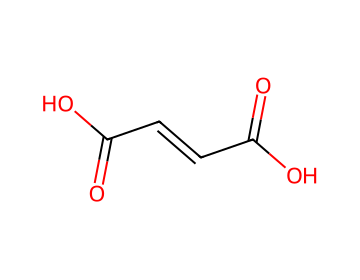
IDENTITY
COMPUTED
PROPERTIES
3,0-3,2 (0,05 % solution at 25 °C)
0.46
log Kow = 0.46
0.46
0.46 (estimated)
Odorless
Fruit acid
1.635 at 68 °F (USCG, 1999) - Denser than water; will sink
1.635 g/cu cm at 20 °C
IT HAS AN EXTREMELY LOW RATE OF MOISTURE ABSORPTION; BULK DENSITY: 32.6 LB/CU FT; STANDARD FREE ENERGY OF ANION FORMATION: -144.41 @ 25 °C; BUFFERING INDEX 3.46
Density (at 20 °C): 1.64 g/cm³
Needles, monoclinic prisms or leaflets from water
Colorless crystals
WHITE CRYSTALLINE POWDER
less than 1 mg/mL at 72 °F (NTP, 1992)
7000
Soluble in ethanol, concentrated sulfuric acid; slightly soluble in ethyl ether, acetone
Soluble in alcohol 5.76 g/100 g at 30 °C. Insoluble in chloroform and benzene
in 100 g 95% alcohol at 30 °C: 5.76g; in 100 g acetone at 30 °C: 1.72 g; in 100 g ether at 25 °C: 0.72 g
Almost insoluble in olive oil, ... carbon tetrachloride, xylene, ... molten camphor, liquid ammonia.
273 °C (open cup)
230 °C (closed cup)
273 °C
329 °F at 1.7 mmHg ; sublimes (NTP, 1992)
522
Sublimes at 200 °C
572 to 576 °F (NTP, 1992)
287
286-302 °C (closed capillary, rapid heating)
287 °C decomposes
549 °C
0.000154 [mmHg]
1.54X10⁻⁴ mm Hg at 25 °C
-4,970 Btu/lb = 2,760 cal/g = -116X10+5 J/kg
GHS
Warning
H319: Causes serious eye irritation [Warning Serious eye damage/eye irritation]
P264+P265, P280, P305+P351+P338, and P337+P317 (click each P-code to see the statement)
This chemical does not meet GHS hazard criteria for 0.4% (13 of 3331) of reports.
HAZARDS
Chemical: 2-Butenedioic acid, (E)-
Regulation (EC) No 1831/2003 (amended)
2-Butenedioic acid (2E)- is listed on the EPA's Chemical Data Reporting (CDR) system. Manufacturers and importers of 2-Butenedioic acid (2E)- are required to report information about their production and use of this chemical to the EPA under the Toxic Substances Control Act (TSCA). (40 eCFR Part 711)
Status: Active Update: 21-02-2023 https://echa.europa.eu/registration-dossier/-/registered-dossier/15099;Status: Active Update: 15-06-2011 https://echa.europa.eu/registration-dossier/-/registered-dossier/6159;Status: Active Update: 14-12-2022 https://echa.europa.eu/registration-dossier/-/registered-dossier/25887
Fumaric acid: Does not have an individual approval but may be used under an appropriate group standard
The New Jersey Worker and Community Right to Know Act requires public and private employers to provide information about hazardous substances at their workplaces. (N.J.S.A. 34:5A-1 et. seq.)
IMAP assessments - 2-Butenedioic acid, (E)-: Human health tier I assessment;IMAP assessments - 2-Butenedioic acid, (E)-: Environment tier I assessment
Special Hazards of Combustion Products: Irritating fumes of maleic anhydride may form in fires.;Behavior in Fire: Dust presents explosion hazard; knock down dust with water fog. (USCG, 1999)
Combustible. Gives off irritating or toxic fumes (or gases) in a fire. Finely dispersed particles form explosive mixtures in air.
SLIGHT
Inhalation of dust may cause respiratory irritation. Compound is non-toxic when ingested. Prolonged contact with eyes or skin may cause irritation. (USCG, 1999)
A skin, eye, and respiratory tract irritant; [ICSC] A skin, eye, nose, and throat irritant; [HSDB] An eye irritant; [eChemPortal: ERMA; ESIS] A mild skin and moderate eye irritant based on animal studies; [MSDSonline]
Fumaric acid and its calcium, ferrous, magnesium, potassium, and sodium salts may be safely used in food in accordance with the following prescribed conditions: (a) The additives meet the following specifications: (1) Fumaric acid contains a minimum of 99.5 percent by weight of fumaric acid, calculated on the anhydrous basis. (2) The calcium, magnesium, potassium, and sodium salts contain a minimum of 99 percent by weight of the respective salt, calculated on the anhydrous basis. Ferrous fumarate contains a minimum of 31.3 percent total iron and not more than 2 percent ferric iron. (b) With the exception of ferrous fumarate, fumaric acid and the named salts are used singly or in combination in food at a level not in excess of the amount reasonably required to accomplish the intended effect. (c) Ferrous fumarate is used as a source of iron in foods for special dietary use, when the use is consistent with good nutrition practice.
Fumaric acid is an indirect food additive for use only as a component of adhesives.
Acids, Carboxylic;Hydrocarbons, Aliphatic Unsaturated
Symbol: Xi; R: 36; S: (2)-26
European Commission, ESIS; IUCLID Dataset, Fumaric acid (110-17-8) (2000 CD-ROM edition) contains information on use, toxicology, and environmental effects of this chemical as supplied to the European Union by industry.[Available from, as of February 25, 2010: http://esis.jrc.ec.europa.eu/]
FAO/WHO Joint Expert Committee on Food Additives; WHO Food Additives Series 9: Fumaric acid (1975).[Available from, as of February 25, 2010: http://www.inchem.org/pages/jecfa.html]
Chemical: Fumaric acid; Green circle - The chemical has been verified to be of low concern based on experimental and modeled data.
Unless specifically excluded, residues resulting from the use of the following substances as either an inert or an active ingredient in a pesticide chemical formulation, including antimicrobial pesticide chemicals, are exempted from the requirement of a tolerance under FFDCA section 408, if such use is in accordance with good agricultural or manufacturing practices. Fumaric acid is included on this list.
SAFETY
Use water spray, dry powder, foam, carbon dioxide.
Fresh air, rest.
Rinse skin with plenty of water or shower.
First rinse with plenty of water for several minutes (remove contact lenses if easily possible), then refer for medical attention.
Rinse mouth.
EYES: First check the victim for contact lenses and remove if present. Flush victim's eyes with water or normal saline solution for 20 to 30 minutes while simultaneously calling a hospital or poison control center. Do not put any ointments, oils, or medication in the victim's eyes without specific instructions from a physician. IMMEDIATELY transport the victim after flushing eyes to a hospital even if no symptoms (such as redness or irritation) develop.;SKIN: IMMEDIATELY flood affected skin with water while removing and isolating all contaminated clothing. Gently wash all affected skin areas thoroughly with soap and water. If symptoms such as redness or irritation develop, IMMEDIATELY call a physician and be prepared to transport the victim to a hospital for treatment.;INHALATION: IMMEDIATELY leave the contaminated area; take deep breaths of fresh air. If symptoms (such as wheezing, coughing, shortness of breath, or burning in the mouth, throat, or chest) develop, call a physician and be prepared to transport the victim to a hospital. Provide proper respiratory protection to rescuers entering an unknown atmosphere. Whenever possible, Self-Contained Breathing Apparatus (SCBA) should be used; if not available, use a level of protection greater than or equal to that advised under Protective Clothing.;INGESTION: DO NOT INDUCE VOMITING. If the victim is conscious and not convulsing, give 1 or 2 glasses of water to dilute the chemical and IMMEDIATELY call a hospital or poison control center. Be prepared to transport the victim to a hospital if advised by a physician. If the victim is convulsing or unconscious, do not give anything by mouth, ensure that the victim's airway is open and lay the victim on his/her side with the head lower than the body. DO NOT INDUCE VOMITING. IMMEDIATELY transport the victim to a hospital. (NTP, 1992)
Separated from oxidizing materials.
If material on fire or involved in fire: use water in flooding quantities as fog. Solid streams of water may spread fire. Cool all affected containers with flooding quantities of water. Apply water from as far a distance as possible. Use foam, dry chemicals, or carbon dioxide.
Suitable extinguishing media: Use water spray, alcohol-resistant foam, dry chemical or carbon dioxide.
Special protective equipment for fire-fighters: Wear self contained breathing apparatus for fire fighting if necessary.
The bulk material should be stored in a well-closed container in a cool, dry place.
Store in cool place. Keep container tightly closed in a dry and well-ventilated place.
Environmental considerations - land spill: Dig a pit, lagoon, holding area to contain liquid or solid material. /SRP: If time permits, pits, ponds, lagoons, soak holes, or holding areas should be sealed with an impermeable flexible membrane liner./ Cover solids with a plastic sheet to prevent dissolving in rain or fiefighting water. Neutralize with agricultural lime (CaO), crushed limestone (CaCO3), or sodium bicarbonate (NaHCO3).
Environmental considerations - water spill: Neutralize with agricultural lime (CaO), crushed limestone (CaCO3), or sodium bicarbonate (NaHCO3). If dissolved, in region of 10 ppm or greater concentration, apply activated carbon at ten times the spilled amount. Adjust pH to neutral (pH = 7). Use mechanical dredges or lifts to remove immobililzed masses of pollutants and precipitates.
Personal precautions: Use personal protective equipment. Avoid dust formation. Avoid breathing dust. Ensure adequate ventilation.
Environmental precautions: Do not let product enter drains.
Methods for cleaning up: Pick up and arrange disposal withour creating dust. Keep in suitable, closed containers for disposal.
SRP: Criteria for land treatment or burial (sanitary landfill) disposal practices are subject to significant revision. Prior to implementing land disposal of waste residue (including waste sludge), consult with environmental regulatory agencies for guidance on acceptable disposal practices.
SRP: Expired or waste pharmaceuticals shall carefully take into consideration applicable DEA, EPA, and FDA regulations. It is not appropriate to dispose by flushing the pharmaceutical down the toilet or discarding to trash. If possible return the pharmaceutical to the manufacturer for proper disposal being careful to properly label and securely package the material. Alternatively, the waste pharmaceutical shall be labeled, securely packaged and transported by a state licensed medical waste contractor to dispose by burial in a licensed hazardous or toxic waste landfill or incinerator.
SRP: At the time of review, regulatory criteria for small quantity disposal are subject to significant revision, however, household quantities of waste pharmaceuticals may be managed as follows: Mix with wet cat litter or coffee grounds, double bag in plastic, discard in trash.
Observe all federal, state, and local environmental regulations. Contact a licensed professional waste disposal service to dispose of this material. Dissolve or mix the material with a combustible solvent and burn in a chemical incinerator equipped with an afterburner and scrubber.
Personal protection: particulate filter respirator adapted to the airborne concentration of the substance. Do NOT let this chemical enter the environment. Sweep spilled substance into covered containers. If appropriate, moisten first to prevent dusting. Then store and dispose of according to local regulations.
SRP: The scientific literature for the use of contact lenses by industrial workers is inconsistent. The benefits or detrimental effects of wearing contact lenses depend not only upon the substance, but also on factors including the form of the substance, characteristics and duration of the exposure, the uses of other eye protection equipment, and the hygiene of the lenses. However, there may be individual substances whose irritating or corrosive properties are such that the wearing of contact lenses would be harmful to the eye. In those specific cases, contact lenses should not be worn. In any event, the usual eye protection equipment should be worn even when contact lenses are in place.
If material not on fire and not involved in fire: keep sparks, flames, and other sources of ignition away. Keep material out of water sources and sewers. Build dikes to contain flow as necessary.
Personnel protection: avoid breathing vapors or dusts ... Do not handle broken packages unless wearing appropriate personal protective equipment. Wash away any material which may have contacted the body with copious amounts of water or soap and water.
Handling: Avoid contact with skin and eyes. Avoid formation of dust and aerosols. Provide appropriate exhaust ventilation at places where dust is formed. Normal measures for preventive fire protection.
For more Preventive Measures (Complete) data for Fumaric acid (7 total), please visit the HSDB record page.
Wear safety goggles.
NO open flames. Prevent deposition of dust. Closed system, dust explosion-proof electrical equipment and lighting.
TOXICITY
Acute exposure: EYES: irrigate opened eyes for several minutes under running water. INGESTION: do not induce vomiting. Rinse mouth with water (never give anything by mouth to an unconscious person). Seek immediate medical advice. SKIN: should be treated immediately by rinsing the affected parts in cold running water for at least 15 minutes, followed by thorough washing with soap and water. If necessary, the person should shower and change contaminated clothing and shoes, and then must seek medical attention. Chronic Exposure: There is no treatment for fumarase deficiencies. Only palliative care is possible. For cancers caused by intracellular fumarate excess, there are a wide variety of cancer treatments including drugs and surgery.
The inhibitory effect of fumaric acid (FA) on hepatocarcinogenesis was examined in mice fed thioacetamide (TAA). A group of male ICR mice was fed TAA at a level of 0.035% in the diet for 40 weeks and then fed a basal diet for 48 weeks. Hepatic tumors developed in 11 of the 24 animals of this group and they were diagnosed as hepatocellular carcinomas. However, cirrhotic lesions and the enlargement of hepatocyte nucleoli were not as marked in mice as in previous findings in rats fed TAA. The effect of FA on the carcinogenesis was examined in a group of mice fed this compound at a level of 1% in a basal diet after ingestion of TAA. The inhibitory effect of FA on TAA carcinogenesis was so marked that no hepatic carcinomas were found in any of the 15 animals fed FA in combination with TAA.
The ability of a substance to reduce the yield of azoxymethane (AOM)-induced foci in the colon of male Fischer 344 rats, was evaluated as a screening assay for chemopreventive agents. Twenty-eight test agents were administered continuously in the diet from the start of the experiments until the animals were killed 35 days later. AOM was sc administered either as 15 mg/kg bw on days 7 and 14 or as 30 mg/kg bw on day 7 of the experiment. Foci of aberrant crypts were evaluated in whole mounts of methylene blue-stained colons. AOM induced twice as many foci when administered between 8.40 and 11.00 a.m. than between 2.45 and 5.55 p.m. Calcium salts of carbonate, chloride and glucarate decreased the yield of AOM-induced foci while the acidic salts of lactate and phosphate did not inhibit the formation of foci. Dimethyl-fumarate, fumaric acid, genistein, piroxicam, simethicone, sodium suramin and sulindac reduced the yield of AOM-induced foci of aberrant crypts, with genistein being the most potent ...
The liver of mice treated with mitomycin C showed perinuclear irregularity, aggregation of chromatin, and abnormal cytoplasmic organelles. The concurrent admin of fumaric acid reduced the incidence of such deleterious changes. The action of fumaric acid against mitomycin C intoxication was even more apparent in the kidney.
Fumaric acid when reacted with chlorine in an aqueous soln was not mutagenic when tested in the Ames test using Salmonella typhimurium TA 100. When a 50/50 by vol methanol/water mixture was used for chlorination, fumaric acid was mutagenic with a peak at 3 equivalents of chlorine per mole.
For more Interactions (Complete) data for Fumaric acid (9 total), please visit the HSDB record page.
Acute exposure to fumaric acid can cause skin redness (skin contact), cough or sore throat (inhalation), abdominal cramps, nausea and diarrhea (ingestion). Chronically high levels of fumaric acid are associated with at least 3 inborn errors of metabolism including: 2-Ketoglutarate dehydrogenase complex deficiency, Fumarase deficiency and Pyruvate carboxylase deficiency. Fumarase deficiency causes encephalopathy, severe mental retardation, unusual facial features, brain malformation, and epileptic seizures. High intracellular fumaric acid levels are associated with the development of renal cancer, leiomyomata, renal cysts, and tumors.
LC50; Species: Brachydanio rerio (Zebrafish); Conditions: static; Concentration: 245 mg/L for 48 hr
EC50; Species: Daphnia magna (Water flea, age <24 hr larvae, 1st instar); Conditions: freshwater, static, 22 °C, pH 7.7 (7.0-8.2), hardness 154.5 mg/L CaCO3 (89.5-180 mg/L CaCO3), alkalinity 137.7 mg/L CaCO3 (95-156 mg/L CaCO3); Concentration: 212000 ug/L for 48 hr (95% confidence interval: 204000-220000 ug/L); Effect: intoxication, immobilization
EC50; Species: Daphnia magna (water flea, first instar <24 hr old); Conditions: static; Concentration: 212 mg/L for 48 hr (95% confidence level 204-220 mg/L); Effect: immobilization
EC50; Species: Scenedesmus subspicatus (green algae); Conditions: UBA algal growth inhibition test; Concentration: 41 mg/L for 72 hr; Effect: Growth rate
TERRESTRIAL FATE: Based on a classification scheme(1), an estimated Koc value of 7(SRC), determined from a structure estimation method(2), indicates that fumaric acid is expected to have very high mobility in soil(SRC). The pKa values of fumaric acid are 3.03 and 4.54(3), indicating that this compound will exist almost entirely in anion form in the environment and anions generally do not adsorb more strongly to soils containing organic carbon and clay than their neutral counterparts(4). Volatilization of fumaric acid from moist soil surfaces is not expected to be an important fate process(SRC) given its pKa(3). Fumaric acid is not expected to volatilize from dry soil surfaces(SRC) based upon a vapor pressure of 1.54X10⁻⁴ mm Hg(5). Using a Warburg respirometer and a sewage inoculum, 5 day Theoretical BODs of 57-70% were reported(6), suggesting that biodegradation may be an important environmental fate process in soil(SRC).
AQUATIC FATE: Based on a classification scheme(1), an estimated Koc value of 7(SRC), determined from a structure estimation method(2), indicates that fumaric acid is not expected to adsorb to suspended solids and sediment(SRC). A pKa values of 3.03 and 4.54(3) indicate fumaric acid will exist almost entirely in the anion form at pH values of 5 to 9 and therefore volatilization from water surfaces is not expected to be an important fate process(4). According to a classification scheme(5), an estimated BCF of 3(SRC), from its log Kow of 0.46(6) and a regression-derived equation(7), suggests the potential for bioconcentration in aquatic organisms is low(SRC). Fumaric acid is not expected to undergo hydrolysis in the environment due to the lack of functional groups that hydrolyze under environmental conditions(8). The rate constant for the aqueous reaction of fumaric acid with photochemically produced hydroxyl radicals (pH 4.5-10) is 6.0X10+9/M-sec(9); using a hydroxyl radical concentration of 3X10-17 M in brightly sunlit natural water(10), the half-life would be 45 days(SRC). The half-life of fumaric acid in various natural waters ranged from 1-15 days using river die-away studies, indicating that biodegradation is an important environmental fate process in water(11).
ATMOSPHERIC FATE: According to a model of gas/particle partitioning of semivolatile organic compounds in the atmosphere(1), fumaric acid, which has a vapor pressure of 1.54X10⁻⁴ mm Hg at 25 °C(2), will exist in both the vapor and particulate phases in the ambient atmosphere. Vapor-phase fumaric acid is degraded in the atmosphere by reaction with photochemically-produced hydroxyl radicals and ozone(SRC); the half-lives for these reactions in air are estimated to be 7 hours and 6 days(SRC), calculated from rate constants of 5.3X10⁻¹¹ cu cm/molecule-sec(3) and 1.8X10⁻¹⁸ cu cm/molecule-sec(4), respectively. Particulate-phase fumaric acid may be removed from the air by wet or dry deposition(SRC). Fumaric acid does not absorb UV light above 290 nm in methanol, acidic methanol, or basic methanol solution(5) and therefore is not expected to be susceptible to direct photolysis by sunlight(SRC).
REPORTED USES: NON-ALCOHOLIC BEVERAGES: 50 PPM; BAKED GOODS: 1300 PPM; GELATINS & PUDDINGS: 3600 PPM.
Fumaric acid is used as a substitute for tartaric acid in beverages and baking powders and as a replacement or partial replacement for citric acid in fruit drinks(1).
Endogenous, ingestion, contact (skin and eyes)
Safe in the present practices of use and concentration. Ingredient, concentration, and use information are available in documents discoverable at https://cir-reports.cir-safety.org
Acute Toxicity: Fumarate is also an endogenous electrophile and reacts spontaneously with cysteine residues in proteins by a Michael addition reaction to form S-(2-succinyl) cysteine, a process termed succination. Lachrymators such as fumarate are thought to act by attacking sulfhydryl functional groups in enzymes. One of the most probable protein targets is the TRPA1 ion channel that is expressed in sensory nerves (trigeminal nerve) of the eyes, nose, mouth and lungs. Chronic Toxicity: Fumarate is increasingly being identified as an oncometabolite. Fumarase or fumarate hydratase (FH) is a tumor suppressor, whose mutation is associated with the development of leiomyomata, renal cysts, and tumors. Loss of FH enzymatic activity results in accumulation of intracellular fumarate which has been proposed to act as a competitive inhibitor of 2-oxoglutarate-dependent oxygenases including the hypoxia-inducible factor (HIF) hydroxylases, thus activating oncogenic HIF pathways. Mitochondrial dysfunction is also associated with FH deficiency. Fumarate hydratase-deficient cells and tumors have been shown to accumulate fumarate to very high levels with multiple consequences including the activation of oncogenic pathways (A15199). Fumarate (and succinate) inhibit the activity or function of other members of the 2-oxoglutarate-dependent oxygenase superfamily, including histone demethylase enzymes (HDMs) and the TET family of 5-methlycytosine (5mC) hydroxylases which are critical in epigenetic regulation of gene expression.. Fumarate accumulation may also affect cytosolic pathways by inhibiting the reactions involved in the biosynthesis of arginine and purine. More recently it has been found that fumarate promotes p65 phosphorylation and p65 accumulation at the HIF-1α promoter through non-canonical signaling via the upstream Tank Binding Kinase 1 (TBK1). Fumarate is also an endogenous electrophile and reacts spontaneously with cysteine residues in proteins by a Michael addition re
Fumaric acid levels in six wild mushroom species, common to the Northeast and Beira Interior regions of Portugal, were as follows (mg/kg): Amanita caesarea and 43.19; Boletus edulis, 11.64-75.16; Gyroporus castaneus 74.65 ; Lactarius deliciosus, 13.18-237.56; Suillus collintus, 49.49-397.16; Xerocomus chrysenteron, 12.77. Samples were collected in 2003(1).
Plants with the highest amount of Fumaric Acid(1). [Table#2020]
Cough. Sore throat.
Redness.
Redness. Pain.
Acute exposure to fumaric acid can cause eye and skin irritation, cough or sore throat (inhalation), abdominal cramps, nausea and diarrhea (ingestion).
Fumaric acid concentrations of 0.94 and 3.2 ug/cu m were detected in the motor exhaust from a 1982 Toyota Corolla and a diesel engine 1971 Mercedes Benz, respectively(1).
The substance is harmful to aquatic organisms.
REGULATORY
Chemical: 2-Butenedioic acid, (E)-
Regulation (EC) No 1831/2003 (amended)
2-Butenedioic acid (2E)- is listed on the EPA's Chemical Data Reporting (CDR) system. Manufacturers and importers of 2-Butenedioic acid (2E)- are required to report information about their production and use of this chemical to the EPA under the Toxic Substances Control Act (TSCA). (40 eCFR Part 711)
Status: Active Update: 21-02-2023 https://echa.europa.eu/registration-dossier/-/registered-dossier/15099;Status: Active Update: 15-06-2011 https://echa.europa.eu/registration-dossier/-/registered-dossier/6159;Status: Active Update: 14-12-2022 https://echa.europa.eu/registration-dossier/-/registered-dossier/25887
Fumaric acid: Does not have an individual approval but may be used under an appropriate group standard
The New Jersey Worker and Community Right to Know Act requires public and private employers to provide information about hazardous substances at their workplaces. (N.J.S.A. 34:5A-1 et. seq.)
Fumaric acid and its calcium, ferrous, magnesium, potassium, and sodium salts may be safely used in food in accordance with the following prescribed conditions: (a) The additives meet the following specifications: (1) Fumaric acid contains a minimum of 99.5 percent by weight of fumaric acid, calculated on the anhydrous basis. (2) The calcium, magnesium, potassium, and sodium salts contain a minimum of 99 percent by weight of the respective salt, calculated on the anhydrous basis. Ferrous fumarate contains a minimum of 31.3 percent total iron and not more than 2 percent ferric iron. (b) With the exception of ferrous fumarate, fumaric acid and the named salts are used singly or in combination in food at a level not in excess of the amount reasonably required to accomplish the intended effect. (c) Ferrous fumarate is used as a source of iron in foods for special dietary use, when the use is consistent with good nutrition practice.
Fumaric acid is an indirect food additive for use only as a component of adhesives.
Unless specifically excluded, residues resulting from the use of the following substances as either an inert or an active ingredient in a pesticide chemical formulation, including antimicrobial pesticide chemicals, are exempted from the requirement of a tolerance under FFDCA section 408, if such use is in accordance with good agricultural or manufacturing practices. Fumaric acid is included on this list.
This action promulgates standards of performance for equipment leaks of Volatile Organic Compounds (VOC) in the Synthetic Organic Chemical Manufacturing Industry (SOCMI). The intended effect of these standards is to require all newly constructed, modified, and reconstructed SOCMI process units to use the best demonstrated system of continuous emission reduction for equipment leaks of VOC, considering costs, non air quality health and environmental impact and energy requirements. Fumaric acid is produced, as an intermediate or final product, by process units covered under this subpart.
Persons in charge of vessels or facilities are required to notify the National Response Center (NRC) immediately, when there is a release of this designated hazardous substance, in an amount equal to or greater than its reportable quantity of 5000 lb or 2270 kg. The toll free number of the NRC is (800) 424-8802. The rule for determining when notification is required is stated in 40 CFR 302.4 (section IV.D.3.b).
Fumaric acid is designated as a hazardous substance under section 311(b)(2)(A) of the Federal Water Pollution Control Act and further regulated by the Clean Water Act Amendments of 1977 and 1978. These regulations apply to discharges of this substance. This designation includes any isomers and hydrates, as well as any solutions and mixtures containing this substance.
PHARMACOLOGY
D - Dermatologicals;D05 - Antipsoriatics;D05A - Antipsoriatics for topical use;D05AX - Other antipsoriatics for topical use;D05AX01 - Fumaric acid
QD - Dermatologicals;QD05 - Drugs for keratoseborrheic disorders (atc human: antipsoriatics);QD05A - Drugs for keratoseborrheic disorders, topical use (atc human: antipsoriatics for topical use);QD05AX - Other drugs for keratoseborrheic disorders for topical use (atc human: other antipsoriatics for topical use);QD05AX01 - Fumaric acid
Fumarate is an intermediate in the citric acid cycle used by cells to produce energy in the form of adenosine triphosphate (ATP) from food. It is formed by the oxidation of succinate by the enzyme succinate dehydrogenase. Fumarate is then converted by the enzyme fumarase (fumarate hydratase) to malate.
The total activity of labeled carbon dioxide in the blood entering and leaving the brain was determined following a single injection of fumarate-2-(14)C in four normal human subjects. Blood samples were drawn simultaneously from the femoral artery and the superior bulb of the internal jugular vein. Also, cerebrospinal fluid specimens were collected. Evidence from the experiments indicates that there was an immmediate formation of (14)CO2 by the brain after injection of the isotope. It suggests that fumarate penetrates the blood-brain barrier with little difficulty.
Placenta;Prostate
Extracellular;Membrane;Mitochondria
2-ketoglutarate dehydrogenase complex deficiency;Adenine phosphoribosyltransferase deficiency (APRT);Adenosine Deaminase Deficiency;Adenylosuccinate Lyase Deficiency;AICA-Ribosiduria;Alkaptonuria;Arginine and proline metabolism;Arginine: Glycine Amidinotransferase Deficiency (AGAT Deficiency);Argininemia;Argininosuccinic Aciduria;Total 65 pathways, visit the HMDB page for details
USES
CIR ingredient: Fumaric Acid
An essential biochemical in the cellular respiration of plants and animals; [Merck Index] Used as a fortifier (paper size resins, unsaturated polyester resins, and alkyd surface coating resins), food antioxidant, dye mordant, and medication; Also used in dentifrices (stain remover) and to make other chemicals; [HSDB] Used in rosin esters and adducts, drying oils, printing inks, and foods (acidulant and flavoring agent); [Hawley]
Pulp and Paper Processing [Category: Industry];Painting (Pigments, Binders, and Biocides) [Category: Paint];Textiles (Printing, Dyeing, or Finishing) [Category: Industry]
For fumaric acid (USEPA/OPP Pesticide Code: 051201) there are 0 labels match. /SRP: Not registered for current use in the U.S., but approved pesticide uses may change periodically and so federal, state and local authorities must be consulted for currently approved uses./
Fumaric acid is used primarily in liquid pharmaceutical preparations as an acidulant and flavoring agent. Fumaric acid may be included as the acid part of effervescent tablet formulations, although this use is limited as the compound has an extremely low solubility in water. It is also used as a chelating agent which exhibits synergism when used in combination with other true antioxidants. In the design of novel pelletized formulations manufactured by extrusion-spheronization, fumaric acid was used to aid spheronization, favoring the production of fine pellets. It has also been investigated as an alternative filler to lactose in pellets. Fumaric acid has been investigated as a lubricant for effervescent tablets, and copolymers of fumaric acid and sebacic acid have been investigated as bioadhesive microspheres. It has also been used in film-coated pellet formulations as an acidifying agent and also to increase drug solubility. Fumaric acid is also used as a food additive at concentrations up to 3600 ppm, and as a therapeutic agent in the treatment of psoriasis and other skin disorders.
Reported uses;Table: Reported uses (ppm): (Flavor and Extract Manufacturers' Association) [Table#2022]
< 20 ppm of heavy metals; <3 ppm iron; <0.1% maleic acid; <0.1% ash
(1984) Negligible
CHEMICAL PROFILE: Fumaric acid. US Imports: 1991: 2.9 million pounds.
CHEMICAL PROFILE: Fumaric acid. US Imports: 1993: 3.3 million pounds.
CHEMICAL PROFILE: Fumaric acid. US Imports: 1998: 2.7 million pounds; 1999: 1.9 million pounds.
(1971) 1.1 X 10+8 g (Princpl Custms Dists)
(1975) 3.98 X 10+8 g (Princpl Custms Dists)
(1984) 3.04 X 10+8 g
CHEMICAL PROFILE: Fumaric acid. US Imports: 1988: 4 million pounds.
For more U.S. Imports (Complete) data for Fumaric acid (7 total), please visit the HSDB record page.
2023: 10,000,000 - <25,000,000 lb;2022: 10,000,000 - <25,000,000 lb;2021: 10,000,000 - <25,000,000 lb;2020: 10,000,000 - <25,000,000 lb
(1972) 2.34 X 10+10 g
(1975) 9.46 X 10+9 g
(1984) 2.24 X 10+10 g
2-Butenedioic acid (2E)- is listed as a High Production Volume (HPV) chemical (65FR81686). Chemicals listed as HPV were produced in or imported into the U.S. in >1 million pounds in 1990 and/or 1994. The HPV list is based on the 1990 Inventory Update Rule. (IUR) (40 CFR part 710 subpart B; 51FR21438).
For more U.S. Production (Complete) data for Fumaric acid (10 total), please visit the HSDB record page.
31% as a fortifier in paper size resins; 26% as a fortifier in unsaturated polyester resins; 12% as a fortifier in alkyd surface coating resins; 12% as a food acidulant in gelatin desserts and dry beverage powders; 7% as a chemical intermediate for plasticizers including dibutyl fumarate; 12% in miscellaneous applications (1974)
50% is used to produce paper size resins; 20% for food acidulant; 10% for unsaturated polyester resins; 5% for alkyds; 5% for plasticizers; and 10% for miscellaneous (1983)
CHEMICAL PROFILE: Fumaric acid. US End-use Pattern for Fumaric Acid in 1985.;Table: US End-use pattern for fumaric acid in 1985 [Table#2014]
CHEMICAL PROFILE: Fumaric Acid. US End-use Pattern for Fumaric Acid in 1988.;Table: US End-use pattern for fumaric acid in 1988 [Table#2015]
For more Consumption Patterns (Complete) data for Fumaric acid (12 total), please visit the HSDB record page.
Not Known or Reasonably Ascertainable;Flavoring and nutrient;Dispersing agent
Dispersing agent;Flavoring and nutrient;Binder;Other;Processing aids not otherwise specified;Monomers;Fixing agent (mordant);Filler;Not Known or Reasonably Ascertainable;Emulsifier;Intermediate
Commercially, fumaric acid may be prepared from glucose by the action of fungi such as Rhizopus nigricans, as a by-product in the manufacture of maleic and phthalic anhydrides, and by the isomerization of maleic acid using heat or a catalyst. On the laboratory scale, fumaric acid can be prepared by the oxidation of furfural with sodium chlorate in the presence of vanadium pentoxide.
Maleic acid or maleic anhydride, especially the maleic acid-containing wash water from the production of maleic anhydride or phthalic anhydride, serves as starting material for the manufacture of fumaric acid. The maleic acid concentration should be at least 30%. Maleic acid is converted almost quantitatively by thermal or catalytic isomerization into the sparingly soluble fumaric acid, which is recovered by filtration. Various substances have been proposed as catalysts: mineral acids (e.g., hydrochloric acid); sulfur compounds such as thiocyanates, thiazoles, thiosemicarbazides, thioureas; or bromine compounds in combination with peroxides (e.g., persulfate). Thiourea is most commonly used in practice. The maleic acid-containing wash water contains impurities that can affect quality and yield. This problem can be largely avoided (1) by thermal pretreatment of the wash water, (2) by adding urea if thiourea is used as catalyst, and (3) by addition of sulfites or passaged of sulfur dioxide and addition of mineral acids. The crude fumaric acid obtained is purified by recrystallization from water, combined with purification by active charcoal. Losses during purification are about 10%.
Grades: Technical; crystal; FCC /Food Chemicals Codex/.
ASTM D3504-76 > 99.5%
Resin grade: 99.6%
FCC /Food Chemicals Codex/; fine granular, fine powders, powder (80 mesh) and technical grades.
Information on 3 consumer products that contain Fumaric acid in the following categories is provided:;• Inside the Home;• Personal Care
EPA Safer Chemical Functional Use Classes -> Processing Aids and Additives
Safer Chemical Classes -> Green circle - The chemical has been verified to be of low concern
Food additives
Flavouring Agent -> FLAVOURING_AGENTFood Additives -> ACIDITY_REGULATOR -> JECFA Functional Classes
Flavoring Agents -> JECFA Flavorings Index
Flavouring Agent -> FLAVOURING_AGENTFood Additives -> ACIDITY_REGULATOR -> JECFA Functional Classes
ALIASES
REACTIONS
uspto-grants-1998_03 · 10.6084/m9.figshare.5104873.v1 · US05723477
查看
uspto-grants-1998_03 · 10.6084/m9.figshare.5104873.v1 · US05723477
查看
uspto-grants-1998_03 · 10.6084/m9.figshare.5104873.v1 · US05723477
查看
uspto-grants-1998_03 · 10.6084/m9.figshare.5104873.v1 · US05723477
查看
uspto-grants-1998_03 · 10.6084/m9.figshare.5104873.v1 · US05723477
查看
uspto-grants-1998_03 · 10.6084/m9.figshare.5104873.v1 · US05723477
查看
uspto-grants-1998_03 · 10.6084/m9.figshare.5104873.v1 · US05728835
查看
uspto-grants-1998_03 · 10.6084/m9.figshare.5104873.v1 · US05728835
查看