
uspto-grants-1984_08 · 10.6084/m9.figshare.5104873.v1 · US04465838
查看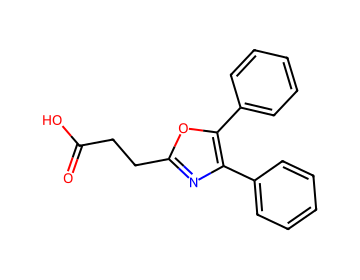
IDENTITY
COMPUTED
PROPERTIES
4.19
log Kow = 4.19
3.7
Crystals from methanol
Insoluble
Slightly soluble in alcohol. Insoluble in water
3.25e-02 g/L
When heated to decomposition it emits toxic fumes of /Nitrogen oxide/.
158-159 °C
160.5 to 161.5 °C
158 - 159 °C
Solid
4.3
pKa = 4.3
169.7 Ų [M+H]+ [CCS Type: TW; Method: calibrated with polyalanine and drug standards]
176 Ų [M+Na]+ [CCS Type: TW; Method: calibrated with polyalanine and drug standards];160.98 Ų [M+H-H2O]+ [CCS Type: TW; Method: calibrated with polyalanine and drug standards];168.56 Ų [M+H]+ [CCS Type: TW; Method: calibrated with polyalanine and drug standards]
GHS
Warning
H302 (25%): Harmful if swallowed [Warning Acute toxicity, oral];H315 (25%): Causes skin irritation [Warning Skin corrosion/irritation];H319 (25%): Causes serious eye irritation [Warning Serious eye damage/eye irritation];H411 (25%): Toxic to aquatic life with long lasting effects [Hazardous to the aquatic environment, long-term hazard];H412 (25%): Harmful to aquatic life with long lasting effects [Hazardous to the aquatic environment, long-term hazard];H413 (25%): May cause long lasting harmful effects to aquatic life [Hazardous to the aquatic environment, long-term hazard]
P264, P264+P265, P270, P273, P280, P301+P317, P302+P352, P305+P351+P338, P321, P330, P332+P317, P337+P317, P362+P364, P391, and P501 (click each P-code to see the statement)
Aggregated GHS information provided per 4 reports by companies from 4 notifications to the ECHA C&L Inventory. Each notification may be associated with multiple companies.;Information may vary between notifications depending on impurities, additives, and other factors. The percentage value in parenthesis indicates the notified classification ratio from companies that provide hazard codes. Only hazard codes with percentage values above 10% are shown. For more detailed information, please visit ECHA C&L website.
HAZARDS
The Approved Drug Products with Therapeutic Equivalence Evaluations List identifies currently marketed prescription drug products, incl oxaprozin, approved on the basis of safety and effectiveness by FDA under sections 505 of the Federal Food, Drug, and Cosmetic Act.
Acute Tox. 4 (25%);Skin Irrit. 2 (25%);Eye Irrit. 2 (25%);Aquatic Chronic 2 (25%);Aquatic Chronic 4 (25%)
SAFETY
Store below 30 °C (86 °F), preferably between 15 and 30 °C (59 and 86 °F), in a tight, light-resistant container, unless otherwise specified by manufacturer. Note: Protect unit-dose packages from light.
SRP: At the time of review, criteria for land treatment or burial (sanitary landfill) disposal practices are subject to significant revision. Prior to implementing land disposal of waste residue (including waste sludge), consult with environmental regulatory agencies for guidance on acceptable disposal practices.
TOXICITY
Prolonged concurrent use of acetaminophen with a nonsteroidal anti-inflammatory drug may increase the risk of adverse renal effects; it is recommended that patients be under close medical supervision while receiving such combined therapy. /Nonsteroidal anti-inflammatory drugs/
Concurrent use /of alcohol or oral glucocorticoid or corticosteroids or chronic therapeutic use of corticotropin or potassium supplements/ with a nonsteroidal anti-inflammatory drug may increase the risk of gastrointestinal side effects, including ulceration or hemorrhage; however, concurrent use with a glucocorticoid or corticotropin in the treatment of arthritis may provide additional therapeutic benefit and permit reduction of glucocorticoid or corticotropin dosage. /Nonsteroidal anti-inflammatory drugs/
Increased monitoring of the response to an antihypertensive agent may be advisable when /oxaprozin/ is used concurrently because ... oxaprozin has been shown to reduce or reverse the effects of antihypertensives, possibly by inhibiting renal prostaglandin synthesis and/or by causing sodium and fluid retention.
Nonsteroidal anti-inflammatory drugs may increase the hypoglycemic effect of these medications /oral antidiabetic agents or insulin/ because prostaglandins are directly involved in regulatory mechanisms of glucose metabolism and possibly because of displacement of the oral antidiabetics from serum proteins; dosage adjustments of the antidiabetic agent may be necessary; ... caution with concurrent use is recommended. /Nonsteroidal anti-inflammatory drugs/
For more Interactions (Complete) data for OXAPROZIN (8 total), please visit the HSDB record page.
Prospective studies show that up to 15% of patients taking oxaprozin chronically experience at least transient serum aminotransferase elevations. These usually resolve even with drug continuation. Marked aminotransferase elevations (>3 fold elevated) occur in approximately 1% of patients.;Clinically apparent liver injury with jaundice from oxaprozin is rare, estimated to occur in 1 in 10,000 to 1 in 20,000 new users each year. Oxaprozin is rarely listed in large surveys of cases of drug induced liver injury perhaps because it is infrequently used in comparison to other NSAIDs. The usual clinical presentation of oxaprozin induced liver injury is an acute hepatitis-like picture arising 2 to 8 weeks after starting the medication (Case 1). The pattern of injury is typically hepatocellular, but mixed hepatocellular-cholestatic cases have been described. Symptoms may include allergic manifestations such as fever, rash, arthralgias and facial edema. Autoantibody formation is rare. Liver biopsy findings are hepatocellular necrosis with prominent periportal and lobular eosinophilic infiltration suggestive of drug induced acute hepatitis. Recovery may be delayed for several days, but is usually complete within one to two months. At least one case of acute liver failure attributed to oxaprozin has been published.;Likelihood score: C (probable rare cause of clinically apparent liver injury).
... Oxaprozin is expected to be excreted in human milk based on its physical-chemical properties; however, the amount of oxaprozin excreted in breast milk has not been evaluated.
/SIGNS AND SYMPTOMS/ No patient experienced either an accidental or intentional overdosage of daypro in the clinical trials of the drug. Symptoms following acute overdose with other NSAIDs are usually limited to lethargy, drowsiness, nausea, vomiting, and epigastric pain and are generally reversible with supportive care. Gastrointestinal bleeding and coma have occurred following NSAID overdose. Hypertension, acute renal failure, and respiratory depression are rare. Anaphylactoid reactions have been reported with therapeutic ingestion of NSAIDs, and may occur following an overdose.
/CASE REPORTS/ A 41-year-old white woman was admitted to the hospital with malaise, anorexia, and right upper quadrant pain. The patient was found to have severe jaundice with liver enzyme elevation. Laboratory test results for potential etiologies were negative, except for the use of oxaprozin for the preceding six weeks. Diagnosis of drug-induced hepatotoxicity was made by liver biopsy. The patient's symptoms resolved and liver enzymes normalized after oxaprozin was discontinued.
/CASE REPORTS/ A 56-year-old woman was admitted with fulminant hepatic failure. Work-up for potential etiologies was negative except for the use of oxaprozin for the preceding two months. Results of premortem liver biopsy were consistent with drug-induced hepatic injury similar to that previously reported with diclofenac. ... Elevations in hepatic transaminase concentrations and now fulminant hepatic failure have been shown to occur with oxaprozin, as previously seen with other nonsteroidal antiinflammatory drugs (NSAIDs). Transaminitis is a known adverse effect of NSAID use, but is usually mild and reversible with discontinuation of drug. Transaminitis may be more likely to occur in the elderly, in patients receiving concurrent potentially hepatotoxic medications, and possibly with the newer long-acting NSAIDs. The existence of fulminant hepatitis, although rare, supports the need for monitoring liver function enzymes during NSAID therapy.
/CASE REPORTS/ Pseudoporphyria is a diagnosis that is used when porphyria-like clinical lesions arise in the setting of normal porphyrin levels. This condition was first described in the 1960s and was initially related to the use of certain antibiotic drugs. In 1985, pseudoporphyria was first attributed to the use of nonsteroidal antiinflammatory drugs (NSAIDs). ... six patients diagnosed with pseudoporphyria /are described/ ... The patients ranged in age from 27 to 59 years and had a female:male predominance of 2:1. The offending NSAID was DayPro (oxaprozin) for three of the patients, Relafen (nabumetone) for two of the patients, and Aleve (naproxen) for one patient. For each patient, histology and immunofluorescence was either consistent with the diagnosis of porphyria cutanea tarda or nonspecific, while serum, stool, and urine porphyrins did not support that diagnosis. Withdrawal of the offending agent provided relief from the clinical symptoms for each patient. None of our patients were rechallenged with the putative offending drug. However, prolonged avoidance has provided a sustained remission from symptoms in all six patients. Pseudoporphyria is a relatively rarely reported condition. Clinical suspicion with appropriate laboratory and histopathologic findings help to make this diagnosis, and exclude true porphyrias. Rechallenge with the offending drug to produce symptom relapse has been proposed to be helpful in confirming this diagnosis of exclusion. Since all 6 patients with drug-induced pseudoporphyria experienced resolution of their symptoms after discontinuing the offending agent, we propose that this clinical correlation alone is sufficient to confirm this diagnosis. ...
For more Human Toxicity Excerpts (Complete) data for OXAPROZIN (7 total), please visit the HSDB record page.
Drug Induced Liver Injury Rank (DILIrank 2.0)
Oxaprozin
vLess-DILI-concern
3
Warnings & precautions
DOI:10.1016/j.drudis.2016.02.015
/LABORATORY ANIMALS: Chronic Exposure or Carcinogenicity/ An increased incidence of hepatic adenomas and carcinomas occurred in 2 year studies in male CD mice, but not in female CD mice or in rats, given oxaprozin. The significance of this species-specific finding is not known.
/LABORATORY ANIMALS: Developmental or Reproductive Toxicity/ Fetal malformations occurred infrequently in rabbits receiving 7.5 to 30 mg/kg per day (doses within the usual human dose range). However, no teratogenicity occurred in mice or rats receiving 50 to 200 mg/kg (225 to 600 mg/sq m) per day.
/GENOTOXICITY/ No mutagenic activity was demonstrated in the Ames test, forward mutation testing in yeast and chinese hamster ovary cells, DNA repair testing in Chinese hamster ovary cells, micronucleus testing in mouse bone marrow, chromosomal aberration testing in human lymphocytes, or cell transformation testing in mouse fibroblasts.
The pharmacokinetics of oxaprozin have been investigated in patients with renal insufficiency. Oxaprozin's renal clearance decreased proportionally with creatinine clearance (CrCl), but since only about 5% of oxaprozin dose is excreted unchanged in the urine, the decrease in total body clearance becomes clinically important only in those subjects with highly decreased CrCl. Oxaprozin is not significantly removed from the blood in patients undergoing hemodialysis or continuous ambulatory peritoneal dialysis (CAPD) due to its high protein binding. Oxaprozin plasma protein binding may decrease in patients with severe renal deficiency. Dosage adjustment may be necessary in patients with renal insufficiency.
Approximately 95% of oxaprozin is metabolized by the liver. However, patients with well-compensated cirrhosis do not require reduced doses of oxaprozin as compared to patients with normal hepatic function. Nevertheless, caution should be observed in patients with severe hepatic dysfunction.
While data specific to oxaprozin were not located(SRC, 2008), the literature suggests that some pharmaceutically active compounds originating from human and veterinary therapy are not eliminated completely in municipal sewage treatment plants and are therefore discharged into receiving waters(1). Wastewater treatment processes often were not designed to remove them from the effluent(2). Selected organic waste compounds may be degrading to new and more persistent compounds that may be released instead of or in addition to the parent compound(2). Studies have indicated that several polar pharmaceutically active compounds can leach through soils(1).
There is no antidote. Vitamin K may be used for patients with elevated prothrombin time caused by hypoprothrombinemia. /Nonsteroidal anti-inflammatory drugs/
Emergency and supportive measures: Maintain on open airway and assist ventilation if necessary. Administer supplemental oxygen. Treat seizures, coma, and hypotension if the occur. Antacids may be used for mild GI upset. Replace fluid losses with intravenous crystalloid solutions. /Nonsteroidal anti-inflammatory drugs/
Administer activated charcoal orally if conditions are appropriate. Gastric lavage is not necessary after small to moderate ingestions if activated charcoal can be given promptly. /Nonsteroidal anti-inflammatory drugs/
Nonsteroidal anti-inflammatory drugs are highly protein bound and extensively metabolized. Thus, hemodialysis, peritoneal dialyses, and forced diuresis are not likely to be effective. /Nonsteroidal anti-inflammatory drugs/
◉ Summary of Use during Lactation;Because there is no published experience with oxaprozin during breastfeeding, other agents are preferred, especially while nursing a newborn or preterm infant.;◉ Effects in Breastfed Infants;Relevant published information was not found as of the revision date.;◉ Effects on Lactation and Breastmilk;Relevant published information was not found as of the revision date.
LD50 Dog ip 200 mg/kg
LD50 Dog iv 124 mg/kg
LD50 Mouse ip 376 mg/kg
LD50 Mouse iv 93 mg/kg
For more Non-Human Toxicity Values (Complete) data for OXAPROZIN (10 total), please visit the HSDB record page.
REGULATORY
The Approved Drug Products with Therapeutic Equivalence Evaluations List identifies currently marketed prescription drug products, incl oxaprozin, approved on the basis of safety and effectiveness by FDA under sections 505 of the Federal Food, Drug, and Cosmetic Act.
PHARMACOLOGY
M - Musculo-skeletal system;M01 - Antiinflammatory and antirheumatic products;M01A - Antiinflammatory and antirheumatic products, non-steroids;M01AE - Propionic acid derivatives;M01AE12 - Oxaprozin
QM - Musculo-skeletal system;QM01 - Antiinflammatory and antirheumatic products;QM01A - Antiinflammatory and antirheumatic products, non-steroids;QM01AE - Propionic acid derivatives;QM01AE12 - Oxaprozin
>99.5% bound to albumin
Oxaprozin is a nonsteroidal anti-inflammatory drug (NSAID) with analgesic and antipyretic properties. Oxaprozin is used to treat rheumatoid arthritis, osteoarthritis, dysmenorrhea, and to alleviate moderate pain.
Anti-inflammatory effects of Oxaprozin are believed to be due to inhibition of cylooxygenase in platelets which leads to the blockage of prostaglandin synthesis. Antipyretic effects may be due to action on the hypothalamus, resulting in an increased peripheral blood flow, vasodilation, and subsequent heat dissipation. Oxaprozin is a non-selective NSAID, with a cell assay system showing lower COX-2 selectivity implying higher COX-1 selectivity.
This study was undertaken to evaluate the scavenging activity for reactive oxygen species (ROS) and reactive nitrogen species (RNS) by several nonsteroidal anti-inflammatory drugs (NSAIDs), namely indole derivatives (indomethacin, acemetacin, etodolac), pyrrole derivatives (tolmetin and ketorolac), and an oxazole derivative (oxaprozin). The inhibition of prostaglandin synthesis constitutes the primary mechanism of the anti-inflammatory action of these drugs. Nevertheless, it has been suggested that the anti-inflammatory activity of NSAIDs may be also partly due to their ability to scavenge ROS and RNS and to inhibit the respiratory burst of neutrophils triggered by various activator agents. Thus, the scavenging activity of these NSAIDs was evaluated against an array of ROS (O(2)(-), HO, HOCl, and ROO) and RNS (NO and ONOO(-)) using noncellular in vitro systems. The results obtained demonstrated that tolmetin, ketorolac, and oxaprozin were not active against O(2)(-), while acemetacin, indomethacin, and etodolac exhibited concentration-dependent effects. Oxaprozin was also the least active scavenger for HO, among all the tested NSAIDs shown to be active. The scavenging effect for HOCl was not observed for any of the tested NSAIDs. The ROO was effectively scavenged by etodolac, with the other tested NSAIDs being much less active. NO and ONOO(-) were scavenged by all the tested NSAIDs.
Oxaprozin is a nonsteroidal anti-inflammatory drug characterised by a propionic acid-based structure. It is able to diffuse easily into inflamed synovial tissues after oral administration. Although discovered > 20 years ago, it is now under intensive investigation because of its unusual pharmacodynamic properties. Other than being a nonselective cyclooxygenase inhibitor, the drug is capable of inhibiting both anandamide hydrolase in neurons (median inhibitory concentration [IC50] = 85 umol/L), with consequent potent analgesic activity, and NF-kappaB activation in inflammatory cells (IC50 = 50 umol/L). Moreover, oxaprozin induces apoptosis of activated monocytes in a dose-dependent manner, with the effect being detectable at a concentration of 5 micromol/L and reaching the maximum activity at 50 umol/L. As monocyte-macrophages and NF-kappaB pathways are crucial for synthesis of proinflammatory and histotoxic mediators in inflamed joints, oxaprozin appears to be endowed with pharmacodynamic properties exceeding those presently assumed as markers of classical nonsteroidal anti-inflammatory drug.
54.9 hours
Upon chronic dosing the accumulation half-life is approximately 22 hours. The elimination half-life is approximately twice the accumulation half-life due to increased binding and decreased clearance at lower concentrations.
Hepatic. Ester and ether glucuronide are the major conjugated metabolites of oxaprozin, and do not have significant pharmacologic activity.
Several oxaprozin metabolites have been identified in human urine or feces. Oxaprozin is primarily metabolized by the liver, by both microsomal oxidation (65%) and glucuronic acid conjugation (35%). Ester and ether glucuronide are the major conjugated metabolites of oxaprozin. On chronic dosing, metabolites do not accumulate in the plasma of patients with normal renal function. Concentrations of the metabolites in plasma are very low. Oxaprozin's metabolites do not have significant pharmacologic activity. The major ester and ether glucuronide conjugated metabolites have been evaluated along with oxaprozin in receptor binding studies and in vivo animal models and have demonstrated no activity. A small amount (<5%) of active phenolic metabolites are produced, but the contribution to overall activity is limited.
MHJ80W9LRB
OXAPROZIN
Mechanisms of Action [MoA] - Cyclooxygenase Inhibitors
Chemical Structure [CS] - Anti-Inflammatory Agents, Non-Steroidal
Established Pharmacologic Class [EPC] - Nonsteroidal Anti-inflammatory Drug
Oxaprozin is a Nonsteroidal Anti-inflammatory Drug. The mechanism of action of oxaprozin is as a Cyclooxygenase Inhibitor.
Anti-inflammatory agents that are non-steroidal in nature. In addition to anti-inflammatory actions, they have analgesic, antipyretic, and platelet-inhibitory actions. They act by blocking the synthesis of prostaglandins by inhibiting cyclooxygenase, which converts arachidonic acid to cyclic endoperoxides, precursors of prostaglandins. Inhibition of prostaglandin synthesis accounts for their analgesic, antipyretic, and platelet-inhibitory actions; other mechanisms may contribute to their anti-inflammatory effects.
Compounds or agents that combine with cyclooxygenase (PROSTAGLANDIN-ENDOPEROXIDE SYNTHASES) and thereby prevent its substrate-enzyme combination with arachidonic acid and the formation of eicosanoids, prostaglandins, and thromboxanes.
Oxaprozin is 95% absorbed after oral administration. Food may reduce the rate of absorption of oxaprozin, but the extent of absorption is unchanged. Antacids do not significantly affect the extent and rate of oxaprozin absorption.
Oxaprozin is expected to be excreted in human milk based on its physical-chemical properties; however, the amount of oxaprozin excreted in breast milk has not been evaluated. Approximately 95% of oxaprozin is metabolized by the liver. Approximately 5% of the oxaprozin dose is excreted unchanged in the urine. Sixty-five percent (65%) of the dose is excreted in the urine and 35% in the feces as metabolite. Biliary excretion of unchanged oxaprozin is a minor pathway. Several oxaprozin metabolites have been identified in human urine or feces.
11 to 17 L/70 kg
In dose proportionality studies utilizing 600, 1200 and 1800 mg doses, the pharmacokinetics of oxaprozin in healthy subjects demonstrated nonlinear kinetics of both the total and unbound drug in opposite directions, i.e., dose exposure related increase in the clearance of total drug and decrease in the clearance of the unbound drug. Decreased clearance of the unbound drug was related predominantly to a decrease in the volume of distribution and not an increase in the half-life. This phenomenon is considered to have minimal impact on drug accumulation upon multiple dosing. The apparent volume of distribution (Vd/F) of total oxaprozin is approximately 11-17 L/70 kg. Oxaprozin is 99% bound to plasma proteins, primarily to albumin. At therapeutic drug concentrations, the plasma protein binding of oxaprozin is saturable, resulting in a higher proportion of the free drug as the total drug concentration is increased. With increases in single doses or following repetitive once-daily dosing, the apparent volume of distribution and clearance of total drug increased, while that of unbound drug decreased due to the effects of nonlinear protein binding. Oxaprozin penetrates into synovial tissues of rheumatoid arthritis patients with oxaprozin concentrations 2-fold and 3-fold greater than in plasma and synovial fluid, respectively. Oxaprozin is expected to be excreted in human milk based on its physical-chemical properties; however, the amount of oxaprozin excreted in breast milk has not been evaluated.
Daypro is 95% absorbed after oral administration. Food may reduce the rate of absorption of oxaprozin, but the extent of absorption is unchanged. Antacids do not significantly affect the extent and rate of Daypro absorption.
It is not known whether oxaprozin is distributed into human breast milk. However, it is distributed into the milk of lactating rats.
Cytoplasm;Membrane
Oxaprozin Action Pathway
USES
MEDICATION
Therapeutic Category: Anti-inflammatory
Use (kg) in USA (2002): 18900;Consumption (g per capita) in the USA (2002): 0.067;Calculated removal (%): 96.9
Preparation: FR 2001036 (1969 Inst Farm Serano); ... K. Brown GB 1206403 and US 3578671 (1970, 1971 to Wyeth)
Oral: Tablets, film-coated: 600 mg Daypro Caplets (scored), (Searle).
600 mg tablets
Pharmaceuticals
ALIASES
REACTIONS
uspto-grants-1984_08 · 10.6084/m9.figshare.5104873.v1 · US04465838
查看
uspto-grants-1985_07 · 10.6084/m9.figshare.5104873.v1 · US04532253
查看
uspto-grants-1987_04 · 10.6084/m9.figshare.5104873.v1 · US04659728
查看
uspto-grants-1980_02 · 10.6084/m9.figshare.5104873.v1 · US04190584
查看
uspto-grants-1980_02 · 10.6084/m9.figshare.5104873.v1 · US04190584
查看
uspto-grants-1980_02 · 10.6084/m9.figshare.5104873.v1 · US04190584
查看
uspto-grants-2000_08 · 10.6084/m9.figshare.5104873.v1 · US06096896
查看