
uspto-grants-1998_03 · 10.6084/m9.figshare.5104873.v1 · US05723617
查看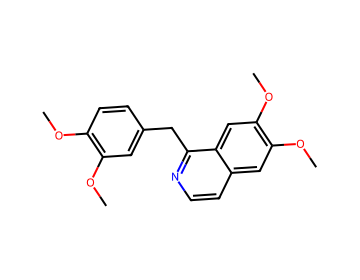
IDENTITY
COMPUTED
PROPERTIES
Optimal pH for storage of papverine solutions: 2.0-2.8
3
log Kow = 2.95
3
1.337 g/cu cm at 20 °C
White prisms from alcohol-diethyl ether; needles from petroleum ether
Triboluminescent, orthorhombic prisms from alcohol + ether
White crystalline powder
In water, 3.733X10⁻⁵ mg/L at 37.5 °C
Slightly soluble in water; very soluble in ethanol, chloroform; soluble in acetone, benzene, pyridine
Almost insoluble in water. Soluble in hot benzene, glacial acetic acid, acetone; slightly soluble in chloroform, carbon tetrachloride, petroleum ether
In water, 35 mg/L at 17 °C
1.29e-02 g/L
Sublimes at 135 °C
When heated to decomposition it emits toxic fumes of /oxides of nitrogen/.
226
147.5 °C
White, monoclinic prisms from water. MP: 224.5 °C; Very soluble in water, ethanol /Papaverine hydrochloride/
Index of refraction: 1.625 C/D
Solid
SENSITIVE TO LIGHT & MOISTURE /papaverine/
pKa = 8.07 at 25 °C
GHS
Warning
H302: Harmful if swallowed [Warning Acute toxicity, oral]
P264, P270, P301+P317, P330, and P501 (click each P-code to see the statement)
Warning
HAZARDS
Status: Active Update: 23-06-2016 https://echa.europa.eu/registration-dossier/-/registered-dossier/18037
IMAP assessments - Isoquinoline, 1-[(3,4-dimethoxyphenyl)methyl]-6,7-dimethoxy-: Environment tier I assessment;IMAP assessments - Isoquinoline, 1-[(3,4-dimethoxyphenyl)methyl]-6,7-dimethoxy-: Human health tier I assessment
Acute Tox. 4 (100%)
Acute toxicity - category 4
Acute Tox. 4 *
SAFETY
As with all fires, evacuate personnel to a safe area. Firefighters should use self-contained breathing equipment and protective clothing.
Water spray, dry chemical, carbon dioxide or foam as appropriate for surrounding fire and materials.
Papaverine hydrochloride preparations should be stored at a temperature less than 40 °C, preferably between 15-30 °C; freezing of the injection should be avoided. ...
Papaverine hydrochloride injection should be stored at room temperature and protected from temperatures of 40 °C or higher and from freezing. It should not be refrigerated because of a reduction in solubility with possible precipitation. The solution should be clear and colorless to pale yellow.
OPTIMAL PH FOR STORAGE OF PAPAVERINE SOLN: 2.0-2.8. /papaverine/
Store in tight, light-resistant container as defined in the USP-NF. This material should be handled and stored per label instructions to ensure product integrity.
Wear approved respiratory protection, chemically compatible gloves and protective clothing. Wipe up spillage or collect spillage using a high-efficiency vacuum cleaner. Avoid breathing dust. Place spillage in appropriately-labelled container for disposal. Wash spill site.
SRP: Expired or waste pharmaceuticals shall carefully take into consideration applicable DEA, EPA, and FDA regulations. It is not appropriate to dispose by flushing the pharmaceutical down the toilet or discarding to trash. If possible return the pharmaceutical to the manufacturer for proper disposal being careful to properly label and securely package the material. Alternatively, the waste pharmaceutical shall be labeled, securely packaged and transported by a state licensed medical waste contractor to dispose by burial in a licensed hazardous or toxic waste landfill or incinerator.
SRP: Wastewater from contaminant suppression, cleaning of protective clothing/equipment, or contaminated sites should be contained and evaluated for subject chemical or decomposition product concentrations. Concentrations shall be lower than applicable environmental discharge or disposal criteria. Alternatively, pretreatment and/or discharge to a permitted wastewater treatment facility is acceptable only after review by the governing authority and assurance that "pass through" violations will not occur. Due consideration shall be given to remediation worker exposure (inhalation, dermal and ingestion) as well as fate during treatment, transfer and disposal. If it is not practicable to manage the chemical in this fashion, it must be evaluated in accordance with EPA 40 CFR Part 261, specifically Subpart B, in order to determine the appropriate local, state and federal requirements for disposal.
Chemically compatible gloves. Safety glasses or goggles. Protect exposed skin.
As a general rule, when handling USP Reference Standards avoid all contact and inhalation of dust, mists, and/or vapors associated with the material. Wash thoroughly after handling.
This material is assumed to be combustible. As with all dry powders it is advisable to ground mechanical equipment in contact with dry material to dissipate the potential buildup of static electricity.
Use a NIOSH approved respirator, if it is determined to be necessary by an industrial hygiene survey involving air monitoring. In the event that a respirator is not required, an approved dust mask should be used.
Engineering controls such as exhaust ventilation are recommended.
TOXICITY
The effects of different concentrations of beta-cyclodextrin (beta-CyD), hydroxypropyl-beta-cyclodextrin (HP-beta-CyD) and 2,6-di-O-methyl-beta-cyclodextrin (DM-beta-CyD) on percutaneous absorption of papaverine hydrochloride (PAP) were investigated. Abdominal rat skin mounted in Franz cells was used for in vitro experiments. To evaluate CyD interaction with a bilayer structure model, dipalmitoyl-sn-glycero-3-phosphocholine (DPPC) and DPPC-Chol (8:2 mole ratio) vesicles were used. CyD vesicle interaction was evaluated by differential scanning calorimetry. Permeation through rat skin and calorimetric experiments demonstrated that at low concentrations DM-beta-CyD shows higher enhancer activity as a possible result of a perturbing action on the skin by a complexation of its lipid components, but at higher concentrations HP-beta-CyD is the most effective. By considering that HP-beta-CyD presents a very moderate destabilizing action on the skin, /it was concluded/ that a 10% aqueous solution of this macrocycle appears to be the most suitable transdermal absorption enhancer for PAP.
...The effect of papaverine ... was investigated on the naloxone-precipitated withdrawal contracture of the acute morphine-dependent guinea-pig ileum in vitro. Furthermore, the effect of papaverine was also considered on DAGO (highly selective mu -agonist) and U50-488H (highly selective k-agonist) withdrawal to test whether the possible interaction of papaverine on opioid withdrawal involves mu - and/or k-opioid receptors. Following a 4 min in vitro exposure to opioid agonist, the guinea-pig isolated ileum exhibited a strong contracture after the addition of naloxone. Papaverine treatment (1 x 10(-7) - 5 x 10(-7) - 1 x 10(-6) M) before or after the opioid agonists was able of both preventing and reversing the naloxone-induced contracture after exposure to mu (morphine and DAGO) or k (U50-488H) opiate agonists in a concentration-dependent fashion. Both acetylcholine response and electrical stimulation were not affected by papaverine treatment whereas the final opiate withdrawal was still reduced. The results ... indicate that papaverine was able to influence the opiate withdrawal in vitro and papaverine was able to exert its effect both at mu and k opioid agonists.
/Investigators sought/ to determine the influences of papaverine and buffered papaverine on passage of dexamethasone administered intratympanically to the inner ear. Twenty-seven Vienna white rabbits were divided into five groups: eight received intratympanic dexamethasone (4 mg/mL) (group 1), seven received intratympanic papaverine (10 mg/mL) + dexamethasone (2 mg/mL) (group 2), six received buffered (with sodium bicarbonate 8.4%) intratympanic papaverine (7.5 mg/mL) + dexamethasone (1.5 mg/mL) (group 3), three had basal cortisol levels in venous blood and perilymph measured (group 4), and three received intravenous papaverine + dexamethasone (group 5). At 1 hr after the administration of the drugs, dexamethasone levels in ipsilateral and contralateral perilymph and venous blood were measured by radioimmunoassay. Animals in group 3 demonstrated the highest levels of ipsilateral perilymph dexamethasone. Ipsilateral perilymph levels were significantly higher in groups 1 and 3 than they were in the other groups (p<0.05). Although the perilymph levels observed in animals in group 2 were slightly higher than those in group 4, no significant difference existed (p = 0.160). /It was concluded/ that when papaverine is intratympanically administered together with dexamethasone after buffering, passage of dexamethasone to the inner ear is increased.
.../Investigators studied/ the combined effect of various cAMP reagents on LNCaP human prostate carcinoma cells. Papaverine and prostaglandin E2 (PGE2), combined synergistically induced morphological changes. Electron microscope study suggested that cells treated with both reagents become like neuroendocrine cells. The effect of both reagents on proliferation and malignancy of LNCaP cells /was then investigated/. The malignancy of cells was analyzed by soft agar colony-forming assay and an in vitro invasion assay. Proliferation and malignancy of LNCaP cells treated with both reagents were significantly decreased in comparison to the proliferation and malignancy of untreated cells. Furthermore, the expression of oncogenes such as c-myc and Bcl-2 was suppressed in differentiated LNCaP cells. These results suggest that papaverine combined with PGE2 can synergistically induce neuronal differentiation as well as decrease the malignancy of human prostatic cancer LNCaP cells.
For more Interactions (Complete) data for PAPAVERINE (12 total), please visit the HSDB record page.
TERRESTRIAL FATE: Based on a classification scheme(1), a log Koc of 5.18(2), corresponding to a Koc of 151,365(SRC), indicates that papaverine is expected to have moderate mobility in soil(SRC). The pKa of papaverine is 8.07(3), indicating that this compound will exist partially in the cation form in the environment and cations generally adsorb more strongly to soils containing organic carbon and clay than their neutral counterparts(4). Volatilization of papaverine from moist soil surfaces is not expected to be an important fate process(SRC) given an estimated Henry's Law constant of 7.5X10⁻¹³ atm-cu m/mole(SRC), using a fragment constant estimation method(5). Papaverine is not expected to volatilize from dry soil surfaces(SRC) based upon an estimated vapor pressure of 2.3X10⁻⁸ mm Hg at 25 °C(SRC), determined from a fragment constant method(6). Biodegradation data in soil were not available(SRC, 2012).
AQUATIC FATE: Based on a classification scheme(1), a log Koc of 5.18(2), corresponding to a Koc of 151,365(SRC), indicates that papaverine is expected to adsorb to suspended solids and sediment(SRC). Volatilization from water surfaces is not expected(3) based upon an estimated Henry's Law constant of 7.5X10⁻¹³ atm-cu m/mole(SRC), developed using a fragment constant estimation method(4) According to a classification scheme(5), an estimated BCF of 41(SRC), from its log Kow of 2.95(6) and a regression-derived equation(7) suggests the potential for bioconcentration in aquatic organisms is moderate(SRC). Biodegradation data in water were not available(SRC, 2012).
ATMOSPHERIC FATE: According to a model of gas/particle partitioning of semivolatile organic compounds in the atmosphere(1), papaverine, which has an estimated vapor pressure of 2.3X10⁻⁸ mm Hg at 25 °C(SRC), determined from a fragment constant method(2), will exist in both the vapor and particulate phases in the ambient atmosphere. Vapor-phase papaverine is degraded in the atmosphere by reaction with photochemically-produced hydroxyl radicals(SRC); the half-life for this reaction in air is estimated to be 0.7 hours(SRC), calculated from its rate constant of 1.9X10⁻¹⁰ cu cm/molecule-sec at 25 °C(SRC) that was derived using a structure estimation method(3). Particulate-phase papaverine may be removed from the air by wet or dry deposition(SRC). Papaverine absorbs light at wavelengths as high as 327 nm(4) and, therefore, may be susceptible to direct photolysis by sunlight(SRC).
Papaverine has been detected in the Opium Poppy (Papaver somniferum L.), with 20 ppm being reported in the fruit. It has also been detected not quantified in the Great Scarlet Poppy plant (Papaver bracteatum L.) and in the root of Indian Snakeroot (Rauvolfia serpentina L>)(1).
A log Koc of 5.18 has been reported for papaverine(1), corresponding to a Koc of 151,365(SRC). According to a classification scheme(2), this estimated Koc value suggests that papaverine is expected to be immobile in soil. The pKa of papaverine is 8.07(3), indicating that this compound will exist almost entirely in the cation form in the environment and cations generally adsorb more strongly to soils containing organic carbon and clay than their neutral counterparts(4). A Kd of 5442 has been reported using an agricultural soil from Corrstown, Co. Dublin, Ireland(1).
Papaverine has been detected in various poppy species (Papaver sp.) and Indian snakeroot (Rauvolfia serpentina)(1).
/HUMAN EXPOSURE STUDIES/ Papaverine is used for the evaluation of functional status of the coronary arteries but it may provoke severe ventricular tachyarrhythmias (VTAs). This study compared the clinical and ECG characteristic of patients with papaverine-induced VTAs. The study involved 25 patients who underwent a fractional flow reserve (FFR) study. FFR was determined as the ratio of blood pressure at the distal and the proximal site of stenosis after intracoronary papaverine administration at 12 mg into the left and 8 mg into the right coronary artery. The QT and QTU intervals were measured manually in the limb leads and in the precordial leads, respectively and corrected by the R-R interval to obtain QTc and QTUc. The clinical and ECG data were compared between the patient groups with and without VTAs. After papaverine administration into the left (20), right (3) or both coronary arteries (2), the RR interval shortened, but non-significantly however, the QT interval (and QTc) and the QTU interval (and QTUc) were significantly prolonged. VTAs developed in four women: torsade de pointes in 3 followed by ventricular fibrillation and ventricular premature beats in 1 patient. After papaverine administration, QTU and QTUc were more prolonged in women than men and in patients with VTAs compared to those without. Just prior to VTAs, giant T-U waves were observed. Intracoronary papaverine was used to determine FFR which may induce VTAs. VTAs developed only in women and they were closely related to prolongation of the QTU intervals with prominent T-U waves.
/HUMAN EXPOSURE STUDIES/ Fatalities have followed intravenous use. Polymorphous ventricular tachycardia with prolongation of the QT intervalhas followed infusion of 6 to 10 mg into the coronary arteries.
/HUMAN EXPOSURE STUDIES/ Doses as high as 1 g by mouth produce only minimal side effects. IV doses of 30 and 65 mg produced rapid demise of 2 adults preceded by hyperpnea, tachypnea and eventually apnea. Heart sounds were not audible after onset of respiratory symptoms. Death may have resulted from either cardiac or respiratory disturbance.
/SIGNS AND SYMPTOMS/ The symptoms of toxicity from papaverine hydrochloride often result from vasomotor instability and include nausea, vomiting, weakness, central nervous system depression, nystagmus, diplopia, diaphoresis, flushing, dizziness, and sinus tachycardia.
For more Human Toxicity Excerpts (Complete) data for PAPAVERINE (22 total), please visit the HSDB record page.
Papaverine's production and adminstration as a vasodialator(1) and drug of abuse(2) may result in its release to the environment through various waste streams(SRC).
Drug-Induced Liver Injury Severity and Toxicity (DILIst)
papaverine
DILI Positive
Intravenous
DOI:10.1016/j.drudis.2019.09.022
An estimated BCF of 41 was calculated in fish for papaverine(SRC), using a log Kow of 2.95(1) and a regression-derived equation(2). According to a classification scheme(3), this BCF suggests the potential for bioconcentration in aquatic organisms is moderate(SRC).
The Henry's Law constant for papaverine is estimated as 7.5X10⁻¹³ atm-cu m/mole(SRC) using a fragment constant estimation method(1). This Henry's Law constant indicates that papaverine is expected to be essentially nonvolatile from water or moist soil surfaces(2). Papaverine is not expected to volatilize from dry soil surfaces(SRC) based upon an estimated vapor pressure of 2.3X10⁻⁸ mm Hg(SRC), determined from a fragment constant method(3).
/LABORATORY ANIMALS: Acute Exposure/ The aim of this study is to investigate erectile response to intraurethral administration of papaverine in /male Sprague-Dawley/ rats. Under urethane anesthesia, penis was exposed and intracavernous pressure (ICP) was recorded through a 23-gauge needle, which was inserted into right corpus cavernosum. Effects of intraurethral application of incremental doses of 0.2 mL papaverine gel (4-17.5 mg) on intracavernosal pressure were observed and compared with those of 0.4 mg papaverine applied into corpus cavernosum. Mean arterial blood pressure (MABP) and heart rate were also monitored. The mean basal ICP was 8.9 +/- 1.8 mm Hg. Intraurethral administration of papaverine did not increase ICP at any doses used in this study. After intracavernous injection of papaverine (0.4 mg), a significant increase in the ICP occurred from resting (8.9 +/- 1.8 mm Hg) to a peak at 57.5 +/- 9.9 mm Hg and persisted for 22.3 +/- 6.7 minutes (p < 0.05). The latter application significantly decreased MABP (22.3 +/- 3.1 mm Hg; p < 0.05). Intraurethral administration of papaverine does not seem to be an alternative to other erectile dysfunction treatment modalities. ...
/LABORATORY ANIMALS: Acute Exposure/ Arrhythmias and AV heart block are commonly observed in ... animals after iv admin.
/LABORATORY ANIMALS: Subchronic or Prechronic Exposure/ In August 1995, an outbreak of bronchiolitis obliterans was observed in Taiwan. This progressive respiratory distress disease was associated with consumption of the uncooked vegetable, Sauropus androgynus. The vegetable is reportedly high in papaverine, a chemical that affects vasodilatation. This study determined whether Sauropus androgynus and papaverine induce bronchiolitis obliterans in Sprague-Dawley (S/D) rats. ... In part A of the experiment, 30 S/D rats were fed various concentrations of S. androgynus juice for eight weeks. The rats were divided into six groups, including a normal control and study groups with one time (1X), 10 times (10X, leaf only and mixed leaf and stalk) and 30 times (30X, leaf only and mixed leaf and stalk) concentration. In part B, 33 S/D rats were fed different doses of papaverine for 4 weeks. The rats were also divided into six groups, including normal control, oral feeding subgroups (1X, 10X and 20X) and intraperitoneal injection subgroups (5X and 10X). The degree of inflammation was defined semiquantitatively in the bronchioles and pulmonary vessel adventitia as including grade 0 (no inflammation), grade 1 (minimal), grade 2 (mild), grade 3 (moderate) and grade 4 (severe). There was no evidence of bronchiolitis obliterans in either experiment. The histopathologic findings of the lungs revealed normal or only minimal inflammatory changes in the peribronchial and perivascular adventitia in each group of both studies. The mean degree of inflammatory changes in the study groups was no different from that of control group. /The authors/ conclude that ingestion of high-dose S. androgynus and papaverine do not induce injuries to the airways, alveoli or pulmonary vessels in the animal model of S/D rats. The species barrier may be one of the possible reasons.
/LABORATORY ANIMALS: Developmental or Reproductive Toxicity/ No teratogenic effects were observed in rats when papaverine hydrochloride was administered subcutaneously as a single agent.
For more Non-Human Toxicity Excerpts (Complete) data for PAPAVERINE (11 total), please visit the HSDB record page.
... Use of papaverine in patients with Parkinson's diease should probably be avoided, particularly if the patients are receiving levodopa.
It is not known whether papaverine can cause fetal harm when administered to a pregnant woman or can affect reproduction capacity. Papaverine Hydrochloride should be given to a pregnant woman only if clearly needed.
Vasoactive therapy for impotence should not be used in patients who might have conditions predisposing to priapism (e.g., sickle cell anemia or trait, multiple myeloma, leukemia), in those with anatomic deformation of the penis (e.g., angulation, cavernosal fibrosis, Peyronie's disease), or in men for whom sexual activity is inadvisable or contraindicated. In addition, vasoactive therapy should be discontinued in any patient who develops penile angulation, cavernosal fibrosis, or Peyronie's disease during therapy with the drug. ... Patients with penile implants should not be treated with vasoactive therapy for impotence.
REGULATORY
Status: Active Update: 23-06-2016 https://echa.europa.eu/registration-dossier/-/registered-dossier/18037
PHARMACOLOGY
A - Alimentary tract and metabolism;A03 - Drugs for functional gastrointestinal disorders;A03A - Drugs for functional gastrointestinal disorders;A03AD - Papaverine and derivatives;A03AD01 - Papaverine
G - Genito urinary system and sex hormones;G04 - Urologicals;G04B - Urologicals;G04BE - Drugs used in erectile dysfunction;G04BE02 - Papaverine
QA - Alimentary tract and metabolism;QA03 - Drugs for functional gastrointestinal disorders;QA03A - Drugs for functional gastrointestinal disorders;QA03AD - Papaverine and derivatives;QA03AD01 - Papaverine
QG - Genito urinary system and sex hormones;QG04 - Urologicals;QG04B - Urologicals;QG04BE - Drugs used in erectile dysfunction;QG04BE02 - Papaverine
~90%
Papaverine is a nonxanthine phosphodiesterase inhibitor for the relief of cerebral and peripheral ischemia associated with arterial spasm and myocardial ischemia complicated by arrhythmias. The main actions of Papaverine are exerted on cardiac and smooth muscle. Like qathidine, Papaverine acts directly on the heart muscle to depress conduction and prolong the refractory period. Papaverine relaxes various smooth muscles. This relaxation may be prominent if spasm exists. The muscle cell is not paralyzed by Papaverine and still responds to drugs and other stimuli causing contraction. The antispasmodic effect is a direct one, and unrelated to muscle innervation. Papaverine is practically devoid of effects on the central nervous system. Papaverine relaxes the smooth musculature of the larger blood vessels, especially coronary, systemic peripheral, and pulmonary arteries.
Perhaps by its direct vasodilating action on cerebral blood vessels, Papaverine increases cerebral blood flow and decreases cerebral vascular resistance in normal subjects; oxygen consumption is unaltered. These effects may explain the benefit reported from the drug in cerebral vascular encephalopathy.
... In this study, /investigators/ examined the inhibitory mechanism of papaverine on carbachol (CCh)-induced contraction in the bovine trachea. Papaverine inhibited muscle contraction and increase in [Ca(2+)](i) level induced by CCh. Papaverine increased cAMP content but not cGMP content. Papaverine did not affect CCh-induced oxidized flavoproteins fluorescence or reduced pyridine nucleotides fluorescence. Papaverine (30 uM) remarkably inhibited muscle tension, but slightly decreased creatine phosphate and ATP contents. Iberiotoxin restored the inhibitions of muscle contraction and [Ca(2+)](i) level induced by papaverine or dibutyryl-cAMP. These results suggested that the relaxing mechanism of papaverine in the bovine trachea is mainly due to increases of cAMP content by inhibiting phosphodiesterase and the mechanism is partially involved in the activation of BK channel by cAMP.
With large overdoses, papaverine is a potent inhibitor of cellular respiration and a weak calcium-channel blocking agent.
To characterize the effects of papaverine on HERG channels expressed in Xenopus oocytes as well as cardiac action potential in rabbit ventricular myocytes. Conventional microelectrodes were used to record action potential in rabbit ventricular myocytes. HERG currents were recorded by 2-electrode voltage clamp technique in Xenopus oocytes injected with HERG cRNA. Papaverine increased the cardiac action potential duration in rabbit ventricular myocytes. It blocked heterologously-expressed HERG currents in a concentration-dependent manner (IC50 71.03+/-4.75 umol/L, NH 0.80, n=6), whereas another phosphodiesterase inhibitor, theophylline (500 umol/L), did not. The blockade of papaverine on HERG currents was not voltage-dependent. The slope conductance measured as a slope of the fully activated HERG current-voltage curves decreased from 78.03+/-4.25 muS of the control to 56.84+/-5.33, 36.06+/-6.53, and 27.09+/-5.50 uS (n=4) by 30, 100, and 300 umol/L of papaverine, respectively. Papaverine (100 umol/L) caused a 9 mV hyperpolarizing shift in the voltage-dependence of steady-state inactivation, but there were no changes in the voltage-dependence of HERG current activation. Papaverine blocked HERG channels in the closed, open, and inactivated states. These results showed that papaverine blocked HERG channels in a voltage- and state-independent manner, which may most likely be the major mechanism of papaverine-induced cardiac arrhythmia reported in humans.
...To identify the role of potassium and calcium channels in papaverine-induced vascular relaxation, ... the effect of papaverine on potassium and calcium channels in freshly isolated smooth muscle cells from rat basilar artery /was examined/. The isolation of rat basilar smooth muscle cells was performed by special techniques. The whole cell currents were recorded by whole cell patch clamp technique in freshly isolated smooth muscle cells from rat basilar artery. Papaverine was added to the bath solution. Papaverine of 100 uM into bath solution increased the amplitude of the outward K(+) current which was completely blocked by BKCa blocker, IBX (iberiotoxin) and a calcium chelator, BAPTA (1,2-bis(o-aminophenoxy) ethane-N,N,N',N'-tetraacetic acid) in whole cell mode. Papaverine (100 uM) also inhibited L type Ca(2+) current recorded in isolated smooth muscle cells from rat basilar artery. These results strongly suggest that Ca(2+)-activated potassium channels and L type Ca(2+) channels may be involved in papaverine-induced vascular relaxation in rat basilar artery.
For more Mechanism of Action (Complete) data for PAPAVERINE (18 total), please visit the HSDB record page.
0.5-2 hours
Papaverine /hydrochloride/ has an elimination half-life of 0.5-2 hours..
Papaverine yielded demethylpapaverine in rabbit. Axelrod J, Biochem J (63) 634, 1956. /from table/
Papaverine hydrochloride is ... excreted in the urine, chiefly as glucuronide, conjugates of phenolic metabolites.
The drug is metabolized in the liver and is excreted mainly in the urine, primarily as metabolites. Less than 1% of /papaverine hydrochloride/ is excreted unchanged.
Compounds which inhibit or antagonize the biosynthesis or actions of phosphodiesterases.
Drugs used to cause dilation of the blood vessels.
Drugs used in the treatment of urological conditions and diseases such as URINARY INCONTINENCE and URINARY TRACT INFECTIONS.
It is not known whether this drug is excreted in human milk.
Papaverine is effective by all routes of administration. A considerable fraction of the drug localizes in fat deposits and in the liver, with the remainder being distributed throughout the body. It is metabolized in the liver. About 90% of the drug is bound to plasma protein. Although estimates of its biologic half-life vary widely, reasonably constant plasma levels can be maintained with oral administration at 6 hour intervals. The drug is excreted in the urine in an inactive form.
... In vitro autoradiography studies of rat and monkey brain sections revealed selective binding of (11)C-papaverine to PDE10A enriched regions: the striatum of rat brain and the caudate and putamen of rhesus monkey brain. The biodistribution of (11)C-papaverine in rats at 5 min demonstrated an initially higher accumulation in striatum than in other brain regions, however the washout was rapid. MicroPET imaging studies in rhesus macaques similarly displayed initial specific uptake in the striatum with very rapid clearance of (11)C-papaverine from brain. ...
Absorption: Slowly released into venous circulation; minimal, if any, systemic effects. /Papaverine, intracavernosal/
For more Absorption, Distribution and Excretion (Complete) data for PAPAVERINE (7 total), please visit the HSDB record page.
Cytoplasm
USES
A vasodilator used for treatment of hypertension (also as the hydrochloride which is soluble in water).
MEDICATION (VET)
MEDICATION
From opium or by synthesis.
Papaverine was synthesized via the Bischler-Napieralski reaction as follows: the Schotten-Baumann reaction between the phenethylamine and the acyl chloride gave the amide. Cyclization with phosphorous pentoxide afforded the 3,4-dihydroisoquinoline. Mild dehydrogenation of /3,4-dihydroisoquinoline/ gave papaverine.
Artegodan, Cepaverin, Cerebid, Cerespan, Dynovas, Optenyl, Pameion, Panergon, Papital T.R., Pavabid, Pavacen, Pavadel, Pavagen, Pavakey, Pavased, Spasmo-Nit, Therapav, Vasal, Vasospan /Papverine hydrochloride/
Table: Papaverine Hydrochloride Preparations [Table#4478]
Pharmaceuticals -> Animal Drugs -> Approved in Taiwan
ALIASES
REACTIONS
