
uspto-grants-1982_02 · 10.6084/m9.figshare.5104873.v1 · US04313942
查看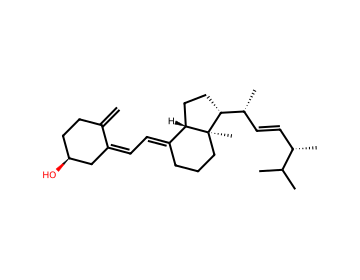
IDENTITY
COMPUTED
PROPERTIES
8.89
log Kow = 10.44 /Estimated/
Odorless
Medications associated with a metallic or bitter taste include ... vitamin D.
Prisms from acetone
White crystals
Colorless crystals
Insoluble
Soluble in alcohol, chloroform, ether, and fatty oils.
SOL IN FATTY ACIDS
Solubility in acetone 69.5, benzene 10, hexane 1 (all in g/L, room temperature)
In water, 50 mg/L at 25 °C
0.05 mg/mL
Decomposes
Sublimes
239 to 244 °F (EPA, 1998)
115-117°C
116.5 °C
116.5 °C
Specific optical rotation: +82.6 @ 25 °C/D (c= 3 in acetone); +102.5 @ 20 °C/D (alcohol); specific optical rotation: +52 @ 20 °C/D (chloroform); UV max absorption (hexane): 264.5 nm (e= 458.9 +/- 7.5, 1%, 1 cm)
Ergocalciferol appears as odorless white crystals. Used as a dietary supplement and food additive. (EPA, 1998)
White odorless solid; [CAMEO] White powder; [Sigma-Aldrich MSDS]
Solid
Deterioration of pure crystal is negligible after storage of /9 mo/ in amber evacuated ampuls at refrigerator temperature. /Vitamin D3/
Ergocalciferol decomposes on exposure to air and light, and preparations of the drug should be protected from air and light
6.35
202.06 Ų [M+K]+ [CCS Type: TW; Method: calibrated with polyalanine and drug standards];201.27 Ų [M+Na]+ [CCS Type: TW; Method: calibrated with polyalanine and drug standards]
202.4 Ų [M+H]+ [CCS Type: DT; Method: single field calibrated with Agilent tune mix (Agilent)];203.2 Ų [M+H]+ [CCS Type: DT; Method: single field calibrated with Agilent tune mix (Agilent)]
GHS
Danger
H301: Toxic if swallowed [Danger Acute toxicity, oral];H311: Toxic in contact with skin [Danger Acute toxicity, dermal];H330: Fatal if inhaled [Danger Acute toxicity, inhalation];H372 **: Causes damage to organs through prolonged or repeated exposure [Danger Specific target organ toxicity, repeated exposure]
P260, P262, P264, P270, P271, P280, P284, P301+P316, P302+P352, P304+P340, P316, P319, P320, P321, P330, P361+P364, P403+P233, P405, and P501 (click each P-code to see the statement)
Danger
HAZARDS
Chemical: Cyclohexanol, 4-methylene-3-[(2E)-2-[(1R,3aS,7aR)-octahydro-7a-methyl-1-[(1R,2E,4R)-1,4,5-trimethyl-2-hexen-1-yl]-4H-inden-4-ylidene]ethylidene]-, (1S,3Z)-
Regulation (EC) No 178/2002 (amended)
2004/129/EC
Calciferol: Does not have an individual approval but may be used under an appropriate group standard
The New Jersey Worker and Community Right to Know Act requires public and private employers to provide information about hazardous substances at their workplaces. (N.J.S.A. 34:5A-1 et. seq.)
IMAP assessments - 9,10-Secoergosta-5,7,10(19),22-tetraen-3-ol, (3.beta.,5Z,7E,22E)-: Environment tier I assessment;IMAP assessments - Calciferols: Human health tier II assessment
Poison
Shows signs of decomposition when stored for a few days at room temperature. (EPA, 1998)
Ergocalciferol poisoning disturbs calcium metabolism and causes kidney damage. Ergocalciferol in a single acute ingestion presents no toxic hazards. Daily ingestion in excess of 5000 units/day in children or 7500 units/day in adults will produce toxic symptoms associated with hypervitaminosis D. Those with hypercalcemia are at a greater risk. (EPA, 1998)
Chronic poisoning can cause calcium metabolism disturbances and kidney injury; [CAMEO] May cause irritation; Highly toxic by ingestion and inhalation; Toxic by skin absorption; Prolonged or repeated ingestion exposure may cause organ injury; [Sigma-Aldrich MSDS] See Vitamin D.
Manufacturers, packers, and distributors of drug and drug products for human use are responsible for complying with the labeling, certification, and usage requirements as prescribed by the Federal Food, Drug, and Cosmetic Act, as amended (secs 201-902, 52 Stat. 1040 et seq., as amended; 21 U.S.C. 321-392).
Vitamin D2 used as a dietary supplement in food for human consumption is generally recognized as safe when used in accordance with good manufacturing practice.
Vitamin D2 used as a nutrient and/or dietary supplement in animal drugs, feeds, and related products is generally recognized as safe when used in accordance with good manufacturing or feeding practice.
Alcohols and Polyols;Hydrocarbons, Aliphatic Unsaturated;Conjugated Dienes
Parfitt AM; Use of Calciferol and its Metabolites and Analogs in Osteoporosis: Current Status. Drugs 36: 513-20 (1988). The rationale for the use of ergocalciferol (calciferol), calcifediol and calcitriol for the treatment of osteoporosis is reviewed.
Flammable and/or toxic gases are generated by the combination of alcohols with alkali metals, nitrides, and strong reducing agents. They react with oxoacids and carboxylic acids to form esters plus water. Oxidizing agents convert them to aldehydes or ketones. Alcohols exhibit both weak acid and weak base behavior. They may initiate the polymerization of isocyanates and epoxides.
No rapid reaction with air. No rapid reaction with water.
Releases of CERCLA hazardous substances are subject to the release reporting requirement of CERCLA section 103, codified at 40 CFR part 302, in addition to the requirements of 40 CFR part 355. Ergocalciferol is an extremely hazardous substance (EHS) subject to reporting requirements when stored in amounts in excess of its threshold planning quantity (TPQ) of 1,000/10,000 lbs.
SAFETY
(Non-Specific -- Medicines, n.o.s.) Move container from fire area if you can do so without risk. Spray cooling water on containers that are exposed to flames until well after fire is out.;(Non-Specific -- Medicines, n.o.s.) Extinguish with dry chemical, carbon dioxide, water spray, fog, or foam. (EPA, 1998)
Note: Emesis, activated charcoal, and cathartics are seldom necessary with acute ingestion unless extremely large amounts are ingested (more than 100 times the Recommended Daily Allowance for Vitamin D2).;Signs and Symptoms of Acute Ergocalciferol Exposure: Signs and symptoms of acute exposure to ergocalciferol may include the following: thirst, itching, fatigue, muscular weakness, nervousness, headache, nausea, vomiting, and diarrhea. Excessive urination, kidney impairment, and hypertension (high blood pressure) may be noted.;Emergency Life-Support Procedures: Acute exposure to ergocalciferol may require decontamination and life support for the victims. Emergency personnel should wear protective clothing appropriate to the type and degree of contamination. Air-purifying or supplied-air respiratory equipment should also be worn, as necessary. Rescue vehicles should carry supplies such as plastic sheeting and disposable plastic bags to assist in preventing spread of contamination.;Inhalation Exposure:;1. Move victims to fresh air. Emergency personnel should avoid self-exposure to ergocalciferol.;2. Evaluate vital signs including pulse and respiratory rate, and note any trauma. If no pulse is detected, provide CPR. If not breathing, provide artificial respiration. If breathing is labored, administer oxygen or other respiratory support.;3. Obtain authorization and/or further instructions from the local hospital for administration of an antidote or performance of other invasive procedures.;4. Transport to a health care facility.;Dermal/Eye Exposure:;1. Remove victims from exposure. Emergency personnel should avoid self-exposure to ergocalciferol.;2. Evaluate vital signs including pulse and respiratory rate, and note any trauma. If no pulse is detected, provide CPR. If not breathing, provide artificial respiration. If breathing is labored, administer oxygen or other respiratory support.;3. Remove and isolate contaminated clothing as soon as possible.;4. If eye exposure has occurred, eyes must be flushed with lukewarm water for at least 15 minutes.;5. Wash exposed skin areas thoroughly with water.;6. Obtain authorization and/or further instructions from the local hospital for administration of an antidote or performance of other invasive procedures.;7. Transport to a health care facility.;Ingestion Exposure:;1. Evaluate vital signs including pulse and respiratory rate, and note any trauma. If no pulse is detected, provide CPR. If not breathing, provide artificial respiration. If breathing is labored, administer oxygen or other respiratory support.;2. Obtain authorization and/or further instructions from the local hospital for administration of an antidote or performance of other invasive procedures.;3. Vomiting may be induced with syrup of Ipecac. If elapsed time since ingestion of ergocalciferol is unknown or suspected to be greater than 30 minutes, do not induce vomiting and proceed to Step
Ergocalciferol capsules, oral solution, and tablets should be stored in tight, light-resistant containers at a temperature less than 40 °C, preferably between 15-30 °C.
Ergocalciferol injection should be protected from light and stored at a temperature less than 40 °C, preferably between 15-30 °C.
(Non-Specific -- Medicines, n.o.s.) Keep unnecessary people away; isolate hazard area and deny entry. Stay upwind; keep out of low areas. Shut off ignition sources; no flares, smoking or flames in hazard area. Keep combustibles (wood, paper, oil, etc.) away from spilled material. Do not touch spilled material.;Small spills: absorb with sand or other noncombustible absorbent material and place into containers for later disposal.;Large spills: dike far ahead of spill for later disposal. (EPA, 1998)
SRP: The most favorable course of action is to use an alternative chemical product with less inherent propensity for occupational exposure or environmental contamination. Recycle any unused portion of the material for its approved use or return it to the manufacturer or supplier. Ultimate disposal of the chemical must consider: the material's impact on air quality; potential migration in soil or water; effects on animal, aquatic, and plant life; and conformance with environmental and public health regulations.
Excerpt from ERG Guide 154 [Substances - Toxic and/or Corrosive (Non-Combustible)]:;IMMEDIATE PRECAUTIONARY MEASURE: Isolate spill or leak area in all directions for at least 50 meters (150 feet) for liquids and at least 25 meters (75 feet) for solids.;SPILL: Increase the immediate precautionary measure distance, in the downwind direction, as necessary.;FIRE: If tank, rail tank car or highway tank is involved in a fire, ISOLATE for 800 meters (1/2 mile) in all directions; also, consider initial evacuation for 800 meters (1/2 mile) in all directions. (ERG, 2024)
For emergency situations, wear a positive pressure, pressure-demand, full facepiece self-contained breathing apparatus (SCBA) or pressure- demand supplied air respirator with escape SCBA and a fully-encapsulating, chemical resistant suit. (EPA, 1998)
TOXICITY
The treatment of hypervitaminosis D with hypercalcemia consists in immediate withdrawal of the vitamin, a low calcium diet, generous intake of fluids, along with symptomatic and supportive treatment. Hypercalcemic crisis with dehydration, stupor, coma, and azotemia requires more vigorous treatment. The first step should be hydration of the patient. Intravenous saline may quickly and significantly increase urinary calcium excretion. A loop diuretic (furosemide or ethacrynic acid) may be given with the saline infusion to further increase renal calcium excretion. Other reported therapeutic measures include dialysis or the administration of citrates, sulfates, phosphates, corticosteroids, EDTA (ethylenediaminetetraacetic acid), and mithramycin via appropriate regimens. (L1712)
The effect of calcitriol (1,25-dihydroxyvitamin D3) on the conversion of ergocalciferol (vitamin D2) to 25-hydroxyvitamin D in 20 normal subjects receiving 2 separate doses of ergocalciferol, one with and one without concomitant administration of calcitriol is described. The concurrent administration of the 2 drugs made no difference to serum calcitriol concentrations.
The effects of glutethimide therapy, 500 mg/day, on the metabolism of vitamin D in a 77 yr old female patient who had taken an overdose of vitamin D2 are reported. Hypercalcemia in this patient was associated with raised serum concentrations of total 25-hydroxyvitamin D and total 1,25-dihydroxyvitamin D. Eight days after administration of glutethimide, plasma gamma-glutamyltransferase activity rose above the upper limit of normal, peaking at 90 IU/L on days 18-22 of therapy. The plasma calcium concentration fell to within the normal range on day 13. The serum concentration of 1,25-dihydroxyvitamin D began to fall within 4 days, and after 8 days it was near the lower limit of the reference range, at 70 pmol/L. The serum concentration of total 25-hydroxyvitamin D did not change appreciably until hepatic enzymes were induced; thereafter it fell gradually. Although the 25-hydroxyvitamin D concentration remained high, the concentration of 1,25-dihydroxyvitamin D did not rise again but remained within the lower part of the normal range.
The effect of a high cholesterol diet and corticosteroids on the toxicity of vitamin D2 in rats was studied. Vitamin D2 was administered orally at the dosage of 5X10+4 to 60X10+4 IU/kg, once daily for 4 days. Animals fed cholesterol showed a decrease in mortality due to vitamin D2 treatment. Dietary cholesterol inhibited toxic responses such as a diminished growth rate following anorexia, elevated serum calcium level and calcium deposition in tissues, which were produced by a sublethal dose of vitamin D2 (20X10+4 IU/kg, once daily for 4 days). Animals pretreated with the high cholesterol diet from 2 wk before the first vitamin D2 administration showed much more symptomatic relief than those given this diet after the first vitamin D2 administration. On the other hand, dexamethasone as well as corticosterone remarkably increased the mortality due to vitamin D2. The degree of vitamin D2 toxicity, enhanced by dexamethasone, was correlated with the degree of hypercalcemia and tissue calcification. Therefore, the inhibitory effect of cholesterol is not likely to be due to activation of the cholesterol corticosterone system in the adrenal gland.
The effect of short term treatment with pharmacological doses of vitamin D2 or vitamin D3 on the serum concentration of 1,25(OH)2D metabolites was examined in epileptic patients on chronic anticonvulsant drug therapy. Nine patients were studied before and after treatment with vitamin D2 4000 IU daily for 24 wk and 10 before and after treatment with vitamin D3 in the same dose. Before treatment the serum concentrations of 1,25(OH)2D and 25(OH)D were significantly lower in epileptics than in normal subjects (p< 0.01). Vitamin D2 treatment increased the serum concentration of 1,25(OH)2D2, but a corresponding decrease in 1,25(OH)2D3 resulted in an unchanged serum concentration of total 1,25(OH)2D. The serum concentration of 25(OH)D2 and 25(OH)D increase significantly, whereas there was a small decrease in 25(OH)D3. Vitamin D3 treatment did not change the serum concentration of 1,25(OH)2D3 whereas serum 25(OH)D3 increased significantly. The correlation between the serum ratio of 1,25(OH)2D2/1,25(OH)2D3 and 25(OH)D2/25(OH)D3 estimated on vitamin D2 treated epileptic patients and normal subjects was highly significant (p< 0.01). The data indicate that the serum concentration of 1,25(OH)2D2 and 1,25(OH)2D3 are directly proportional to the amount of their precursors 25(OH)D2 and 25(OH)D3 and that the concentration of total 1,25(OH)2D is tightly regulated.
Vitamin D analogs should be administered with caution in patients receiving cardiac glycosides, because hypercalcemia in these patient may result in cardiac arrhythmias. Vitamin D analogs should also be used with caution in patients with increased sensitivity to these drugs. /Vitamin D analogs/
Oral, readily absorbed.
Vitamin D2 is the form of vitamin D most commonly added to foods and nutritional supplements. Vitamin D2 must be transformed (hydroxylated) into one of two active forms via the liver or kidney. Once transformed, it binds to the vitamin D receptor that then leads to a variety of regulatory roles. Vitamin D plays an important role in maintaining calcium balance and in the regulation of parathyroid hormone (PTH). It promotes renal reabsorption of calcium, increases intestinal absorption of calcium and phosphorus, and increases calcium and phosphorus mobilization from bone to plasma. Vitamin D2 and its analogs appear to promote intestinal absorption of calcium through binding to a specific receptor in the mucosal cytoplasm of the intestine. Subsequently, calcium is absorbed through formation of a calcium-binding protein. Activated ergocalciferol increases serum calcium and phosphate concentrations, primarily by increasing intestinal absorption of calcium and phosphate through binding to a specific receptor in the mucosal cytoplasm of the intestine. Subsequently, calcium is absorbed through formation of a calcium-binding protein. 25-hydroxyergocalciferol is the intermediary metabolite of ergocalciferol. Although this metabolite exhibits 2-5 times more activity than unactivated ergocalciferol in curing rickets and inducing calcium absorption and mobilization (from bone) in animals, this increased activity is still insufficient to affect these functions at physiologic concentrations. Activated ergocalciferol stimulate resorption of bone and are required for normal mineralization of bone. Physiological doses of ergocalciferol also promotes calcium reabsorption by the kidneys, but the significance of this effect is not known.
Nausea, vomiting and diarrhea, weight loss, irritability, weakness, fatigue, lassitude, and headache.
A plant sterol widely distributed in nature.
/HUMAN EXPOSURE STUDIES/ There is a relationship between excess maternal vitamin D intake or extreme sensitivity to the vitamin and nonfamilial congenital supravalvular aortic stenosis. In infants, this anomaly is often found in association with other stigmata of hypercalcemia. /Vitamin D/
/HUMAN EXPOSURE STUDIES/ Serious toxicity may result from excessive ingestion of vitamin, and even as little as 1800 USP units per day in infants may lead to possible inhibition of growth. /Vitamin D/
/HUMAN EXPOSURE STUDIES/ Maternal hypercalcemia may also result in suppression of parathyroid function in the newborn with resultant hypocalcemia, tetany, and seizures. /Vitamin D/
No indication of carcinogenicity to humans (not listed by IARC).
Drug Induced Liver Injury Rank (DILIrank 2.0)
Ergocalciferol
vNo-DILI-concern
0
No match
DOI:10.1016/j.drudis.2016.02.015
/LABORATORY ANIMALS: Acute Exposure/ Lethal dose in dog is said to be ... 13 mg/kg (530,000 iu/kg) body weight. Immediate effects are bloody diarrhea, anorexia, thirst, polyuria & prostration. In surviving animals calcium is deposited as in chronic hypervitaminosis-d. /vitamin D/
/LABORATORY ANIMALS: Subchronic or Prechronic Exposure/ Topical application of ergocalciferol to hairless mouse dorsal skin, and exposure to solar-simulating ultraviolet (UV) radiation at a dose of 10.8 J/cm(2) (UVA) were performed for 15 weeks, five times a week on weekdays. At the end of the final irradiation, histological and analytical studies were performed. Topical application of ergocalcifero significantly prevented wrinkle formation and abnormal accumulation of extracellular matrix components. In addition, ergocalcifero suppressed excessive secretion of IL-6 induced by UV irradiation in cultured human normal keratinocytes, in a dose-dependent manner. Ergocalcifero promoted keratinocytes differentiation in the epidermis and showed diverse physiological effects, the same as the active form of VD(3). The results suggested that the suppression of skin photodamage involved the promotion of keratinocytes differentiation and suppression of IL-6 secretion induced by exposure to UV. Topical application of ergocalciferol may become an effective means to suppress solar UV-induced human skin damage.
/LABORATORY ANIMALS: Chronic Exposure or Carcinogenicity/ ... Excessive doses ... over extended period of time, hypercalcemia & calcification of blood vessels, muscles & other tissues may result in experimental animal. In hypervitaminosis D calcium salts are laid down in mucopolysaccharide matrix in soft tissues.
/LABORATORY ANIMALS: Developmental or Reproductive Toxicity/ Similar lesions /of congenital supravalvular aortic stenosis/ have been produced experimentally in offspring of rabbits treated with large doses of vitamin D during pregnancy. /Vitamin D/
For more Non-Human Toxicity Excerpts (Complete) data for VITAMIN D2 (6 total), please visit the HSDB record page.
Emergency and supportive measures: Treat fluid loses caused by gastroenteritis with intravenous crystalloid solutions. Treat vitamin ... D induced hypercalcemia if /it/ occurs.
Recommended treatment includes the following: Hypervitaminosis D is treated by withdrawal of the vitamin, low-calcium diet, and generous fluid intake. If hypercalcemia persists, prednisone may be started. Severe hypercalcemia may be treated with calcitonin, etidronate, pamidronate, or gallium nitrate. Hypercalcemic crisis requires vigorous hydration with intravenous saline to increase calcium excretion, with or without a loop diuretic. Cardiac arrhythmias may be treated with small doses of potassium with continuous cardiac monitoring. Therapy may be reinstituted at a lower dose when serum calcium concentrations return to normal. Serum or urinary calcium levels should be obtained twice weekly after dosage changes. / Vitamin D and analogs/
LD<sub>50</sub> = 23.7 mg/kg (Orally in mice); LD<sub>50</sub> = 10 mg/kg (Orally in rats ).
REGULATORY
Chemical: Cyclohexanol, 4-methylene-3-[(2E)-2-[(1R,3aS,7aR)-octahydro-7a-methyl-1-[(1R,2E,4R)-1,4,5-trimethyl-2-hexen-1-yl]-4H-inden-4-ylidene]ethylidene]-, (1S,3Z)-
Regulation (EC) No 178/2002 (amended)
2004/129/EC
Calciferol: Does not have an individual approval but may be used under an appropriate group standard
The New Jersey Worker and Community Right to Know Act requires public and private employers to provide information about hazardous substances at their workplaces. (N.J.S.A. 34:5A-1 et. seq.)
Manufacturers, packers, and distributors of drug and drug products for human use are responsible for complying with the labeling, certification, and usage requirements as prescribed by the Federal Food, Drug, and Cosmetic Act, as amended (secs 201-902, 52 Stat. 1040 et seq., as amended; 21 U.S.C. 321-392).
Vitamin D2 used as a dietary supplement in food for human consumption is generally recognized as safe when used in accordance with good manufacturing practice.
Vitamin D2 used as a nutrient and/or dietary supplement in animal drugs, feeds, and related products is generally recognized as safe when used in accordance with good manufacturing or feeding practice.
Releases of CERCLA hazardous substances are subject to the release reporting requirement of CERCLA section 103, codified at 40 CFR part 302, in addition to the requirements of 40 CFR part 355. Ergocalciferol is an extremely hazardous substance (EHS) subject to reporting requirements when stored in amounts in excess of its threshold planning quantity (TPQ) of 1,000/10,000 lbs.
PHARMACOLOGY
A - Alimentary tract and metabolism;A11 - Vitamins;A11C - Vitamin a and d, incl. combinations of the two;A11CC - Vitamin d and analogues;A11CC01 - Ergocalciferol
QA - Alimentary tract and metabolism;QA11 - Vitamins;QA11C - Vitamin a and d, incl. combinations of the two;QA11CC - Vitamin d and analogues;QA11CC01 - Ergocalciferol
A11CC01
The mechanisms by which vitamin D acts to maintain normal concentration of calcium and phosphate in plasma are to facilitate their absorption by the small intestine, to enhance their mobilization from bone, and to decrease their excretion by the kidney. /Vitamin D/
... Active form of vitamin D has two functions. ... Maintain circulating level of calcium in blood. ... Low blood calcium acts to release parathormone, which initiates vitamin D activation. ... Normal bone calcification requires vitamin D. It insures that Ca & PO4 are present in blood ... so that bone may be formed. /Vitamin D/
Recommended intakes may be increased by the following medications: Barbiturates, cholestyramine, colestipol, hydantoin anticonvulsants, mineral oil, and primidone. /Vitamin D and analogs/
Recommended intakes for all vitamins and most minerals are increased during breast-feeding. /Vitamin D and analogs/
For more Bionecessity (Complete) data for VITAMIN D2 (12 total), please visit the HSDB record page.
Ergocalciferol is not found significantly distributed circulating in plasma. It is known to be found in its bound form to the vitamin D plasma protein. The parent compound of ergocalciferol does not bind directly to plasma proteins, however, 70-90% of its metabolites such as cholecalciferol and calcitriol are found in the bound form.
After the activation of the vitamin D receptor, some of the biological changes produced by ergocalciferol include mobilization and accretion of calcium and phosphorus in the bone, absorption of calcium and phosphorus in the intestine, and reabsorption of calcium and phosphorus in the kidney. Some other effects known to be produced due to the presence of vitamin D are osteoblast formation, fetus development, induction of pancreatic function, induction of neural function, improvement of immune function, cellular growth and cellular differentiation. When compared to its vitamin D counterpart [cholecalciferol], ergocalciferol has been shown to present a reduced induction of calcidiol and hence, it is less potent. Ergocalciferol supplementation in patients with end-stage renal disease has been shown to generate a significant benefit in lab parameters of bone and mineral metabolism as well as improvement in glycemic control, serum albumin levels and reduced levels of inflammatory markers.
For its activity, ergocalciferol is required to be transformed to its major active circulating hydroxylated metabolite and transported to the target organs in order to bind to its target, the vitamin D receptor. The activation of the vitamin D receptor is part of the vitamin D endocrine system and it is described by the production of a change in the transcription rates of the vitamin D receptor target genes. The target genes in the DNA affected by the presence of ergocalciferol are called vitamin D response elements which are dependent on co-modulators. The vitamin D receptor is a transcription factor and member of the steroid hormone nuclear receptor family. It presents a DNA binding domain (VDRE) that, when activated, recruits coregulatory complexes to regulate the genomic activity. Additionally, ergocalciferol presents nongenomic effects such as the stimulation of intestinal calcium transport via transcaltachia.
The mechanism of action of calcitriol, the activated form of vitamin D, resembles that of the steroid and thyroid hormones. Thus, calcitriol binds to cytosolic receptors within target cells, and the receptor-hormone complex interacts with the DNA of certain genes to either enhance or inhibit their transcription. Structural analysis of the calcitriol receptor indicates that it belongs to the same supergene family as the steroid receptors. Calcitriol also appears to exert a few effects that occur too rapidly to be explained by genomic actions. /Calcitriol/
The mechanisms responsible for mobilization of bone salts have been only partially defined, and the interaction of multiple factors appears to be involved. Paradoxically, the cells responsible for bone resorption (osteoclasts) are not directly acted upon by calcitriol and do not appear to contain calcitriol receptors. Instead, calcitriol causes an increase in the number of osteoclasts available to resorb bone; this may result from an action upon myeloid hematopoietic precursor cells that are induced to differentiate toward functional osteoclasts. The cells responsible for bone formation (osteoblasts) do contain receptors, and calcitriol causes them to elaborate several proteins, including osteocalcin, a vitamin K-dependent protein that contains gamma-carboxyglutamic acid residues. The exact role of this protein is not known, but other unidentified substances are also elaborated that appear to stimulate the function of osteoclasts. In addition, calcitriol acts synergistically with gamma-interferon to increase the production of interleukin-1, a lymphokine that promotes bone resorption.
Ergocalciferol can be found circulation for 1-2 days. This quick turnover is presented due to hepatic conversion and uptake by fat and muscle cells where it is transformed to the active form.
19 to 48 hours (however, stored in fat deposits in body for prolonged periods).
Ergocalciferol is inactive and hence, the first step in the body is ruled by the conversion of this parent compound to 25-hydroxyvitamin D by the action of CYP2R1 followed by the generation of the major circulating metabolite, 1,25-dihydroxyvitamin D or calcitrol. The generation of this major metabolite is ruled by the activity of CYP27B1 which is a key 1-hydroxylase and CYP24A1 which is responsible for the 25-hydroxylation. As part of the minor metabolism, ergocalciferol is transformed into 25-hydroxyvitamin D in the liver by the activity of D-25-hydroxylase and CYP2R1. As well, the formation of 24(R),25dihydroxyvitamin D is performed mainly in the kidneys by the action of 25-(OH)D-1-hydroxylase and 25-(OH)D-24-hydroxylase. Additionally, there are reports indicating significant activity of 3-epimerase in the metabolism of ergocalciferol which modifies the hydroxy group in C3 from the alpha position to a beta. The epimers formed seemed to have a reduced affinity for the vitamin D plasma proteins and to the vitamin D receptor. An alternative activation metabolic pathway has been reported and this process is characterized by the activity of CYP11A1 and its hydroxylation in the C-20. This 20-hydroxylated vitamin D seems to have similar biological activity than calcitriol.
Vitamin D ... is hydroxylated at the 25 position in liver to produce 25-hydroxy-vitamin D3 which is the major metabolite circulating in the plasma. The metabolite is further hydroxylated in the kidney to 1,25-dihydroxy-vitamin D3, the most active metabolite in initiating intestinal transport of calcium & phosphate & mobilization of mineral from bone.
A polar, biologically active metabolite of vitamin D2, 25-hydroxyergocalciferol, which is about 1.5 times more active in curing rickets in rats, has been isolated from pig plasma.
Dihydrotachysterol is a vitamin D analog that may be regaurded as a reduction product of vitamin D2 ... Dihydrotachysterol is about 1/450 as active as vitamin D in the antirachitic assay, but at high doses it is much more effective than vitamin D in mobilizing bone mineral.
Vitamin D2 has known human metabolites that include Vitamin D2 3-glucuronide.
Within the liver, ergocalciferol is hydroxylated to ercalcidiol (25-hydroxyergocalciferol) by the enzyme 25-hydroxylase. Within the kidney, ercalcidiol serves as a substrate for 1-alpha-hydroxylase, yielding ercalcitriol (1,25-dihydroxyergocalciferol), the biologically active form of vitamin D2. Half Life: 19 to 48 hours (however, stored in fat deposits in body for prolonged periods).
VS041H42XC
ERGOCALCIFEROL
Chemical Structure [CS] - Ergocalciferols
Established Pharmacologic Class [EPC] - Provitamin D2 Compound
Ergocalciferol is a Provitamin D2 Compound.
ERGOCALCIFEROL
Ergocalciferol is absorbed in the intestine and carried to the liver in chylomicrons. Its intestinal absorption does not present limitations unless the presence of conditions related to fat malabsorption. However, for absorption to take place, the presence of bile is required.
The active form of ergocalciferol, calcitrol, cannot be maintained for long periods in storage tissue mainly in periods of dietary or UVB deprivation. Therefore, ergocalciferol and its metabolites are excreted via the bile with a minor contribution of renal elimination. This major fecal elimination is explained due to the cubilin-megalin receptor system-mediated renal reuptake of vitamin D metabolites bound to vitamin D binding protein.
The amount of circulating ergocalciferol is very limited as this compound is rapidly stored in fat tissue such as adipose tissue, liver and muscle. This is very obvious in reports that indicate that circulating ergocalciferol is significantly reduced in obese patients.
There are no formal reports regarding the clearance rate of ergocalciferol. Due to the structural similarity, it is recommended to consult this parameter with [cholecalciferol]. On the other hand, the proposed renal clearance of calcitriol is of 31 ml/min.
Both vitamin D2 & vitamin D3 are absorbed from the small intestine, although vitamin D3 may be absorbed more efficiently. The exact portion of the gut that is most effective in vitamin D absorption reflects the vehicle in which the vitamin is dissolved. Most of the vitamin appears first within chylomicrons in lymph.
The presence of bile is required for absorption of ergocalciferol and the extent of GI absorption may be decreased in patients with hepatic, biliary, or GI disease (e.g., Crohn's disease, Whipple's disease, sprue).
Adipose Tissue;Bladder;Brain;Epidermis;Fibroblasts;Intestine;Kidney;Liver;Neuron;Ovary;Pancreas;Placenta;Prostate;Skeletal Muscle;Spleen;Testis
Cytoplasm;Extracellular;Membrane;Mitochondria
USES
Synthetic form of vitamin D used as a rodenticide and therapeutic vitamin; [Merck Index] Used as a nutritional supplement; [FDA]
No active pesticide product registrations in the US; [NPIRS]
MEDICATION
MEDICATION (VET)
Rodenticide.
For use in the management of hypocalcemia and its clinical manifestations in patients with hypoparathyroidism, as well as for the treatment of familial hypophosphatemia (vitamin D resistant rickets). This drug has also been used in the treatment of nutritional rickets or osteomalacia, vitamin D dependent rickets, rickets or osteomalacia secondary to long-term high dose anticonvulsant therapy, early renal osteodystrophy, osteoporosis (in conjunction with calcium), and hypophosphatemia associated with Fanconi syndrome (with treatment of acidosis).
(1984) 9.16X10+7 g /Vitamin D-2 and D-3, synthetic/
/Is/ the synthetic form of vitamin D. Prepared from ergosterol by UV irradiation in a suitable solvent. ... The best wavelengths for production of vitamin D2 seem to be from 275 to 300 nm ... Prepn by electron bombardment of ergosterol using longer waves ... .
Usually obtained from yeast which synthesizes it from simple sugars such as glucose.
Ergocalciferol capsules usually consist of the drug in an edible oil solution encapsulated with gelatin. Commercially available ergocalciferol solution is a clear solution of the drug in an edible vegetable oil or in propylene glycol. Ergocalciferol injection is a sterile solution of the drug in sesame oil.
Ergocalciferol is also commercially available in combination with other vitamins and minerals, analgesic-antipyretics, amino acids, infant formulas, laxatives, and protein supplements.
Parenteral: Injection (for IM use only): 12.5 mg (500,000 units) per mL, Calciferol (in oil), (Schwarz)
Ergocalciferol (calciferol; Drisdol) is pure vitamin D2. ... Available in capsules or tablets that contain 1.25 mg (50,000 USP units) each. An oral solution (8,000 units/mL) of the vitamin in propylene glycol is also available. An injection in oil (500,000 units/mL) is available for im administration. ... Dihydrotachysterol (DHT; hytakerol) is the pure crystalline compound obtained by reduction of vitamin D2 ... Available as tablets (0.125 to 0.4 mg), capsules (0.125 mg), an oral soln (0.2 mg/mL) & a soln in oil (0.2 mg/mL).
For more Formulations/Preparations (Complete) data for VITAMIN D2 (7 total), please visit the HSDB record page.
Information on 1 consumer products that contain Ergocalciferol in the following categories is provided:;• Personal Care
Cyclohexanol, 4-methylene-3-[(2E)-2-[(1R,3aS,7aR)-octahydro-7a-methyl-1-[(1R,2E,4R)-1,4,5-trimethyl-2-hexen-1-yl]-4H-inden-4-ylidene]ethylidene]-, (1S,3Z)-: ACTIVE
Information available in 2004 indicated that Ergocalciferol was used in the manufacture of pharmaceutical preparations in the following countries: Argentina, Australia, Austria, Brazil, Canada, Chile, Czech Republic, Denmark, Ecuador, Finland, France, Germany, Greece, Hong Kong, Ireland, Israel, Italy, Luxembourg, Malaysia, Mexico, Norway, Portugal, Romania, Slovakia, South Africa, Spain, Switzerland, Thailand, United Kingdom, USA (1,2)
International & USP units of vitamin D are equivalent in activity to 0.025 ug of crystalline vitamin D2.
Ergosterol, which is present in plants, is provitamin for vitamin D2 (calciferol). ... Vitamin D2 is active constituent in a number of commercial vitamin preparations as well as in irradiated bread & irradiated milk.
Vitamin D2 crystals have a potency of 40 units of vitamin D (USP)/ug.
Because of vitamin D2's sensitivity to oxygen and light, USP allows traces of antioxidants in crystalline compound.
ALIASES
REACTIONS

