
uspto-grants-1988_03 · 10.6084/m9.figshare.5104873.v1 · US04730000
查看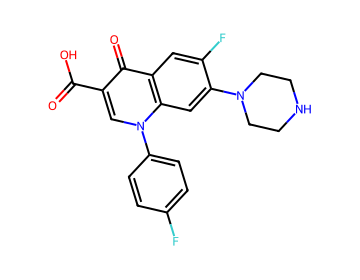
IDENTITY
COMPUTED
PROPERTIES
Stable under recommended storage conditions. /Sarafloxacin hydrochloride hydrate/
pKa1= 5.6; pKa2 = 8.2
204.8 Ų [M+Na]+ [CCS Type: DT; Buffer gas: N2; Ionization: ESI+; Dataset: TOXCAST; Source Identifier: DTXSID8048494];188.2 Ų [M+H]+ [CCS Type: DT; Buffer gas: N2; Ionization: APCI+; Dataset: TOXCAST; Source Identifier: DTXSID8048494];188.3 Ų [M+H]+ [CCS Type: DT; Buffer gas: N2; Ionization: ESI+; Dataset: TOXCAST; Source Identifier: DTXSID8048494]
193.68 Ų [M+H]+ [CCS Type: TW; Method: calibrated with polyalanine and drug standards];199.92 Ų [M+K]+ [CCS Type: TW; Method: calibrated with polyalanine and drug standards];199.56 Ų [M+Na]+ [CCS Type: TW; Method: calibrated with polyalanine and drug standards]
202 Ų [M+H]+ [CCS Type: TW]
187.09 Ų [M+H]+;202 Ų [M+H]+;203.4 Ų [M+Na]+
MP as monhydrate: >275 °C /Sarafloxacin monohydrochloride/
GHS
This chemical does not meet GHS hazard criteria for 100% (3 of 3) of all reports.
Not Classified;Reported as not meeting GHS hazard criteria by 3 of 3 companies. For more detailed information, please visit ECHA C&L website.
Aggregated GHS information provided per 3 reports by companies from 1 notifications to the ECHA C&L Inventory.;Reported as not meeting GHS hazard criteria per 3 of 3 reports by companies.;There are 0 notifications provided by 0 of 3 reports by companies with hazard statement code(s).;Information may vary between notifications depending on impurities, additives, and other factors. The percentage value in parenthesis indicates the notified classification ratio from companies that provide hazard codes. Only hazard codes with percentage values above 10% are shown. For more detailed information, please visit ECHA C&L website.
HAZARDS
Special hazards arising from the substance or mixture: Carbon oxides, nitrogen oxides (NOx), Hydrogen chloride gas. /Sarafloxacin hydrochloride hydrate/
Not Classified
SAFETY
Advice for firefighters: Wear self contained breathing apparatus for fire fighting if necessary. /Sarafloxacin hydrochloride hydrate/
Suitable extinguishing media: Use water spray, alcohol-resistant foam, dry chemical or carbon dioxide. /Sarafloxacin hydrochloride hydrate/
Conditions for safe storage, including any incompatibilities: Keep container tightly closed in a dry and well-ventilated place. Keep in a dry place. /Sarafloxacin hydrochloride hydrate/
Accidental Release Measures. Personal precautions, protective equipment and emergency procedures: Avoid dust formation. Avoid breathing vapors, mist or gas. Environmental precautions: Do not let product enter drains. Methods and materials for containment and cleaning up: Sweep up and shovel. Keep in suitable, closed containers for disposal. /Sarafloxacin hydrochloride hydrate/
SRP: Expired or waste pharmaceuticals shall carefully take into consideration applicable DEA, EPA, and FDA regulations. It is not appropriate to dispose by flushing the pharmaceutical down the toilet or discarding to trash. If possible return the pharmaceutical to the manufacturer for proper disposal being careful to properly label and securely package the material. Alternatively, the waste pharmaceutical shall be labeled, securely packaged and transported by a state licensed medical waste contractor to dispose by burial in a licensed hazardous or toxic waste landfill or incinerator.
Product: Offer surplus and non-recyclable solutions to a licensed disposal company. Contaminated packaging: Dispose of as unused product. /Sarafloxacin hydrochloride hydrate/
Appropriate engineering controls: General industrial hygiene practice. /Sarafloxacin hydrochloride hydrate/
Precautions for safe handling: Provide appropriate exhaust ventilation at places where dust is formed. Normal measures for preventive fire protection. /Sarafloxacin hydrochloride hydrate/
Gloves must be inspected prior to use. Use proper glove removal technique (without touching glove's outer surface) to avoid skin contact with this product. Dispose of contaminated gloves after use in accordance with applicable laws and good laboratory practices. Wash and dry hands. /Sarafloxacin hydrochloride hydrate/
Skin protection: Handle with gloves. /Sarafloxacin hydrochloride hydrate/
Eye/face protection Face shield and safety glasses: Use equipment for eye protection tested and approved under appropriate government standards such as NIOSH (US) or EN 166(EU). /Sarafloxacin hydrochloride hydrate/
Respiratory protection: For nuisance exposures use type P95 (US) or type P1 (EU EN 143) particle respirator.For higher level protection use type OV/AG/P99 (US) or type ABEK-P2 (EU EN 143) respirator cartridges. Use respirators and components tested and approved under appropriate government standards such as NIOSH (US) or CEN (EU). /Sarafloxacin hydrochloride hydrate/
Body Protection: Complete suit protecting against chemicals. The type of protective equipment must be selected according to the concentration and amount of the dangerous substance at the specific workplace. /Sarafloxacin hydrochloride hydrate/
TOXICITY
TERRESTRIAL FATE: Based on a classification scheme(1), Koc values of 55,000-155,000(2), indicate that sarafloxacin is expected to be immobile in soil(SRC). The pKa values of the carboxy and amino moieties of sarafloxacin are 5.6 and 8.2, respectively(3), indicating that this compound will exist as a zwitter ion and zwitter ions do not volatilize from moist soil(SRC). Sarafloxacin is not expected to volatilize from dry soil surfaces(SRC) based upon an estimated vapor pressure of 1.6X10⁻¹⁴ mm Hg at 25 °C(SRC), determined from a fragment constant method(4). Sarafloxacin was aerobically biodegraded 0.49-0.58% over 66-80 days in various soils(5), suggesting that biodegradation is not an important environmental fate process in soil(SRC).
AQUATIC FATE: Based on a classification scheme(1), Koc values of 55,000-155,000(2), indicate that sarafloxacin is expected to adsorb to suspended solids and sediment(SRC). The pKa values of the carboxy and amino moieties of sarafloxacin are 5.6 and 8.2, respectively(3), indicating that this compound will primarily exist as a zwitter ion and ions do not volatilize from water surfaces(SRC). Sarafloxacin is not expected to undergo hydrolysis in the environment due to the lack of functional groups that hydrolyze under environmental conditions(4). According to a classification scheme(5), an estimated BCF of 3(SRC), from an estimated log Kow of 1.07(6) and a regression-derived equation(6), suggests the potential for bioconcentration in aquatic organisms is low(SRC). Aqueous photodegradation half-lives ranged from <1 hour at 1 cm depth in mid-summer to approximately 20 hours in mid-winter at 50 cm depth(7). Sarafloxacin had reported anaerobic half-lives of 151 days or more in marine sediment(8), indicating that biodegradation in not an important environmental fate process in water(SRC).
ATMOSPHERIC FATE: According to a model of gas/particle partitioning of semivolatile organic compounds in the atmosphere(1), sarafloxacin, which has an estimated vapor pressure of 1.6X10⁻¹⁴ mm Hg at 25 °C(SRC), determined from a fragment constant method(2), is expected to exist solely in the particulate phase in the ambient atmosphere. Particulate-phase sarafloxacin may be removed from the air by wet and dry deposition(SRC). Sarafloxacin contains chromophores that absorb at wavelengths >290 nm(3) and, therefore, may be susceptible to direct photolysis by sunlight(SRC).
Sarafloxacin was detected (detection limit <4 ug/kg) in some of the 16 honey samples tested(1). Sarafloxacin was not detected (detection limit <0.4 ug/kg) in honey samples imported into Canada(2). Sarafloxacin was not detected (detection limit 0.04-0.52 ug/kg) in 16 infant and young children powdered milk samples purchased from Spanish markets(3).
IDENTIFICATION AND USE: Sarafloxacin is a fluoroquinolone antibacterial agent. It is used in veterinary medicine for the treatment and control of bacterial infections in poultry. Sarafloxacin is also used in aquaculture for the treatment in of furunculosis, vibriosis and enteric redmouth in Salmonidae. HUMAN EXPOSURE AND TOXICITY: The safety of single oral doses of sarafloxacin was studied in groups of healthy male volunteers. Six subjects received 100 mg sarafloxacin, six received 200 mg, five received 400 mg, and five received 800 mg. The adverse events reported most frequently were dizziness and asthenia. Emotional lability, somnolence, and hiccoughs were reported by those receiving the lowest dose. The safety of oral sarafloxacin administered for seven consecutive days was also studied in groups of six healthy male volunteers who received 100 mg every 12 hr, 200 mg every 12 hr, or 100 mg every 6 hr. The most frequently reported adverse events were asthenia and dizziness. The most frequently reported adverse events in the group receiving placebo were asthenia and somnolence. ANIMAL STUDIES: In a study of dietary palatability, sarafloxacin was administered to four groups of five rats of each sex, four to five weeks old, as a dietary admixture for two weeks. No overt signs of toxicity or mortality were reported in animals consuming diets containing up to 10,000 mg/kg feed. Alopecia, emaciation, dehydration, decreased feed consumption, and body-weight gain were treatment-related effects observed in rats consuming 50,000 mg/kg feed. Sarafloxacin was also administered to four groups of five mice of each sex, four to five weeks old, as a dietary admixture for 15 consecutive days. No overt signs of toxicity or mortality were reported in animals consuming diets containing up to 10,000 mg/kg feed. Decreased feed consumption and body-weight gain were the only treatment-related effects observed in rats consuming the diets containing 25,000 and 50,000 mg/kg feed. Sarafloxac
Sarafloxacin was not detected (detection limit 5.4 ng/L) in effluent samples from South Shore Water Reclamation Facility and Jones Island Water Reclamation Facility located in Milwaukee, Wisconsin(1). Sarafloxacin was not detected (detection limit 0.01 ug/L) in effluent samples from 10 waste water treatment plants located around the country (Arizona, Colorado, Georgia, Iowa, Kansas, Minnesota, Nevada, New Jersey, New York, South Dakota)(2). Sarafloxacin was not detected (detection limit 0.05 ug/L) in influent and effluent samples collected from seven wastewater treatment plants at locations in Wisconsin; samples were collected Oct 22, 2001 to May 9, 2002(3). Sarafloxacin was not detected (detection limit 44 ng/L) in effluent samples from a wastewater treatment plant in East Lansing, Michigan; samples were collected Aug to Sept 2002(4). Sarafloxacin was not detected in 14 influent (<0.04 ug/L) or 14 effluent (<0.03 ug/L) samples collected 2008 to 2009 from three wastewater treatment plants from the Spanish Mediterranean area of Valencia, Spain(5). Sarafloxacin was not detected in sewage water throughout processing at a sewage treatment plant in Beijing, China; it was also not detected in raw or primary sewage sludge, but was detected in return, excess and de-watered sludge processes at 0.62, 0.39 and 0.53 mg/kg, respectively(6). Sarafloxacin was detected at 1.8-14 ug/L in wastewater and drainage waters from piggeries located in Alentaejo, Portugal(7).
Koc values of sarafloxacin have been reported as 55,000-155,000(1). According to a classification scheme(2), this Koc range suggests that sarafloxacin is expected to be immobile in soil.
/HUMAN EXPOSURE STUDIES/ The safety of oral administration of sarafloxacin for seven consecutive days was ... studied in groups of six healthy male volunteers who received 100 mg every 12 hr, 200 mg every 12 hr, or 100 mg every 6 hr. The most frequently reported adverse events were asthenia (eight reports, 20%) and dizziness (six reports, 15%). The most frequently reported adverse events in the group receiving placebo were asthenia (six reports, 17%) and somnolence (four reports, 11%).
/HUMAN EXPOSURE STUDIES/ The safety of oral administration of sarafloxacin for seven consecutive days was studied in groups of six healthy male volunteers who received doses of 100 or 200 mg twice daily, as a slurry to maximize exposure of the surface of the stomach. ... Asthenia, vasodilatation, anxiety, dizziness, and nervousness were reported by the treated subjects but not those receiving a placebo. Somnolence was the most frequently reported adverse event in both the treated and placebo groups. There were no clinically significant changes in hematological, clinical chemical, coagulation, or urinary parameters, nor were clinically significant changes seen in physical, ophthalmological, or neurological examinations or on electrocardiograms or electroencephalograms.
/HUMAN EXPOSURE STUDIES/ The safety of single oral doses of sarafloxacin was studied in groups of healthy male volunteers. Six subjects received 100 mg sarafloxacin, six received 200 mg, five received 400 mg, and five received 800 mg. The adverse events reported most frequently were dizziness and asthenia, although the increase in incidence was not dose-related. Emotional lability, somnolence, and hiccoughs were the only adverse events reported by those receiving the lowest dose. ...
Sarafloxacin was detected in fish liver, back fat, skin and bone 50 days after the end of medication at 4, 4, 114 and 27 ng/g, respectively, and 6, 6, 95 and 60 ng/g, respectively, 80 days after treatment(1). Sarafloxacin was not detected in muscle tissue at either the 50 or 80 day post treatment times(1).
Sarafloxacin's production and administration as an antibiotic in poultry(1) and fish(2) may result in its release to the environment through various waste streams(SRC). Sarafloxacin is authorized or allowed use in aquaculture in certain European countries and Chile(3), which may result in its direct release to the environment. (SRC)
AEROBIC: Biodegradation of 14C-labeled sarafloxacin in three types of soil were measured. Soils were incubated at 22 °C in the dark(1).[Table#6651]
ANAEROBIC: Degradation half-lives of sarafloxacin were reported in marine sediment as 151 and >300 days in the 0-1 and 5-7 cm layers, respectively(1).
SEDIMENT: Sarafloxacin was not detected (detection limit 5.4 ng/g) in sediment samples from five locations in Lake Michigan collected on two dates May 15, 2009 and April 9, 2010(1). Sarafloxacin was not detected in 40 sediment samples collected April to June 2010 from Puget Sound, Washington(2).
An estimated BCF of 3 was calculated in fish for sarafloxacin(SRC), using an estimated log Kow of 1.07(1) and a regression-derived equation(1). According to a classification scheme(2), this BCF suggests the potential for bioconcentration in aquatic organisms is low(SRC).
The pKa values of the carboxy and amino moieties of sarafloxacin are 5.6 and 8.2, respectively(1), indicating that this compound will primarily exist as a zwitter ion and ions do not volatilize from water or moist soil surfaces(SRC). Sarafloxacin is not expected to volatilize from dry soil surfaces(SRC) based upon an estimated vapor pressure of 1.6X10⁻¹⁴ mm Hg(SRC), determined from a fragment constant method(2).
PHARMACOLOGY
QJ - Antiinfectives for systemic use;QJ01 - Antibacterials for systemic use;QJ01M - Quinolone and quinoxaline antibacterials;QJ01MA - Fluoroquinolones;QJ01MA98 - Sarafloxacin
A single oral dose of 100, 200, 400, or 800 mg sarafloxacin was administered to 22 healthy male volunteers ranging in age from 20 to 39 years. ... The average terminal phase half-lives were 9, 9, 10, and 11 hr at the 100, 200, 400, and 800 mg doses, respectively.
Pharmacokinetics of sarafloxacin, a fluoroquinolone antibiotic, was determined in pigs and broilers after intravenous (i.v.), intramuscular (i.m.), or oral (p.o.) administration at a single dose of 5 (pigs) or 10 mg/kg (broilers). ... Following i.v., i.m. and p.o. doses, the elimination half-lives were 3.37 +/- 0.46, 4.66 +/- 1.34, 7.20 +/- 1.92 (pigs) and 2.53 +/- 0.82, 6.81 +/- 2.04, 3.89 +/- 1.19 hR (broilers), respectively. ...
The pharmacokinetics of sarafloxacin applied by oral gavage at a dose of 15 mg/kg bw was studied in eel (Anguilla anguilla) at water temperature of 24 degrees C. ... The distribution rate constant (alpha) was 0.085 hr(-1) (r=0.972), and the half-life (t(1,2alpha)) was 8.15 hr. The elimination rate constant (beta) was 0.023 hr(-1) (r=0.909), and the half-life (t(1/2beta)) was 30.13 hr. ...
The pharmacokinetics and metabolism of sarafloxacin were studied in two groups of six volunteers given a single oral dose of 100 or 200 mg sarafloxacin and two groups of five volunteers given a single oral dose of 400 or 800 mg. ... The metabolism of sarafloxacin appears to involve mainly oxidative degradation of the piperazinyl substituent, first producing 3'-oxo-sarafloxacin. Subsequent oxidation produces an ethylene diamine-substituted quinolone, which in turn is oxidized to an aminoquinolone. The plasma concentrations of the ethylene diamine-substituted quinolone parallel those of the parent drug, but the average AUC for the quinolone was consistently only about 6% that of sarafloxacin. The concentration of the aminoquinolone in plasma and urine was considerably lower than that of the ethylene diamine-substituted quinolone. Owing to its weak fluorescence, 3'-oxo-sarafloxacin was not detected in plasma. In urine, the major drug-related peak was sarafloxacin, accounting for 75-80% of all urinary metabolites. After sarafloxacin, the predominant metabolite in urine was tentatively identified as 3'-oxo-sarafloxacin, which occurred at concentrations that were typically one-third to one-fourth those of sarafloxacin. The total urinary recovery of parent drug plus metabolites was low and dose-dependent, decreasing from 24 to 10% as the dose increased from 100 to 800 mg. The extent of the decrease was similar to that in the dose-normalized AUC. Collectively, the aminoquinolone, the ethylene diamine-substituted quinolone, and their conjugates accounted for < 7% of the urinary excretion.
... /Dogs (breed, sex, and number not stated) were given an oral or intravenous dose of 10 mg/kg bw dose of (14)C-sarafloxacin base./ ... About 79% of the 10 mg/kg bw dose of (14)C-sarafloxacin base was excreted as unmetabolized parent drug in urine and faeces. In bile, the unchanged parent drug and its glucuronide were found in about equal proportions
To investigate the microbial biotransformation of veterinary fluoroquinolones, Mucor ramannianus was grown in sucrose/peptone broth with sarafloxacin for 18 days. Cultures were extracted with ethyl acetate and extracts were analyzed by liquid chromatography. The two metabolites (26% and 15% of the A280, respectively) were identified by mass and 1H nuclear magnetic resonance spectra as N-acetylsarafloxacin and desethylene-N-acetylsarafloxacin. The biological formation of desethylene-N-acetylsarafloxacin has not been previously observed.
(14)C-Sarafloxacin was orally administered to six laying hens for five consecutive days. Eggs were collected for 15 days after the initial drug treatment. Egg yolk and egg albumen were separated and assayed for total radioactive residues (TRR) using a combustion oxidizer and scintillation counting techniques. Radioactivity was detected in egg yolk and egg albumen on the second day of dosing and reached a maximum at 24 hr after drug withdrawal. Thereafter, the sarafloxacin TRR levels in egg albumen declined rapidly and were undetectable 2 days after the last dose, whereas the levels in egg yolk declined at a much slower rate and were undetectable 7 days after drug withdrawal. In both the egg albumen and yolk, HPLC analysis indicated that the parent sarafloxacin was the major component.
Pharmacokinetics of sarafloxacin, a fluoroquinolone antibiotic, was determined in pigs and broilers after intravenous (i.v.), intramuscular (i.m.), or oral (p.o.) administration at a single dose of 5 (pigs) or 10 mg/kg (broilers). Plasma concentration profiles were analysed by a noncompartmental pharmacokinetic method. Following i.v., i.m. and p.o. doses, the elimination half-lives were 3.37 +/- 0.46, 4.66 +/- 1.34, 7.20 +/- 1.92 (pigs) and 2.53 +/- 0.82, 6.81 +/- 2.04, 3.89 +/- 1.19 hR (broilers), respectively. After i.m. and p.o. doses, bioavailabilities (F) were 81.8 +/- 9.8 and 42.6 +/- 8.2% (pigs) and 72.1 +/- 8.1 and 59.6 +/- 13.8% (broilers), respectively. Steady-state distribution volumes (Vd(ss)) of 1.92 +/- 0.27 and 3.40 +/- 1.26 L/kg and total body clearances (ClB) of 0.51 +/- 0.03 and 1.20 +/- 0.20 L/kg/hr were determined in pigs and broilers, respectively. Areas under the curve (AUC), mean residence times (MRT), and mean absorption times (MAT) were also determined. Sarafloxacin was demonstrated to be more rapidly absorbed, more extensively distributed, and more quickly eliminated in broilers than in pigs. Based on the single-dose pharmacokinetic parameters determined, multiple dosage regimens were recommended as: a dosage of 10 mg/kg given intramuscularly every 12 hr in pigs, or administered orally every 8 hr in broilers, can maintain effective plasma concentrations with bacteria infections, in which MIC90 are <0.25 ug/mL.
The absorption, metabolism, and excretion of (14)C-labelled sarafloxacin was studied in three-month-old female New Zealand white rabbits. Two groups of three animals per group were treated orally by gavage with 10 mg/kg bw of (14)C-sarafloxacin base. A third group of three animals received the same dose by intravenous administration. Blood samples were collected 1, 3, 6, 12, and 24 hr after oral administration from animals in one of the groups, and urine and feces were collected daily for five days from animals in the other groups. ... Within five days of oral administration, about 11% of the dose was eliminated in the urine and about 79% in the feces. Urinary excretion after intravenous administration indicated that about 16% of the oral dose had been systemically absorbed.
Five groups of 18 Sprague-Dawley rats of each sex were treated with sarafloxacin as follows: One group received a single intravenous dose of 20 mg/kg bw; three groups received a single oral dose of 20, 75, or 275 mg/kg bw; and animals in the fifth group received an oral dose of 1000 mg/kg bw daily for 14 consecutive days. Blood samples were collected from four rats in each group just before treatment and 0.5, 1, 2, 4, 6, 8, 12, and 24 hr after treatment on day 1 for the groups receiving the single dose and on days 1 and 14 for the 14-day treatment group. Plasma and urine samples were assayed for sarafloxacin base by high-performance liquid chromatography. ... A comparison of the 0 to infinity area under the concentration time curve (AUC) after a single intravenous or oral dose of 20 mg/kg bw sarafloxacin indicated that its bioavailability was about 12%. A plot of the AUC against dose was linear up to 275 mg/kg bw but deviated from linearity at 1000 mg/kg bw.
For more Absorption, Distribution and Excretion (Complete) data for SARAFLOXACIN (8 total), please visit the HSDB record page.
Cytoplasm;Extracellular
USES
MEDICATION (VET)
Condensation of 7-chloro-1-(p-fluorophenyl)-6-fluoro-1,4-dihydro-4-oxoquinoline-3-carboxylic acid with N-carboethoxypiperazine in hot 1-methyl-2-pyrrolidinone yields the N-carboethoxy derivative of A-56620. Hydrolysis of the derivative with sodium hydroxide in aqueous ethanol followed by treatment with dilute hydrochloric acid gives A-56620.
Preparation: D. T. W. Chu, European Patent Office patent 131839; idem, USA patent 4730000 (1985, 1988 both to Abbott); ... H. Narita et al., Japanese patent Kokai 85237069 (1985 to Toyama).
Veterinary Drug -> ANTIMICROBIAL_AGENT -> JECFA Functional Classes
Pharmaceuticals
Patent number U.S. 4,730,000 /expired/ March 18, 2005 /Sarafloxacin hydrchloride injection/
ALIASES
REACTIONS
uspto-grants-1988_03 · 10.6084/m9.figshare.5104873.v1 · US04730000
查看