
uspto-grants-1997_01 · 10.6084/m9.figshare.5104873.v1 · US05591851
查看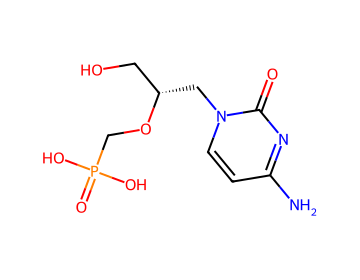
IDENTITY
COMPUTED
PROPERTIES
-3.9
log Kow = -3.3 @ pH 7.1
-3.9
Fluffy white powder
White crystalline powder
=170 mg/mL at pH 6-8
Aqueous solubility >=170 mg/ml @ pH 6-8
1.15e+01 g/L
480
260 °C (dec)
480 °C
Specific optical rotation at 20 °C for the D (sodium) line: -97.3 deg (c=0.80 in water)
Solid
It is recommended that cidofovir admixtures be administered within 24 hours of preparation and that refrigeration or freezer storage not be used to extend this 24 hour limit.
UV maximum (pH 2): 279 nm (E 13,000) /Monohydrate/
HAZARDS
Hazard Traits - Carcinogenicity; Developmental Toxicity; Reproductive Toxicity;Authoritative List - Prop 65;Report - regardless of intended function of ingredient in the product
The Approved Drug Products with Therapeutic Equivalence Evaluations List identifies currently marketed prescription drug products, incl cidofovir, approved on the basis of safety and effectiveness by FDA under sections 505 of the Federal Food, Drug, and Cosmetic Act.
An overview of the pharmacology, pharmacokinetics, efficacy, side effects and dosage of cidofovir for the treatment of cytomegalovirus retinitis.[Levien T, Baker DE; Hosp Pharm 31: 1604-20 (1996)]
SAFETY
SRP: At the time of review, criteria for land treatment or burial (sanitary landfill) disposal practices are subject to significant revision. Prior to implementing land disposal of waste residue (including waste sludge), consult with environmental regulatory agencies for guidance on acceptable disposal practices.
Partially used vials of cidofovir and diluted solutions should be discarded by high temperature incineration.
Caution should be exercised in preparing, administering, and discarding solutions of cidofovir according to guidelines for handling mutagenic substances. If cidofovir concentrate for injection or a dilute solution of the drug comes in contact with the skin or mucosa, the affected area should be washed immediately and thoroughly with soap and water.
Due to the mutagenic potential of cidofovir, use of appropriate safety equipment is recommended for preparation, administration, and disposal of cidofovir. The National Institutes of Health recommends that cidofovir be prepared in a class II laminar flow biological safety cabinet and that personnel preparing this medication wear surgical gloves and a closed-front surgical-type gown with kint cuffs.
TOXICITY
Vitreous samples from 9 eyes of 9 patients and plasma samples from 4 patients were assayed with high-performance liquid chromatography to determine cidofovir levels. The only eye that had a detectable vitreous concentration (673.7 ng/ml) was injected with 20 ug 24 hours prior to the surgery. The remaining samples including plasma were below the detection point of the assay (100 ng/ml) and were injected between 5 and 40 days prior to sampling.
Concomitant administration of cidofovir with potentially nephrotoxic agents (e.g., amphotericin B, aminoglycosides, foscarnet, nonsteriodal antiinflammatory agents, IV pentamidine, vancomycin) is contraindicated, and the manufacturer recommends that at least 7 days elapse between discontinuance of such drugs and administration of cidofovir.
Placement of a ganciclovir ocular implant in patients receiving IV cidofovir has resulted in profound hypotony in some patients, and some clinicians suggest that IV cidofovir not be administered within one month before or after placement of a ganciclovir ocular implant.
Intravenous cidofovir therapy is associated with mild-to-moderate elevations in serum ALT levels in a proportion of patients, but the elevations are usually self-limited and do not require dose modification. Nephrotoxicity is often dose limiting, which may account for the absence of clinically significant cases of liver injury associated with cidofovir therapy. Cases of clinically apparent liver injury have been reported during cidofovir therapy, but the role of this agent has been difficult to define because most patients who receive cidofovir have severe immunodeficiency and are receiving multiple other agents, some of which are known hepatotoxins. Several instances of acute liver failure, lactic acidosis and fatty liver have been described in patients taking cidofovir, but other nucleoside analogues such as zidovudine, stavudine or didanosine were being taken concurrently.;Likelihood score: E (unlikely cause of clinically apparent liver injury).
/HUMAN EXPOSURE STUDIES/ The major complication of cidofovir therapy is renal toxicity, which is sometimes irreversible, results in renal failure, and requires dialysis to prevent death.
/CASE REPORTS/ A diagnosis of Fanconi's syndrome, as manifested by multiple abnormalities of proximal renal tubular function, was reported in 1% of patients. Decreases in serum bicarbonate to < or =16 mEq/L occurred in 16% of cidofovir-treated patients. Cases of metabolic acidosis in association with liver dysfunction and pancreatitis resulting in death have been reported in patients receiving /cidofovir/.
Drug Induced Liver Injury Rank (DILIrank 2.0)
Cidofovir
Ambiguous-DILI-concern
5
Adverse reactions
DOI:10.1016/j.drudis.2016.02.015
/LABORATORY ANIMALS: Acute Exposure/ /A study was conducted/ to determine the effect of cidofovir on intraocular pressure (IOP) in the guinea pig, and rabbit eye to develop an animal model of cidofovir-induced ocular hypotony and to study the histopathology of this toxicity. Twenty-eight guinea pig eyes were injected with cidofovir yielding final intravitreal concs of 25, 200, 625 and 2000 ug/ml. Eighteen eyes of pigmented rabbits were injected with cidofovir yielding final intravitreal concs of 625 and 2000 ug/ml. A carefully calibrated low volume displacement manometer system using a micro-transducer was used to determine the IOP measurements in the guinea pig and rabbit eyes. Histology was evaluated using light and electron microscopy. Injection of 6.25 micrograms of cidofovir intravitreally (vitreous concentration of 25 ug/ml) is the highest non-toxic dose in the guinea pig; the IOP was unchanged at two and four wks after injection with this dose; histologically the eyes were normal. A single injection of 50 ug of cidofovir intravitreally (vitreous concentration of 200 ug/ml) caused a long lasting (9.3 mmHg) decrease in IOP (approximately 50% of baseline). At this dose there were only mild and variable histologic changes in the ciliary body and the retina. Higher doses of 156.25 ug and 500 ug of cidofovir (vitreous concentrations of 625, and 2000 ug/ml, respectively) caused moderate to severe ciliary body and retinal changes. In rabbit eyes there was a mild but statistically insignificant pressure drop with doses of 875 ug cidofovir intravitreally (vitreous concentration of 625 ug/ml); retina was within normal limits after injection with this dose, there were mild changes in the ciliary body. There was a total destruction of ciliary body and loss of nonpigmented epithelial cells with injections of 2800 micrograms of cidofovir intravitreally (vitreous concentration of 2000 ug/ml): retina was relatively well preserved. The guinea pig eye shows similar reduction in
/LABORATORY ANIMALS: Chronic Exposure or Carcinogenicity/ ... A 26 wk toxicology study was done in rats evaluating once weekly subscapular sc injections of cidofovir. The study was terminated at 19 wks because palpable mammary adenocarcinomas were detected in females after only 6 doses. These masses developed at doses as low as 0.6 mg/kg/wk... . There was also a significant incr in mammary adenocarcinomas in female rats and a significant incidence of Zymbal's gland carcinomas in male and female rats administered 15 mg/kg of cidofovir once weekly; this was not seen at the 0.6 or 3 mg/kg doses.
/LABORATORY ANIMALS: Chronic Exposure or Carcinogenicity/ In animals ...iv admin of... cidofovir results in a dose-limiting nephrotoxicity characterized by damage to the proximal tubular epithelial cells. Probenecid, a competitive inhibitor of organic anion transport in the proximal tubular epithelial cells, was evaluated for its effect on the chronic toxicity and pharmacokinetics of cidofovir. Cynomolgus monkeys (5/sex/group) received cidofovir for 52 consecutive weeks as a once weekly iv bolus injection at 0 (saline), 0.1, 0.5, or 2.5 mg/kg/dose alone or at 2.5 mg/kg/dose in combination with probenecid (30 mg/kg/dose via oral gavage 1 hr prior to cidofovir admin). Cidofovir-associated histopathological changes were seen only in the kidneys, testes, and epididymides. Nephrotoxicity (mild to moderate cortical tubular epithelial cell karyomegaly, tubular dilation, basement membrane thickening) was present only in monkeys receiving 2.5 mg/kg/dose cidofovir without probenecid. The incidence and severity of testicular (hypo- and aspermatogenesis) and epididymal (severe oligo- and aspermia) changes were increased in monkeys admin cidofovir at 2.5 mg/kg/dose, either alone or in combination with oral probenecid. Renal drug clearance was decreased between Weeks 1 and 52 in the 2.5 mg/kg/dose groups and resulted in an incr systemic exposure to cidofovir... that was significantly greater in monkeys admin cidofovir alone (312% increase in males, 98% in females) than in those coadministered probenecid (32% increase in males, 3% in females). These results demonstrate that oral probenecid coadministration protects against the morphological evidence of nephrotoxicity and the accompanying decr in renal clearance in monkeys receiving chronic iv cidofovir treatment.
/LABORATORY ANIMALS: Developmental or Reproductive Toxicity/ Cidofovir was found to be embryotoxic (reduced fetal body weight) in rats administered 1.5 mg/kg per day and in rabbits given 1.0 mg/kg during the period of organogenesis; these doses were also maternotoxic. There was also an increased incidence of fetal external soft tissue and skeletal anomalies, such as meningocele, short snout, and short maxillary bones seen in the rabbits administered 1.0 mg/kg per day, which was also maternally toxic.
/LABORATORY ANIMALS: Developmental or Reproductive Toxicity/ Studies showed that cidofovir caused inhibition of spermatogenesis in rats and monkeys. However, no adverse effects on fertility or reproduction were seen following once weekly iv injections of cidofovir in male rats for 13 consecutive weeks at doses up to 15 mg/kg/wk... . Female rats dosed iv once weekly at 1.2 mg/kg/wk...or higher, for up to 6 weeks prior to mating and for 2 weeks post mating had decreased litter sizes and live births/litter and increased early resorptions/litter. Peri- and post-natal development studies in which female rats received sc injections of cidofovir once daily at doses up to 1.0 mg/kg/day from day 7 of gestation through day 21 postpartum (approx 5 weeks) resulted in no adverse effects on viability, growth, behavior, sexual maturation or reproductive capacity in the offspring.
Basic treatment: Establish a patent airway. Suction if necessary. Watch for signs of respiratory insufficiency and assist ventilations if needed. Administer oxygen by nonrebreather mask at 10 to 15 L/min. Monitor for pulmonary edema and treat if necessary ... . Monitor for shock and treat if necessary ... . Anticipate seizures and treat if necessary ... . For eye contamination, flush eyes immediately with water. Irrigate each eye continuously with normal saline during transport ... . Do not use emetics. For ingestion, rinse mouth and administer 5 ml/kg up to 200 ml of water for dilution if the patient can swallow, has a strong gag reflex, and does not drool ... . Cover skin burns with dry sterile dressings after decontamination ... . /Poison A and B/
Advanced treatment: Consider orotracheal or nasotracheal intubation for airway control in the patient who is unconscious, has severe pulmonary edema, or is in respiratory arrest. Positive pressure ventilation techniques with a bag valve mask device may be beneficial. Monitor cardiac rhythm and treat arrhythmias as necessary ... . Start an IV with D5W /SRP: "To keep open", minimal flow rate/. Use lactated Ringer's if signs of hypovolemia are present. Watch for signs of fluid overload. Consider drug therapy for pulmonary edema ... . For hypotension with signs of hypovolemia, administer fluid cautiously. Watch for signs of fluid overload ... . Treat seizures with diazepam (Valium) ... . Use proparacaine hydrochloride to assist eye irrigation ... . /Poison A and B/
Hemodialysis and probenecid should reduce plasma concentrations in the event of an overdose.
Two cases of cidofovir overdose have been reported. These patients received single doses of /cidofovir/ at 16.3 mg/kg and 17.4 mg/kg respectively, with concomitant oral probenecid and intravenous hydration. In both cases, the patients were hospitalized and received oral probenecid and vigorous iv hydration with normal saline for 3 to 5 days. Significant changes in renal function were not observed in either patient.
◉ Summary of Use during Lactation;No information is available on the use of cidofovir during breastfeeding. Until more safety data become available, an alternate drug is preferred. Individuals with smallpox are recommended to not breastfeed their infant because of the risk of passing variola virus to the infant through direct contact. Providing pumped milk to the infant may be possible if no lesions are near the breast and adequate precautions are taken with respect to cleaning hands, breasts, breast pumps and any other apparatuses used to provide milk to the infant. Individuals with Mpox should feed their infants with pasteurized donor milk or infant formula until all of their lesions are healed. Numerous other safety precautions are advised for mothers with Mpox.[1];◉ Effects in Breastfed Infants;Relevant published information was not found as of the revision date.;◉ Effects on Lactation and Breastmilk;Relevant published information was not found as of the revision date.
REGULATORY
Hazard Traits - Carcinogenicity; Developmental Toxicity; Reproductive Toxicity;Authoritative List - Prop 65;Report - regardless of intended function of ingredient in the product
The Approved Drug Products with Therapeutic Equivalence Evaluations List identifies currently marketed prescription drug products, incl cidofovir, approved on the basis of safety and effectiveness by FDA under sections 505 of the Federal Food, Drug, and Cosmetic Act.
PHARMACOLOGY
J - Antiinfectives for systemic use;J05 - Antivirals for systemic use;J05A - Direct acting antivirals;J05AB - Nucleosides and nucleotides excl. reverse transcriptase inhibitors;J05AB12 - Cidofovir
QJ - Antiinfectives for systemic use;QJ05 - Antivirals for systemic use;QJ05A - Direct acting antivirals;QJ05AB - Nucleosides and nucleotides excl. reverse transcriptase inhibitors;QJ05AB12 - Cidofovir
6%
Cidofovir is a new anti-viral drug. It is classified as a nucleotide analogue and is active against herpes cytomegalovirus (CMV) retinitis infection. Most adults are infected with CMV. Cidofovir suppresses cytomegalovirus (CMV) replication by selective inhibition of viral DNA synthesis.
Cidofovir acts through the selective inhibition of viral DNA polymerase.Biochemical data support selective inhibition of CMV DNA polymerase by cidofovir diphosphate, the active intracellular metabolite of cidofovir. Cidofovir diphosphate inhibits herpesvirus polymerases at concentrations that are 8- to 600-fold lower than those needed to inhibit human cellular DNA polymerase alpha, beta, and gamma(1,2,3). Incorporation of cidofovir into the growing viral DNA chain results in reductions in the rate of viral DNA synthesis.
Cidofovir diphosphate exerts its antiviral effect by interfering with DNA synthesis and inhibiting viral replication. The inhibitory activity of cidofovir diphosphate is highly selective because of its greater affinity for viral DNA polymerases than for human DNA polymerases. /Cidofovir diphosphate/
Pyrimidine nucleoside monophosphate kinase converts cidofovir to cidofovir monophosphate, which is further converted to the diphosphate and cidofovir phosphate-choline via other cellular enzymes. Cidofovir diphosphate stop replication of viral DNA by competitive inhibition of viral DNA polymerase, incorporation and termination of the growing viral DNA chain, and inactivation of the viral DNA polymerase. /Cidofovir diphosphate/
Cidofovir /is an/ ... acyclic phosphonate analog of deoxynucleoside monophosphate. /This cmpd/ undergoes intracellular activation to form diphosphates that are potent inhibitors of viral DNA polymerases. Cidofovir has broad spectrum antiviral activity against herpesviruses, papillomaviruses and poxviruses.
2.4 to 3.2 hours
...Male rabbits received either 14C-cidofovir ...by intravitreal injection into both eyes (50 micrograms/eye...). ...The estimated terminal elimination half-lives /were/ in vitreous (42 hr) and in retina (66-77 hr)... .
...Levels of cidofovir in serum following iv infusion were dose proportional over the dose range of 1.0-10.0 mg/kg bw and declined biexponentially with an overall mean +/- standard deviation terminal half-life of 2.6 +/- 1.2 hr (n=25).
Cidofovir is converted via cellular enzymes to the pharmacologically active diphosphate metabolite ... .
This study was designed to evaluate the intraocular distribution and metabolism of the antiviral nucleotide analogs cidofovir and cyclic 1-[(S)-3-hydroxy-2-(phosphonomethoxy) propyl]cytosine (HPMPC) in New Zealand white rabbits following intravitreal administration. ...Male rabbits received either 14C-cidofovir or 14C-cyclic HPMPC by intravitreal injection into both eyes (50 micrograms/eye, 11 microCi/eye). Two animals/group were sacrificed at 24, 48, 72 or 240 hr post-dose. Ocular tissues, kidney and liver were oxidized to determine total radioactivity and metabolites were determined by HPLC. ...At 24 hr post-dose, total radioactivity was 9.96 and 5.18 micrograms-equiv/g for cidofovir and cyclic HPMPC, respectively, in vitreous and 20.9 and 3.54 micrograms-equiv/g, respectively, in retina. Although the initial vitreal clearance was 2-fold faster for the cyclic analog, the estimated terminal elimination half-lives in vitreous (42 hr) and in retina (66-77 hr) were similar for both drugs. By 240 hr post-dose, radioactivity in all ocular tissues was approx ten-fold higher for cidofovir. Radioactivity in vitreous at 240 hr after intravitreal dosing with either drug contained cidofovir, cyclic HPMPC and cidofovir-phosphocholine. ...The long retinal half-life observed presumably reflects formation of phosphorylated cidofovir within retinal cells. Cidofovir achieved a ten-fold higher level of phosphorylated drug in retina than cyclic HPMPC. Therefore, intravitreal cidofovir may be expected to suppress progression of retinitis for a longer period than an equivalent intravitreal dose of cyclic HPMPC. The intravitreal half-life of cidofovir was 20-fold longer than that of ganciclovir in the same animal model.
Pyrimidine nucleoside monophosphate kinase converts cidofovir to cidofovir monophosphate, which is further converted to the diphosphate and cidofovir phosphate-choline via other cellular enzymes.
768M1V522C
CIDOFOVIR ANHYDROUS
Established Pharmacologic Class [EPC] - Cytomegalovirus Nucleoside Analog DNA Polymerase Inhibitor
Mechanisms of Action [MoA] - DNA Polymerase Inhibitors
Nucleoside Analog [EXT]
Cidofovir anhydrous is a Cytomegalovirus Nucleoside Analog DNA Polymerase Inhibitor. The mechanism of action of cidofovir anhydrous is as a DNA Polymerase Inhibitor.
Agents used in the prophylaxis or therapy of VIRUS DISEASES. Some of the ways they may act include preventing viral replication by inhibiting viral DNA polymerase; binding to specific cell-surface receptors and inhibiting viral penetration or uncoating; inhibiting viral protein synthesis; or blocking late stages of virus assembly.
Compounds or agents that combine with an enzyme in such a manner as to prevent the normal substrate-enzyme combination and the catalytic reaction.
100%
537 ± 126 mL/kg [VISTIDE ADMINISTERED WITHOUT PROBENECID];410 ± 102 mL/kg [VISTIDE ADMINISTERED WITH PROBENECID]
179 +/- 23.1 mL/min/1.73 m2 [WITHOUT PROBENECID];148 +/- 38.8 mL/min/1.73 m2 [WITH PROBENECID]
Volume of distribution is 537 ml/kg without concurrent probenecid administration and 410 ml/kg with concurrent probenecid administration.
Concentrations of cidofovir were undetectable 15 minutes after the end of a 1 hour infusion in one patient who had a corresponding serum concentration of 8.7 ug/mL.
Renal (without concurrent probenecid administration): Approximately 80 to 100% of an administered cidofovir dose was recovered unchanged in the urine within 24 hours.
Cytoplasm
USES
MEDICATION: Antiviral agent
Preparation: A. Holy et al., EP 253412; eidem, US 5142051 (1988, 1992 both to Ceskoslov. Akad, Ved; Rega Inst.) ... .
Preparations: Parenteral; for injection, concentrate, for IV infusion only; 75 mg (of anhydrous cidofovir) per mL; Vistide, Gilead Sciences
...Cream containing 1% cidofovir.
ALIASES
REACTIONS
uspto-grants-1997_01 · 10.6084/m9.figshare.5104873.v1 · US05591851
查看
uspto-grants-1997_01 · 10.6084/m9.figshare.5104873.v1 · US05591852
查看
uspto-grants-2011_11 · 10.6084/m9.figshare.5104873.v1 · US08063209B2
查看
uspto-grants-2011_11 · 10.6084/m9.figshare.5104873.v1 · US08063209B2
查看
uspto-grants-1998_05 · 10.6084/m9.figshare.5104873.v1 · US05756486
查看
uspto-grants-2009_03 · 10.6084/m9.figshare.5104873.v1 · US07511051B2
查看
uspto-grants-2009_03 · 10.6084/m9.figshare.5104873.v1 · US07511051B2
查看
uspto-grants-1995_12 · 10.6084/m9.figshare.5104873.v1 · US05476938
查看