
uspto-grants-1998_03 · 10.6084/m9.figshare.5104873.v1 · US05731463
查看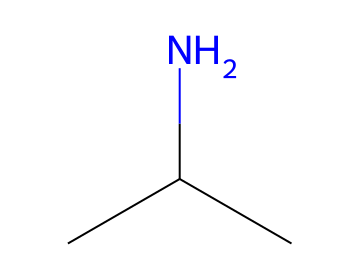
IDENTITY
COMPUTED
PROPERTIES
Strong base
log Kow = 0.26
0.3
Ammonia odor
High strength odor; fishy ammonia aroma
0.691 at 68 °F (est.) (USCG, 1999) - Less dense than water; will float
0.6891 g/cu cm at 20 °C
Bulk density: 5.7 lb/gal at 20 °C; refractive index; 1.377 at 15 C
0.7 g/cm³
Relative density of the vapour/air-mixture at 20 °C (air = 1): 1.7
0.687-0.693
0.47 mm²/s at 20 °C
Colorless liquid [Note: A gas above 91 degrees F]
Colorless, volatile liquid
Colorless to yellow liquid
Very soluble (NTP, 1992)
In water, 1X10+6 mg/L at 20 °C /miscible/
Miscible with water
Miscible with ethanol, ether; very soluble in acetone; soluble in benzene, chloroform
Solubility in water: miscible
Soluble in water
-35 °F (NTP, 1992)
-26 °C
-18 °C (0 °F) (Closed cup)
-35 °F (-37 °C) (open cup)
-37 °C c.c.
-35 °F (open cup)
90.3 °F at 760 mmHg (NTP, 1992)
31.8 °C
31.7 °C
34 °C
91 °F
91 °F
When heated to decomposition it emits toxic fumes of /nitrogen oxides/.
-150 °F (NTP, 1992)
-95.119 °C
-95.2 °C
-150 °F
-101.2 °C
-150 °F
2.04 (Air = 1)
Relative vapor density (air = 1): 2.0
GHS
Danger
H224: Extremely flammable liquid and vapor [Danger Flammable liquids];H315: Causes skin irritation [Warning Skin corrosion/irritation];H319: Causes serious eye irritation [Warning Serious eye damage/eye irritation];H335: May cause respiratory irritation [Warning Specific target organ toxicity, single exposure; Respiratory tract irritation]
P210, P233, P240, P241, P242, P243, P261, P264, P264+P265, P271, P280, P302+P352, P303+P361+P353, P304+P340, P305+P351+P338, P319, P321, P332+P317, P337+P317, P362+P364, P370+P378, P403+P233, P403+P235, P405, and P501 (click each P-code to see the statement)
Danger
HAZARDS
Chemical: 2-Propanamine
Commission Regulation (EC) No 1565/2000 (Repealed by Com. Implementing Reg. (EU) No 872/2012)
2-Propanamine is listed on the EPA's Chemical Data Reporting (CDR) system. Manufacturers and importers of 2-Propanamine are required to report information about their production and use of this chemical to the EPA under the Toxic Substances Control Act (TSCA). (40 eCFR Part 711)
Status: Active Update: 17-05-2023 https://echa.europa.eu/registration-dossier/-/registered-dossier/14604;Status: Cease Manufacture Update: 24-05-2013 https://echa.europa.eu/registration-dossier/-/registered-dossier/10379
2-Propanamine: HSNO Approval: HSR001183 Approved with controls
The New Jersey Worker and Community Right to Know Act requires public and private employers to provide information about hazardous substances at their workplaces. (N.J.S.A. 34:5A-1 et. seq.)
IMAP assessments - Short chain (C2-3) alkyl amines: Human health tier II assessment
Flammable Liquid Corrosive
Special Hazards of Combustion Products: Toxic oxides of nitrogen may form in fire.;Behavior in Fire: Burning isopropylamine is difficult to control because of the ease of reignition of the vapor. Vapors are heavier than air and may travel to a source of ignition and flash back. Containers may explode. (USCG, 1999)
· Flammable/combustible material.;· May be ignited by heat, sparks or flames.;· Vapors may form explosive mixtures with air.;· Vapors may travel to source of ignition and flash back.;· Most vapors are heavier than air. They will spread along the ground and collect in low or confined areas (sewers, basements, tanks, etc.).;· Vapor explosion hazard indoors, outdoors or in sewers.;· Those substances designated with a (P) may polymerize explosively when heated or involved in a fire.;· Runoff to sewer may create fire or explosion hazard.;· Containers may explode when heated.;· Many liquids will float on water.
Extremely flammable. Vapour/air mixtures are explosive.
Flammable liquid.
Very dangerous fire hazard and moderate explosion hazard when exposed to sparks, heat, flame, or oxidizers.
Inhalation causes nose and throat irritation, severe coughing, and chest pain due to irritation of air passages; can cause lung edema and loss of consciousness. Ingestion causes nausea, salivation and severe irritation of mouth and stomach. Contact with eyes causes severe irritation and possible edema of the cornea. Contact with skin causes severe irritation. (USCG, 1999)
· May cause toxic effects if inhaled or ingested.;· Contact with substance may cause severe burns to skin and eyes.;· Fire will produce irritating, corrosive and/or toxic gases.;· Vapors may cause dizziness or asphyxiation, especially when in closed or confined areas.;· Runoff from fire control or dilution water may cause environmental contamination.
Liquid causes first degree burns on short exposure. [CHRIS] Corrosive to skin; [Quick CPC] TLV Basis is irritation of upper respiratory tract and eye (visual impairment). [ACGIH] May cause permanent eye injury; Transient visual effects (blue haze or halo vision) occur at low concentrations; [CHEMINFO]
1221 132
1221 132
Amines, Phosphines, and Pyridines
Symbol: F+, Xi; R: 12-36/37/38; S: (2)-16-26-29
UN Hazard Class: 3; UN Subsidiary Risks: 8; UN Pack Group: I
Highly Flammable
SAFETY
Excerpt from ERG Guide 132 [Flammable Liquids - Corrosive]:;Some of these materials may react violently with water.;SMALL FIRE: Dry chemical, CO2, water spray or alcohol-resistant foam.;LARGE FIRE: Water spray, fog or alcohol-resistant foam. If it can be done safely, move undamaged containers away from the area around the fire. Dike runoff from fire control for later disposal. Do not get water inside containers.;FIRE INVOLVING TANKS, RAIL TANK CARS OR HIGHWAY TANKS: Fight fire from maximum distance or use unmanned master stream devices or monitor nozzles. Cool containers with flooding quantities of water until well after fire is out. Withdraw immediately in case of rising sound from venting safety devices or discoloration of tank. ALWAYS stay away from tanks in direct contact with flames. For massive fire, use unmanned master stream devices or monitor nozzles; if this is impossible, withdraw from area and let fire burn. (ERG, 2024)
Use water in large amounts, powder, alcohol-resistant foam, carbon dioxide. In case of fire: keep drums, etc., cool by spraying with water.
Fresh air, rest. Half-upright position. Artificial respiration may be needed. Refer for medical attention.
First rinse with plenty of water for at least 15 minutes, then remove contaminated clothes and rinse again. Refer for medical attention .
Rinse with plenty of water for several minutes (remove contact lenses if easily possible). Refer immediately for medical attention.
Rinse mouth. Give nothing to drink. Do NOT induce vomiting. Refer immediately for medical attention.
· CALL 911. Then call emergency response telephone number on shipping paper. If shipping paper not available or no answer, refer to appropriate telephone number listed on the inside back cover.;· Keep unauthorized personnel away.;· Stay upwind, uphill and/or upstream.;· Ventilate closed spaces before entering, but only if properly trained and equipped.
· ELIMINATE all ignition sources (no smoking, flares, sparks or flames) from immediate area.;· All equipment used when handling the product must be grounded.;· Do not touch or walk through spilled material.;· Stop leak if you can do it without risk.;· Prevent entry into waterways, sewers, basements or confined areas.;· A vapor-suppressing foam may be used to reduce vapors.;· Absorb with earth, sand or other non-combustible material.;· For hydrazine, absorb with DRY sand or inert absorbent (vermiculite or absorbent pads).;· Use clean, non-sparking tools to collect absorbed material.;Large Spill;· Dike far ahead of liquid spill for later disposal.;· Water spray may reduce vapor, but may not prevent ignition in closed spaces.
EYES: First check the victim for contact lenses and remove if present. Flush victim's eyes with water or normal saline solution for 20 to 30 minutes while simultaneously calling a hospital or poison control center. Do not put any ointments, oils, or medication in the victim's eyes without specific instructions from a physician. IMMEDIATELY transport the victim after flushing eyes to a hospital even if no symptoms (such as redness or irritation) develop.;SKIN: IMMEDIATELY flood affected skin with water while removing and isolating all contaminated clothing. Gently wash all affected skin areas thoroughly with soap and water. IMMEDIATELY call a hospital or poison control center even if no symptoms (such as redness or irritation) develop. IMMEDIATELY transport the victim to a hospital for treatment after washing the affected areas.;INHALATION: IMMEDIATELY leave the contaminated area; take deep breaths of fresh air. If symptoms (such as wheezing, coughing, shortness of breath, or burning in the mouth, throat, or chest) develop, call a physician and be prepared to transport the victim to a hospital. Provide proper respiratory protection to rescuers entering an unknown atmosphere. Whenever possible, Self-Contained Breathing Apparatus (SCBA) should be used; if not available, use a level of protection greater than or equal to that advised under Protective Clothing.;INGESTION: DO NOT INDUCE VOMITING. Corrosive chemicals will destroy the membranes of the mouth, throat, and esophagus and volatile chemicals have a high risk of being aspirated into the victim's lungs during vomiting. Thus, the risk of increasing the medical problems by inducing vomiting of a volatile corrosive chemical is very high. If the victim is conscious and not convulsing, give 1 or 2 glasses of water to dilute the chemical and IMMEDIATELY call a hospital or poison control center. IMMEDIATELY transport the victim to a hospital. If the victim is convulsing or unconscious, do not give anything by mouth, ensure that the victim's airway is open and lay the victim on his/her side with the head lower than the body. DO NOT INDUCE VOMITING. IMMEDIATELY transport the victim to a hospital. (NTP, 1992)
General First Aid:;· Call 911 or emergency medical service.;· Ensure that medical personnel are aware of the material(s) involved, take precautions to protect themselves and avoid contamination.;· Move victim to fresh air if it can be done safely.;· Administer oxygen if breathing is difficult.;· If victim is not breathing:;-- DO NOT perform mouth-to-mouth resuscitation; the victim may have ingested or inhaled the substance.;-- If equipped and pulse detected, wash face and mouth, then give artificial respiration using a proper respiratory medical device (bag-valve mask, pocket mask equipped with a one-way valve or other device).;-- If no pulse detected or no respiratory medical device available, provide continuous compressions. Conduct a pulse check every two minutes or monitor for any signs of spontaneous respirations.;· Remove and isolate contaminated clothing and shoes.;· For minor skin contact, avoid spreading material on unaffected skin.;· In case of contact with substance, remove immediately by flushing skin or eyes with running water for at least 20 minutes.;· For severe burns, immediate medical attention is required.;· Effects of exposure (inhalation, ingestion, or skin contact) to substance may be delayed.;· Keep victim calm and warm.;· Keep victim under observation.;· For further assistance, contact your local Poison Control Center.;· Note: Basic Life Support (BLS) and Advanced Life Support (ALS) should be done by trained professionals.;Specific First Aid:;· For corrosives, in case of contact, immediately flush skin or eyes with running water for at least 30 minutes. Additional flushing may be required.
(General first aid procedures);Eye: Irrigate immediately - If this chemical contacts the eyes, immediately wash (irrigate) the eyes with large amounts of water, occasionally lifting the lower and upper lids. Get medical attention immediately.;Skin: Water flush immediately - If this chemical contacts the skin, immediately flush the contaminated skin with water. If this chemical penetrates the clothing, immediately remove the clothing and flush the skin with water. Get medical attention promptly.;Breathing: Respiratory support;Swallow: Medical attention immediately - If this chemical has been swallowed, get medical attention immediately.
Well closed. Fireproof. Provision to contain effluent from fire extinguishing. Separated from food and feedstuffs. See Chemical Dangers. Store in an area without drain or sewer access.
Vapors are heavier than air and will collect in low areas. Vapors may travel long distances to ignition sources and flashback. Vapors in confined areas may explode when exposed to fire. Containers may explode in fire. Storage containers and parts of containers may rocket great distances, in many directions.
Vapors are heavier than air and may travel to a source of ignition and flash back.
· Wear positive pressure self-contained breathing apparatus (SCBA).;· Wear chemical protective clothing that is specifically recommended by the manufacturer when there is NO RISK OF FIRE.;· Structural firefighters' protective clothing provides thermal protection but only limited chemical protection.
5.0 [ppm], Ceiling = 10 ppm[German Research Foundation (DFG)]
Suitable extinguishing media: Use water spray, alcohol-resistant foam, dry chemical or carbon dioxide.
Advice for firefighters: Wear self-contained breathing apparatus for firefighting if necessary.
Use water spray to cool unopened containers.
... Use dry chemical, carbon dioxide, or foam extinguishers. ... If material or contaminated runoff enters waterways, notify downstream users of potentially contaminated waters. Notify local health and fire officials and pollution control agencies. From a secure, explosion-proof location, use water spray to cool exposed containers. If cooling streams are ineffective (venting sound increases in volume and pitch, tank discolors or shows any digns of deforming), withdraw immediately to a secure position.
For more Fire Fighting Procedures (Complete) data for Isopropylamine (6 total), please visit the HSDB record page.
Well closed. Fireproof. Provision to contain effluent from fire extinguishing. Separated from food and feedstuffs. See Chemical Dangers. Store in an area without drain or sewer access.
Keep container tightly closed in a dry and well-ventilated place. Containers which are opened must be carefully resealed and kept upright to prevent leakage.
Isopropylamine must be stored to avoid contact with oxidizers (such as perchlorates, peroxides, permanganates, chlorates, and nitrates) and strong acids (such as hydrochloric, sulfuric, and nitric) since violent reactions occur. Store in tightly closed containers in a cool, well-ventilated area away from heat. Sources of ignition, such as smoking and open flames, are prohibited where isopropylamine is handled, used, or stored. Metal containers involving the transfer of 5 gallons or more of isopropylamine should be grounded and bonded. Drums must be equipped with self-closing valves, pressure vacuum bungs, and flame arresters. Use only non-sparking tools and eqipment, especially when opening and closing containers of isopropylamine. Wherever isopropylamine is used, handled, manufactured, or stored, use explosion-proof electrical equipment and fittings. Isopropylamine will attack some forms of plastics, rubber, and coatings.
Store in a cool, dry, well-ventilated location. Separate from strong acids, oxidizing materials.
ACCIDENTAL RELEASE MEASURES: Personal precautions, protective equipment and emergency procedures: Wear respiratory protection. Avoid breathing vapors, mist or gas. Ensure adequate ventilation. Remove all sources of ignition. Evacuate personnel to safe areas. Beware of vapors accumulating to form explosive concentrations. Vapors can accumulate in low areas. Environmental precautions: Prevent further leakage or spillage if safe to do so. Do not let product enter drains. Discharge into the environment must be avoided. Methods and materials for containment and cleaning up: Contain spillage, and then collect with an electrically protected vacuum cleaner or by wet-brushing and place in container for disposal according to local regulations.
SRP: Wastewater from contaminant suppression, cleaning of protective clothing/equipment, or contaminated sites should be contained and evaluated for subject chemical or decomposition product concentrations. Concentrations shall be lower than applicable environmental discharge or disposal criteria. Alternatively, pretreatment and/or discharge to a permitted wastewater treatment facility is acceptable only after review by the governing authority and assurance that "pass through" violations will not occur. Due consideration shall be given to remediation worker exposure (inhalation, dermal and ingestion) as well as fate during treatment, transfer and disposal. If it is not practicable to manage the chemical in this fashion, it must be evaluated in accordance with EPA 40 CFR Part 261, specifically Subpart B, in order to determine the appropriate local, state and federal requirements for disposal.
Eliminate all ignition sources. Stop or control the leak, if this can be done without undue risk. Use water spray to cool and disperse vapors, protect personnel, and dilute spills to form nonflammable mixtures. Absorb in noncombustible material for proper disposal.
Evacuate danger area! Remove all ignition sources. Consult an expert! Personal protection: complete protective clothing including self-contained breathing apparatus. Do NOT let this chemical enter the environment. Do NOT wash away into sewer. Collect leaking liquid in sealable containers. Absorb remaining liquid in sand or inert absorbent. Then store and dispose of according to local regulations.
For more Cleanup Methods (Complete) data for Isopropylamine (8 total), please visit the HSDB record page.
Excerpt from ERG Guide 132 [Flammable Liquids - Corrosive]:;ELIMINATE all ignition sources (no smoking, flares, sparks or flames) from immediate area. All equipment used when handling the product must be grounded. Do not touch or walk through spilled material. Stop leak if you can do it without risk. Prevent entry into waterways, sewers, basements or confined areas. A vapor-suppressing foam may be used to reduce vapors. Absorb with earth, sand or other non-combustible material. For hydrazine, absorb with DRY sand or inert absorbent (vermiculite or absorbent pads). Use clean, non-sparking tools to collect absorbed material.;LARGE SPILL: Dike far ahead of liquid spill for later disposal. Water spray may reduce vapor, but may not prevent ignition in closed spaces. (ERG, 2024)
SRP: Recycle any unused portion of the material for its approved use or return it to the manufacturer or supplier. Ultimate disposal of the chemical must consider: the material's impact on air quality; potential migration in air, soil or water; effects on animal, aquatic and plant life; and conformance with environmental and public health regulations. If it is possible or reasonable use an alternative chemical product with less inherent propensity for occupational harm/injury/toxicity or environmental contamination.
SRP: Wastewater from contaminant suppression, cleaning of protective clothing/equipment, or contaminated sites should be contained and evaluated for subject chemical or decomposition product concentrations. Concentrations shall be lower than applicable environmental discharge or disposal criteria. Alternatively, pretreatment and/or discharge to a permitted wastewater treatment facility is acceptable only after review by the governing authority and assurance that "pass through" violations will not occur. Due consideration shall be given to remediation worker exposure (inhalation, dermal and ingestion) as well as fate during treatment, transfer and disposal. If it is not practicable to manage the chemical in this fashion, it must be evaluated in accordance with EPA 40 CFR Part 261, specifically Subpart B, in order to determine the appropriate local, state and federal requirements for disposal.
Product: Burn in a chemical incinerator equipped with an afterburner and scrubber but exert extra care in igniting as this material is highly flammable. Offer surplus and non-recyclable solutions to a licensed disposal company. Contact a licensed professional waste disposal service to dispose of this material; Contaminated packaging: Dispose of as unused product.
... May be disposed of by atomizing in a suitable combustion chamber equipped with an appropriate effluent gas cleaning device.
Incineration: Incinerate in a suitable combustion chamber with an afterburner and scrubber.
TOXICITY
/While/ methyl and ethylamine in combination with nitrite were significantly mutagenic, the Escherichia coli mutagenicity test of carcinogenic isopropylamine in combination with nitrite did not yield a detectable increase in mutation frequency over that due to nitrite alone.
Eyes, skin, respiratory system
EC50; Species: Chlorella ellipsoidea (Green algae); Conditions: freshwater, static 25 °C, pH 7.2; Concentration: 1X10⁻⁹ ug/cell for 90 min; Effect: decreased photosynthesis, oxygen production
EC50; Species: Anabaena catenula (Blue-Green Algae) exponential growth phase; Conditions: freshwater, static, 22 °C; Concentration: 1500 ug/L for 21 days; Effect: decreased population growth rate /98% purity/
EC50; Species: Microcystis aeruginosa (Blue-Green Algae) exponential growth phase; Conditions: freshwater, static, 22 °C; Concentration: 2500 ug/L for 21 days; Effect: decreased population growth rate /98% purity/
EC50; Species: Leptolyngbya boryana (Blue-Green Algae) exponential growth phase; Conditions: freshwater, static, 22 °C; Concentration: 2900 ug/L for 21 days; Effect: decreased population growth rate /98% purity/
For more Ecotoxicity Values (Complete) data for Isopropylamine (11 total), please visit the HSDB record page.
TERRESTRIAL FATE: Based on a classification scheme(1), an estimated Koc value of 11(SRC), determined from a log Kow of 0.26(2) and a regression-derived equation(3), indicates that isopropylamine is expected to have very high mobility in soil(SRC). However, the pKa of isopropylamine is 10.6(4), indicating that this compound will exist almost entirely in the cation form in the environment and cations generally adsorb more strongly to soils containing organic carbon and clay than their neutral counterparts(5). Volatilization of isopropylamine from moist soil surfaces is not expected to be an important fate process because this compound exists almost entirely in the cation form at pH values of 5 to 9 and cations do not volatilize. Isopropylamine is expected to volatilize from dry soil surfaces(SRC) based upon a vapor pressure of 580 mm Hg at 25 °C(6). A 70-80% of theoretical BOD using activated sludge in the Manometric Respirometry test(7) suggests that biodegradation is an important environmental fate process in soil(SRC).
AQUATIC FATE: Based on a classification scheme(1), an estimated Koc value of 11(SRC), determined from a log Kow of 0.26(2) and a regression-derived equation(3), indicates that isopropylamine is not expected to adsorb to suspended solids and sediment(SRC). A pKa of 10.6(4) indicates isopropylamine will exist almost entirely in the cation form at pH values of 5 to 9 and, therefore, volatilization from water surfaces is not expected to be an important fate process(SRC). According to a classification scheme(5), an estimated BCF of 3.2(SRC), from its log Kow(2) and a regression-derived equation(3), suggests the potential for bioconcentration in aquatic organisms is low(SRC). A 70-80% of theoretical BOD using activated sludge in the Manometric Respirometry test(6) suggests that biodegradation is an important environmental fate process in water(SRC).
ATMOSPHERIC FATE: According to a model of gas/particle partitioning of semivolatile organic compounds in the atmosphere(1), isopropylamine, which has a vapor pressure of 580 mm Hg at 25 °C(2), is expected to exist solely as a vapor in the ambient atmosphere. Vapor-phase isopropylamine is degraded in the atmosphere by reaction with photochemically-produced hydroxyl radicals(SRC); the half-life for this reaction in air is estimated to be 3.3 hours(SRC), calculated from its rate constant of 3.9X10⁻¹³ cu cm/molecule-sec at 25 °C(SRC) that was derived using a structure estimation method(3). Isopropylamine does not contain chromophores that absorb at wavelengths >290 nm(4) and, therefore, is not expected to be susceptible to direct photolysis by sunlight(SRC).
Isopropylamine was detected as a volatile component in boiled beef on unknown dates at unknown concentrations(1). Isopropylamine was detected in a sample of maize grain on unknown dates at a concentration of 2.3 mg/kg(2). Isopropylamine is reported as an odor and/or flavor used in cereal, fruit, meat, cheese and diary(3).
Dermatotoxin - Skin burns.;Toxic Pneumonitis - Inflammation of the lungs induced by inhalation of metal fumes or toxic gases and vapors.
Serious local effects by all routes of exposure.
inhalation, skin absorption, ingestion, skin and/or eye contact
IDENTIFICATION AND USE: Isopropylamine is a colorless liquid (a gas above 91 degrees F). It is used as a solvent, intermediate in synthesis of rubber accelerators, pharmaceuticals, dyes, insecticides, bactericides, textile specialties, and surface-active agents, dehairing agent, solubilizer for 2,4-D acid. HUMAN STUDIES: Complaints of nose and throat irritation were reported by volunteer subjects after brief exposures at 10 to 20 ppm. Workers complained of transient visual disturbances (halos around lights) after exposure to the vapor for 8 hours, probably resulting from mild corneal edema, which usually cleared in 3 to 4 hours. ANIMAL STUDIES: A 4-hour exposure of 10,000 mg/cu m (4000 ppm) to 6 rats was not lethal, while all 6 rats died from exposure to 20,000 mg/cu m (8000 ppm). Exposure to a saturated vapor caused the death of all rats within 2 minutes. Isopropylamine produced a severe burn from application of 0.5 mL of a 1% solution. Instillation of 0.005 mL of undiluted compound resulted in severe corneal opacity while 0.5 mL of a 1% solution in water caused severe corneal opacity and iritis. In mice, isopropylamine is essentially an upper respiratory tract-irritating compound. In a one generation reproduction study rats were exposed to isopropylamine at analytical concentrations of 20, 100 or 499 mg/cu m for 6 hr per day (5 days/week) by inhalation (whole body exposure). Clinical signs included incidental fur discoloration and focal hair loss. There were no significant differences in mating and fertility parameters, number of corpora lutea, implantations and resorptions. The was a reduction in mean body weight gain in males in the high dose group. Negative results were reported in bacterial reverse mutation tests for mutagenicity in Salmonella typhimurium (strains included TA1535, TA1537, TA98 and TA100) with and without metabolic activation. The highest non-toxic dose tested was 3333 mg/plate.
Sore throat. Cough. Burning sensation. Shortness of breath. Laboured breathing.
Pain. Redness. Blisters. Skin burns.
Pain. Redness. Severe burns. Loss of vision.
Burning sensation. Burns in mouth and throat. Abdominal cramps. Shock or collapse.
irritation eyes, skin, nose, throat; pulmonary edema; visual disturbance; eye, skin burns; dermatitis
The following link will take the user to the National Toxicology Program (NTP) Test Status of Agents Search page, which tabulates the results and current status of tests such as "Short-Term Toxicity Studies", "Long-term Carcinogenicity Studies", "Developmental Studies", "Genetic Toxicology Studies", etc., performed with this chemical. Testing status for isopropylamine is available.[Available from, as of March 27, 2018: https://ntpsearch.niehs.nih.gov/?e=True&ContentType=Testing+Status]
The substance is harmful to aquatic organisms.
Before a worker is placed in a job with a potential for exposure to isopropylamine, a licensed health care professional should evaluate and document the worker's baseline health status with thorough medical, environmental, and occupational histories, a physical examination, and physiologic and laboratory tests appropriate for the anticipated occupational risks. These should concentrate on the function and integrity of the eyes, skin, and respiratory system. Medical surveillance for respiratory disease should be conducted using the principles and methods recommended by the American Thoracic Society.
Occupational health interviews and physical examinations should be performed at regular intervals during the employment period, as mandated by any applicable Federal, State, or local standard. Where no standard exists and the hazard is minimal, evaluations should be conducted every 3 to 5 years or as frequently as recommended by an experienced occupational health physician. Additional examinations may be necessary if a worker develops symptoms attributable to isopropylamine exposure. The interviews, examinations, and medical screening tests should focus on identifying the adverse effects of isopropylamine on the eyes, skin, or respiratory system. Current health status should be compared with the baseline health status of the individual worker or with expected values for a suitable reference population.
REGULATORY
Chemical: 2-Propanamine
Commission Regulation (EC) No 1565/2000 (Repealed by Com. Implementing Reg. (EU) No 872/2012)
2-Propanamine is listed on the EPA's Chemical Data Reporting (CDR) system. Manufacturers and importers of 2-Propanamine are required to report information about their production and use of this chemical to the EPA under the Toxic Substances Control Act (TSCA). (40 eCFR Part 711)
Status: Active Update: 17-05-2023 https://echa.europa.eu/registration-dossier/-/registered-dossier/14604;Status: Cease Manufacture Update: 24-05-2013 https://echa.europa.eu/registration-dossier/-/registered-dossier/10379
2-Propanamine: HSNO Approval: HSR001183 Approved with controls
The New Jersey Worker and Community Right to Know Act requires public and private employers to provide information about hazardous substances at their workplaces. (N.J.S.A. 34:5A-1 et. seq.)
This action promulgates standards of performance for equipment leaks of Volatile Organic Compounds (VOC) in the Synthetic Organic Chemical Manufacturing Industry (SOCMI). The intended effect of these standards is to require all newly constructed, modified, and reconstructed SOCMI process units to use the best demonstrated system of continuous emission reduction for equipment leaks of VOC, considering costs, non air quality health and environmental impact and energy requirements. Isopropylamine is produced, as an intermediate or a final product, by process units covered under this subpart.
Isopropylamine
1
10000
Flammable chemical that can be released at a facility.
PHARMACOLOGY
Following a single intravenous injection of (14)C-isopropylamine HCl of 0.3 mg/kg bw into male Wistar rats, radioactivity was rapidly eliminated from the body via the urine with a half-life of about 2 to 4 hr. /Isopropylamine HCl/
In mongrel dogs intravenously infused with isopropylamine (0.25 mg/kg/min, 45 min), an initial rapid and a subsequent slow decline in plasma levels with half life times of 5 and 146 min, respectively, were observed.
Following a single intravenous injection of (14)C-isopropylamine HCl of 0.3 mg/kg bw into male Wistar rats, radioactivity was rapidly eliminated from the body via the urine with a half-life of about 2 to 4 hr. Following a single intraperitoneal injection of a similar dose, 97% of the radioactivity was excreted in the urine, all being identified as isopropylamine, 1.2% in the feces, and 1% in exhaled air. In in vitro experiments in which isopropylamine was incubated with rat liver microsomes in the presence of a NADPH-generating system, more than 94% was recovered as unchanged compound. /Isopropylamine HCl/
In mongrel dogs intravenously infused with isopropylamine (0.25 mg/kg/min, 45 min), an initial rapid and a subsequent slow decline in plasma levels with half life times of 5 and 146 min, respectively, were observed. These values indicate redistribution of isopropylamine into a tissue compartment followed by a slow release into and elimination from the blood. Examinations of tissues 2 hours post-infusion showed highest tissue/plasma ratios (ranging from approximately 5-17) for the kidneys (medulla, cortex), the spleen, the liver, the adrenal glands, and the lungs while significant amounts were found in sections of the brains (ratios of about 3-3.5) and the heart (ratios: ca. 2-3.5) (Pri82).
... Studies on the disposition of isopropylamine indicated that there was significant accumulation of isopropylamine in all tissues as compared to plasma. ...
USES
Used as a solvent and as an intermediate in the synthesis of dyes, rubber additives, pesticides, surface active agents, and pharmaceuticals; Generated from plant and animal waste decomposition; [ACGIH]
For isopropylamine (USEPA/OPP Pesticide Code: 610024) there are 0 labels match. /SRP: Not registered for current use in the U.S., but approved pesticide uses may change periodically and so federal, state and local authorities must be consulted for currently approved uses./
Solvent, intermediate in synthesis of rubber accelerators, pharmaceuticals, dyes, insecticides, bactericides, textile specialties, and surface-active agents, dehairing agent, solubilizer for 2,4-D acid.
Reported uses (ppm):;Table: Reported uses (ppm): (Flavor and Extract Manufacturers' Association (2005)) [Table#2166]
The isopropylamine salt of glyphosate is the active ingredient of the herbicide Roundup /Glyphosate/
For more Uses (Complete) data for Isopropylamine (8 total), please visit the HSDB record page.
2023: 85,000,000 - <100,000,000 lb;2022: 100,000,000 - <250,000,000 lb;2021: 100,000,000 - <250,000,000 lb;2020: 100,000,000 - <250,000,000 lb
(1972) Probably greater than 4.54x10+5 g
(1975) Probably greater than 1.36x10+6 g
(1984) 2.17X10+10 g
2-Propanamine is listed as a High Production Volume (HPV) chemical (65FR81686). Chemicals listed as HPV were produced in or imported into the U.S. in >1 million pounds in 1990 and/or 1994. The HPV list is based on the 1990 Inventory Update Rule. (IUR) (40 CFR part 710 subpart B; 51FR21438).
For more U.S. Production (Complete) data for Isopropylamine (7 total), please visit the HSDB record page.
54% as an int for the herbicides prometone, prometryne, propazine, andsancap; 20% as an int for surface active agents incl dodecylbenzenesulfonic acid, isopropylamine salt; 14% as an int for rubber chems; and 12% used in misc applications (1965)
Not Known or Reasonably Ascertainable;Intermediate;Processing aids, specific to petroleum production
Intermediate
Preparation from acetone and ammonia ... ; From acetone oxime.
From acetone and ammonia under pressure.
Amination of an alcohol over a metal catalyst under reducing conditions or over a solid acid catalyst at high temperature.
Lower aliphatic amines can be prepared by a variety of methods, and from many different types of raw materials. By far the largest commercial applications involve the reaction of alcohol with ammonia to form the corresponding amines. Other methods are employed depending on the particular amine desired, raw material availability, plant economics, and the ability to sell coproducts. /Lower aliphatic amines/
Flavouring Agent -> FLAVOURING_AGENT -> JECFA Functional Classes
Flavoring Agents -> JECFA Flavorings Index
Flavouring Agent -> FLAVOURING_AGENT -> JECFA Functional Classes
Cosmetics -> Buffering
All Other Basic Organic Chemical Manufacturing;Pesticide, Fertilizer, and Other Agricultural Chemical Manufacturing;Oil and Gas Drilling, Extraction, and Support activities
2-Propanamine: ACTIVE
It is available commercially in an anhydrous form.
ALIASES
REACTIONS
uspto-grants-1998_03 · 10.6084/m9.figshare.5104873.v1 · US05731463
查看
uspto-grants-1998_03 · 10.6084/m9.figshare.5104873.v1 · US05731463
查看
uspto-grants-1998_03 · 10.6084/m9.figshare.5104873.v1 · US05733914
查看
uspto-grants-1988_02 · 10.6084/m9.figshare.5104873.v1 · US04724235
查看
uspto-grants-1988_02 · 10.6084/m9.figshare.5104873.v1 · US04724235
查看
uspto-grants-1988_02 · 10.6084/m9.figshare.5104873.v1 · US04724235
查看
uspto-grants-1988_02 · 10.6084/m9.figshare.5104873.v1 · US04724235
查看
uspto-grants-1988_02 · 10.6084/m9.figshare.5104873.v1 · US04724235
查看