
uspto-grants-1993_05 · 10.6084/m9.figshare.5104873.v1 · US05208397
查看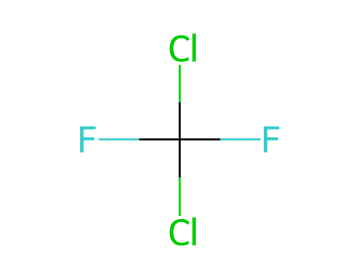
IDENTITY
COMPUTED
PROPERTIES
log Kow = 2.16
2.16
2.16
Practically odorless ... faint, ether-like odor in high concentration
1.35 at 59 °F (USCG, 1999) - Denser than water; will sink
1.486 at -29.8 °C (liquid)
Relative density (water = 1): 1.5
1.35 at 59 °F
1.486 @-29.8°C
4.2(relative gas density)
0.262 centipoise at 70 °F
Colorless gas ... [Note: Shipped as a liquified compressed gas]
Insoluble (NTP, 1992)
In water, 280 mg/L at 25 °C
Soluble in ethanol, ether, acetic acid
Solubility of water in dichlorodifluoromethane, 0.009 wt% at 25 °C
13.1 wt% amyl chloride; 9.0 wt% benzene; 5.0 wt% bromobenzene; 1.2 wt% bromoform; 8.5 wt% n-butyl alcohol; 13.2 wt% butyl butyrate; 5.2 wt% carbon tetrachloride; 5.5 wt% chloroform; 3.9 wt% alpha-chloronaphthalene; 8.5 wt% cyclohexanone; 6.1 wt% diacetone alcohol; 14.1 wt% dibutyl ether; 8.9 wt% dibutyl oxalate; 6.3 wt% dibutyl tartrate; 3.9 wt% dichloroethyl ether; 7.2 wt% diethyl aniline; 4.7 wt% diethyl phthalate; 6.9 wt% dioxane; 4.7 wt% ethylene dichloride; 7.2 wt% ethylene glycol butyl ether; 7.4 wt% ethylene glycol ethyl ether (all 21.1 °C at 1 atm)
0.28 mg/mL at 25 °C
Noncorrosive
-21.6 °F at 760 mmHg (NTP, 1992)
-29.8 °C
-30 °C
-22 °F
-29.8 °C @760 [mm Hg]
-22 °F
When heated to decomp it emits highly toxic fumes of phosgene and /hydrogen chloride and hydrogen fluoride/.
The heated, thermal decomposition products like hydrogen chloride, chlorine, hydrogen fluoride, fluorine, and phosgene are dangerous.
Under certain conditions, /chlorofluorocarbon/ vapors may decompose on contact with flames or hot surfaces, creating the potential hazard of inhalation of toxic decomposition products. /Chlorofluorocarbon/
The appearance of toxic decomposition products serves as warning of the occurrence of thermal decompositon and detection of a sharp acrid odor warns of the presence of these products. /Fluorocarbons/
-252 °F (NTP, 1992)
-157.1 °C
-158 °C
-158 °C
-252 °F
-157.1 °C
4.2 (NIOSH, 2024) - Heavier than air; will sink (Relative to Air)
4.1 (Air = 1)
Relative vapor density (air = 1): 4.2
4.2
5 atm at 61 °F (NTP, 1992)
4,850 mm Hg at 25 °C
Vapor pressure, kPa at 20 °C: 568
5.7 atm
750 [mm Hg] @-30 °C
5.7 atm
GHS
This chemical does not meet GHS hazard criteria for 3.7% (5 of 136) of reports.
Warning
H280 (94.1%): Contains gas under pressure; may explode if heated [Warning Gases under pressure]
P410+P403</a, and a href="https://pubchem.ncbi.nlm.nih.gov/ghs/#P410+P403">P410+P403 (click each P-code to see the statement)
Aggregated GHS information provided per 136 reports by companies from 7 notifications to the ECHA C&L Inventory.;Reported as not meeting GHS hazard criteria per 5 of 136 reports by companies.;There are 6 notifications provided by 131 of 136 reports by companies with hazard statement code(s).;Information may vary between notifications depending on impurities, additives, and other factors. The percentage value in parenthesis indicates the notified classification ratio from companies that provide hazard codes. Only hazard codes with percentage values above 10% are shown. For more detailed information, please visit ECHA C&L website.
HAZARDS
Chemical: Methane, dichlorodifluoro-
Hazard Traits - Other Toxicological Hazard Traits;Authoritative List - CA NLs;Report - if used as a fragrance or flavor ingredient
Status: Active Update: 22-02-2021 https://echa.europa.eu/registration-dossier/-/registered-dossier/12142
Dichlorodifluoromethane: Does not have an individual approval but may be used under an appropriate group standard
The New Jersey Worker and Community Right to Know Act requires public and private employers to provide information about hazardous substances at their workplaces. (N.J.S.A. 34:5A-1 et. seq.)
Non-Flammable Gas
Special Hazards of Combustion Products: Although nonflammable, dissociation products generated in a fire may be irritating or toxic.;Behavior in Fire: Helps extinguish fire. (USCG, 1999)
· Some may burn but none ignite readily.;· Containers may explode when heated.;· Ruptured cylinders may rocket.;CAUTION: Aerosols (UN1950) may contain a flammable propellant.
Not combustible. Gives off irritating or toxic fumes (or gases) in a fire.
NONFLAMMABLE GAS
INHALATION: some narcosis when 10% in air is breathed. (USCG, 1999)
· Vapors may cause dizziness or asphyxiation without warning, especially when in closed or confined areas.;· Vapors from liquefied gas are initially heavier than air and spread along ground.;· Contact with gas or liquefied gas may cause burns, severe injury and/or frostbite.;· Fire may produce irritating, corrosive and/or toxic gases.
Possible frostbite from contact with liquid; [NIOSH] Dichlorodifluoromethane is in the list of Some volatile substances which may be abused by inhalation published on the web site of the U.N. International Drug Control Programme, indicating its potential to cause narcosis in workers. [Reference #1] Release in confined space may result in suffocation; May cause CNS depression and cardiac arrhythmias; [ICSC]
1028 126
1028 126
The Food and Drug Administration (FDA), after consultation with the Environmental Protection Agency (EPA), is amending FDA's regulation on the use of ozone-depleting substances (ODSs) in selfpressurized containers to remove the essential-use designations for flunisolide, triamcinolone, metaproterenol, pirbuterol, albuterol and ipratropium in combination, cromolyn, and nedocromil used in oral pressurized metered-dose inhalers (MDIs). The Clean Air Act requires FDA, in consultation with the EPA, to determine whether an FDA-regulated product that releases an ODS is an essential use of the ODS. FDA has concluded that there are no substantial technical barriers to formulating flunisolide, triamcinolone, metaproterenol, pirbuterol, albuterol and ipratropium in combination, cromolyn, and nedocromil as products that do not release ODSs, and therefore they will no longer be essential uses of ODSs as of the effective dates of this rule. MDIs for these active moieties containing an ODS may not be marketed after the relevant effective date. DATES: Removal of Part 2.125(e)(2)(iii) and 2.125(e)(4)(vii) is effective June 14, 2010. Removal of Part 2.125(e)(1)(v) and 2.125(e)(4)(iv) is effective December 31, 2010. Removal of Part 2.125(e)(1)(iii) is effective June 30, 2011. Removal of 2.125(e)(2)(iv) and Part 2.125(e)(4)(viii) is effective December 31, 2013. /Ozone-Depleting Substances/
Use of ozone-depleting substances in foods, drugs, devices, or cosmetics. (a) As used in this section, ozone-depleting substance (ODS) means any class I substance as defined in 40 CFR part 82, appendix A to subpart A, or class II substance as defined in 40 CFR part 82, appendix B to subpart A. (b) Except as provided in paragraph (c) of this section, any food, drug, device, or cosmetic that is, consists in part of, or is contained in an aerosol product or other pressurized dispenser that releases an ODS is not an essential use of the ODS under the Clean Air Act. (c) A food, drug, device, or cosmetic that is, consists in part of, or is contained in an aerosol product or other pressurized dispenser that releases an ODS is an essential use of the ODS under the Clean Air Act if paragraph (e) of this section specifies the use of that product as essential. For drugs, including biologics and animal drugs, and for devices, an investigational application or an approved marketing application must be in effect, as applicable. ... (e) The use of ODSs in the following products is essential: ... (2) Metered-dose short-acting adrenergic bronchodilator human drugs for oral inhalation. Oral pressurized metered-dose inhalers containing the following active moieties: ... (iv) Pirbuterol. ... (4) Other essential uses. (iii) Anesthetic drugs for topical use on accessible mucous membranes of humans where a cannula is used for application. ... (vi) Metered-dose atropine sulfate aerosol human drugs administered by oral inhalation. ... (viii) Metered-dose ipratropium bromide and albuterol sulfate, in combination, administered by oral inhalation for human use. (ix) Sterile aerosol talc administered intrapleurally by thoracoscopy for human use. /Ozone-Depleting Substances/
Fluorinated Organic Compounds
UN Hazard Class: 2.2
Ross RH et al; Report, ORNL/EIS-105 (1978). Health aspects of organohalide compounds including difluorodichloromethane are presented.
Russell AD, Thompson GM; Water Resour Res 19 (1): 57-60 (1983). Mechanisms leading to enrichment of atmospheric fluorocarbons, dichlorofluoromethane & fluorotrichloromethane, in groundwater are discussed.
Gunderson EC, Anderson CC; DHHS (NIOSH) publ, US (80-133) (1980). This study summarizes the methods validated for sampling & analyzing 130 substances in the workplace.
USEPA; Ambient Water Quality Criteria Doc: Halomethanes (1980) EPA 440/5-80-051
For more Special Reports (Complete) data for DICHLORODIFLUOROMETHANE (13 total), please visit the HSDB record page.
U075; As stipulated in 40 CFR 261.33, when dichlorodifluoromethane, as a commercial chemical product or manufacturing chemical intermediate or an off-specification commercial chemical product or a manufacturing chemical intermediate, becomes a waste, it must be managed according to Federal and/or State hazardous waste regulations. Also defined as a hazardous waste is any residue, contaminated soil, water, or other debris resulting from the cleanup of a spill, into water or on dry land, of this waste. Generators of small quantities of this waste may qualify for partial exclusion from hazardous waste regulations (40 CFR 261.5).
SAFETY
Excerpt from ERG Guide 126 [Gases - Compressed or Liquefied (Including Refrigerant Gases)]:;Use extinguishing agent suitable for type of surrounding fire.;SMALL FIRE: Dry chemical or CO2.;LARGE FIRE: Water spray, fog or regular foam. If it can be done safely, move undamaged containers away from the area around the fire. Damaged cylinders should be handled only by specialists.;FIRE INVOLVING TANKS: Fight fire from maximum distance or use unmanned master stream devices or monitor nozzles. Cool containers with flooding quantities of water until well after fire is out. Do not direct water at source of leak or safety devices; icing may occur. Withdraw immediately in case of rising sound from venting safety devices or discoloration of tank. ALWAYS stay away from tanks in direct contact with flames. Some of these materials, if spilled, may evaporate leaving a flammable residue. (ERG, 2024)
In case of fire in the surroundings, use appropriate extinguishing media. In case of fire: keep cylinder cool by spraying with water.
Fresh air, rest. Artificial respiration may be needed. Refer for medical attention.
ON FROSTBITE: rinse with plenty of water, do NOT remove clothes. Refer for medical attention .
First rinse with plenty of water for several minutes (remove contact lenses if easily possible), then refer for medical attention.
· CALL 911. Then call emergency response telephone number on shipping paper. If shipping paper not available or no answer, refer to appropriate telephone number listed on the inside back cover.;· Keep unauthorized personnel away.;· Stay upwind, uphill and/or upstream.;· Many gases are heavier than air and will spread along the ground and collect in low or confined areas (sewers, basements, tanks, etc.).;· Ventilate closed spaces before entering, but only if properly trained and equipped.
· Do not touch or walk through spilled material.;· Stop leak if you can do it without risk.;· Do not direct water at spill or source of leak.;· Use water spray to reduce vapors or divert vapor cloud drift. Avoid allowing water runoff to contact spilled material.;· If possible, turn leaking containers so that gas escapes rather than liquid.;· Prevent entry into waterways, sewers, basements or confined areas.;· Allow substance to evaporate.;· Ventilate the area.
EYES: First check the victim for contact lenses and remove if present. Flush victim's eyes with water or normal saline solution for 20 to 30 minutes while simultaneously calling a hospital or poison control center. Do not put any ointments, oils, or medication in the victim's eyes without specific instructions from a physician. If symptoms (such as redness or irritation) develop, immediately transport the victim to a hospital.;SKIN: CAUTION: Exposure of skin to compressed gases may result in freezing of the skin. Treatment for frostbite may be necessary. Remove the victim from the source of contamination. IMMEDIATELY wash affected areas gently with COLD water (and soap, if necessary) while removing and isolating all contaminated clothing. Dry carefully with clean, soft towels. If symptoms such as inflammation or irritation develop, IMMEDIATELY call a physician or go to a hospital for treatment.;INHALATION: IMMEDIATELY leave the contaminated area; take deep breaths of fresh air. If symptoms (such as wheezing, coughing, shortness of breath, or burning in the mouth, throat, or chest) develop, call a physician and be prepared to transport the victim to a hospital. Provide proper respiratory protection to rescuers entering an unknown atmosphere. Whenever possible, Self-Contained Breathing Apparatus (SCBA) should be used; if not available, use a level of protection greater than or equal to that advised under Protective Clothing.;INGESTION: This compound is a gas, therefore inhalation is the first route of exposure. (NTP, 1992)
General First Aid:;· Call 911 or emergency medical service.;· Ensure that medical personnel are aware of the material(s) involved, take precautions to protect themselves and avoid contamination.;· Move victim to fresh air if it can be done safely.;· Administer oxygen if breathing is difficult.;· If victim is not breathing:;-- DO NOT perform mouth-to-mouth resuscitation; the victim may have ingested or inhaled the substance.;-- If equipped and pulse detected, wash face and mouth, then give artificial respiration using a proper respiratory medical device (bag-valve mask, pocket mask equipped with a one-way valve or other device).;-- If no pulse detected or no respiratory medical device available, provide continuous compressions. Conduct a pulse check every two minutes or monitor for any signs of spontaneous respirations.;· Remove and isolate contaminated clothing and shoes.;· For minor skin contact, avoid spreading material on unaffected skin.;· In case of contact with substance, remove immediately by flushing skin or eyes with running water for at least 20 minutes.;· For severe burns, immediate medical attention is required.;· Effects of exposure (inhalation, ingestion, or skin contact) to substance may be delayed.;· Keep victim calm and warm.;· Keep victim under observation.;· For further assistance, contact your local Poison Control Center.;· Note: Basic Life Support (BLS) and Advanced Life Support (ALS) should be done by trained professionals.;Specific First Aid:;· In case of contact with liquefied gas, only medical personnel should attempt thawing frosted parts.
(General first aid procedures);Eye: Frostbite - If eye tissue is frozen, seek medical attention immediately; if tissue is not frozen, immediately and thoroughly flush the eyes with large amounts of water for at least 15 minutes, occasionally lifting the lower and upper eyelids. If irritation, pain, swelling, lacrimation, or photophobia persist, get medical attention as soon as possible.;Skin: Frostbite - Compressed gases may create low temperatures when they expand rapidly. Leaks and uses that allow rapid expansion may cause a frostbite hazard. Wear appropriate personal protective clothing to prevent the skin from becoming frozen.;Breathing: Respiratory support
Separated from incompatible materials. See Chemical Dangers. Cool. Ventilation along the floor.
· Wear positive pressure self-contained breathing apparatus (SCBA).;· Wear chemical protective clothing that is specifically recommended by the manufacturer when there is NO RISK OF FIRE.;· Structural firefighters' protective clothing provides thermal protection but only limited chemical protection.
1000.0 [ppm]
If material involved in fire: Extingiush fire using agent suitable for type of surrounding fire. (Material itself does not burn or burns with difficulty). Cool all affected containers with flooding quantities of water. Apply water from as far a distance as possible.
Firefighters should wear self-contained, NIOSH-approved breathing apparatus for protection against possible toxic decomposition products. Proper eye and skin protection should be provided.
Separated from incompatible materials. ... Cool. Ventilation along the floor.
Store in a cool, well-ventilated area of low fire risk and out of direct sunlight. Protect cylinder and its fittings from physical damage. Storage in subsurface locations should be avoided. Close valve tightly after use and when empty.
If dichlorodifluoromethane is leaked ... ventilate area of spill or leak to disperse gas. ... Stop flow of gas.
Excerpt from ERG Guide 126 [Gases - Compressed or Liquefied (Including Refrigerant Gases)]:;Do not touch or walk through spilled material. Stop leak if you can do it without risk. Do not direct water at spill or source of leak. Use water spray to reduce vapors or divert vapor cloud drift. Avoid allowing water runoff to contact spilled material. If possible, turn leaking containers so that gas escapes rather than liquid. Prevent entry into waterways, sewers, basements or confined areas. Allow substance to evaporate. Ventilate the area. (ERG, 2024)
Generators of waste (equal to or greater than 100 kg/mo) containing this contaminant, EPA hazardous waste number U075, must conform with USEPA regulations in storage, transportation, treatment and disposal of waste.
A potential candidate for rotary kiln incineration at a temperature range of 820 to 1,600 °C and residence times of seconds for liquids and gases, and hours for solids. A potential candidate for fluidized bed incineration at a temperature range of 450 to 980 °C and residence times of seconds for liquids and gases, and longer for solids.
Dichlorodifluoromethane is a waste chemical stream constituent which may be subjected to ultimate disposal by controlled incineration. Incineration, preferably after mixing with another combustible fuel. Care must be exercised to assure complete combustion to prevent the formation of phosgene. An acid scrubber is necessary to remove the halo acids produced.
The following wastewater treatment technology has been investigated for dichlorodifluoromethane: Concentration process: Solvent extraction.
For more Disposal Methods (Complete) data for DICHLORODIFLUOROMETHANE (6 total), please visit the HSDB record page.
Ventilation.
TOXICITY
In a pilot study of pollutants in the milk of women living in 4 urban-industrial areas in the US, dichlorodifluoromethane was identified, not quantified, in 2 of 8 samples(1).
/In humans/ a 10 to 90% mixture of CFC-11 & CFC-12, respectively, caused more severe respiratory effects than either fluorocarbon inhaled singly.
Effects of chlorofluorocarbons on bronchiolar tone in asthmatic children /were studied/. Forced expiratory volume, a measure of bronchial tone, was measured in 18 children with a history of asthma, before and after inhaling aerosols of the B2-receptor agonist, fenoterol, or a mixture of CFC-11, CFC-12, and CFC-114, and in the absence of treatment. The levels of exposure were not reported. Exposure to the chlorofluorocarbon mixture significantly reduced forced expiratory volume for 2 hr, relative to "no treatment", and for 8 hr relative to exposure to fenoterol (containing CFC-11 and CFC-12). The results suggest that chlorofluorcarbons can decrease bronchial tone in asthmatic patients, but that this effect is transient and of a sufficiently small magnitude to be superseded by the dilating effects of fenoterol when both fenoterol and chlorofluorcarbon propellants are inhaled together.
cardiovascular system, peripheral nervous system
Due to the high vapor pressure of dichlorodifluoromethane, volatilization to the atmosphere is quite rapid. ... It does not react readily with hydroxyl radicals, nor does it photodissociate in the troposphere since it exhibits no absorption of light greater than 200 nm. ... In the stratosphere, dichlorodifluoromethane is broken down by the absorption of higher energy, shorter wavelength ultraviolet light.
TERRESTRIAL FATE: Based on a classification scheme(1), an estimated Koc value of 75(SRC), determined from a log Kow of 2.16(2) and a regression-derived equation(3), indicates that dichlorodifluoromethane is expected to have high mobility in soil(SRC). Volatilization of dichlorodifluoromethane from moist soil surfaces is expected to be an important fate process(SRC) given a Henry's Law constant of 0.343 atm-cu m/mole(4). Dichlorodifluoromethane is expected to volatilize from dry soil surfaces(SRC) based upon a vapor pressure of 4850 mm Hg at 25 °C(5). Dichlorodifluoromethane is resistant to aerobic biodegradation in soil(6); however, when incubated anaerobically using fresh household domestic waste, dichlorodifluoromethane exhibited a degradation rate constant of 0.029/day, corresponding to a half-life of 23.9 days(6).
AQUATIC FATE: Based on a classification scheme(1), an estimated Koc value of 75(SRC), determined from a log Kow of 2.16(2) and a regression-derived equation(3), indicates that dichlorodifluoromethane is not expected to adsorb to suspended solids and sediment(SRC). Volatilization from water surfaces is expected(4) based upon a Henry's Law constant of 0.343 atm-cu m/mole(5). Using this Henry's Law constant and an estimation method(4), volatilization half-lives for a model river and model lake are 3 hrs and 4 days, respectively(SRC). According to a classification scheme(6), an estimated BCF of 12(SRC), from its log Kow(2) and a regression-derived equation(3), suggests the potential for bioconcentration in aquatic organisms is low(SRC). Dichlorodifluoromethane is resistant to aerobic biodegradation(7); however, the compound was degraded under anaerobic conditions over a 100 day incubation period using a sediment inoculum(7).
ATMOSPHERIC FATE: According to a model of gas/particle partitioning of semivolatile organic compounds in the atmosphere(1), dichlorodifluoromethane, which has a vapor pressure of 4850 mm Hg at 25 °C(2), is expected to exist solely as a gas in the ambient atmosphere. Dichlorodifluoromethane does not react with photochemically produced hydroxyl radicals, ozone molecules or nitrate radicals(3,4). The compound will gradually diffuse into the stratosphere above the ozone layer where it will slowly degrade due to direct photolysis from UV-C radiation and contribute to the catalytic removal of stratospheric ozone(SRC). The half-life for this reaction has been estimated to range from 105 to 169 years(4). Dichlorodifluoromethane does not contain chromophores that absorb at wavelengths >290 nm(5) and, therefore, is not expected to be susceptible to direct photolysis by sunlight in the troposphere(SRC).
Neurotoxin - Acute solvent syndrome;Other Poison - Simple Asphyxiant;ACGIH Carcinogen - Not Classifiable.
The substance can be absorbed into the body by inhalation.
inhalation, skin and/or eye contact (liquid)
ENVIRONMENTAL: In a pilot study of pollutants in the milk of women living in 4 urban-industrial areas in the US, dichlorodifluoromethane was found in 2 of 8 samples(1).
Irregular heartbeat. Confusion. Drowsiness. Unconsciousness.
ON CONTACT WITH LIQUID: FROSTBITE.
Redness. Pain.
dizziness, tremor, asphyxia, unconsciousness, cardiac arrhythmias, cardiac arrest; liquid: frostbite
Of the 1,144 stations reporting pollutants in ambient waters in EPA's STORET database, 1.6% contained dichlorodifluoromethane at detectable levels(1). No dichlorodifluoromethane was found in the effluent of a large community septic tank (detection limit 0.7 ppb)(2). In the National Urban Runoff Program in which samples of runoff were collected from 19 cities (51 catchments) in the U.S., no dichlorodifluoromethane was found in any samples(3). Leachate from 2 of 6 municipal landfills tested in Minnesota had detectable quantities of dichlorodifluoromethane(4). Leachate from 1 out of 5 landfills in Wisconsin contained 180 ppb of the chemical(4). Dichlorodifluoromethane was emitted from a simulated landfill composed of municipal refuse and wastewater sludges(5).
All of the dichlorodifluoromethane that is produced is eventually lost as emissions. It is estimated that 3.3% of the dichlorodifluoromethane produced is lost from plant vents and during packaging, a loss which is immediate. Losses from aerosols occur, on the average, 6 months after sale; losses from domestic refrigerators and freezers have an average life of 12 yr with a 2% loss during filling; industrial refrigerator charges have an average lifetime of 4 yr; all of the dichlorodifluoromethane used in closed cell foams are lost within 2 yr with 75% being lost during the first year. The annual world production and release of dichlorodifluoromethane were 443.7 and 422.8 million kg, respectively, in 1982. Cumulative production and release estimates up until the end of 1974 were 4698.5 and 4286.2 million kg. By the end of 1982 these figures had increased to 8196.0 and 7520.2 million kg(1).
Avoid release to the environment because of its impact on the ozone layer.
Dichlorodifluoromethane
2 x 10 ^-1 mg/kg-day
Employees should be screened for history of certain medical conditions ... which might place the employee at increased risk from dichlorodifluoromethane exposure. Cardiovascular disease: In persons with impaired cardiovascular function, especially those with a history of cardiac arrhythmias, the inhalation of dichlorodifluoromethane might cause exacerbation of disorders of the conduction mechanism due to its sensitizing effects on the myocardium. ... Any employee developing the above-listed conditions should be referred for further medical examination.
REGULATORY
Chemical: Methane, dichlorodifluoro-
Hazard Traits - Other Toxicological Hazard Traits;Authoritative List - CA NLs;Report - if used as a fragrance or flavor ingredient
Status: Active Update: 22-02-2021 https://echa.europa.eu/registration-dossier/-/registered-dossier/12142
Dichlorodifluoromethane: Does not have an individual approval but may be used under an appropriate group standard
The New Jersey Worker and Community Right to Know Act requires public and private employers to provide information about hazardous substances at their workplaces. (N.J.S.A. 34:5A-1 et. seq.)
The Food and Drug Administration (FDA), after consultation with the Environmental Protection Agency (EPA), is amending FDA's regulation on the use of ozone-depleting substances (ODSs) in selfpressurized containers to remove the essential-use designations for flunisolide, triamcinolone, metaproterenol, pirbuterol, albuterol and ipratropium in combination, cromolyn, and nedocromil used in oral pressurized metered-dose inhalers (MDIs). The Clean Air Act requires FDA, in consultation with the EPA, to determine whether an FDA-regulated product that releases an ODS is an essential use of the ODS. FDA has concluded that there are no substantial technical barriers to formulating flunisolide, triamcinolone, metaproterenol, pirbuterol, albuterol and ipratropium in combination, cromolyn, and nedocromil as products that do not release ODSs, and therefore they will no longer be essential uses of ODSs as of the effective dates of this rule. MDIs for these active moieties containing an ODS may not be marketed after the relevant effective date. DATES: Removal of Part 2.125(e)(2)(iii) and 2.125(e)(4)(vii) is effective June 14, 2010. Removal of Part 2.125(e)(1)(v) and 2.125(e)(4)(iv) is effective December 31, 2010. Removal of Part 2.125(e)(1)(iii) is effective June 30, 2011. Removal of 2.125(e)(2)(iv) and Part 2.125(e)(4)(viii) is effective December 31, 2013. /Ozone-Depleting Substances/
Use of ozone-depleting substances in foods, drugs, devices, or cosmetics. (a) As used in this section, ozone-depleting substance (ODS) means any class I substance as defined in 40 CFR part 82, appendix A to subpart A, or class II substance as defined in 40 CFR part 82, appendix B to subpart A. (b) Except as provided in paragraph (c) of this section, any food, drug, device, or cosmetic that is, consists in part of, or is contained in an aerosol product or other pressurized dispenser that releases an ODS is not an essential use of the ODS under the Clean Air Act. (c) A food, drug, device, or cosmetic that is, consists in part of, or is contained in an aerosol product or other pressurized dispenser that releases an ODS is an essential use of the ODS under the Clean Air Act if paragraph (e) of this section specifies the use of that product as essential. For drugs, including biologics and animal drugs, and for devices, an investigational application or an approved marketing application must be in effect, as applicable. ... (e) The use of ODSs in the following products is essential: ... (2) Metered-dose short-acting adrenergic bronchodilator human drugs for oral inhalation. Oral pressurized metered-dose inhalers containing the following active moieties: ... (iv) Pirbuterol. ... (4) Other essential uses. (iii) Anesthetic drugs for topical use on accessible mucous membranes of humans where a cannula is used for application. ... (vi) Metered-dose atropine sulfate aerosol human drugs administered by oral inhalation. ... (viii) Metered-dose ipratropium bromide and albuterol sulfate, in combination, administered by oral inhalation for human use. (ix) Sterile aerosol talc administered intrapleurally by thoracoscopy for human use. /Ozone-Depleting Substances/
U075; As stipulated in 40 CFR 261.33, when dichlorodifluoromethane, as a commercial chemical product or manufacturing chemical intermediate or an off-specification commercial chemical product or a manufacturing chemical intermediate, becomes a waste, it must be managed according to Federal and/or State hazardous waste regulations. Also defined as a hazardous waste is any residue, contaminated soil, water, or other debris resulting from the cleanup of a spill, into water or on dry land, of this waste. Generators of small quantities of this waste may qualify for partial exclusion from hazardous waste regulations (40 CFR 261.5).
As the federal pesticide law FIFRA directs, EPA is conducting a comprehensive review of older pesticides to consider their health and environmental effects and make decisions about their continued use. Under this pesticide reregistration program, EPA examines newer health and safety data for pesticide active ingredients initially registered before November 1, 1984, and determines whether the use of the pesticide does not pose unreasonable risk in accordance to newer saftey standards, such as those described in the Food Quality Protection Act of 1996. Pesticides for which EPA had not issued Registration Standards prior to the effective date of FIFRA '88 were divided into three lists based upon their potential for human exposure and other factors, with List B containing pesticides of greater concern than those on List C, and with List C containing pesticides of greater concern than those on List D. Dichlorodifluoromethane is found on List D. Case No: 4042; Pesticide type: insecticide; Case Status: No products containing the pesticide are actively registered ... The case /is characterized/ as "cancelled." Under FIFRA, pesticide producers may voluntarily cancel their registered products. EPA also may cancel pesticide registrations if registrants fail to pay required fees or make/meet certain reregistration commitments, or if EPA reaches findings of unreasonable adverse effects.; Active ingredient (AI): Dichlorodifluoromethane; AI Status: The active ingredient is no longer contained in any registered pesticide products ... "cancelled."
This action promulgates standards of performance for equipment leaks of Volatile Organic Compounds (VOC) in the Synthetic Organic Chemical Manufacturing Industry (SOCMI). The intended effect of these standards is to require all newly constructed, modified, and reconstructed SOCMI process units to use the best demonstrated system of continuous emission reduction for equipment leaks of VOC, considering costs, non air quality health and environmental impact and energy requirements. Dichlorodifluoromethane is produced, as an intermediate or a final product, by process units covered under this subpart.
Persons in charge of vessels or facilities are required to notify the National Response Center (NRC) immediately, when there is a release of this designated hazardous substance, in an amount equal to or greater than its reportable quantity of 5000 lb or 2270 kg. The toll free number of the NRC is (800) 424-8802. The rule for determining when notification is required is stated in 40 CFR 302.4 (section IV. D.3.b).
(AZ) ARIZONA 1400 ug/l
(CA) CALIFORNIA 1000 ug/l
(CT) CONNECTICUT 350 ug/l
(MA) MASSACHUSETTS 1400 ug/l
For more State Drinking Water Guidelines (Complete) data for DICHLORODIFLUOROMETHANE (7 total), please visit the HSDB record page.
EPA 1000 ug/l
PHARMACOLOGY
Freons are toxic to humans by several mechanisms. Inhaled fluorocarbons sensitized the myocardium to catecholamines, frequently resulting in lethal ventricular arrhythmias. Because they are gases heavier than air, fluorocarbons can displace atmospheric oxygen, thus resulting in asphyxiation. These compounds also have a central nervous system (CNS) anesthetic effect analogous to a structurally similar general anesthetic, halothane. Pressurized refrigerant or liquid fluorocarbons with a low boiling point have a cryogenic effect on exposed tissues, causing frostbite, laryngeal or pulmonary edema, and gastrointestinal perforation. Certain fluorocarbons degrade at high temperatures into toxic products of chlorine, hydrofluoric acid, or phosgene gases. /Freons/
The distribution half-life of the common fluorocarbons (Freon 11, Freon 12) averages 13 to 14 seconds; the elimination half-life is longer (1.5 hours) because of slower release from fat stores.
Elimination of CFC-12 from the body is rapid. Dogs exhaled within 1 hr essentially all the CFC-12 inhaled during 6- to 20-minute exposure to 8000 to 12000 ppm. Inhaled CFC-12 rapidly appeared in blood, bile, cerebrospinal fluid, and urine of anesthetized rabbits and dogs. Unanesthetized dogs exposed to 1000 to 100,000 ppm for 10 min showed rapid rise in blood concentrations of CFC-12 during the first 3 to 5 minutes, which was paralleled by a rapid decline for first 5 min after exposure.
Blood levels of CFC-12 were below detection limits in normal subjects using household aerosols; in asthmatic subjects using aerosol inhaler, blood levels were much lower than in dogs exposed at threshold for cardiac sensitization. Radiolabeled tests showed essentially all the dose of CFC-12 (95-103%) exhaled within the first hour after a 12- or 17-minute inhalation at 1000 ppm; total metabolites were < 0.2% of the administed dose. At 30 minutes, retention of the labeled dose inhaled in a single breath was 10% vesus 23%, 20%, and 12% for comparable doses of trichlorofluoromethane (FC-11), 1,1,2-trichloro-1,2,2,-trifluoroethane (FC-113), and 1,2-dichloro-1,1,2,2-tetrafluoroethane (FC-114), respectively. For an eight hr inhalation at 1000 ppm, a pharmacokinetic model based on analyses in dogs and humans gave an estimate of 55% absorption of the inhaled CFC-12.
At 1000 ppm ... level in /human/ venous blood was 1.2 ug/mL.
Absorption and elimination are dynamic processes involving equilibria among air, blood, and various tissues. Upon absorption, a biphasic blood-level pattern occurs, with an initial rapid then slower rise in blood levels, during which the material is absorbed from blood into tissue.
For more Absorption, Distribution and Excretion (Complete) data for DICHLORODIFLUOROMETHANE (10 total), please visit the HSDB record page.
Cytoplasm;Extracellular
USES
Has been used as a refrigerant, propellant, and blowing agent; [ACGIH] Used in photography (film cleaner); [www.ci.tucson.az.us/arthazards/medium.html]
The manufacture of products containing CFC-12 propellants was banned by the EPA in 1978. [ACGIH]
Photographic Processing [Category: Other]
For dichlorodifluoromethane (USEPA/OPP Pesticide Code: 000014) there are 0 labels match. /SRP: Not registered for current use in the U.S., but approved pesticide uses may change periodically and so federal, state and local authorities must be consulted for currently approved uses./
The active ingredient is no longer contained in any registered pesticide products ... "cancelled."
Refrigerant, foaming agent, aerosol propellant /Former/
Chlorofluoroalkanes (and also the alternative HCFCs and HFCs) produced on an industrial scale are subject to stringent standards. Impurities must not exceed the following limits (vol %): acids, 0; moisture, <0.001; higher-boiling fractions, <0.05; and other gases, 2. /Chlorofluoroalkanes/
(1972) NEGLIGIBLE
(1975) NEGLIGIBLE
(1984) 3.95X10+9 g /COMBINATION OF TRICHLOROFLUOROMETHANE & DICHLORODIFLUOROMETHANE/
(1972) 1.99X10+11 G
(1975) 1.78X10+11 G
(1988) 413,777,000 lb
Methane, dichlorodifluoro- is listed as a High Production Volume (HPV) chemical (65FR81686). Chemicals listed as HPV were produced in or imported into the U.S. in >1 million pounds in 1990 and/or 1994. The HPV list is based on the 1990 Inventory Update Rule. (IUR) (40 CFR part 710 subpart B; 51FR21438).
... Refrigerant (46%), foam blowing agent (20%), solvent (16%), fluoropolymers (7%), other (4%), export (7%). Solvent use is mainly in the aerospace and electronic industries (1981).
Blowing agent 71%; refrigeration 6%; aerosol 5%; and miscellaneous 18%.
Blowing agent 11%; mobile air-conditioning 37%; retail food refrigeration 4%; chillers 1%; home refrigerators 2%; aerosol 4%; micellaneous 10%; unallocated 31% (1986).
REFRIGERANTS, 39%; FOAM BLOWING AGENTS, 17%; SOLVENTS, 14%; FLUOROPOLYMERS, 14%; STERILANT GAS, 2%; AEROSOL PROPELLANTS, 2%; FOOD FREEZANT, 1%; OTHER, 8%; EXPORTS, 3% (1985) /FLUOROCARBONS/
Refrigeration/air conditioning, 43%; foam blowing agents, 20%; polymer precursors, 13%; solvent cleaning, 12% aerosol propellants, 2%; medical equipment sterilization, 3%; other, 7%. (1991). /Estimates are for CFC-11,-12,-113,-114,-115 and HCFC-22 only/
Reaction of carbon tetrachloride and anhydrous hydrogen fluoride, in the presence of an antimony halide catalyst
High temperature chlorination of vinylidene fluoride.
The most important commercial method for manufacturing CFCs and HCFCs is the successive replacement of chlorine by fluorine using hydrogen fluoride. The traditional, liquid-phase process uses antimony pentafluoride or a mixture of antimony trifluoride and chlorine as catalysts. Continuous vapor-phase processes that employ gaseous hydrogen fluoride in the presence of heterogenous chromium, iron, or fluorinated alumina catalysts also are widely used. Carbon tetrachloride, chloroform, and hexachloroethane (or tetrachloroethylene plus chlorine) are commonly used starting materials for one- and two-carbon chlorofluorocarbons. The extent of chlorine exchange can be controlled by varying the hydrogen fluoride concentration, the contact time, or the reaction temperature. /CFCs and HCFCs/
USEPA/OPP Pesticide Code 000014; Trade Names: Freon 12; Propellant 12; Frigen 12; Arcton 12; FC 12; Genetron 12; Ledon 12; and Eskimon 12. /Former trade names/
99.9% min purity
Food Additives -> FREEZING_AGENT; PROPELLANT -> JECFA Functional Classes
Methane, dichlorodifluoro-: ACTIVE
SRP: The EPA has organized groups of chemicals into two classes according to their ozone-depletion potential. Class I controlled substances are those with an ozone-depletion potential of 0.2 or higher. Class II controlled substances are those with an ozone-potential of less than 0.2. Class II controlled substances are all hydrochlorofluorocarbons (HCFCs).
In the United States, "Class I" substances were subject to the first round of phaseout targets. Class I substances have an ozone depletion potential (ODP) of 0.2 or higher, and include halons, chlorofluorocarbons (CFCs), methyl chloroform, carbon tetrachloride, and methyl bromide. Section 604 of the Clean Air Act sets the phaseout targets for Class I substances. The ban on production and import of halons took effect on January 1, 1994. The ban on production and import of other Class I ODS /ozone-depleting substance/ - excluding methyl bromide - took effect on January 1, 1996.
The numbers in the "ODP1" column are from the Montreal Protocol. Some numbers have been updated as per amendments to the protocol. The "ODP2" column numbers are from the stratospheric ozone protection regulations at 40 CFR Part 82, as required by Title VI of the Clean Air Act amendments. These numbers include the amendments of July 18, 2003 (68 FR 42892). Data in the "ODP3" column come from WMO's /World Meteorological Organization/ Scientific Assessment of Ozone Depletion: 2006. ODP values listed are semi-empirical and can be found in Table 8-1 of the document. All GWP values represent global warming potential over a 100-year time horizon. The numbers in the "GWP1" column are from Table 1-6 of The Scientific Assessment of Ozone Depletion, 2002, a report of the World Meteorological Association's Global Ozone Research and Monitoring Project. The GWPs in the "GWP1" column that were not provided Table 1-6 of the 2002 report have not been updated since 1998 and are from The Scientific Assessment of Ozone Depletion, 1998. "GWP2" column numbers are from the Intergovernmental Panel on Climate Change Third Assessment Report: Climate Change 2001, and "GWP3" column numbers are from 40 CFR Part 82, stratospheric ozone protection regulations required by Title VI of the Clean Air Act amendments. The data in the "GWP4" column come from the IPCC Special Report on Safeguarding the Ozone Layer and the Global Climate System: Issues related to Hydrofluorocarbons and Perfluorocarbons ("SROC"). The values listed are for direct radiative forcing and can be found in Table 2.7 in the document. The numbers in the "GWP5" column come from the WMO's Scientific Assessment of Ozone Depletion: 2006. The values listed are for direct radiative forcing and can be found in Table 8-2 of the document.;Table: Class I Ozone-depleting Substances [Table#448]
... /The use of chlorofluorocarbons for aerosol sprays/ was prohibited in 1979 except for a few specialized items, because of their depleting effect on stratospheric ozone. /Chlorofluorocarbons/
For more General Manufacturing Information (Complete) data for DICHLORODIFLUOROMETHANE (6 total), please visit the HSDB record page.
ALIASES
REACTIONS
uspto-grants-1993_05 · 10.6084/m9.figshare.5104873.v1 · US05208397
查看
uspto-grants-1993_07 · 10.6084/m9.figshare.5104873.v1 · US05225576
查看
uspto-grants-1999_07 · 10.6084/m9.figshare.5104873.v1 · US05929293
查看
uspto-grants-1992_05 · 10.6084/m9.figshare.5104873.v1 · US05116526
查看
uspto-grants-1994_01 · 10.6084/m9.figshare.5104873.v1 · US05276221
查看
uspto-grants-2001_07 · 10.6084/m9.figshare.5104873.v1 · US06262320B1
查看
uspto-grants-1994_04 · 10.6084/m9.figshare.5104873.v1 · US05300713
查看
uspto-grants-1993_06 · 10.6084/m9.figshare.5104873.v1 · US05220082
查看