
uspto-grants-2014_09 · 10.6084/m9.figshare.5104873.v1 · US08829015B2
查看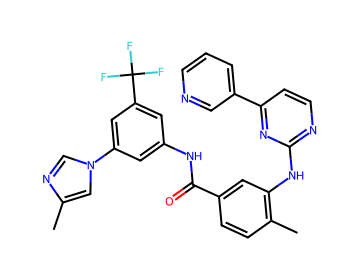
IDENTITY
COMPUTED
PROPERTIES
White to slightly yellowish to slightly greenish yellow powder
The solubility ... in aqueous solutions decreases with increasing pH
2.01e-03 g/L
Solid
pKa1 = 2.1; pKa2 = 5.4
A monohydrate monohydrochloride
GHS
Danger
H361 (69.2%): Suspected of damaging fertility or the unborn child [Warning Reproductive toxicity];H361fd (46.2%): Suspected of damaging fertility; Suspected of damaging the unborn child [Warning Reproductive toxicity];H372 (15.4%): Causes damage to organs through prolonged or repeated exposure [Danger Specific target organ toxicity, repeated exposure];H373 (76.9%): May causes damage to organs through prolonged or repeated exposure [Warning Specific target organ toxicity, repeated exposure];H400 (69.2%): Very toxic to aquatic life [Warning Hazardous to the aquatic environment, acute hazard];H410 (69.2%): Very toxic to aquatic life with long lasting effects [Warning Hazardous to the aquatic environment, long-term hazard];H413 (23.1%): May cause long lasting harmful effects to aquatic life [Hazardous to the aquatic environment, long-term hazard]
P203, P260, P264, P270, P273, P280, P318, P319, P391, P405, and P501 (click each P-code to see the statement)
Aggregated GHS information provided per 13 reports by companies from 8 notifications to the ECHA C&L Inventory. Each notification may be associated with multiple companies.;Information may vary between notifications depending on impurities, additives, and other factors. The percentage value in parenthesis indicates the notified classification ratio from companies that provide hazard codes. Only hazard codes with percentage values above 10% are shown. For more detailed information, please visit ECHA C&L website.
HAZARDS
Status: Active Update: 21-04-2023 https://echa.europa.eu/registration-dossier/-/registered-dossier/34814
The Approved Drug Products with Therapeutic Equivalence Evaluations List identifies currently marketed prescription drug products, including nilotinib hydrochloride monohydrate, approved on the basis of safety and effectiveness by FDA under sections 505 of the Federal Food, Drug, and Cosmetic Act. /Nilotinib hydrochloride monohydrate/
Repr. 2 (69.2%);STOT RE 1 (15.4%);STOT RE 2 (76.9%);Aquatic Acute 1 (69.2%);Aquatic Chronic 1 (69.2%);Aquatic Chronic 4 (23.1%)
/PRECAUTIONS FOR ANTINEOPLASTIC AGENTS:/ Methods for transporting hazardous drugs to the health-care setting should be consistent with environmental protection and national or local regulations for transporting hazardous substances. When hazardous drugs are being transported to the home-care setting, appropriate containers (eg, lined cardboard boxes) and procedures should be used to prevent breakage and contain leakage. ... The drugs must be securely capped or sealed and properly packaged and protected during transport to reduce further the chance of breakage and spillage in a public area such as a corridor or elevator. /Antineoplastic agents/
SAFETY
/PRECAUTIONS FOR ANTINEOPLASTIC AGENTS:/ Spill kits containing all materials needed to clean up spills of hazardous drugs should be assembled or purchased. These kits should be readily available in all areas where hazardous drugs are routinely handled. If hazardous drugs are being prepared or administered in a nonroutine area (home setting or unusual patient-care area), a spill kit should be obtained by the drug handler. The kit should include two pairs of disposable gloves (one outer pair of utility gloves and one inner latex pair); low-permeability, disposable protective garments (coveralls or gown and shoe covers); safety glasses or splash goggles; respirator; absorbent, plastic-backed sheets or spill pads; disposable toweling; at least 2 sealable thick plastic hazardous waste disposal bags (prelabeled with an appropriate warning label); a disposable scoop for collecting glass fragments; and a puncture-resistant container for glass fragments. All individuals who routinely handle hazardous drugs must be trained in proper spill management and cleanup procedures. Spills and breakages must be cleaned up immediately according to the following procedures. If the spill is not located in a confined space, the spill area should be identified and other people should be prevented from approaching and spreading the contamination. Wearing protective apparel from the spill kit, workers should remove any broken glass fragments and place them in the puncture-resistant container. Liquids should be absorbed with a spill pad; powder should be removed with damp disposable gauze pads or soft toweling. The hazardous material should be completely removed and the area rinsed with water and then cleaned with detergent. The spill cleanup should proceed progressively from areas of lesser to greater contamination. The detergent should be thoroughly rinsed and removed. All contaminated materials should be placed in the disposal bags provided and sealed and transported to a designated contain
/PRECAUTIONS FOR ANTINEOPLASTIC AGENTS:/ If hazardous drugs are routinely prepared or administered in carpeted areas, special equipment is necessary to remove the spill. Absorbent powder should be substituted for pads or sheets and left in place on the spill for the time recommended by the manufacturer. The powder should then be picked up with a small vacuum unit reserved for hazardous drug cleanup. The carpet should then be cleaned according to usual procedures. The vacuum bag should be removed and discarded or cleaned, and the exterior of the vacuum cleaner should be washed with detergent and rinsed before being covered and stored. The contaminated powder should be discarded into a sealable plastic bag and segregated with other contaminated waste materials. Alternatively, inexpensive wet or dry vacuum units may be purchased for this express use and used with appropriate cleaners. All such units are contaminated, once used, and must be cleaned, stored, and ultimately discarded /properly/ ... The circumstances and handling of spills should be documented. Health-care personnel exposed during spill management should also complete an incident report or exposure form. /Antineoplastic agents/
/PRECAUTIONS FOR ANTINEOPLASTIC AGENTS:/ All contaminated disposables should be contained in sealable bags for transfer to larger waste containers. /Antineoplastic agents/
/PRECAUTIONS FOR ANTINEOPLASTIC AGENTS:/ If the biological safety cabinets is equipped with a drainpipe and valve, it may be used to collect rinse water. The collection vessel used must fit well around the drain valve and not allow splashing. Gauze may be used around the connection to prevent aerosol from escaping. The collection vessel must have a tight fitting cover, and all rinse water (gauze, if used) must be disposed of as contaminated waste. /Antineoplastic agents/
SRP: Expired or waste pharmaceuticals shall carefully take into consideration applicable DEA, EPA, and FDA regulations. It is not appropriate to dispose by flushing the pharmaceutical down the toilet or discarding to trash. If possible return the pharmaceutical to the manufacturer for proper disposal being careful to properly label and securely package the material. Alternatively, the waste pharmaceutical shall be labeled, securely packaged and transported by a state licensed medical waste contractor to dispose by burial in a licensed hazardous or toxic waste landfill or incinerator.
SRP: At the time of review, regulatory criteria for small quantity disposal are subject to significant revision, however, household quantities of waste pharmaceuticals may be managed as follows: Mix with wet cat litter or coffee grounds, double bag in plastic, discard in trash.
/PRECAUTIONS FOR ANTINEOPLASTIC AGENTS:/ All bottles must be discarded as contaminated waste after decontamination of the biohazard cabinet. All protective apparel (gown, gloves, goggles, and respirator) should be discarded as contaminated waste. /Antineoplastic agents/
/PRECAUTIONS FOR ANTINEOPLASTIC AGENTS:/ The contaminated filters must be removed, bagged in thick plastic and prepared for disposal in a hazardous waste dump site or incinerator licensed by the Environmental Protection Agency (EPA). /Antineoplastic agents/
For more Disposal Methods (Complete) data for Nilotinib (7 total), please visit the HSDB record page.
/PRECAUTIONS FOR ANTINEOPLASTIC AGENTS:/ Accidental contamination of the health-care environment, resulting in exposure of personnel, patients, visitors, and family members to hazardous substances, is prevented by maintaining the physical integrity and security of packages of hazardous drugs. 1. Access to all areas where hazardous drugs are stored is limited to specified authorized staff. 2. A method should be present for identifying to personnel those drugs that require special precautions (eg, cytotoxics). One way to accomplish this is to apply appropriate warning labels to all hazardous drug containers, shelves, and bins where the drug products are stored. ... 3. A method of identifying, for patients and family members, those drugs that require special precautions in the home should be in place. This may be accomplished in the health-care setting, by providing specific labeling for discharge medications, along with written instructions. 4. Methods for identifying shipping cartons of hazardous drugs should be required from manufacturers and distributors of these drugs. 5. Written procedures for handling damaged packages of hazardous drugs should be maintained. Personnel involved in shipping and receiving hazardous drugs should be trained in these procedures, including the proper use of protective garments and equipment. Damaged shipping cartons of hazardous drugs should be received and opened in an isolated area (eg, in a laboratory fume hood, if available, not in a vertical laminar airflow biological safety cabinet used for preparing sterile products). /Antineoplastic agents/
/PRECAUTIONS FOR ANTINEOPLASTIC AGENTS:/ Facilities (eg, shelves, carts, counters, and trays) for storing hazardous drugs are designed to prevent breakage and to limit contamination in the event of leakage. Bins, shelves with barriers at the front, or other design features that reduce the chance of drug containers falling to the floor should be used. Hazardous drugs requiring refrigeration should be stored separately from nonhazardous drugs in individual bins designed to prevent breakage and to contain leakage. /Antineoplastic agents/
/PRECAUTIONS FOR ANTINEOPLASTIC AGENTS:/ Until the reproductive risks (or lack thereof) associated with handling hazardous drugs within a safety program have been substantiated, staff who are pregnant or breast-feeding should be allowed to avoid contact with these drugs. Policies should be in effect that provide these individuals with alternative tasks or responsibilities if they so desire. /Antineoplastic agents/
/PRECAUTIONS FOR ANTINEOPLASTIC AGENTS:/ The pharmacy should provide access to information on toxicity, treatment of acute exposure (if available), chemical inactivators, solubility and stability of hazardous drugs (including investigational agents) used in the workplace. /Antineoplastic agents/
For more Preventive Measures (Complete) data for Nilotinib (19 total), please visit the HSDB record page.
/PRECAUTIONS FOR ANTINEOPLASTIC AGENTS:/ Protective apparel: Disposable closed-front gown or coveralls, disposable utility gloves over disposable latex gloves, NIOSH-approved air-purifying half-mask respirator equipped with a high efficiency filter, and eye protection should be worn. /Antineoplastic agents/
/PRECAUTIONS FOR ANTINEOPLASTIC AGENTS:/ Class 100 clean-air work stations, both horizontal and vertical airflow (with no containment characteristics), are inappropriate engineering controls for handling hazardous drugs because they provide no personnel protection and permit environmental contamination. Although there are no engineering controls designed specifically for the safe handling of hazardous chemicals as sterile products, Class II contained vertical-flow biological safety cabinets (biohazard cabinets) have been adopted for this use. Biohazard cabinetry is, however, designed for the handling of infectious agents, not hazardous chemicals. ... Based on design, ease of use, and cost considerations, Class II contained-vertical-flow biohazard cabinetry is currently recommended for use in preparing sterile doses of hazardous drugs. Class II cabinetry design and performance specifications are defined in NSF Standard 49. Biological safety cabinets selected for use with hazardous drugs should meet NSF Standard 49 specifications to ensure the maximum protection from these engineering controls. /Antineoplastic agents/
/PRECAUTIONS FOR ANTINEOPLASTIC AGENTS:/ Workers should wear powder free, disposable surgical latex gloves of good quality when preparing hazardous drugs. Selection criteria for gloves should include thickness (especially at the fingertips where stress is the greatest), fit, length, and tactile sensation. ... The practice of double gloving is supported by research that indicates that many glove materials vary in drug permeability even within lots; therefore, double gloving is recommended. ... In general, surgical latex gloves fit better, have appropriate elasticity for double gloving and maintaining the integrity of the glove-gown interface, and have sufficient tactile sensation (even during double gloving) for stringent aseptic procedures. ... Powdered gloves should be avoided. /Antineoplastic agents/
/PRECAUTIONS FOR ANTINEOPLASTIC AGENTS:/ Workers who are not protected by the containment environment of a biohazard cabinet should use respiratory protection when handling hazardous drugs. Respiratory protection should be an adjunct to and not a substitute for engineering controls. Surgical masks of all types provide no respiratory protection against powdered or liquid aerosols of hazardous drugs. In situations where workers may be exposed to potential eye contact with hazardous drugs, an appropriate plastic face shield or splash goggles should be worn. /Antineoplastic agents/
/PRECAUTIONS FOR ANTINEOPLASTIC AGENTS:/ During compounding of hazardous drugs (eg, crushing, dissolving, and preparing an ointment), workers should wear low permeability gowns and double gloves. Compounding should take place in a protective area such as a disposable glove box. If compounding must be done in the open, an area away from drafts and traffic must be selected, and the worker should use appropriate respiratory protection. /Antineoplastic agents/
TOXICITY
Single-dose administration of Tasigna with midazolam (a CYP3A4 substrate) to healthy subjects increased midazolam exposure by 30%. Single-dose administration of Tasigna to healthy subjects did not change the pharmacokinetics and pharmacodynamics of warfarin (a CYP2C9 substrate). The ability of Tasigna to induce metabolism has not been determined in vivo. Exercise caution when co-administering Tasigna with substrates for these enzymes that have a narrow therapeutic index.
Nilotinib inhibits human P-glycoprotein. If Tasigna is administered with drugs that are substrates of P-gp, increased concentrations of the substrate drug are likely, and caution should be exercised.
In healthy subjects receiving the CYP3A4 inducer, rifampicin, at 600 mg daily for 12 days, systemic exposure (AUC) to nilotinib was decreased approximately 80%.
In healthy subjects receiving ketoconazole, a CYP3A4 inhibitor, at 400 mg once daily for 6 days, systemic exposure (AUC) to nilotinib was increased approximately 3-fold.
For more Interactions (Complete) data for Nilotinib (8 total), please visit the HSDB record page.
Elevations in serum aminotransferase levels are common during nilotinib therapy, occurring in up to 70% of patients, but rising to greater than 5 times the upper limit of normal (ULN) in only 4% to 9% of recipients. These abnormalities are usually asymptomatic. If levels are markedly elevated (ALT or AST persistently greater than 5 times ULN or bilirubin more than 3 times ULN), dose adjustment or temporary discontinuation and restarting at a lower dose is recommended. In high doses, nilotinib is also associated with elevations in serum bilirubin, but these are largely in the indirect (unconjugated) fraction and are not associated with serum enzyme elevations or symptoms, resolving with dose adjustment or discontinuation. The majority of patients with marked bilirubin elevations on nilotinib therapy have underlying Gilbert Syndrome. There has been only a single published case report of clinically apparent liver injury attributed to nilotinib, but it has been used in a restricted population of patients for a relatively short period of time. The latency to onset was 2 months and the pattern of injury was hepatocellular initially, but evolved into a severe and prolonged cholestatic hepatitis. The product label does mention hepatitis and jaundice as reported adverse events. Severe tumor lysis syndrome with multiorgan including hepatic failure can occur with nilotinib but is rare. In addition, most other tyrosine kinase receptor inhibitors have been linked to rare instances of clinically apparent liver injury, usually arising after 1 to 8 weeks of treatment and presenting with a hepatocellular or mixed pattern of serum enzyme elevations. Immunoallergic and autoimmune features are uncommon. The liver injury can be severe and lead to acute liver failure. Routine monthly monitoring of liver tests during therapy with tyrosine kinase receptor inhibitors is recommended.;Likelihood score: D (possible rare cause of clinically apparent liver injury).
/PRECAUTIONS FOR ANTINEOPLASTIC AGENTS:/ There is no method available for routine monitoring of personnel for evidence of hazardous drug exposure. Tests for the presence of mutagens or chromosomal damage are not drug specific and are of value only in controlled studies. Chemical analysis of urine for the presence of hazardous drugs at the sensitivity level needed to detect occupational exposure is limited to a few drugs and is not yet commercially available. /Antineoplastic agents/
/SIGNS AND SYMPTOMS/ Overdose with nilotinib has been reported, where an unspecified number of Tasigna capsules were ingested in combination with alcohol and other drugs. Events included neutropenia, vomiting, and drowsiness.
/CASE REPORTS/ ... A 30-year-old woman with chronic myeloid leukemia who became pregnant twice successfully /is reported/. Philadelphia-positive CML in its chronic phase was diagnosed at 16 weeks of her first gestation. At that time, she received no treatment throughout her pregnancy. At 38 weeks of gestation, a normal infant was delivered by cesarean section. At six weeks postpartum, the patient underwent imatinib mesylate therapy but she could not tolerate the treatment. The treatment was then changed to nilotinib at 400 mg orally b.i.d. Two years later, she became pregnant again while she was on nilotinib 200 mg b.i.d. The unplanned pregnancy was identified during her 7.4 weeks of gestation. Because the patient elected to continue her pregnancy, nilotinib was stopped immediately, and no further treatment was given until delivery. Neither obstetrical complications nor structural malformations in neonates in both pregnancies were observed. Both babies' growth and development have been normal. Although this experience is limited to a single patient, the success of this patient demonstrates that the management of chronic myeloid leukemia in pregnant women may be individualized based on the relative risks and benefits of the patient and fetus.
/GENOTOXICITY/ Centrosomes play fundamental roles in mitotic spindle organisation, chromosome segregation and maintenance of genetic stability. Recently, /investigators/ have demonstrated that the tyrosine kinase inhibitor imatinib induces centrosome and chromosome aberrations in vitro. Here, /thge authors/ comparatively investigated the effects of imatinib and the more potent successor drug nilotinib on centrosome, mitotic spindle and karyotype status in primary human fibroblasts. Therapeutic doses of imatinib and/or nilotinib administered separately, consecutively or in combination similarly induced centrosome, mitotic spindle, and karyotype aberrations. /This/ data suggest that distinct tyrosine kinases likewise targeted by both drugs are essential actuators in maintenance of centrosome and karyotype integrity.
/ALTERNATIVE and IN VITRO TESTS/ In vitro studies indicate that nilotinib inhibits CYP isoenzymes 3A4, 2C8, 2C9, and 2D6; the drug also inhibits uridine diphosphate-glucuronosyltransferase (UGT) 1A1 and P-glycoprotein.In addition, in vitro studies suggest that nilotinib induces CYP isoenzymes 2B6, 2C8, and 2C9.
For more Human Toxicity Excerpts (Complete) data for Nilotinib (6 total), please visit the HSDB record page.
/LABORATORY ANIMALS: Developmental or Reproductive Toxicity/ In a study where male and female rats were treated with nilotinib at oral doses of 20-180 mg/kg/day (approximately 1-6.6 fold the AUC in patients at the dose of 400 mg twice daily) during the pre-mating and mating periods and then mated, and dosing of pregnant rats continued through gestation Day 6, nilotinib increased post-implantation loss and early resorption, and decreased the number of viable fetuses and litter size at all doses tested.
/LABORATORY ANIMALS: Developmental or Reproductive Toxicity/ There were no effects on male or female rat and female rabbit mating or fertility at doses up to 180 mg/kg in rats (approximately 4-7 fold for males and females, respectively, the AUC in patients at the dose of 400 mg twice daily) or 300 mg/kg in rabbits (approximately one-half the AUC in patients at the dose of 400 mg twice daily).
/LABORATORY ANIMALS: Developmental or Reproductive Toxicity/ When pregnant rats were dosed with nilotinib during organogenesis and through lactation, the adverse effects included a longer gestational period, lower pup body weights until weaning and decreased fertility indices in the pups when they reached maturity, all at a maternal dose of 360 mg/sq m (approximately 0.7 times the clinical dose of 400 mg twice daily based on body surface area). At doses up to 120 mg/sq m (approximately 0.25 times the clinical dose of 400 mg twice daily based on body surface area) no adverse effects were seen in the maternal animals or the pups.
/LABORATORY ANIMALS: Developmental or Reproductive Toxicity/ Nilotinib was studied for effects on embryo-fetal development in pregnant rats and rabbits given oral doses of 10, 30, 100 mg/kg/day, and 30, 100, 300 mg/kg/day, respectively, during organogenesis. In rats, nilotinib at doses of 100 mg/kg/day (approximately 5.7 times the AUC in patients at the dose of 400 mg twice daily) was associated with maternal toxicity (decreased gestation weight, gravid uterine weight, net weight gain, and food consumption). Nilotinib at doses greater than or equal to 30 mg/kg/day (approximately 2 times the AUC in patients at the dose of 400 mg twice daily) resulted in embryo-fetal toxicity as shown by increased resorption and post-implantation loss, and at 100 mg/kg/day a decrease in viable fetuses. In rabbits, maternal toxicity at 300 mg/kg/day (approximately one-half the human exposure based on AUC) was associated with mortality, abortion, decreased gestation weights and decreased food consumption. Embryonic toxicity (increased resorption) and minor skeletal anomalies were observed at a dose of 300 mg/kg/day. Nilotinib is not considered teratogenic.
For more Non-Human Toxicity Excerpts (Complete) data for Nilotinib (6 total), please visit the HSDB record page.
Tasigna prolongs the QT interval. Sudden deaths have been reported in patients receiving nilotinib. Tasigna should not be used in patients with hypokalemia, hypomagnesemia, or long QT syndrome. Hypokalemia or hypomagnesemia must be corrected prior to Tasigna administration and should be periodically monitored. Drugs known to prolong the QT interval and strong CYP3A4 inhibitors should be avoided. Patients should avoid food 2 hours before and 1 hour after taking dose. A dose reduction is recommended in patients with hepatic impairment. ECGs should be obtained to monitor the QTc at baseline, seven days after initiation, and periodically thereafter, as well as following any dose adjustments.
A pharmacogenetic analysis of 97 patients that evaluated the polymorphisms of UGT1A1 and its potential association with hyperbilirubinemia during nilotinib treatment found that the (TA)7/(TA)7 genotype was associated with an increase in the risk of hyperbilirubinemia relative to the (TA)6/(TA)6 and (TA)6/(TA)7 genotypes.The largest increases in bilirubin were observed in patients with the (TA)7/(TA)7 genotype (UGT1A1*28).
/PRECAUTIONS FOR ANTINEOPLASTIC AGENTS:/ The danger to health-care personnel from handling a hazardous drug stems from a combination of its inherent toxicity and the extent to which workers are exposed to the drug in the course of carrying out their duties. This exposure may be through inadvertent ingestion of the drug on foodstuffs (eg, workers' lunches), inhalation of drug dusts or droplets or direct skin contact. /Antineoplastic agents/
/SRP:/ Immediate first aid: Ensure that adequate decontamination has been carried out. If patient is not breathing, start artificial respiration, preferably with a demand valve resuscitator, bag-valve-mask device, or pocket mask, as trained. Perform CPR if necessary. Immediately flush contaminated eyes with gently flowing water. Do not induce vomiting. If vomiting occurs, lean patient forward or place on the left side (head-down position, if possible) to maintain an open airway and prevent aspiration. Keep patient quiet and maintain normal body temperature. Obtain medical attention. /Poisons A and B/
/SRP:/ Basic treatment: Establish a patent airway (oropharyngeal or nasopharyngeal airway, if needed). Suction if necessary. Watch for signs of respiratory insufficiency and assist ventilations if needed. Administer oxygen by nonrebreather mask at 10 to 15 L/min. Monitor for pulmonary edema and treat if necessary ... . Monitor for shock and treat if necessary ... . Anticipate seizures and treat if necessary ... . For eye contamination, flush eyes immediately with water. Irrigate each eye continuously with 0.9% saline (NS) during transport ... . Do not use emetics. For ingestion, rinse mouth and administer 5 mL/kg up to 200 mL of water for dilution if the patient can swallow, has a strong gag reflex, and does not drool ... . Cover skin burns with dry sterile dressings after decontamination ... . /Poisons A and B/
/SRP:/ Advanced treatment: Consider orotracheal or nasotracheal intubation for airway control in the patient who is unconscious, has severe pulmonary edema, or is in severe respiratory distress. Positive-pressure ventilation techniques with a bag valve mask device may be beneficial. Consider drug therapy for pulmonary edema ... . Consider administering a beta agonist such as albuterol for severe bronchospasm ... . Monitor cardiac rhythm and treat arrhythmias as necessary ... . Start IV administration of D5W /SRP: "To keep open", minimal flow rate/. Use 0.9% saline (NS) or lactated Ringer's if signs of hypovolemia are present. For hypotension with signs of hypovolemia, administer fluid cautiously. Watch for signs of fluid overload ... . Treat seizures with diazepam or lorazepam ... . Use proparacaine hydrochloride to assist eye irrigation ... . /Poisons A and B/
◉ Summary of Use during Lactation;Although the amount of nilotinib in milk appears to be small and one breastfed infant apparently experienced no adverse effects during maternal use of nilotinib, no long-term data are available. Because nilotinib is 98% bound to plasma proteins, the amounts in milk are likely to be low. However, there is little published experience with nilotinib during breastfeeding, and an alternate drug may be preferred, especially while nursing a newborn or preterm infant. National Comprehensive Cancer Network guidelines recommend avoiding breastfeeding during nilotinib therapy and the manufacturer recommends withholding breastfeeding until 2 weeks following the last dose.;◉ Effects in Breastfed Infants;A woman with chronic myeloid leukemia received nilotinib (dosage not stated) for 20 months before pregnancy, throughout pregnancy and continuing during 9 months of breastfeeding (extent not stated). No adverse reactions were reported in her breastfed infant.;◉ Effects on Lactation and Breastmilk;Relevant published information was not found as of the revision date.
REGULATORY
Status: Active Update: 21-04-2023 https://echa.europa.eu/registration-dossier/-/registered-dossier/34814
The Approved Drug Products with Therapeutic Equivalence Evaluations List identifies currently marketed prescription drug products, including nilotinib hydrochloride monohydrate, approved on the basis of safety and effectiveness by FDA under sections 505 of the Federal Food, Drug, and Cosmetic Act. /Nilotinib hydrochloride monohydrate/
PHARMACOLOGY
L01XE08
L - Antineoplastic and immunomodulating agents;L01 - Antineoplastic agents;L01E - Protein kinase inhibitors;L01EA - Bcr-abl tyrosine kinase inhibitors;L01EA03 - Nilotinib
QL - Antineoplastic and immunomodulating agents;QL01 - Antineoplastic agents;QL01E - Protein kinase inhibitors;QL01EA - Bcr-abl tyrosine kinase inhibitors;QL01EA03 - Nilotinib
L01EA03
Nilotinib is a transduction inhibitor that targets BCR-ABL, c-kit and PDGF, for the potential treatment of various leukemias, including chronic myeloid leukemia (CML).
Chronic myelogenous leukaemia (CML) is caused by the BCR-ABL oncogene. Nilotinib inhibits the tyrosine kinase activity of the BCR-ABL protein. Nilotinib fits into the ATP-binding site of the BCR-ABL protein with higher affinity than imatinib, over-riding resistance caused by mutations. The ability of AMN107 to inhibit TEL-platelet-derived growth factor receptor-beta (TEL-PDGFRbeta), which causes chronic myelomonocytic leukaemia, and FIP1-like-1-PDGFRalpha, which causes hypereosinophilic syndrome, suggests potential use of AMN107 for myeloproliferative diseases characterised by these kinase fusions (Stover et al, 2005; Weisberg et al, 2005). AMN107 also inhibits the c-Kit receptor kinase, including the D816V-mutated variant of KIT, at pharmacologically achievable concentrations, supporting potential utility in the treatment of mastocytosis, and gastrointestinal stromal tumours (Weisberg et al, 2005; von Bubnoff et al, 2005; Gleixner et al, 2006).
Nilotinib, an inhibitor of Bcr-Abl tyrosine kinase, is an antineoplastic agent. Chronic myelogenous leukemia (CML) is a clonal myeloproliferative disorder characterized by the expansion of hematopoietic cells carrying the Philadelphia chromosome (Ph), resulting from a reciprocal translocation of the long arms of chromosomes 9 and 22. A novel fusion gene is formed, Bcr-Abl, which encodes a constitutively active, cytoplasmic form of protein tyrosine kinase. The unregulated activity of the Abl tyrosine kinase in Bcr-Abl is the cause of CML. Nilotinib is an orally active aminopyrimidine-derivative tyrosine kinase inhibitor that functions through competitive inhibition at the ATP-binding site of Bcr-Abl, leading to the inhibition of tyrosine phosphorylation of proteins that are involved in the intracellular signal transduction that Bcr-Abl mediates.
Clinical resistance to imatinib in CML has been attributed to several mechanisms, but point mutations in the Bcr-Abl kinase domain appear to the most common, occurring in 30-90% of patients who develop resistance. The ability of nilotinib to overcome imatinib resistance resulting from Bcr-Abl kinase domain mutations has been demonstrated in vitro. In preclinical studies in cell-line models, nilotinib inhibited most (32 of 33) imatinib-resistant Bcr-Abl kinase domain mutant forms.
Nilotinib binds to and stabilizes the inactive conformation of the kinase domain of Abl protein. In vitro, nilotinib inhibited Bcr-Abl mediated proliferation of murine leukemic cell lines and human cell lines derived from patients with Ph+ CML. Under the conditions of the assays, nilotinib was able to overcome imatinib resistance resulting from Bcr-Abl kinase mutations, in 32 out of 33 mutations tested. In vivo, nilotinib reduced the tumor size in a murine Bcr-Abl xenograft model. Nilotinib inhibited the autophosphorylation of the following kinases at IC50 values as indicated: Bcr-Abl (20-60 nM), PDGFR (69 nM), c-Kit (210 nM), CSF-1R (125-250 nM) and DDR (3.7 nM).
It is an important challenge to better understand the mechanisms of tyrosine kinase inhibitors-induced apoptosis in CML cells. Thus, /the authors/ have investigated how this apoptosis can be modulated by extracellular factors. Apoptosis induced by imatinib and nilotinib was determined in BCR-ABL expressing cell lines and primary CML CD34+ cells. Both molecules induced apoptosis of BCR-ABL expressing cells. This apoptosis was inhibited by protein synthesis inhibition in both K562 and CML CD34+ cells. In K562, 80% inhibition of the BCR-ABL auto-phosphorylation by either imatinib or nilotinib induced a two fold increase in Bim-EL expression and induction of apoptosis in 48 hr. Bim accumulation preceded apoptosis induction which was completely abolished by depletion in Bim using shRNA. However, the anti-proliferative effect of imatinib was preserved in Bim-depleted cells. When K562 cells were cultured in a cytokine containing medium, the pro-apoptotic effect of nilotinib was decreased by 68% and this was related to a decrease in Bim-EL dephosphorylation and accumulation. Similarly, the presence of a combination of cytokines inhibited 88% of NIL- and 39% of IMA-induced apoptosis in primary CML CD34+ cells. In conclusion, both nilotinib and imatinib induce apoptosis through Bim accumulation independently of cell cycle arrest. However, the pro-apoptotic effect of both molecules can be attenuated by the presence of cytokines and growth factors, particularly concerning nilotinib. Thus BCR-ABL inhibition restores the cytokine dependence but is not sufficient to induce apoptosis when other signaling pathways are activated.
For more Mechanism of Action (Complete) data for Nilotinib (7 total), please visit the HSDB record page.
15 hours
The apparent elimination half-life estimated from the multiple dose pharmacokinetic studies with daily dosing was approximately 17 hours.
... The calculated half-life t((1/2)) following multiple daily dosing was approximately 17 hours.
... Nilotinib is metabolized in the liver via oxidation and hydroxylation pathways, mediated primarily by the cytochrome P450 3A4 isozyme. Interpatient variability in systemic exposure to nilotinib has been reported to range from 32% to 64%. ...
Nilotinib is extensively metabolized by the cytochrome P-450 (CYP) microsomal enzyme system, principally by the isoenzyme 3A4. Nilotinib is the principal circulating component in the serum, and none of the metabolites substantially contribute to the pharmacologic activity of the drug.
F41401512X
NILOTINIB
Established Pharmacologic Class [EPC] - Kinase Inhibitor
Mechanisms of Action [MoA] - Bcr-Abl Tyrosine Kinase Inhibitors
Mechanisms of Action [MoA] - Cytochrome P450 2C8 Inhibitors
Mechanisms of Action [MoA] - Cytochrome P450 2D6 Inhibitors
Protein kinase inhibitors that inhibit TYROSINE PROTEIN KINASES.
Orally available
... On pharmacokinetic analysis, T(max) was 3 hours.
Steady-state nilotinib exposure was dose-dependent with less than dose-proportional increases in systemic exposure at dose levels higher than 400 mg given as once daily dosing. Daily serum exposure to nilotinib following 400 mg twice daily dosing at steady state was 35% higher than with 800 mg once daily dosing. Steady state exposure (AUC) of nilotinib with 400 mg twice daily dosing was 13% higher than with 300 mg twice daily dosing. The average steady state nilotinib trough and peak concentrations did not change over 12 months. There was no relevant increase in exposure to nilotinib when the dose was increased with 400 mg twice daily to 600 mg twice daily.
Inter-patient variability in nilotinib AUC was 32% to 64%. Steady state conditions were achieved by Day 8. An increase in serum exposure to nilotinib between the first dose and steady state was approximately 2-fold for daily dosing and 3.8-fold for twice-daily dosing.
The blood-to-serum ratio of nilotinib is 0.68. Serum protein binding is approximately 98% on the basis of in vitro experiments.
For more Absorption, Distribution and Excretion (Complete) data for Nilotinib (8 total), please visit the HSDB record page.
Cytoplasm;Membrane
Nilotinib Inhibition of BCR-ABL
USES
MEDICATION
Use (kg; approx.) in Germany (2009): >75;Consumption (g per capita; approx.) in Germany (2009): 0.000916;Calculated removal (%): 78
Nilotinib preparations: (AHFS, 2010):;Table: Nilotinib preparations: (AHFS, 2010): [Table#7583]
Tasigna
ALIASES
REACTIONS
uspto-grants-2014_09 · 10.6084/m9.figshare.5104873.v1 · US08829015B2
查看
uspto-grants-2014_09 · 10.6084/m9.figshare.5104873.v1 · US08829015B2
查看
uspto-grants-2014_09 · 10.6084/m9.figshare.5104873.v1 · US08829015B2
查看
uspto-grants-2014_09 · 10.6084/m9.figshare.5104873.v1 · US08829015B2
查看
uspto-grants-2014_09 · 10.6084/m9.figshare.5104873.v1 · US08829015B2
查看
uspto-grants-2014_09 · 10.6084/m9.figshare.5104873.v1 · US08829015B2
查看
uspto-grants-2015_01 · 10.6084/m9.figshare.5104873.v1 · US08937082B2
查看
uspto-grants-2015_01 · 10.6084/m9.figshare.5104873.v1 · US08937082B2
查看