
39k HTE dataset from Pfizer · 10.1038/s41557
查看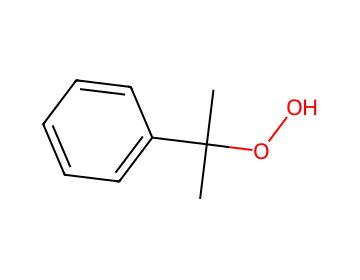
IDENTITY
COMPUTED
PROPERTIES
2.16
1.03 at 77 °F (USCG, 1999) - Denser than water; will sink
1.03 g/cu cm at 20 °C
Relative density (water = 1): 1.06
1.06 @ 20°C
Colorless to pale-yellow liq
Colorless liquid
less than 0.1 mg/mL at 64 °F (NTP, 1992)
In water, 1.39X10+4 mg/L at 25 °C
Slightly soluble in water
Readily soluble in alcohol, acetone, esters, hydrocarbons, and chlorinated hydrocarbons.
Soluble in ether
Solubility in water, g/100ml: 1.5
Reactive with metal-containing materials.
135 °F (NTP, 1992)
79 °C
175 °F (79 °C) (Closed cup)
79 °C c.c.
Decomposes at 261 °F (NTP, 1992)
153 °C
BP: Decomposes at 1 atm
153 °C @760 [mm Hg]
At concentrations of 91 and 95%, cumene hydroperoxide decomposed violently at about 150 °C.
Above 125 °C principal hazard is phenol formation. Other compounds which have been reported to be formed are 2-phenyl, 2-hydroxypropane acetophenone.
When heated to decomposition it emits acrid smoke and fumes.
Contaminants may catalyze decomposition at lower temperatures.
Violent decomposition on contact with cobalt, copper, copper alloys, lead alloys, minral acids.
less than -40 °F (NTP, 1992)
-9 °C
5 (NTP, 1992) - Heavier than air; will sink (Relative to Air)
Relative vapor density (air = 1): 5.4
0.6 mmHg at 68 °F (for 80-85% by weight) (NTP, 1992)
0.00327 [mmHg]
3.27X10⁻³ mm Hg at 25 °C
Vapor pressure, Pa at 20 °C: 32
2.8X10⁻² N/m at 264 K
GHS
Danger
H242: Heating may cause a fire [Danger Self-reactive substances and mixtures; Organic peroxides];H302: Harmful if swallowed [Warning Acute toxicity, oral];H312: Harmful in contact with skin [Warning Acute toxicity, dermal];H314: Causes severe skin burns and eye damage [Danger Skin corrosion/irritation];H331: Toxic if inhaled [Danger Acute toxicity, inhalation];H373 **: May causes damage to organs through prolonged or repeated exposure [Warning Specific target organ toxicity, repeated exposure];H411: Toxic to aquatic life with long lasting effects [Hazardous to the aquatic environment, long-term hazard]
P210, P234, P235, P240, P260, P261, P264, P270, P271, P273, P280, P301+P317, P301+P330+P331, P302+P352, P302+P361+P354, P304+P340, P305+P354+P338, P316, P317, P319, P321, P330, P362+P364, P363, P370+P378, P391, P403, P403+P233, P405, P410, P411, P420, and P501 (click each P-code to see the statement)
Danger
HAZARDS
Chemical: Hydroperoxide, 1-methyl-1-phenylethyl
Hydroperoxide, 1-methyl-1-phenylethyl is listed on the EPA's Chemical Data Reporting (CDR) system. Manufacturers and importers of Hydroperoxide, 1-methyl-1-phenylethyl are required to report information about their production and use of this chemical to the EPA under the Toxic Substances Control Act (TSCA). (40 eCFR Part 711)
Status: Active Update: 30-11-2022 https://echa.europa.eu/registration-dossier/-/registered-dossier/15026
Hydroperoxide, 1-methyl-1-phenylethyl 90-98%, cumene 2-10%: HSNO Approval: HSR001368 Approved with controls
The New Jersey Worker and Community Right to Know Act requires public and private employers to provide information about hazardous substances at their workplaces. (N.J.S.A. 34:5A-1 et. seq.)
IMAP assessments - Selected organic hydroperoxides: Human health tier II assessment
Organic Peroxide
Special Hazards of Combustion Products: Toxic phenol vapors may form from hot material.;Behavior in Fire: May decompose violently when heated. Burning rate becomes more rapids as fire burns. (USCG, 1999)
Combustible. Above 79 °C explosive vapour/air mixtures may be formed. Risk of fire and explosion on contact with organic materials or reducing agents.
Flammable when exposed to heat or flame.
Inhalation of vapor causes headache and burning throat. Liquid causes severe irritation of eyes; on skin, causes burning, throbbing sensation, irritation, and blisters. Ingestion causes irritation of mouth and stomach. (USCG, 1999)
Highly corrosive to skin; [Quick CPC] A corrosive substance that can cause pulmonary edema; [ICSC] Rats exposed to 31.5 ppm for seven 5-hr periods had lacrimation, labored breathing, tremors, and histological evidence of lung damage. [AIHA]
Cumene hydroperoxide is an indirect food additive for use only as a component of adhesives.
Peroxides, Organic
Symbol: O, T, N; R: 7-21/22-23-34-48/20/22-51/53; S: (1/2)-3/7-14-36/37/39-45-50-61
UN Hazard Class: 5.2
Preliminary 2D Animation of Events Leading to 2017 Fire at Arkema Chemical Plant in Crosby, Texas.[U.S. Chemical Safety Board; Preliminary 2D Animation of Events Leading to 2017 Fire at Arkema Chemical Plant in Crosby, Texas; Available from, as of November 27, 2017: http://www.csb.gov/videos/preliminary-2d-animation-of-events-leading-to-2017-fire-at-arkema-chemical-plant-in-crosby-texas/]
ITC/USEPA; Information Review #131 Cumene Hydroperoxide (1980)
Aringer L; Criteria Document for Exposure Limits-Benzoyl Peroxide, Cyclohexanone Peroxide, Dicumyl Peroxide, Methyl Ethyl Ketone Peroxide. Arbetarskyddsstyrelsen, Publikationsservice, 171 84 Solna, Sweden 64pp. (1985)
SAFETY
Fire Extinguishing Agents Not to Be Used: Water may be ineffective.;Fire Extinguishing Agents: Foam, dry chemical, or carbon dioxide (USCG, 1999)
Use water spray, powder, alcohol-resistant foam, carbon dioxide. In case of fire: keep drums, etc., cool by spraying with water. Combat fire from a sheltered position.
Fresh air, rest. Half-upright position. Artificial respiration may be needed. Refer for medical attention.
First rinse with plenty of water for at least 15 minutes, then remove contaminated clothes and rinse again. Refer for medical attention .
First rinse with plenty of water for several minutes (remove contact lenses if easily possible), then refer for medical attention.
Rinse mouth. Give one or two glasses of water to drink. Do NOT induce vomiting. Refer for medical attention .
EYES: First check the victim for contact lenses and remove if present. Flush victim's eyes with water or normal saline solution for 20 to 30 minutes while simultaneously calling a hospital or poison control center. Do not put any ointments, oils, or medication in the victim's eyes without specific instructions from a physician. IMMEDIATELY transport the victim after flushing eyes to a hospital even if no symptoms (such as redness or irritation) develop.;SKIN: IMMEDIATELY flood affected skin with water while removing and isolating all contaminated clothing. Gently wash all affected skin areas thoroughly with soap and water. IMMEDIATELY call a hospital or poison control center even if no symptoms (such as redness or irritation) develop. IMMEDIATELY transport the victim to a hospital for treatment after washing the affected areas.;INHALATION: IMMEDIATELY leave the contaminated area; take deep breaths of fresh air. IMMEDIATELY call a physician and be prepared to transport the victim to a hospital even if no symptoms (such as wheezing, coughing, shortness of breath, or burning in the mouth, throat, or chest) develop. Provide proper respiratory protection to rescuers entering an unknown atmosphere. Whenever possible, Self-Contained Breathing Apparatus (SCBA) should be used; if not available, use a level of protection greater than or equal to that advised under Protective Clothing.;INGESTION: DO NOT INDUCE VOMITING. Corrosive chemicals will destroy the membranes of the mouth, throat, and esophagus and, in addition, have a high risk of being aspirated into the victim's lungs during vomiting which increases the medical problems. If the victim is conscious and not convulsing, give 1 or 2 glasses of water to dilute the chemical and IMMEDIATELY call a hospital or poison control center. IMMEDIATELY transport the victim to a hospital. If the victim is convulsing or unconscious, do not give anything by mouth, ensure that the victim's airway is open and lay the victim on his/her side with the head lower than the body. DO NOT INDUCE VOMITING. Transport the victim IMMEDIATELY to a hospital. (NTP, 1992)
Separated from combustible substances, reducing agents, mineral acids and food and feedstuffs. Cool. Dry. Store in an area without drain or sewer access.
Fight fires from explosion-resistant location. In advanced or massive fires, area should be evacuated. If fire occurs in vicinity of ... material, water should be used to keep containers cool. Clean-up and salvage ... should not be attempted until all of peroxide has cooled completely.
In case of fire, water should be applied by the sprinkler system or by hose from a safe distance, preferably with a fog nozzle. Foam may be necessary instead if the peroxide is diluted in a low density flammable solvent. Portable extinguishers should not be used except for very small fires. Peroxides threatened by fire should be wetted from a safe distance for cooling. /Peroxides, Organic and Inorganic/
To fight fire, use foam, CO2, dry chemicals.
... Spilled material should be absorbed (after extinguishment in case of fire) with noncombustible absorbent, such as vermiculite, sweep up and place in plastic container for immediate disposal. Do not use spark-generating metals or cellulosic materials ... for ... handling spilled materials.
Spills on water body: if the spill occurs on a large flowing water body, collect the chemical by booming, skimming, and dredging.
Spills should be cleaned up promptly using non-sparking tools and an inert, moist diluent such as vermiculite or sand. Sweepings may be placed in open containers or polyethylene bags and the area washed with water and detergent. Spilled, contaminated, waste or questionable peroxides should be destroyed. /Peroxides, Organic and Inorganic/
Most peroxides can be hydrolyzed by adding them slowly with stirring to about ten times their weight of cold 10% sodium hydroxide solution. The reaction may require several hours. /Peroxides, Organic and Inorganic/
Potentially Incompatible Absorbents: Use caution: Liquids with this reactive group classification have been known to react with ... cellulose-based absorbents /and/ expanded polymeric absorbents.
Excerpt from ERG Guide 145 [Organic Peroxides (Heat and Contamination Sensitive)]:;ELIMINATE all ignition sources (no smoking, flares, sparks or flames) from immediate area. Keep combustibles (wood, paper, oil, etc.) away from spilled material. Do not touch damaged containers or spilled material unless wearing appropriate protective clothing. Keep substance wet using water spray. Stop leak if you can do it without risk.;SMALL SPILL: Pick up with inert, damp, non-combustible material using clean, non-sparking tools and place into loosely covered plastic containers for later disposal.;LARGE SPILL: Wet down with water and dike for later disposal. Prevent entry into waterways, sewers, basements or confined areas. DO NOT CLEAN-UP OR DISPOSE OF, EXCEPT UNDER SUPERVISION OF A SPECIALIST. (ERG, 2024)
Generators of waste (equal to or greater than 100 kg/mo) containing this contaminant, EPA hazardous waste number U096, must conform with USEPA regulations in storage, transportation, treatment and disposal of waste.
Cumene hydroperoxide is a good candidate for incineration by liquid injection incineration with a temperature range of 650 to 1,600 °C and a residence time of 0.1 to 2 seconds. It is also a good candidate for rotary kiln incineration, with a temperature range of 820 to 1600 °C and a residence time of seconds, and fluidized bed incineration, with a temperature range of 450 to 980 °C and a residence time of seconds.
Organic peroxides should never be flushed down the drain. /Organic peroxides/
Personal protection: chemical protection suit including self-contained breathing apparatus. Do NOT let this chemical enter the environment. Collect leaking liquid in sealable plastic containers. Absorb remaining liquid in sand or inert absorbent. Then store and dispose of according to local regulations. Do NOT absorb in saw-dust or other combustible absorbents.
SRP: The scientific literature for the use of contact lenses by industrial workers is inconsistent. The benefits or detrimental effects of wearing contact lenses depend not only upon the substance, but also on factors including the form of the substance, characteristics and duration of the exposure, the uses of other eye protection equipment, and the hygiene of the lenses. However, there may be individual substances whose irritating or corrosive properties are such that the wearing of contact lenses would be harmful to the eye. In those specific cases, contact lenses should not be worn. In any event, the usual eye protection equipment should be worn even when contact lenses are in place.
Excerpt from ERG Guide 145 [Organic Peroxides (Heat and Contamination Sensitive)]:;IMMEDIATE PRECAUTIONARY MEASURE: Isolate spill or leak area in all directions for at least 50 meters (150 feet) for liquids and at least 25 meters (75 feet) for solids.;LARGE SPILL: Consider initial evacuation for at least 250 meters (800 feet) in all directions.;FIRE: If tank, rail tank car or highway tank is involved in a fire, ISOLATE for 800 meters (1/2 mile) in all directions; also, consider initial evacuation for 800 meters (1/2 mile) in all directions. (ERG, 2024)
Wear face shield or eye protection in combination with breathing protection.
TOXICITY
In recent years, considerable efforts have been made to identify new chemopreventive agents which could be useful for man. Myrica nagi, a subtropical shrub, has been shown to possess significant activity against hepatotoxicity and other pharmacological and physiological disorders. We have shown a chemopreventive effect of Myrica nagi on cumene hydroperoxide-induced cutaneous oxidative stress and toxicity in mice. Cumene hydroperoxide treatment at a dose level of 30 mg/animal/0.2 mL acetone enhances susceptibility of cutaneous microsomal membrane for iron-ascorbate-induced lipid peroxidation and induction of xanthine oxidase activity which are accompanied by decrease in the activities of cutaneous antioxidant enzymes such as catalase, glutathione peroxidase, glutathione reductase, glucose-6-phosphate dehydrogenase and depletion in the level of cutaneous glutathione. Parallel to these changes a sharp decrease in the activities of phase II metabolizing enzymes such as glutathione S-transferase and quinone reductase has been observed. Application of Myrica nagi at doses of 2.0 mg and 4.0 mg/kg body weight in acetone prior to that of cumene hydroperoxide (30 mg/animal/0.2 mL acetone) treatment resulted in significant inhibition of cumene hydroperoxide-induced cutaneous oxidative stress and toxicity in a dose-dependent manner. Enhanced susceptibility of cutaneous microsomal membrane for lipid peroxidation induced by iron ascorbate and xanthine oxidase activities were significantly reduced (p<0.05). In addition the depleted level of glutathione, the inhibited activities of antioxidants, and phase II metabolizing enzymes were recovered to a significant level (p<0.05). The protective effect of Myrica nagi was dose-dependent. In summary our data suggest that Myrica nagi is an effective chemopreventive agent in skin and capable of ameliorating cumene hydroperoxide-induced cutaneous oxidative stress and toxicity.
In the present study, we evaluated the sensitivity of different Escherichia coli strains to Cumene hydroperoxide (CHP) treatment under distinct conditions of Fe2+ availability. Our results showed that the pretreatment with an iron chelator (dipyridyl) protects all the tested strains against CHP toxic effects, but it was not sufficient to abolish the CHP induced mutagenesis. On the other hand, simultaneous pretreatment with both dipyridyl and neocuproine (copper chelator) leads to a complete protection against CHP mutagenic effects. Our data suggest the participation of copper ion in the CHP mutagenesis induced in E. coli.
Organic peroxides are widely used in the chemical industry as initiators of oxidation for the production of polymers and fiber-reinforced plastics, in the manufacture of polyester resin coatings, and pharmaceuticals. Free radical production is considered to be one of the key factors contributing to skin tumor promotion by organic peroxides. In vitro experiments have demonstrated metal-catalyzed formation of alkoxyl, alkyl, and aryl radicals in keratinocytes incubated with cumene hydroperoxide. The present study investigated in vivo free radical generation in lipid extracts of mouse skin exposed to cumene hydroperoxide. The electron spin resonance (ESR) spin-trapping technique was used to detect the formation of alpha-phenyl-N-tert-butylnitrone (PBN) radical adducts, following intradermal injection of 180 mg/kg PBN. It was found that 30 min after topical exposure, cumene hydroperoxide (12 mmol/kg) induced free radical generation in the skin of female Balb/c mice kept for 10 weeks on vitamin E-deficient diets. In contrast, hardly discernible radical adducts were detected when cumene hydroperoxide was applied to the skin of mice fed a vitamin E-sufficient diet. Importantly, total antioxidant reserve and levels of GSH, ascorbate, and vitamin E decreased 34%, 46.5%. 27%, and 98%, respectively, after mice were kept for 10 weeks on vitamin E-deficient diet. PBN adducts detected by ESR in vitamin E-deficient mice provide direct evidence for in vivo free radical generation in the skin after exposure to cumene hydroperoxide.
Hemidesmus indicus has been shown to possess significant activity against immunotoxicity and other pharmacological and physiological disorders. In this communication, we have shown the modulating effect of H. indicus on cumene hydroperoxide-mediated cutaneous oxidative stress and tumor promotion response in murine skin. Cumene hydroperoxide treatment (30 mg per animal) increased cutaneous microsomal lipid peroxidation and induction of xanthine oxidase activity which are accompanied by decrease in the activities of cutaneous antioxidant enzymes and depletion in the level of glutathione. Parallel to these changes a sharp decrease in the activities of phase II metabolizing enzymes was observed. Cumene hydroperoxide treatment also induced the ornithine decarboxylase activity and enhanced the [(3)H]-thymidine uptake in DNA synthesis in murine skin. Application of ethanolic extract of H. indicus at a dose level of 1.5 and 3.0 mg/kg body weight in acetone prior to that of cumene hydroperoxide treatment resulted in significant inhibition of cumene hydroperoxide-induced cutaneous oxidative stress, epidermal ornithine decarboxylase activity and enhanced DNA synthesis in a dose-dependent manner. Enhanced susceptibility of cutaneous microsomal membrane for lipid peroxidation and xanthine oxidase activity were significantly reduced (p<0.01). In addition the depleted level of glutathione, inhibited activities of antioxidants and phase II metabolizing enzymes were recovered to significant level (p<0.05). In summary, our data suggest that H. indicus is an effective chemopreventive agent in skin and capable of ameliorating hydroperoxide-induced cutaneous oxidative stress and tumor promotion.
For more Interactions (Complete) data for Cumene hydroperoxide (12 total), please visit the HSDB record page.
LC50; Species: Daphnia magna (Water Flea) age <=24 hr; Conditions: freshwater, static, 20-22 °C, pH 7.6-7.7; Concentration: 16000 ug/L for 24 hr /formulation/
TERRESTRIAL FATE: Based on a classification scheme(1), an estimated Koc value of 2000(SRC), determined from a structure estimation method(2), indicates that cumene hydroperoxide is expected to have low mobility in soil(SRC). Volatilization of cumene hydroperoxide from moist soil surfaces is not expected(SRC) given an estimated Henry's Law constant of 4.7X10⁻⁸ atm-cu m/mole(SRC), based upon its vapor pressure, 3.27X10⁻³ mm Hg(3), and water solubility, 13,900 mg/L(4). Cumene hydroperoxide is not expected to volatilize from dry soil surfaces(SRC) based upon its vapor pressure(3). A 0% of Theoretical BOD using activated sludge in the Japanese MITI test(5) suggests that biodegradation is not an important environmental fate process in soil(SRC). However, hydroperoxides react with a variety of compounds and are reduced readily to the corresponding alcohols(6). They are decomposed readily by multivalent metal ions, are photo- and thermally-sensitive and undergo initial oxygen-oxygen bond homolysis, and they are readily attacked by free radicals, undergoing induced and self-induced decomposition(6). Therefore, chemical degradation is expected to be the dominant fate process in soil(SRC).
AQUATIC FATE: Based on a classification scheme(1), an estimated Koc value of 2000(SRC), determined from a structure estimation method(2), indicates that cumene hydroperoxide is expected to adsorb to suspended solids and sediment(SRC). Volatilization from water surfaces is not expected(3) based upon an estimated Henry's Law constant of 4.7X10⁻⁸ atm-cu m/mole(SRC), derived from its vapor pressure, 3.27X10⁻³ mm Hg(4), and water solubility, 13,900 mg/L(5). According to a classification scheme(6), an estimated BCF of 12(SRC), from an estimated log Kow of 2.16(2) and a regression-derived equation(2), suggests the potential for bioconcentration in aquatic organisms is low. Biodegradation in water is not expected based on a 0% biodegradation using the Japanese MITI test(7). However, hydroperoxides react with a variety of compounds and are reduced readily to the corresponding alcohols(8). They are decomposed readily by multivalent metal ions, are photo- and thermally sensitive and undergo initial oxygen-oxygen bond homolysis, and they are readily attacked by free radicals, undergoing induced and self-induced decomposition(8). Therefore, chemical degradation is expected to be the dominant fate process in water(SRC).
ATMOSPHERIC FATE: According to a model of gas/particle partitioning of semivolatile organic compounds in the atmosphere(1), cumene hydroperoxide, which has a vapor pressure of 3.27X10⁻³ mm Hg at 25 °C(2), is expected to exist solely in the vapor-phase in the ambient atmosphere. Vapor-phase cumene hydroperoxide is degraded in the atmosphere by reaction with photochemically-produced hydroxyl radicals(SRC); the half-life for this reaction in air is estimated to be 45 hours(SRC), calculated from its rate constant of 8.6X10⁻¹² cu cm/molecule-sec at 25 °C(SRC) determined using a structure estimation method(3). Cumene hydroperoxide absorbs light in the environmental spectrum and has the potential for direct photolysis(4).
Dermatotoxin - Skin burns.;Toxic Pneumonitis - Inflammation of the lungs induced by inhalation of metal fumes or toxic gases and vapors.
The substance can be absorbed into the body by inhalation, through the skin and by ingestion.
IDENTIFICATION AND USE: Cumene peroxide is a colorless to pale-yellow liquid. It is used in production of acetone and phenol; as polymerization catalyst, particularly in the redox systems, used for rapid polymerization. HUMAN STUDIES: Normal human epidermal keratinocytes undergo profound lipid oxidation with preference for phosphatidylserine followed by phosphatidylserine externalization upon exposure to cumene hydroperoxide. ANIMAL STUDIES: Application of 1-2 drops of cumene hydroperoxide (73%) to rabbit skin (circular area, 2 cm diameter) produced erythema, edema, and vesiculation within 2-3 days. 1 mg applied to the eye of rabbits caused redness of palpebral conjunctiva and chemosis. Skin carcinoma formed in DMBA/cumene peroxide-exposed mice in initiation/promotion study. Mutagenic activity of cumene hydroperoxide was observed in the Drosophila melanogaster test. Cumene hydroperoxide was evaluated for mutagenicity in the Salmonella microsome preincubation assay. Cumene hydroperoxide was tested in as many as 5 Salmonella typhimurium strains (TA1535, TA1537, TA97, TA98, and TA100) in the presence and absence of metabolic activation. Cumene hydroperoxide was positive in the Ames test with the last positive dose tested 33 ug/plate. ECOTOXICITY STUDIES: Toxic action of water pollutants was tested by measuring the immobilization of Daphnia magna, strain ircha. The mean effective concentration (EC50) for cumene hydroperoxide was less than 10 mg/L.
/AQUATIC SPECIES/ The toxicity threshold for Uronema parduczi was less than 1 mg/L for cumene hydroperoxide.
/OTHER TERRESTRIAL SPECIES/ Organic pollutants effects on lichens have not been addressed. Rehydration is critical for lichens, a burst of free radicals involving NO occurs. Repeated dehydrations with organic pollutants could increase oxidative damage. Our aim is to learn the effects of cumene hydroperoxide (CP) during lichen rehydration using Ramalina farinacea (L.) Ach., its photobiont Trebouxia spp. and Asterochloris erici. Confocal imaging shows intracellular ROS and NO production within myco and phycobionts, being the chloroplast the main source of free radicals. CP increases ROS, NO and lipid peroxidation and reduces chlorophyll autofluorescence, although photosynthesis remains unaffected. Concomitant NO inhibition provokes a generalized increase of ROS and a decrease in photosynthesis. Our results suggest that CP induces a compensatory hormetic response in Ramalina farinacea that could reduce the lichen's antioxidant resources after repeated desiccation-rehydration cycles. NO is important in the protection from CP.
/OTHER TERRESTRIAL SPECIES/ Lepidopteran insect cells serve as excellent model to study stress responses and are known to display resistance against DNA-damaging agents including ionizing radiation; however, limited information is available on the effects of membrane damaging agents in these cells. In this study, we investigated the response of Sf9 cells (derived from ovaries of Spodoptera frugiperda; order Lepidoptera) to cumene hydroperoxide (CHPx), compared to human BMG-1 cells. CHPx treatment at doses lethal for human cells also caused typical necrosis in Sf9. Severe necrosis in human BMG-1 cells was observed at 125 uM, whereas similar effect in Sf9 cells was observed at 250 uM. In Sf9 cells, CHPx (250 uM) induced negligible changes in mitochondrial membrane potential and intracellular reactive oxygen species, while moderate effect was observed on intracellular calcium distribution. Reduced DNA damage and lipid (including cardiolipin) oxidation was observed in Sf9 cells that could be due to moderate total antioxidant status and constitutive/induced glutathione S-transferase activity. This study importantly demonstrates that Lepidopteran insect cells having extensive resistance towards DNA damaging agents show only moderately higher resistance to membrane damaging agents. A stronger reducing environment involving efficient antioxidant system seems to contribute significantly in this response.
Sore throat. Burning sensation. Cough. Laboured breathing. Shortness of breath. Symptoms may be delayed.
Redness. Pain. Skin burns.
Redness. Pain. Severe burns.
Burning sensation. Abdominal pain. Shock or collapse.
EPA has released the Interactive Chemical Safety for Sustainability (iCSS) Dashboard. The iCSS Dashboard provides an interactive tool to explore rapid, automated (or in vitro high-throughput) chemical screening data generated by the Toxicity Forecaster (ToxCast) project and the federal Toxicity Testing in the 21st century (Tox21) collaboration. /The title compound was tested by ToxCast and/or Tox21 assays/[USEPA; ICSS Dashboard Application; Available from, as of September 21, 2017: http://actor.epa.gov/dashboard/]
The following link will take the user to the National Toxicology Program (NTP) Test Status of Agents Search page, which tabulates the results and current status of tests such as "Short-Term Toxicity Studies", "Long-term Carcinogenicity Studies", "Developmental Studies", "Genetic Toxicology Studies", etc., performed with this chemical. Testing status for cumene hydroperoxide is available.[Available from, as of November 3, 2017: https://ntpsearch.niehs.nih.gov/?e=True&ContentType=Testing+Status]
Cumene hydroperoxide may be emitted as an air pollutant from industrial sources that produce cyclic crudes and intermediates, and industrial organic chemicals(1).
The substance is toxic to aquatic organisms.
Initial Medical Screening: Employees should be screened for history of certain medical conditions which might place the employee at an increased risk. ... /Screen for/ eye, skin, and chronic respiratory diseases. /Hydrogen peroxide/
REGULATORY
Chemical: Hydroperoxide, 1-methyl-1-phenylethyl
Hydroperoxide, 1-methyl-1-phenylethyl is listed on the EPA's Chemical Data Reporting (CDR) system. Manufacturers and importers of Hydroperoxide, 1-methyl-1-phenylethyl are required to report information about their production and use of this chemical to the EPA under the Toxic Substances Control Act (TSCA). (40 eCFR Part 711)
Status: Active Update: 30-11-2022 https://echa.europa.eu/registration-dossier/-/registered-dossier/15026
Hydroperoxide, 1-methyl-1-phenylethyl 90-98%, cumene 2-10%: HSNO Approval: HSR001368 Approved with controls
The New Jersey Worker and Community Right to Know Act requires public and private employers to provide information about hazardous substances at their workplaces. (N.J.S.A. 34:5A-1 et. seq.)
Cumene hydroperoxide is an indirect food additive for use only as a component of adhesives.
U096; As stipulated in 40 CFR 261.33, when alpha,alpha-dimethylbenzylhydroperoxide, as a commercial chemical product or manufacturing chemical intermediate or an off-specification commercial chemical product or a manufacturing chemical intermediate, becomes a waste, it must be managed according to Federal and/or State hazardous waste regulations. Also defined as a hazardous waste is any residue, contaminated soil, water, or other debris resulting from the cleanup of a spill, into water or on dry land, of this waste. Generators of small quantities of this waste may qualify for partial exclusion from hazardous waste regulations (40 CFR 261.5).
Pursuant to section 8(d) of TSCA, EPA promulgated a model Health and Safety Data Reporting Rule. The section 8(d) model rule requires manufacturers, importers, and processors of listed chemical substances and mixtures to submit to EPA copies and lists of unpublished health and safety studies. Hydroperoxide, 1-methyl-1-phenylethyl- is included on this list. Effective date: 3/7/86; Sunset date: 12/19/95.
This action promulgates standards of performance for equipment leaks of Volatile Organic Compounds (VOC) in the Synthetic Organic Chemical Manufacturing Industry (SOCMI). The intended effect of these standards is to require all newly constructed, modified, and reconstructed SOCMI process units to use the best demonstrated system of continuous emission reduction for equipment leaks of VOC, considering costs, non air quality health and environmental impact and energy requirements. Cumene hydroperoxide is produced, as an intermediate or a final product, by process units covered under this subpart.
Persons in charge of vessels or facilities are required to notify the National Response Center (NRC) immediately, when there is a release of this designated hazardous substance, in an amount equal to or greater than its reportable quantity of 10 lb or 4.54 kg. The toll free number of the NRC is (800) 424-8802. The rule for determining when notification is required is stated in 40 CFR 302.4 (section IV.D.3.b).
PHARMACOLOGY
The cumene hydroperoxide-hematin system reacts with 5,5-dimethyl-1-pyrroline-1-oxide to form the nitroxide 5,5-dimethyl-pyrrolidone-(2)-oxyl-(1) (DMPOX). DMPOX is formed via spin trapping of a cumene hydroperoxyl radical followed by an intramolecular carbanion displacement. Activation of carcinogen n-hydroxy-2-acetyl aminofluorene by cumene hydroperoxide-hematin system is most likely mediated by cumene hydroperoxyl radical.
Cumene hydroperoxide oxidized cholesterol to the carcinogen 5,6-epoxide (5,6-alpha-epoxy-5-alpha-cholestan-3-beta-ol).
Cumene hydroperoxide penetrates human red blood cells ... reduced by glutathione in the reaction catalyzed by glutathione peroxidase. Cumenol, water, and oxidized gluthathione were products.
Enzymatic reduction of cumene hydroperoxide leads to the formation of cumenol (2-phenylpropan-2-ol) in vitro.
Cumene hydroperoxide has known human metabolites that include (2S)-2-amino-5-[[(2R)-1-(carboxymethylamino)-1-oxo-3-(2-phenylpropan-2-ylperoxysulfanyl)propan-2-yl]amino]-5-oxopentanoic acid.
Electron-accepting molecules in chemical reactions in which electrons are transferred from one molecule to another (OXIDATION-REDUCTION).
Liquid peroxides can be absorbed through the skin. /Organic peroxides/
USES
Used in the production of acetone and phenol and as a curing agent for polyester resins and other polymers; [HSDB]
Plastic Composites Manufacturing [Category: Industry]
Sculpturing plastics [Category: Hobbies]
Production of acetone and phenol; polymerization catalyst, particularly in the redox systems, used for rapid polymerization.
... synthesis of phenol, ... polymerization of dienes and for the cross-linking of sulfide rubbers. ... starting material for dicumyl peroxide.
Production of acetone, phenol, and alpha-methylsytrene
Impurities found in 80-95% cumene hydroperoxide include: cumene, dimethyl phenylcarbinol, and acetophenone.
2023: 500,000,000 - <1,000,000,000 lb;2022: 500,000,000 - <1,000,000,000 lb;2021: 500,000,000 - <1,000,000,000 lb;2020: 500,000,000 - <1,000,000,000 lb
(1978) 2.14X10+12 G (CAPTIVE CONSUMPTION-EST)
(1982) 1.68X10+12 G (CAPTIVE CONSUMPTION-EST)
(1985) 5.14X10+8 g
(1992) 380,000 Kg
For more U.S. Production (Complete) data for Cumene hydroperoxide (6 total), please visit the HSDB record page.
Not Known or Reasonably Ascertainable;Binder
Not Known or Reasonably Ascertainable;Hardener;Intermediate;Polymerization promoter;Binder;CBI;Chemical reaction regulator
Cumene hydroperoxide is obtained by oxidizing cumene with air, usually in a cascade of stirred-tank reactors or bubble columns at temperatures in the range of 100-140 °C and a pressure of 6-7 bar and usually with small amounts of a buffer to prevent acids from building up. Since cumene hydroperoxide, as a tertiary alkyl hydroperoxide, is much more stable than ethylbenzene hydroperoxide, the oxidation can be taken to a higher conversion with still reasonable selectivity. Usually the conversion is limited to around 20%, leading to selectivities to cumene hydroperoxide in the range of 90-95%.
A solution or emulsion of cumene is oxidized with air at approximately 130 °C.
The usual commercial product is an 80% solution in cumene.
Cumene hydroperoxide, 80-95%; cumene, 9.6-16.8%; dimethyl phenyl carbinol, 2.9-4.6%; and acetophenone, 0.3-0.8%.
An aqueous solution containing 78-84% peroxide.
Information on 3 consumer products that contain Cumene hydroperoxide in the following categories is provided:;• Auto Products;• Home Maintenance;• Inside the Home
All Other Basic Organic Chemical Manufacturing;Plastics Material and Resin Manufacturing;Plastics Product Manufacturing;Primary Metal Manufacturing;Rubber Product Manufacturing;CBI
Hydroperoxide, 1-methyl-1-phenylethyl: ACTIVE
ALIASES
REACTIONS
39k HTE dataset from Pfizer · 10.1038/s41557
查看
39k HTE dataset from Pfizer · 10.1038/s41557
查看
39k HTE dataset from Pfizer · 10.1038/s41557
查看
39k HTE dataset from Pfizer · 10.1038/s41557
查看
39k HTE dataset from Pfizer · 10.1038/s41557
查看
39k HTE dataset from Pfizer · 10.1038/s41557
查看
39k HTE dataset from Pfizer · 10.1038/s41557
查看
39k HTE dataset from Pfizer · 10.1038/s41557
查看