
uspto-grants-2006_08 · 10.6084/m9.figshare.5104873.v1 · US07091342B2
查看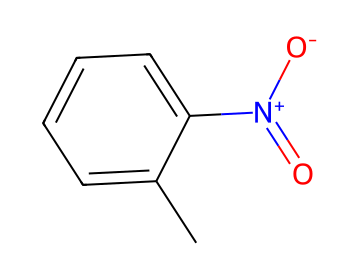
IDENTITY
COMPUTED
PROPERTIES
log Kow = 2.30
2.3
Weak, aromatic odor
Weak aromatic
1.1622 at 66.2 °F (USCG, 1999) - Denser than water; will sink
Specific gravity: 1.1622 at 19 °C/15 °C
1.16 (Water = 1)
Relative density (water = 1): 1.16
1.1622 @ 19°C/15°C
1.16
2.7 mPa (= cP)
Yellowish liquid at ordinary temperature
Yellow liquid [Note: A solid below 25 degrees F]
less than 1 mg/mL at 70 °F (NTP, 1992)
Soluble in alcohol, benzene, petroleum ether
SOL IN CHLOROFORM
Soluble in carbon tetrachloride; miscible in ethanol and ethyl ether
In water, 650 mg/L at 30 °C; 609 mg/L at 20 °C
All isomers are almost insoluble in water, /but/ soluble in benzene.
223 °F (NTP, 1992)
95 °C
95 °C; open cup
106 °C; 223 °F (Closed cup)
95 °C c.c.
223 °F
431.1 °F at 760 mmHg (NTP, 1992)
222 °C
460 °F (238 °C)
222 °C
222.3 °C @760 [mm Hg]
432 °F
The substance decomposes ... /to/ form nitrogen oxides, carbon monoxide.
Temperature of adiabatic storage which gives an induction time to exothermic decomposition of 24 hours was determined as 232 C by adiabatic Dewar tests, which an apparent energy of activation of 162 kJ/mol.
When heated to decomposition it emits toxic fumes of /nitrogen oxides/.
14.9 °F (NTP, 1992)
-9.55 °C (alpha-form); -3.85 °C (beta-form)
130 °F (54 °C)
-10 °C
-10 °C
25 °F
4.72 (NTP, 1992) - Heavier than air; will sink (Relative to Air)
4.72 (Air = 1)
4.7 (Air = 1)
Relative vapor density (air = 1): 4.73
Odor Threshold Low: 0.05 [ppm];Odor threshold from "Quick Guide: The Electronic NIOSH Pocket Guide to Chemical Hazards"
0.05 mg/l
GHS
Danger
H302: Harmful if swallowed [Warning Acute toxicity, oral];H340: May cause genetic defects [Danger Germ cell mutagenicity];H350: May cause cancer [Danger Carcinogenicity];H361f ***: Suspected of damaging fertility [Warning Reproductive toxicity];H411: Toxic to aquatic life with long lasting effects [Hazardous to the aquatic environment, long-term hazard]
P203, P264, P270, P273, P280, P301+P317, P318, P330, P391, P405, and P501 (click each P-code to see the statement)
Danger
HAZARDS
Chemical: Benzene, 1-methyl-2-nitro-
Hazard Traits - Carcinogenicity; Genotoxicity;Authoritative List - EC Annex VI CMRs - Cat. 1B; IARC Carcinogens - 2A; NTP RoC - reasonable; Prop 65;Report - regardless of intended function of ingredient in the product
Benzene, 1-methyl-2-nitro- is listed on the EPA's Chemical Data Reporting (CDR) system. Manufacturers and importers of Benzene, 1-methyl-2-nitro- are required to report information about their production and use of this chemical to the EPA under the Toxic Substances Control Act (TSCA). (40 eCFR Part 711)
Status: Active Update: 03-01-2023 https://echa.europa.eu/registration-dossier/-/registered-dossier/13637;Status: Active Update: 10-10-2012 https://echa.europa.eu/registration-dossier/-/registered-dossier/1725
Status: Active Update: 02-09-2022 https://echa.europa.eu/registration-dossier/-/registered-dossier/1563
Benzene, 1-methyl-2-nitro-: HSNO Approval: HSR002787 Approved with controls
IMAP assessments - Benzene, 1-methyl-2-nitro-: Human health tier II assessment
Poison
Special Hazards of Combustion Products: Toxic fumes may be generated.;Behavior in Fire: Generates toxic fumes. (USCG, 1999)
Combustible. Risk of fire and explosion on contact with acids or oxidizing agents.
Comubstible when exposed to heat or open flame.
... Contact with strong oxidizers or sulfuric acid may cause fires ... . /Nitrotoluene/
... Contact with strong oxidizers or sulfuric acid may cause fires.
INHALATION, INGESTION, OR SKIN: Headache, flushing of face, dizziness, dyspnea (difficult breathing), cyanosis, nausea, vomiting, muscular weakness, increased pulse and respiratory rate, irritability, and convulsions. SKIN: Irritation. (USCG, 1999)
Nitrotoluenes (all isomers) have the potential to induce methemoglobinemia in the same manner as aniline and nitrobenzene. [ACGIH] Irritating to the eyes; Can induce methemoglobinemia; [ICSC] Suspected germ cell mutagen (3B); [MAK]
A skin, eye, and throat irritant; May induce methemoglobinemia; May cause liver and kidney damage; Emergency treatment: Nitrobenzene; Nitrobenzene causes skin irritation; It is toxic by all routes causing methemoglobinemia and liver injury; Estimated lethal dose in adults is 1-5 grams; [HSDB] Explosive; A strong oxidizer; May be fatal by inhalation, skin absorption, and ingestion; [CAMEO] See p-Nitrotoluene.
The major hazards encountered in the use and handling of 2-nitrotoluene stem from its toxicologic properties and explosivity. Toxic by all routes (inhalation, ingestion, and dermal absorption), exposure to this bitter-almond-smelling, yellowish liquid may occur from its use in the manufacture of toluidine, tolidine, fuchsine, azo dyes, sulfur dyes, rubber chemicals, and agricultural chemicals. Effects from exposure may include contact burns to the skin and eyes, headache, weakness, dizziness, nausea, shortness-of-breath, tachycardia, and methemoglobinemia. The onset of symptoms may be delayed up to 4 hours. OSHA has set a time-weighted-average (TWA) limit of 2 ppm as a final rule to become effective December 31, 1992. Local exhaust ventilation should be applied to control airborne 2-nitrotoluene to permissible limits. In activities and situations where over-exposure may occur,wear a positive pressure self-contained breathing apparatus and chemical protective clothing which is specifically recommended by the shipper or manufacturer. If contact should occur, irrigate exposed eyes with copious amounts of tepid water for at least 15 minutes and wash exposed skin thoroughly with soap and water. Contaminated clothing should be removed and left at the site for cleaning. While 2-nitrotoluene does not ignite easily, it may burn with the production of irritating or poisonous gases. Also, containers of this substance may explode violently in the heat of a fire. For fires involving 2-nitrotoluene, extinguish with dry chemical, CO2, water spray, fog, or standard foam. Fight fire from as far a distance as possible, and if fire is advanced, evacuate the area. Dike fire control water. 2-Nitrotoluene should be stored in a cool, dry, well-ventilated area, away from sources of ignition, strong oxidizers, and sulfuric acid. For small spills of 2-nitrotoluene, take up with vermiculite, dry sand, or earth and place into containers for later disposal. Large spills on land should be
1664 152
Nitro, Nitroso, Nitrate, and Nitrite Compounds, Organic
Symbol: T, N; R: 45-46-22-62-51/53; S: 53-45-61; Note: C
UN Hazard Class: 6.1; UN Pack Group: II
DHHS/NTP; NTP Technical Report on Toxicity Studies of o-, m-, and p-Nitrotoluenes Administered in Dosed Feed to F344/N Rats and B6C3F1 Mice Toxicity Rpt Series No. 23 NIH Publication No. 93-3346 (1992)
DHHS/NTP; NTP Technical Report on Comparative Toxicity Studies of o-Nitrotoluene and o-Toluidine Hydrochloride Administered in Feed to Male F344/N Rats. Toxicity Rpt Series No. 44 NIH Publication No. 96-3936 (1996)
DHHS/NTP; NTP Technical Report on Toxicity Studies of o-, m-, and p-Nitrotoluenes Administered in Dosed Feed to F344/N Rats and B6C3F1 Mice Toxicity Rpt Series No. 23 NIH Publication No. 93-3346 (1992)
SAFETY
Fire Extinguishing Agents: Water, CO2, and dry chemical (USCG, 1999)
Use water spray, powder, foam, carbon dioxide.
Fresh air, rest. Artificial respiration may be needed. Refer for medical attention.
Wear protective gloves when administering first aid. Rinse and then wash skin with water and soap. Refer for medical attention .
First rinse with plenty of water for several minutes (remove contact lenses if easily possible), then refer for medical attention.
Rinse mouth. Refer for medical attention .
EYES: First check the victim for contact lenses and remove if present. Flush victim's eyes with water or normal saline solution for 20 to 30 minutes while simultaneously calling a hospital or poison control center. Do not put any ointments, oils, or medication in the victim's eyes without specific instructions from a physician. IMMEDIATELY transport the victim after flushing eyes to a hospital even if no symptoms (such as redness or irritation) develop.;SKIN: IMMEDIATELY flood affected skin with water while removing and isolating all contaminated clothing. Gently wash all affected skin areas thoroughly with soap and water. If symptoms such as redness or irritation develop, IMMEDIATELY call a physician and be prepared to transport the victim to a hospital for treatment.;INHALATION: IMMEDIATELY leave the contaminated area; take deep breaths of fresh air. If symptoms (such as wheezing, coughing, shortness of breath, or burning in the mouth, throat, or chest) develop, call a physician and be prepared to transport the victim to a hospital. Provide proper respiratory protection to rescuers entering an unknown atmosphere. Whenever possible, Self-Contained Breathing Apparatus (SCBA) should be used; if not available, use a level of protection greater than or equal to that advised under Protective Clothing.;INGESTION: DO NOT INDUCE VOMITING. If the victim is conscious and not convulsing, give 1 or 2 glasses of water to dilute the chemical and IMMEDIATELY call a hospital or poison control center. Be prepared to transport the victim to a hospital if advised by a physician. If the victim is convulsing or unconscious, do not give anything by mouth, ensure that the victim's airway is open and lay the victim on his/her side with the head lower than the body. DO NOT INDUCE VOMITING. IMMEDIATELY transport the victim to a hospital. (NTP, 1992)
(General first aid procedures);Eye: Irrigate immediately - If this chemical contacts the eyes, immediately wash (irrigate) the eyes with large amounts of water, occasionally lifting the lower and upper lids. Get medical attention immediately.;Skin: Soap wash immediately - If this chemical contacts the skin, immediately wash the contaminated skin with soap and water. If this chemical penetrates the clothing, immediately remove the clothing, wash the skin with soap and water, and get medical attention promptly.;Breathing: Respiratory support;Swallow: Medical attention immediately - If this chemical has been swallowed, get medical attention immediately.
Separated from food and feedstuffs. See Chemical Dangers. Well closed. Ventilation along the floor. Store in an area without drain or sewer access. Provision to contain effluent from fire extinguishing.
Biological Exposure Indices (BEI) [ACGIH] - Methemoglobin in blood = 1.5% of hemoglobin during or at end of shift. [ACGIH]
Water spray, fog, foam, CO2.
Powder, water spray, foam, carbon dioxide. In case of fire: keep drums, etc., cool by spraying with water.
If material on fire or involved in fire: Use water in flooding quantities as fog. Cool all affected containers with flooding quantities of water. Apply water from as far a distance as possible. Use foam, dry chemical, or carbon dioxide. /Nitrotoluenes/
Use carbon dioxide, dry chemical, or foam.
If material on fire or involved in fire: Use water in flooding quantities as fog. Cool all affected containers with flooding quantities of water. Apply water from as far a distance as possible. Use foam, dry chemical, or carbon dioxide.
Store in a cool. dry, well-ventilated location. Separate from acids, alkalies, oxidizing materials, and reducing agents.
Ventilate area of spill or leak. For small quantities of liq nitrotoluene, absorb on paper towels. For small quantities of solid nitrotoluene, sweep onto paper or other suitable material. Remove to safe place (such as fume hood) & burn. Large quantities of liq nitrotoluene can be collected & atomized in suitable combustion chamber equipped with appropriate effluent gas cleaning device. Large quantities of solid nitrotoluene can be reclaimed; ... If not practical, dissolve in flammable solvent (such as alcohol) & atomize in suitable combustion chamber equipped with appropriate effluent gas cleaning device. /Nitrotoluene/
Environmental considerations: Land Spill: Dig a pit, pond, lagoon, or holding area to contain liquid or solid material. /SRP: If time permits, pits, ponds, lagoons, soak holes, or holding areas should be sealed with an impermeable flexible membrane liner./ Cover solids with plastic sheet to prevent dissolving in rain or fire fighting water. /Nitrotoluenes/
Environmental considerations: Water Spill: Use natural barriers or oil spill control booms to limit spill travel. Remove trapped material with suction hoses. /Nitrotoluenes/
Environmental considerations: Air spill: Apply water spray or mist to knock down vapors. Combustion products include corrosive or toxic vapors. /Nitrotoluenes/
1) Ventilate area of spill or leak. For small quantities of liq nitrotoluene, absorb on paper towels. For small quantities of solid nitrotoluene, sweep onto paper or other suitable material. Remove to safe place (such as fume hood) & burn. Large quantities of liq nitrotoluene can be collected & atomized in suitable combustion chamber equipped with appropriate effluent gas cleaning device. Large quantities of solid nitrotoluene can be reclaimed; ... If not practical, dissolve in flammable solvent (such as alcohol) & atomize in suitable combustion chamber equipped with appropriate effluent gas cleaning device.
Environmental considerations: Land Spill: Dig a pit, pond, lagoon, or holding area to contain liquid or solid material. /SRP: If time permits, pits, ponds, lagoons, soak holes, or holding areas should be sealed with an impermeable flexible membrane liner./ Cover solids with plastic sheet to prevent dissolving in rain or fire fighting water.
SMALL SPILLS AND LEAKAGE: If you spill this chemical, FIRST REMOVE ALL SOURCES OF IGNITION. Then, use absorbent paper to pick up all liquid spill material. Your contaminated clothing and absorbent paper should be sealed in a vapor-tight plastic bag for eventual disposal. Solvent wash all contaminated surfaces with 60-70% ethanol followed by washing with a soap and water solution. Do not reenter the contaminated area until the Safety Officer (or other responsible person) has verified that the area has been properly cleaned.;STORAGE PRECAUTIONS: You should store this chemical under ambient temperatures, and keep it away from oxidizing materials. (NTP, 1992)
SRP: The most favorable course of action is to use an alternative chemical product with less inherent propensity for occupational harm/injury/toxicity or environmental contamination. Recycle any unused portion of the material for its approved use or return it to the manufacturer or supplier. Ultimate disposal of the chemical must consider: the material's impact on air quality; potential migration in soil or water; effects on animal and plant life; and conformance with environmental and public health regulations.
SRP: Wastewater from contaminant suppression, cleaning of protective clothing/equipment, or contaminated sites should be contained and evaluated for subject chemical or decomposition product concentrations. Concentrations shall be lower than applicable environmental discharge or disposal criteria. Alternatively, pretreatment and/or discharge to a permitted wastewater treatment facility is acceptable only after review by the governing authority and assurance that "pass through" violations will not occur. Due consideration shall be given to remediation worker exposure (inhalation, dermal and ingestion) as well as fate during treatment, transfer and disposal. If it is not practicable to manage the chemical in this fashion, it must be evaluated in accordance with EPA 40 CFR Part 261, specifically Subpart B, in order to determine the appropriate local, state and federal requirements for disposal.
For liq nitrotoluene, by absorbing it in vermiculite, dry sand, earth or similar material. By atomizing liq nitrotoluene in suitable combustion chamber equipped with appropriate effluent gas cleaning device. By making packages of solid nitrotoluene in paper or other suitable material or by dissolving in a flammable solvent (such as alcohol) & burning in a suitable combustion chamber equipped with appropriate effluent gas cleaning device. /Nitrotoluene/
The following wastewater treatment technologies have been investigated for 2-Nitrotoluene: Concentration process: Biological treatment.
SRP: The most favorable course of action is to use an alternative chemical product with less inherent propensity for occupational harm/injury/toxicity or environmental contamination. Recycle any unused portion of the material for its approved use or return it to the manufacturer or supplier. Ultimate disposal of the chemical must consider: the material's impact on air quality; potential migration in soil or water; effects on animal and plant life; and conformance with environmental and public health regulations.
1) For liq nitrotoluene, by absorbing it in vermiculite, dry sand, earth or similar material. 2) By atomizing liq nitrotoluene in suitable combustion chamber equipped with appropriate effluent gas cleaning device. 3) By making packages of solid nitrotoluene in paper or other suitable material or by dissolving in a flammable solvent (such as alcohol) & burning in a suitable combustion chamber equipped with appropriate effluent gas cleaning device.
Personal protection: filter respirator for organic gases and vapours adapted to the airborne concentration of the substance. Do NOT let this chemical enter the environment. Collect leaking and spilled liquid in sealable containers as far as possible. Absorb remaining liquid in sand or inert absorbent. Then store and dispose of according to local regulations.
SRP: The scientific literature for the use of contact lenses in industry is conflicting. The benefit or detrimental effects of wearing contact lenses depend not only upon the substance, but also on factors including the form of the substance, characteristics and duration of the exposure, the uses of other eye protection equipment, and the hygiene of the lenses. However, there may be individual substances whose irritating or corrosive properties are such that the wearing of contact lenses would be harmful to the eye. In those specific cases, contact lenses should not be worn. In any event, the usual eye protection equipment should be worn even when contact lenses are in place.
SRP: Local exhaust ventilation should be applied wherever there is an incidence of point source emissions or dispersion of regulated contaminants in the work area. Ventilation control of the contaminant as close to its point of generation is both the most economical and safest method to minimize personnel exposure to airborne contaminants.
SRP: Contaminated protective clothing should be segregated in such a manner so that there is no direct personal contact by personnel who handle, dispose, or clean the clothing. The completeness of the cleaning procedures should be considered before the decontaminated protective clothing is returned for reuse by the workers. Contaminated clothing should not be taken home at the end of shift, but should remain at employee's place of work for cleaning.
The worker should immediately wash the skin when it becomes contaminated.
For more Preventive Measures (Complete) data for 2-NITROTOLUENE (7 total), please visit the HSDB record page.
SRP: The scientific literature for the use of contact lenses in industry is conflicting. The benefit or detrimental effects of wearing contact lenses depend not only upon the substance, but also on factors including the form of the substance, characteristics and duration of the exposure, the uses of other eye protection equipment, and the hygiene of the lenses. However, there may be individual substances whose irritating or corrosive properties are such that the wearing of contact lenses would be harmful to the eye. In those specific cases, contact lenses should not be worn. In any event, the usual eye protection equipment should be worn even when contact lenses are in place.
TOXICITY
Under controlled experimental conditions, 2-nitrotoluene was detected in human expired air; 387 samples from 54 people, 19.1% samples positive, 0.04 ng/L mean concentration(1).
Under controlled experimental conditions o-nitrotoluene was detected in human expired air, 387 samples from 54 people, 19.1% samples pos, 0.04 ng/L mean concentration(1).
Blood, central nervous system, cardiovascular system, skin, gastrointestinal tract
EC50; Species: Daphnia magna (Water Flea) age 24 hr; Conditions: freshwater, static, 18-20 °C, pH 8.0-8.3, dissolved oxygen 8.1-9.7 mg/L; Concentration: 13200 ug/L for 24 hr (95% confidence interval: 12000-14500 ug/L); Effect: intoxicaiton, immobilization />99% purity formulation/
EC50; Species: Daphnia magna (Water Flea) age 24 hr; Conditions: freshwater, static, 18-20 °C, pH 8.0-8.3, dissolved oxygen 8.1-9.7 mg/L; Concentration: 12300 ug/L for 48 hr (95% confidence interval: 10900-13900 ug/L); Effect: intoxicaiton, immobilization />99% purity formulation/
EC50; Species: Daphnia magna (Water Flea); Conditions: freshwater, static; Concentration: 5400 ug/L for 48 hr; Effect: intoxicaiton, immobilization />99.5% purity formulation/
LC50; Species: Daphnia magna (Water Flea) age < or =24 hr; Conditions: freshwater, static, 20-22 °C, pH 7.6-7.7; Concentration: 42000 ug/L for 24 hr /formulation/
For more Ecotoxicity Values (Complete) data for 2-NITROTOLUENE (14 total), please visit the HSDB record page.
TERRESTRIAL FATE: Based on a classification scheme(1), an estimated Koc value of 370(SRC), determined from a structure estimation method(2), indicates that 2-nitrotoluene is expected to have moderate mobility in soil(SRC). Field monitoring at a munition factory site in Melbourne Australia found that 2-nitrotoluene migrated large distances in the subsurface soils(3); 2-nitrotoluene is reported to have low soil Kd sorption coefficients in a variety of soils types(3) indicating it will leach. Volatilization of 2-nitrotoluene from moist soil surfaces is expected to be an important fate process(SRC) given a Henry's Law constant of 1.25X10⁻⁵ atm-cu m/mole(4). Biodegradation screening tests have shown that 2-nitrotoluene can degrade very slowly in unacclimated media such as the Japanese test(5,6) or a 64-day silt loam soil inoculum test(7). However, biodegradation in acclimated media can be relatively fast with 98-100% degradation within a few days or two weeks(8-10).
AQUATIC FATE: Based on a classification scheme(1), an estimated Koc value of 370(SRC), determined from a structure estimation method(2), indicates that 2-nitrotoluene is expected to adsorb moderately to suspended solids and sediment(SRC). Volatilization from water surfaces is expected(3) based upon a Henry's Law constant of 1.25X10⁻⁵ atm-cu m/mole(4). Using this Henry's Law constant and an estimation method(3), volatilization half-lives for a model river and model lake are 85 hours and 30 days, respectively(SRC). According to a classification scheme(5), and measured BCF values of 6.6-29.9 in carp (Carprinus carpio)(6), suggests the potential for bioconcentration in aquatic organisms is low. Biodegradation screening tests have shown that 2-nitrotoluene can degrade very slowly in unacclimated media such as the Japanese test(6,7) or a 64-day silt loam soil inoculum test(8). However, biodegradation in acclimated media can be relatively fast with 98-100% degradation within a few days or two weeks(9-11). Hydrolysis is not expected to be an important environmental fate process since this compound lacks functional groups that hydrolyze under environmental conditions(3).
ATMOSPHERIC FATE: According to a model of gas/particle partitioning of semivolatile organic compounds in the atmosphere(1), 2-nitrotoluene, which has a vapor pressure of 0.185 mm Hg at 25 °C(2), is expected to exist solely as a vapor in the ambient atmosphere. Vapor-phase 2-nitrotoluene is degraded in the atmosphere by reaction with photochemically-produced hydroxyl radicals(SRC); the half-life for this reaction in air is estimated to be 23 days(SRC), calculated from its rate constant of 7X10-13 cu cm/molecule-sec at 25 °C(3). 2-Nitrotoluene is expected to undergo direct photolysis, with the primary photoproducts being 2-methyl-6-nitrophenol and 2-methyl-4-nitrophenol(4).
TERRESTRIAL FATE: Based on a classification scheme(1), a 4-nitrotoluene measured Koc value of 138 for a single sediment(2) and an estimated mononitrotoluene Koc value of 370(SRC), determined from a structure estimation method(3), indicate that the mononitrotoluenes are expected to have high to moderate mobility in soil(SRC). Field monitoring at a munition factory site found that nitrotoluene isomers can migrate large distances in the subsurface soils(4). Volatilization of mononitrotoluenes from moist soil surfaces is expected to occur slowly(SRC) given a Henry's Law constant range of 5.63X10⁻⁶ to 1.25X10⁻⁵ atm-cu m/mole(5). Mononitrotoluenes are not expected to volatilize from dry soil surfaces(SRC) based upon a vapor pressure range of 0.0157-0.185 mm Hg at 25 °C(6). The mononitrotoluenes are susceptible to direct photolysis(7,8), therefore, photodegradation may occur on surfaces exposed to sunlight(SRC). Biodegradation screening tests have shown that mononitrotoluenes can degrade very slowly in tests using unacclimated media such as the Japanese MITI test(9) or a 64-day silt loam soil inoculum test(10). However, biodegradation in acclimated media can be relatively fast with 98-100% degradation within a few days or two weeks(11-13).
AQUATIC FATE: Based on a classification scheme(1), a measured Koc value of 138 for a single sediment(2) and an estimated Koc value of 370(SRC), determined from a structure estimation method(3), indicate that mononitrotoluenes are expected to have little to moderate adsorption to suspended solids and sediment(SRC). Volatilization from water surfaces is expected to be slow(4) based upon a Henry's Law constant range of 5.63X10⁻⁶ to 1.25X10⁻⁵ atm-cu m/mole(5). Using this Henry's Law constant and an estimation method(3), volatilization half-lives for a model river and model lake are 3.6-7.8 days and 30-60 days, respectively(SRC). According to a classification scheme(6), BCF measured values of 0.47 to 29.9 in fish(7,8) suggests bioconcentration in aquatic organisms is low(SRC). Hydrolysis is not expected to be an important environmental fate process since these compounds lack functional groups that hydrolyze under environmental conditions(4). In aqueous solution, the mononitrotoluenes have quantum yields of 0.0046-0.0158 at 313 nm(9) indicating that they are susceptible to direct photolysis by sunlight with a half-life of less than 32 hours near the water surface(9). The photolysis rate constant in pure water for 3-nitrotoluene in near surface water at latitude 40 deg N has been experimentally determined to be 6.5 L/days which corresponds to a half-life of 0.11 days(10). Biodegradation screening tests have shown that mononitrotoluenes can degrade very slowly in test using unacclimated media such as the Japanese MITI test(7) or a 64-day silt loam soil inoculum test(11). However, biodegradation in acclimated media can be relatively fast with 98-100% degradation within a few days or two weeks(12-14). Based on monitoring data, the half-life of the mononitrotoluene isomers in a river 4 to 5 meters deep has been estimated to be 2.7 to 3.2 days(15).
ATMOSPHERIC FATE: According to a model of gas/particle partitioning of semivolatile organic compounds in the atmosphere(1), mononitrotoluenes, which have a vapor pressure range of 0.0157-0.185 mm Hg at 25 °C(2), are expected to exist solely as a vapor in the ambient atmosphere. Vapor-phase mononitrotoluenes are degraded in the atmosphere by reaction with photochemically-produced hydroxyl radicals(SRC); the half-life for this reaction in air is estimated to be 17-23 days(SRC), calculated from their rate constants of 7X10-13 to 9.5X10⁻¹³ cu cm/molecule-sec at 25 °C(SRC) that were derived using a structure estimation method(3) or measured(4). The mononitrotoluenes undergo direct photolysis in sunlight to yield methyl-nitrophenol isomers as the primary photodegradates(5).
Methemoglobinemia - The presence of increased methemoglobin in the blood; the compound is classified as primary toxic effect.;IARC Carcinogen - Class 2: International Agency for Research on Cancer classifies chemicals as probable (2a), or possible (2b) human carcinogens.;NTP Carcinogen - Reasonably anticipated to be a human carcinogen.
Occupational hepatotoxin - Secondary hepatotoxins: the potential for toxic effect in the occupational setting is based on cases of poisoning by human ingestion or animal experimentation.;Methemoglobinemia - The presence of increased methemoglobin in the blood; the compound is classified as secondary toxic effect
The substance can be absorbed into the body by inhalation of its vapour, through the skin and by ingestion.
inhalation, skin absorption, ingestion, skin and/or eye contact
/AQUATIC SPECIES/ The compositions of explosive wastewater generated from TNT (2,4,6-trinitrotoluene) purification stage were characterized by using UV-vis spectroscopy, Fourier transform infrared spectroscopy (FTIR), high performance liquid chromatograph (HPLC) and gas chromatograph/mass spectroscopy (GC/MS). The acute toxicity was evaluated by bacterium bioluminescence assay using a freshwater luminescent bacterium (Vibrio qinghaiensis sp. Nov.) and a marine luminescent bacterium (Photobacterium phosphoreum). The results showed that the wastewater's biodegradability was poor due to the high amount of chemical oxygen demand (COD). The main organic components were dinitrotoluene sulfonates (DNTS) with small amount of TNT, dinitrotoluene (DNT), mononitrotoluene (MNT) and other derivatives of nitrobenzene. It was highly toxic to luminescent bacteria P. phosphoreum and V. qinghaiensis sp. Nov. After reaction time of 15 min, the relative concentration of toxic pollutants (expressed as reciprocal of dilution ratio of wastewater) at 50% of luminescence inhibition ratio was 5.32x10(-4) for P. phosphoreu, while that was 4.34x10(-4) for V. qinghaiensis. V. qinghaiensis is more sensitive and suitable for evaluating the wastewater's acute toxicity than P. phosphoreum. After adsorption by resin, the acute toxicity can be greatly reduced, which is helpful for further treatment by biological methods.
Headache. Blue lips, fingernails and skin. Dizziness. Shortness of breath.
MAY BE ABSORBED! Further see Inhalation.
Redness. Pain.
Abdominal pain. Further see Inhalation.
Anoxia, cyanosis; headache, lassitude (weakness, exhaustion), dizziness; ataxia; dyspnea (breathing difficulty); tachycardia; nausea, vomiting
The following link will take the user to the National Toxicology Program (NTP) Test Agent Search Results page, which tabulates all of the "Standard Toxicology & Carcinogenesis Studies", "Developmental Studies", and "Genetic Toxicity Studies" performed with this chemical. Clicking on the "Testing Status" link will take the user to the status (i.e., in review, in progress, in preparation, on test, completed, etc.) and results of all the studies that the NTP has done on this chemical.[Available from: http://ntp-apps.niehs.nih.gov/ntp_tox/index.cfm?fuseaction=ntpsearch.searchresults&searchterm=88-72-2]
2-Nitrotoluene has been detected in the effluent from a plant manufacturing trinitrotoluene in Radford, VA, 0.32-16 mg/L detected(1). 2-Nitrotoluene has been detected in the wastewater resulting from the production and purification of 2,4,6-trinitrotoluene, 0.02-0.14 mg/L detected, 38% samples pos(2). 2-Nitrotoluene has also been detected in raw effluent from a plant manufacturing dinitrotoluene, 7.8 mg/L detected, and in a waste treatment lagoon of a paper mill(1).
In the effluent from a plant manufacturing trinitrotoluene in Radford, VA, 0.32 to 16 mg/L o-nitrotoluene detected and 0.12 to 9.2 mg/L p-nitrotouene detected(1). In the wastewater resulting from the production and purification of 2,4,6-trinitrotoluene, 0.02-0.14 mg/L o-nitrotoluene was detected, with 38% samples positive and 0.01 to 0.17 mg/L p-nitrotoluene was detected with 43% samples positive(2). In raw effluent from a plant manufacturing dinitrotoluene, 7.8 mg/L o-nitrotoluene was detected, 8.8 mg/L p-nitrotoluene detected and m-nitrotoluene qualitatively identified(1). o-Nitrotoluene has been detected, not quantified in a waste treatment lagoon of a paper mill; p-nitrotoluene has been detected in a waste treatment lagoon of a chemical company at 0.04 mg/L(1).
The substance is toxic to aquatic organisms. The substance may cause long-term effects in the aquatic environment. It is strongly advised not to let the chemical enter into the environment.
... Routine checking of lips, tongue, and nail beds of exposed personnel for signs of cyanosis.Preclude from exposure those individuals with anemia, cardiovascular or pulmonary disease.
The following medical procedures should be made available to each employee who is exposed to nitrotoluene at potentially hazardous levels. Initial Medical Exam: A complete history & physical exam: ... Exam of blood, nervous system, GI system, & cardiovascular system should be stressed. Skin should be exam for evidence of chronic disorders. ... A complete blood count should be performed, including red cell count, a white cell count, a differential count of stained smear, as well as hemoglobin & hematocrit. Persons with blood disorders may be at increased risk from exposure.Periodic Medical Exam: The ... /initial med exam/ should be repeated on an annual basis. Methemoglobin determinations should be performed if overexposure is suspected or signs & symptoms of toxicity occur.
The following medical procedures should be made available to each employee who is exposed to nitrotoluene at potentially hazardous levels. Initial Medical Exam: A complete history & physical exam: ... Exam of blood, nervous system, GI system, & cardiovascular system should be stressed. Skin should be exam for evidence of chronic disorders. ... A complete blood count should be performed, including red cell count, a white cell count, a differential count of stained smear, as well as hemoglobin & hematocrit. Persons with blood disorders may be at increased risk from exposure.Periodic Medical Exam: The ... /initial med exam/ should be repeated on an annual basis. Methemoglobin determinations should be performed if overexposure is suspected or signs & symptoms of toxicity occur.
... Routine checking of lips, tongue, and nail beds of exposed personnel for signs of cyanosis.Preclude from exposure those individuals with anemia, cardiovascular or pulmonary disease.
REGULATORY
Chemical: Benzene, 1-methyl-2-nitro-
Hazard Traits - Carcinogenicity; Genotoxicity;Authoritative List - EC Annex VI CMRs - Cat. 1B; IARC Carcinogens - 2A; NTP RoC - reasonable; Prop 65;Report - regardless of intended function of ingredient in the product
Benzene, 1-methyl-2-nitro- is listed on the EPA's Chemical Data Reporting (CDR) system. Manufacturers and importers of Benzene, 1-methyl-2-nitro- are required to report information about their production and use of this chemical to the EPA under the Toxic Substances Control Act (TSCA). (40 eCFR Part 711)
Status: Active Update: 03-01-2023 https://echa.europa.eu/registration-dossier/-/registered-dossier/13637;Status: Active Update: 10-10-2012 https://echa.europa.eu/registration-dossier/-/registered-dossier/1725
Status: Active Update: 02-09-2022 https://echa.europa.eu/registration-dossier/-/registered-dossier/1563
Benzene, 1-methyl-2-nitro-: HSNO Approval: HSR002787 Approved with controls
Section 8(a) of TSCA requires manufacturers of this chemical substance to report preliminary assessment information concerned with production, exposure, and use to EPA as cited in the preamble in 51 FR 41329. Effective date: 3/11/94; Reporting date: 5/10/94.
Pursuant to section 8(d) of TSCA, EPA promulgated a model Health and Safety Data Reporting Rule. The section 8(d) model rule requires manufacturers, importers, and processors of listed chemical substances and mixtures to submit to EPA copies and lists of unpublished health and safety studies. o-Nitrotoluene is included on this list. Effective date: 3-11-94; Sunset date: 6-30-98.
This action promulgates standards of performance for equipment leaks of Volatile Organic Compounds (VOC) in the Synthetic Organic Chemical Manufacturing Industry (SOCMI). The intended effect of these standards is to require all newly constructed, modified, and reconstructed SOCMI process units to use the best demonstrated system of continuous emission reduction for equipment leaks of VOC, considering costs, non air quality health and environmental impact and energy requirements. Nitrotoluene is produced, as an intermediate or a final product, by process units covered under this subpart. /Nitrotoluene/
This action promulgates standards of performance for equipment leaks of Volatile Organic Compounds (VOC) in the Synthetic Organic Chemical Manufacturing Industry (SOCMI). The intended effect of these standards is to require all newly constructed, modified, and reconstructed SOCMI process units to use the best demonstrated system of continuous emission reduction for equipment leaks of VOC, considering costs, non air quality health and environmental impact and energy requirements. Nitrotoluene is produced, as an intermediate or a final product, by process units covered under this subpart.
Persons in charge of vessels or facilities are required to notify the National Response Center (NRC) immediately, when there is a release of this designated hazardous substance, in an amount equal to or greater than its reportable quantity of 1000 lb or 454 kg. The toll free number of the NRC is (800) 424-8802. The rule for determining when notification is required is stated in 40 CFR 302.4 (section IV. D.3.b).
Persons in charge of vessels or facilities are required to notify the National Response Center (NRC) immediately, when there is a release of this designated hazardous substance, in an amount equal to or greater than its reportable quantity of 1000 lb or 454 kg. The toll free number of the NRC is (800) 424-8802. The rule for determining when notification is required is stated in 40 CFR 302.4 (section IV. D.3.b).
o-Nitrotoluene is designated as a hazardous substance under section 311(b)(2)(A) of the Federal Water Pollution Control Act and further regulated by the Clean Water Act Amendments of 1977 and 1978. These regulations apply to discharges of this substance. This designation includes any isomers and hydrates, as well as any solutions and mixtures containing this substance.
Nitrotoluene is designated as a hazardous substance under section 311(b)(2)(A) of the Federal Water Pollution Control Act and further regulated by the Clean Water Act Amendments of 1977 and 1978. These regulations apply to discharges of this substance. This designation includes any isomers and hydrates, as well as any solutions and mixtures containing this substance.
PHARMACOLOGY
/The/ p53 and beta-catenin mutations in the o-nitrotoluene-induced hemangiosarcomas ... most likely occurred as a result of the genotoxic effects of these chemicals. It also suggests that these mutations play a role in the pathogenesis of the ... hemangiosarcomas in B6C3F1(1) mice.
The alterations in cancer genes and proteins found in the mouse large intestinal tumors included mutations that activate signal transduction pathways (K-ras and Catnb) and changes that disrupt the cell-cycle and bypass G(1) arrest (p53, cyclin D1). These alterations, which are hallmarks of human colon cancer, probably contributed to the pathogenesis of the large intestinal carcinomas in mice following o-nitrotoluene exposure.
... The metabolism /of 2-nitrotoluene/ was compared in hepatocytes isolated from male Fischer 344 rats. ... Hepatocytes were incubated with U-(14)C 2-nitrotoluene, ... at concentrations from 25-1000 uM for up to 60 minutes. ... 2-Nitrotoluene was converted to 2-nitrobenzyl alcohol (52%), 2-nitrobenzyl alcohol glucuronide (28%), and unidentified metabolite (20%) and 2-nitrobenzoic (3%). ... Incubation of 2-nitrotoluene (1mM) with rat hepatic microsomes produced only the respective nitrobenzyl alcohols ... .
The metabolism and excretion of 2-, 3-, and 4-nitrotoluene (2NT, 3NT, and 4NT, respectively) were studied in male Fischer 344 rats. ... The major metabolites excreted in urine in 72 hr after administration of 2NT were 2-nitrobenzoic acid (29% of the dose), an unidentified metabolite (16% of the dose), 2-nitrobenzyl glucuronide (14% of the dose), and S-(2-nitrobenzyl)-N-acetylcysteine (12% of the dose).
Nine metabolites were found in the urine of rats given 2-nitrotoluene. For three rats 72 hr after treatment, the mean percentage of the dose administered plus or minus the standard error of the mean for each metabolite was: nitrobenzoic acid (28.6 +/- 0.3); 2-nitrobenzyl glucuronide (14.1 +/- 0.7); S-(2-nitrobenzyl)-N-acetylcysteine (11.6 +/- 0.2); S-(2-nitrobenzyl)glutathione (3.9 +/- 0.4); 2-aminobenzoic acid (1.8 +/- 0.2); 2-nitrobenzyl sulfate (0.5 +/- 0.2); 2-nitrobenzyl alcohol (0.4 +/- 0.3); and two unidentified metabolites (15.9 +/- 1.5 and 6.0 +/- 0.6).
In bile duct-cannulated male Fischer 344 rats administered 200 mg/kg bw nitro[14C] toluene isomers,... the major metabolite in bile following 2-nitrotoluene administration was 2-nitrobenzyl glucuronide. Males excreted 22% of the dose as this metabolite and females excreted 8.3%.
The metabolic potential of the gastrointestinal flora is considered an important factor in o-nitrotoluene-induced toxicity and involves the reduction of the nitro group to the corresponding amine (forming o-toluidine).
The metabolism and excretion of 2-, 3-, and 4-nitrotoluene (2NT, 3NT, and 4NT, respectively) were studied in male Fischer 344 rats. ... The major metabolites excreted in urine in 72 hr after administration of 2NT were 2-nitrobenzoic acid (29% of the dose), an unidentified metabolite (16% of the dose), 2-nitrobenzyl glucuronide (14% of the dose), and S-(2-nitrobenzyl)-N-acetylcysteine (12% of the dose). The major metabolites excreted in urine in 72 hr after administration of 3NT were 3-nitrohippuric acid (24% of the dose), 3-nitrobenzoic acid (21% of the dose), and 3-acetamidobenzoic acid (12% of the dose). The major metabolites excreted in urine in 72 hr after administration of 4NT were 4-nitrobenzoic acid (28% of the dose), 4-acetamidobenzoic acid (27% of the dose), and 4-nitrohippuric acid (13% of the dose). Thus, the major urinary metabolites of 3NT and 4NT differed only quantitatively while those of 2NT were also qualitatively different.
Rats /were given/ 0 or 48 mg/kg bw/ day 2-nitrotoluene for 7 days. 42% of the dosed 2-NT was excreted with the urine as hippuric acid.
The metabolism and excretion of 2-, 3-, and 4-nitrotoluene (2NT, 3NT, and 4NT, respectively) were studied in male Fischer 344 rats. Excreta were collected for 72 hr after an oral dose (200 mg/kg) of radiolabeled 2NT, 3NT, or 4NT. Radiolabel from each NT isomer was rapidly excreted (86, 73 and 74% of the dose for 2NT, 3NT, and 4NT, respectively in 24 hr). The urine was the major route of excretion with 70-85% of the dose being excreted by that route in 72 hr. Five to 13% and 0.0 to 0.1% of the dose was excreted in the feces and expired air, respectively, in 72 hr.
In bile duct-cannulated male Fischer 344 rats administered 200 mg/kg bw nitro (14)C toluene isomers, 28.6% of the 2-nitrotoluene dose was excreted in bile in males, compared to 9.6% in females.
It may be absorbed through the intact skin and through the respiratory tract. /SRP: also absorbed following ingestion/.
The metabolism and excretion of 2-, 3-, and 4-nitrotoluene (2NT, 3NT, and 4NT, respectively) were studied in male Fischer 344 rats. Excreta were collected for 72 hr after an oral dose (200 mg/kg) of radiolabeled 2NT, 3NT, or 4NT. Radiolabel from each NT isomer was rapidly excreted (86, 73 and 74% of the dose for 2NT, 3NT, and 4NT, respectively in 24 hr). The urine was the major route of excretion with 70-85% of the dose being excreted by that route in 72 hr. Five to 13% and 0.0 to 0.1% of the dose was excreted in the feces and expired air, respectively, in 72 hr. ...
It is readily absorbed through the skin, and can affect the body through inhalation or ingestion.
USES
Used in the production of dyes, pesticides, and rubber chemicals; [ACGIH]
Used to make dyes, toluidines, nitrobenzoic acids, sun screening agents, gasoline inhibitors, and flotation agents; Also used in some detergents and in the tire industry; [HSDB]
For production of toluidine, tolidine, fuchsin, and various synthetic dyes.
2-Nitrotoluene is used in the synthesis of intermediates for azo dyes, sulfur dyes, rubber chemicals, and agriculture chemicals; typical intermediates are o-toluidine, o-nitrobenzaldehyde, 2-nitro-4-chlorotoluene, 2-nitro-6-chlorotoluene, 2-amino-4-chlorotoluene (Fast Scarlet TR Base), and 2-amino-6-chlorotoluene (Fast Red KB Base).
2-Nitrotoluene derivatives are used principally as colorant intermediates
Synthesis of explosives
(1983) 1.63X10+8 g
(1984) 2.73X10+8 g (NITRATED BENZENE, TOLUENE OR NAPHTHALENE)
(1984) 2.73X10+8 g /NITRATED BENZENE, TOLUENE OR NAPHTHALENE/.
2023: 250,000 - <550,000 lb;2022: 50,000 - <250,000 lb;2021: 250,000 - <550,000 lb;2020: 250,000 - <550,000 lb
(1972) GREATER THAN 9.08X10+5 G
(1975) 9.09X10+9 G (CONSUMPTION)
(1981) 1.3X10+10 G /CALCULATED/
(1983) 2.0X10+10 g /(ORTHO- AND PARA- ISOMERS COMBINED)/
For more U.S. Production (Complete) data for 2-NITROTOLUENE (8 total), please visit the HSDB record page.
Intermediate
From toluene by nitration and separation by fractional distillation.
Mononitrotoluenes can be produced by either a batch or continuous process. With a typical batch process, the toluene is fed into the nitrator and cooled to about 25 °C. The nitrating acid (52-56 wt% H2SO4, 28-32 wt% HNO3, and 12-20 wt% H2O) is added slowly below the surface of the toluene and the temperature of the reaction mixture is maintained at 25 °C by adjusting the feed rate of the nitrating acid and the amount of cooling. After all of the acid is added, the temperature is raised slowly to 35-40 °C. After completion of the reaction, the reaction mixture is put into a separator where the spent acid is withdrawn from the bottom and is reconcentrated. The crude product is washed in several steps with dilute caustic and then water. The product is steam distilled to remove excess toluene and then dried by distilling the remaining traces of water. The resulting product contains 55-60 wt% o-nitrotoluene, 3-4 wt% m-nitrotoluene, and 35-40 wt% p-nitrotoluene. The yield of mononitrotoluenes is about 96%. ... The separation of the isomers is carried out by a combination of fractional distillation and crystallization.
o-Nitrotoluene can be obtained by treating 2,4-dinitrotoluene with ammonium sulfide followed by diazotization and boiling with ethanol.
Mononitrotoluenes can be produced by either a batch or continuous process. With a typical batch process, the toluene is fed into the nitrator and cooled to about 25 °C. The nitrating acid (52-56 wt% H2SO4, 28-32 wt% HNO3, and 12-20 wt% H2O) is added slowly below the surface of the toluene and the temperature of the reaction mixture is maintained at 25 °C by adjusting the feed rate of the nitrating acid and the amount of cooling. After all of the acid is added, the temperature is raised slowly to 35-40 °C. After completion of the reaction, the reaction mixture is put into a separator where the spent acid is withdrawn from the bottom and is reconcentrated. The crude product is washed in several steps with dilute caustic and then water. The product is steam distilled to remove excess toluene and then dried by distilling the remaining traces of water. The resulting product contains 55-60 wt% o-nitrotoluene, 3-4 wt% m-nitrotoluene, and 35-40 wt% p-nitrotoluene. The yield of mononitrotoluenes is about 96%. ... The separation of the isomers is carried out by a combination of fractional distillation and crystallization.
Technical
Nitrotoluene is sold in a mixed formula (o,m,p) and as separate isomers (o-,m-,p-).
All Other Basic Organic Chemical Manufacturing
Benzene, 1-methyl-2-nitro-: ACTIVE
Nitrotoluene ... /consists of/ three isomers, ortho, meta & para.
ALIASES
REACTIONS
uspto-grants-2006_08 · 10.6084/m9.figshare.5104873.v1 · US07091342B2
查看
uspto-grants-2004_03 · 10.6084/m9.figshare.5104873.v1 · US06706924B2
查看
uspto-grants-2004_03 · 10.6084/m9.figshare.5104873.v1 · US06706924B2
查看
uspto-grants-2004_03 · 10.6084/m9.figshare.5104873.v1 · US06706924B2
查看
uspto-grants-2004_03 · 10.6084/m9.figshare.5104873.v1 · US06706924B2
查看
uspto-grants-2004_03 · 10.6084/m9.figshare.5104873.v1 · US06706924B2
查看
uspto-grants-2004_03 · 10.6084/m9.figshare.5104873.v1 · US06706924B2
查看
uspto-grants-2004_03 · 10.6084/m9.figshare.5104873.v1 · US06706924B2
查看