
uspto-grants-1993_09 · 10.6084/m9.figshare.5104873.v1 · US05248775
查看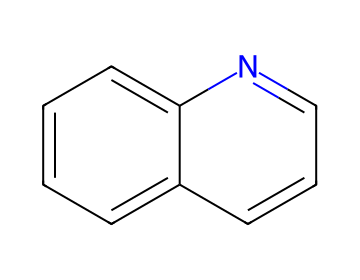
IDENTITY
COMPUTED
PROPERTIES
Weak tertiary base
log Kow= 2.03
2.03
2.06
Penetrating odor, not as offensive as pyridine
Unpleasant odor
1.095 at 68 °F (USCG, 1999) - Denser than water; will sink
1.0900 @ 25 °C/4 °C
Relative density (water = 1): 1.09
1.0977 @ 15°C
2.997 millipascal second (=cP) at 30 °C
COLORLESS TO BROWN /SRP: TECHNICAL GRADE/
Highly refractive/darkens with age
Colorless liquid
less than 0.1 mg/mL at 72.5 °F (NTP, 1992)
Soluble in alcohol, ether, and carbon disulfide
Miscible with oxygenated solvents
More sol in hot than cold water; sol in ethanol, ethyl ether, acetone, carbon disulfide and other common organic solvents.
In water, 6,110 mg/l @ 25 °C
6.11 mg/mL at 25 °C
May attack some forms of plastic
138 °F (NFPA, 2010)
105 °C
99 °C, (Closed Cup)
101 °C c.c.
460 °F at 760 mmHg (NTP, 1992)
237.7 °C @ 760 mm Hg
239.00 °C. @ 760.00 mm Hg
238 °C
237.16 °C @760 [mm Hg]
When heated to decomposition it emits toxic fumes of /nitrogen oxides/.
5 °F (NTP, 1992)
-14.78 °C
-15.6 °C
-15 °C
-14.78 °C
GHS
Danger
H302: Harmful if swallowed [Warning Acute toxicity, oral];H312: Harmful in contact with skin [Warning Acute toxicity, dermal];H315: Causes skin irritation [Warning Skin corrosion/irritation];H319: Causes serious eye irritation [Warning Serious eye damage/eye irritation];H341: Suspected of causing genetic defects [Warning Germ cell mutagenicity];H350: May cause cancer [Danger Carcinogenicity];H411: Toxic to aquatic life with long lasting effects [Hazardous to the aquatic environment, long-term hazard]
P203, P264, P264+P265, P270, P273, P280, P301+P317, P302+P352, P305+P351+P338, P317, P318, P321, P330, P332+P317, P337+P317, P362+P364, P391, P405, and P501 (click each P-code to see the statement)
Danger
HAZARDS
Chemical: Quinoline
Quinoline is listed on the EPA's Chemical Data Reporting (CDR) system. Manufacturers and importers of Quinoline are required to report information about their production and use of this chemical to the EPA under the Toxic Substances Control Act (TSCA). (40 eCFR Part 711)
Status: Active Update: 19-03-2021 https://echa.europa.eu/registration-dossier/-/registered-dossier/14335;Status: Cease Manufacture Update: 29-01-2015 https://echa.europa.eu/registration-dossier/-/registered-dossier/1376;Status: No longer Valid Update: 26-05-2010 https://echa.europa.eu/registration-dossier/-/registered-dossier/1208;Status: Cease Manufacture Update: 03-04-2018 https://echa.europa.eu/registration-dossier/-/registered-dossier/23492;Status: Cease Manufacture Update: 08-05-2013 https://echa.europa.eu/registration-dossier/-/registered-dossier/6927
Quinoline: Does not have an individual approval but may be used under an appropriate group standard
The New Jersey Worker and Community Right to Know Act requires public and private employers to provide information about hazardous substances at their workplaces. (N.J.S.A. 34:5A-1 et. seq.)
IMAP assessments - Quinolines: Human health tier II assessment
Poison
Special Hazards of Combustion Products: Toxic oxides of nitrogen may form in fires.;Behavior in Fire: Heat exposure may cause pressure build-up in closed containers. (USCG, 1999)
· Non-combustible, substance itself does not burn but may decompose upon heating to produce corrosive and/or toxic fumes.;· Some are oxidizers and may ignite combustibles (wood, paper, oil, clothing, etc.).;· Corrosives in contact with metals may evolve flammable hydrogen gas.;· Containers may explode when heated.;· For electric vehicles or equipment, GUIDE 147 (lithium ion or sodium ion batteries) or GUIDE 138 (sodium batteries) should also be consulted.
Combustible. Gives off irritating or toxic fumes (or gases) in a fire. Above 101 °C explosive vapour/air mixtures may be formed.
IT IS MODERATELY FLAMMABLE BUT DOES NOT EVOLVE A FLAMMABLE CONCN OF VAPOR AT TEMP OF BELOW 99 °C.
It will burn though it may take some effort to ignite.
Combustible when exposed to heat or flame.
Vapors are irritating to nose and throat and may cause headaches, dizziness, and nausea if inhaled. Ingestion causes irritation of mouth and stomach; vomiting may occur. Contact with eyes or skin causes irritation. (USCG, 1999)
· TOXIC and/or CORROSIVE; inhalation, ingestion or skin contact with material may cause severe injury or death.;· Contact with molten substance may cause severe burns to skin and eyes.;· Avoid any skin contact.;· Fire may produce irritating, corrosive and/or toxic gases.;· Runoff from fire control or dilution water may be corrosive and/or toxic and cause environmental contamination.
Quinoline is used mainly as an intermediate in the manufacture of other products. Potential exposure to quinoline may occur from the inhalation of cigarette smoke. Quinoline breaks down quickly in the atmosphere and water. Acute (short-term) inhalation exposure to quinoline vapors irritates the eyes, nose, and throat and may cause headaches, dizziness, and nausea in humans. Information on the chronic (long- term), reproductive, developmental, or carcinogenic effects of quinoline in humans is not available. Liver damage has been observed in rats chronically exposed to quinoline by ingestion. An increased incidence of liver vascular tumors has been observed in rats and mice orally exposed to quinoline. EPA has provisionally classified quinoline as a Group C, possible human carcinogen
A skin and eye irritant; May have effects on the liver and retina; Possibly carcinogenic in humans; [ICSC] Causes lethargy, respiratory depression, and coma in high-dose animal experiments; No rats died when exposed to saturated vapor (about 78 ppm) for 8 hours, but all rats died within 6 hours after exposure to 4000 ppm; [HSDB] An irritant; May cause serious injury to eyes; Can be absorbed through skin; [MSDSonline]
2656 154
Amines, Phosphines, and Pyridines
UN Hazard Class: 6.1; UN Pack Group: III
QUINOLINE is hygroscopic. It absorbs as much as 22% water. It is sensitive to light and moisture. It darkens on storage. This chemical is a weak base. A potentially explosive reaction may occur with hydrogen peroxide. It reacts violently with dinitrogen tetraoxide. It also reacts violently with perchromates. It is incompatible with (linseed oil + thionyl chloride) and maleic anhydride. It is also incompatible with strong oxidizers and strong acids. This chemical can be unpredictably violent. It dissolves sulfur, phosphorus and arsenic trioxide. It may attack some forms of plastics. It is a preparative hazard. (NTP, 1992)
Listed as a hazardous air pollutant (HAP) generally known or suspected to cause serious health problems. The Clean Air Act, as amended in 1990, directs EPA to set standards requiring major sources to sharply reduce routine emissions of toxic pollutants. EPA is required to establish and phase in specific performance based standards for all air emission sources that emit one or more of the listed pollutants. Quinoline is included on this list.
SAFETY
Excerpt from ERG Guide 154 [Substances - Toxic and/or Corrosive (Non-Combustible)]:;SMALL FIRE: Dry chemical, CO2 or water spray.;LARGE FIRE: Dry chemical, CO2, alcohol-resistant foam or water spray. If it can be done safely, move undamaged containers away from the area around the fire. Dike runoff from fire control for later disposal.;FIRE INVOLVING TANKS, RAIL TANK CARS OR HIGHWAY TANKS: Fight fire from maximum distance or use unmanned master stream devices or monitor nozzles. Do not get water inside containers. Cool containers with flooding quantities of water until well after fire is out. Withdraw immediately in case of rising sound from venting safety devices or discoloration of tank. ALWAYS stay away from tanks in direct contact with flames. (ERG, 2024)
Use water spray, foam, powder, carbon dioxide. In case of fire: keep drums, etc., cool by spraying with water.
Fresh air, rest. Refer for medical attention.
Remove contaminated clothes. Rinse and then wash skin with water and soap.
Rinse with plenty of water (remove contact lenses if easily possible). Refer for medical attention.
Rinse mouth. Give one or two glasses of water to drink. Refer for medical attention .
· CALL 911. Then call emergency response telephone number on shipping paper. If shipping paper not available or no answer, refer to appropriate telephone number listed on the inside back cover.;· Keep unauthorized personnel away.;· Stay upwind, uphill and/or upstream.;· Ventilate closed spaces before entering, but only if properly trained and equipped.
· ELIMINATE all ignition sources (no smoking, flares, sparks or flames) from immediate area.;· Do not touch damaged containers or spilled material unless wearing appropriate protective clothing.;· Stop leak if you can do it without risk.;· Prevent entry into waterways, sewers, basements or confined areas.;· Absorb or cover with dry earth, sand or other non-combustible material and transfer to containers.;· DO NOT GET WATER INSIDE CONTAINERS.
EYES: First check the victim for contact lenses and remove if present. Flush victim's eyes with water or normal saline solution for 20 to 30 minutes while simultaneously calling a hospital or poison control center. Do not put any ointments, oils, or medication in the victim's eyes without specific instructions from a physician. IMMEDIATELY transport the victim after flushing eyes to a hospital even if no symptoms (such as redness or irritation) develop.;SKIN: IMMEDIATELY flood affected skin with water while removing and isolating all contaminated clothing. Gently wash all affected skin areas thoroughly with soap and water. IMMEDIATELY call a hospital or poison control center even if no symptoms (such as redness or irritation) develop. IMMEDIATELY transport the victim to a hospital for treatment after washing the affected areas.;INHALATION: IMMEDIATELY leave the contaminated area; take deep breaths of fresh air. If symptoms (such as wheezing, coughing, shortness of breath, or burning in the mouth, throat, or chest) develop, call a physician and be prepared to transport the victim to a hospital. Provide proper respiratory protection to rescuers entering an unknown atmosphere. Whenever possible, Self-Contained Breathing Apparatus (SCBA) should be used; if not available, use a level of protection greater than or equal to that advised under Protective Clothing.;INGESTION: DO NOT INDUCE VOMITING. Corrosive chemicals will destroy the membranes of the mouth, throat, and esophagus and, in addition, have a high risk of being aspirated into the victim's lungs during vomiting which increases the medical problems. If the victim is conscious and not convulsing, give 1 or 2 glasses of water to dilute the chemical and IMMEDIATELY call a hospital or poison control center. IMMEDIATELY transport the victim to a hospital. If the victim is convulsing or unconscious, do not give anything by mouth, ensure that the victim's airway is open and lay the victim on his/her side with the head lower than the body. DO NOT INDUCE VOMITING. Transport the victim IMMEDIATELY to a hospital. (NTP, 1992)
General First Aid:;· Call 911 or emergency medical service.;· Ensure that medical personnel are aware of the material(s) involved, take precautions to protect themselves and avoid contamination.;· Move victim to fresh air if it can be done safely.;· Administer oxygen if breathing is difficult.;· If victim is not breathing:;-- DO NOT perform mouth-to-mouth resuscitation; the victim may have ingested or inhaled the substance.;-- If equipped and pulse detected, wash face and mouth, then give artificial respiration using a proper respiratory medical device (bag-valve mask, pocket mask equipped with a one-way valve or other device).;-- If no pulse detected or no respiratory medical device available, provide continuous compressions. Conduct a pulse check every two minutes or monitor for any signs of spontaneous respirations.;· Remove and isolate contaminated clothing and shoes.;· For minor skin contact, avoid spreading material on unaffected skin.;· In case of contact with substance, remove immediately by flushing skin or eyes with running water for at least 20 minutes.;· For severe burns, immediate medical attention is required.;· Effects of exposure (inhalation, ingestion, or skin contact) to substance may be delayed.;· Keep victim calm and warm.;· Keep victim under observation.;· For further assistance, contact your local Poison Control Center.;· Note: Basic Life Support (BLS) and Advanced Life Support (ALS) should be done by trained professionals.;Specific First Aid:;· For corrosives, in case of contact, immediately flush skin or eyes with running water for at least 30 minutes. Additional flushing may be required.
Provision to contain effluent from fire extinguishing. Separated from strong oxidants, acids, acid anhydrides and food and feedstuffs. Dry. Keep in the dark. Well closed. Store in an area without drain or sewer access.
· Wear positive pressure self-contained breathing apparatus (SCBA).;· Wear chemical protective clothing that is specifically recommended by the manufacturer when there is NO RISK OF FIRE.;· Structural firefighters' protective clothing provides thermal protection but only limited chemical protection.
EXTINGUISH WITH WATER, DRY CHEMICALS, FOAM, OR CARBON DIOXIDE.
If material on fire or involved in fire: Do not extinguish fire unless flow can be stopped. Use water in flooding quantities as fog. Cool all affected containers with flooding quantities of water. Apply water from as far a distance as possible. Solid streams of water may be ineffective. Use foam, dry chemical, or carbon dioxide.
PROTECT FROM LIGHT & MOISTURE.
Spread over with the 9:1 mixture of sand and soda ash. After mixing, transfer into a paper carton, stuffed with ruffled paper.
Environmental considerations: Land spill: Dig a pit, pond, lagoon, or holding area to contain liquid or solid material. /SRP: If time permits, pits, ponds, lagoons, soak holes, or holding areas should be sealed with an impermeable flexible membrane liner./ Dike surface flow using soil, sand bags, foamed polyurethane, or foamed concrete. Absorb bulk liquid with fly ash or cement powder. Apply "universal" gelling agent to immobilize spill.
Environmental considerations: Water spill: If dissolved, apply activated carbon at ten times the spilled amount in region of 10 ppm or greater concentration. Remove trapped material with suction hoses. Use mechanical dredges or lifts to remove immobilized masses of pollutants and precipitates.
Environmental considerations: Air spill: Apply water spray or mist to knock down vapors.
Excerpt from ERG Guide 154 [Substances - Toxic and/or Corrosive (Non-Combustible)]:;ELIMINATE all ignition sources (no smoking, flares, sparks or flames) from immediate area. Do not touch damaged containers or spilled material unless wearing appropriate protective clothing. Stop leak if you can do it without risk. Prevent entry into waterways, sewers, basements or confined areas. Absorb or cover with dry earth, sand or other non-combustible material and transfer to containers. DO NOT GET WATER INSIDE CONTAINERS. (ERG, 2024)
SRP: At the time of review, criteria for land treatment or burial (sanitary landfill) disposal practices are subject to significant revision. Prior to implementing land disposal of waste residue (including waste sludge), consult with environmental regulatory agencies for guidance on acceptable disposal practices.
Dissolve in such combustible solvent as alcohols, etc. Spray the solution into the furnace with afterburner and scrubber. Pour into a mixture of sand and soda ash (9:1). After mixing, put into a paper carton stuffed full with packing paper to serve as fuel. Burn in the furnace and stand or position oneself on upwind side.
A good candidate for rotary kiln incineration at a temperature range of 820 to 1,600 °C and residence times of seconds for liquids and gases, and hours for solids. A good candidate for fluidized bed incineration at a temperature range of 450 to 980 °C and residence times of seconds for liquids and gases, and longer for solids.
Quinoline is a waste chemical stream constituent which may be subjected to ultimate disposal by controlled incineration.
Personal protection: filter respirator for organic gases and vapours adapted to the airborne concentration of the substance. Do NOT let this chemical enter the environment. Collect leaking and spilled liquid in sealable containers as far as possible. Absorb remaining liquid in sand or inert absorbent. Then store and dispose of according to local regulations.
TOXICITY
There is no know antidote for PAHs. Exposure is usually handled with symptomatic treatment. (L10)
Hepatic
PAHs are carcinogens and have been associated with the increased risk of skin, respiratory tract, bladder, stomach, and kidney cancers. They may also cause reproductive effects and depress the immune system. (L10)
LC50 Xenophus laevis (South African clawed toad) embryo 26.3 mg/l/96 hr /Conditions of bioassay not specified/
LC100 Tetrahymena pyriformis (ciliate) 6.19 mmole/l/24 hr /Conditions of bioassay not specified/
TERRESTRIAL FATE: Based on a classification scheme(1), Kocs ranging from 2.84 to 10.9(2,3), indicates that quinoline is expected to have very high mobility in soil(SRC). Volatilization of the neutral species of quinoline from moist soil surfaces is not expected to be an important fate process(SRC) given an estimated Henry's Law constant of 1.67X10⁻⁶ atm-cu m/mole(SRC), based upon its vapor pressure, 0.06 mm Hg(4), and water solubility, 6,110 mg/l(5). The potential for volatilization of quinoline from dry soil surfaces may exist(SRC) based upon its vapor pressure(4). However, the pKa of quinoline is 4.90(6), indicating that this compound will partially exist in the protonated form in the environment and cations generally adsorb to organic carbon and clay more strongly than their neutral counterparts(7). Quinoline was degraded in a Danish sandy soil from Lundgaard, Jutland, characterized by 2.47% organic carbon content, 80.2% sand, 13.2% silt, 4.8% clay, and a pH of 5.8; using batch experiments at pH 5.8 and 7 with concns of 10 and 50 mg/kg quinoline, 14CO2 production was 21%/day after 3-4 days in all experiments(8); observed biodegradation to hydroxylated products was reported using freshwater sediment slurries incubated under methanogenic conditions(9). Therefore, biodegradation may be a slow environmental fate process in soil(SRC).
AQUATIC FATE: Based on a classification scheme(1), Koc values ranging from 2.84 to 10.9(2,3), indicates that quinoline is not expected to adsorb to suspended solids and sediment(SRC). However, the pKa of quinoline is 4.90(7), indicating that this compound will partially exist in the protonated form in the environment and cations generally adsorb to organic carbon and clay more strongly than their neutral counterparts(8). Volatilization from water surfaces is expected(4) based upon an estimated Henry's Law constant of 1.7X10⁻⁶ atm-cu m/mole(SRC), derived from its vapor pressure, 0.06 mm Hg(5), and water solubility, 6,110 mg/l(6). Using this Henry's Law constant and an estimation method(4), volatilization half-lives for a model river and model lake are 25 and 186 days, respectively(SRC). Quinoline may be susceptible to photolysis as indicated by strong UV absorption in water at wavelengths >290 nm with maximum at 312.5 nm(9). According to a classification scheme(10), a BCF range of <0.1 to 3.8(11), suggests the potential for bioconcentration in aquatic organisms is low(SRC). Biodegradation may be a slow environmental fate process in water based upon a measured 0.2% theoretical BOD in 2 weeks using the Japanese MITI test(11) and observed biodegradation to hydroxylated products using freshwater sediment slurries incubated under methanogenic conditions(12).
ATMOSPHERIC FATE: According to a model of gas/particle partitioning of semivolatile organic compounds in the atmosphere(1), quinoline, which has a vapor pressure of 0.006 mm Hg at 25 °C(2), is expected to exist solely as a vapor in the ambient atmosphere. Vapor-phase quinoline is degraded in the atmosphere by reaction with photochemically-produced hydroxyl radicals(SRC); the half-life for this reaction in air is estimated to be 1.4 days(SRC), calculated from its rate constant of 1.16X10⁻¹¹ cu cm/molecule-sec at 25 °C(3). Strong absorption of UV light wavelenghts >290 nm with an absorption maximum at 312.5 nm in water(4), suggests the potential for direct photolysis of quinoline in the atmosphere(SRC). This compound may be removed from the atmosphere by wet and dry deposition as indicated by the identification of quinoline sorbed to atmospheric particulates(5) and in rainwater samples(6).
Neurotoxin - Other CNS neurotoxin;Occupational hepatotoxin - Secondary hepatotoxins: the potential for toxic effect in the occupational setting is based on cases of poisoning by human ingestion or animal experimentation.;IARC Carcinogen - Class 3: Chemicals are not classifiable by the International Agency for Research on Cancer.
The substance can be absorbed into the body by inhalation, through the skin and by ingestion.
Oral (L10) ; inhalation (L10)
The ability of PAH's to bind to blood proteins such as albumin allows them to be transported throughout the body. Many PAH's induce the expression of cytochrome P450 enzymes, especially CYP1A1, CYP1A2, and CYP1B1, by binding to the aryl hydrocarbon receptor or glycine N-methyltransferase protein. These enzymes metabolize PAH's into their toxic intermediates. The reactive metabolites of PAHs (epoxide intermediates, dihydrodiols, phenols, quinones, and their various combinations) covalently bind to DNA and other cellular macromolecules, initiating mutagenesis and carcinogenesis. (L10, L23, A27, A32)
A field study was designed to measure plant uptake of organic contaminants from sludge-treated coal refuse, following a one-time applications in 1987(1). Quinoline was not detected in corn, cabbage, and carrot samples collected in 1990(1).
Cough. Sore throat.
Redness.
Redness. Pain.
Sore throat.
Acute exposure to PAHs causes irritation and inflammation of the skin and lung tissue. (A10)
With 260 mg quinoline per kg creosote-pentachlorophenol, quinoline was detected in wastewater from an on-site storage pond in central Texas(1). The compound was qualitatively identified in CO and UT shale oil wastewaters during 1981-2(2). A quinoline concn of 20 ng/l was estimated to be present in synthetic coal conversion wastewater(3). A baseline study of gaseous emissions from polystyrene combustion indicate that quinoline represents 2.08% of the total gas-phase PAH emissions(4). Quinoline was tentatively identified in the base fraction of wastewater from gasification of Indian Head lignite coal at an estimated concentration of 0.49 mg/l(5). Gasoline and diesel-powered vehicle exhaust emissions have been shown to contain quinoline at concns ranging from 5.3 (noncatalyst) and 0.57 ug/km (catalyst), and 0.46 (diesel) ug/km, respectively(6).
The substance is very toxic to aquatic organisms. It is strongly advised not to let the chemical enter into the environment.
REGULATORY
Chemical: Quinoline
Quinoline is listed on the EPA's Chemical Data Reporting (CDR) system. Manufacturers and importers of Quinoline are required to report information about their production and use of this chemical to the EPA under the Toxic Substances Control Act (TSCA). (40 eCFR Part 711)
Status: Active Update: 19-03-2021 https://echa.europa.eu/registration-dossier/-/registered-dossier/14335;Status: Cease Manufacture Update: 29-01-2015 https://echa.europa.eu/registration-dossier/-/registered-dossier/1376;Status: No longer Valid Update: 26-05-2010 https://echa.europa.eu/registration-dossier/-/registered-dossier/1208;Status: Cease Manufacture Update: 03-04-2018 https://echa.europa.eu/registration-dossier/-/registered-dossier/23492;Status: Cease Manufacture Update: 08-05-2013 https://echa.europa.eu/registration-dossier/-/registered-dossier/6927
Quinoline: Does not have an individual approval but may be used under an appropriate group standard
The New Jersey Worker and Community Right to Know Act requires public and private employers to provide information about hazardous substances at their workplaces. (N.J.S.A. 34:5A-1 et. seq.)
Listed as a hazardous air pollutant (HAP) generally known or suspected to cause serious health problems. The Clean Air Act, as amended in 1990, directs EPA to set standards requiring major sources to sharply reduce routine emissions of toxic pollutants. EPA is required to establish and phase in specific performance based standards for all air emission sources that emit one or more of the listed pollutants. Quinoline is included on this list.
Persons in charge of vessels or facilities are required to notify the National Response Center (NRC) immediately, when there is a release of this designated hazardous substance, in an amount equal to or greater than its reportable quantity of 5000 lb or 2270 kg. The toll free number of the NRC is (800) 424-8802; In the Washington D.C. metropolitan area (202) 426-2675. The rule for determining when notification is required is stated in 40 CFR 302.4 (section IV. D.3.b).
Quinoline is designated as a hazardous substance under section 311(b)(2)(A) of the Federal Water Pollution Control Act and further regulated by the Clean Water Act Amendments of 1977 and 1978. These regulations apply to discharges of this substance. This designation includes any isomers and hydrates, as well as any solutions and mixtures containing this substance.
PHARMACOLOGY
QUINOLINE BINDS TO RNA, DNA & CERTAIN POLYRIBONUCLEOTIDES IN PRESENCE OF NADPH & RAT LIVER MICROSOMES. BINDING WAS PRONOUNCED WITH HELP OF SOME INDUCERS OF MICROSOMAL MONOOXYGENASE SYSTEM. BINDING REACTION REQUIRED NADPH & WAS INHIBITED BY CARBON MONOXIDE, ANILINE, 7,8-BENZOFLAVONE, METHYRAPONE OR SKF 525A. QUINOLINE BOUND PREFERENTIALLY TO POLY(A), POLY(C), POLY(G) & POLY(X), BUT NEGLIGIBLY TO POLY(U) & POLY(I). MOST OF QUINOLINE RESIDUES OF THE ADDUCTS, REGARDLESS OF KIND OF POLYNUCLEOTIDES USED WERE RELEASED BY ACID OR ALKALI AT 100 °C IN FORM OF 3-HYDROXYQUINOLINE. THE 2,3- OR 3,4-EPOXY DERIVATIVE OF QUINOLINE APPARENTLY IS THE REACTIVE INTERMEDIATE FOR NUCLEIC ACID MODIFICATION.
WITH AROMATIC HETEROCYCLIC NITROGEN CMPD ... HYDROXYLATION OCCURS AT THE 3-POSITION, & IF A BENZENOID RING IS ATTACHED TO HETEROCYCLE, HYDROXYLATION OCCURS ALSO AT POSITIONS ORTHO & PARA TO THE N ATOM, IE QUINOLINE YIELDS 3-, 6- & 8-HYDROXYQUINOLINE. QUINOLINE IS ... METABOLIZED INTO 6-HYDROXYCARBOSTYRIL; INITIAL OXIDATION TO 2-HYDROXYQUINOLINE (CARBOSTYRIL) IS CATALYZED BY A SOL ENZYME OF RABBIT LIVER, & SUBSEQUENT HYDROXYLATION ... IS CATALYZED BY A MICROSOMAL ENZYME.
QUINOLINE YIELDS CIS-7,8-DIHYDRO-7,8-DIHYDROXYQUINOLINE PROBABLY IN PSEUDOMONAS. QUINOLINE YIELDS 5,6-DIHYDROXYQUINOLINE & 3-HYDROXYQUINOLINE IN RABBIT. QUINOLINE YIELDS 2-HYDROXYQUINOLINE IN RABBITS. /FROM TABLE/
FIVE FRACTIONS WERE SEPARATED AFTER METABOLISM OF (3)H-LABELED QUINOLINE BY RAT LIVER MICROSOMES. IDENTIFIED METABOLITES WERE 5,6-TRANS-DIHYDROXY-5,6-DIHYDROQUINOLINE, QUINOLINE 1-OXIDE, & 3-HYDROXYQUINOLINE. RELATIVE AMT OF METABOLITES WERE DEPENDENT ON ENZYME INDUCER PRETREATMENT. METABOLIC PATHWAY IS PROPOSED ON BASIS OF ENZYME INDUCER STUDIES.
... The metabolites of quinoline and isoquinoline, as formed in vitro with rat liver homogenate, were identified to investigate possible molecular bases for the differences in their biological activity. The ethyl acetate extractable metabolites of quinoline and isoquinoline were analyzed directly by high pressure liquid chromatography after silylation, and by capillary gas chromatography. The major metabolite of quinoline was 5,6-dihydroxy-5,6-dihydroquinoline. Lesser amounts of 2- and 3-hydroxyquinoline and quinoline-N-oxide were also identified as metabolites. 1-, 4- and 5-hydroxyisoquinoline and isoquinoline-N-oxide were detected as metabolites of isoquinoline. 5,6-Dihydroxy-5,6-dihydroisoquinoline was detected as only a minor metabolite. This difference in the extent to which these isomers are ultimately metabolized to dihydrodiols may be associated with their differences in biological activity.
For more Metabolism/Metabolites (Complete) data for QUINOLINE (8 total), please visit the HSDB record page.
Quinoline has known human metabolites that include Quinoline 1-oxide, Q-8,6-epoxide, and 3OHQ.
Salmo gairdneri (rainbow trout) readily absorb & metabolize (14)C quinoline when exposed to 1 mg/l concn in water. Juvenile fish accumulated over 60% of the total radiolabel body burden in the gall bladder as quinoline metabolites after 48 hr exposure, followed by 24 hr in clean water. Hydrolysis products of the metabolites, isolated by alkaline digestion & base-catalysed acetylation, were found to be hydroxyquinolines & quinolinethiols. There is evidence that the hydroxy form was present in the gall bladders as the glucuronide was obtained from thin layer chromatographic experiments, & by cleavage with beta-glucuronidase. The thiols, identified by high & low resolution mass spectrometry, predominated over the hydroxy derivative in most tissues examined. Relative body burdens of quinoline plus metabolites after 48 hr were in the order of: gall bladder >muscle >gut >eyes >liver.
Quinoline is absorbed percutaneously.
Rainbow trout were fed pelleted food containing (14)C-quinoline to assess the relationship of digestive processes to pharmacokinetics. The pH of material in the stomach of rainbow trout ranged from 2.7 to 5.2. ... At 2 hr after feeding, 67% of the quinoline was estimated to be non-ionized & available for absorption across gastric epithelium. Quinoline was >99% non-ionized in the alkaline environment of the intestine; however, relative concns in the intestine were about 8% of those measured in the stomach. Gastric absorption was consistent with known serum profiles & excretion patterns of dietary quinoline. Rates of gallbladder emptying appeared to exceed rates of hepatic bile secretion until about 8 hr after a single feeding. Time since feeding influenced both the amount & concn of quinoline-derived radioactivity in the bile. ...
The primary routes of exposure to quinoline are through skin contact with the liquid & inhalation of the vapor or aerosol.
Elimination half-lives of quinoline & its metabolites showed considerable variability among tissues, with a range of 0.3 days for gallbladder to 8.7 days for muscle. Biliary/fecal excretion was significant & glucuronide conjugates made up 14% of the radioactivity in the bile /in trout/.
Cytoplasm;Extracellular
USES
Quinoline is used mainly as an intermediate in the manufacture of other products.
Used to make paints, dyes, and other chemicals; Also used as a preservative for anatomical specimens, solvent for resins and terpenes, fungistat, corrosion inhibitor, antimalarial drug, flavoring agent, and decarboxylation reagent; [HSDB] Extracted from coal-tar distillates; occurs in polluted air and cigarette smoke; [AIHA]
Using Disinfectants or Biocides [Category: Clean]
Manuf dyes; prepn hydroxyquinoline sulfate, q.v., niacin. As preservative for anatomical specimens. Solvent for resins abd terpenes.
Chem int for 8-hydroxyquinoline, a fungistat; chem int for pharmaceuticals-e.g., antiinfectives; corrosion inhibitor
Used as ... a decarboxylation reagent.
Monomethylquinolines, 2,8-dimethylquinoline, and some homologues of isoquinoline.
(1978) 3.13X10+7 G (PRINCPL CUSTMS DISTS)
(1982) 3.96X10+7 G (PRINCPL CUSTMS DISTS)
2023: 100,000 - <250,000 lb;2022: 400,000 - <550,000 lb;2021: 700,000 - <850,000 lb;2020: 550,000 - <700,000 lb
(1978) AT LEAST 4.54X10+7 G
(1982) PROBABLY GREATER THAN 2.27X10+6 G
Corrosion inhibitor;Absorbent
Quinoline
1-Benzazine; 2,3-Benzopyridine; Benzo(b)pyridine; Chinoleine; Leucoline; Quinoleine
IFRA_STD_178.pdf
45
IFRA 51st Amendment - Guidance for the use of IFRA Standards
Prohibition: This material should not be used as a fragrance ingredient
Prepd by the Skaup synthesis of heating aniline with glycerol and nitrobenzene in presence of sulfuric acid: Clarke, Davis, Org. Syn. coll. vol. I, 478 (2nd ed., 1941) 478: alternate syntheses: Manske, Chem Rev. 20, 113 (1942); Bergstrom, ibis, 35, 150 (1944). Process based on interaction of aniline with acetaldehyde and a formaldehyde hemiacetal: Cislak, Wheeler, US 3020281 (1962 to Reilly Tar & Chem.).
QUINOLINE MAY BE EXTRACTED FROM BONE OIL ... .
Isolation from the chemical oil fraction of coal tar distillates.
Skraup synthesis by heating aniline with glycerol and nitrobenzene in presence of sulfuric acid.
GRADES: REAGENT; TECHNICAL
Commercial quinoline is at least 90% pure. Chromatographic composition of this product is typically 92% quinoline and 5% isoquinoline by weight.
Cosmetics product ingredient: Quinoline and its strong acid salts;Source: Quinoline is component of coal tar. Coal tar is added to cosmetics to prevent the growth of microorganisms on the skin. It is also added to make cosmetics taste bad and to discourage people from eating them. Coal tar is an active ingredient in some over-the-counter dandruff treatments.;Potential health impacts: People are mainly exposed to quinoline through the skin. Studies of laboratory animals that were fed quinolone or exposed to quinolone by skin application have shown that it can cause liver and skin cancer. The U.S. Environmental Protection Agency (U.S. EPA) considers quinoline likely to cause cancer in humans.;Product count: 9
All Other Chemical Product and Preparation Manufacturing;All Other Basic Organic Chemical Manufacturing
Quinoline: ACTIVE
World production of quinoline is more than 2000 tons annually.
A basic heterocyclic nitrogenous compound typically occurring in coal tar and obtained from it, but more frequently by synthesis.
ALIASES
REACTIONS
uspto-grants-1993_09 · 10.6084/m9.figshare.5104873.v1 · US05248775
查看
uspto-grants-2006_08 · 10.6084/m9.figshare.5104873.v1 · US07091357B2
查看
uspto-grants-2006_08 · 10.6084/m9.figshare.5104873.v1 · US07091352B2
查看
uspto-grants-2010_06 · 10.6084/m9.figshare.5104873.v1 · US07728031B2
查看
uspto-grants-2010_06 · 10.6084/m9.figshare.5104873.v1 · US07737160B2
查看
uspto-grants-2005_02 · 10.6084/m9.figshare.5104873.v1 · US06852673B2
查看
uspto-grants-2005_02 · 10.6084/m9.figshare.5104873.v1 · US06852830B2
查看
uspto-grants-2005_02 · 10.6084/m9.figshare.5104873.v1 · US06858651B2
查看