
750 AstraZeneca ELN dataset
查看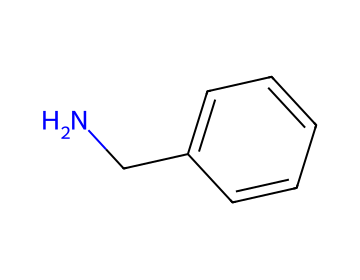
IDENTITY
COMPUTED
PROPERTIES
pH = 11.6 in water at a concentration of 100 g/L
1.09
log Kow = 1.09
1.09
1.09
Ammonia-like odor
Weak amine-like odor
0.98 at 68 °F (USCG, 1999) - Less dense than water; will float
0.983 at 19 °C/4 °C
Density: 0.9813 g/cu cm at 20 °C
Density = 0.9272 at 86.6 °C/4 °C
Relative density (water = 1): 0.98
0.983 @ 19°C
1.78 mPa-s at 21.2 °C, 0.295 mPa-s at 178.2 °C
Colorless liquid
Light amber liquid
1000000
Miscible in ethanol and diethyl ether. Very soluble in acetone. Soluble in benzene. Slightly soluble in chloroform.
In water, 1.00X10+6 mg/L at 20 °C (miscible)
1000 mg/mL at 20 °C
Solubility in water: miscible
Strongly alkaline ... skin irritant
168 °F (USCG, 1999)
168 °F
65 °C (149 °F) - closed cup
60 °C
364.1 °F at 760 mmHg (USCG, 1999)
185
185 °C
185.00 °C. @ 760.00 mm Hg
185 °C
185 °C @760 [mm Hg]
When heated to decomposition it emits toxic fumes.
-51 °F (USCG, 1999)
10
10 °C
10 °C
GHS
Danger
H302: Harmful if swallowed [Warning Acute toxicity, oral];H312: Harmful in contact with skin [Warning Acute toxicity, dermal];H314: Causes severe skin burns and eye damage [Danger Skin corrosion/irritation]
P260, P264, P270, P280, P301+P317, P301+P330+P331, P302+P352, P302+P361+P354, P304+P340, P305+P354+P338, P316, P317, P321, P330, P362+P364, P363, P405, and P501 (click each P-code to see the statement)
This chemical does not meet GHS hazard criteria for 0.2% (1 of 518) of reports.
HAZARDS
Chemical: Benzenemethanamine
Benzenemethanamine is listed on the EPA's Chemical Data Reporting (CDR) system. Manufacturers and importers of Benzenemethanamine are required to report information about their production and use of this chemical to the EPA under the Toxic Substances Control Act (TSCA). (40 eCFR Part 711)
Status: Active Update: 20-02-2023 https://echa.europa.eu/registration-dossier/-/registered-dossier/5667;Status: Active Update: 19-12-2018 https://echa.europa.eu/registration-dossier/-/registered-dossier/20033
Benzylamine: Does not have an individual approval but may be used under an appropriate group standard
Corrosive
Special Hazards of Combustion Products: Toxic nitrogen oxides may form in a fire. (USCG, 1999)
Flammable. Gives off irritating or toxic fumes (or gases) in a fire. Above 60 °C explosive vapour/air mixtures may be formed.
Flammable
Inhalation of vapor causes irritation of the mucous membranes of the nose and throat, and lung irritation with respiratory distress and cough. Headache, nausea, faintness, and anxiety can occur. Exposure to vapor produces eye irritation with lachrymation, conjunctivitis, and corneal edema resulting in halos around lights. Direct local contact with liquid is known to produce severe and sometimes permanent eye damage and skin burns. Vapors may also produce primary skin irritation and dermatitis. (USCG, 1999)
Corrosive to skin; [Quick CPC] Inhalation of vapor can cause respiratory distress and cough; Effects on the eye include lacrimation and corneal edema associated with a perception of halos around lights; [CAMEO] A corrosive substance that can cause pulmonary edema; [ICSC]
Amines, Phosphines, and Pyridines
Symbol: C; R: 21/22-34; S: (1/2)-26-36/37/39-45
UN Hazard Class: 8
D002; A solid waste containing benzylamine may become characterized as a hazardous waste when subjected to testing for corrosivity as stipulated in 40 CFR 261.21, and if so characterized, must be managed as a hazardous waste.
In presence of moisture, BENZYLAMINE may weakly corrode some metals. Liquid will attack some plastics (USCG, 1999). Neutralize acids to form salts plus water in exothermic reactions. May be incompatible with isocyanates, halogenated organics, peroxides, phenols (acidic), epoxides, anhydrides, and acid halides. Flammable gaseous hydrogen is generated in combination with strong reducing agents, such as hydrides.
This action promulgates standards of performance for equipment leaks of Volatile Organic Compounds (VOC) in the Synthetic Organic Chemical Manufacturing Industry (SOCMI). The intended effect of these standards is to require all newly constructed, modified, and reconstructed SOCMI process units to use the best demonstrated system of continuous emission reduction for equipment leaks of VOC, considering costs, non air quality health and environmental impact and energy requirements. Benzylamine is produced, as an intermediate or a final product, by process units covered under this subpart.
SAFETY
Fire Extinguishing Agents Not to Be Used: Water may be ineffective.;Fire Extinguishing Agents: Alcohol foam, dry chemical, carbon dioxide (USCG, 1999)
Use water spray, powder, alcohol-resistant foam, carbon dioxide. In case of fire: keep drums, etc., cool by spraying with water.
Fresh air, rest. Half-upright position. Artificial respiration may be needed. Refer for medical attention.
Remove contaminated clothes. Rinse skin with plenty of water or shower. Refer for medical attention .
First rinse with plenty of water for several minutes (remove contact lenses if easily possible), then refer for medical attention.
Rinse mouth. Do NOT induce vomiting. Refer for medical attention .
INHALATION: remove victim from exposure; if breathing is difficult, administer oxygen; if breathing has stopped, begin artificial respiration.;EYES or SKIN: wash with copious amounts of water for 15 min. (USCG, 1999)
Fireproof. Separated from strong oxidants, strong acids and food and feedstuffs.
Powder, alcohol-resistant foam, water spray, carbon dioxide. In case of fire: keep drums, etc., cool by spraying with water.
Wear self contained breathing apparatus for fire fighting if necessary.
Fireproof. Separated from strong oxidants, strong acids, food and feedstuffs.
SRP: Wastewater from contaminant suppression, cleaning of protective clothing/equipment, or contaminated sites should be contained and evaluated for subject chemical or decomposition product concentrations. Concentrations shall be lower than applicable environmental discharge or disposal criteria. Alternatively, pretreatment and/or discharge to a permitted wastewater treatment facility is acceptable only after review by the governing authority and assurance that "pass through" violations will not occur. Due consideration shall be given to remediation worker exposure (inhalation, dermal and ingestion) as well as fate during treatment, transfer and disposal. If it is not practicable to manage the chemical in this fashion, it must be evaluated in accordance with EPA 40 CFR Part 261, specifically Subpart B, in order to determine the appropriate local, state and federal requirements for disposal.
Collect leaking liquid in sealable containers. Cautiously neutralize remainder. Then wash away with plenty of water. Extra personal protection: complete protective clothing including self-contained breathing apparatus.
Neutralizing Agents for Acids and Caustics: Flush with water. (USCG, 1999)
Generators of waste (equal to or greater than 100 kg/mo) containing this contaminant, EPA hazardous waste number D002, must conform with USEPA regulations in storage, transportation, treatment and disposal of waste.
The following wastewater treatment technologies have been investigated for benzylamine: concentration process: biological treatment.
This combustible material may be burned in a chemical incinerator equipped with an afterburner and scrubber. Observe all federal, state, and local environmental regulations. Contact a licensed professional waste disposal service to dispose of this material.
Personal protection: complete protective clothing including self-contained breathing apparatus. Collect leaking and spilled liquid in sealable containers as far as possible. Cautiously neutralize remainder. Then wash away with plenty of water.
SRP: The scientific literature for the use of contact lenses in industry is conflicting. The benefit or detrimental effects of wearing contact lenses depend not only upon the substance, but also on factors including the form of the substance, characteristics and duration of the exposure, the uses of other eye protection equipment, and the hygiene of the lenses. However, there may be individual substances whose irritating or corrosive properties are such that the wearing of contact lenses would be harmful to the eye. In those specific cases, contact lenses should not be worn. In any event, the usual eye protection equipment should be worn even when contact lenses are in place.
SRP: Local exhaust ventilation should be applied wherever there is an incidence of point source emissions or dispersion of regulated contaminants in the work area. Ventilation control of the contaminant as close to its point of generation is both the most economical and safest method to minimize personnel exposure to airborne contaminants. Ensure that the local ventilation moves the contaminant away from the worker.
Ventilation, local exhaust, or breathing protection.
Excerpt from ERG Guide 153 [Substances - Toxic and/or Corrosive (Combustible)]:;IMMEDIATE PRECAUTIONARY MEASURE: Isolate spill or leak area in all directions for at least 50 meters (150 feet) for liquids and at least 25 meters (75 feet) for solids.;SPILL: Increase the immediate precautionary measure distance, in the downwind direction, as necessary.;FIRE: If tank, rail tank car or highway tank is involved in a fire, ISOLATE for 800 meters (1/2 mile) in all directions; also, consider initial evacuation for 800 meters (1/2 mile) in all directions. (ERG, 2024)
TOXICITY
A total of 224 expired air samples were collected from 28 healthy, non-smoking volunteers in Chicago(1); approximately 18% of the samples contained benzylamine at a geometric mean concentration of about 0.1 ng/L(1). In another study, a total of 387 expired air samples were collected from 54 healthy volunteers in Chicago(1); approximately 12% of the samples contained benzylamine at a geometric mean concentration of about 0.007 ng/L(2).
Semicarbazide-sensitive amine oxidase (SSAO) is highly expressed in adipose cells, and substrates of SSAO, such as benzylamine, in combination with low concentrations of vanadate strongly stimulate glucose transport and GLUT4 recruitment in 3T3-L1 and rat adipocytes. ... Acute intravenous administration of these drugs enhanced glucose tolerance in nondiabetic rats and in streptozotocin (STZ)-induced diabetic rats. This occurred in the absence of changes in plasma insulin concentrations. However, the administration of benzylamine or vanadate alone did not improve glucose tolerance. The improvement caused by benzylamine plus vanadate was abolished when rats were pretreated with the SSAO-inhibitor semicarbazide. Chronic administration of benzylamine and vanadate exerted potent antidiabetic effects in STZ-induced diabetic rats. Although daily administration of vanadate alone (50 and 25 umol/kg/day i.p.) for 2 weeks had little or no effect on glycemia, vanadate plus benzylamine reduced hyperglycemia in diabetic rats, enhanced basal and insulin-stimulated glucose transport, and upregulated GLUT4 expression in isolated adipocytes...
Benzylamine, a substrate of semicarbazide-sensitive amine oxidase (SSAO), stimulates glucose transport in rat adipocytes and improves glucose disposal in diabetic rats only in the presence of vanadate. These effects have been described to result from a synergism between the hydrogen peroxide formed during amine oxidation and vanadate, via the generation of pervanadate, a powerful insulin mimicker. However, it has also been reported that benzylamine alone can stimulate glucose uptake and inhibit lipolysis in human fat cells. ...This work ... investigated whether benzylamine on its own was able to induce both in vivo and in vitro insulin-like responses in animal models other than rat. In rabbits, the i.v. infusion of 7 umol/kg benzylamine before a glucose tolerance test resulted in a net reduction of the hyperglycemic response without a change in insulin secretion. Benzylamine also improved glucose tolerance and reduced lipid mobilization in hyperglycemic/obese mice. In vitro, 0.1 mM benzylamine stimulated glucose transport and inhibited lipolysis in mouse and rabbit adipocytes. These effects were blocked by previous treatments with semicarbazide, a SSAO inhibitor. Levels of benzylamine oxidation were more elevated in mouse than in rabbit adipose tissues, whereas the reverse was observed for skeletal muscles. Finally, benzylamine was unable to stimulate insulin secretion by isolated pancreatic islets from both species and SSAO activity was hardly detectable in pancreas. Together, /these/ results bring evidence that benzylamine on its own can improve glucose tolerance in rabbit and mouse, likely by stimulating glucose uptake via amine oxidase activation in insulin-sensitive tissues.
In mice deprived of food for 12 h, the i.c.v. or i.p. administration of benzylamine, a substrate common to both monoamine oxidase B and semicarbazide-sensitive benzylamine oxidases, dose-dependently inhibited feeding. This effect was significantly potentiated by selective monoamine oxidase A and B inhibition, suggesting that central monoamines, known to be substrates of these enzymes may be released. The i.p. administration of semicarbazide-sensitive benzylamine oxidase inhibitors, B24 (3,5-ethoxy-4-aminomethylpyridine) and MDL 72274 ((E)-2-phenyl-3-chloroallylamine) strongly potentiated the effect of i.p. but not i.c.v.-administered benzylamine. The hypophagic effect of benzylamine was evaluated following i.c.v. administration, in comparison with the effect of the sympathomimetic compound amphetamine or the K(+) channel blocker tetraethylammonium, as reference compounds. Our results make it possible to define benzylamine as a centrally acting hypophagic compound devoid of amphetamine-like motor stimulatory effects and point to a role of B24 and MDL 72274 as specific peripheral enhancers of the pharmacological effects of benzylamine.
Streptozotocin induced diabetic rats were treated with benzylamine (BZA) +/- vanadate (V) or insulin. In contrast to insulin, BZA + V treatment did not reduce HbA(1C) levels. However, it reduced the elevated serum semicarbazide-sensitive amine oxidase/vascular adhesion protein-1 (SSAO) activity, decreased the accumulation of advanced-glycation end products and increased the bioavailability of nitric oxide in diabetic animals, similarly to insulin. BZA alone did not affect any of these parameters.
For more Interactions (Complete) data for Benzylamine (7 total), please visit the HSDB record page.
LC50; Species: Pimephales promelas (fathead minnow); Conditions: flow through, 23.9 °C, pH 7.9, dissolved oxygen 6.9 mg/L, hardness 44.7 mg/L CaCO3, alkalinity 44.0 mg/L CaCO3; Concentration: 102 mg/L for 96 hr (confidence limit: 97.9-106 mg/L)
EC50; Species: Pimephales promelas (fathead minnow); Conditions: flow through, 23.9 °C, pH 7.9, dissolved oxygen 6.9 mg/L, hardness 44.7 mg/L CaCO3, alkalinity 44.0 mg/L CaCO3; Concentration: 98 mg/L for 96 hr (confidence limit: 94.5-102 mg/L); Effect: loss of equilibrium
LC50; Species: Pimephales promelas (fathead minnow, age 30 days, 0.087 g, 18.2 mm); Conditions: freshwater, flow through, 23.9 °C, pH 7.9, hardness 44.7 mg/L CaCO3, alkalinity 44.0 mg/L CaCO3, dissolved oxygen 6.9 mg/L; Concentration: 102000 ug/L (97900-106000 ug/L) for 96 hr /99% pure/
TERRESTRIAL FATE: Based on a classification scheme(1), an estimated Koc value of 270(SRC), determined from a log Kow of 1.09(2) and a regression-derived equation(3), indicates that benzylamine is expected to have moderate mobility in soil(SRC). The pKa of benzylamine is 9.33(4), indicating that this compound will entirely exist in the cation form in the environment and cations generally adsorb more strongly to soils containing organic carbon and clay than their neutral counterparts(5). Volatilization of benzylamine from moist soil surfaces is not expected to be an important fate process(SRC) given the predominance of the cationic state at pH values of 5 to 9(7). Benzylamine is not expected to volatilize from dry soil surfaces(SRC) based upon a vapor pressure of 0.662 mm Hg at 25 °C(8). Multiple biodegradation screening studies reported that benzylamine degraded 53-101% after 4-30 days(9,10)suggesting that biodegradation is expected to be an important fate process in terrestrial environments(SRC).
AQUATIC FATE: Based on a classification scheme(1), an estimated Koc value of 270(SRC), determined from a log Kow of 1.09(2) and a regression-derived equation(3), indicates that benzylamine is expected to adsorb to suspended solids and sediment(SRC). A pKa of 9.33(6) indicates benzylamine will exist almost entirely in the cation form at pH values of 5 to 9 and therefore volatilization from water surfaces is not expected to be an important fate process(7). According to a classification scheme(8), an estimated BCF of 2.4(SRC), from its log Kow(2) and a regression-derived equation(9), suggests the potential for bioconcentration in aquatic organisms is low(SRC). Benzylamine degraded 96.1-98.9% after 6 days in lake water(10), indicating benzylamine will biodegrade in aquatic environments(SRC). However, biodegradation may be attenuated by adsorption to suspended sediments(11,12).
ATMOSPHERIC FATE: According to a model of gas/particle partitioning of semivolatile organic compounds in the atmosphere(1), benzylamine, which has a vapor pressure of 0.662 mm Hg at 25 °C(2), is expected to exist solely as a vapor in the ambient atmosphere. Vapor-phase benzylamine is degraded in the atmosphere by reaction with photochemically-produced hydroxyl radicals(SRC); the half-life for this reaction in air is estimated to be 11 hours(SRC), calculated from its rate constant of 3.3X10⁻¹¹ cu cm/molecule-sec at 25 °C(3). Benzylamine does not contain chromophores that absorb at wavelengths >290 nm(4) and therefore is not expected to be susceptible to direct photolysis by sunlight(SRC).
The following concentrations of benzylamine (in mg/kg) were detected in samples of fresh vegetables: spinach, 6.1; red cabbage, 3.3; cabbage, 2.8; cauliflower, 1.4; kale, 3.8; white beet, 5.3; carrots, 2.8; red beet, 0.1; large radish, 1.8; red radish, 4.8; celery, 3.4. Benzylamine concentrations (in mg/kg) were detected in the following foods: maize, grains, 3.4; green salad, 11.5; rhubard, 2.9; apple flesh, 0.3; apple peel, 0.6(1).
Dermatotoxin - Skin burns.;Lacrimator (Lachrymator) - A substance that irritates the eyes and induces the flow of tears.;Toxic Pneumonitis - Inflammation of the lungs induced by inhalation of metal fumes or toxic gases and vapors.
The substance can be absorbed into the body by inhalation of its vapour and by ingestion.
Plants containing benzylamine(1). [Table#4170]
Sore throat. Cough. Burning sensation. Shortness of breath. Laboured breathing. Symptoms may be delayed.
Pain. Redness. Skin burns. Blisters.
Pain. Redness. Severe deep burns.
Burning sensation. Abdominal pain. Shock or collapse.
The Koc of benzylamine is estimated as 270(SRC), using a log Kow of 1.09(1) and a regression-derived equation(2). According to a classification scheme(3), this estimated Koc value suggests that benzylamine is expected to have moderate mobility in soil. The pKa of benzylamine is 9.33(4), indicating that this compound will almost entirely exist in the cation form in the environment and cations generally adsorb more strongly to soils containing organic carbon and clay than their neutral counterparts(5).
Benzylamine has been detected in a wide variety of fresh vegetables and fruits such as spinach, cabbage, cauliflower, kale, beets, carrots, radishes, celery, maize, apples and rhubarb(1).
/SIGNS AND SYMPTOMS/ Corrosive to the eyes, the skin and the respiratory tract. Inhalation of vapor may cause lung edema ... The symptoms of lung edema often do not become manifest until a few hours have passed, and they are aggravated by physical effort. Rest and medical observation is therefore essential. Immediate administration of an appropriate spray, by a doctor or a person authorized by him/her, should be considered.
/SIGNS AND SYMPTOMS/ Inhalation: Sore throat. Cough. Burning sensation. Shortness of breath. Labored breathing. Symptoms may be delayed. Skin: Pain. Redness. Skin burns. Blisters. Eyes: Pain. Redness. Severe deep burns. Ingestion: Burning sensation. Abdominal pain. Shock or collapse.
/SIGNS AND SYMPTOMS/ Highly irritating to skin, mucous membranes.
/SIGNS AND SYMPTOMS/ Benzylamine is an irritating, corrosive liquid. The vapor irritates the eyes and the mucous membranes of the respiratory tract. The solution irritates and corrodes the skin. Long-term exposure can cause eczema.
/CASE REPORTS/ The case of a 48 year old chemist who developed a work related dermatitis after handling epichlorohydrin, benzylamine, and benzyl-1-amino-3-chloro-2-hydroxypropane was described. The patient presented with a dermatitis of the hands and face which subsided after a few days away from work. He used the compounds as chemical intermediates in the potential synthesis of agricultural chemicals, and his dermatitis developed shortly after he had contact with the materials. The clinical history included hay fever, and positive inhalation responses to house dust, grass pollen, and animal dander were obtained. A weak reaction to formaldehyde was found in patch tests with the ICDRG standard series. Patch tests to epichlorohydrin were negative. Patch tests to benzylamine and benzyl-1-amino-3-chloro-2-hydroxypropane were positive. These compounds were tested at 0.1 and 1% in 70% ethanol. Ten comparisons had negative patch tests to these compounds. It was concluded that the positive reactions in the patient are allergic reactions which probably demonstrate cross sensitivity.
REGULATORY
Chemical: Benzenemethanamine
Benzenemethanamine is listed on the EPA's Chemical Data Reporting (CDR) system. Manufacturers and importers of Benzenemethanamine are required to report information about their production and use of this chemical to the EPA under the Toxic Substances Control Act (TSCA). (40 eCFR Part 711)
Status: Active Update: 20-02-2023 https://echa.europa.eu/registration-dossier/-/registered-dossier/5667;Status: Active Update: 19-12-2018 https://echa.europa.eu/registration-dossier/-/registered-dossier/20033
Benzylamine: Does not have an individual approval but may be used under an appropriate group standard
D002; A solid waste containing benzylamine may become characterized as a hazardous waste when subjected to testing for corrosivity as stipulated in 40 CFR 261.21, and if so characterized, must be managed as a hazardous waste.
This action promulgates standards of performance for equipment leaks of Volatile Organic Compounds (VOC) in the Synthetic Organic Chemical Manufacturing Industry (SOCMI). The intended effect of these standards is to require all newly constructed, modified, and reconstructed SOCMI process units to use the best demonstrated system of continuous emission reduction for equipment leaks of VOC, considering costs, non air quality health and environmental impact and energy requirements. Benzylamine is produced, as an intermediate or a final product, by process units covered under this subpart.
PHARMACOLOGY
Glucose, 3-deoxyglucosone (3-DG), and methylglyoxal (MG) oxidatively deaminated benzylamine to benzaldehyde in the presence of Cu(2+) at a physiological pH and temperature but not glyoxal. 3-DG and MG were more effective oxidants than glucose. We have determined the effects of metal ions, pH, oxygen, and radical scavengers on the oxidative deamination. The formation of benzaldehyde was greatest with Cu(2+), and was accelerated at a higher pH and in the presence of oxygen. EDTA, catalase, and dimethyl sulfoxide significantly inhibited the oxidation, suggesting the participation of reactive oxygen species. From these results, we propose a mechanism for the oxidative deamination by the Strecker-type reaction and the reactive oxygen species-mediated oxidation during glycoxidation.
Human semicarbazide-sensitive amine oxidase (SSAO) is a target for novel anti-inflammatory drugs that inhibit enzymatic activity. However, progress in developing such drugs has been hampered by an incomplete understanding of mechanisms involved in substrate turnover. We report here results of a comparative study of human and bovine SSAO enzymes that reveal binding of substrates and other ligands to at least two (human) and up to four (bovine) distinct sites on enzyme monomers. Anaerobic spectroscopy reveals binding of substrates (spermidine and benzylamine) and of an imidazoline site ligand (clonidine) to the reduced active site of bovine SSAO, whereas interactions with oxidized enzyme are evident in kinetic assays and crystallization studies. Radioligand binding experiments with [(3)H]tetraphenylphosphonium, an inhibitor of bovine SSAO that binds to an anionic cavity outside the active site, reveal competition with spermidine, benzylamine, and clonidine, indicating that these ligands also bind to this second anionic region. Kinetic models of bovine SSAO are consistent with one spermidine molecule straddling the active and secondary sites on both oxidized and reduced enzyme, whereas these sites are occupied by two individual molecules of smaller substrates such as benzylamine. Clonidine and other imidazoline site ligands enhance or inhibit activity as a result of differing affinities for both sites on oxidized and reduced enzyme. In contrast, although analyses of kinetic data obtained with human SSAO are also consistent with ligands binding to oxidized and reduced enzyme, ... no apparent requirement for substrate or modulator binding to any secondary site to model enzyme behavior /was observed/.
The in vivo and in vitro disposition of benzylamine was investigated in rats. Benzylamine was metabolized to only a small extent by rat liver subcellular fractions. In contrast, it was extensively metabolized in vivo in rats. In vivo studies performed with stable isotope-labeled benzylamine enabled rapid mass spectrometric identification of metabolites present in rat bile and urine. The major metabolite of benzylamine was the hippuric acid formed by glycine conjugation of benzoic acid. LC/MS analysis of bile and urine obtained from rats dosed with 1:1 equimolar mixture of either d(0):d(7)- or d(0):d(2)-benzylamine showed the presence of several glutathione adducts in addition to the hippuric acid metabolite. The presence of various glutathione adducts indicated that benzylamine was metabolized to a number of reactive intermediates. Various metabolic pathways, including those independent of P450, were found to produce these intermediates. A previously undocumented pathway included the formation of a new carbon-nitrogen bond that led to a potentially reactive intermediate, Ar-CH(2)-NH(CO)-X, capable of interacting with various nucleophiles. The origin of this reactive intermediate is postulated to occur via the formation of either a formamide or carbamic acid metabolites. Metabolites which were produced by the reaction of this intermediate, Ar-CH(2)-NH(CO)-X with nucleophiles included S-[benzylcarbamoyl] glutathione, N-acetyl-S-[benzylcarbamoyl]cysteine, S-[benzylcarbamoyl] cysteinylglycine, S-[benzylcarbamoyl] cysteinylglutamate, N-[benzylcarbamoyl] glutamate, and an oxidized glutathione adduct. Bioactivation of amines via this pathway has not been previously described. The oxidative deamination of benzylamine yielding the benzaldehyde was demonstrated to be a precursor to the hippuric acid metabolite and S-benzyl-L-glutathione. The formation of the S-benzyl-L-glutathione conjugate showed that a net displacement of amine from benzylamine had taken place with a subseq
In mammals, benzylamine is metabolized by semicarbazide-sensitive amine oxidase (SSAO) to benzaldehyde and hydrogen peroxide. This latter product has insulin-mimicking action, and is involved in the effects of benzylamine on human adipocytes: stimulation of glucose transport and inhibition of lipolysis.
Hippuric acid was excreted after ingestion of benzylamine by humans.
The activity of monoamine oxidase was studied in the mitochondria fraction of the brain stem of active sleeping, or hibernating ground squirrels. During hibernation, deamination of serotonin and conversion of monoamine oxide serotonin complex decr more than benzylamine deamination and monoamine oxide benzylamine complex conversion.
For more Metabolism/Metabolites (Complete) data for Benzylamine (7 total), please visit the HSDB record page.
Cytoplasm;Extracellular
USES
Used as a chemical intermediate; [HSDB]
In organic synthesis
Chemical intermediate for dyes, pharmaceuticals and polymers
... raw material for the production of biotin (Vitamin H), as an intermediate for certain photographic materials..
In synthetic textiles, in paints, and as a corrosion inhibitor ... an intermediate in the production of ... compounds for plant and material protection. In this case ... as "protected nitrogen"
Reaction with glyoxal hemiacetal to synthesize 1-substituted isoquinolines.
2023: <75,000 lb;2022: <75,000 lb;2021: <75,000 lb;2020: 75,000 - <500,000 lb
Benzenemethanamine is listed as an Extended High Production Volume (EHPV). Chemicals listed as EHPV were produced in or imported into the U.S. in >1 million pounds according to the 2002 Toxic Substances Control Act (TSCA) Inventory Update. The EHPV program is a voluntary initiative that allows companies to demonstrate that adequate screening data exist for organic HPV chemicals.
Production volumes for non-confidential chemicals reported under the Inventory Update Rule. [Table#4171]
Production volume for non-confidential chemicals reported under the 2006 Inventory Update Rule. Chemical: Benzenemethanamine. Aggregated National Production Volume: < 500,000 pounds.
Intermediate;Monomers
Benzylamine is produced by the reaction of benzyl chloride with ammonia in aqueous solution. The catalytic hydrogenation of benzonitrile and the reaction of benzaldehyde with ammonia in the presence of hydrogen and catalysts are alternatives.
Preparation: benzyl chloride and ammonia; by reduction of benzonitrile; from benzyl bromide and acetamide; from N-benzylphthalimide and hydrazine hydrate.
Paint and Coating Manufacturing;All Other Basic Organic Chemical Manufacturing
Benzenemethanamine: ACTIVE
ALIASES
REACTIONS


