
uspto-grants-1998_03 · 10.6084/m9.figshare.5104873.v1 · US05723105
查看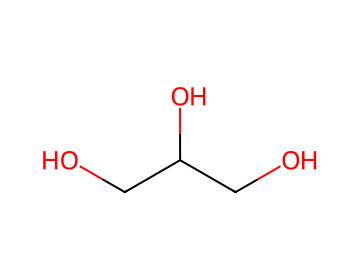
IDENTITY
COMPUTED
PROPERTIES
Neutral to litmus
log Kow = -1.76
-1.76
-1.76
MILD ODOR
Odorless
Sweet, warm taste
1.261 at 68 °F (USCG, 1999) - Denser than water; will sink
1.2613 g/cu cm at 20 °C
A trihydric (polyhydric) alcohol; hygroscopic; density (anhydrous): 1.2653; density (USP): >1.249 at 25 °C/25 °C; density (dynamite): 1.2620
Relative density (water = 1): 1.26
1.26
1.2613 @ 20°C
954 CENTIPOISES AT 25 °C; 17 CENTIPOISES AT 25 °C (70% SOLN)
Syrupy, rhombic plates
Clear, colorless syrupy liquid
Clear, colorless, ... syrupy liquid or solid (below 64 degrees F) [Note: The solid form melts above 64 degrees F but the liquid form freezes at a much lower temperature].
greater than or equal to 100 mg/mL at 64 °F (NTP, 1992)
Miscible with ethanol; slightly soluble in ethyl ether; insoluble in benzene, carbon tetrachloride, chloroform, carbon disulfide, petroleum ether
1 part dissolves in 11 parts ethyl acetate, in approx 500 parts ethyl ether. Insoluble in benzene, chloroform, carbon tetrachloride, carbon disulfide, petroleum ether, oils.
SOLUBILITY IN ACETONE: 1 G IN 15 ML
Insoluble in fixed and volatile oils
In water, 5.296X10+6 mg/L at 25 °C
320 °F (NTP, 1992)
177 °C
177 °C (Open cup)
176 °C c.c.
320 °F
320 °F
554 °F at 760 mmHg (decomposes) (NTP, 1992)
290 °C (decomposes)
BP: 263 °C at 400 mm Hg; 240.0 °C at 200 mm Hg; 220.1 °C at 100 mm Hg; 208.0 °C at 60 mm Hg; 182.2 °C at 20 mm Hg; 167.2 °C at 10 mm Hg; 153.8 °C at 5 mm Hg; 125.5 °C at 1.0 mm Hg
290 °C
554 °F (decomposes)
290 °C @760 [mm Hg]
Pure gycerin is not prone to oxidation by the atmosphere under ordinary conditions, but is decomposes on heating with the evolution of toxic acrolein.
64 °F (NTP, 1992)
18.1 °C
20 °C
18 °C
64 °F
18.1 °C
GHS
This chemical does not meet GHS hazard criteria for 98.3% (5522 of 5617) of all reports.
Not Classified;Reported as not meeting GHS hazard criteria by 5522 of 5617 companies (only 1.7% companies provided GHS information). For more detailed information, please visit ECHA C&L website.
Aggregated GHS information provided per 5617 reports by companies from 16 notifications to the ECHA C&L Inventory.;Reported as not meeting GHS hazard criteria per 5522 of 5617 reports by companies.;There are 13 notifications provided by 95 of 5617 reports by companies with hazard statement code(s).;Information may vary between notifications depending on impurities, additives, and other factors. The percentage value in parenthesis indicates the notified classification ratio from companies that provide hazard codes. Only hazard codes with percentage values above 10% are shown. For more detailed information, please visit ECHA C&L website.
HAZARDS
Chemical: 1,2,3-Propanetriol
Commission Regulation (EU) No 231/2012 (amended)
Regulation (EC) No 1333/2008 (amended)
1,2,3-Propanetriol is listed on the EPA's Chemical Data Reporting (CDR) system. Manufacturers and importers of 1,2,3-Propanetriol are required to report information about their production and use of this chemical to the EPA under the Toxic Substances Control Act (TSCA). (40 eCFR Part 711)
Status: Active Update: 18-04-2023 https://echa.europa.eu/registration-dossier/-/registered-dossier/14481
Propanetriol: Does not have an individual approval but may be used as a component in a product covered by a group standard. It is not approved for use as a chemical in its own right.
IMAP assessments - 1,2,3-Propanetriol: Human health tier I assessment;IMAP assessments - 1,2,3-Propanetriol: Environment tier I assessment
This chemical is combustible. (NTP, 1992)
Combustible. Gives off irritating or toxic fumes (or gases) in a fire.
No hazard (USCG, 1999)
No listed effects of short-term or long-term exposure; [ICSC]
Substances migrating to food from paper and paperboard products used in food packaging that are generally recognized as safe for their intended use, within the meaning of section 409 of the Act: Glycerin is included on this list.
Glycerin used as a multiple purpose GRAS food substance in food for human consumption is generally recognized as safe when used in accordance with good manufacturing practice.
Glycerin used as a general purpose food additive in animal drugs, feeds, and related products is generally recognized as safe when used in accordance with good manufacturing or feeding practice.
Alcohols and Polyols
Chemical: Glycerol; Green circle - The chemical has been verified to be of low concern based on experimental and modeled data.
Residues resulting from the use of the following substances as either an inert or an active ingredient in a pesticide chemical formulation, including antimicrobial pesticide chemicals, are exempted from the requirement of a tolerance under FFDCA section 408, if such use is in accordance with good agricultural or manufacturing practices. Glycerin is included on this list.
As the federal pesticide law FIFRA directs, EPA is conducting a comprehensive review of older pesticides to consider their health and environmental effects and make decisions about their future use. Under this pesticide reregistration program, EPA examines health and safety data for pesticide active ingredients initially registered before November 1, 1984, and determines whether they are eligible for reregistration. In addition, all pesticides must meet the new safety standard of the Food Quality Protection Act of 1996. Pesticides for which EPA had not issued Registration Standards prior to the effective date of FIFRA, as amended in 1988, were divided into three lists based upon their potential for human exposure and other factors, with List B containing pesticides of greater concern and List D pesticides of less concern. Glycerol is found on List D. Case No: 4044; Case Status: No products containing the pesticide are actively registered ... The case /is characterized/ as "cancelled." Under FIFRA, pesticide producers may voluntarily cancel their registered products. EPA also may cancel pesticide registrations if registrants fail to pay required fees or make/meet certain reregistration commitments, or if EPA reaches findings of unreasonable adverse effects.; Active ingredient (AI): Glycerol; AI Status: The active ingredient is no longer contained in any registered pesticide products ... "cancelled."
Permissible Exposure Limit: Table Z-1 8-hr Time Weighted Avg: 15 mg/cu m. /Mist, total dust/
Permissible Exposure Limit: Table Z-1 8-hr Time Weighted Avg: 5 mg/cu m. /Mist, respirable fraction/
Vacated 1989 OSHA PEL TWA 10 mg/cu m is still enforced in some states. /Mist, total/
Vacated 1989 OSHA PEL TWA 5 mg/cu m is still enforced in some states. /Mist, resp/
GLYCERINE is incompatible with strong oxidizers. It is also incompatible with hydrogen peroxide, potassium permanganate, nitric acid + sulfuric acid, perchloric acid + lead oxide, acetic anhydride, aniline + nitrobenzene, Ca(OCl)2, CrO3, F2 + PbO, KMnO4, K2O2, AgClO4 and NaH. A mixture with chlorine explodes if heated to 158-176 °F. It reacts with acetic acid, potassium peroxide, sodium peroxide, hydrochloric acid, (HClO4 + PbO) and Na2O2. Contact with potassium chlorate may be explosive. It also reacts with ethylene oxide, perchloric acid, nitric acid + hydrofluoric acid and phosphorus triiodide. (NTP, 1992)
This action promulgates standards of performance for equipment leaks of Volatile Organic Compounds (VOC) in the Synthetic Organic Chemical Manufacturing Industry (SOCMI). The intended effect of these standards is to require all newly constructed, modified, and reconstructed SOCMI process units to use the best demonstrated system of continuous emission reduction for equipment leaks of VOC, considering costs, non air quality health and environmental impact and energy requirements. Glycerol is produced, as an intermediate or a final product, by process units covered under this subpart.
SAFETY
Use water spray, alcohol-resistant foam, dry powder, carbon dioxide. In case of fire: keep drums, etc., cool by spraying with water.
Fresh air, rest.
Rinse skin with plenty of water or shower. Rinse skin with plenty of water or shower.
First rinse with plenty of water for several minutes (remove contact lenses if easily possible), then refer for medical attention.
Rinse mouth. Rinse mouth.
EYES: First check the victim for contact lenses and remove if present. Flush victim's eyes with water or normal saline solution for 20 to 30 minutes while simultaneously calling a hospital or poison control center. Do not put any ointments, oils, or medication in the victim's eyes without specific instructions from a physician. IMMEDIATELY transport the victim after flushing eyes to a hospital even if no symptoms (such as redness or irritation) develop.;SKIN: IMMEDIATELY flood affected skin with water while removing and isolating all contaminated clothing. Gently wash all affected skin areas thoroughly with soap and water. If symptoms such as redness or irritation develop, IMMEDIATELY call a physician and be prepared to transport the victim to a hospital for treatment.;INHALATION: IMMEDIATELY leave the contaminated area; take deep breaths of fresh air. If symptoms (such as wheezing, coughing, shortness of breath, or burning in the mouth, throat, or chest) develop, call a physician and be prepared to transport the victim to a hospital. Provide proper respiratory protection to rescuers entering an unknown atmosphere. Whenever possible, Self-Contained Breathing Apparatus (SCBA) should be used; if not available, use a level of protection greater than or equal to that advised under Protective Clothing.;INGESTION: DO NOT INDUCE VOMITING. If the victim is conscious and not convulsing, give 1 or 2 glasses of water to dilute the chemical and IMMEDIATELY call a hospital or poison control center. Be prepared to transport the victim to a hospital if advised by a physician. If the victim is convulsing or unconscious, do not give anything by mouth, ensure that the victim's airway is open and lay the victim on his/her side with the head lower than the body. DO NOT INDUCE VOMITING. IMMEDIATELY transport the victim to a hospital. (NTP, 1992)
(General first aid procedures);Eye: Irrigate immediately - If this chemical contacts the eyes, immediately wash (irrigate) the eyes with large amounts of water, occasionally lifting the lower and upper lids. Get medical attention immediately.;Skin: Water wash - If this chemical contacts the skin, wash the contaminated skin with water.;Breathing: Fresh air
Separated from strong oxidants.
200.0 [mg/m3], inhalable fraction[German Research Foundation (DFG)]
Water or foam may cause frothing.
Extinguishing methods: Alcohol foam.
To fight fire, use alcohol foam, CO2, dry chemical.
This material is combustible and may explode when exposed to strong oxidizers, flame, or extreme heat.
Glycerol should preferably be stored at 40 - 60 °C under nitrogen blanketing. It is not corrosive and presents little risk of ignition because of its high flash point. Highly concentrated glycerol does not corrode steel, but storage tanks of carbon steel must be protected by surface coating to prevent rusting by residual moisture. Glycerol is therefore usually stored in tanks of stainless steel or aluminum.
Glycerin oral solution should be stored in tight containers at a temp less than 40 °C, perferably between 15-30 °C; freezing should be avoided. Glycerin ophthalmic soln should be protected from light and stored in tight glass or plastic containers. The ophthalmic soln should be ... discarded 6 mo after the dropper is first placed in the soln.
Glycerin rectal suppositories should preferably be stored at less than 25 °C.
Store container tightly closed. Store at room temperature: 15 deg - 30 °C (59 deg - 86 °F). Do not exceed 30 °C (86 deg F).
For more Storage Conditions (Complete) data for GLYCERIN (7 total), please visit the HSDB record page.
Wear approved respiratory protection, chemically compatible gloves and protective clothing. Wipe up spillage or collect spillage using a high efficiency vacuum cleaner. Avoid breathing vapor. Place spillage in appropriately labelled container for disposal.
Absorb with paper. Evaporate completely all spilt surface. Dispose by burning the paper after complete ventilation of vapor.
SRP: The most favorable course of action is to use an alternative chemical product with less inherent propensity for occupational harm/injury/toxicity or environmental contamination. Recycle any unused portion of the material for its approved use or return it to the manufacturer or supplier. Ultimate disposal of the chemical must consider: the material's impact on air quality; potential migration in soil or water; effects on animal and plant life; and conformance with environmental and public health regulations.
Mixture with a more flammable solvent followed by incineration.
Ventilation. Collect leaking and spilled liquid in covered containers as far as possible. Absorb remaining liquid in sand or inert absorbent. Then store and dispose of according to local regulations.
SRP: The scientific literature for the use of contact lenses by industrial workers is inconsistent. The benefits or detrimental effects of wearing contact lenses depend not only upon the substance, but also on factors including the form of the substance, characteristics and duration of the exposure, the uses of other eye protection equipment, and the hygiene of the lenses. However, there may be individual substances whose irritating or corrosive properties are such that the wearing of contact lenses would be harmful to the eye. In those specific cases, contact lenses should not be worn. In any event, the usual eye protection equipment should be worn even when contact lenses are in place.
As with all fires, evacuate personnel to a safe area. Firefighters should use self-contained breathing equipment and protective clothing.
As a general rule, when handling USP Reference Standards avoid all contact and inhalation of dust, mists, and/or vapors associated with the material. Wash thoroughly after handling.
/Wear/ chemically compatible gloves /and/ safety glasses or goggles. Protect exposed skin.
Wear safety goggles.
TOXICITY
Concomitant administration of carbonic anhydrase inhibitors or topical miotics may prolong the effects of glycerin.
Glycerin ...and propylene glycol ...are commonly used as humectant ingredients in manufactured cigarettes to control and maintain the moisture content of the cut tobacco filler. The potential of these added humectants to affect the toxicity of cigarette smoke was investigated in a subchronic nose-only smoke inhalation study in rats. Filtered test cigarettes were prepared from an American-style tobacco blend containing either glycerin added at 5.1% wt/wt tobacco, propylene glycol at 2.2% wt/wt tobacco, or combinations of these humectants totaling 2.3%, 3.9%, and 7.2% wt/wt tobacco. Other groups of animals were exposed similarly to the smoke of reference cigarettes without added humectants, or to filtered air (sham control). Smoke exposures were conducted for 1 hr/day, 5 days/wk for 13 wk, at target smoke particulate concentrations of 350 mg/cu m. All smoke-exposed groups had equivalent increases in blood carboxyhemoglobin, serum nicotine, and serum cotinine relative to the air controls. Smoke-associated reductions in body weights and occasional increases in heart and lung weights were generally similar among the various exposure conditions at necropsy. Increases in serum alkaline phosphatase and decreases in serum glucose and cholesterol were observed among smoke-exposed females relative to air controls. However, no significant differences in these parameters were evident between the humectant-containing and reference cigarette smoke exposure groups. Assessments of respiration conducted after 3, 6, 9, and 12 wk of smoke exposure indicated an initial smoke-related but not humectant-related decrease in respiratory rate, tidal volume, and minute volume during the first 20 min of each smoke exposure. Respiratory-tract histopathology was consistent across sexes and smoke groups, comprising (1) diffuse and focal alveolar pigmented macrophages and chronic interstitial inflammation in the lung, (2) laryngeal epithelial hyperplasia, squamous metaplasia, and scab formation, an
The use of glycerol for boar semen cryopreservation results in low fertility, possibly due to toxicity. This has led to recommend the use of solutions with less than 4% glycerol. Trehalose is a disaccharide known to stabilize proteins and biologic membranes during processes such as cryopreservation. Thus, it was decided to evaluate the cryoprotective effect of glycerol/trehalose mixtures. Effects on motility (M), viability (Vb) and acrosomal integrity (nA) were evaluated. Sperm samples were frozen in three different extenders: G4 contained 4% glycerol; T1 contained 1% glycerol plus 250 mM trehalose and T0.5 was constituted by 0.5% glycerol plus 250 mM trehalose. All extenders yielded similar post-freezing/thawing motility rates. Viability was diminished in T0.5 as compared to the others. In regard to acrosome integrity, it was twice as high (P<0.05) in the trehalose enriched media as in G4, the glycerol-only extender. Thus, T1 twice as many spermatozoa were alive, motile and intact, than in either T0.5 or G4, i.e. during freeze/thawing the use of T1 resulted in twice as many fertile cells as when using the other extenders. During our study, we noted that there were wide individual variations both in sperm viability and in motility.
Bovine pericardium is a widely utilized biomaterial. Usually, after harvesting, it is advantageous that the pericardium be immersed in glycerol to improve its shelf life. This can induce some degree of toxicity in the material. The studies were performed in compliance with the rules of /International Organization for Standardization/ 10993 and OECD 487, in the biological evaluation of medical devices. The material was prepared without previous washing. After sterilization by gamma radiation the pericardium was immersed in RPMI 1640 culture medium to fulfill the extraction condition. The same extract was employed in the cytotoxic and genotoxic tests. The procedures were carried out with Chinese hamster ovary cell line and to determine the cytotoxicity, a colorimetric method with the tetrazolium compound...was used. For the genotoxicity, following the in vitro micronucleus assay, the test was developed with and without metabolic activation. The Cytotoxicity Index was graphically estimated at the extract concentration of 78%. In the genotoxicity test, the average value of cell proliferation index was found to be 1.62 +/- 0.02 with ...metabolic activator and 1.91 +/- 0.01 without ...metabolic activator. Both values are similar to the negative control value in the micronucleus assay. We observed that although the pericardium preserved in glycerol shows a certain level of cytotoxicity, it does not show any genotoxicity.
For more Interactions (Complete) data for GLYCERIN (7 total), please visit the HSDB record page.
Eyes, skin, respiratory system, kidneys
Chronically high levels of glycerol are associated with Glycerol Kinase Deficiency.
Toxicity threshold (cell multiplication inhibition test) Algae (Microcystis aeruginosa) 2900 mg/l
Toxicity threshold (cell multiplication inhibition test) Protozoa (Entosiphon sulcatum) 3200 mg/l
LC50; Species: Goldfish; Concentration: >5000 mg/L for 24 hr - modified ASTM D 1345
LC50; Species: Daphnia magna (Water flea, age < or = 24 hr); Conditions: freshwater, static, 20-22 °C; Concentration: >10000 mg/L for 24 hr /formulated product/
TERRESTRIAL FATE: Based on a classification scheme(1), an estimated Koc value of 1(SRC), determined from a structure estimation method(2), indicates that glycerin is expected to have very high mobility in soil(SRC). Volatilization of glycerin from moist soil surfaces is not expected to be an important fate process(SRC) given a Henry's Law constant of 1.73X10⁻⁸ atm-cu m/mole(3). Glycerin is not expected to volatilize from dry soil surfaces(SRC) based upon a vapor pressure of 1.68X10⁻⁴ mm Hg at 25 °C(4). A 63% of theoretical BOD using activated sludge in the Japanese MITI test(5) suggests that biodegradation is an important environmental fate process in soil(SRC).
AQUATIC FATE: Based on a classification scheme(1), an estimated Koc value of 1(SRC), determined from a structure estimation method(2), indicates that glycerin is not expected to adsorb to suspended solids and sediment(SRC). Volatilization from water surfaces is not expected(3) based upon a Henry's Law constant of 1.73X10⁻⁸ atm-cu m/mole(4). According to a classification scheme(5), an estimated BCF of 3(SRC), from its log Kow of -1.76(6) and a regression-derived equation(7), suggests the potential for bioconcentration in aquatic organisms is low(SRC). A 63% of theoretical BOD using activated sludge in the Japanese MITI test(8) suggests that biodegradation is an important environmental fate process in water(SRC).
ATMOSPHERIC FATE: According to a model of gas/particle partitioning of semivolatile organic compounds in the atmosphere(1), glycerin, which has a vapor pressure of 1.68X10⁻⁴ mm Hg at 25 °C(2), will exist in both the vapor and particulate phases in the ambient atmosphere. Vapor-phase glycerin is degraded in the atmosphere by reaction with photochemically-produced hydroxyl radicals(SRC); the half-life for this reaction in air is estimated to be 7 hours(SRC), calculated from its rate constant of 1.9X10⁻¹¹ cu cm/molecule-sec at 25 °C(SRC) that was derived using a structure estimation method(3). Particulate-phase glycerin may be removed from the air by wet or dry deposition(SRC). Glycerin does not contain chromophores that absorb at wavelengths >290 nm(4), and therefore is not expected to be susceptible to direct photolysis by sunlight(SRC).
inhalation, skin and/or eye contact
Safe in the present practices of use and concentration. Ingredient, concentration, and use information are available in documents discoverable at https://cir-reports.cir-safety.org
Glycerin was reported present in Cork Oak, Quercus suber L., in the cork at 65,000 ppm(1).
Dry skin.
Diarrhoea.
irritation eyes, skin, respiratory system; headache, nausea, vomiting; kidney injury
Chemical: GLYCEROL
Glycerin was found but not quantified in the primary waste treatment effluent of the Oak Ridge treatment facility in 1974(1). It was identified in the influent to the industrial wastewater treatment plant of the Kashima petrochemical complex, Japan(2).
Using a structure estimation method based on molecular connectivity indices(1), the Koc of glycerin can be estimated to be 1(SRC). According to a classification scheme(2), this estimated Koc value suggests that glycerin is expected to have very high mobility in soil.
REGULATORY
Chemical: 1,2,3-Propanetriol
Commission Regulation (EU) No 231/2012 (amended)
Regulation (EC) No 1333/2008 (amended)
1,2,3-Propanetriol is listed on the EPA's Chemical Data Reporting (CDR) system. Manufacturers and importers of 1,2,3-Propanetriol are required to report information about their production and use of this chemical to the EPA under the Toxic Substances Control Act (TSCA). (40 eCFR Part 711)
Status: Active Update: 18-04-2023 https://echa.europa.eu/registration-dossier/-/registered-dossier/14481
Propanetriol: Does not have an individual approval but may be used as a component in a product covered by a group standard. It is not approved for use as a chemical in its own right.
Substances migrating to food from paper and paperboard products used in food packaging that are generally recognized as safe for their intended use, within the meaning of section 409 of the Act: Glycerin is included on this list.
Glycerin used as a multiple purpose GRAS food substance in food for human consumption is generally recognized as safe when used in accordance with good manufacturing practice.
Glycerin used as a general purpose food additive in animal drugs, feeds, and related products is generally recognized as safe when used in accordance with good manufacturing or feeding practice.
Residues resulting from the use of the following substances as either an inert or an active ingredient in a pesticide chemical formulation, including antimicrobial pesticide chemicals, are exempted from the requirement of a tolerance under FFDCA section 408, if such use is in accordance with good agricultural or manufacturing practices. Glycerin is included on this list.
As the federal pesticide law FIFRA directs, EPA is conducting a comprehensive review of older pesticides to consider their health and environmental effects and make decisions about their future use. Under this pesticide reregistration program, EPA examines health and safety data for pesticide active ingredients initially registered before November 1, 1984, and determines whether they are eligible for reregistration. In addition, all pesticides must meet the new safety standard of the Food Quality Protection Act of 1996. Pesticides for which EPA had not issued Registration Standards prior to the effective date of FIFRA, as amended in 1988, were divided into three lists based upon their potential for human exposure and other factors, with List B containing pesticides of greater concern and List D pesticides of less concern. Glycerol is found on List D. Case No: 4044; Case Status: No products containing the pesticide are actively registered ... The case /is characterized/ as "cancelled." Under FIFRA, pesticide producers may voluntarily cancel their registered products. EPA also may cancel pesticide registrations if registrants fail to pay required fees or make/meet certain reregistration commitments, or if EPA reaches findings of unreasonable adverse effects.; Active ingredient (AI): Glycerol; AI Status: The active ingredient is no longer contained in any registered pesticide products ... "cancelled."
This action promulgates standards of performance for equipment leaks of Volatile Organic Compounds (VOC) in the Synthetic Organic Chemical Manufacturing Industry (SOCMI). The intended effect of these standards is to require all newly constructed, modified, and reconstructed SOCMI process units to use the best demonstrated system of continuous emission reduction for equipment leaks of VOC, considering costs, non air quality health and environmental impact and energy requirements. Glycerol is produced, as an intermediate or a final product, by process units covered under this subpart.
PHARMACOLOGY
A - Alimentary tract and metabolism;A06 - Drugs for constipation;A06A - Drugs for constipation;A06AX - Other drugs for constipation;A06AX01 - Glycerol
A - Alimentary tract and metabolism;A06 - Drugs for constipation;A06A - Drugs for constipation;A06AG - Enemas;A06AG04 - Glycerol
QA - Alimentary tract and metabolism;QA16 - Other alimentary tract and metabolism products;QA16Q - Other alimentary tract and metabolism products for veterinary use;QA16QA - Drugs for prevention and/or treatment of acetonemia;QA16QA03 - Glycerol
QA - Alimentary tract and metabolism;QA06 - Drugs for constipation;QA06A - Drugs for constipation;QA06AG - Enemas;QA06AG04 - Glycerol
QA - Alimentary tract and metabolism;QA06 - Drugs for constipation;QA06A - Drugs for constipation;QA06AX - Other drugs for constipation;QA06AX01 - Glycerol
Glycerin is commonly classified as an osmotic laxative but may act additionally or alternatively through its local irritant effects; it may also have lubricating and fecal softening actions. Glycerin suppositories usually work within 15 to 30 minutes.
When administered rectally, glycerin exerts a hygroscopic and/or local irritant action, drawing water from the tissues into the feces and reflexively stimulating evacuation. Glycerin decreases intraocular pressure by creating an osmotic gradient between the blood and intraocular fluid, causing fluid to move out of the aqueous and vitreous humors into the bloodstream.
Glycerin (glycerol) and sorbitol are hyperosmotic laxatives.
When administered rectally, glycerin and sorbitol exert a hygroscopic and/or local irritant action, drawing water from the tissues into the feces and reflexly stimulating evacuation. The extent to which the simple physical distention of the rectum and the hygroscopic and/or local irritant actions are responsible for the laxative effects of some of these drugs is not known. Only extremely high oral doses of sorbitol (25 g daily) or glycerin exert laxative action.
/Glycerin/ decreases intraocular pressure by creating an osmotic gradient between the blood and intraocular fluid, causing fluid to move out of the aqueous and vitreous humors into the bloodstream.
The physicochemical effects of a series of alkanols, alkanediols and glycerol on erythrocyte shape and hemolysis at 4 and 20 degrees C were examined. We calculated the dielectric constant of the incubation medium, Ds, and the dielectric constant of the erythrocyte membrane Dm in the presence of organic solutes. The ratio Ds/Dm = -38.48 at 20 degrees C defines the normal biconcave shape in a medium without hemolytic agents. A decrease in Ds/Dm favors externalization or internalization with consequent hemolysis. Alkanols and alkanediols convert biconcave erythrocytes into echinocytes, which is accompanied by an increase in the projected surface area. Glycerol converts biconcave erythrocytes into stomatocytes, which was accompanied by a marginal decrease in the projected surface area. Progressive externalization in alkanols and alkanediols or internalization in glycerol resulted in a decrease in the projected surface area and the formation of smooth spheres. The degree of shape change induced was related to the degree of hemolysis and the ratio Ds/Dm. A decrease in temperature reduced both the degree of shape change and hemolysis. .../Thus/ physicochemical toxicity may be a result of a temperature dependent hydrophobic interaction between the organic solutes and the membrane and is best interpreted by the ability of the solutes to change Ds and Dm.
30 - 45 minutes
Elimination half-life of glycerin is about 30-40 min.
Glycerin is a substrate for synthesis of triacylglycerols and of phospholipids in the liver and adipose tissue. When fat metabolized as a source of energy, glycerol and fatty acids are released into the bloodstream. Circulating glycerin does not glycate proteins and does not lead to the formation of advanced glycation endproducts (AGEs). In some organisms, the glycerin component can enter the glycolysis pathway directly to provide a substrate for energy or glucose production. Glycerol must be converted to their intermediate glyceraldehyde 3-phosphate before being used in glycolysis or gluconeogenesis. Glycerol metabolism is regulated by the enzymes glycerol kinase, (cytosolic) NAD+-dependent G3P dehydrogenase and (mitochondrial) FAD-linked G3P dehydrogenase.
Glycerol is phosphorylated to alpha-glycerophosphate by glycerol kinase predominantly in the liver (80-90%) and kidneys (10-20%) and incorporated in the standard metabolic pathways to form glucose and glycogen. Glycerol kinase is also found in intestinal mucosa, brown adipose tissue, lymphatic tissue, lung and pancreas. Glycerol may also be combined with free fatty acids in the liver to form triglycerides (lipogenesis) which are distributed to the adipose tissues. The turnover rate is directly proportional to plasma glycerol levels.
Glycerol is endogenous in the human body. It enters the glycolytic pathway after its conversion in the liver to glycerol-3-phosphate by glycerol kinase. Glycerol-3-phosphate is then oxidized by glycerol-3-phosphate dehydrogenase to yield dihydroxyacetone phosphate, which is then isomerized to glyceral-dehyde-3-phosphate, eventually yielding pyruvic acid.
Glycerol esters are hydrolyzed to glycerol and the corresponding carboxylic acids. The hydrolysis is catalysed by intestinal lipase, which attacks the ester bonds at carbons 1 and 3. The ester bond at carbon 2 is more resistant to hydrolysis, possibly because of its stereochemistry and steric hindrance. The beta-monoglyceride can, however, spontaneously isomerise to the alpha-form (3-acylglycerol), permitting further hydrolysis to yield glycerol.
Glycerol, pyruvic acid, and lactic acid are endogenous in humans. Glycerol and pyruvic acid are metabolized completely and are not excreted. ... Glycerol is metabolized via the glycolytic pathway after it has been converted in the liver to glycerol-3-phosphate.
For more Metabolism/Metabolites (Complete) data for GLYCERIN (6 total), please visit the HSDB record page.
PDC6A3C0OX
GLYCERIN
Established Pharmacologic Class [EPC] - Non-Standardized Chemical Allergen
Physiologic Effects [PE] - Increased Histamine Release
Physiologic Effects [PE] - Cell-mediated Immunity
Physiologic Effects [PE] - Increased IgG Production
Substances that provide protection against the harmful effects of freezing temperatures.
Liquids that dissolve other substances (solutes), generally solids, without any change in chemical composition, as, water containing sugar. (Grant & Hackh's Chemical Dictionary, 5th ed)
Well absorbed orally, poorly absorbed rectally. Studies in humans and animals indicate glycerol is rapidly absorbed in the intestine and the stomach
Approx 7-14% of dose is excreted unchanged in the urine within 2.5 hr.
Glycerin is distributed throughout the blood. Although glycerin generally does not appear in ocular fluids, it may enter the orbital sac when the eye is inflamed, with a consequent decrease in osmotic effect.
Data from studies in humans and animals indicate glycerol is rapidly absorbed in the intestine and the stomach, distributed over the extracellular space and excreted.
After hydrolysis of glycerol esters in the intestine, glycerol is readily absorbed.
Following rectal administration, glycerin and sorbitol are poorly absorbed; colonic evacuation of glycerin rectal suppositories or enemas occurs within 15-60 minutes, while colonic evacuation of oral sorbitol occurs within 24-48 hours.
Adipose Tissue;Bladder;Brain;Epidermis;Kidney;Liver;Neuron;Pancreas;Placenta;Prostate;Skeletal Muscle;Spleen;Testis;Thyroid Gland
Extracellular;Mitochondria
D-glyceric acidura;Familial lipoprotein lipase deficiency;Galactose Metabolism;Galactosemia;Glycerol Kinase Deficiency;Glycerolipid Metabolism
USES
CIR ingredient: Glycerin
Used as a solvent, humectant, plasticizer, emollient, sweetener, coating for paper, antifreeze for automobiles, and fluid for gas meters, hydraulic jacks, and shock absorber; Also used to make nitroglycerol (dynamite), cosmetics, soaps, liqueurs, confectioneries, inks, lubricants, glues; and medications; Also used to keep fabrics pliable; to preserve printing on cotton; and to defrost windshields; [HSDB; Merck Index]
Pulp and Paper Processing [Category: Industry];Textiles (Printing, Dyeing, or Finishing) [Category: Industry]
MEDICATION
For Glycerin (USEPA/OPP Pesticide Code: 063507) there are 0 labels match. /SRP: Not registered for current use in the U.S., but approved pesticide uses may change periodically and so federal, state and local authorities must be consulted for currently approved uses./
The active ingredient is no longer contained in any registered pesticide products ... "cancelled."
(1972) 2.89X10+10 GRAMS (CRUDE & REFINED)
(1975) 2.0X10+10 GRAMS (CRUDE & REFINED)
(1972) 5.04X10+8 GRAMS (CRUDE & REFINED)
(1975) 2.1X10+8 GRAMS (CRUDE & REFINED)
2023: 1,000,000,000 - <2,500,000,000 lb;2022: 1,000,000,000 - <2,500,000,000 lb;2021: 1,000,000,000 - <2,500,000,000 lb;2020: 1,000,000,000 - <2,500,000,000 lb
(1972) 1.59X10+11 GRAMS (NATURAL & SYNTHETIC)
(1975) 1.24X10+11 GRAMS (NATURAL & SYNTHETIC)
Glycerol production in the United States:;Table: Glycerol Production (100% glycerol basis) in the United States, Metric Tons [Table#1366]
1,2,3-Propanetriol is listed as a High Production Volume (HPV) chemical (65FR81686). Chemicals listed as HPV were produced in or imported into the U.S. in >1 million pounds in 1990 and/or 1994. The HPV list is based on the 1990 Inventory Update Rule. (IUR) (40 CFR part 710 subpart B; 51FR21438).
For more U.S. Production (Complete) data for GLYCERIN (6 total), please visit the HSDB record page.
23% in drugs as vehicle, for smoothness, to maintain moisture, and as humectant, solvent, and lubricant in cosmetics and toilet preparations; 21% in production of alkyd resin surface coatings; 15% as humectant in tobacco; 12% as solvent for flavors and food colors, smoothing agent and humectant in foods, and in preparation of quick frozen foods; 11% as softener or plasticizer in cellophane; 7% in manufacture of polyester polyols for urethane foams; 5% as chemical intermediate for the explosive, nitroglycerin; 6% in numerous misc applications (1974)
CHEMICAL PROFILE: Glycerine. Drugs and toothpaste, 20%; tobacco, 19%; cosmetics, 15%; foods, 13%; alkyd resins, 12%; polyether polyols for urethanes, 8%; cellophane, 4%; explosives, 1%; miscellaneous, including agriculture, adhesives, leather, photography, textiles, ink rubber, wood and others, 8%.
CHEMICAL PROFILE: Glycerine. Demand: 1986: 365 million lb; 1987: 372 million lb; 1991 /projected/: 400 million lb.
CHEMICAL PROFILE: Glycerine. Drugs, toothpaste & cosmetics, 28%; tobacco, 15%; foods, 12%; polyether polyols for urethanes, 10%; alkyd resins, 5%; cellophane, 2%; distributor sales and miscellaneous, 28%.
For more Consumption Patterns (Complete) data for GLYCERIN (6 total), please visit the HSDB record page.
Cleaning agent;Stabilizing agent;Soil amendments (fertilizers);Not Known or Reasonably Ascertainable;Diluent;Adhesion/cohesion promoter;Etching agent;Intermediate;Softener and conditioner;Humectant;Solvent;Flavoring and nutrient;Other;Lubricating agent;Freeze-thaw additive;Processing aids not otherwise specified;Surfactant (surface active agent);Monomers;Fuel agents
Flow promoter;Diluent;Not Known or Reasonably Ascertainable;Emulsifier;Anti-slip agent;Humectant;Intermediate;Other;Lubricating agent;Solvent;Flavoring and nutrient;Anti-freeze agent;Abrasives;Dust suppressant;Fuel agents;Processing aids not otherwise specified;Solubility enhancer;Monomers;Tanning agents not otherwise specified;Surfactant (surface active agent)
Production from allyl chloride: ... This method became available once the high-temperature chlorination of propene to allyl chloride could be controlled properly. The allyl chloride produced is oxidized with hypochlorite to dichlorohydrin, which is converted without isolation to epichlorohydrin by ring closure with calcium or sodium hydroxide. Hydrolysis to glycerol is carried out with sodium hydroxide or sodium carbonate. Epichlorohydrin is hydrolyzed to glycerol at 80 - 200 °C with a 10 - 15% aqueous solution of sodium hydroxide or sodium carbonate at atmospheric or overpressure. The residence time in one or a series of several closed, continuously operating reactors amounts to several minutes or several hours depending on the plant concerned. The yield of dilute (10 - 25%) glycerol solution is > 98%. The solution contains 5 - 10% sodium chloride and less than 2% of other impurities. This aqueous glycerol solution containing sodium chloride is evaporated in a multistage evaporation plant under vacuum to a glycerol concentration of > 75%; precipitated sodium chloride is separated at the same time. The glycerol solution is then distilled under high vacuum (about 0.5 - 1.0 kPa); co-distilled water is separated by fractional condensation. Residual inorganic salts and higher oligomers of glycerol remaining after the evaporation must be worked up further or discarded. The glycerol, practically free of water, is treated further to remove colored impurities and odorous material; this can be performed, for example, with activated carbon.
Production from acrolein: ... Propene is oxidized to acrolein, which is then reduced to allyl alcohol (Meerwein-Ponndorf-Verley reduction). The allyl alcohol is epoxidized with hydrogen peroxide, and the resulting glycidol is hydrolyzed to glycerol.
Production from propylene oxide: ... Propene is epoxidized to propylene oxide, which is then isomerized to allyl alcohol by the Progil process. A second epoxidation is carried out with peracetic acid, and the resulting glycidol is hydrolyzed to glycerol.
Fermentation of sugar: ... The fermentation /is/ ... interrupted at the glyceraldehyde 3-phosphate stage with sodium carbonate or with alkali or alkaline earth sulfites. After reduction to glycerol phosphate, glycerol is obtained in yields up to 25% by hydrolysis.
For more Methods of Manufacturing (Complete) data for GLYCERIN (9 total), please visit the HSDB record page.
Two grades of crude glycerol are marketed: (1) soap-lye crude glycerol obtained by concentration of lyes from kettle or continuous soapmaking processes contains about 80% glycerol; and (2) hydrolysis crude glycerol resulting from hydrolysis of fats contains about 88-91% glycerol and a small amount of organic salts. Since glycerol from methyl ester production contains salt, it is usually marketed as soap-lye crude.
Several grades of refined glycerol, such as high gravity, dynamite, and USP, are marketed; specifications vary depending on the consumer and the intended use. USP-grade glycerol is water-white, and meets the requirements of the USP. It is classified as GRAS by the FDA, and is suitable for use in foods, pharmaceuticals, and cosmetics, or when the highest quality is demanded or the product is designed for human consumption. It has a minimum specific gravity (25 °C/25 °C) of 1.249, corresponding to no less than 95% glycerol. Kosher glycerin meets all USP requirements and is produced by synthetically or from 100% vegetable glycerides. The European Pharmacopoeia (PH.EUR.) grade is similar to the USP, but the common PH.EUR. grade has a minimum glycerol content of 99.5%. The chemically pure (CP) grade designates a grade of glycerol that is about the same as the USP but with the specifications varying slightly as agreed by buyer and seller. The high gravity grade is a pale-yellow glycerol for industrial use with a minimum specific gravity (25 °C/25 °C) of 1.2595. The dynamite grade has the same specific gravity but is more yellow.
Glycerin (Glycerol) preparations: (AHFS, 2011);Table: Glycerin (Glycerol) preparations: (AHFS, 2011) [Table#1363]
Osmoglyn (glycerin) ophthalmic solution
For more Formulations/Preparations (Complete) data for GLYCERIN (6 total), please visit the HSDB record page.
Information on 2656 consumer products that contain Glycerin in the following categories is provided:;• Auto Products;• Commercial / Institutional;• Hobby/Craft;• Home Maintenance;• Home Office;• Inside the Home;• Landscaping/Yard;• Personal Care;• Pesticides;• Pet Care
EPA Safer Chemical Functional Use Classes -> Solvents
Safer Chemical Classes -> Green circle - The chemical has been verified to be of low concern
Food additives
Fragrance Ingredients
Flavouring Agent -> FLAVOURING_AGENTFood Additives -> CARRIER_SOLVENT; EMULSIFIER; HUMECTANT; THICKENER -> JECFA Functional Classes
Flavouring Agent -> FLAVOURING_AGENTFood Additives -> CARRIER_SOLVENT; EMULSIFIER; HUMECTANT; THICKENER -> JECFA Functional Classes
Wholesale and Retail Trade;Agriculture, Forestry, Fishing and Hunting;Oil and Gas Drilling, Extraction, and Support activities;Soap, Cleaning Compound, and Toilet Preparation Manufacturing;Printing and Related Support Activities;Pesticide, Fertilizer, and Other Agricultural Chemical Manufacturing;All Other Basic Inorganic Chemical Manufacturing;Pharmaceutical and Medicine Manufacturing;Rubber Product Manufacturing;All Other Basic Organic Chemical Manufacturing;Textiles, apparel, and leather manufacturing;Printing Ink Manufacturing;Other (requires additional information);Food, beverage, and tobacco product manufacturing;Machinery Manufacturing;Paper Manufacturing;Miscellaneous Manufacturing;Petrochemical Manufacturing;Construction;All Other Chemical Product and Preparation Manufacturing
1,2,3-Propanetriol: ACTIVE
Glycerol is obtained as a byproduct in the conversion of fats and oils to fatty acids or fatty acid methyl esters. This type of glycerol is known as natural or native glycerol, in contrast to synthetic glycerol from propene.
The term glycerol applies only to the pure chemical compound 1,2,3-propanetriol, CH2OHCHOHCH2OH. the term glycerin applies to the purified commercial products normally containing greater than or equal to 95% of glycerol.
Method of purification: redistillation; ion-exchange techniques.
Antimicrobial action: concentrated solutions ... are slowly bactericidal.
ALIASES
REACTIONS
uspto-grants-1998_03 · 10.6084/m9.figshare.5104873.v1 · US05723105
查看
uspto-grants-1998_03 · 10.6084/m9.figshare.5104873.v1 · US05728671
查看
uspto-grants-1998_03 · 10.6084/m9.figshare.5104873.v1 · US05728752
查看
uspto-grants-1998_03 · 10.6084/m9.figshare.5104873.v1 · US05728752
查看
uspto-grants-1998_03 · 10.6084/m9.figshare.5104873.v1 · US05728843
查看
uspto-grants-1988_02 · 10.6084/m9.figshare.5104873.v1 · US04723016
查看
uspto-grants-2006_08 · 10.6084/m9.figshare.5104873.v1 · US07087241B2
查看
uspto-grants-2006_08 · 10.6084/m9.figshare.5104873.v1 · US07087415B2
查看