
uspto-grants-2016_03 · 10.6084/m9.figshare.5104873.v1 · US09284407B2
查看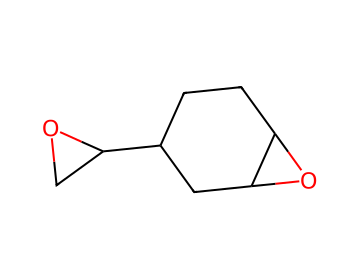
IDENTITY
COMPUTED
PROPERTIES
1.3
1.0986 at 68 °F (NTP, 1992) - Denser than water; will sink
1.0986 @ 20 °C/20 °C
Relative density (water = 1): 1.10
1.099
1.0966 @ 20°C
1.10
7.77 CP @ 20 °C
COLORLESS LIQUID
Colorless liquid.
50 to 100 mg/mL at 72 °F (NTP, 1992)
SOL IN WATER
Solubility in water, g/100ml at 20 °C: 18.3
High
230 °F (NTP, 1992)
230 °F
110 °C o.c.
230 °F (open cup)
(oc) 230 °F
441 °F at 760 mmHg (NTP, 1992)
227 °C @ 760 MM HG
227 °C
441 °F
227 °C @760 [mm Hg]
441 °F
less than -67 °F (NTP, 1992)
LESS THAN -55 °C
<-67 °F
-164 °F
4.07 (NTP, 1992) - Heavier than air; will sink (Relative to Air)
Relative vapor density (air = 1): 4.8
4.07
0.1 mmHg at 68 °F (NTP, 1992)
1.17 [mmHg]
LESS THAN 0.1 MM HG @ 20 °C
Vapor pressure, kPa at 20 °C:
0.1 mmHg
0.1 mmHg
INDEX OF REFRACTION: 1.4787 @ 20 °C
1-vinyl-3-cyclohexene dioxide is a clear colorless liquid. Sets to glass at -67 °F. Faint olefinic odor. (NTP, 1992)
Colorless liquid; [NIOSH]
COLOURLESS LIQUID.
Colorless liquid.
Colorless liquid.
GHS
Danger
H302: Harmful if swallowed [Warning Acute toxicity, oral];H331: Toxic if inhaled [Danger Acute toxicity, inhalation];H341: Suspected of causing genetic defects [Warning Germ cell mutagenicity];H350: May cause cancer [Danger Carcinogenicity];H360F: May damage fertility [Danger Reproductive toxicity]
P203, P261, P264, P270, P271, P280, P301+P317, P304+P340, P316, P318, P321, P330, P403+P233, P405, and P501 (click each P-code to see the statement)
Danger
HAZARDS
Chemical: 7-Oxabicyclo[4.1.0]heptane, 3-oxiranyl-
Hazard Traits - Carcinogenicity; Reproductive Toxicity;Authoritative List - EC Annex VI CMRs - Cat. 1B; IARC Carcinogens - 2B; NTP RoC - reasonable; Prop 65;Report - regardless of intended function of ingredient in the product
Vinyl cyclohexene dioxide: HSNO Approval: HSR003101 Approved with controls
The New Jersey Worker and Community Right to Know Act requires public and private employers to provide information about hazardous substances at their workplaces. (N.J.S.A. 34:5A-1 et. seq.)
IMAP assessments - Epoxidised cycloaliphatic olefins: Human health tier II assessment;IMAP assessments - 7-Oxabicyclo[4.1.0]heptane, 3-oxiranyl-: Environment tier I assessment
Poison
This chemical is combustible. (NTP, 1992)
Combustible. Risk of fire and explosion on contact with acids or bases.
Slight, when exposed to heat or flame.
Excerpt from NIOSH Pocket Guide for Vinyl cyclohexene dioxide:;Exposure Routes: Inhalation, skin absorption, ingestion, skin and/or eye contact;Symptoms: In Animals: irritation eyes, skin, respiratory system; testicular atrophy; leukopenia (reduced blood leukocytes), necrosis thymus; skin sensitization; [potential occupational carcinogen];Target Organs: Eyes, skin, respiratory system, blood, thymus, reproductive system;Cancer Site: [in animals: skin tumors] (NIOSH, 2024)
A potential skin sensitizer; [HSDB] VCD causes male and female reproductive damage in high-dose animal studies. [ACGIH] May cause respiratory tract irritation and pulmonary edema; May cause kidney injury; [ICSC]
Epoxides;Polymerizable Compounds
Symbol: T; R: 23/24/25-68; S: (1/2)-23-24-45
UN Hazard Class: 6.1
National Toxicology Program. Eleventh Report on Carcinogens (2005). The Report on Carcinogens is an informational scientific and public health document that identifies and discusses substances (including agents, mixtures, or exposure circumstances) that may pose a carcinogenic hazard to human health. 4-Vinyl-1-cyclohexene Diepoxide (106-87-6) is listed as reasonably anticipated to be a human carcinogen.[Available from, as of July 31, 2009: http://ntp.niehs.nih.gov/ntp/roc/eleventh/profiles/s187vch.pdf]
NTP TR No 362; Route: skin paint; Species: rats and mice. NTIS No PB90219957/AS.[NTP; Division of Toxicology Research and Testing; Management Status Report; 07/22/92; p.27]
Section 8(a) of TSCA requires manufacturers of this chemical substance to report preliminary assessment information concerned with production, use, and exposure to EPA as cited in the preamble of the 51 FR 41329.
SAFETY
Fires involving this material can be controlled with a dry chemical, carbon dioxide or Halon extinguisher. A water spray may also be used. (NTP, 1992)
Use water spray, powder, alcohol-resistant foam, carbon dioxide.
Fresh air, rest. Half-upright position. Artificial respiration may be needed. Refer for medical attention.
Remove contaminated clothes. Rinse and then wash skin with water and soap. Refer for medical attention .
First rinse with plenty of water for several minutes (remove contact lenses if easily possible), then refer for medical attention.
Rinse mouth. Induce vomiting (ONLY IN CONSCIOUS PERSONS!). Refer for medical attention .
EYES: First check the victim for contact lenses and remove if present. Flush victim's eyes with water or normal saline solution for 20 to 30 minutes while simultaneously calling a hospital or poison control center. Do not put any ointments, oils, or medication in the victim's eyes without specific instructions from a physician. IMMEDIATELY transport the victim after flushing eyes to a hospital even if no symptoms (such as redness or irritation) develop.;SKIN: IMMEDIATELY flood affected skin with water while removing and isolating all contaminated clothing. Gently wash all affected skin areas thoroughly with soap and water. IMMEDIATELY call a hospital or poison control center even if no symptoms (such as redness or irritation) develop. IMMEDIATELY transport the victim to a hospital for treatment after washing the affected areas.;INHALATION: IMMEDIATELY leave the contaminated area; take deep breaths of fresh air. IMMEDIATELY call a physician and be prepared to transport the victim to a hospital even if no symptoms (such as wheezing, coughing, shortness of breath, or burning in the mouth, throat, or chest) develop. Provide proper respiratory protection to rescuers entering an unknown atmosphere. Whenever possible, Self-Contained Breathing Apparatus (SCBA) should be used; if not available, use a level of protection greater than or equal to that advised under Protective Clothing.;INGESTION: DO NOT INDUCE VOMITING. If the victim is conscious and not convulsing, give 1 or 2 glasses of water to dilute the chemical and IMMEDIATELY call a hospital or poison control center. Be prepared to transport the victim to a hospital if advised by a physician. If the victim is convulsing or unconscious, do not give anything by mouth, ensure that the victim's airway is open and lay the victim on his/her side with the head lower than the body. DO NOT INDUCE VOMITING. IMMEDIATELY transport the victim to a hospital.;OTHER: Since this chemical is a known or suspected carcinogen you should contact a physician for advice regarding the possible long term health effects and potential recommendation for medical monitoring. Recommendations from the physician will depend upon the specific compound, its chemical, physical and toxicity properties, the exposure level, length of exposure, and the route of exposure. (NTP, 1992)
(General first aid procedures);Eye: Irrigate immediately - If this chemical contacts the eyes, immediately wash (irrigate) the eyes with large amounts of water, occasionally lifting the lower and upper lids. Get medical attention immediately.;Skin: Water wash immediately - If this chemical contacts the skin, immediately wash the contaminated skin with water. If this chemical penetrates the clothing, immediately remove the clothing and wash the skin with water. If symptoms occur after washing, get medical attention immediately.;Breathing: Respiratory support;Swallow: Medical attention immediately - If this chemical has been swallowed, get medical attention immediately.
Separated from food and feedstuffs, alcohols, amines and other active hydrogen compounds. Dry. Ventilation along the floor.
To fight fire: Water, foam, dry chemical.
SMALL SPILLS AND LEAKAGE: If you should spill this chemical, use absorbent paper to pick up all liquid spill material. Seal the absorbent paper, as well as any of your clothing which may be contaminated, in a vapor-tight plastic bag for eventual disposal. Wash any surfaces you may have contaminated with a soap and water solution. Do not reenter the contaminated area until the Safety Officer (or other responsible person) has verified that the area has been properly cleaned.;STORAGE PRECAUTIONS: You should store this chemical under refrigerated temperatures, and protect it from moisture. (NTP, 1992)
Personal protection: complete protective clothing including self-contained breathing apparatus. Ventilation. Collect leaking liquid in sealable containers. Wash away remainder with plenty of water.
The worker should immediately wash the skin when it becomes contaminated.
Work clothing that becomes wet or significantly contaminated should be removed and replaced.
Excerpt from ERG Guide 153 [Substances - Toxic and/or Corrosive (Combustible)]:;IMMEDIATE PRECAUTIONARY MEASURE: Isolate spill or leak area in all directions for at least 50 meters (150 feet) for liquids and at least 25 meters (75 feet) for solids.;SPILL: Increase the immediate precautionary measure distance, in the downwind direction, as necessary.;FIRE: If tank, rail tank car or highway tank is involved in a fire, ISOLATE for 800 meters (1/2 mile) in all directions; also, consider initial evacuation for 800 meters (1/2 mile) in all directions. (ERG, 2024)
Wear face shield or eye protection in combination with breathing protection.
NO open flames.
A harmful contamination of the air can be reached very quickly on evaporation of this substance at 20 °C.
TOXICITY
[in animals: skin tumors]
Eyes, skin, respiratory system, blood, thymus, reproductive system
Nephrotoxin - The chemical is potentially toxic to the kidneys in the occupational setting.;Reproductive Toxin - A chemical that is toxic to the reproductive system, including defects in the progeny and injury to male or female reproductive function. Reproductive toxicity includes developmental effects. See Guidelines for Reproductive Toxicity Risk Assessment.;Skin Sensitizer - An agent that can induce an allergic reaction in the skin.;Toxic Pneumonitis - Inflammation of the lungs induced by inhalation of metal fumes or toxic gases and vapors.;IARC Carcinogen - Class 3: Chemicals are not classifiable by the International Agency for Research on Cancer.;NTP Carcinogen - Reasonably anticipated to be a human carcinogen.;ACGIH Carcinogen - Confirmed Animal.
The substance can be absorbed into the body by inhalation, through the skin and by ingestion.
inhalation, skin absorption, ingestion, skin and/or eye contact
Cough. Laboured breathing. Sore throat.
MAY BE ABSORBED! Dry skin. Redness. Pain. Swelling.
Redness. Pain.
See Inhalation.
In Animals: irritation eyes, skin, respiratory system; testicular atrophy; leukopenia (reduced blood leukocytes), necrosis thymus; skin sensitization; [potential occupational carcinogen]
The following link will take the user to the National Toxicology Program (NTP) Test Agent Search Results page, which tabulates all of the "Standard Toxicology & Carcinogenesis Studies", "Developmental Studies", and "Genetic Toxicity Studies" performed with this chemical. Clicking on the "Testing Status" link will take the user to the status (i.e., in review, in progress, in preparation, on test, completed, etc.) and results of all the studies that the NTP has done on this chemical. [http://ntp-apps.niehs.nih.gov/ntp_tox/index.cfm?fuseaction=ntpsearch.searchresults&searchterm=106-87-6]
HUMAN EXPERIENCE INDICATES THAT IT IS MILD TO MODERATE SKIN IRRITANT ... . ONE CASE OF SEVERE VESICULATION OF SKIN OF BOTH FEET WHEN WORKER WORE SHOES PREVIOUSLY CONTAMINATED WITH THIS COMPD.
TOXIC BY INGESTION & SKIN ABSORPTION. STRONG IRRITANT TO SKIN & TISSUE.
EYE INJURY IS CONSIDERED TO BE DEFINITE HAZARD. IF VAPOR PRESSURE OF 0.1 MM HG AT 20 °C IS CORRECT ... RISK BY INHALATION IS CONSIDERED TO BE SLIGHT. BECAUSE OF VERY LIMITED ... DATA & BECAUSE OF DEMONSTRATED CARCINOGENICITY WHEN ... APPLIED TO SKIN OF MOUSE, EXTREME CAUTION SHOULD BE EXERCISED IN USE OF THIS DIEPOXIDE.
Allergic contact dermatitis occurred in an electron microscopist after exposure to the cycloaliphatic epoxy, vinyl cyclohexane diepoxide. Cycloaliphatic epoxies are not based on the diglycidyl ether of bisphenol A, presently the epoxy of greatest commercial usage. Latex or polyvinyl chloride gloves did not protect the reported patient from precutaneous absorption and elicitation of allergic dermatitis.
A study of occupational exposure to sensitizing chemicals was conducted. The study was initiated because of numerous complaints of eye, nasal, skin, and respiratory irritation among workers at an industrial facility. Serum samples were obtained from 31 workers and assayed for immunoglobulin G and immunoglobulin E to an unspecified number of chemicals. An enzyme linked immunosorbent assay technique was used to detect the antibodies. Immunoglobulin G and immunoglobulin E antibodies against four chemicals were found: an aliphatic diisocyanate, 4-vinylcyclohexene-dioxide, trimellitic anhydride, and an unknown substance which was a component of n-octyl-n-decyl-trimellitate. The presence or absence of antibodies could not be correlated with the presence or absence of symptoms; however, the highest incidence of symptoms occurred in workers who were classified as having the highest exposures. It was noted that trimellitic anhydride is not known to be present at the facility. The source of the trimellitic anhydride response is not known. It was concluded that there is no occupational allergic disease in the worker population. The lack of correlation between the antibody responses and symptoms suggests that an immunologic factor is not the cause of the reported symptoms. The symptoms are more likely to be due to irritant nonimmunological reactions.
4-Vinylcyclohexene diepoxide
Group 2B: Possibly carcinogenic to humans
Volume Sup 7: Overall Evaluations of Carcinogenicity: An Updating of IARC Monographs Volumes 1 to 42, 1987; 440 pages; ISBN 92-832-1411-0 (out of print);Volume 60: (1994) Some Industrial Chemicals
1994
1994
4-Vinyl-1-Cyclohexene Diepoxide
20 REPEATED SKIN APPLICATIONS TO RABBITS CAUSES SEVERE TO EXTREME IRRITATION.
REPEATED SKIN APPLICATIONS OF 16 MG OF A COMMERCIAL SAMPLE OF /VINYLCYCLOHEXENE DIOXIDE/ ... IN ACETONE 5 TIMES WEEKLY FOR 12 MO ... SKIN TUMORS IN 11/20 MALE ALBINO MICE; 9 ... SQUAMOUS CELL CARCINOMAS &/OR SARCOMAS. ... 1/20 & 4/18 C57B1 OR C3H MICE DEVELOPED SKIN TUMORS AFTER ... 10% SOLN IN ACETONE & TOTAL DOSES OF 70 & 78 MG (CONTROL DATA ... GIVEN FOR NEITHER OF ABOVE STUDIES).
OF 30 8 WK OLD MALE SWISS ICR/HA MICE PAINTED ON CLIPPED DORSAL SKIN WITH 0.1 MLOF A 10% SOLN /OF VINYLCYCLOHEXENEDIOXIDE/ IN BENZENE THRICE WEEKLY, 14 DEVELOPED SKIN TUMORS; 9 ... HAD SQUAMOUS CELL CARCINOMAS; MEAN SURVIVAL TIME WAS 326 DAYS. AMONG 150 BENZENE-TREATED MICE, SKIN TUMORS ... IN 11, 1 ... SQUAMOUS-CELL ... .
/VINYLCYCLOHEXENE DIOXIDE/ CAUSES ACUTE RESP TRACT IRRITATION & CONGESTION OF LUNGS. IT PRODUCES REDNESS & SWELLING COMPATIBLE WITH 1ST DEG BURN ON CLIPPED SKIN OF RABBITS. TREATED RATS SHOWED FOCAL NECROSIS OF THYMUS, & LEUKOCYTE COUNT FELL BY MORE THAN 60% DURING 1ST 4 DAYS. ... TESTICULAR ATROPHY IN SOME ... ANIMALS ... .
For more Non-Human Toxicity Excerpts (Complete) data for VINYLCYCLOHEXENE DIOXIDE (20 total), please visit the HSDB record page.
Evaluation: There is inadequate evidence in humans for the carcinogenicity of 4-vinylcyclohexene diepoxide. There is sufficient evidence in experimental animals for the carcinogenicity of 4-vinylcyclohexene diepoxide. Overall evaluation: 4-Vinylcyclohexene diepoxide is possibly carcinogenic to humans (Group 2B).
A3; Confirmed animal carcinogen with unknown relevance to humans.
4-Vinyl-1-cyclohexene Diepoxide: reasonably anticipated to be a human carcinogen.
Two-year studies were conducted by administrating 4-vinyl-1- cyclohexene diepoxide in acetone by dermal application, 5 days per week to groups of 60 rats of each sex at 0, 15, or 30 mg/animal. Groups of 60 mice of each sex were administered 0, 2.5, 5, or 10 mg/animal on the same schedule for 103 weeks. None of the doses selected had produced ulceration of skin in 13 week studies. ... In general, the body weights and survival were lower in mid and high dose groups than in vehicle controls. The survival was lower in exposed groups, primarily because of neoplasms (survival at week 105 male rats: vehicle control, 7/50; low dose, 8/50; high dose, 4/50; female rats: 27/50; 23/50; 15/50; male mice; vehicle control 38/50; low dose, 35/50; mid dose, 4/50; high dose, 0/50; female mice; 30/50; 15/50; 0/50). All high dose male mice died by week 83; the 10 surviving high dose female mice were killed during week 85. ... Acanthosis and sebaceous gland hypertrophy of skin from the scapula or back were observed at substantially increased incidences in exposed male and female rats. Squamous cell papillomas in male rats and squamous cell carcinomas in male and female rats were observed only in exposed rats (squamous cell carcinomas--male: vehicle control 0/50; low dose 33/50; high dose, 36/50; female: 0/50; 16/50). The incidences of basal celladenomas or carcinomas (combined) were increased (male: 0/50; 1/50; 6/50; female: 0/50; 3/50; 4/50). ... For exposed mice, acanthosis, hyperkeratosis, and necrotizing inflammation of the skin were observed over the scapula or back. Squamous cell carcinomas were found only in exposed mice (male: vehicle control, 0/50; low dose, 14/50; mid dose, 39/50; high dose, 42/50; female: 0/50; 6/50; 37/50; 41/50). ... Follicular atrophy and tubular hyperplasia of the ovary in female mice were increased (atrophy: 12/50; 43/49; 42/49; 47/50; tubular hyperplasia: 5/50; 35/49; 34/50). Mid and high dose females had benign or malignant granulosa cell tumors (0/50;
The immunotoxic effects of 4-vinyl-1-cyclohexene diepoxide were studied in male B6C3F1 mice after a 5 day dermal exposure at doses ranging from 2.5 to 10 mg/mouse/day. 4-Vinyl-1-cyclohexene diepoxide was immunosuppressive at 10 mg/mouse and, to a lesser extent, at 5 mg/mouse, as indicated by a decrease in peripheral lymphocytes and the in vitro lymphoproliferative response to phytohemagglutinin and concanavalin A in the high dose group and suppression of the antibody plaque-forming-cell response in the 5 and 10 mg/mouse groups.
4-Vinyl-1-cyclohexene diepoxide was mutagenic in Salmonella typhimurium strains TA98, TA100, and TA1535 with and without exogenous metabolic activation; the compound was equivocally mutagenic in strain TA1537 without S9 but gave a positive response in the presence of activation. 4-Vinyl-1-cyclohexene diepoxide induced resistance to trifluorothymidine in mouse L5178Y/TK cells without exogenous metabolic activation; it was not tested with activation. 4-Vinyl-1-cyclohexene diepoxide induced sister chromatid exchanges and chromosomal aberrations in Chinese hamster ovary cells in the presence and absence of exogenous metabolic activation.
LC50 (rat) = 800 ppm/4h
REGULATORY
Chemical: 7-Oxabicyclo[4.1.0]heptane, 3-oxiranyl-
Hazard Traits - Carcinogenicity; Reproductive Toxicity;Authoritative List - EC Annex VI CMRs - Cat. 1B; IARC Carcinogens - 2B; NTP RoC - reasonable; Prop 65;Report - regardless of intended function of ingredient in the product
Vinyl cyclohexene dioxide: HSNO Approval: HSR003101 Approved with controls
The New Jersey Worker and Community Right to Know Act requires public and private employers to provide information about hazardous substances at their workplaces. (N.J.S.A. 34:5A-1 et. seq.)
Section 8(a) of TSCA requires manufacturers of this chemical substance to report preliminary assessment information concerned with production, use, and exposure to EPA as cited in the preamble of the 51 FR 41329.
PHARMACOLOGY
In vitro studies with rabbit liver microsomal preparations showed that 4-vinyl-1-cyclohexene diepoxide can be metabolized to monoepoxymonoglycols, 1,2-hydroxy-4-vinylcyclohexane oxide, and 4-(1',2'-dihydroxyethyl)-1-cyclohexane oxide. Formation of these products is catalyzed by epoxide hydrolase. Conjugation with glutathione is another pathway for metabolism of 4-vinyl-1- cyclohexene. Depletion of reduced glutathione /was reported/ in the liver of mice given ip injections of 500 mg/kg 4-vinyl-1-cyclohexene diepoxide.
Carcinogenicity studies have shown that chronic administration of 4-vinylcyclohexene will induce ovarian tumors in B6C3F1 mice but not F-344 rats. This occurs because the blood level of the ovotoxic 4-vinylcyclohexene metabolite, 4-vinylcyclohexene-1,2-epoxide, is dramatically higher in 4-vinylcyclohexene treated female mice compared with rats. This species difference in 4-vinylcyclohexene epoxidation is also reflected in the rate of 4-vinylcyclohexene metabolism by hepatic microsomes (female mouse greater than female rat). The present study assessed the ability of microsomes obtained from human liver to metabolize 4-vinylcyclohexene to epoxides since humans are exposed to 4-vinylcyclohexene in certain occupational settings. The production of 4-vinylcyclohexene-1,2-epoxide and 4-vinylcyclohexene-7,8-epoxide from 4-vinylcyclohexene (1 mM) by human hepatic microsomes was linear with respect to microsomal protein concentration (0.25-1.0 mg/ml) and incubation time (5-20 min). 4-Vinylcyclohexene-1,2-epoxide was the major metabolite, while the rate 4-vinylcyclohexene-7,8-epoxide formation was about 6 fold lower and in some cases was below the limit of detection. There was no dramatic difference in the rate of 4-vinylcyclohexene epoxidation by hepatic microsomes obtained from male and female humans. The rate of 4-vinylcyclohexene-1,2-epoxide formation by female human hepatic microsomes was 0.71 + or - 0.35 nmol/mg microsomal protein/min (n = 4). This is 13 and 2 fold lower than the rate of 4-vinylcyclohexene-1,2-epoxide formation by female mouse and rat hepatic microsomes, respectively.
4-Vinylcyclohexene is a chemical to which humans are exposed in the rubber industry. A chronic carcinogenicity bioassay conducted by the NTP showed that oral administration of 4-vinylcyclohexene induced tumors in the ovaries of mice but not in those of rats. The hypothesis tested was that the species and organ specificity of 4-vinylcyclohexene toxicity was due to differences in the disposition of 4-vinylcyclohexene between the female rat and mouse. Therefore, the disposition of a single oral dose of 400 mg/kg (14)C 4-vinylcyclohexene was studied in female B6C3F1 mice and Fischer 344 rats. Mice eliminated greater than 95% of the dose in 24 hr, whereas rats required 48 hr to eliminate greater than 95% of the dose. The major routes of excretion of (14)C 4-vinylcyclohexene derived radioactivity were in the urine (50-60%) and expired air (30-40%). No evidence was obtained to indicate that the ovaries of either species retained 4-vinylcyclohexene as a parent cmpd or as radioactive equivalents. A dramatic difference was observed between the rat and mouse in the appearance of a monoepoxide of 4-vinylcyclohexene in blood from 0.5 to 6 hr after 4-vinylcyclohexene administration (800 mg/kg, ip). 4-Vinylcyclohexene-1,2-epoxide was present in the blood of mice with the highest concentration at 2 hr (41 nmol/ml). The blood concentration of 4-vinylcyclohexene-1,2-epoxide in rats was less than 2.5 nmol/ml at all times examined. 4-Vinylcyclohexene-7,8-epoxide was not present in the blood of either species at the level of detection. These findings were supported by in vitro studies of 4-vinylcyclohexene epoxidation by liver microsomes. The rate of epoxidation of 4-vinylcyclohexene (1 mM) to 4-vinylcyclohexene-1,2-epoxide was 6.5 fold greater in mouse liver microsomes than that in rat liver microsomes. The species difference in the rate of epoxide formation by the liver may be an important factor in the species difference in susceptibility to 4-vinylcyclohexene induced ovarian tumors.
VCH-diepoxide is a known human metabolite of 1,2-Epoxy-4-vinylcyclohexane and Epoxy-4-vinylcyclohexene.
Substances that increase the risk of NEOPLASMS in humans or animals. Both genotoxic chemicals, which affect DNA directly, and nongenotoxic chemicals, which induce neoplasms by other mechanism, are included.
4-Vinyl-1-cyclohexene diepoxide is absorbed by rodents exposed dermally orally, or by inhalation. ... Rats and mice received 0.1 ml and 0.01 ml, respectively, of dose mixtures containing 500 mg/ml (200 uc/ml) [ethylene-(14)C] 4-vinyl-1-cyclohexene diepoxide in acetone. The preliminary results indicate that 30% of the dose applied to the skin is absorbed over a 24 hr period for both rats and mice; only 1%-3% of the dose remained on the skin at the site of application. By 24 hr, 70%-80% of the absorbed dose had been eliminated from the body, virtually all in the urine. The radioactivity remaining in the body was distributed over a number of tissues, with no tissue containing more than 1% of the applied dose. The liver, muscle, and adipose tissue, however, contained 0.5%-1.6% and 1.2%-2.9% of the absorbed dose in rat and mouse tissue, respectively. Tissue to blood ratios ranged from 0.3 to 1.5 in rats and from 0.8 to 2.8 in mice.
USES
Used in the plastics industry to manufacture polymers and other organic chemicals; [ACGIH]
POLYMERS; ORGANIC SYNTHESIS
CHEM INT FOR CONDENSATION WITH DICARBOXYLIC ACIDS.
... IS USED AS REACTIVE DILUENT FOR OTHER DIEPOXIDES & FOR EPOXY RESINS DERIVED FROM BISPHENOL-A & EPICHLOROHYDRIN.
ONE GRADE OF 1-EPOXYETHYL-3,4-EPOXYCYCLOHEXENE AVAIL IN US HAS EPOXY EQUIV OF 74-78. ... CAN BE PREPARED BY PERACETIC ACID EPOXIDIZATION OF 4-VINYLCYCLOHEXANE.
7-Oxabicyclo[4.1.0]heptane, 3-(2-oxiranyl)-: ACTIVE
IT HAS BEEN PROPOSED FOR USE AS CHEM INTERMEDIATE (EG, FOR CONDENSATION WITH DICARBOXYLIC ACIDS) & AS MONOMER (EG, FOR PREPN OF POLYGLYCOLS CONTAINING UNREACTED EPOXY GROUPS OR FOR HOMO-POLYMERIZATION TO 3-DIMENSIONAL RESIN).
ALIASES
REACTIONS

