
uspto-grants-1998_03 · 10.6084/m9.figshare.5104873.v1 · US05723497
查看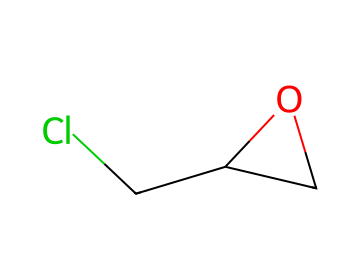
IDENTITY
COMPUTED
PROPERTIES
log Kow = 0.45
0.45
0.26
Odor is sweet, pungent or chloroform-like ... generally perceived as a slightly irritating chloroformlike odor
Pungent, garlic-like odor
1.18 to 1.801 at 68 °F (EPA, 1998)
1.1750 at 25 °C/4 °C
Relative density (water = 1): 1.2
1.18
1.175 @25 °C
1.18
0.0103 poise at 25 °C
Colorless liquid
50 to 100 mg/mL at 72 °F (NTP, 1992)
Miscible with most organic solvents
Miscible with alcohol, ether, chloroform, trichloroethylene, carbon tetrachloride; immiscible with petroleum hydrocarbons.
In water, 6.59X10+4 mg/L at 25 °C
65.9 mg/mL at 25 °C
Solubility in water, g/100ml at 20 °C: 6
93 °F (EPA, 1998)
88 °F
88 °F (31 °C) (Closed cup)
31 °C c.c.
93 °F
93 °F
241.7 °F at 760 mmHg (EPA, 1998)
117.9 °C
116 °C
242 °F
117.9 °C @760 [mm Hg]
242 °F
When heated to decomp, emits toxic fumes of /hydrogen chloride/.
-54.4 to -14.1 °F (EPA, 1998)
-25.6 °C
-57.2 °C
-48 °C
-54 °F
-25.6 °C
3.29 (EPA, 1998) - Heavier than air; will sink (Relative to Air)
3.29 (Air = 1)
Relative vapor density (air = 1): 3.2
3.29
Odor Threshold Low: 0.08 [ppm];Odor Threshold High: 12.0 [ppm];Odor threshold from AIHA
Sensory perception studies indicate that mean threshold for odor recognition is approximately 10 ppm ... @ 25 ppm it is recognized by majority of persons.
Human Odor Perception: non perception 0.2 mg/cu m; perception 0.3 mg/cu m
GHS
Danger
H226: Flammable liquid and vapor [Warning Flammable liquids];H301: Toxic if swallowed [Danger Acute toxicity, oral];H311: Toxic in contact with skin [Danger Acute toxicity, dermal];H314: Causes severe skin burns and eye damage [Danger Skin corrosion/irritation];H317: May cause an allergic skin reaction [Warning Sensitization, Skin];H331: Toxic if inhaled [Danger Acute toxicity, inhalation];H350: May cause cancer [Danger Carcinogenicity]
P203, P210, P233, P240, P241, P242, P243, P260, P261, P262, P264, P270, P271, P272, P280, P301+P316, P301+P330+P331, P302+P352, P302+P361+P354, P303+P361+P353, P304+P340, P305+P354+P338, P316, P318, P321, P330, P333+P317, P361+P364, P362+P364, P363, P370+P378, P403+P233, P403+P235, P405, and P501 (click each P-code to see the statement)
This chemical does not meet GHS hazard criteria for < 0.1% (1 of 1920) of reports.
HAZARDS
Chemical: Oxirane, (chloromethyl)-
Hazard Traits - Carcinogenicity; Ocular Toxicity; Reproductive Toxicity; Respiratory Toxicity;Authoritative List - CA TACs; EC Annex VI CMRs - Cat. 1B; IARC Carcinogens - 2A; IRIS Carcinogens - B2; NTP RoC - reasonable; OEHHA RELs; Prop 65;Report - regardless of intended function of ingredient in the product
Regulation (EC) No 178/2002 (amended)
Oxirane, 2-(chloromethyl)- is listed on the EPA's Chemical Data Reporting (CDR) system. Manufacturers and importers of Oxirane, 2-(chloromethyl)- are required to report information about their production and use of this chemical to the EPA under the Toxic Substances Control Act (TSCA). (40 eCFR Part 711)
Status: Active Update: 14-04-2023 https://echa.europa.eu/registration-dossier/-/registered-dossier/15559;Status: Cease Manufacture Update: 09-08-2010 https://echa.europa.eu/registration-dossier/-/registered-dossier/1262;Status: Active Update: 26-03-2018 https://echa.europa.eu/registration-dossier/-/registered-dossier/23282
Oxirane, (chloromethyl)-: HSNO Approval: HSR000977 Approved with controls
IMAP assessments - Oxirane, (chloromethyl)-: Environment tier I assessment;IMAP assessments - Oxirane, (chloromethyl)-: Human health tier II assessment
Poison Flammable Liquid
When heated to decomposition, this compound evolves highly toxic fumes of phosgene and carbon monoxide. Reactive and incompatible with strong oxidizers, strong acids, caustics, zinc, aluminum, chlorides of iron and aluminumand compounds with an active hydrogen atom, including water. Unstable, avoid heat, contaminants, strong acids and bases, certain curing agents such as ethylenediamine. Hazardous polymerization may occur. (EPA, 1998)
· HIGHLY FLAMMABLE: Will be easily ignited by heat, sparks or flames.;CAUTION: Methanol (UN1230) will burn with an invisible flame. Use an alternate method of detection (thermal camera, broom handle, etc.);· Vapors may form explosive mixtures with air.;· Vapors may travel to source of ignition and flash back.;· Most vapors are heavier than air. They will spread along the ground and collect in low or confined areas (sewers, basements, tanks, etc.).;· Vapor explosion and poison hazard indoors, outdoors or in sewers.;· Those substances designated with a (P) may polymerize explosively when heated or involved in a fire.;· Runoff to sewer may create fire or explosion hazard.;· Containers may explode when heated.;· Many liquids will float on water.
Flammable. Gives off irritating or toxic fumes (or gases) in a fire. Above 31 °C explosive vapour/air mixtures may be formed.
Flammable liquid when exposed to heat or flame.
This compound is caustic as both a liquid and gas. Irritation of the eyes and skin, and skin sensitization has been observed. Exposure to epichlorohydrin has caused inflammation of the lungs, asthmatic bronchitis, and liver and kidney damage. In acute poisonings, death may be caused by respiratory paralysis. (EPA, 1998)
· TOXIC; may be fatal if inhaled, ingested or absorbed through skin.;· Inhalation or contact with some of these materials will irritate or burn skin and eyes.;· Methyl chloroacetate (UN2295) is an eye irritant/lachrymator (causes flow of tears).;· Fire will produce irritating, corrosive and/or toxic gases.;· Vapors may cause dizziness or asphyxiation, especially when in closed or confined areas.;· Runoff from fire control or dilution water may cause environmental contamination.
Epichlorohydrin is mainly used in the production of epoxy resins. Acute (short-term) inhalation exposure to epichlorohydrin in the workplace has caused irritation to the eyes, respiratory tract, and skin of workers. At high levels of exposure, nausea, vomiting, cough, labored breathing, inflammation of the lung, pulmonary edema, and renal lesions may be observed in humans. Chronic (long-term) occupational exposure of humans to epichlorohydrin in air is associated with high levels of respiratory tract illness and hematological effects. Damage to the nasal passages, respiratory tract and kidneys have been observed in rodents exposed to epichlorohydrin by inhalation for acute or chronic duration. An increased incidence of tumors of the nasal cavity has been observed in rats exposed by inhalation. EPA has classified epichlorohydrin as a Group B2, probable human carcinogen.
Can cause severe skin burns and a skin sensitizer; Inhalation of vapor can cause lung edema and asthma-like reactions; [ICSC] In high-dose animal studies, epichlorohydrin causes testicular damage and sterility. [Frazier, p. 340] Animals exposed in subchronic inhalation studies at 50 ppm show kidney damage and liver effects. TLV Basis is respiratory tract irritant; [ACGIH] Suspected germ cell mutagen (3B); [MAK] Destructive to mucous membranes and upper respiratory tract; [Sigma-Aldrich MSDS] Epichlorohydrin (UN2023) has warning of explosive polymerization; [ERG 2016]
2023 131P
2023 131P
Halogenated Organic Compounds;Epoxides;Polymerizable Compounds
Symbol: T; R: 45-10-23/24/25-34-43; S: 53-45; Note: E
UN Hazard Class: 6.1; UN Subsidiary Risks: 3; UN Pack Group: II
USEPA; Response To Public Comments On Draft Health Assessment Document for Epichlorohydrin (1983) EPA 600/8-83-032A Contract 68-02-4030
USEPA; Health Assessment Document: Epichlorohydrin (1983) EPA-600/8-83-032A
National Toxicology Program. Eleventh Report on Carcinogens (2005). The Report on Carcinogens is an informational scientific and public health document that identifies and discusses substances (including agents, mixtures, or exposure circumstances) that may pose a carcinogenic hazard to human health. Epichlorohydrin (106-89-8) is listed as reasonably anticipated to be a human carcinogen.[Available from, as of July 31, 2009: http://ntp.niehs.nih.gov/ntp/roc/eleventh/profiles/s082epic.pdf]
European Commission, ESIS; IUCLID Dataset, 1-Chloro-2,3-epoxypropane (106-89-8) (2000 CD-ROM edition).[Available from, as of March 4, 2009: http://esis.jrc.ec.europa.eu/]
SAFETY
If fire becomes uncontrollable, or containers are exposed to direct flames, evacuate for a radius of 1,500 feet. Isolate for one-half mile in all directions if tank car or truck is involved in fire.;Epichlorohydrin may react violently with water.;Use water spray, dry chemical, foam or carbon dioxide. Water spray may be used to dilute spills to non-flammable mixtures. If leak or spill has not ignited, use water spray to disperse the vapors. Keep fire-exposed containers cooled with water. (EPA, 1998)
Use water spray, powder, foam, carbon dioxide. In case of fire: keep drums, etc., cool by spraying with water.
Fresh air, rest. Half-upright position. Artificial respiration may be needed. Refer immediately for medical attention.
Wear protective gloves when administering first aid. First rinse with plenty of water for at least 15 minutes, then remove contaminated clothes and rinse again. Put clothes in sealable container. Refer immediately for medical attention.
Rinse with plenty of water (remove contact lenses if easily possible). Refer immediately for medical attention.
Rinse mouth. Do NOT induce vomiting. Refer immediately for medical attention.
· CALL 911. Then call emergency response telephone number on shipping paper. If shipping paper not available or no answer, refer to appropriate telephone number listed on the inside back cover.;· Keep unauthorized personnel away.;· Stay upwind, uphill and/or upstream.;· Ventilate closed spaces before entering, but only if properly trained and equipped.
· ELIMINATE all ignition sources (no smoking, flares, sparks or flames) from immediate area.;· All equipment used when handling the product must be grounded.;· Do not touch or walk through spilled material.;· Stop leak if you can do it without risk.;· Prevent entry into waterways, sewers, basements or confined areas.;· A vapor-suppressing foam may be used to reduce vapors.;Small Spill;· Absorb with earth, sand or other non-combustible material and transfer to containers for later disposal.;· Use clean, non-sparking tools to collect absorbed material.;Large Spill;· Dike far ahead of liquid spill for later disposal.;· Water spray may reduce vapor, but may not prevent ignition in closed spaces.
Warning: Effects may be delayed for several hours. Caution is advised.;Signs and Symptoms of Acute Epichlorohydrin Exposure: Acute exposure to epichlorohydrin may result in nausea, vomiting, and abdominal pain. Liver and kidney effects may be observed. The respiratory tract may become irritated, dyspnea (shortness of breath) may occur, and in acute cases, respiratory paralysis has been observed. Central nervous system and respiratory depression have been noted. Facial swelling, mucosal irritation, dermatitis (red, inflamed skin), and eye irritation may also occur following exposure to epichlorohydrin.;Emergency Life-Support Procedures: Acute exposure to epichlorohydrin may require decontamination and life support for the victims. Emergency personnel should wear protective clothing appropriate to the type and degree of contamination. Air-purifying or supplied-air respiratory equipment should also be worn, as necessary. Rescue vehicles should carry supplies such as plastic sheeting and disposable plastic bags to assist in preventing spread of contamination.;Inhalation Exposure:;1. Move victims to fresh air. Emergency personnel should avoid self-exposure to epichlorohydrin.;2. Evaluate vital signs including pulse and respiratory rate, and note any trauma. If no pulse is detected, provide CPR. If not breathing, provide artificial respiration. If breathing is labored, administer oxygen or other respiratory support.;3. Obtain authorization and/or further instructions from the local hospital for administration of an antidote or performance of other invasive procedures.;4. Transport to a health care facility.;Dermal/Eye Exposure:;1. Remove victims from exposure. Emergency personnel should avoid self- exposure to epichlorohydrin.;2. Evaluate vital signs including pulse and respiratory rate, and note any trauma. If no pulse is detected, provide CPR. If not breathing, provide artificial respiration. If breathing is labored, administer oxygen or other respiratory support.;3. Remove contaminated clothing as soon as possible.;4. If eye exposure has occurred, eyes must be flushed with lukewarm water for at least 15 minutes.;5. Wash exposed skin areas twice with soap and water.;6. Obtain authorization and/or further instructions from the local hospital for administration of an antidote or performance of other invasive procedures.;7. Transport to a health care facility.;Ingestion Exposure:;1. Evaluate vital signs including pulse and respiratory rate, and note any trauma. If no pulse is detected, provide CPR. If not breathing, provide artificial respiration. If breathing is labored, administer oxygen or other respiratory support.;2. Obtain authorization and/or further instructions from the local hospital for administration of an antidote or performance of other invasive procedures.;3. Vomiting may be induced with syrup of Ipecac. If elapsed time since ingestion of epichlorohydrin is unknown or suspected to be greater than 30 minutes, do not induce vomiting and proceed to Step
General First Aid:;· Call 911 or emergency medical service.;· Ensure that medical personnel are aware of the material(s) involved, take precautions to protect themselves and avoid contamination.;· Move victim to fresh air if it can be done safely.;· Administer oxygen if breathing is difficult.;· If victim is not breathing:;-- DO NOT perform mouth-to-mouth resuscitation; the victim may have ingested or inhaled the substance.;-- If equipped and pulse detected, wash face and mouth, then give artificial respiration using a proper respiratory medical device (bag-valve mask, pocket mask equipped with a one-way valve or other device).;-- If no pulse detected or no respiratory medical device available, provide continuous compressions. Conduct a pulse check every two minutes or monitor for any signs of spontaneous respirations.;· Remove and isolate contaminated clothing and shoes.;· For minor skin contact, avoid spreading material on unaffected skin.;· In case of contact with substance, remove immediately by flushing skin or eyes with running water for at least 20 minutes.;· For severe burns, immediate medical attention is required.;· Effects of exposure (inhalation, ingestion, or skin contact) to substance may be delayed.;· Keep victim calm and warm.;· Keep victim under observation.;· For further assistance, contact your local Poison Control Center.;· Note: Basic Life Support (BLS) and Advanced Life Support (ALS) should be done by trained professionals.;Specific First Aid:;· Wash skin with soap and water.
(General first aid procedures);Eye: Irrigate immediately - If this chemical contacts the eyes, immediately wash (irrigate) the eyes with large amounts of water, occasionally lifting the lower and upper lids. Get medical attention immediately.;Skin: Soap wash immediately - If this chemical contacts the skin, immediately wash the contaminated skin with soap and water. If this chemical penetrates the clothing, immediately remove the clothing, wash the skin with soap and water, and get medical attention promptly.;Breathing: Respiratory support;Swallow: Medical attention immediately - If this chemical has been swallowed, get medical attention immediately.
Fireproof. Separated from strong oxidants, acids, bases, aluminium, zinc, amines and food and feedstuffs. Well closed.
Vapors are heavier than air and may travel to a source of ignition and flash back.
· Wear positive pressure self-contained breathing apparatus (SCBA).;· Wear chemical protective clothing that is specifically recommended by the manufacturer when there is NO RISK OF FIRE.;· Structural firefighters' protective clothing provides thermal protection but only limited chemical protection.
687.0 [ppm]
Avoid use of dry chemical if fire occurs in container with confined vent. Containers may explode in fire because of polymerization.
Approach fire from upwind to avoid hazardous vapors and toxic decomposition products. Fight fire from protected location or maximum possible distance. Use water spray, dry chemical, "alcohol resistant" foam, or carbon dioxide. Use water spray to keep fire-exposed containers cool.
If material on fire or involved in fire Do not extinguish fire unless flow can be stopped. Use water in flooding quantities as fog. Solid streams of water may be ineffective. Cool all affected containers with flooding quantities of water. Apply water from as far a distance as possible. Use "alcohol" foam, dry chemical or carbon dioxide.
Evacuation: If fire becomes uncontrollable or container is exposed to direct flame consider evacuation of one-third (1/3) mile radius.
Separate from acids, alkalies, salts, water, and oxidizers. Store in a cool, dry, well-ventilated location. Inside storage should be in a standard flammable liquids storage warehouse, room, or cabinet.
/Store at/ ambient temperature
PRECAUTIONS FOR "CARCINOGENS": Storage site should be as close as practical to lab in which carcinogens are to be used, so that only small quantities required for ... expt need to be carried. Carcinogens should be kept in only one section of cupboard, an explosion-proof refrigerator or freezer (depending on chemicophysical properties ...) that bears appropriate label. An inventory ... should be kept, showing quantity of carcinogen & date it was acquired ... Facilities for dispensing ... should be contiguous to storage area. /Chemical Carcinogens/
Epichlorohydrin should be stored in tightly closed, labeled containers in fire-proof, cool, dry rooms. Apply ventilation across the floor. Epichlorohydrin attacks steel in the presence of moisture. The compound should be stored away from strong acids and bases, zinc, aluminium, metal chlorides, alcohol-containing material, isopropylamine, trichloroethylene, and oxidizing agents.
Remove all ignition sources. Ventilate area of spill or leak.
For small quantities, absorb on paper towels. Evaporate in a safe place (such as a fume hood). Allow sufficient time for evaporating vapors to completely clear the hood ductwork. Burn the paper in suitable location away from combustible materials.
... It should not be allowed to enter a confined space, such as a sewer, because of the possibility of an explosion. Sewers designed to preclude the formation of explosive concentrations of epichlorhydrin vapors are permitted.
PRECAUTIONS FOR "CARCINOGENS": A high-efficiency particulate arrestor (HEPA) or charcoal filters can be used to minimize amt of carcinogen in exhausted air ventilated safety cabinets, lab hoods, glove boxes or animal rooms ... Filter housing that is designed so that used filters can be transferred into plastic bag without contaminating maintenance staff is avail commercially. Filters should be placed in plastic bags immediately after removal ... The plastic bag should be sealed immediately ... The sealed bag should be labelled properly ... Waste liquids ... should be placed or collected in proper containers for disposal. The lid should be secured & the bottles properly labelled. Once filled, bottles should be placed in plastic bag, so that outer surface ... is not contaminated ... The plastic bag should also be sealed & labelled. ... Broken glassware ... should be decontaminated by solvent extraction, by chemical destruction, or in specially designed incinerators. /Chemical Carcinogens/
For more Cleanup Methods (Complete) data for EPICHLOROHYDRIN (8 total), please visit the HSDB record page.
Excerpt from ERG Guide 131 [Flammable Liquids - Toxic; polymerization hazard]:;ELIMINATE all ignition sources (no smoking, flares, sparks or flames) from immediate area. All equipment used when handling the product must be grounded. Do not touch or walk through spilled material. Stop leak if you can do it without risk. Prevent entry into waterways, sewers, basements or confined areas. A vapor-suppressing foam may be used to reduce vapors.;SMALL SPILL: Absorb with earth, sand or other non-combustible material and transfer to containers for later disposal. Use clean, non-sparking tools to collect absorbed material.;LARGE SPILL: Dike far ahead of liquid spill for later disposal. Water spray may reduce vapor, but may not prevent ignition in closed spaces. (ERG, 2024)
[40 CFR 240-280, 300-306, 702-799 (7/1/2008)] Generators of waste (equal to or greater than 100 kg/mo) containing this contaminant, EPA hazardous waste number U014, must conform with USEPA regulations in storage, transportation, treatment and disposal of waste.
Epichlorohydrin is a waste chemical stream constituent which may be subjected to ultimate disposal by controlled incineration. Incineration, preferably after mixing with another combustible fuel. Care must be exercised to assure complete combustion to prevent the formation of phosgene. An acid scrubber is necessary to remove the halo acids produced.
A potential candidate for liquid injection incineration at a temperature range of 650 to 1,600 °C and a residence time of 0.1 to 2 seconds. A potential candidate for rotary kiln incineration at a temperature range of 820 to 1,600 °C and residence times of seconds for liquids and gases, and hours for solids. A potential candidate for fluidized bed incineration at a temperature range of 450 to 980 °C and residence times of seconds for liquids and gases, and longer for solids.
PRECAUTIONS FOR "CARCINOGENS": There is no universal method of disposal that has been proved satisfactory for all carcinogenic compounds & specific methods of chem destruction ... published have not been tested on all kinds of carcinogen-containing waste. ... summary of avail methods & recommendations ... /given/ must be treated as guide only. /Chemical Carcinogens/
For more Disposal Methods (Complete) data for EPICHLOROHYDRIN (8 total), please visit the HSDB record page.
TOXICITY
Gastrointestinal;Respiratory
[in animals: nasal cancer]
Respiratory
Eyes, skin, respiratory system, kidneys, liver, reproductive system
Minimum inhibitory concentration; Species: Microcystis aeruginosa (Blue algae); Conditions: static, 27 °C, pH 7.0; Concentration: 6.0 mg/L for 8 days; Effect: cell multiplication /from table/
Minimum inhibitory concentration; Species: Scenedesmus quadricauda (Green algae); Conditions: static, 27 °C, pH 7.0; Concentration: 5.4 mg/L for 8 days; Effect: cell multiplication /from table/
Minimum inhibitory concentration; Species: Pseudomonas putida (Bacteria); Conditions: static, 25 °C, pH 7.0; Concentration: 55 mg/L for 16 hr; Effect: cell multiplication /from table/
Minimum inhibitory concentration; Species: Entosiphon sulcatum (Protozoa); Conditions: static, 25 °C, pH 6.9; Concentration: 35 mg/L for 72 hr; Effect: cell multiplication /from table/
For more Ecotoxicity Values (Complete) data for EPICHLOROHYDRIN (18 total), please visit the HSDB record page.
TERRESTRIAL FATE: Based on a classification scheme(1), an estimated Koc value of 40(SRC), determined from a log Kow of 0.45(2) and a regression-derived equation(3), indicates that epichlorohydrin is expected to have very high mobility in soil(SRC). Volatilization of epichlorohydrin from moist soil surfaces is expected to be an important fate process(SRC) given an estimated Henry's Law constant of 3.0X10⁻⁵ atm-cu m/mole(SRC), calculated from a vapor pressure of 16.4 mm Hg(4) and water solubility of 65,900 mg/L(5). The potential for volatilization of epichlorohydrin from dry soil surfaces may exist based upon the vapor pressure(4). Epichlorohydrin may undergo hydrolysis in moist soil surfaces based on a hydrolysis half-life of 8.2 days in distilled water(6). Epichlorohydrin achieved 3% of the theoretical BOD in a sewage sludge over a 5 day incubation period, but achieved 14% of the theoretical BOD following acclimation(7), suggesting that biodegradation in acclimated soils may be important(SRC).
AQUATIC FATE: Based on a classification scheme(1), an estimated Koc value of 40(SRC), determined from a log Kow of 0.45(2) and a regression-derived equation(3), indicates that epichlorohydrin is not expected to adsorb to suspended solids and sediment in water(SRC). Volatilization from water surfaces is expected(3) based upon an estimated Henry's Law constant of 3.0X10⁻⁵ atm-cu m/mole(SRC), calculated from its vapor pressure of 16.4 mm Hg(4) and water solubility of 65,900 mg/L(5). Using this estimated Henry's Law constant and an estimation method(3), volatilization half-lives for a model river and model lake are 19 hours and 12 days, respectively(SRC). According to a classification scheme(6), an estimated BCF of 3(SRC), from its log Kow(2) and a regression-derived equation(7), suggests the potential for bioconcentration in aquatic organisms is low. The hydrolysis half-life of epichlorohydrin is 8.2 days in distilled water and 5.3 days in simulated seawater(8). Epichlorohydrin achieved 3% of the theoretical BOD in a sewage sludge over a 5 day incubation period, but achieved 14% of the theoretical BOD following acclimation(9); thus biodegradation in acclimated water may be important(SRC).
ATMOSPHERIC FATE: According to a model of gas/particle partitioning of semivolatile organic compounds in the atmosphere(1), epichlorohydrin, which has a vapor pressure of 16.4 mm Hg at 25 °C(2), is expected to exist solely as a vapor in the ambient atmosphere. Vapor-phase epichlorohydrin is degraded in the atmosphere by reaction with photochemically-produced hydroxyl radicals(SRC); the half-life for this reaction in air is estimated to be 36 days(SRC), calculated from its rate constant of 4.4X10⁻¹³ cu cm/molecule-sec at 25 °C(3).
Occupational hepatotoxin - Secondary hepatotoxins: the potential for toxic effect in the occupational setting is based on cases of poisoning by human ingestion or animal experimentation.;Nephrotoxin - The chemical is potentially toxic to the kidneys in the occupational setting.;Reproductive Toxin - A chemical that is toxic to the reproductive system, including defects in the progeny and injury to male or female reproductive function. Reproductive toxicity includes developmental effects. See Guidelines for Reproductive Toxicity Risk Assessment.;Dermatotoxin - Skin burns.;Skin Sensitizer - An agent that can induce an allergic reaction in the skin.;Toxic Pneumonitis - Inflammation of the lungs induced by inhalation of metal fumes or toxic gases and vapors.;IARC Carcinogen - Class 2: International Agency for Research on Cancer classifies chemicals as probable (2a), or possible (2b) human carcinogens.;NTP Carcinogen - Reasonably anticipated to be a human carcinogen.;ACGIH Carcinogen - Confirmed Animal.
The substance can be absorbed into the body by inhalation, through the skin and by ingestion.
inhalation, skin absorption, ingestion, skin and/or eye contact
IDENTIFICATION: Epichlorohydrin is a colorless liquid in which the vapor forms explosive mixtures in air. Phosgene, hydrogen chloride and carbon monoxide are liberated while burning. Acids, caustic solutions and halide salts initiate polymerization reactions. The compound is very reactive with metals such as zinc, aluminum, anhydrous metal halides, strong acids and bases along with alcohol containing materials. In the presence of moisture epichlorohydrin is corrosive to steel. Epichlorohydrin has a chloroform like odor. It is soluble in water. Epichlorohydrin is used for the manufacture of glycerine and unmodified epoxyresins. It is also used in the production of elastomers, glycidil ether, cross linked food starch, wet strength resins for the paper industry, water treatment resins, surfactants, ion exchange resins, plasticizers, dyestuffs, pharmaceutical products, emulsifiers, lubricants and adhesives. HUMAN EXPOSURE: On the basis of use patterns and the chemical and physical properties of epichlorohydrin, human exposure is mainly occupational, through vapor inhalation, direct skin contact and a slight exposure resulting from food consumption. Five human volunteers showed significant electroencephalogram changes in the voltage spikes of the alpha rhythm when they were exposed to a vapor of epichlorohydrin. Burning of the eyes and nasal mucosa was reported along with throat irritation. Seven cases of epichlorohydrin spills on the hands, thighs or feet have been described. In two cases epichlorohydrin was mixed with methanol. All spills resulted in protracted chemical burns with a latent period of between 10 minutes and several hours before the first symptoms appeared. Redness, swelling, edema, erosion and ulceration. One case was reported of a 39 year old man who inhaled a few deep breaths of epichlorohydrin vapor occured. Initially only a slight irritation of the eyes and throat was experienced with headache, nausea and vomiting; later chronic asthmatic bronchit
/AQUATIC SPECIES/ The 14 day LC50 value of epichlorohydrin to the guppy (Poecilia reticulata) was determined. These data were investigated through the construction of a quantitative structure-activity relationship (QSAR). Both hydrophobicity and alkylating potency of the compound were found to be necessary parameters for the satisfactory description of the LC50 data. The log LC50 experimental data for epichlorohydrin was 0.85 umol/L as compared to the calculated QSAR value of 1.08 umol/L.
Cough. Sore throat. Burning sensation. Headache. Laboured breathing. Nausea. Shortness of breath. Vomiting. Tremor. Symptoms may be delayed.
MAY BE ABSORBED! Redness. Pain. Burning sensation. Blisters. Serious skin burns.
Pain. Redness. Loss of vision. Severe deep burns.
Sore throat. Burns in mouth and throat. Headache. Nausea. Vomiting. Diarrhoea. Shock or collapse.
irritation eyes, skin with deep pain; nausea, vomiting; abdominal pain; resp distress, cough; cyanosis; reproductive effects; [potential occupational carcinogen]
The following link will take the user to the National Toxicology Program (NTP) Test Agent Search Results page, which tabulates all of the "Standard Toxicology & Carcinogenesis Studies", "Developmental Studies", and "Genetic Toxicity Studies" performed with this chemical. Clicking on the "Testing Status" link will take the user to the status (i.e., in review, in progress, in preparation, on test, completed, etc.) and results of all the studies that the NTP has done on this chemical.[Available from: http://ntp-apps.niehs.nih.gov/ntp_tox/index.cfm?fuseaction=ntpsearch.searchresults&searchterm=106-89-8]
Detected, not quantified in chemical industry effluent in Louisville, KY(1). Epichlorohydrin was identified, not quantified, in emissions from polyurethane carpet cushions(2). Atmospheric emissions of epichlorohydrin were reported as 479,000 lbs/yr in the US in a 1983 study(3). Epichlorohydrin was identified, not quantified, in sewage samples obtained from a municipal treatment plant which was also supplied with the pre-treated sewage from a chemical plant(4).
The substance is harmful to aquatic organisms.
REGULATORY
Chemical: Oxirane, (chloromethyl)-
Hazard Traits - Carcinogenicity; Ocular Toxicity; Reproductive Toxicity; Respiratory Toxicity;Authoritative List - CA TACs; EC Annex VI CMRs - Cat. 1B; IARC Carcinogens - 2A; IRIS Carcinogens - B2; NTP RoC - reasonable; OEHHA RELs; Prop 65;Report - regardless of intended function of ingredient in the product
Regulation (EC) No 178/2002 (amended)
Oxirane, 2-(chloromethyl)- is listed on the EPA's Chemical Data Reporting (CDR) system. Manufacturers and importers of Oxirane, 2-(chloromethyl)- are required to report information about their production and use of this chemical to the EPA under the Toxic Substances Control Act (TSCA). (40 eCFR Part 711)
Status: Active Update: 14-04-2023 https://echa.europa.eu/registration-dossier/-/registered-dossier/15559;Status: Cease Manufacture Update: 09-08-2010 https://echa.europa.eu/registration-dossier/-/registered-dossier/1262;Status: Active Update: 26-03-2018 https://echa.europa.eu/registration-dossier/-/registered-dossier/23282
Oxirane, (chloromethyl)-: HSNO Approval: HSR000977 Approved with controls
U041; As stipulated in 40 CFR 261.33, when epichlorohydrin, as a commercial chemical product or manufacturing chemical intermediate or an off-specification commercial chemical product or a manufacturing chemical intermediate, becomes a waste, it must be managed according to Federal and/or State hazardous waste regulations. Also defined as a hazardous waste is any residue, contaminated soil, water, or other debris resulting from the cleanup of a spill, into water or on dry land, of this waste. Generators of small quantities of this waste may qualify for partial exclusion from hazardous waste regulations (40 CFR 261.5).
Pursuant to section 8(d) of TSCA, EPA promulgated a model Health and Safety Data Reporting Rule. The section 8(d) model rule requires manufacturers, importers, and processors of listed chemical substances and mixtures to submit to EPA copies and lists of unpublished health and safety studies. Oxirane, (chloromethyl)- is included on this list. Effective date 10/4/82; Sunset date: 10/4/92.
This action promulgates standards of performance for equipment leaks of Volatile Organic Compounds (VOC) in the Synthetic Organic Chemical Manufacturing Industry (SOCMI). The intended effect of these standards is to require all newly constructed, modified, and reconstructed SOCMI process units to use the best demonstrated system of continuous emission reduction for equipment leaks of VOC, considering costs, non air quality health and environmental impact and energy requirements. Epichlorohydrin is produced, as an intermediate or a final product, by process units covered under this subpart.
Listed as a hazardous air pollutant (HAP) generally known or suspected to cause serious health problems. The Clean Air Act, as amended in 1990, directs EPA to set standards requiring major sources to sharply reduce routine emissions of toxic pollutants. EPA is required to establish and phase in specific performance based standards for all air emission sources that emit one or more of the listed pollutants. Epichlorohydrin is included on this list.
Epichlorohydrin is a substance for which a Federal Register notice has been published that included consideration of the serious health effects, including cancer, from ambient air exposure to the substance.
Persons in charge of vessels or facilities are required to notify the National Response Center (NRC) immediately, when there is a release of this designated hazardous substance, in an amount equal to or greater than its reportable quantity of 100 lb or 45.4 kg. The toll free number of the NRC is (800) 424-8802. The rule for determining when notification is required is stated in 40 CFR 302.4 (section IV. D.3.b).
Releases of CERCLA hazardous substances are subject to the release reporting requirement of CERCLA section 103, codified at 40 CFR part 302, in addition to the requirements of 40 CFR part 355. Epichlorohydrin is an extremely hazardous substance (EHS) subject to reporting requirements when stored in amounts in excess of its threshold planning quantity (TPQ) of 1000 lbs.
Epichlorohydrin is designated as a hazardous substance under section 311(b)(2)(A) of the Federal Water Pollution Control Act and further regulated by the Clean Water Act Amendments of 1977 and 1978. These regulations apply to discharges of this substance. This designation includes any isomers and hydrates, as well as any solutions and mixtures containing this substance.
Epichlorohydrin
1
20000
Toxic chemical that can be released at a facility.
(FL) FLORIDA 3 ug/l
(AZ) ARIZONA 3.5 ug/l
(ME) MAINE 35 ug/l
EPA Treatment Technique in lieu of MCL.
PHARMACOLOGY
The two reactive electrophilic sites, the C-1 carbon in the epoxide ring and C-3, the chlorine-bearing carbon, behave as alkylating agents and can react nonenzymatically with glutathione or protein sulfhydryl groups.
3-Chloroglycerophosphate inhibited rat sperm enzyme activities (glyceraldehyde-3-phosphate dehydrogenase and triosephosphate isomerase) and hence glycolysis. Only the S(-) isomer and not the R(+) isomer of 3-chloro-1,2-propanediol produced antifertility or antiglycolytic effects. Since epichlorohydrin has not been shown to have enzyme inhibitory effects, it may be that it is metabolized in vivo to S(-) alpha-chlorohydrin phosphate, to exert its antifertility effect.
No reports found; [TDR, p. 619]
... Male mice were given a single ip injection of epichlorohydrin dissolved in corn oil. Groups of ten mice were killed by decapitation at 1, 3, 5, 7, 10, 15, 20 and 30 minutes after injection and blood samples were collected. The in vivo half-life of epichlorohydrin is extremely short, being only just detectable after 15 minutes.
Half-life values of ECH and its metabolite, alpha-chloro-hydrin, in the blood of Swiss-Albino mice, which has been administered 200 mg/kg bw doses of the substances (oral or ip) were found to be 3.6-5.3 and 65 minutes.
... WISTAR RATS DOSED ORALLY OR IP WITH ... EPICHLOROHYDRIN YIELD ... URINARY METABOLITES ... 2,3-DIHYDROXYPROPYL-S-CYSTEINE & ITS N-ACETATE. SINCE EPICHLOROHYDRIN IS A STRONG ELECTROPHILE THAT IS CAPABLE OF REACTING WITH CELLULAR NUCLEOPHILES, IT IS PROBABLE THAT SOME EPICHLOROHYDRIN METABOLITES ARE ALSO COVALENTLY BOUND TO VARIOUS TISSUE MACROMOLECULES.
Rats given oral (14)C labeled epichlorhydrin and sacrificed after 3 days: 38% exhaled as carbon dioxide; 50% excreted as metabolites in urine; 3% excreted in the feces; and the remainder was found in the tissues - liver, kidney, and forestomach.
The major urinary metabolite of (14)C-epichlorohydrin, after oral administration to rats, was identified previously to be N-acetyl-S-(3-chloro-2-hydroxypropyl)-L-cysteine at 36% of the administered dose. In a similar study reported here, 1,2-dibromo-3- chloropropane was metabolized to at least 20 radioactive urinary metabolites. N-acetyl-S-(3-chloro-2-hydroxypropyl)-L-cysteine was only a minor metabolite (4%) of 1,2-dibromo-3-chloropropane. Epichlorohydrin was metabolized in vitro by rat liver microsomes to alpha-chlorohydrin, but 1,2-dibromo-3-chloroproane was not metabolized to epichlorohydrin or alpha-chlorohydrin under similar conditions. Covalent binding of radioactivity to liver microsomal proteins occurred for both substrates, but was less for (14)C-epichlorohydrin than for (14)C-1,2-dibromo-3-chloropropane. Addition of 3,3,3-trichloropropylene oxide, an inhibitor of epoxide hydrolase, increased the extent of protein binding of epichlorohydrin, but decreased the amojnt of (14)C-1,2-dibromo-3-chloropropane which was bound. The data indicate the epichlorohydrin is not a significant in vivo nor in vitro metabolite of 1,2-dibromo-3-chloropropane in the rat, and is unlikely to be responsible for the toxicity of 1,2-dibromo-3-chloropropane.
In in vitro studies, it was shown that epichlorohydrin was hydrolyzed into 3-chloro-1,2-propanediol by the microsomal epoxide hydrolase(s) (EC 3.3.2.3) of mouse liver in the absence of NADPH, the roles of protein or glutathione in this detoxification being insignificant.
For more Metabolism/Metabolites (Complete) data for EPICHLOROHYDRIN (7 total), please visit the HSDB record page.
WITH EXCEPTION OF PANCREAS, A CORRELATION OBSERVED BETWEEN TISSUE DISTRIBUTION & TARGET ORGAN TOXICITY. EXCRETION MAINLY IN URINE. 21 & 18% OF DOSE EXCRETED AS CO2 IN MALE & FEMALE RATS. PEAK TISSUE LEVELS IN FEMALES LOWER.
/EPICHLOROHYDRIN MAY BE/ ABSORBED THROUGH THE SKIN.
The upper respiratory tracts of male Fischer F344 rats were surgically isolated and connected to a specially designed flow system. The tracheal connection of the upper respiratory tract and the lower respiratory tract was interrupted. The upper respiratory tract was exposed to propylene-glycol- monomethyl ether, propylene glycol monomethyl ether acetate, epichlorohydrin, cmpd which include vapors while the rat spontaneously breathed from a stream of air. Intact rats were exposed nose only to the same compound and the percentages of vapor absorbed were determined for comparison purposes. Attempts were made to correlate the results with the water solubility of the compounds. The data were compared to predictions of two compartment mathematical models. More than 50 to 70% of the epichlorohydrin, vapors passing through the isolated upper respiratory tacts were absorbed. With the exception of styrene and methylene chloride, the percentage of vapors absorbed by the upper respiratory tract approximated that observed in the lower respiratory tract and nose only exposed animals. There was no correlation between absorption in the URT and water solubility. The mathematical models generally predicted the absorption of vapors by the lower respiratory tract and intact animals accurately. The models seriously underestimated absorption of epichlorohydrin, by the upper respiratory tract. /Results indicate/ that blood air partitioning can account for absorption of chemicals by the upper respiratory tract, but only if other metabolic and physiological parameters are considered.
The highest tissue concentrations in rodents were found in the nose after inhalation, and in the stomach after ingestion. In rats, regardless of the route of exposure, most absorbed epichlorohydrin is metabolized rapidly, part being excreted as carbon dioxide via the lungs and part as water-soluble compounds via the urine.
For more Absorption, Distribution and Excretion (Complete) data for EPICHLOROHYDRIN (7 total), please visit the HSDB record page.
Cytoplasm;Extracellular
USES
The primary use of epichlorohydrin is in the production of epoxy resins used in coatings, adhesives, and plastics. Epichlorohydrin is also used in the manufacture of synthetic glycerine, textiles, paper, inks and dyes, solvents, surfactants, and pharmaceuticals.
Used primarily in the manufacture of epoxy and phenoxy resins; [ACGIH]
Semiconductor Manufacturing [Category: Industry];Painting (Pigments, Binders, and Biocides) [Category: Paint];Working with Glues and Adhesives [Category: Other];Plastic Composites Manufacturing [Category: Industry]
PRODUCT PROFILE: Epichlorohydrin: Epichlorohydrin (ECH) is mainly used in epoxy resins, which account for up to 75% of output. Synthetic glycerine is an ECH 'sink' allowing integrated players to use spare capacity to run synthetic glycerine plants independently of the natural glycerine market, and exit or substitute the natural product whenever epoxy demand requires. Glycerine can run to 10-15% of demand while other end uses, such as water and paper treatment resins, and elastomers, account for the remainder.
Insect fumigant /Former US/
Solvent for natural and synthetic resins, gums, cellulose esters and ethers, paints, varnishes, nail enamels and lacquers, cement for celluloid
Purity: 99%
(1978) 9.90X10+9 G
(1983) 8.22X10+9 G
(1985) 3.21X10+10 g
(1978) 1.5X10+9 G
(1983) 1.5X10+9 G
(1985) 1.34X10+10 g
2023: 400,000,000 - <550,000,000 lb;2022: 400,000,000 - <550,000,000 lb;2021: 100,000,000 - <500,000,000 lb;2020: 500,000,000 - <1,000,000,000 lb
(1977) 1.32X10+11 G
(1982) 1.52X10+11 G
(1984) 2.00X10+11 g
Oxirane, (chloromethyl)- is listed as a High Production Volume (HPV) chemical (65FR81686). Chemicals listed as HPV were produced in or imported into the U.S. in >1 million pounds in 1990 and/or 1994. The HPV list is based on the 1990 Inventory Update Rule. (IUR) (40 CFR part 710 subpart B; 51FR21438).
For more U.S. Production (Complete) data for EPICHLOROHYDRIN (6 total), please visit the HSDB record page.
Epoxy resins, 65%; glycerine, 25%; epichlorohydrin elastomers, 5%; miscellaneous, 5% (1984)
Global demand is /estimated/ ... to have recovered to some 920,000-940,000 tonnes/year, following the serious dip in demand to around 840,000 tonnes in 2001 after years of steady growth. World capacity is estimated at 1.24 million tonnes/year with an occupancy of about 75%, although real utilization, discounting idled capacity and scheduled downtime, may be nearer 87%. ... West European demand is hovering around 250,000 tonnes/year. Japanese demand is fairly stagnant at 95,000-100,000 tonnes/year.
Flocculating agent;Adhesion/cohesion promoter;Intermediate;Monomers
Filler;Not Known or Reasonably Ascertainable;Stabilizing agent;Intermediate;Flocculating agent;Monomers;Processing aids not otherwise specified
Epichlorohydrin is commercially prepared by high temperature chlorination of propylene to allyl chloride, followed by chlorohydration with hypochlorous acid to form isomeric glycerol dichlorohydrins. The mixture is subsequently dehydrochlorinated with alkali to yield epichlorohydrin.
Made by chlorohydrination of allyl chloride ... which is obtained by high-temperature chlorination of propylene. Byproducts of chlorination are cis- and trans-1,3-dichloropropene and 1,2-dichloropropane. Glycerol dichlorohydrins are made from allyl chloride, with 1,2,3-trichloropropane being obtained as a byproduct. Finally, epichlorohydrin is produced from the glycerol-dichlorohydrin mixture by treatment with base.
PRODUCT PROFILE: Epichlorohydrin: ECH /epichlorohydrin/ is essentially a derivative of propylene and chlorine that combines the reactivity of an epoxide group (an oxygen bridge) with the additional reactivity of a chloro-group on to a propylene backbone. There are two production routes to ECH: via allyl chloride or allyl alcohol. Over 90% of global capacity is based on allyl chloride which offers better economics if the site is fully integrated with incineration and co-product hydrochloric acid demand.
Commercial specifications for a product sold by one USA manufacturer are a minimum of 98.0% wt purity and a max of 0.2% wt water.
Cosmetics product ingredient: 1-Chloro-2,3-epoxypropane;Product count: 1
Information on 2 consumer products that contain Epichlorohydrin in the following categories is provided:;• Commercial / Institutional;• Inside the Home
Wholesale and Retail Trade;Plastics Product Manufacturing;Oil and Gas Drilling, Extraction, and Support activities;All Other Basic Organic Chemical Manufacturing;Asphalt Paving, Roofing, and Coating Materials Manufacturing;All Other Chemical Product and Preparation Manufacturing;Paint and Coating Manufacturing;Synthetic Dye and Pigment Manufacturing;Plastics Material and Resin Manufacturing
Oxirane, 2-(chloromethyl)-: ACTIVE
Diethylaminoethyl dextran gel can be used as a temporary wound covering to promote the wound healing process by funtioning as a substrate and providing a directional influence for cell propagation. The hydrogel sheet was prepared using epichlorhyrin as the crosslinking agent.
ALIASES
REACTIONS
uspto-grants-1998_03 · 10.6084/m9.figshare.5104873.v1 · US05723497
查看
uspto-grants-1998_03 · 10.6084/m9.figshare.5104873.v1 · US05728895
查看
uspto-grants-1998_03 · 10.6084/m9.figshare.5104873.v1 · US05728895
查看
uspto-grants-1998_03 · 10.6084/m9.figshare.5104873.v1 · US05731463
查看
uspto-grants-1998_03 · 10.6084/m9.figshare.5104873.v1 · US05731463
查看
uspto-grants-1988_02 · 10.6084/m9.figshare.5104873.v1 · US04727072
查看
uspto-grants-1988_02 · 10.6084/m9.figshare.5104873.v1 · US04727072
查看
uspto-grants-1988_02 · 10.6084/m9.figshare.5104873.v1 · US04727067
查看