
uspto-grants-1998_03 · 10.6084/m9.figshare.5104873.v1 · US05723457
查看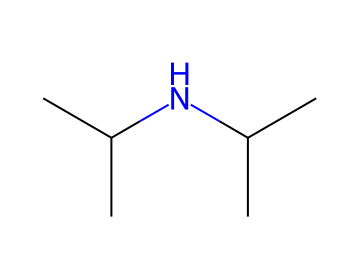
IDENTITY
COMPUTED
PROPERTIES
Strongly alkaline
log Kow= 1.4
1.64
... Ammonia or fish-like odor.
0.717 at 68 °F (USCG, 1999) - Less dense than water; will float
0.7169 @ 20 °C/4 °C
Relative density (water = 1): 0.72
0.72
0.715 @ 20°C
0.72
0.40 cP @ 25 °C
Colorless liquid ...
Slightly soluble (NTP, 1992)
Very soluble in acetone, benzene, ether, and ethanol.
In water, 1.1X10+5 mg/l @ 25 °C
Solubility in water, g/l: 10 (slightly soluble)
Miscible
MAY ATTACK SOME FORMS OF PLASTIC
30 °F (NTP, 1992)
-1 °C
30 °F (-1 °C)(OPEN CUP)
-6 °C o.c.
20 °F
20 °F
183 °F at 760 mmHg (NTP, 1992)
84 °C @ 760 mm Hg
84 °C
183 °F
183 °F
When heated to decomposition it emits toxic fumes of nitroxides.
-78 °F (NTP, 1992)
-61 °C
-61 °C
-78 °F
-61 °C
-141 °F
GHS
Danger
H225: Highly Flammable liquid and vapor [Danger Flammable liquids];H302: Harmful if swallowed [Warning Acute toxicity, oral];H314: Causes severe skin burns and eye damage [Danger Skin corrosion/irritation];H332: Harmful if inhaled [Warning Acute toxicity, inhalation]
P210, P233, P240, P241, P242, P243, P260, P261, P264, P270, P271, P280, P301+P317, P301+P330+P331, P302+P361+P354, P303+P361+P353, P304+P340, P305+P354+P338, P316, P317, P321, P330, P363, P370+P378, P403+P235, P405, and P501 (click each P-code to see the statement)
Danger
HAZARDS
Chemical: 2-Propanamine, N-(1-methylethyl)-
2-Propanamine, N-(1-methylethyl)- is listed on the EPA's Chemical Data Reporting (CDR) system. Manufacturers and importers of 2-Propanamine, N-(1-methylethyl)- are required to report information about their production and use of this chemical to the EPA under the Toxic Substances Control Act (TSCA). (40 eCFR Part 711)
Status: Active Update: 30-08-2022 https://echa.europa.eu/registration-dossier/-/registered-dossier/13145;Status: Active Update: 18-08-2022 https://echa.europa.eu/registration-dossier/-/registered-dossier/33964
2-Propanamine, N-(1-methylethyl)-: HSNO Approval: HSR001132 Approved with controls
The New Jersey Worker and Community Right to Know Act requires public and private employers to provide information about hazardous substances at their workplaces. (N.J.S.A. 34:5A-1 et. seq.)
Flammable Liquid Corrosive
Special Hazards of Combustion Products: Toxic oxides of nitrogen may form in fires.;Behavior in Fire: Vapor is heavier than air and may travel to a source of ignition and flash back. (USCG, 1999)
· Flammable/combustible material.;· May be ignited by heat, sparks or flames.;· Vapors may form explosive mixtures with air.;· Vapors may travel to source of ignition and flash back.;· Most vapors are heavier than air. They will spread along the ground and collect in low or confined areas (sewers, basements, tanks, etc.).;· Vapor explosion hazard indoors, outdoors or in sewers.;· Those substances designated with a (P) may polymerize explosively when heated or involved in a fire.;· Runoff to sewer may create fire or explosion hazard.;· Containers may explode when heated.;· Many liquids will float on water.
Highly flammable. Gives off irritating or toxic fumes (or gases) in a fire. Vapour/air mixtures are explosive. Risk of fire and explosion on contact with strong oxidizing agents.
Flammable; severe fire hazard
Inhalation of vapors causes irritation, sometimes with nausea and vomiting; can also cause burns to the respiratory system. Ingestion causes irritation of mouth and stomach. Vapor irritates eyes; liquid causes severe burn, like caustic. Contact with skin causes irritation. (USCG, 1999)
· May cause toxic effects if inhaled or ingested.;· Contact with substance may cause severe burns to skin and eyes.;· Fire will produce irritating, corrosive and/or toxic gases.;· Vapors may cause dizziness or asphyxiation, especially when in closed or confined areas.;· Runoff from fire control or dilution water may cause environmental contamination.
Liquid causes first degree burns on short exposure; [CHRIS] Corrosive to skin; [Quick CPC] Diisopropylamine is a severe pulmonary irritant in acute and chronic animal studies. At concentrations of 25 to 50 ppm, workers have experienced transient corneal injury, nausea, and headache. [ACGIH] A corrosive substance that causes lacrimation and may cause lung edema after inhalation of high concentrations; [ICSC]
1158 132
1158 132
Amines, Phosphines, and Pyridines
UN Hazard Class: 3; UN Subsidiary Risks: 8; UN Pack Group: II
Highly Flammable
Permissible Exposure Limit: Table Z-1 8-hr Time-Weighted Avg: 5 ppm (20 mg/cu m). Skin Designation.
DIISOPROPYLAMINE can react violently with oxidizing agents and strong acids. Readily eutralizes acids in exothermic reactions to form salts plus water. May be incompatible with isocyanates, halogenated organics, peroxides, phenols (acidic), epoxides, anhydrides, and acid halides. Flammable gaseous hydrogen may be generated in combination with strong reducing agents, such as hydrides.
SAFETY
Excerpt from ERG Guide 132 [Flammable Liquids - Corrosive]:;Some of these materials may react violently with water.;SMALL FIRE: Dry chemical, CO2, water spray or alcohol-resistant foam.;LARGE FIRE: Water spray, fog or alcohol-resistant foam. If it can be done safely, move undamaged containers away from the area around the fire. Dike runoff from fire control for later disposal. Do not get water inside containers.;FIRE INVOLVING TANKS, RAIL TANK CARS OR HIGHWAY TANKS: Fight fire from maximum distance or use unmanned master stream devices or monitor nozzles. Cool containers with flooding quantities of water until well after fire is out. Withdraw immediately in case of rising sound from venting safety devices or discoloration of tank. ALWAYS stay away from tanks in direct contact with flames. For massive fire, use unmanned master stream devices or monitor nozzles; if this is impossible, withdraw from area and let fire burn. (ERG, 2024)
Use alcohol-resistant foam, water, powder, carbon dioxide. In case of fire: keep drums, etc., cool by spraying with water.
Fresh air, rest. Half-upright position. Artificial respiration may be needed. Refer immediately for medical attention.
Wear protective gloves when administering first aid. Remove contaminated clothes. Rinse skin with plenty of water or shower for at least 15 minutes. Refer immediately for medical attention.
Rinse with plenty of water for several minutes (remove contact lenses if easily possible). Refer immediately for medical attention.
Rinse mouth. Give nothing to drink. Do NOT induce vomiting. Refer immediately for medical attention.
· CALL 911. Then call emergency response telephone number on shipping paper. If shipping paper not available or no answer, refer to appropriate telephone number listed on the inside back cover.;· Keep unauthorized personnel away.;· Stay upwind, uphill and/or upstream.;· Ventilate closed spaces before entering, but only if properly trained and equipped.
· ELIMINATE all ignition sources (no smoking, flares, sparks or flames) from immediate area.;· All equipment used when handling the product must be grounded.;· Do not touch or walk through spilled material.;· Stop leak if you can do it without risk.;· Prevent entry into waterways, sewers, basements or confined areas.;· A vapor-suppressing foam may be used to reduce vapors.;· Absorb with earth, sand or other non-combustible material.;· For hydrazine, absorb with DRY sand or inert absorbent (vermiculite or absorbent pads).;· Use clean, non-sparking tools to collect absorbed material.;Large Spill;· Dike far ahead of liquid spill for later disposal.;· Water spray may reduce vapor, but may not prevent ignition in closed spaces.
EYES: First check the victim for contact lenses and remove if present. Flush victim's eyes with water or normal saline solution for 20 to 30 minutes while simultaneously calling a hospital or poison control center. Do not put any ointments, oils, or medication in the victim's eyes without specific instructions from a physician. IMMEDIATELY transport the victim after flushing eyes to a hospital even if no symptoms (such as redness or irritation) develop.;SKIN: IMMEDIATELY flood affected skin with water while removing and isolating all contaminated clothing. Gently wash all affected skin areas thoroughly with soap and water. If symptoms such as redness or irritation develop, IMMEDIATELY call a physician and be prepared to transport the victim to a hospital for treatment.;INHALATION: IMMEDIATELY leave the contaminated area; take deep breaths of fresh air. If symptoms (such as wheezing, coughing, shortness of breath, or burning in the mouth, throat, or chest) develop, call a physician and be prepared to transport the victim to a hospital. Provide proper respiratory protection to rescuers entering an unknown atmosphere. Whenever possible, Self-Contained Breathing Apparatus (SCBA) should be used; if not available, use a level of protection greater than or equal to that advised under Protective Clothing.;INGESTION: DO NOT INDUCE VOMITING. Volatile chemicals have a high risk of being aspirated into the victim's lungs during vomiting which increases the medical problems. If the victim is conscious and not convulsing, give 1 or 2 glasses of water to dilute the chemical and IMMEDIATELY call a hospital or poison control center. IMMEDIATELY transport the victim to a hospital. If the victim is convulsing or unconscious, do not give anything by mouth, ensure that the victim's airway is open and lay the victim on his/her side with the head lower than the body. DO NOT INDUCE VOMITING. IMMEDIATELY transport the victim to a hospital. (NTP, 1992)
General First Aid:;· Call 911 or emergency medical service.;· Ensure that medical personnel are aware of the material(s) involved, take precautions to protect themselves and avoid contamination.;· Move victim to fresh air if it can be done safely.;· Administer oxygen if breathing is difficult.;· If victim is not breathing:;-- DO NOT perform mouth-to-mouth resuscitation; the victim may have ingested or inhaled the substance.;-- If equipped and pulse detected, wash face and mouth, then give artificial respiration using a proper respiratory medical device (bag-valve mask, pocket mask equipped with a one-way valve or other device).;-- If no pulse detected or no respiratory medical device available, provide continuous compressions. Conduct a pulse check every two minutes or monitor for any signs of spontaneous respirations.;· Remove and isolate contaminated clothing and shoes.;· For minor skin contact, avoid spreading material on unaffected skin.;· In case of contact with substance, remove immediately by flushing skin or eyes with running water for at least 20 minutes.;· For severe burns, immediate medical attention is required.;· Effects of exposure (inhalation, ingestion, or skin contact) to substance may be delayed.;· Keep victim calm and warm.;· Keep victim under observation.;· For further assistance, contact your local Poison Control Center.;· Note: Basic Life Support (BLS) and Advanced Life Support (ALS) should be done by trained professionals.;Specific First Aid:;· For corrosives, in case of contact, immediately flush skin or eyes with running water for at least 30 minutes. Additional flushing may be required.
(General first aid procedures);Eye: Irrigate immediately - If this chemical contacts the eyes, immediately wash (irrigate) the eyes with large amounts of water, occasionally lifting the lower and upper lids. Get medical attention immediately.;Skin: Water wash immediately - If this chemical contacts the skin, immediately wash the contaminated skin with water. If this chemical penetrates the clothing, immediately remove the clothing and wash the skin with water. If symptoms occur after washing, get medical attention immediately.;Breathing: Respiratory support;Swallow: Medical attention immediately - If this chemical has been swallowed, get medical attention immediately.
Fireproof. Separated from strong oxidants, strong acids and food and feedstuffs. Store only in original container. Store in an area without drain or sewer access.
Vapors are heavier than air and may travel to a source of ignition and flash back.
· Wear positive pressure self-contained breathing apparatus (SCBA).;· Wear chemical protective clothing that is specifically recommended by the manufacturer when there is NO RISK OF FIRE.;· Structural firefighters' protective clothing provides thermal protection but only limited chemical protection.
Use dry chemical, "alcohol resistant" foam, carbon dioxide, or water spray. Water may be ineffective. Use water spray to keep fire-exposed containers cool. Approach fire from upwind to avoid hazardous vapors and toxic decomposition products.
Use dry chemical, alcohol foam or carbon dioxide fire fighting agents. Water may be ineffective, but effective to keep fire-exposed containers cool, to disperse the vapors, to flush spills away from exposures, to dilute spills to nonflammable mixtures and thus to prevent the spread of fires. Wear complete protective clothing.
Store in a cool, dry, well-ventilated location. Separate from acids; oxidizing material, plastics.
Protect containers against physical damage. Keep containers well closed. In factories, store in standard combustible liquid storage rooms or cabinets.
1. REMOVE ALL IGNITION SOURCES. 2. VENTILATE AREA OF SPILL OR LEAK. 3. FOR SMALL QUANTITIES, ABSORB ON PAPER TOWELS. EVAPORATE IN SAFE PLACE (SUCH AS FUME HOOD). ALLOW SUFFICIENT TIME FOR EVAPORATING VAPORS TO COMPLETELY CLEAR HOOD DUCTWORK. BURN PAPER IN SUITABLE LOCATION AWAY FROM COMBUSTIBLE MATERIALS. LARGE QUANTITIES CAN BE RECLAIMED OR COLLECTED AND ATOMIZED IN A SUITABLE COMBUSTION CHAMBER EQUIPPED WITH AN APPROPRIATE EFFLUENT GAS CLEANING DEVICE.
DIISOPROPYLAMINE SHOULD NOT BE ALLOWED TO ENTER A CONFINED SPACE, SUCH AS A SEWER, BECAUSE OF THE POSSIBILITY OF AN EXPLOSION. SEWERS DESIGNED TO PRECLUDE THE FORMATION OF EXPLOSIVE CONCN OF...VAPORS ARE PERMITTED.
Eliminate all ignition sources. Stop or control the leak, if this can be done without undue risk. Use water spray to cool and disperse vapors, protect personnel, and dilute spills to form nonflammable mixtures. Absorb in noncombustible material for proper disposal.
Excerpt from ERG Guide 132 [Flammable Liquids - Corrosive]:;ELIMINATE all ignition sources (no smoking, flares, sparks or flames) from immediate area. All equipment used when handling the product must be grounded. Do not touch or walk through spilled material. Stop leak if you can do it without risk. Prevent entry into waterways, sewers, basements or confined areas. A vapor-suppressing foam may be used to reduce vapors. Absorb with earth, sand or other non-combustible material. For hydrazine, absorb with DRY sand or inert absorbent (vermiculite or absorbent pads). Use clean, non-sparking tools to collect absorbed material.;LARGE SPILL: Dike far ahead of liquid spill for later disposal. Water spray may reduce vapor, but may not prevent ignition in closed spaces. (ERG, 2024)
SRP: At the time of review, criteria for land treatment or burial (sanitary landfill) disposal practices are subject to significant revision. Prior to implementing land disposal of waste residue (including waste sludge), consult with environmental regulatory agencies for guidance on acceptable disposal practices.
DIISOPROPYLAMINE MAY BE DISPOSED OF BY ATOMIZING IN A SUITABLE COMBUSTION CHAMBER EQUIPPED WITH AN APPROPRIATE EFFLUENT GAS CLEANING DEVICE.
TOXICITY
Eyes, skin, respiratory system
TERRESTRIAL FATE: Based on a classification scheme(1), an estimated Koc value of 140(SRC) from a log Kow of 1.4(2) and a regression derived equation(3) indicates that diisopropylamine is expected to have high mobility in soil(SRC). A pKa value of 11.07(4) indicates that the protonated form of diisopropylamine will be the dominant species in moist soil surfaces and cations generally adsorb to organic carbon and clays more strongly than their neutral counterparts(SRC). Volatilization of diisopropylamine from moist soil surfaces is not expected to be an important fate process since the cation will not volatilize. The potential for volatilization of diisopropylamine from dry soil surfaces may exist(SRC) based upon a vapor pressure of 79.4 mm Hg at 25 °C(5). Based on screening tests(6,7), biodegradation may be an important fate process in soil, providing sufficient acclimation has occured. However, high concns of diisopropylamine (> 50 ppm) appear to be toxic to microorganisms and, thus, may reduce biodegradation(6,7).
AQUATIC FATE: Based on a classification scheme(1), an estimated Koc value of 140(SRC) from a log Kow of 1.4(2) and a regression derived equation(3) indicates that diisopropylamine is not expected to adsorb to suspended solids and sediment in water(SRC). A pKa value of 11.07(4) indicates that the protonated form of diisopropylamine will be the predominant species in water and cations generally adsorb more strongly than their neutral counterparts. Volatilization from water surfaces is not expected to be important fate process(SRC) since the protonated form is not expected to volatilize at environmental pH. According to a classification scheme(5), an estimated BCF of 2(SRC), from its log Kow(2) and a regression-derived equation(6), suggests the potential for bioconcentration in aquatic organisms is low(SRC). Based on screening tests(7,8), biodegradation may be an important fate process in aquatic systems providing sufficient acclimation has occurred.
ATMOSPHERIC FATE: According to a model of gas/particle partitioning of semivolatile organic compounds in the atmosphere(1), diisopropylamine, which has a vapor pressure of 79.4 mm Hg at 25 °C(2), is expected to exist solely as a vapor in the ambient atmosphere. Vapor-phase diisopropylamine is degraded in the atmosphere by reaction with photochemically-produced hydroxyl radicals(SRC); the half-life for this reaction in air is estimated to be 4 hours(SRC), from its rate constant of 9.7X10⁻¹¹ cu cm/molecule-sec at 25 °C(3). Diisopropylamine is not expected to directly photolyze due to the lack of absorption in the environmental UV spectrum(SRC).
Diisopropylamine was detected in raw beef at a concn of 0.05 ug/kg(1).
Dermatotoxin - Skin burns.;Lacrimator (Lachrymator) - A substance that irritates the eyes and induces the flow of tears.;Toxic Pneumonitis - Inflammation of the lungs induced by inhalation of metal fumes or toxic gases and vapors.
Serious local effects by all routes of exposure.
inhalation, skin absorption, ingestion, skin and/or eye contact
On the basis of the data presented in this report, the CIR Expert Panel concludes that Diisopropylamine is safe as a cosmetic ingredient as presently used. Diisopropylamine should not be used in products containing N-nitrosating agents.
Safe for use in cosmetics, with qualifications
Cough. Sore throat. Burning sensation. Shortness of breath. Laboured breathing.
Redness. Pain. Serious skin burns.
Redness. Pain. Blurred vision. Severe burns.
Burns in mouth and throat. Burning sensation behind the breastbone. Abdominal pain. Vomiting. Shock or collapse.
irritation eyes, skin, respiratory system; nausea, vomiting; headache; visual disturbance
The substance is harmful to aquatic organisms.
Employees should be screened for history of certain medical conditions which might place the employee at increased risk from diisopropylamine exposure. /These are/ ... chronic respiratory disease ... skin disease ... /and/ eye disease. ... Any employee developing the above-listed conditions should be referred for further medical examination.
The Koc of diisopropylamine was estimated as 140(SRC), using a log Kow of 1.4(1) and a regression-derived equation(2). According to a classification scheme(3), this estimated Koc value suggests that diisopropylamine is expected to have high mobility in soil(SRC). The pKa of diisopropylamine is 11.07(4), indicating that the protonated form will be the predominant species in moist soils and cationic molecules generally adsorb to organic carbon and clays more strongly than their neutral counterparts(SRC).
Diisopropylamine (CAS # 108-18-9) was evaluated for dermal sensitization in Harlet guinea pigs (5/sex) inducted with 0.3 ml occluded topical applications of 10% (v/v) test solution to shaved backs, 6 hours/day, 3 days/week for 3 weeks. Upon a third application, increasing dermal irritation required reduction of dosage to 0.3 ml of a 5% (v/v) solution, which continued to produce irritation ranging from moderate to severe. Two weeks later, the non-irritating dermal challenge upon virgin application sites produced no such signs of irritation, confirming cumulative irritation without dermal sensitization. Conversely, dermal irritation acquired during induction with DCNB (positive control) was identified as delayed hypersensitivity upon challenge 2 weeks later, which produced universal dermal irritation in response to an otherwise non-irritating dose.
Acute inhalation toxicity was evaluated in groups of 10 Sprague-Dawley rats (5 male and 5 female) exposed to diisopropylamine at analytical concentrations of 0, 5.0 and 5.3 mg/l of air for four hours. Mortality was observed in one male rat in the 5.3 mg/l group and the LC50 for both sexes was considered to be greater than 5.3 mg/l. Clinical observations of animals at one or both exposure levels immediately following exposure and during the 14 day post-exposure period included labored breathing, tremors, high-pitched respiratory sounds, partially or completely closed eyes, nasal and ocular discharges and encrustation, ocular opacity, and pitted/raised corneal surface. After an initial body weight decrease in most exposed animals on post-exposure day 2, all animals gained weight and exceeded their pre-exposure weights by post-exposure day 14. Gross necropsy revealed corneal opacity.
Diisopropylamine (CAS # 108-18-9) was evaluated in hepatocyte primary culture DNA repair assay. Isolated liver cells from Fischer-344 rats cultured in triplicate were exposed simultaneously to tritiated thymidine plus 10 concentrations of diisopropylamine ranging from 0.1 to 5000 ug/ml (cytotoxic concentration in preliminary assay), and 6 concentrations in the replicate assay from 10 to 2500 ug/ml for 18-21 hours at 37 degrees C. Each culture, washed and swelled in hypotonic solution, fixed and mounted on slides, was then dipped in autoradiographic emulsion and the cells exposed at -20 degrees C for 7 days, then developed and stained in methylgreen Pyronin Y. Thirty cells/culture, a total of 90 morphologically intact cells for each assay, were then subjected to quantitative autoradiographic grain counting to determine the net nuclear grain count (the nuclear count adjusted for background cytoplasmic uptake). Net grain counts were negative for all concentrations of test material and solvent control, reflecting a lack of diisopropylamine-induced DNA damage. Conversely, 2-AAF (the positive control) produced 39.9 and 51.2 net grain counts, respectively, in preliminary and replicate assays.
Diisopropylamine (CAS # 108-18-9) was evaluated for subchronic dermal toxicity in groups of Charles River CD(SD)BR rats (3/sex/group) exposed 5 consecutive days/week for 1 month to 15, 50 or 150 mg/kg applications, undiluted doses at or below the established NOEL in range-finding study. A plastic collar hindered ingestion of test material during treatment. Volatility analysis of the undiluted test material under the conditions of study established that evaporation would results in diminished diisopropylamine availability at the sites of application (application site and manner of occlusion, if any, were unspecified). No overt effects of treatment were noted, other than mild dryness at the application sites and may have been attributable to repeated dosing and evaporation. Terminal necropsy revealed significantly decreased absolute (19%) and relative (12%) heart weights and increased absolute (4-5%) and relative (10-14%) testes weights in mid- and high-dose males. There was neither lost bodyweight nor any microscopic changes indicative of expressed toxicity in these organs. A dose-response relationship was not established for mild splenic congestion in females of all treatment groups and hematological and clinical chemistry findings were not clinically or biologically significant.
Subchronic inhalation toxicity was evaluated in groups of 15 female and 15 male Charles River CD(SD)BR rats exposed to diisopropylamine vapor at mean concentrations (measured with an automatic infrared analyzer system) of 0, 0.1, 0.6 and 2.0 mg/l for 6 h/d, 5 d/week for about 4 weeks. The test atmosphere was generated by metering the test material through a nebulizer and introducing the resulting vapor along with air into the test chamber. There were 3 mortalities in the high-dose group. Clinical observations included eye and respiratory tract irritation and decreased body weights in mid- and high-dose rats and dose-related corneal keratopathy. Hematological studies revealed dose-dependent decreases in mean corpuscular volume, serum chloride, total protein, and albumin as well as dose-dependent increases in serum cholesterol in both sexes; increased red blood cell counts, hemoglobin, and hematocrit measurements in high-dose males and mid- and high-dose females; and lowered white blood cell counts (reduced absolute number of lymphocytes) in treated males. Necropsy revealed inflammatory lesions in the nasal passages of males and females at all levels, thymic and seminal vesicle atrophy in high-dose males, and inflammatory lesions in the trachea, lung and corneas of high-dose males and females.
Diisopropylamine was detected as a volatile constituent of raw beef(1).
REGULATORY
Chemical: 2-Propanamine, N-(1-methylethyl)-
2-Propanamine, N-(1-methylethyl)- is listed on the EPA's Chemical Data Reporting (CDR) system. Manufacturers and importers of 2-Propanamine, N-(1-methylethyl)- are required to report information about their production and use of this chemical to the EPA under the Toxic Substances Control Act (TSCA). (40 eCFR Part 711)
Status: Active Update: 30-08-2022 https://echa.europa.eu/registration-dossier/-/registered-dossier/13145;Status: Active Update: 18-08-2022 https://echa.europa.eu/registration-dossier/-/registered-dossier/33964
2-Propanamine, N-(1-methylethyl)-: HSNO Approval: HSR001132 Approved with controls
The New Jersey Worker and Community Right to Know Act requires public and private employers to provide information about hazardous substances at their workplaces. (N.J.S.A. 34:5A-1 et. seq.)
USES
CIR ingredient: Diisopropylamine
Used as a catalyst and chemical intermediate; [ACGIH] Many aliphatic amines are used as curing agents for epoxy resins. [Sullivan, p. 473]
Plastic Composites Manufacturing [Category: Industry]
CATALYST; INTERMEDIATE
MEDICATION
Chemical intermediate in the synthesis of pharmaceuticals and pesticides (e.g. Diallate, Fenamiphos, and Triallate)
2023: 50,000 - <250,000 lb;2022: 50,000 - <250,000 lb;2021: <50,000 lb;2020: 250,000 - <550,000 lb
(1970) 5.45X10+8 G
(1975) PROBABLY GREATER THAN 4.54X10+5 G
(1983) 5,861,000 pounds
Abrasives;Cleaning agent;Intermediate
REACTION OF AMMONIA WITH ISOPROPYL ALCOHOL
From isopropyl chloride and ammonia
GRADES OR PURITY: COMMERCIAL, 100%.
Grade: Technical.
Pharmaceutical and Medicine Manufacturing;Computer and Electronic Product Manufacturing;All Other Basic Organic Chemical Manufacturing
2-Propanamine, N-(1-methylethyl)-: ACTIVE
ALIASES
REACTIONS
uspto-grants-1998_03 · 10.6084/m9.figshare.5104873.v1 · US05723457
查看
uspto-grants-1998_03 · 10.6084/m9.figshare.5104873.v1 · US05723602
查看
uspto-grants-1998_03 · 10.6084/m9.figshare.5104873.v1 · US05726159
查看
uspto-grants-1998_03 · 10.6084/m9.figshare.5104873.v1 · US05726316
查看
uspto-grants-1998_03 · 10.6084/m9.figshare.5104873.v1 · US05726182
查看
uspto-grants-1998_03 · 10.6084/m9.figshare.5104873.v1 · US05731314
查看
uspto-grants-1998_03 · 10.6084/m9.figshare.5104873.v1 · US05731344
查看
uspto-grants-1998_03 · 10.6084/m9.figshare.5104873.v1 · US05733882
查看