
uspto-grants-1998_03 · 10.6084/m9.figshare.5104873.v1 · US05733648
查看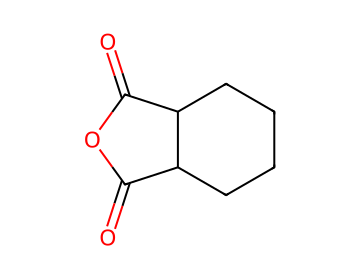
IDENTITY
COMPUTED
PROPERTIES
21.4
1.19 at 40 °C
5.3
Clear, colorless, viscous liquid
... becomes a glassy solid at 35-36 °C
Miscible with benzene, toluene, acetone, carbon tetrachloride, chloroform, ethanol, and ethyl acetate; slightly soluble in petroleum ether
Solubility in water: reaction
149 °C (open cup)
300.2 °F
BP: 145 °C at 18 mm Hg
296 °C
564.8 °F
Decomposition products: converts to hexahydrophthalic acid in the presence of water
Hazardous decomposition products formed under fire conditions. - Carbon oxides.
32 °C
35-36 °C
89.6 °F
Relative vapor density (air = 1): 5.3
1.19
0.05 [mmHg]
Vapor pressure, Pa at 25 °C: 0.9
5.35x10(-2)
Dry Powder; Other Solid; Large Crystals; Liquid
Solid; [ICSC] Glassy solid; [EPA ChAMP] White solid; [Alfa Aesar MSDS]
SOLID IN VARIOUS FORMS.
Dry powder or solid in various forms, or clear, colorless, viscous liquid.
GHS
Danger
H317: May cause an allergic skin reaction [Warning Sensitization, Skin];H318: Causes serious eye damage [Danger Serious eye damage/eye irritation];H334: May cause allergy or asthma symptoms or breathing difficulties if inhaled [Danger Sensitization, respiratory]
P233, P260, P261, P264+P265, P271, P272, P280, P284, P302+P352, P304+P340, P305+P354+P338, P317, P321, P333+P317, P342+P316, P362+P364, P403, and P501 (click each P-code to see the statement)
This chemical does not meet GHS hazard criteria for 0.2% (1 of 526) of reports.
HAZARDS
Chemical: 1,3-Isobenzofurandione, hexahydro-
Hazard Traits - Respiratory Toxicity;Authoritative List - EC Annex VI Resp. Sens. - Cat. 1;Report - if used as a fragrance or flavor ingredient
1,3-Isobenzofurandione, hexahydro- is listed on the EPA's Chemical Data Reporting (CDR) system. Manufacturers and importers of 1,3-Isobenzofurandione, hexahydro- are required to report information about their production and use of this chemical to the EPA under the Toxic Substances Control Act (TSCA). (40 eCFR Part 711)
Status: Active Update: 25-08-2022 https://echa.europa.eu/registration-dossier/-/registered-dossier/14406
Substance: Cyclohexane-1,2-dicarboxylic anhydride;EC: 201-604-9;Date of inclusion: >19-Dec-2012;Reason for inclusion: Respiratory sensitising properties (Article 57(f) - human health)
1,3-Isobenzofurandione, hexahydro-: Does not have an individual approval but may be used under an appropriate group standard
IMAP assessments - 1,3-Isobenzofurandione, hexahydro-: Environment tier I assessment;IMAP assessments - Hexahydrophthalic anhydride: Human health tier II assessment
Combustible. Gives off irritating or toxic fumes (or gases) in a fire.
Occupational asthma reported in chemical worker; [Malo] Toxic by inhalation; A strong skin and eye irritant; [Hawley] Slowly decomposed by water forming acids; A skin and severe eye irritant; May cause skin sensitization and asthma; [ICSC] Workers with occupational contact urticaria, rhinitis, and conjunctivitis from airborne exposure had resolution of symptoms after removal from work. [ACGIH] A skin sensitizer in guinea pig maximization test; Hypersensitivity effects of human exposure include asthma, urticaria, contact dermatitis, hemolysis, and late respiratory systemic syndrome; Allergic asthma is reportedly the major hypersensitivity reaction, with most cases apparently of the IgE form; [IUCLID] Several studies have shown respiratory sensitization in humans; Mildly irritating to skin and severely irritating or corrosive to eyes of rabbits; [EPA ChAMP] An irritant that may cause serious eye injury; May cause sensitization by skin contact and inhalation; [Alfa Aesar MSDS] See ACID ANHYDRIDES. See Trimellitic anhydride.
Note: C; Symbol: Xn; R: 41-42/43; S: (2)-23-24-26-37/39
Decomposes slowly on contact with water. This produces acid.
Skin Sens. 1 (99.8%);Eye Dam. 1 (99.6%);Resp. Sens. 1 (99.6%)
Eye damage - category 1;Respiratory sensitisation - category 1;Skin sensitisation - category 1
Serious eye damage/eye irritation - Category 1;Respiratory sensitization - Category 1;Skin sensitization - Category 1;Specific target organ toxicity - Single exposure - Category 3 (Narcotic effects);Hazardous to the aquatic environment (Acute) - Category 3
Serious eye damage/eye irritation - Category 1;Respiratory sensitization - Category 1;Skin sensitization - Category 1;Specific target organ toxicity - Single exposure - Category 3 (respiratory tract irritation, narcotic effects)
Eye Dam. 1;Resp. Sens. 1;Skin Sens. 1
Strong irritant to eyes and skin
Materials to avoid: Strong oxidizing agents, strong acids, strong bases.
SAFETY
Use water in large amounts.
Fresh air, rest. Refer for medical attention.
Remove contaminated clothes. Rinse and then wash skin with water and soap.
First rinse with plenty of water for several minutes (remove contact lenses if easily possible), then refer for medical attention.
Rinse mouth. Refer for medical attention .
Dry. Store in an area without drain or sewer access.
Suitable extinguishing media: Use water spray, alcohol-resistant foam, dry chemical or carbon dioxide.
Special protective equipment for fire-fighter: Wear self contained breathing apparatus for fire fighting if necessary.
Keep container tightly closed in a dry and well-ventilated place.
ACCIDENTAL RELEASE MEASURES. Personal precautions: Use personal protective equipment. Avoid dust formation. Avoid breathing dust. Ensure adequate ventilation.
ACCIDENTAL RELEASE MEASURES. Methods and materials for containment and cleaning up: Pick up and arrange disposal without creating dust. Keep in suitable, closed containers for disposal.
SRP: The most favorable course of action is to use an alternative chemical product with less inherent propensity for occupational harm/injury/toxicity or environmental contamination. Recycle any unused portion of the material for its approved use or return it to the manufacturer or supplier. Ultimate disposal of the chemical must consider: the material's impact on air quality; potential migration in soil or water; effects on animal and plant life; and conformance with environmental and public health regulations.
Personal protection: complete protective clothing including self-contained breathing apparatus. Do NOT let this chemical enter the environment. Sweep spilled substance into covered containers.
Avoid formation of dust and aerosols. Provide appropriate exhaust ventilation at places where dust is formed.
Skin and body protection: Choose body protection according to the amount and concentration of the dangerous substance at the work place.
Handle in accordance with good industrial hygiene and safety practice. Wash hands before breaks and at the end of workday.
SRP: The scientific literature for the use of contact lenses by industrial workers is inconsistent. The benefits or detrimental effects of wearing contact lenses depend not only upon the substance, but also on factors including the form of the substance, characteristics and duration of the exposure, the uses of other eye protection equipment, and the hygiene of the lenses. However, there may be individual substances whose irritating or corrosive properties are such that the wearing of contact lenses would be harmful to the eye. In those specific cases, contact lenses should not be worn. In any event, the usual eye protection equipment should be worn even when contact lenses are in place.
SRP: Local exhaust ventilation should be applied wherever there is an incidence of point source emissions or dispersion of regulated contaminants in the work area. Ventilation control of the contaminant as close to its point of generation is both the most economical and safest method to minimize personnel exposure to airborne contaminants. Ensure that the local ventilation moves the contaminant away from the worker.
Wear face shield or eye protection in combination with breathing protection.
NO open flames.
Protective gloves. Protective clothing.
TOXICITY
LC50; Species: Daphnia magna (Crustacea); Conditions: static Concentration: 88 mg/L for 21 days
LC50; Species: Daphnia magna (Crustacea); Conditions: static Concentration: 103 mg/L for 24 hours
LC50; Species: Oryzias latipes (Medaka); Conditions: static freshwater; Concentration: > 500 mg/L for 48 hr; Dissolved Oxygen: 7.3-4.3 mg/L Test Temperature and Units: Value/Lower Range: 23 Upper Range: 27
TERRESTRIAL FATE: Based on a classification scheme(1), an estimated Koc value of 10(SRC), determined from a structure estimation method(2), indicates that hexahydrophthalic anhydride is expected to have very high mobility in soil(SRC). Volatilization of hexahydrophthalic anhydride from moist soil surfaces is expected to be an important fate process(SRC) given an estimated Henry's Law constant of 2.1X10⁻⁵ atm-cu m/mole(SRC), using a fragment constant estimation method(3). Hexahydrophthalic anhydride is not expected to volatilize from dry soil surfaces(SRC) based upon an estimated vapor pressure of 5.3X10⁻² mm Hg at 25 °C(SRC), determined from a fragment constant method(4). Utilizing the Japanese MITI test, 4% of the Theoretical BOD was reached in 4 weeks(5) indicating that biodegradation is not a rapid environmental fate process in soil(SRC).
AQUATIC FATE: Based on a classification scheme(1), an estimated Koc value of 10(SRC), determined from a structure estimation method(2), indicates that hexahydrophthalic anhydride is not expected to adsorb to suspended solids and sediment(SRC). Volatilization from water surfaces is expected(3) based upon an estimated Henry's Law constant of 2.1X10⁻⁵ atm-cu m/mole(4)((SRC), developed using a fragment constant estimation method(4). Using this Henry's Law constant and an estimation method(3), volatilization half-lives for a model river and model lake are 2.3 and 20 days, respectively(SRC). According to a classification scheme(5), an estimated BCF of 13(SRC), from an estimated log Kow of 2.17(6) and a regression-derived equation(7), suggests the potential for bioconcentration in aquatic organisms is low(SRC). Hexahydrophthalic anhydride is expected to undergo hydrolysis in the environment due to the presence of functional groups that hydrolyze under environmental conditions(3). Utilizing the Japanese MITI test, 4% of the Theoretical BOD was reached in 4 weeks(8) indicating that biodegradation is not a rapid environmental fate process in water(SRC).
ATMOSPHERIC FATE: According to a model of gas/particle partitioning of semivolatile organic compounds in the atmosphere(1), hexahydrophthalic anhydride, which has an estimated vapor pressure of 5.3X10⁻² mm Hg at 25 °C(SRC), determined from a fragment constant method(2), is expected to exist solely as a vapor in the ambient atmosphere. Vapor-phase hexahydrophthalic anhydride is degraded in the atmosphere by reaction with photochemically-produced hydroxyl radicals(SRC); the half-life for this reaction in air is estimated to be 19 hrs(SRC), calculated from its rate constant of 6.8X10⁻¹² cu cm/molecule-sec at 25 °C(SRC) that was derived using a structure estimation method(3). Hexahydrophthalic anhydride does not contain chromophores that absorb at wavelengths >290 nm(4), and therefore is not expected to be susceptible to direct photolysis by sunlight(SRC).
Hemolytic anemia - Decreased hemoglobin or number of red blood cells.;Skin Sensitizer - An agent that can induce an allergic reaction in the skin.;Asthma - Reversible bronchoconstriction (narrowing of bronchioles) initiated by the inhalation of irritating or allergenic agents.
The substance can be absorbed into the body by inhalation.
Cough. Wheezing.
Redness.
Redness. Pain.
Sore throat. Burning sensation. Abdominal pain. Diarrhoea.
The substance is harmful to aquatic organisms.
The objective of this study was to determine whether immunologic anhydride-induced respiratory disease could be predicted on the basis of the level of specific immunoglobulin E (IgE) or immunoglobulin G (IgG) antibody. Eighty-one anhydride-exposed employees in one plant were studied. Fourteen had disease and 67 did not. Immunologic studies were performed by enzyme-linked immunosorbent assay and expressed as titers. When optimal discriminant analysis was used, IgE < 1:5 and IgG \ 1:10 were found to be the optimal titers for separating employees with and without immunologic respiratory disease caused by anhydrides. When IgG \ 1:10 was used, 62 of 81 workers were correctly classified; the sensitivity was 100%, the positive predictive value was 45%, the specificity was 75%, and the negative predictive value was 100%. When IgE < 1:5 was used, 73 of 81 workers were correctly classified; the sensitivity was 86%, the positive predictive value was 67% ... /anhydrides/
Using a structure estimation method based on molecular connectivity indices(1), the Koc of hexahydrophthalic anhydride can be estimated to be 10(SRC). According to a classification scheme(2), this estimated Koc value suggests that hexahydrophthalic anhydride is expected to have very high mobility in soil.
/HUMAN EXPOSURE STUDIES/ Six healthy volunteers were exposed to gaseous hexahydrophthalic anhydride (HHPA) ... for 8 hr. The respiratory uptake of the inhaled HHPA was almost complete. Rapid increases in plasma and urinary levels of hexahydrophthalic acid (HHP acid) were seen. During the first 4 hr after the end of exposure, the half-time of HHP acid in plasma was about 2 hr. A corresponding decay was seen in urine. The correlations (r > 0.90) between the air concentrations of HHPA and the levels of HHP acid in plasma and urine were close. They were even closer (r > 0.96) when the total respiratory uptake of HHPA was used. Urinary pH adjustment by intake of ammonium chloride or sodium hydrogen carbonate did not significantly alter the excretion of HHP acid. The results show that the analysis of HHP acid in plasma or urine is useful as a biological monitor for exposure to HHPA.
/HUMAN EXPOSURE STUDIES/ Organic acid anhydrides are potential sensitizers and cause occupational airway diseases. In an intervention study the efficacy of measures of hygiene at the workplace and possible selection bias were investigated. A first investigation with 110 workers exposed to hexahydrophthalic acid anhydride (HHPA) and methyltetrahydrophthalic acid anhydride (MTHPA) was carried out in July 1991. The results (skin prick test, specific serum IgE) showed that 20 people were sensitized, and in a challenge test the clinical relevance of the sensitization was confirmed in six subjects...
/HUMAN EXPOSURE STUDIES/ Nasal challenge tests were performed with a conjugate of hexahydro-1,3-isobenzofurandione (HHPA) and human serum albumin (HAS) at three increasing concentrations in exposed workers to test the pathogenetic relevance of serum antibodies (IgE and IgG) . Eleven subjects who reported work-related nasal symptoms and were IgE-sensitized against HHPA (Positive in skin-prick test and RAST against HHPA-HAS conjugate) had a decrease of nasal inspiratory peak flow and a significant increase of symptoms after the challenges. Eleven unsensitized subjects with no symptoms and nine unsensitized subjects who complained of work related nasal symptoms displayed no significant change in any parameter. The authors concluded that symptoms in some of the workers were caused by an IgE-mediated mast cell degranulation and ensuing inflammatory reaction involving eosinophil and neutrophil cells.
/HUMAN EXPOSURE STUDIES/ 53 humans. 5% suspension of hexahydro-1,3-isobenzofurandione in mineral oil (10 repeat test). Four out of fifty-three subjects gave a low grade sensitivity reaction and one marked reaction indicating sensitization. Interpretation of Results: Sensitizing .
For more Human Toxicity Excerpts (Complete) data for Hexahydrophthalic anhydride (14 total), please visit the HSDB record page.
Hexahydrophthalic anhydride's production and use as a chemical intermediate and hardener in epoxy resins(1) may result in its release to the environment through various waste streams(SRC).
AEROBIC: Hexahydrophthalic anhydride reached 4% of its theoretical BOD in 28 days in the Japanese MITI test(1).
An estimated BCF of 13 was calculated in fish for hexahydrophthalic anhydride(SRC), using an estimated log Kow of 2.17(1) and a regression-derived equation(2). According to a classification scheme(3), this BCF suggests the potential for bioconcentration in aquatic organisms is low(SRC).
REGULATORY
Chemical: 1,3-Isobenzofurandione, hexahydro-
Hazard Traits - Respiratory Toxicity;Authoritative List - EC Annex VI Resp. Sens. - Cat. 1;Report - if used as a fragrance or flavor ingredient
1,3-Isobenzofurandione, hexahydro- is listed on the EPA's Chemical Data Reporting (CDR) system. Manufacturers and importers of 1,3-Isobenzofurandione, hexahydro- are required to report information about their production and use of this chemical to the EPA under the Toxic Substances Control Act (TSCA). (40 eCFR Part 711)
Status: Active Update: 25-08-2022 https://echa.europa.eu/registration-dossier/-/registered-dossier/14406
Substance: Cyclohexane-1,2-dicarboxylic anhydride;EC: 201-604-9;Date of inclusion: >19-Dec-2012;Reason for inclusion: Respiratory sensitising properties (Article 57(f) - human health)
1,3-Isobenzofurandione, hexahydro-: Does not have an individual approval but may be used under an appropriate group standard
PHARMACOLOGY
Biological half-life of HHP acid in plasma was approximately 2 hr.
Human volunteers /were/ exposed at vapor levels of 10, 40, or 80 ug/cu m for 8 hours. Inhaled /hexahydrophtalic anhydride/ (HHPA) was almost completely absorbed in the respiratory tract, probably as /hexahydrophthalic acid/ (HHP acid) after hydrolysis on the mucus membrane. HHP acid in plasma rapidly increased without reaching steady state during exposure and decreased rapidly following removal from exposure. HHP acid was excreted through the kidneys.
Agents causing the narrowing of the lumen of a bronchus or bronchiole.
Six healthy volunteers were exposed to gaseous hexahydrophthalic anhydride (HHPA) ... for 8 hr. The respiratory uptake of the inhaled HHPA was almost complete. Rapid increases in plasma and urinary levels of hexahydrophthalic acid (HHP acid) were seen. During the first 4 hr after the end of exposure, the half-time of HHP acid in plasma was about 2 hr. A corresponding decay was seen in urine. The correlations (r > 0.90) between the air concentrations of HHPA and the levels of HHP acid in plasma and urine were close. They were even closer (r > 0.96) when the total respiratory uptake of HHPA was used. Urinary pH adjustment by intake of ammonium chloride or sodium hydrogen carbonate did not significantly alter the excretion of HHP acid. The results show that the analysis of HHP acid in plasma or urine is useful as a biological monitor for exposure to HHPA.
Human volunteers /were/ exposed at vapor levels of 10, 40, or 80 ug/cu m for 8 hours. Inhaled /hexahydrophtalic anhydride/ (HHPA) was almost completely absorbed in the respiratory tract, probably as /hexahydrophthalic acid/ (HHP acid) after hydrolysis on the mucus membrane. HHP acid in plasma rapidly increased without reaching steady state during exposure and decreased rapidly following removal from exposure. HHP acid was excreted through the kidneys.
USES
Used as a curing agent for epoxy resins and an intermediate for plasticizers and other chemicals; [Hawley] Used in the chemical, polymers, and paints, lacquers, and varnishes industries; [IUCLID]
Plastic Composites Manufacturing [Category: Industry]
Intermediate for alkyds, plasticizers, insect repellents, and rust inhibitors; hardener in epoxy resins.
2023: 10,000,000 - <50,000,000 lb;2022: 25,000,000 - <40,000,000 lb;2021: 40,000,000 - <55,000,000 lb;2020: 25,000,000 - <40,000,000 lb
1,3-Isobenzofurandione, hexahydro- is listed as a High Production Volume (HPV) chemical (65FR81686). Chemicals listed as HPV were produced in or imported into the U.S. in >1 million pounds in 1990 and/or 1994. The HPV list is based on the 1990 Inventory Update Rule. (IUR) (40 CFR part 710 subpart B; 51FR21438).
Production volumes for non-confidential chemicals reported under the Inventory Update Rule. [Table#7749]
Production volume for non-confidential chemicals reported under the 2006 Inventory Update Rule. Chemical: 1,3-Isobenzofurandione, hexahydro-. Aggregated National Production Volume: 10 to < 50 million lbs.
Chelating agent;Hardener;Dispersing agent;pH regulating agent
Intermediate;Hardener;Chelating agent;Not Known or Reasonably Ascertainable;Monomers;pH regulating agent;Dispersing agent
Tetrahydrophthalic anhydride is formed by a Diels - Alder reaction with butadiene; hydrogenation of the anhydride yields hexahydrophthalic anhydride.
Electrical Equipment, Appliance, and Component Manufacturing;All Other Basic Inorganic Chemical Manufacturing;Utilities;All Other Basic Organic Chemical Manufacturing;Miscellaneous Manufacturing;Not Known or Reasonably Ascertainable;Plastics Material and Resin Manufacturing
1,3-Isobenzofurandione, hexahydro-: ACTIVE
ALIASES
REACTIONS
uspto-grants-1998_03 · 10.6084/m9.figshare.5104873.v1 · US05733648
查看
uspto-grants-1998_03 · 10.6084/m9.figshare.5104873.v1 · US05733648
查看
uspto-grants-1979_11 · 10.6084/m9.figshare.5104873.v1 · US04175948
查看
uspto-grants-1979_11 · 10.6084/m9.figshare.5104873.v1 · US04175948
查看
Training data from https://doi.org/10.1039/C8SC04228D (2/10) · 10.1039/C8SC04228D
查看
Training data from https://doi.org/10.1039/C8SC04228D (2/10) · 10.1039/C8SC04228D
查看
Training data from https://doi.org/10.1039/C8SC04228D (2/10) · 10.1039/C8SC04228D
查看
Training data from https://doi.org/10.1039/C8SC04228D (9/10) · 10.1039/C8SC04228D
查看