
Training data from https://doi.org/10.1039/C8SC04228D (6/10) · 10.1039/C8SC04228D
查看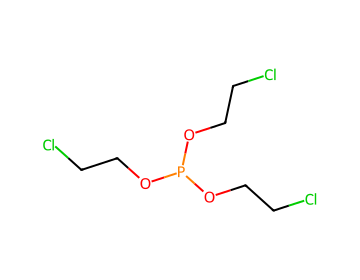
IDENTITY
COMPUTED
PROPERTIES
Characteristic odor
1.353 at 68 °F (NTP, 1992) - Denser than water; will sink
1.3443 g/cu cm at 26 °C
Colorless liquid
Decomposes (NTP, 1992)
Miscible with most common organic solvents
Slightly soluble in water; decomposes when dissolved.
280 °F (NTP, 1992)
280 °F Open Cup
257 to 275 °F at 7 mmHg (NTP, 1992)
120 °C at 3 mm Hg
BP: 112-5 °C at 2 mm Hg
When heated to decomp ... emits very toxic fumes of /hydrogen chloride and phosphorus oxides/.
9.32 (NTP, 1992) - Heavier than air; will sink (Relative to Air)
9.32 (Air= 1)
greater than 1 mmHg at 68 °F (NTP, 1992)
0.0003 [mmHg]
Index of refraction: 1.4868 at 20 °C
Tris(2-chloroethyl)phosphite is a clear colorless liquid. (NTP, 1992)
Colorless liquid; [HSDB]
Self reacts exothermally when heated above 130 °C.
GHS
This chemical does not meet GHS hazard criteria for 4.8% (5 of 104) of reports.
Danger
H301+H311 (36.5%): Toxic if swallowed or in contact with skin [Danger Acute toxicity, oral; acute toxicity, dermal];H301 (95.2%): Toxic if swallowed [Danger Acute toxicity, oral];H311 (73.1%): Toxic in contact with skin [Danger Acute toxicity, dermal];H312 (21.2%): Harmful in contact with skin [Warning Acute toxicity, dermal];H315 (57.7%): Causes skin irritation [Warning Skin corrosion/irritation];H319 (58.7%): Causes serious eye irritation [Warning Serious eye damage/eye irritation];H330 (36.5%): Fatal if inhaled [Danger Acute toxicity, inhalation];H335 (57.7%): May cause respiratory irritation [Warning Specific target organ toxicity, single exposure; Respiratory tract irritation];H340 (37.5%): May cause genetic defects [Danger Germ cell mutagenicity];H350 (37.5%): May cause cancer [Danger Carcinogenicity]
P203, P260, P261, P262, P264, P264+P265, P270, P271, P280, P284, P301+P316, P302+P352, P304+P340, P305+P351+P338, P316, P317, P318, P319, P320, P321, P330, P332+P317, P337+P317, P361+P364, P362+P364, P403+P233, P405, and P501 (click each P-code to see the statement)
Aggregated GHS information provided per 104 reports by companies from 6 notifications to the ECHA C&L Inventory. Each notification may be associated with multiple companies.;Reported as not meeting GHS hazard criteria per 5 of 104 reports by companies.;There are 5 notifications provided by 99 of 104 reports by companies with hazard statement code(s).;Information may vary between notifications depending on impurities, additives, and other factors. The percentage value in parenthesis indicates the notified classification ratio from companies that provide hazard codes. Only hazard codes with percentage values above 10% are shown. For more detailed information, please visit ECHA C&L website.
HAZARDS
Chemical: Ethanol, 2-chloro-, phosphite (3:1)
Ethanol, 2-chloro-, phosphite (3:1): Does not have an individual approval but may be used as a component in a product covered by a group standard. It is not approved for use as a chemical in its own right.
Poison
This chemical is combustible. (NTP, 1992)
Combustible
Slight when exposed to heat or flame
SYMPTOMS: This material causes irritation of the eyes, skin and mucous membranes.;ACUTE/CHRONIC HAZARDS: Vapors from this material are extremely irritating to the eyes, skin and mucous membranes. It is also easily absorbed through the skin and may cause irritation on contact. (NTP, 1992)
Oral LD50 (rat) = 131 mg/kg; (Effects include hypoactivity, weakness, dyspnea, and diarrhea; Skin LD50 (rabbit) = 810 mg/kg; [HSDB] A strong reducing agent; Decomposed by water; Unstable in presence of heat, moisture, and prolonged air exposure; A skin, eye, and mucous membrane irritant; Can be absorbed through skin; [CAMEO] May decompose on exposure to water or moist air; An irritant; [MSDSonline]
Halogenated Organic Compounds;Sulfonates, Phosphonates, and Thiophosphonates, Organic;Reducing Agents, Weak
EPA/Office of Pollution Prevention and Toxics; High Production Volume (HPV) Challenge Program's Robust Summaries and Test Plans on 2-Chloroethanol phosphite.[Available from, as of June 15, 2009: http://iaspub.epa.gov/oppthpv/quicksearch.display?pChem=102294]
Pursuant to section 8(d) of TSCA, EPA promulgated a model Health and Safety Data Reporting Rule. The section 8(d) model rule requires manufacturers, importers, and processors of listed chemical substances and mixtures to submit to EPA copies and lists of unpublished health and safety studies. Tris(2-chloroethyl)phosphite is included on this list. Effective date 4/29/83; Sunset date: 1/13/86.
Water-Reactive
TRIS(2-CHLOROETHYL)PHOSPHITE is unstable to heat, moisture and prolonged exposure to air. Hydrolyzes in water. Reacts vigorously with oxidizing agents. Undergoes vigorous isomerization (NTP, 1992).
Unstable to heat, moisture and prolonged exposure to air. Decomposes in water.
SAFETY
Fires involving this compound should be controlled with a dry chemical, carbon dioxide or Halon extinguisher. (NTP, 1992)
EYES: First check the victim for contact lenses and remove if present. Flush victim's eyes with water or normal saline solution for 20 to 30 minutes while simultaneously calling a hospital or poison control center. Do not put any ointments, oils, or medication in the victim's eyes without specific instructions from a physician. IMMEDIATELY transport the victim after flushing eyes to a hospital even if no symptoms (such as redness or irritation) develop.;SKIN: IMMEDIATELY flood affected skin with water while removing and isolating all contaminated clothing. Gently wash all affected skin areas thoroughly with soap and water. If symptoms such as redness or irritation develop, IMMEDIATELY call a physician and be prepared to transport the victim to a hospital for treatment.;INHALATION: IMMEDIATELY leave the contaminated area; take deep breaths of fresh air. If symptoms (such as wheezing, coughing, shortness of breath, or burning in the mouth, throat, or chest) develop, call a physician and be prepared to transport the victim to a hospital. Provide proper respiratory protection to rescuers entering an unknown atmosphere. Whenever possible, Self-Contained Breathing Apparatus (SCBA) should be used; if not available, use a level of protection greater than or equal to that advised under Protective Clothing.;INGESTION: DO NOT INDUCE VOMITING. If the victim is conscious and not convulsing, give 1 or 2 glasses of water to dilute the chemical and IMMEDIATELY call a hospital or poison control center. Be prepared to transport the victim to a hospital if advised by a physician. If the victim is convulsing or unconscious, do not give anything by mouth, ensure that the victim's airway is open and lay the victim on his/her side with the head lower than the body. DO NOT INDUCE VOMITING. IMMEDIATELY transport the victim to a hospital. (NTP, 1992)
Undergoes intramolecular isomerization at higher temperatures, exposure to air should be minimum.
Water, foam, carbon dioxide, and dry chemical
In general, materials which are toxic as stored or which can decomp into toxic components ... should be stored in a cool, well-ventilated place, out of direct rays of the sun, away from areas of high fire hazard, and should be periodically inspected. ... Incompatible materials should be isolated from each other.
SRP: Wastewater from contaminant suppression, cleaning of protective clothing/equipment, or contaminated sites should be contained and evaluated for subject chemical or decomposition product concentrations. Concentrations shall be lower than applicable environmental discharge or disposal criteria. Alternatively, pretreatment and/or discharge to a POTW is acceptable only after review by the governing authority. Due consideration shall be given to remediation worker exposure (inhalation, dermal and ingestion) as well as fate during treatment, transfer and disposal. If it is not practicable to manage the chemical in this fashion, it must meet Hazardous Material Criteria for disposal.
SMALL SPILLS AND LEAKAGE: If you spill this chemical, use absorbent paper to pick up all liquid spill material. Your contaminated clothing and absorbent paper should be sealed in a vapor-tight plastic bag for eventual disposal. Solvent wash all contaminated surfaces with alcohol followed by washing with a strong soap and water solution. Do not reenter the contaminated area until the Safety Officer (or other responsible person) has verified that the area has been properly cleaned.;STORAGE PRECAUTIONS: You should protect this material from exposure to air, and store it in a refrigerator. (NTP, 1992)
SRP: The most favorable course of action is to use an alternative chemical product with less inherent propensity for occupational exposure or environmental contamination. Recycle any unused portion of the material for its approved use or return it to the manufacturer or supplier. Ultimate disposal of the chemical must consider: the material's impact on air quality; potential migration in soil or water; effects on animal, aquatic, and plant life; and conformance with environmental and public health regulations.
Excerpt from ERG Guide 153 [Substances - Toxic and/or Corrosive (Combustible)]:;IMMEDIATE PRECAUTIONARY MEASURE: Isolate spill or leak area in all directions for at least 50 meters (150 feet) for liquids and at least 25 meters (75 feet) for solids.;SPILL: Increase the immediate precautionary measure distance, in the downwind direction, as necessary.;FIRE: If tank, rail tank car or highway tank is involved in a fire, ISOLATE for 800 meters (1/2 mile) in all directions; also, consider initial evacuation for 800 meters (1/2 mile) in all directions. (ERG, 2024)
RECOMMENDED RESPIRATOR: Where the neat test chemical is weighed and diluted, wear a NIOSH-approved half face respirator equipped with an organic vapor/acid gas cartridge (specific for organic vapors, HCl, acid gas and SO2) with a dust/mist filter. (NTP, 1992)
TOXICITY
LC50; Species: fish /species unspecified/ (7 months old); Conditions: Static bioassay, temperature 20.9-22.6 °C, pH 7.4-7.8 at the beginning and 5.4-5.5 by the middle, 84% Oxygen concentration; Concentration: 251.6 mg/L for 96 hours /98.8% purity/
LC50; Species: Lepomis macrochirus (Bluegill sunfish, 8-10 months old, 0.70 g); Conditions: Static bioassay, well water, pH 7.43, temperature consistent; Concentration: >/= 100 mg/L for 96 hours
LC50; Species: Oryzias latipes (Killifish); Conditions: Semi-static bioassay, de-chlorinated drinking water, pH 7.2, temperature 20 °C, 60% dissolved oxygen; Concentration: 170 mg/L for 96 hours
LC50; Species: Oryzias latipes (Killifish); Conditions: underground water, temperature 25 °C; Concentration: 300 mg/L for 48 hours
For more Ecotoxicity Values (Complete) data for TRIS(2-CHLOROETHYL) PHOSPHITE (14 total), please visit the HSDB record page.
TERRESTRIAL FATE: Based on a rapid hydrolysis of 100% in 20 minutes at pH 7(1), adsorption to soil and volatilization from moist soil are not expected to be an important environmental fate processes(SRC). Tris(2-chloroethyl) phosphite is not expected to volatilize from dry soil surfaces(SRC) based upon an estimated vapor pressure of 3.0X10⁻⁴ mm Hg at 25 °C(SRC), determined from a fragment constant method(2). Biodegradation data were not available(SRC, 2009).
AQUATIC FATE: Adsorption to suspended solids and sediment, volatilization, and bioconcentration of tris(2-chloroethyl) phosphite in water are not expected to be important environment fate processes due to 100% hydrolysis in 20 minutes at pH 7 and 23 °C(1). Biodegradation data were not available(SRC, 2009).
ATMOSPHERIC FATE: According to a model of gas/particle partitioning of semivolatile organic compounds in the atmosphere(1), tris(2-chloroethyl) phosphite, which has an estimated vapor pressure of 3.0X10⁻⁴ mm Hg at 25 °C(SRC), determined from a fragment constant method(2), is expected to exist solely as a vapor in the ambient atmosphere. Vapor-phase tris(2-chloroethyl) phosphite is degraded in the atmosphere by reaction with photochemically-produced hydroxyl radicals(SRC); the half-life for this reaction in air is estimated to be 17 hours(SRC), calculated from its rate constant of 2.2X10⁻¹¹ cu cm/molecule-sec at 25 °C(SRC) that was derived using a structure estimation method(3). Tris(2-chloroethyl) phosphite does not contain chromophores that absorb at wavelengths >290 nm(4) and therefore is not expected to be susceptible to direct photolysis by sunlight(SRC).
Based on a rapid hydrolysis of 100% in 20 minutes at pH 7(1), adsorption to soil and sediment are not expected to be an important environmental fate processes(SRC).
The mutagenicity of tris(2-chloroethyl) phosphite was evaluated in Salmonella tester strains TA1535, TA1537, TA1538, TA98 and TA100 (Ames Test) and in Saccharomyces cerevisiae strain D4, both in the presence and absence of added metabolic activation by Aroclor-induced rat liver S9 fraction. Based on preliminary toxicity determinations, tris(2-chloroethyl) phosphite, diluted in DMSO, was tested at concentrations up to 5ul/plate using the plate incorporation technique. Tris(2-chloroethyl) phosphite did not produce a positive response in any tester strain with or without metabolic activation.
The ability of tris(2-chloroethyl) phosphite to induce specific locus mutations at the TK locus of cultured L5178Y mouse lymphoma cells (Mouse Lymphoma Mutagenicity Assay) was evaluated in the presence and absence of Aroclor-induced rat liver S9 metabolic activation. Based on preliminary toxicity determinations, nonactivated cultures were treated with concentration ranging from 0.0160ul/ml to 0.006ul/ml, producing a range of 3.0 - 90% total relative growth. Four S9 activated cultures treated with concentrations ranging from 0.4ul/ml to 0.1ul/ml produced a range of 23.0 - 145.2% total relative growth. None of the cultures produced mutant frequencies significantly greater than the solvent control (DMSO) with or without metabolic activation.
Tris(2-chloroethyl) phosphite's production and use as a chemical intermediate and as a component of vinyl stabilizers, grease additives, flameproofing compositions(1) may result in its release to the environment through various waste streams(SRC).
Bioconcentration of tris(2-chloroethyl) phosphite is not expected to be important environmental fate processes due to 100% hydrolysis in 20 minutes at pH 7 and 23 °C(1).
Volatilization of tris(2-chloroethyl) phosphite from water surfaces or moist soil surfaces is not expected to be important environmental fate processes due to 100% hydrolysis in 20 minutes at pH 7 and 23 °C(1). Tris(2-chloroethyl) phosphite is is not expected to volatilize from dry soil surfaces(SRC) based upon an estimated vapor pressure of 3.0X10⁻⁴ mm Hg(SRC), determined from a fragment constant method(2).
/LABORATORY ANIMALS: Acute Exposure/ Sprague-Dawley rats /were dosed orally with/ 79.01; 118.5; 177.8; 266.7 mg/kg bw /2-chloroethanol phosphite suspended in corn oil/. The mortality was 0, 25, 100 and 100 % respectively for the dose rates 79.01, 118.5, 177.8 and 266.7 mg/kg bw. Deaths occurred from 6 to 22 hours after the administration depending on the animals. No gross pathologic alterations were noted among any of the dosed animals. Observed symptoms /included/: hypoactivity and ruffed fur were observed in all treated animals. These signs were observed 30 minutes after the administration and lasted for a minimum of 1 day. Muscular weakness was noted 1 hour after the administration of all dose rates except the lowest one (79.01 mg/kg). Labored breathing and diarrhea were observed 1 hour after the administration of the 177.8 and 266.7 mg/kg dose rates.
/LABORATORY ANIMALS: Acute Exposure/ Male albino rats /were dosed orally with/ 150, 200, 400, and 800 mg/kg bw /2-chloroethanol phosphite in corn oil/. The rats treated at 150 mg/kg bw showed no signs of intoxication nor mortality. At the dose rate of 200 mg/kg, signs of intoxication were observed from 4 to 8 hours after dosing in 1 rat. This animal died on Day 2. Two rats treated at 400 mg/kg showed symptoms during the period 0-4 hrs after administration. One rat died during the period 4-8 hrs and the other one on Day 2. All rats treated at 800 mg/kg showed signs of intoxication 0-4 hrs after the administration and died during the four following hours (period 4-8 hrs). The observed signs of intoxication were: ataxia, depression, hypothermia, TSP (Toleration of side position), gasping. /No additional findings in gross autopsy/.
/LABORATORY ANIMALS: Neurotoxicity/ Sprague-Dawley rats /were dosed orally with/ 25, 50, 100, 200, 300 mg/kg /2-chloroethanol phosphite in 10% corn oil/. The mortality was 20, 10, 50, 70 and 90 % respectively for the dose rates 25, 50, 100, 200 and 300 mg/kg bw. Deaths occurred from 6 hours (one animal at 50 mg/kg) to 14 days (one animal at 25 mg/kg) after the administration. Among the animals that died, 20 out of 24 animals died 24 hours after administration. No gross pathologic alterations were noted among any of the treated animals. Autopsies revealed only chronic pulmonary disease (minor) in one animal at 25 mg/kg and in another one at 50 mg/kg. Observed symptoms /included/: decreased locomotor activity, piloerection, ptosis, loss of righting reflex. Normal body activity returned within 8 days in all surviving animals.
/GENOTOXICITY/ Tris(2-chloroethyl) phosphite was evaluated for the induction of sex-linked recessive lethal mutations in Drosophila melanogaster by the National Toxicology Program. Canton-S wild-type males were treated with concentrations of tris(2-chloroethyl) phosphite that result in approximately 30% mortality. Following treatment, males were mated individually to 3 harems of Basc virgin females to produce 3 broods for analysis. The concentrations of tris(2-chloroethyl) phosphite tested by injection (1800 ppm) or feeding (700, 750, and 900 ppm) were negative in this assay.
For more Non-Human Toxicity Excerpts (Complete) data for TRIS(2-CHLOROETHYL) PHOSPHITE (7 total), please visit the HSDB record page.
Tris(2-chloroethyl) phosphite hydrolyzes rapidly in water(1), as indicated by a half-life of 5.1 hours (degradation rate constant of 3.81X10⁻⁵ /sec) at pH 9(2). At pH 4 the compound degrades immediately to diethyl phosphonate. Products identified at pH 7 were diethyl phosphonate and ethyl phosphonate and at pH 9, triethyl phosphite, diethyl phosphonate and ethyl phosphonate. Reaction with hydroxy radicals and photogradation are not expected to be important environmental fate processes due to very rapid hydrolysis rate(2).
The rate constant for the vapor-phase reaction of tris(2-chloroethyl) phosphite with photochemically-produced hydroxyl radicals has been estimated as 2.2X10⁻¹¹ cu cm/molecule-sec at 25 °C(SRC) using a structure estimation method(1). This corresponds to an atmospheric half-life of about 17 hours at an atmospheric concentration of 5X10+5 hydroxyl radicals per cu cm(1). Tris(2-chloroethyl) phosphite does not contain chromophores that absorb at wavelengths >290 nm(2) and therefore is not expected to be susceptible to direct photolysis by sunlight(SRC).
Occupational exposure to tris(2-chloroethyl) phosphite may occur through inhalation and dermal contact with this compound at workplaces where tris(2-chloroethyl) phosphite is produced or used. (SRC)
RAIN/SNOW/FOG: Tris(2-chloroethyl)phosphite was tested for but not detected in a study of snow samples collected during March 2003 in northern Sweden at a road intersection and an airport, designed to implicate traffic as a source of organophosphorus flame retardants and plasticizers in the outdoor environment(1).
Tris(2-chloroethyl) phosphite's production and use as a chemical intermediate may result in its release to the environment through various waste streams. If released to air, an estimated vapor pressure of 3.0X10⁻⁴ mm Hg at 25 °C indicates tris(2-chloroethyl) phosphite will exist solely as a vapor in the atmosphere. Vapor-phase tris(2-chloroethyl) phosphite will be degraded in the atmosphere by reaction with photochemically-produced hydroxyl radicals; the half-life for this reaction in air is estimated to be 17 hours. Tris(2-chloroethyl) phosphite does not contain chromophores that absorb at wavelengths >290 nm and therefore is not expected to be susceptible to direct photolysis by sunlight. If released to soil, 100% hydrolysis in 20 minutes indicates that adsorption to soil and volatilization from moist soil are not expected to be an important environmental fate processes. Tris(2-chloroethyl) phosphite is not expected to volatilize from dry soil surfaces based upon the estimated vapor pressure. Biodegradation data were not avialable. If released to water, adsorption to suspended solids and sediment, volatilization, and bioconcentration of tris(2-chloroethyl) phosphite are not expected to be important environment fate processes due to 100% hydrolysis in 20 minutes at pH 7 and 23 °C. Occupational exposure to tris(2-chloroethyl) phosphite may occur through inhalation and dermal contact with this compound at workplaces where tris(2-chloroethyl) phosphite is produced or used. (SRC)
REGULATORY
Chemical: Ethanol, 2-chloro-, phosphite (3:1)
Ethanol, 2-chloro-, phosphite (3:1): Does not have an individual approval but may be used as a component in a product covered by a group standard. It is not approved for use as a chemical in its own right.
Pursuant to section 8(d) of TSCA, EPA promulgated a model Health and Safety Data Reporting Rule. The section 8(d) model rule requires manufacturers, importers, and processors of listed chemical substances and mixtures to submit to EPA copies and lists of unpublished health and safety studies. Tris(2-chloroethyl)phosphite is included on this list. Effective date 4/29/83; Sunset date: 1/13/86.
USES
Used in vinyl stabilizers, grease additives, and fire-retardant compositions; Also used as a color inhibitor in esterification reactions; [HSDB]
Intermediate; component of vinyl stabilizers, grease additives, flameproofing compositions
Chemical intermediate
Fire retardant; color inhibitor in esterification reactions
(1975) Probably greater than 9.08X10+5 g
Production volumes for non-confidential chemicals reported under the Inventory Update Rule. [Table#4064]
Production volumes for non-confidential chemicals reported under the Inventory Update Rule. [Table#4065]
Ethanol, 2-chloro-, phosphite (3:1) is listed as a High Production Volume (HPV) chemical (65FR81686). Chemicals listed as HPV were produced in or imported into the U.S. in >1 million pounds in 1990 and/or 1994. The HPV list is based on the 1990 Inventory Update Rule. (IUR) (40 CFR part 710 subpart B; 51FR21438).
The addition of ethylene oxide to PCl3 in the presence of catalytic quantities of chloroethanol, iron chloride, or aluminum chloride produces tris(2-chloroethyl) phosphite.
Reaction of phosphorus trichloride & ethylene oxide
Ethanol, 2-chloro-, 1,1',1''-phosphite: ACTIVE
Exposure to air should be minimum. /SRP: Hydrolyzes rapidly/
ALIASES
REACTIONS
Training data from https://doi.org/10.1039/C8SC04228D (6/10) · 10.1039/C8SC04228D
查看
uspto-grants-1980_11 · 10.6084/m9.figshare.5104873.v1 · US04234696
查看
uspto-grants-1988_06 · 10.6084/m9.figshare.5104873.v1 · US04749758
查看
uspto-grants-1983_10 · 10.6084/m9.figshare.5104873.v1 · US04407765
查看
uspto-grants-1991_09 · 10.6084/m9.figshare.5104873.v1 · US05051413
查看
Test data from https://doi.org/10.1039/C8SC04228D · 10.1039/C8SC04228D
查看
uspto-grants-1977_01 · 10.6084/m9.figshare.5104873.v1 · US04003965
查看
uspto-grants-1977_01 · 10.6084/m9.figshare.5104873.v1 · US04003965
查看