
uspto-grants-2013_09 · 10.6084/m9.figshare.5104873.v1 · US08536175B2
查看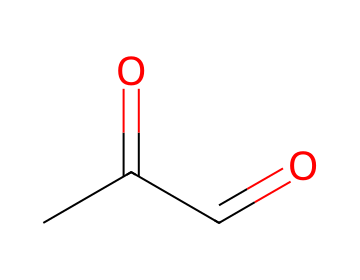
IDENTITY
COMPUTED
PROPERTIES
Pungent
1.06 at 68 °F (NTP, 1992) - Denser than water; will sink
1.0455 at 24 °C
Bulk density: 10 lb/gal at 20 °C
Density: 1.20 at 20 °C/20 °C
1.041-1.048
Clear, yellow liquid
Yellow, hygroscopic liquid
greater than or equal to 100 mg/mL at 63 °F (NTP, 1992)
Soluble in water and alcohol, giving colorless solutions
Soluble in ethanol, ether, benzene
miscible with water and most solvents and oils (yellow solutions)
miscible (in ethanol)
162 °F at 760 mmHg (NTP, 1992)
72 °C at 760 mm Hg
72 °C
When heated to decomposition it emits acrid smoke and irritating fumes.
< 25 °C
26.7 [mmHg]
Index of refraction: 1.4002 at 17.5 °C/D
1.399-1.406
Henry's Law constant = 2.70X10⁻⁷ atm-cu m/mol at 25 °C
Methylglyoxal is a clear yellow slightly viscous liquid with a pungent odor. Yellowish-green vapors. Faintly acidic to litmus. (NTP, 1992)
Clear to yellow hygroscopic liquid with a pungent odor; [HSDB]
Solid
yellow mobile hygroscopic liquid which polymerizes readily; pungent stinging odour
970;970
GHS
This chemical does not meet GHS hazard criteria for 4% (11 of 274) of reports.
Danger
H290 (39.4%): May be corrosive to metals [Warning Corrosive to Metals];H302 (96%): Harmful if swallowed [Warning Acute toxicity, oral];H315 (40.1%): Causes skin irritation [Warning Skin corrosion/irritation];H317 (40.5%): May cause an allergic skin reaction [Warning Sensitization, Skin];H318 (40.5%): Causes serious eye damage [Danger Serious eye damage/eye irritation];H319 (54%): Causes serious eye irritation [Warning Serious eye damage/eye irritation];H335 (40.1%): May cause respiratory irritation [Warning Specific target organ toxicity, single exposure; Respiratory tract irritation];H341 (42.3%): Suspected of causing genetic defects [Warning Germ cell mutagenicity]
P203, P234, P261, P264, P264+P265, P270, P271, P272, P280, P301+P317, P302+P352, P304+P340, P305+P351+P338, P305+P354+P338, P317, P318, P319, P321, P330, P332+P317, P333+P317, P337+P317, P362+P364, P390, P403+P233, P405, P406, and P501 (click each P-code to see the statement)
Aggregated GHS information provided per 274 reports by companies from 13 notifications to the ECHA C&L Inventory. Each notification may be associated with multiple companies.;Reported as not meeting GHS hazard criteria per 11 of 274 reports by companies.;There are 12 notifications provided by 263 of 274 reports by companies with hazard statement code(s).;Information may vary between notifications depending on impurities, additives, and other factors. The percentage value in parenthesis indicates the notified classification ratio from companies that provide hazard codes. Only hazard codes with percentage values above 10% are shown. For more detailed information, please visit ECHA C&L website.
HAZARDS
Chemical: Propanal, 2-oxo-
Commission Regulation (EC) No 1565/2000 (Repealed by Com. Implementing Reg. (EU) No 872/2012)
Status: Active Update: 01-04-2015 https://echa.europa.eu/registration-dossier/-/registered-dossier/10128
Combustible Liquid
Literature sources indicate that this chemical is nonflammable. (NTP, 1992)
SYMPTOMS: Symptoms of exposure to this compound include irritation of the skin, eyes, mucous membranes and upper respiratory tract.;ACUTE/CHRONIC HAZARDS: This compound is an irritant of the skin, eyes, mucous membranes and upper respiratory tract. When heated to decomposition it emits acrid smoke, irritating fumes and toxic fumes of carbon monoxide and carbon dioxide. (NTP, 1992)
A skin, eye, and respiratory tract irritant; [CAMEO] Oral LD50 (rat) = 1165 mg/kg; [HSDB] An severe eye irritant; Harmful if swallowed; [MSDSonline]
Pyruvaldehyde is a food additive permitted for direct addition to food for human consumption as a synthetic flavoring substance and adjuvant in accordance with the following conditions: a) they are used in the minimum quantity required to produce their intended effect, and otherwise in accordance with all the principles of good manufacturing practice, and 2) they consist of one or more of the following, used alone or in combination with flavoring substances and adjuvants generally recognized as safe in food, prior-sanctioned for such use, or regulated by an appropriate section in this part.
Aldehydes;Ketones;Polymerizable Compounds
Polymerizable
METHYLGLYOXAL polymerizes readily. It is hygroscopic. This chemical is incompatible with strong oxidizing agents and bases. (NTP, 1992) METHYLGLYOXAL is an aldehyde. Aldehydes are frequently involved in self-condensation or polymerization reactions. These reactions are exothermic; they are often catalyzed by acid. Aldehydes are readily oxidized to give carboxylic acids. Flammable and/or toxic gases are generated by the combination of aldehydes with azo, diazo compounds, dithiocarbamates, nitrides, and strong reducing agents. Aldehydes can react with air to give first peroxo acids, and ultimately carboxylic acids. These autoxidation reactions are activated by light, catalyzed by salts of transition metals, and are autocatalytic (catalyzed by the products of the reaction). The addition of stabilizers (antioxidants) to shipments of aldehydes retards autoxidation.
Water soluble.
Met. Corr. 1 (39.4%);Acute Tox. 4 (96%);Skin Irrit. 2 (40.1%);Skin Sens. 1B (40.5%);Eye Dam. 1 (40.5%);Eye Irrit. 2 (54%);STOT SE 3 (40.1%);Muta. 2 (42.3%)
SAFETY
Fires involving this material can be controlled with a dry chemical, carbon dioxide or Halon extinguisher. (NTP, 1992)
EYES: First check the victim for contact lenses and remove if present. Flush victim's eyes with water or normal saline solution for 20 to 30 minutes while simultaneously calling a hospital or poison control center. Do not put any ointments, oils, or medication in the victim's eyes without specific instructions from a physician. IMMEDIATELY transport the victim after flushing eyes to a hospital even if no symptoms (such as redness or irritation) develop.;SKIN: IMMEDIATELY flood affected skin with water while removing and isolating all contaminated clothing. Gently wash all affected skin areas thoroughly with soap and water. If symptoms such as redness or irritation develop, IMMEDIATELY call a physician and be prepared to transport the victim to a hospital for treatment.;INHALATION: IMMEDIATELY leave the contaminated area; take deep breaths of fresh air. If symptoms (such as wheezing, coughing, shortness of breath, or burning in the mouth, throat, or chest) develop, call a physician and be prepared to transport the victim to a hospital. Provide proper respiratory protection to rescuers entering an unknown atmosphere. Whenever possible, Self-Contained Breathing Apparatus (SCBA) should be used; if not available, use a level of protection greater than or equal to that advised under Protective Clothing.;INGESTION: DO NOT INDUCE VOMITING. Volatile chemicals have a high risk of being aspirated into the victim's lungs during vomiting which increases the medical problems. If the victim is conscious and not convulsing, give 1 or 2 glasses of water to dilute the chemical and IMMEDIATELY call a hospital or poison control center. IMMEDIATELY transport the victim to a hospital. If the victim is convulsing or unconscious, do not give anything by mouth, ensure that the victim's airway is open and lay the victim on his/her side with the head lower than the body. DO NOT INDUCE VOMITING. IMMEDIATELY transport the victim to a hospital. (NTP, 1992)
SMALL SPILLS AND LEAKAGE: If you should spill this chemical, use absorbent paper to pick up all liquid spill material. Seal the absorbent paper, as well as any of your clothing which may be contaminated, in a vapor-tight plastic bag for eventual disposal. Wash any surfaces you may have contaminated with a soap and water solution. Do not reenter the contaminated area until the Safety Officer (or other responsible person) has verified that the area has been properly cleaned.;STORAGE PRECAUTIONS: You should keep this material in a tightly closed container under an inert atmosphere, and store it at refrigerated temperatures. (NTP, 1992)
SRP: The most favorable course of action is to use an alternative chemical product with less inherent propensity for occupational exposure or environmental contamination. Recycle any unused portion of the material for its approved use or return it to the manufacturer or supplier. Ultimate disposal of the chemical must consider: the material's impact on air quality; potential migration in soil or water; effects on animal, aquatic, and plant life; and conformance with environmental and public health regulations.
Excerpt from ERG Guide 128 [Flammable Liquids (Water-Immiscible)]:;IMMEDIATE PRECAUTIONARY MEASURE: Isolate spill or leak area for at least 50 meters (150 feet) in all directions.;LARGE SPILL: Consider initial downwind evacuation for at least 300 meters (1000 feet).;FIRE: If tank, rail tank car or highway tank is involved in a fire, ISOLATE for 800 meters (1/2 mile) in all directions; also, consider initial evacuation for 800 meters (1/2 mile) in all directions. (ERG, 2024)
RECOMMENDED RESPIRATOR: When working with this chemical, wear a NIOSH-approved full face chemical cartridge respirator equipped with the appropriate organic vapor cartridges. If that is not available, a half face respirator similarly equipped plus airtight goggles can be substituted. However, please note that half face respirators provide a substantially lower level of protection than do full face respirators. (NTP, 1992)
TOXICITY
In this in vitro study, ... the effect of MG on the structure and function of ceruloplasmin (CP) a serum oxidase carrier of copper ions in the human /was investigated/. When ceruloplasmin (CP) was incubated with methylglyoxal (MG), the protein showed increased electrophoretic mobility which represented the aggregates at a high concentration of MG (100 mM). ... It is suggested that oxidative damage of CP by MG may induce perturbations of the copper transport system and subsequently lead to harmful intracellular condition.
The effect of methylglyoxal alone and in combination with creatine and ascorbic acid on cancer-bearing animals had been investigated by measuring the increase in life span and tumor cell growth inhibition. The results indicated that anticancer effect of methylglyoxal was significantly augmented by ascorbic acid and further augmented by ascorbic acid and creatine. Nearly 80% of the animals treated with methylglyoxal plus ascorbic acid plus creatine were completely cured and devoid of any malignant cells within the peritoneal cavity.
... Methylglyoxal (MG) and D-lactate (DL) were measured by high-performance liquid chromatography in plasma from 57 subjects with type 2 diabetes. Of these subjects, 27 were treated with diet, sulfonylureas, or insulin (nonmetformin), and 30 were treated with metformin; 28 normal control subjects were also studied. Glycemic control was determined by HbA1c. MG was significantly elevated in diabetic subjects versus the normal control subjects (189.3 + 38.7 vs. 123.0 + 37 nmol/L, p = 0.0001). MG levels were significantly reduced by high-dosage (1,500-2,500 mg/d) metformin (158.4 + 44.2 nmol/L) compared with nonmetformin (189.3 + 38.7 nmol/L, p = 0.03) or low-dosage (< or = 1,000 mg/day) metformin (210.98 + 51.0 nmol/L, p = 0.001), even though the groups had similar glycemic control. ... MG correlated with rising HbA1c levels (R = 0.4, p = 0.03, slope = 13.2) in the nonmetformin subjects but showed no increase with worsening glycemic control in the high-dosage metformin group (R = 0.0004, p = 0.99, slope = 0.02).
TERRESTRIAL FATE: Based on a classification scheme(1), an estimated Koc value of 1(SRC), determined from a structure estimation method(2), indicates that methyl glyoxal is expected to have very high mobility in soil(SRC). Volatilization of methyl glyoxal from moist soil surfaces is not expected to be an important fate process(SRC) given a Henry's Law constant of 2.70X10⁻⁷ atm-cu m/mole(3). Methyl glyoxal is expected to volatilize from dry soil surfaces(SRC) based upon an estimated vapor pressure of 27 mm Hg(SRC), determined from a fragment constant method(4). Biodegradation data were not available(SRC, 2007).
AQUATIC FATE: Based on a classification scheme(1), an estimated Koc value of 1(SRC), determined from a structure estimation method(2), indicates that methyl glyoxal is not expected to adsorb to suspended solids and sediment(SRC). Volatilization from water surfaces is not expected(3) based upon a Henry's Law constant of 2.70X10⁻⁷ atm-cu m/mole(4). According to a classification scheme(5), an estimated BCF of 3(SRC), from an estimated log Kow of -1.50(6) and a regression-derived equation(7), suggests the potential for bioconcentration in aquatic organisms is low(SRC). Biodegradation data were not available(SRC, 2007).
AQUATIC FATE: Based on a classification scheme(1), an estimated Koc value of 1(SRC), determined from a structure estimation method(2), indicates that methyl glyoxal is not expected to adsorb to suspended solids and sediment(SRC). Volatilization from water surfaces is not expected(3) based upon a Henry's Law constant of 2.70X10⁻⁷ atm-cu m/mole(4). According to a classification scheme(5), an estimated BCF of 3(SRC), from an estimated log Kow of -1.50(6) and a regression-derived equation(7), suggests the potential for bioconcentration in aquatic organisms is low(SRC). Biodegradation data were not available(SRC, 2007).
Methyl glyoxal was identified as a coffee aroma constituent at a concentration range of 4.0 nmol to 0.4 mmol(1). The mean concentrations of methyl glyoxal in home-brew and instant coffee are 152 and 114 ug/g, respectively(1). The compound has been detected in autoxidised edible oils (sesame, safflower and sardine oil) at concentrations of 2.5, 2.0 and 7.0 ug/g, respectively, following 30 hrs of heating(2). It was identified as a beef volatile and as a component of beef flavor(3).
Methyl glyoxal gas-phase concentration in medium-duty diesel truck exhaust was 1,700 ug/km(1); from gasoline-powered motor vehicle tailpipe emissions, 50 and 10,000 ug/km in catalyst and non-catalyst equipped vehicles, respectively(2). The compound was identified in a study of light- and heavy-duty vehicle exhaust was measured at the Tuscarora Mountain Tunnel, PA in May 1999; concentrations were 0.167 and 0.289 ug/cu m at the tunnel inlet and outlet, respectively, resulting in an emission factor of 0.23 mg/km(3). The concentration from meat charbroiling was 334,000 ug/kg meat cooked(4). Methyl glyoxal gas-phase effluent concentration resulting from fireplace combustion of wood was 943, 321 and 520 mg/kg wood burned using pine, oak and eucalyptus, respectively(5).
Using a structure estimation method based on molecular connectivity indices(1), the Koc of methyl glyoxal can be estimated to be 1(SRC). According to a classification scheme(2), this estimated Koc value suggests that methyl glyoxal is expected to have very high mobility in soil.
Methyl glyoxal is a partially oxidized compound obtained from the tropospheric oxidation of numerous hydrocarbons, both of biogenic and anthropogenic origin(1). It is synthesized by microorganisms(2).
URBAN/SUBURBAN: Methyl glyoxal was detected at concentrations of 24, 67, 40 and 39 ng/cu m in aerosol samples collected on February 24-25, February 25-26, July 22-23, and July 23, 1992, respectively, in Tokyo Japan(1). The average ambient concentration in Rio de Janeiro, Brazil, measured from May to November, 2000 at a downtown location during morning vehicle commute, was 1.041 ug/cu m(2).
RURAL/REMOTE: Arctic aerosol samples from Alert, Canada, measured in 1987-1988 showed a methyl glyoxal concentration range of <0.003 to 0.59 ng/cu m(1).
SOURCE DOMINATED: Methyl glyoxal mean concentration in the San Francisco Bay Bridge toll plaza sampled during rush hour traffic April 23 and 24, 2001 was 0.056 ug/cu m, with an estimated range of 0.055 to 0.76 ug/cu m(1). The level in the Los Angeles Van Nuys Tunnel, CA, September 21, 1993 was approximately 10 mg/L (0% weight percentage in gasoline)(2).
/SURVEILLANCE/ ... Methylglyoxal (MG) and D-lactate (DL) were measured by high-performance liquid chromatography in plasma from 57 subjects with type 2 diabetes. Of these subjects, 27 were treated with diet, sulfonylureas, or insulin (nonmetformin), and 30 seconds were treated with metformin; 28 normal control subjects were also studied. Glycemic control was determined by HbA1c. MG was significantly elevated in diabetic subjects versus the normal control subjects (189.3 + 38.7 vs. 123.0 + 37 nmol/L, p = 0.0001). MG levels were significantly reduced by high-dosage (1,500-2,500 mg/d) metformin (158.4 + 44.2 nmol/L) compared with nonmetformin (189.3 + 38.7 nmol/L, p = 0.03) or low-dosage (< or = 1,000 mg/day) metformin (210.98 + 51.0 nmol/L, p = 0.001), even though the groups had similar glycemic control. ... MG correlated with rising HbA1c levels (R = 0.4, p = 0.03, slope = 13.2) in the nonmetformin subjects but showed no increase with worsening glycemic control in the high-dosage metformin group (R = 0.0004, p = 0.99, slope = 0.02)
/SURVEILLANCE/ ... A cross-sectional study was undertaken to determine whether methylglyoxal (MG) accumulates in the gingival crevicular fluid (GCF) of chronic periodontitis patients. GCF samples were collected for 30 seconds each from three teeth with pocket depths greater than 3 mm (DD sites), from 14 chronic periodontitis patients. Control samples were taken from three healthy sites (DH sites) in the same patients, as well as from seven subjects who were periodontally healthy (HH sites). ... Mean pocket depths were 5.7 +/- 0.7, 2.7 +/- 0.6 and 2.7 +/- 0.5 mm (mean +/- SD) for the DD, DH and HH sites, respectively. Mean MG levels were found to be 208.7 +/- 241.7 and 142.9 +/- 235.7 pmol/site in the GCF from DD and DH sites, respectively (p=0.0023), but only 11.5 +/- 4.4 pmol/site for the HH sites
/SURVEILLANCE/ ... The production of the glycolytic intermediate methylglyoxal (MG) was followed up in 7 diabetic patients treated for ketoacidosis during pretreatment and recovery phase. Blood samples for methylglyoxal analysis were collected upon patient arrival in emergency department (0 hr), and during ketoacidosis treatment between 12-24 hr and at 168 hr. The study also included 10 normoglycaemic healthy volunteers and 31 type 1 diabetic patients (control diabetes group). The methylglyoxal assay, based on methylglyoxal derivation with 1,2-diamino-4,5-dimethoxybenzene (DDB), was performed by HPLC, only assessing the level of free methylglyoxal. The baseline level of methylglyoxal recorded in normoglycemic healthy controls was 338 + 62 nmol/L versus 374 + 89 nmol/L in control diabetes group (p = 0.0407). A consistent feature of diabetic ketoacidosis before and during treatment was striking elevation of methylglyoxal as compared with control diabetes group (median test chi(2) = 14.6, df = 3, p = 0.0021). Friedman's ANOVA indicated differences (p = 0.04) among the three sampling times with a peak value (601 +/- 95 nmol/L) at 12-24 hr following therapy initiation. However, fasting treatment values at 168 hr were still significantly higher than the mean fasting methylglyoxal level in control diabetes group (p = 0.008). The study indicated that diabetic ketoacidosis results in an increase in methylglyoxal level.
/SURVEILLANCE/ ... The /plasma and dialysate/ levels of some advanced glycation end products (AGEs) (pentosidine and free pentosidine) and dicarbonyl compounds (glyoxal and methylglyoxal) in end-stage renal disease patients subjected to peritoneal dialysis /were determined/ ... Samples (20 from healthy subjects, 16 from uremic patients before and after 12 hr of peritoneal dialysis) were analyzed ... Glyoxal and methylglyoxal mean levels showed a decrease in plasma after dialysis even if their values were always higher than those of healthy control subjects. Surprisingly, an analogous trend was observed also in dialysate.
For more Human Toxicity Excerpts (Complete) data for METHYL GLYOXAL (11 total), please visit the HSDB record page.
Methyl glyoxal's production and use as a chemical intermediate and flavoring(1) may result in its release to the environment through various waste streams(SRC).
Methylglyoxal
Group 3: Not classifiable as to its carcinogenicity to humans
Volume 51: (1991) Coffee, Tea, Mate, Methylxanthines and Methylglyoxal
1991
1990
An estimated BCF of 3 was calculated in fish for methyl glyoxal(SRC), using an estimated log Kow of -1.50(1) and a regression-derived equation(2). According to a classification scheme(3), this BCF suggests the potential for bioconcentration in aquatic organisms is low(SRC).
The Henry's Law constant for methyl glyoxal is 2.70X10⁻⁷ atm-cu m/mole(1). This Henry's Law constant indicates that methyl glyoxal is expected to be essentially nonvolatile from water surfaces(2). Methyl glyoxal's Henry's Law constant indicates that volatilization from moist soil surfaces may not occur(SRC). Methyl glyoxal is expected to volatilize from dry soil surfaces(SRC) based upon an estimated vapor pressure of 27 mm Hg(SRC), determined from a fragment constant method(3).
REGULATORY
Chemical: Propanal, 2-oxo-
Commission Regulation (EC) No 1565/2000 (Repealed by Com. Implementing Reg. (EU) No 872/2012)
Status: Active Update: 01-04-2015 https://echa.europa.eu/registration-dossier/-/registered-dossier/10128
Pyruvaldehyde is a food additive permitted for direct addition to food for human consumption as a synthetic flavoring substance and adjuvant in accordance with the following conditions: a) they are used in the minimum quantity required to produce their intended effect, and otherwise in accordance with all the principles of good manufacturing practice, and 2) they consist of one or more of the following, used alone or in combination with flavoring substances and adjuvants generally recognized as safe in food, prior-sanctioned for such use, or regulated by an appropriate section in this part.
PHARMACOLOGY
This study examines molecular mechanisms in the methylglyoxal (MG)-induced signal transduction leading to apoptosis, focusing particularly on the role of JNK activation. We first confirmed that MG caused apoptosis in Jurkat cells and that it was cell type dependent because it failed to induce apoptosis in MOLT-4, HeLa, or COS-7 cells. A caspase inhibitor, Z-DEVD-fmk, completely blocked MG-induced poly(ADP-ribose)polymerase (PARP) cleavage and apoptosis, showing the critical role of caspase activation. Inhibition of JNK activity by a JNK inhibitor, curcumin, remarkably reduced MG-induced caspase-3 activation, PARP cleavage, and apoptosis.
... In the present study, /the authors/ investigated ATP binding, stability and degradation of methylglyoxal (MGO)-modified alpha-crystallin. Proteolytic digestion with trypsin and chymotrypsin showed that MGO-modified alpha-crystallin is more susceptible to degradation compared to native alpha-crystallin. Furthermore, ATP was able to protect native alpha-crystallin against proteolytic cleavage but not MGO-modified alpha-crystallin. ... MGO-modification of alpha-crystallin causes partial unfolding and decreased stability leading to enhanced proteolysis. Cross-linking of these degraded products could result in aggregation and subsequent insolubilization as observed in senile and diabetic cataract lenses.
... N-acetyl-L-cysteine, an antioxidant, successfully suppressed the activity of the p38 MAPK signaling pathway along with the inhibition of apoptosis, indicating the involvement of oxidative stress in the MG-induced apoptosis via the p38 MAPK pathway.
... The majority of glyoxal-induced mutations (65%) were base-pair substitutions, in which G:C-->C:G transversions were predominant. In the mutants induced by methylglyoxal, multi-base deletions were predominant (50%), followed by base-pair substitutions (35%), in which G:C-->C:G and G:C-->T:A transversions were predominant.
Methylglyoxal was demonstrated to be a substrate for the isozymes E1, E2 and E3 of human aldehyde dehydrogenase. Pyruvate was the product from the oxidation of methylglyoxal by the three isozymes. At pH 7.4 and 25 degrees C, the major and minor components of the E3 isozyme catalyzed the reaction with Vmax of 1.1 and 0.8 umol NADH/min and mg protein, respectively, compared to 0.067 and 0.060 umol NADH/min and mg protein for the E1 and E2 isozymes, respectively. The E2 isozyme had a K(m) for methylglyoxal of 8.6 uM, the lowest compared to 46 uM for E1 and 586 and 552 uM for the major and minor components of the E3 isozyme, respectively. Both components of the E3 isozyme showed substrate inhibition by methylglyoxal, with Ki values of 2.0 mM for the major component and 12 mM for the minor component at pH 9.0. Substrate inhibition by methylglyoxal was not observed with the E1 and E2 isozymes. Methylglyoxal strongly inhibited the glycolaldehyde activity of the E1 and E2 isozymes. Mixed-type models of inhibition were employed as an approach to calculate the inhibition constants, 44 and 10.6 microM for E1 and E2 isozymes, respectively.
Eye Lens;Fibroblasts;Kidney;Liver
Extracellular
3-Phosphoglycerate dehydrogenase deficiency;Dihydropyrimidine Dehydrogenase Deficiency (DHPD);Dimethylglycine Dehydrogenase Deficiency;Dimethylglycine Dehydrogenase Deficiency;Glycine, serine and threonine metabolism;Hyperglycinemia, non-ketotic;Leigh Syndrome;Non Ketotic Hyperglycinemia;Primary hyperoxaluria II, PH2;Pyruvaldehyde Degradation;Total 16 pathways, visit the HMDB page for details
USES
Used in organic synthesis, as a flavoring agent, and in tanning leather; [ChemIDplus]
Leather Tanning and Processing [Category: Industry]
Organic synthesis, as of complex chemical compounds such as pyrethrins, tanning leather, flavoring.
Supplied commercially as a 30% aqueous solution.
Flavouring Agent -> FLAVOURING_AGENT -> JECFA Functional Classes
Flavoring Agents -> JECFA Flavorings Index
Flavouring Agent -> FLAVOURING_AGENT -> JECFA Functional Classes
Flavouring Agent -> FLAVOURING_AGENT -> JECFA Functional Classes
Flavouring Agent -> FLAVOURING_AGENT -> JECFA Functional Classes
Propanal, 2-oxo-: ACTIVE
ALIASES
REACTIONS
uspto-grants-2013_09 · 10.6084/m9.figshare.5104873.v1 · US08536175B2
查看
uspto-grants-2016_09 · 10.6084/m9.figshare.5104873.v1 · US09439910B2
查看
uspto-grants-2016_09 · 10.6084/m9.figshare.5104873.v1 · US09439910B2
查看
uspto-grants-1982_08 · 10.6084/m9.figshare.5104873.v1 · US04343953
查看
uspto-grants-1982_08 · 10.6084/m9.figshare.5104873.v1 · US04343953
查看
Training data from https://doi.org/10.1039/C8SC04228D (2/10) · 10.1039/C8SC04228D
查看
Training data from https://doi.org/10.1039/C8SC04228D (2/10) · 10.1039/C8SC04228D
查看
Training data from https://doi.org/10.1039/C8SC04228D (6/10) · 10.1039/C8SC04228D
查看