
uspto-grants-2010_06 · 10.6084/m9.figshare.5104873.v1 · US07740906B2
查看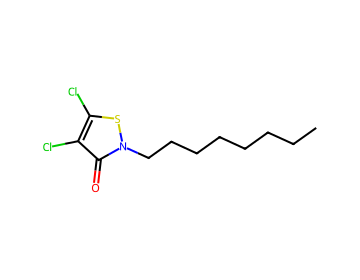
IDENTITY
COMPUTED
PROPERTIES
log Kow = 2.8, also reported as 4.5
1.28 g/mL at 25 °C (melted and solidified)
Crystals from hexane
In water, 14 ppm at 25 °C
In deionized water, 6.5 ppm; 4.7 ppm in synthetic seawater
Miscible in most organic solvents
Decomposes before boiling
Hazardous decomposition products formed under fire conditions - Carbon oxides, nitrogen oxides (NOx), Sulfur oxides, Hydrogen chloride gas.
40-46 °C
7.4X10⁻⁶ mm Hg at 25 °C
Liquid
Stable under recommended storage conditions.
Technical product is reported as tan-to-brown waxy solid with pungent aromatic odor, MP 40-41 °C /technical 4,5-Dichloro-2-octyl-3-isothiazolone/
VP: 4.5X10⁻⁶ mm Hg, temp not specified; Henry's Law constant: 1.2X10⁻⁷ atm-cu m/mol at 25 °C (calc)
GHS
Danger
H302: Harmful if swallowed [Warning Acute toxicity, oral];H314: Causes severe skin burns and eye damage [Danger Skin corrosion/irritation];H317: May cause an allergic skin reaction [Warning Sensitization, Skin];H318: Causes serious eye damage [Danger Serious eye damage/eye irritation];H330: Fatal if inhaled [Danger Acute toxicity, inhalation];H400: Very toxic to aquatic life [Warning Hazardous to the aquatic environment, acute hazard];H410: Very toxic to aquatic life with long lasting effects [Warning Hazardous to the aquatic environment, long-term hazard]
P260, P261, P264, P264+P265, P270, P271, P272, P273, P280, P284, P301+P317, P301+P330+P331, P302+P352, P302+P361+P354, P304+P340, P305+P354+P338, P316, P317, P320, P321, P330, P333+P317, P362+P364, P363, P391, P403+P233, P405, and P501 (click each P-code to see the statement)
This chemical does not meet GHS hazard criteria for 1.3% (5 of 373) of reports.
HAZARDS
Chemical: 3(2H)-Isothiazolone, 4,5-dichloro-2-octyl-
3(2H)-Isothiazolone, 4,5-dichloro-2-octyl- is listed on the EPA's Chemical Data Reporting (CDR) system. Manufacturers and importers of 3(2H)-Isothiazolone, 4,5-dichloro-2-octyl- are required to report information about their production and use of this chemical to the EPA under the Toxic Substances Control Act (TSCA). (40 eCFR Part 711)
Kathon 930 is listed in the dataset of EPA Human Health Benchmarks for Pesticides under the Safe Drinking Water Act (40 eCFR 141)
3(2H)-Isothiazolone, 4,5-dichloro-2-octyl-: HSNO Approval: HSR002758 Approved with controls
IMAP assessments - Isothiazolinones: Human health tier III assessment;IMAP assessments - 3(2H)-Isothiazolone, 4,5-dichloro-2-octyl-: Human health tier II assessment;IMAP assessments - Octylisothiazolinone preservatives and industrial biocides: Environment tier II assessment
Acute Tox. 4 (97.6%);Acute Tox. 4 (29.8%);Skin Corr. 1B (98.1%);Skin Sens. 1A (98.7%);Eye Dam. 1 (69.2%);Acute Tox. 2 (76.1%);Acute Tox. 3 (12.6%);STOT SE 3 (57.9%);Aquatic Acute 1 (97.1%);Aquatic Chronic 1 (82.3%)
Acute toxicity (ingestion) - category 4;Acute toxicity (inhalation) - category 1;Skin corrosion - category 1;Skin sensitisation - category 1A;Hazardous to the aquatic environment (acute) - category 1;Hazardous to the aquatic environment (chronic) - category 1
Hazardous to the aquatic environment (Acute) - Category 1;Hazardous to the aquatic environment (Long-term) - Category 1
Acute toxicity (Oral) - Category 4;Acute toxicity (Inhalation: Dusts and mists) - Category 2;Skin corrosion/irritation - Category 1;Serious eye damage/eye irritation - Category 1;Skin sensitization - Category 1A;Reproductive toxicity - Category 1B;Specific target organ toxicity - Single exposure - Category 1 (respiratory organs), Category 3 (narcotic effects);Specific target organ toxicity - Repeated exposure - Category 1 (respiratory organs)
Acute Tox. 2;Acute Tox. 4;Skin Corr. 1;Eye Dam. 1;Skin Sens. 1A;Aquatic Acute 1;Aquatic Chronic 1
Incompatible materials: Strong oxidizing agents.
SAFETY
Suitable extinguishing media: Use water spray, alcohol-resistant foam, dry chemical or carbon dioxide.
Advice for firefighters: Wear self-contained breathing apparatus for firefighting if necessary.
Keep container tightly closed in a dry and well-ventilated place.
ACCIDENTAL RELEASE MEASURES: Personal precautions, protective equipment and emergency procedures: Wear respiratory protection. Avoid dust formation. Avoid breathing vapors, mist or gas. Ensure adequate ventilation. Evacuate personnel to safe areas. Avoid breathing dust. Environmental precautions: Prevent further leakage or spillage if safe to do so. Do not let product enter drains. Discharge into the environment must be avoided. Methods and materials for containment and cleaning up: Pick up and arrange disposal without creating dust. Sweep up and shovel. Keep in suitable, closed containers for disposal.
SRP: Recycle any unused portion of the material for its approved use or return it to the manufacturer or supplier. Ultimate disposal of the chemical must consider: the material's impact on air quality; potential migration in air, soil or water; effects on animal, aquatic and plant life; and conformance with environmental and public health regulations. If it is possible or reasonable use an alternative chemical product with less inherent propensity for occupational harm/injury/toxicity or environmental contamination.
Product: Offer surplus and non-recyclable solutions to a licensed disposal company. Contact a licensed professional waste disposal service to dispose of this material. Dissolve or mix the material with a combustible solvent and burn in a chemical incinerator equipped with an afterburner and scrubber; Contaminated packaging: Dispose of as unused product.
ACCIDENTAL RELEASE MEASURES: Personal precautions, protective equipment and emergency procedures: Wear respiratory protection. Avoid dust formation. Avoid breathing vapors, mist or gas. Ensure adequate ventilation. Evacuate personnel to safe areas. Avoid breathing dust. Environmental precautions: Prevent further leakage or spillage if safe to do so. Do not let product enter drains. Discharge into the environment must be avoided.
Precautions for safe handling: Avoid contact with skin and eyes. Avoid formation of dust and aerosols.Further processing of solid materials may result in the formation of combustible dusts. The potential for combustible dust formation should be taken into consideration before additional processing occurs. Provide appropriate exhaust ventilation at places where dust is formed.
Appropriate engineering controls: Avoid contact with skin, eyes and clothing. Wash hands before breaks and immediately after handling the product.
Gloves must be inspected prior to use. Use proper glove removal technique (without touching glove's outer surface) to avoid skin contact with this product. Dispose of contaminated gloves after use in accordance with applicable laws and good laboratory practices. Wash and dry hands.
SRP: Local exhaust ventilation should be applied wherever there is an incidence of point source emissions or dispersion of regulated contaminants in the work area. Ventilation control of the contaminant as close to its point of generation is both the most economical and safest method to minimize personnel exposure to airborne contaminants. Ensure that the local ventilation moves the contaminant away from the worker.
Eye/face protection: Face shield and safety glasses. Use equipment for eye protection tested and approved under appropriate government standards such as NIOSH (US) or EN 166(EU).
Skin protection: Handle with gloves.
Body Protection: Complete suit protecting against chemicals. The type of protective equipment must be selected according to the concentration and amount of the dangerous substance at the specific workplace.
Respiratory protection: Where risk assessment shows air-purifying respirators are appropriate use a full-face particle respirator type N100 (US) or type P3 (EN 143) respirator cartridges as a backup to engineering controls. If the respirator is the sole means of protection, use a full-face supplied air respirator. Use respirators and components tested and approved under appropriate government standards such as NIOSH (US) or CEN (EU).
TOXICITY
The toxicity of three antifoulants (Sea-Nine, Irgarol, and TBT) was determined individually and in mixtures in two tests with microalgae. Effects on periphyton community photosynthesis and reproduction of the unicellular green algae Scenedesmus vacuolatus were investigated. The tested antifoulants were highly toxic in both tests. Observed mixture toxicities were compared with predictions derived from two concepts: Independent Action (IA), assumed to be more relevant for the tested mixtures that were composed of dissimilarly acting substances, and Concentration Addition (CA), regarded as a reasonable worst-case approach in predictive mixture hazard assessment. Despite the corresponding mechanistic basis, IA failed to provide accurate predictions of the observed mixture toxicities. Results show the same pattern in both assays. Mixture effects at high concentrations were slightly overestimated and effects at low concentrations were slightly underestimated. Maximum observed deviations between observed and IA-predicted concentrations amount to a factor of 4. The suggested worst-case approach using CA was protective only in effect regions above 20%. Nevertheless, the application of any concept that accounts for possible mixture effects is more realistic than the present chemical-by-chemical assessment.
LC50; Species: Anas platyrhynchos (Mallard Duck) age 14 days; food >10000 ppm for 8 days /60% purity/
LD50; Species: Anas platyrhynchos (Mallard Duck) age 14 days; oral via capsule >4640 mg/kg /60% purity/
LC50; Species: Colinus virginianus (Northern Bobwhite Quail) age 10 days; food >4639 ppm for 8 days /96.9% purity/
EC50; Species: Chlorella fusca var. vacuolata (Green Algae) strain 211-15; Conditions: saltwater, static; Concentration: 314 nM for 24 hr (95% confidence interval: 286-342 nM); Effect: decreased population growth rate /99.6% purity/
For more Ecotoxicity Values (Complete) data for 4,5-Dichloro-2-octyl-3-isothiazolone (30 total), please visit the HSDB record page.
TERRESTRIAL FATE: Based on a classification scheme(1), an estimated Koc value of 2300(SRC), determined from a structure estimation method(2), indicates that 4,5-dichloro-2-octyl-3-isothiazolone is expected to have slight mobility in soil(SRC). Volatilization of 4,5-dichloro-2-octyl-3-isothiazolone from moist soil surfaces is expected to be a slow process(SRC) given an estimated Henry's Law constant of 2.0X10⁻⁷ atm-cu m/mole(SRC) based upon its vapor pressure, 7.4X10⁻⁶ mm Hg(3), and water solubility, 14 mg/L(4). 4,5-Dichloro-2-octyl-3-isothiazolone is not expected to volatilize from dry soil surfaces(SRC) based upon its vapor pressure(3). A biodegradation half-life of 22 hours in activated sludge(5) suggests that biodegradation is an important environmental fate process in soil(SRC).
AQUATIC FATE: Based on a classification scheme(1), an estimated Koc value of 2300(SRC), determined from a structure estimation method(2), indicates that 4,5-dichloro-2-octyl-3-isothiazolone is expected to adsorb to suspended solids and sediment(SRC). Volatilization from water surfaces is expected to be a slow process(3) based upon an estimated Henry's Law constant of 2.0X10⁻⁷ atm-cu m/mole(SRC), derived from its vapor pressure, 7.4X10⁻⁶ mm Hg(4), and water solubility, 14 mg/L(5). Using this Henry's Law constant and an estimation method(3), volatilization half-lives for a model river and model lake are 310 and 2300 days, respectively(SRC). According to a classification scheme(6), a BCF of 13(7) suggests that bioconcentration in aquatic organisms is low(SRC). A photolytic half-life of 322 hours in aqueous solution at pH 7 was reported(8). A reported half-life of <24 hours in seawater(8) indicates that biodegradation may be an important environmental fate process in water(SRC).
AQAUTIC FATE: SeaNine 211, with 4,5-dichloro-2-n-octyl-4-isothiazolin-3-one (DCOIT) being the biocidal ingredient, is a widely-used antifouling agent to deter the undesirable biofouling phenomenon. It is commercially promoted as an environmentally acceptable antifoulant mainly due to its claimed rapid degradation in marine environment. However, ... SeaNine 211 is actually not degraded equally fast around the world (half-life between <1 day and 13.1 days). Large-scale application of SeaNine 211 in antifouling coatings has also caused global contamination of marine environment in various compartments. ...
AQUATIC FATE: Here, we investigated the degradation kinetics of butenolide, a promising antifouling compound, under various environmental conditions. The active ingredient of the commercial antifoulant SeaNine 211, 4,5-dichloro-2-n-octyl-4-isothiazolin-3-one (DCOIT), was used as positive control. The results showed that the degradation rate increased with increasing temperature. Half-lives of butenolide at 4 °C, 25 °C and 40 °C were>64 d, 30.5 d and 3.9 d, respectively. Similar half-lives were recorded for DCOIT: >64 d at 4 °C, 27.9 d at 25 °C and 4.5d at 40 °C. Exposure to sunlight accelerated the degradation of both butenolide and DCOIT. The photolysis half-lives of butenolide and DCOIT were 5.7 d and 6.8 d, respectively, compared with 9.7 d and 14.4 d for the dark control. Biodegradation led to the fastest rate of butenolide removal from natural seawater, with a half-life of 0.5 d, while no obvious degradation was observed for DCOIT after incubation for 4 d. The biodegradative ability of natural seawater for butenolide was attributed mainly to marine bacteria. During the degradation of butenolide and DCOIT, a gradual decrease in antifouling activity was observed, as indicated by the increased settlement percentage of cypris larvae from barnacle Balanus amphitrite. Besides, increased cell growth of marine diatom Skeletonema costatum demonstrated that the toxicity of seawater decreased gradually without generation of more toxic by-products. Overall, rapid degradation of butenolide in natural seawater supported its claim as a promising candidate for commercial antifouling industry.
ATMOSPHERIC FATE: According to a model of gas/particle partitioning of semivolatile organic compounds in the atmosphere(1), 4,5-dichloro-2-octyl-3-isothiazolone, which has a vapor pressure of 7.4X10⁻⁶ mm Hg at 25 °C(2), in the ambient atmosphere. Vapor-phase 4,5-dichloro-2-octyl-3-isothiazolone is degraded in the atmosphere by reaction with photochemically-produced hydroxyl radicals(SRC); the half-life for this reaction in air is estimated to be 13 hrs(SRC), calculated from its rate constant of 3.0X10⁻¹¹ cu cm/molecule-sec at 25 °C(SRC) that was derived using a structure estimation method(3). Particulate-phase 4,5-dichloro-2-octyl-3-isothiazolone may be removed from the air by wet and dry deposition(SRC). 4,5-Dichloro-2-octyl-3-isothiazolone absorbs UV light weakly at wavelengths >290 nm(4) and, therefore, may be susceptible to direct photolysis by sunlight(SRC).
IDENTIFICATION AND USE: 4,5-Dichloro-2-octyl-3-isothiazolone (DCOIT) is a solid. It is used as a marine antifoulant. HUMAN STUDIES: An outbreak of occupational contact dermatitis occurred due to the biocide DCOIT. Eight of 19 persons, six females, 20 to 63 years old, employed in a Japanese textile finishing factory developed edematous reddish eruptions on their forearms, upper arms, face, or neck. The subjects have been sensitized to DCOIT without apparent cross sensitization to DCOIT. ANIMAL STUDIES: In dogs decreased body weight and food consumption, hematologic and clinical chemistry parameter changes observed at 1500 ppm. After inhalation in rats at concentrations of 0.02, 0.63, and 6.72 mg/cu m for 6 hours per day, 5 days per week, for thirteen weeks, treatment-related microscopic lesions in the nose, larynx, and lungs were observed in mid- and high-dose treated rats. Minimal or mild subacute inflammation of the nose was observed in increased incidence, as was transitional respiratory epithelial hyperplasia and goblet cell hyperplasia. In the epiglottis, hyperplasia of the squamous and cuboidal epithelium was observed in mid- and high dose rats, as was chronic-active inflammation of the epiglottis. Goblet cell hyperplasia and acute inflammation was observed in increased incidence in the lungs of high dose rats. In the developmental study in rabbits, there were no treatment-related external, visceral, or skeletal malformations or variations. In rats, fetuses at 100 mg/kg/day showed an increase in the number of fetuses with wavy ribs, along with an increase in number of litters with this effect as well as the severity of the effect. It was not mutagenic in Salmonella strains TA1535, TA1537, TA98, TA100 with or without metabolic activation. It induced clastogenic response in Chinese hamster ovary in vitro cytogenetic assays in the presence or absence of metabolic activation. ECOTOXICITY STUDIES: In marine medaka (Oryzias melastigma) gene transcription analysis sho
/AQUATIC SPECIES/ Sea-Nine211 has been introduced as a new biocide in antifouling paints with an immediate degradation when it is released from ship hulls. The active component of Sea-Nine211 is 4,5-dichloro-2-n-octyl-isothiazoline-3-one (DCOI). In the present study, the toxicity of DCOI and the occurrence of Pollution Induced Community Tolerance (PICT) were tested in microcosms containing eutrophic coastal water with its natural composition of phytoplankton. The experiment was performed in closed systems with a single addition of the nominal concentrations 0, 3.2, 10, 32 and 100 nM DCOI, for a period of 16 days. Pollution induced community tolerance (PICT) was observed in the phytoplankton communities exposed to the nominal concentrations 32 and 100 nM DCOI. Chemical analysis of DCOI in the coastal water utilized in the toxicity and PICT experiment was performed by GC-MS using a solid-phase extraction method. Half-life was calculated to be 2.5 days for the nominal concentrations 32 and 100 nM DCOI. The results of the present study show that nominal concentrations of 32 and 100 nM DCOI significantly increased the community tolerance ... after 2 days of exposure and that the tolerance was maintained for a period of 16 days even when DCOI was degraded during this period. The causes for the persistent tolerance are discussed in relation to the degradation of DCOI and structural changes in the phytoplankton communities.
/AQUATIC SPECIES/ After the definitive ban on tin-based antifouling substances, new organic compounds have recently been introduced in antifouling paint formulations, as either principal or booster biocides. In most cases, previous risk assessment of these biocides has been inadequate so that their possible effects on aquatic ecosystems is a matter of great concern. ...The effects of two new organic biocides often associated in paint formulations, Sea-Nine 211 (4,5 dichloro-2-n-octyl-4-isothiazoline-3-one) and chlorothalonil (2,4,5,6-tetrachloroisophthalonitrile), on hemocytes of the compound ascidian Botryllus schlosseri exposed for 60 min to various concentrations (from 0.1 to 10 uM) of the xenobiotics /were studied/. This species had previously proved to be a good bioindicator of organotin compounds. Both compounds, at concentrations of 1 and 10 uM, altered the morphology of phagocytes, and these changes were closely related to disrupting effects on cytoskeletal components. At the same concentrations, phagocytosis, which requires cytoskeletal modifications for pseudopod formation, was severely hindered. Both compounds were able to induce apoptosis of Botryllus blood cells, probably as a consequence of severe oxidative stress related to the reported decrease of intracellular reduced glutathione (GSH) content. In the case of Sea-Nine 211, a substantial increase in intracellular Ca(2+) and a negative effect on Ca(2+)-ATPase activity may also be involved in the activation of the cell death machinery. Cytochrome-c-oxidase was also significantly inhibited by the two biocides, indicating perturbation of the mitochondrial respiratory chain. Isodynamic mixtures of Sea-Nine 211 and chlorothalonil were used to evaluate the occurrence of interactions between the two compounds. Results suggest the combined action of partial additivity when cell-spreading and cytochrome-c-oxidase activity were considered, and were indicative of antagonism in the case of the GSH depletion. On t
/AQUATIC SPECIES/ The toxicity of the alternative antifouling compound Sea-Nine to the early developmental stages of the sea urchin Paracentrotus lividus was investigated. The inhibition of the fertilization rate and the induction of transmissible damages to the offspring, measured as inhibition of embryonic development and larval growth, were studied by preexposure of gametes to a range of Sea-Nine concentrations. Sperm and egg exposures resulted in a significant decrease of the fertilization rate and induced a transmissible damage to the offspring. The effects of Sea-Nine throughout the embryonic development were also studied by a 48 hr exposure of fertilized eggs. The larval growth was the most sensitive response tested, with toxic effects detected at 8.6 nM=2.4 ug/L (EC(10)). The inhibition of P. lividus embryonic development and larval growth was also used to study the loss of toxicity in Sea-Nine solutions exposed for 8 hr to direct sunlight and maintained for 28 hr in dark conditions. The results showed that the toxicity of Sea-Nine solutions did not decrease but a slight increase in toxicity was observed in comparison with control solutions. The risk of Sea-Nine maximum concentrations measured in marinas around Europe to P. lividus early developmental stages was calculated and the obtained risk quotient was 5.5, indicating that adverse ecological effects of this compound are likely to occur.
/AQUATIC SPECIES/ ...In the present study, affinity pull-down assays were used to identify target proteins for 4,5-dichloro-2-n-octyl-4-isothiazolin-3-one (DCOIT), a costal pollutant of emerging concern, in various tissues (e.g., brain, liver, plasma, and gonad) from marine medaka (Oryzias melastigma) and zebrafish (Danio rerio). Pull-down results showed that, in male and female brains from medaka and zebrafish, DCOIT had a consistently high affinity for G protein alpha subunits (Ga), suggesting the targeted effects of DCOIT on signaling transduction from G protein-coupled receptors (GPCRs) and an extrapolatable mode of action in teleost brains. Validation using recombinant proteins and molecular docking analysis confirmed that binding of DCOIT to Ga protein competitively inhibited its activation by substrate. Considering the involvement of GPCRs in the regulation of myriad biological processes, including the hypothalamus-pituitary-gonadal-liver axis, binding of DCOIT to upstream Ga proteins in the brain may provide a plausible explanation for the diversity of toxic effects resulting from DCOIT challenge, especially abnormal hormonal production through the mitogen-activated protein kinase pathway. A new mechanism of action based on GPCR signaling is thus hypothesized for endocrine disrupting chemicals and warrants further research to clearly elucidate the link between GPCR signaling and endocrine disruption.
For more Ecotoxicity Excerpts (Complete) data for 4,5-Dichloro-2-octyl-3-isothiazolone (9 total), please visit the HSDB record page.
EPA has released the Interactive Chemical Safety for Sustainability (iCSS) Dashboard. The iCSS Dashboard provides an interactive tool to explore rapid, automated (or in vitro high-throughput) chemical screening data generated by the Toxicity Forecaster (ToxCast) project and the federal Toxicity Testing in the 21st century (Tox21) collaboration. /The title compound was tested by ToxCast and/or Tox21 assays/[USEPA; ICSS Dashboard Application; Available from, as of August 9, 2018: http://actor.epa.gov/dashboard/]
The emission sources of biocidal active substances in households have been under discussion since these substances have been detected frequently in municipal wastewater and receiving surface water bodies. Therefore, the goal of this study was to investigate the products responsible for the emission of these substances to wastewater. We analysed the wastewater of two streets for a set of biocidal active substances. Time-proportional sampling was conducted for one week of each season during one year in each street. The 14 substances analysed with liquid chromatography coupled with tandem mass spectrometry were 1,2-benzisothiazol-3(2H)-one (BIT), C12-benzalkonium chloride, carbendazim, 5-chloro-2-methyl-2H-isothiazol-3-one (CMIT), dichlorooctylisothiazolinone (DCOIT), N,N-diethyl-meta-toluamide (DEET), diuron, icaridine, 2-octyl-2H-isothiazol-3-one (OIT), piperonyl butoxide (PBO), triclosan, tebuconazole, terbutryn and tetramethrin. Using data available from household product inventories of the two streets, we searched the lists of ingredients for the products possibly being responsible for the emissions. Except for four substances, all substances have been detected in at least 10% of the samples. Highest concentrations were measured for C12-benzalkonium chloride with an average concentration in the daily samples of 7.7 ug/L in one of the streets. Next to C12-benzalkonium chloride, BIT, DEET and icaridine were detected in all samples in average concentrations above 1 ug/L in at least one street. The results show that washing and cleaning agents were important sources for preservatives such as BIT and OIT, while triclosan was apparently mainly emitted through personal care products. The mosquito repelling substances DEET and icaridine were found throughout the year, with highest emissions in summer and autumn. In conclusion, the results demonstrate that the sources of biocidal active substances in municipal wastewater are complex and that measures for the prevention of
Using a structure estimation method based on molecular connectivity indices(1), the Koc of 4,5-dichloro-2-octyl-3-isothiazolone can be estimated to be 2300(SRC). According to a classification scheme(2), this estimated Koc value suggests that 4,5-dichloro-2-octyl-3-isothiazolone is expected to have slight mobility in soil(SRC). 4,5-Dichloro-2-octyl-3-isothiazolone and its metabolites have been reported as being essentially immobile in sediment(3).
/CASE REPORTS/ An outbreak of occupational contact dermatitis due to the biocide Kathon-930 was described. Eight of 19 persons, six females, 20 to 63 years old, employed in a Japanese textile finishing factory developed edematous reddish eruptions on their forearms, upper arms, face, or neck between 24 July and 8 August 1991. Two patients worked in the textile finishing unit. The other six worked in the drying and inspection unit. All eight wore protective gloves; however, they wore short sleeved shirts and used no protective equipment on their upper arms or forearms. The patients reported that on 2 July a new biocide consisting of 30% Kathon-930 in xylene was added to the finishing agent. Open patch testing was performed with Kathon-930 and closed patch testing was performed with Kathon-CG and the finishing agent without Kathon-930. Seven of the eight patients reacted to the Kathon-930 patch. None of the patients reacted to the Kathon-CG patch or to the finishing agent without Kathon-930. The authors conclude that since the manufacturer indicated that Kathon-930 is a strong skin irritant and sensitizer, it should not be used in products that come into contact with the skin. The subjects have been sensitized to Kathon-930 without apparent cross sensitization to Kathon-CG.
4,5-Dichloro-2-octyl-3-isothiazolone's production and use in adhesives, coatings, fuels, metal working fluids (MUP only), resin emulsions, paints and various other specialty industrial products (as a preservative)(1) may result in its release to the environment through various waste streams; its use in microbiocide in pulp/paper mills, cooling water systems, oil field operations (MUP only), industrial process waters and air washers systems(1), as a marine antifoulant paint(1,2), in industrial process water, in ornamental fountains, in industrial caulkings, paints and pressure treated lumber(1) will result in its direct release to the environment(SRC).
AEROBIC: A half-life of less than 1 hour was reported using a 30-day seawater/sediment microcosm and 4,5-dichloro-2-octyl-3-isothiazolone concentrations 0.05 and 1.0 ppm. A half-life of <24 hours was reported using a seawater microcosm(1). Based on 14CO2 evolution, biodegradation half-lives of 22 and 26 hours at 25 and 6 °C, respectively, were reported using activated sludge in a 28-day terrestrial microcosm test(2).
ANAEROBIC: 4,5-dichloro-2-octyl-3-isothiazolone, present at 0.05 and 1 ppm, exhibited a half-life of less than one hour when incubated in seawater and sediment in a one-year microcosm study(1).
SEDIMENT: 4,5-Dichloro-2-octyl-3-isothiazolone was tested for but not detected in sediment beneath two painted Danish Navy ships moored in Korser Harbor, Denmark; detection limit = 0.02 ug/g(1). The compound has been detected at 281 ng/g dry weight in Korean sediment(2).
SEDIMENT: Antifouling biocides in surface sediments and gastropod tissues were assessed for the first time along coastal areas of Panama under the influence of maritime activities, including one of the world's busiest shipping zones: the Panama Canal. Imposex incidence was also evaluated in five muricid species distributed along six coastal areas of Panama. This TBT-related biological alteration was detected in three species, including the first report in Purpura panama. Levels of organotins (TBT, DBT, and MBT) in gastropod tissues and surficial sediments ranged from <5 to 104 ng Sn/g and <1-149 ng Sn/g, respectively. In addition, fresh TBT inputs were observed in areas considered as moderate to highly contaminated mainly by inputs from fishing and leisure boats. Regarding booster biocides, TCMTB and dichlofluanid were not detected in any sample, while irgarol 1051, diuron and DCOIT levels ranged from <0.08 to 2.8 ng/g, <0.75-14.1 ng/g, and <0.38-81.6 ng/g, respectively. The highest level of TBT (149 ng tin/g) and irgarol 1051 (2.8 ng/g), as well as relevant level of DCOIT (5.7 ng/g), were detected in a marina used by recreational boats. Additionally, relatively high diuron values (14.1 ng/g) were also detected in the Panama Canal associate to a commercial port. DCOIT concentrations were associated with the presence of antifouling paint particles in sediments obtained nearby shipyard or boat maintenance sites. The highest levels of TBT, irgarol 1051, and diuron exceeded international sediment quality guidelines indicating that toxic effects could be expected in coastal areas of Panama. Thus, the simultaneous impacts produced by new and old generations of antifouling paints highlight a serious environmental issue in Panamanian coastal areas.
SEDIMENT: Antifouling paint particles (APPs) are generated during periodical maintenance of boat hulls. Chemical composition and toxicity (either chronic or acute) of APPs found in the sediment was evaluated using the epibenthic copepod Nitokra sp. The APPs analyzed showed the presence of high levels of metals such as Cu (234,247 ug/g), Zn (112,404 ug/g) and the booster biocide DCOIT (0.13 ug/g). ... This study was the first assessment of toxicity associated with the presence of APPs in sediment to benthic organisms, and it calls attention to the need of improving regulations in boatyards and marina areas.
REGULATORY
Chemical: 3(2H)-Isothiazolone, 4,5-dichloro-2-octyl-
3(2H)-Isothiazolone, 4,5-dichloro-2-octyl- is listed on the EPA's Chemical Data Reporting (CDR) system. Manufacturers and importers of 3(2H)-Isothiazolone, 4,5-dichloro-2-octyl- are required to report information about their production and use of this chemical to the EPA under the Toxic Substances Control Act (TSCA). (40 eCFR Part 711)
Kathon 930 is listed in the dataset of EPA Human Health Benchmarks for Pesticides under the Safe Drinking Water Act (40 eCFR 141)
3(2H)-Isothiazolone, 4,5-dichloro-2-octyl-: HSNO Approval: HSR002758 Approved with controls
PHARMACOLOGY
Dermal absorption of RH-287 was examined in male Crl:CD:BR rats. There were six experimental groups of 4 rats each. Two concentrations of RH-287 were employed, 3% and 0.045%. Dermal application was made to a shaved 2 x 2 cm area on the interscapular region of the back, which was fitted with a contoured glass ring secured with cyanoacrylate glue and a porous top secured with rubber bands after application of the test substance in a dose aliquot of 60 uL. Two groups (A and B) received either 3% of 0.045% RH287 and urine and feces samples obtained at 10 hours post-dose, at which time the animals were killed and analysis for radioactivity performed in whole blood, plasma, and remaining carcass. Two additional groups (C and D) received either 3% or 0.045% RH-287 and were subjected to the same procedures as groups A and B, except exposure duration was 24 hours. The last two groups (E and F) received either 3% or 0.045 % RH-287, and urine and feces samples taken at 0, 10, 24, 48, and 72 hours post-dose. Animals in this group were sacrificed at 72 hours post-dose and analysis for radioactivity performed as for the other groups. Results of this study showed that at a dose of 0.045% RH-287, 44-50% of the dose was absorbed after a 10 hour exposure, and 70% after a 24 hour exposure. Administration of 3% RH-287 resulted in 31-34% absorption after 10 hours of exposure, and 52% absorption after 24 hours exposure.
USES
There are 27 products (three are manufacture use products or MUPs) registered for uses for incorporation into products such as adhesives, coatings, fuels, metal working fluids (MUP only), resin emulsions, paints and various other specialty industrial products (as a preservative); and, as a microbiocide in pulp/paper mills, cooling water systems, oil field operations (MUP only), industrial process waters and air washers systems. The compound is also registered for use to treat wood products (seasoned/unseasoned forest products and various finished wood products).
For 4,5-dichloro-2-n-octyl-3(2H)-isothiazolone (USEPA/OPP Pesticide Code: 128101) ACTIVE products with label matches. /SRP: Registered for use in the USA but approved pesticide uses may change periodically and so federal, state and local authorities must be consulted for currently approved uses./
Marine antifoulant.
Isothiazolinones with longer aliphatic chains tend to be more fungicidal. They are used as fungicides for dry-film protection in paints, sealants, plasticized PVC, for wood stains and as co-fungicides for in-can preservatives based on combination with other biocides. /Isothiazolinones/
2023: 38,801 lb;2022: 58,202 lb;2021: 19,400 lb;2020: 38,801 lb
Preservative
Preservative
Sea Grand Prix CF-10 (Chugoku Marine Paints (U.S.A.), Inc): Active ingredient: zinc pyrithione 2.85% and 3(2H)-isothiazolone, 4,5-dichloro-2-octyl- 3.6%.
Sea Grandprix 660 HS Light Brown S (Chugoku Marine Paints (U.S.A.), Inc): Active ingredient: cuprous oxide 19.0% and 3(2H)-isothiazolone, 4,5-dichloro-2-octyl- 1.5%.
Bioban DC 9P5 Antimicrobial (Dow Chemical Company): Active ingredient: 3(2H)-isothiazolone, 4,5-dichloro-2-octyl- 9.5%.
E Paint SN-1 (E Paint Company): Active ingredient: 3(2H)-isothiazolone, 4,5-dichloro-2-octyl- 2.91%.
For more Formulations/Preparations (Complete) data for 4,5-Dichloro-2-octyl-3-isothiazolone (33 total), please visit the HSDB record page.
Adhesive Manufacturing;Paint and Coating Manufacturing
3(2H)-Isothiazolone, 4,5-dichloro-2-octyl-: ACTIVE
ALIASES
REACTIONS


