
uspto-grants-1998_03 · 10.6084/m9.figshare.5104873.v1 · US05726162
查看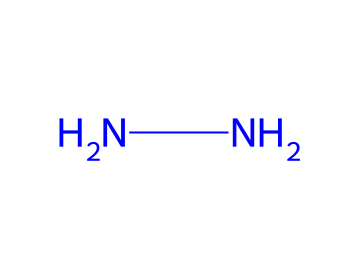
IDENTITY
COMPUTED
PROPERTIES
Aqueous solutions of hydrazine are highly alkaline. pH of a 64 wt% aqueous solution of hydrazine is 12.75.
log Kow = -2.07
-2.07
-2.1
Penetrating odor resembling ammonia.
Ammonia-like odor
1.011 at 59 °F (EPA, 1998) - Denser than water; will sink
1.0036 g/cu cm
Density: 1.146 at -5 °C/4 °C; 1.0253 at 0 °C/4 °C; 1.024 at 2 °C/4 °C; 1.011 at 15 °C/4 °C; 1.0036 at 25 °C/4 °C; 0.9955 at 35 °C/4 °C
White crystalline powder. MP 198 °C. Density: 1.42. Corrosive. Freely soluble in water, slightly soluble in alcohol /Hydrazine dihydrochloride/
Relative density (water = 1): 1.01
1.01
0.974 uPa-sec at 20 °C
0.0009 mm²/s at 20 °C
Colorless oily liquid
Colorless fuming, oily liquid ... (Note: A solid below 36 °F)
Anhydrous hydrazine is a waxy solid.
Miscible (NIOSH, 2024)
Miscible with water /1.0X10+6 mg/L/
Very soluble in water
Miscible with methyl, ethyl, propyl, isobutyl alcohols
Very soluble in ethanol, methanol
For more Solubility (Complete) data for Hydrazine (6 total), please visit the HSDB record page.
125.6 °F (EPA, 1998)
Emergency Response Guidebook is for "hydrazine, anhydrous." 100 °F
52 °C (126 °F) - closed cup
100 °F - open cup
40 °C c.c.
125.6 °F
236.3 °F at 760 mmHg (EPA, 1998)
113.55 °C
Contracts on freezing. ...One gallon of commercial product weighs 8.38 lbs. ...Dissolves many inorganic substances. ...Forms an azeotropic mixture with water, boiling point (at 760 mm Hg) 120.3 °C, which contains 55 mole-% (68.5 weight-%) N2H4.
BP: 56 °C at 71 mm Hg; 170 deg at 5 atm; 200 °C at 10 atm; 236 °C at 20 atm
114 °C
236.3 °F
Hazardous decomposition products formed under fire conditions - Nitrogen oxides (NOx).
On contact with metal catalysts (e.g., platinum black; Raney nickel; copper-iron oxide; molybdenum; molybdenum oxides; iridium), it decomposes to ammonia, hydrogen and nitrogen gases which may ignite or explode.
When heated to decomposition it emits highly toxic fumes of /nitrogen oxide/ and /ammonia/.
Air or oxygen is not required for decomposition. ... Decomposes at room temperature or above depending on surface contacted.
The pure compound decomposes on heating or when exposed to ultraviolet radiation to form ammonia, hydrogen, and nitrogen. This reaction may be explosive, especially when catalysed by certain metals and metal oxides.
Decomposition of aqueous hydrazine occurs in the presence of metal catalysts such as platinum or Raney nickel.
36 °F (EPA, 1998)
1.54 °C
MP: 127 °C; soluble in water at 25 °C /Hydrazine monohydroiodide/
2 °C
2 °C
36 °F
Relative vapor density (air = 1): 1.1
GHS
Danger
H226: Flammable liquid and vapor [Warning Flammable liquids];H301: Toxic if swallowed [Danger Acute toxicity, oral];H311: Toxic in contact with skin [Danger Acute toxicity, dermal];H314: Causes severe skin burns and eye damage [Danger Skin corrosion/irritation];H317: May cause an allergic skin reaction [Warning Sensitization, Skin];H331: Toxic if inhaled [Danger Acute toxicity, inhalation];H350: May cause cancer [Danger Carcinogenicity];H400: Very toxic to aquatic life [Warning Hazardous to the aquatic environment, acute hazard];H410: Very toxic to aquatic life with long lasting effects [Warning Hazardous to the aquatic environment, long-term hazard]
P203, P210, P233, P240, P241, P242, P243, P260, P261, P262, P264, P270, P271, P272, P273, P280, P301+P316, P301+P330+P331, P302+P352, P302+P361+P354, P303+P361+P353, P304+P340, P305+P354+P338, P316, P318, P321, P330, P333+P317, P361+P364, P362+P364, P363, P370+P378, P391, P403+P233, P403+P235, P405, and P501 (click each P-code to see the statement)
Danger
HAZARDS
Chemical: Hydrazine
Hazard Traits - Neurotoxicity;Authoritative List - ATSDR Neurotoxicants;Report - if used as a fragrance or flavor ingredient
Hydrazine is listed on the EPA's Chemical Data Reporting (CDR) system. Manufacturers and importers of Hydrazine are required to report information about their production and use of this chemical to the EPA under the Toxic Substances Control Act (TSCA). (40 eCFR Part 711)
Status: Active Update: 11-01-2023 https://echa.europa.eu/registration-dossier/-/registered-dossier/14983;Status: Active Update: 02-04-2019 https://echa.europa.eu/registration-dossier/-/registered-dossier/28019
Substance: Hydrazine;EC: 206-114-9;Date of inclusion: >20-Jun-2011;Reason for inclusion: Carcinogenic (Article 57a)
Hydrazine, anhydrous: HSNO Approval: HSR001446 Approved with controls
IMAP assessments - Hydrazine: Human health tier II assessment
Corrosive Flammable Liquid Poison
Corrosive Flammable Liquid Poison
Poison
It is a flammable/combustible material and may be ignited by heat, sparks, or flames. Vapor may travel to a source of ignition and flash back. Container may explode in heat of fire. Vapor explosion and poison hazard indoors, outdoors, or in sewers. Runoff to sewer may create fire or explosion hazard. Vapors form explosive mixtures with air. May continue to burn in the absence of air. Decomposition gives off toxic nitrogen compound fumes. Can catch fire when in contact with porous materials such as wood, asbestos, cloth, earth, and rusty metals. Incompatible with oxidizers, hydrogen peroxide, nitric acid, metal oxides, and strong acids. Hazardous polymerization may not occur. (EPA, 1998)
Excerpt from ERG Guide 132 [Flammable Liquids - Corrosive]:;Flammable/combustible material. May be ignited by heat, sparks or flames. Vapors may form explosive mixtures with air. Vapors may travel to source of ignition and flash back. Most vapors are heavier than air. They will spread along the ground and collect in low or confined areas (sewers, basements, tanks, etc.). Vapor explosion hazard indoors, outdoors or in sewers. Those substances designated with a (P) may polymerize explosively when heated or involved in a fire. Runoff to sewer may create fire or explosion hazard. Containers may explode when heated. Many liquids will float on water. (ERG, 2024)
Excerpt from ERG Guide 153 [Substances - Toxic and/or Corrosive (Combustible)]:;Combustible material: may burn but does not ignite readily. When heated, vapors may form explosive mixtures with air: indoors, outdoors and sewers explosion hazards. Those substances designated with a (P) may polymerize explosively when heated or involved in a fire. Corrosives in contact with metals may evolve flammable hydrogen gas. Containers may explode when heated. Runoff may pollute waterways. Substance may be transported in a molten form. (ERG, 2024)
· Combustible material: may burn but does not ignite readily.;· When heated, vapors may form explosive mixtures with air: indoors, outdoors and sewers explosion hazards.;· Those substances designated with a (P) may polymerize explosively when heated or involved in a fire.;· Corrosives in contact with metals may evolve flammable hydrogen gas.;· Containers may explode when heated.;· Runoff may pollute waterways.;· Substance may be transported in a molten form.
· Combustible material: may burn but does not ignite readily.;· When heated, vapors may form explosive mixtures with air: indoors, outdoors and sewers explosion hazards.;· Those substances designated with a (P) may polymerize explosively when heated or involved in a fire.;· Corrosives in contact with metals may evolve flammable hydrogen gas.;· Containers may explode when heated.;· Runoff may pollute waterways.;· Substance may be transported in a molten form.
· Flammable/combustible material.;· May be ignited by heat, sparks or flames.;· Vapors may form explosive mixtures with air.;· Vapors may travel to source of ignition and flash back.;· Most vapors are heavier than air. They will spread along the ground and collect in low or confined areas (sewers, basements, tanks, etc.).;· Vapor explosion hazard indoors, outdoors or in sewers.;· Those substances designated with a (P) may polymerize explosively when heated or involved in a fire.;· Runoff to sewer may create fire or explosion hazard.;· Containers may explode when heated.;· Many liquids will float on water.
Flammable liquid. A very dangerous fire hazard when exposed to heat, flame, or oxidizing agents.
Flammable liquid. ... Flammable over a wide range including 100% pure material. ... Ignites in air at room temperature on metal oxide surfaces, and in a wide variety of porous materials, such as cellulosic materials.
Target organs affected include central nervous system; respiratory system; skin and eyes. Chronic exposure in humans may cause pneumonia, liver and kidney damage. Liver damage may be more severe than kidney damage. It is a suspected human carcinogen. (EPA, 1998)
Excerpt from ERG Guide 132 [Flammable Liquids - Corrosive]:;May cause toxic effects if inhaled or ingested. Contact with substance may cause severe burns to skin and eyes. Fire will produce irritating, corrosive and/or toxic gases. Vapors may cause dizziness or asphyxiation, especially when in closed or confined areas. Runoff from fire control or dilution water may cause environmental contamination. (ERG, 2024)
Excerpt from ERG Guide 153 [Substances - Toxic and/or Corrosive (Combustible)]:;TOXIC and/or CORROSIVE; inhalation, ingestion or skin contact with material may cause severe injury or death. Methyl bromoacetate (UN2643) is an eye irritant/lachrymator (causes flow of tears). Contact with molten substance may cause severe burns to skin and eyes. Avoid any skin contact. Fire may produce irritating, corrosive and/or toxic gases. Runoff from fire control or dilution water may be corrosive and/or toxic and cause environmental contamination. (ERG, 2024)
· TOXIC and/or CORROSIVE; inhalation, ingestion or skin contact with material may cause severe injury or death.;· Methyl bromoacetate (UN2643) is an eye irritant/lachrymator (causes flow of tears).;· Contact with molten substance may cause severe burns to skin and eyes.;· Avoid any skin contact.;· Fire may produce irritating, corrosive and/or toxic gases.;· Runoff from fire control or dilution water may be corrosive and/or toxic and cause environmental contamination.
· TOXIC and/or CORROSIVE; inhalation, ingestion or skin contact with material may cause severe injury or death.;· Methyl bromoacetate (UN2643) is an eye irritant/lachrymator (causes flow of tears).;· Contact with molten substance may cause severe burns to skin and eyes.;· Avoid any skin contact.;· Fire may produce irritating, corrosive and/or toxic gases.;· Runoff from fire control or dilution water may be corrosive and/or toxic and cause environmental contamination.
· May cause toxic effects if inhaled or ingested.;· Contact with substance may cause severe burns to skin and eyes.;· Fire will produce irritating, corrosive and/or toxic gases.;· Vapors may cause dizziness or asphyxiation, especially when in closed or confined areas.;· Runoff from fire control or dilution water may cause environmental contamination.
Hydrazines are clear, colorless liquids with an ammonia-like odor. There are many kinds of hydrazine compounds, including hydrazine, 1,1-dimethylhydrazine, and 1,2-dimethylhydrazine. Small amounts of hydrazine occur naturally in plants. Most hydrazines are manufactured for use as rocket propellants and fuels, boiler water treatments, chemical reactants, medicines, and in cancer research. Hydrazines are highly reactive and easily catch fire.
Individuals may be exposed to hydrazine in the workplace or to small amounts in tobacco smoke. Symptoms of acute (short-term) exposure to high levels of hydrazine may include irritation of the eyes, nose, and throat, dizziness, headache, nausea, pulmonary edema, seizures, and coma in humans. Acute exposure can also damage the liver, kidneys, and central nervous system in humans. The liquid is corrosive and may produce dermatitis from skin contact in humans and animals. Effects to the lungs, liver, spleen, and thyroid have been reported in animals chronically (long-term) exposed to hydrazine via inhalation. Increased incidences of lung, nasal cavity, and liver tumors have been observed in rodents exposed to hydrazine. EPA has classified hydrazine as a Group B2, probable human carcinogen.
Liquid causes second or third degree burns after short contact; [CHRIS] Corrosive to skin; [Quick CPC] A case of pulmonary edema following an inhalation exposure has been reported. [ACGIH] Patients poisoned by hydrazines may develop symptoms of CNS injury, methemoglobinemia, and liver damage. [HSDB] Allergic contact dermatitis from hydrazine in flux for soldering has been reported in electronic workers. [Marks, p. 318] [Hydrazine contact dermatitis from gold plating. Wrangsjo K, et al. Contact Dermatitis. 1986 Oct;15(4):244-5.] Allergic contact dermatitis reported in workers using solder containing hydrazine sulfate, hydrazine hydrobromide, or hydrazine hydrochloride; [Kanerva, p. 1801] In high-dose reproductive studies of animals, hydrazine derivatives (hydrazine, MMH, and UDMH) cause testicular damage and fetal loss, and hydrazine causes birth defects. [Frazier, p. 341-2] Hydrazine and hydrazine sulfate are reasonably anticipated to be human carcinogens. [NTP] Hydrazines antagonize GABA in the CNS causing excitation and seizures. Pyridoxine, vitamin B6, is a specific antidote for this effect. [AHLS, p. 426] See Carcinogenicity of some industrial chemicals, Volume 115. [IARC, News Release, 23 February 2016]
2030 153
3293 153
2029 132
2029 132(anhydrous)
3293 152(≤ 37% solution)
2030 153(37-64% solution)
Azo, Diazo, Azido, Hydrazine, and Azide Compounds;Bases, Strong
Azo, Diazo, Azido, Hydrazine, and Azide Compounds;Bases, Weak;Water and Aqueous Solutions
Azo, Diazo, Azido, Hydrazine, and Azide Compounds;Water and Aqueous Solutions
Symbol: T, N; R: 45-10-23/24/25-34-43-50/53; S: 53-45-60-61; Note: E
UN Hazard Class: 8; UN Subsidiary Risks: 3 and 6.1; UN Pack Group: I
Kimball RF; Mutat Res 39 (2): 111 (1977). A review of the mutagenicity of hydrazine derivatives is presented.
Back KC et al; Aviat, Space Environ Med 49 (4): 591 (1978). A review of hazards associated with use of hydrazine propellants in missile operations.
Toth B; Falk Symp 31 (Colonic Carcinog): 165 (1982). Review of hydrazine compounds on colon and intestine carcinogenesis.
Schabacher W; Vgb Kraftwerkstech 62 (2): 139 (1982). Review of occupational exposure to hydrazine and safety guidelines.
For more Special Reports (Complete) data for Hydrazine (9 total), please visit the HSDB record page.
SAFETY
Stay upwind; keep out of low areas. Wear positive pressure breathing apparatus and protective clothing. Isolate for one-half mile in all directions if tank car or truck is involved in fire. Move container from fire area if you can do so without risk. Dike fire control water for later disposal; do not scatter material. Spray cooling water on containers that are exposed to flames until well after fire is out.;Small fires: dry chemical, carbon dioxide, water spray or foam. Large fires: water spray, fog, or foam. (EPA, 1998)
Excerpt from ERG Guide 132 [Flammable Liquids - Corrosive]:;Some of these materials may react violently with water.;SMALL FIRE: Dry chemical, CO2, water spray or alcohol-resistant foam.;LARGE FIRE: Water spray, fog or alcohol-resistant foam. If it can be done safely, move undamaged containers away from the area around the fire. Dike runoff from fire control for later disposal. Do not get water inside containers.;FIRE INVOLVING TANKS, RAIL TANK CARS OR HIGHWAY TANKS: Fight fire from maximum distance or use unmanned master stream devices or monitor nozzles. Cool containers with flooding quantities of water until well after fire is out. Withdraw immediately in case of rising sound from venting safety devices or discoloration of tank. ALWAYS stay away from tanks in direct contact with flames. For massive fire, use unmanned master stream devices or monitor nozzles; if this is impossible, withdraw from area and let fire burn. (ERG, 2024)
Excerpt from ERG Guide 153 [Substances - Toxic and/or Corrosive (Combustible)]:;SMALL FIRE: Dry chemical, CO2 or water spray.;LARGE FIRE: Dry chemical, CO2, alcohol-resistant foam or water spray. If it can be done safely, move undamaged containers away from the area around the fire. Dike runoff from fire control for later disposal.;FIRE INVOLVING TANKS, RAIL TANK CARS OR HIGHWAY TANKS: Fight fire from maximum distance or use unmanned master stream devices or monitor nozzles. Do not get water inside containers. Cool containers with flooding quantities of water until well after fire is out. Withdraw immediately in case of rising sound from venting safety devices or discoloration of tank. ALWAYS stay away from tanks in direct contact with flames. (ERG, 2024)
Use alcohol-resistant foam, foam, water spray, dry powder, carbon dioxide. In case of fire: keep drums, etc., cool by spraying with water. Combat fire from a sheltered position.
Fresh air, rest. Half-upright position. Refer immediately for medical attention.
First rinse with plenty of water for at least 15 minutes, then remove contaminated clothes and rinse again. Refer immediately for medical attention.
Rinse with plenty of water (remove contact lenses if easily possible). Refer immediately for medical attention.
Rinse mouth. Give nothing to drink. Do NOT induce vomiting. Refer immediately for medical attention.
· CALL 911. Then call emergency response telephone number on shipping paper. If shipping paper not available or no answer, refer to appropriate telephone number listed on the inside back cover.;· Keep unauthorized personnel away.;· Stay upwind, uphill and/or upstream.;· Ventilate closed spaces before entering, but only if properly trained and equipped.
· ELIMINATE all ignition sources (no smoking, flares, sparks or flames) from immediate area.;· Do not touch damaged containers or spilled material unless wearing appropriate protective clothing.;· Stop leak if you can do it without risk.;· Prevent entry into waterways, sewers, basements or confined areas.;· Absorb or cover with dry earth, sand or other non-combustible material and transfer to containers.;· DO NOT GET WATER INSIDE CONTAINERS.
· CALL 911. Then call emergency response telephone number on shipping paper. If shipping paper not available or no answer, refer to appropriate telephone number listed on the inside back cover.;· Keep unauthorized personnel away.;· Stay upwind, uphill and/or upstream.;· Ventilate closed spaces before entering, but only if properly trained and equipped.
· ELIMINATE all ignition sources (no smoking, flares, sparks or flames) from immediate area.;· Do not touch damaged containers or spilled material unless wearing appropriate protective clothing.;· Stop leak if you can do it without risk.;· Prevent entry into waterways, sewers, basements or confined areas.;· Absorb or cover with dry earth, sand or other non-combustible material and transfer to containers.;· DO NOT GET WATER INSIDE CONTAINERS.
· CALL 911. Then call emergency response telephone number on shipping paper. If shipping paper not available or no answer, refer to appropriate telephone number listed on the inside back cover.;· Keep unauthorized personnel away.;· Stay upwind, uphill and/or upstream.;· Ventilate closed spaces before entering, but only if properly trained and equipped.
· ELIMINATE all ignition sources (no smoking, flares, sparks or flames) from immediate area.;· All equipment used when handling the product must be grounded.;· Do not touch or walk through spilled material.;· Stop leak if you can do it without risk.;· Prevent entry into waterways, sewers, basements or confined areas.;· A vapor-suppressing foam may be used to reduce vapors.;· Absorb with earth, sand or other non-combustible material.;· For hydrazine, absorb with DRY sand or inert absorbent (vermiculite or absorbent pads).;· Use clean, non-sparking tools to collect absorbed material.;Large Spill;· Dike far ahead of liquid spill for later disposal.;· Water spray may reduce vapor, but may not prevent ignition in closed spaces.
Warning: Effects may be delayed for hours to days. Caution is advised.;Signs and Symptoms of Acute Hydrazine Exposure: Signs and symptoms of acute exposure to hydrazine may include severe eye irritation, facial numbness, facial swelling, and increased salivation. Hydrazine vapor may immediately irritate the nose and throat. Headache, twitching, seizures, convulsions, and coma may also occur. Gastrointestinal signs and symptoms include anorexia, nausea, and vomiting. Pulmonary edema and hypotension (low blood pressure) are common. Hydrazine is toxic to the liver, ruptures red blood cells, and may cause kidney damage. Dermal contact may result in irritation or severe burns.;Emergency Life-Support Procedures: Acute exposure to hydrazine may require decontamination and life support for the victims. Emergency personnel should wear protective clothing appropriate to the type and degree of contamination. Air-purifying or supplied-air respiratory equipment should also be worn, as necessary. Rescue vehicles should carry supplies such as plastic sheeting and disposable plastic bags to assist in preventing spread of contamination.;Inhalation Exposure:;1. Move victims to fresh air. Emergency personnel should avoid self-exposure to hydrazine.;2. Evaluate vital signs including pulse and respiratory rate, and note any trauma. If no pulse is detected, provide CPR. If not breathing, provide artificial respiration. If breathing is labored, administer oxygen or other respiratory support.;3. Obtain authorization and/or further instructions from the local hospital for administration of an antidote or performance of other invasive procedures.;4. Transport to a health care facility.;Dermal/Eye Exposure:;1. Remove victims from exposure. Emergency personnel should avoid self- exposure to hydrazine.;2. Evaluate vital signs including pulse and respiratory rate, and note any trauma. If no pulse is detected, provide CPR. If not breathing, provide artificial respiration. If breathing is labored, administer oxygen or other respiratory support.;3. Remove contaminated clothing as soon as possible.;4. If eye exposure has occurred, eyes must be flushed with lukewarm water for at least 15 minutes.;5. Wash exposed skin areas THOROUGHLY with soap and water.;6. Obtain authorization and/or further instructions from the local hospital for administration of an antidote or performance of other invasive procedures.;7. Transport to a health care facility.;Ingestion Exposure:;1. Evaluate vital signs including pulse and respiratory rate, and note any trauma. If no pulse is detected, provide CPR. If not breathing, provide artificial respiration. If breathing is labored, administer oxygen or other respiratory support.;2. Obtain authorization and/or further instructions from the local hospital for administration of an antidote or performance of other invasive procedures.;3. Give the victims water or milk: children up to 1 year old, 125 mL (4 oz or 1/2 cup); children 1 to 12 years old, 200 mL (6 oz or 3/4 cup); adults 250 mL (8 oz or 1 cup). Water or milk should be given only if victims are conscious and alert.
Excerpt from ERG Guide 132 [Flammable Liquids - Corrosive]:;Refer to the "General First Aid" section. Specific First Aid: For corrosives, in case of contact, immediately flush skin or eyes with running water for at least 30 minutes. Additional flushing may be required. In case of burns, immediately cool affected skin for as long as possible with cold water. Do not remove clothing if adhering to skin. (ERG, 2024)
Excerpt from ERG Guide 153 [Substances - Toxic and/or Corrosive (Combustible)]:;Refer to the "General First Aid" section. Specific First Aid: For corrosives, in case of contact, immediately flush skin or eyes with running water for at least 30 minutes. Additional flushing may be required. Removal of solidified molten material from skin requires medical assistance. (ERG, 2024)
General First Aid:;· Call 911 or emergency medical service.;· Ensure that medical personnel are aware of the material(s) involved, take precautions to protect themselves and avoid contamination.;· Move victim to fresh air if it can be done safely.;· Administer oxygen if breathing is difficult.;· If victim is not breathing:;-- DO NOT perform mouth-to-mouth resuscitation; the victim may have ingested or inhaled the substance.;-- If equipped and pulse detected, wash face and mouth, then give artificial respiration using a proper respiratory medical device (bag-valve mask, pocket mask equipped with a one-way valve or other device).;-- If no pulse detected or no respiratory medical device available, provide continuous compressions. Conduct a pulse check every two minutes or monitor for any signs of spontaneous respirations.;· Remove and isolate contaminated clothing and shoes.;· For minor skin contact, avoid spreading material on unaffected skin.;· In case of contact with substance, remove immediately by flushing skin or eyes with running water for at least 20 minutes.;· For severe burns, immediate medical attention is required.;· Effects of exposure (inhalation, ingestion, or skin contact) to substance may be delayed.;· Keep victim calm and warm.;· Keep victim under observation.;· For further assistance, contact your local Poison Control Center.;· Note: Basic Life Support (BLS) and Advanced Life Support (ALS) should be done by trained professionals.;Specific First Aid:;· For corrosives, in case of contact, immediately flush skin or eyes with running water for at least 30 minutes. Additional flushing may be required.
General First Aid:;· Call 911 or emergency medical service.;· Ensure that medical personnel are aware of the material(s) involved, take precautions to protect themselves and avoid contamination.;· Move victim to fresh air if it can be done safely.;· Administer oxygen if breathing is difficult.;· If victim is not breathing:;-- DO NOT perform mouth-to-mouth resuscitation; the victim may have ingested or inhaled the substance.;-- If equipped and pulse detected, wash face and mouth, then give artificial respiration using a proper respiratory medical device (bag-valve mask, pocket mask equipped with a one-way valve or other device).;-- If no pulse detected or no respiratory medical device available, provide continuous compressions. Conduct a pulse check every two minutes or monitor for any signs of spontaneous respirations.;· Remove and isolate contaminated clothing and shoes.;· For minor skin contact, avoid spreading material on unaffected skin.;· In case of contact with substance, remove immediately by flushing skin or eyes with running water for at least 20 minutes.;· For severe burns, immediate medical attention is required.;· Effects of exposure (inhalation, ingestion, or skin contact) to substance may be delayed.;· Keep victim calm and warm.;· Keep victim under observation.;· For further assistance, contact your local Poison Control Center.;· Note: Basic Life Support (BLS) and Advanced Life Support (ALS) should be done by trained professionals.;Specific First Aid:;· For corrosives, in case of contact, immediately flush skin or eyes with running water for at least 30 minutes. Additional flushing may be required.
General First Aid:;· Call 911 or emergency medical service.;· Ensure that medical personnel are aware of the material(s) involved, take precautions to protect themselves and avoid contamination.;· Move victim to fresh air if it can be done safely.;· Administer oxygen if breathing is difficult.;· If victim is not breathing:;-- DO NOT perform mouth-to-mouth resuscitation; the victim may have ingested or inhaled the substance.;-- If equipped and pulse detected, wash face and mouth, then give artificial respiration using a proper respiratory medical device (bag-valve mask, pocket mask equipped with a one-way valve or other device).;-- If no pulse detected or no respiratory medical device available, provide continuous compressions. Conduct a pulse check every two minutes or monitor for any signs of spontaneous respirations.;· Remove and isolate contaminated clothing and shoes.;· For minor skin contact, avoid spreading material on unaffected skin.;· In case of contact with substance, remove immediately by flushing skin or eyes with running water for at least 20 minutes.;· For severe burns, immediate medical attention is required.;· Effects of exposure (inhalation, ingestion, or skin contact) to substance may be delayed.;· Keep victim calm and warm.;· Keep victim under observation.;· For further assistance, contact your local Poison Control Center.;· Note: Basic Life Support (BLS) and Advanced Life Support (ALS) should be done by trained professionals.;Specific First Aid:;· For corrosives, in case of contact, immediately flush skin or eyes with running water for at least 30 minutes. Additional flushing may be required.
Fireproof. Separated from acids, metals, oxidants and food and feedstuffs. Keep under inert gas. Provision to contain effluent from fire extinguishing. Store in an area without drain or sewer access.
Vapors are heavier than air and will collect in low areas. Vapors may travel long distances to ignition sources and flashback. Vapors in confined areas may explode when exposed to fire. Containers may explode in fire. Storage containers and parts of containers may rocket great distances, in many directions.
Closed containers may rupture violently when heated.
Hydrazine can ignite spontaneously in air, when in contact with porous materials.
· Wear positive pressure self-contained breathing apparatus (SCBA).;· Wear chemical protective clothing that is specifically recommended by the manufacturer when there is NO RISK OF FIRE.;· Structural firefighters' protective clothing provides thermal protection but only limited chemical protection.
· Wear positive pressure self-contained breathing apparatus (SCBA).;· Wear chemical protective clothing that is specifically recommended by the manufacturer when there is NO RISK OF FIRE.;· Structural firefighters' protective clothing provides thermal protection but only limited chemical protection.
· Wear positive pressure self-contained breathing apparatus (SCBA).;· Wear chemical protective clothing that is specifically recommended by the manufacturer when there is NO RISK OF FIRE.;· Structural firefighters' protective clothing provides thermal protection but only limited chemical protection.
Suitable extinguishing media: Use water spray, alcohol-resistant foam, dry chemical or carbon dioxide.
Advice for firefighters: Wear self-contained breathing apparatus for firefighting if necessary.
Use water spray to cool unopened containers.
Approach fire from upwind to avoid hazardous vapors and toxic decomposition products. Fight fire from protected location or maximum possible distance. Use water spray to keep fire-exposed containers cool. Use flooding quantities of water as fog or spray. Flooding quantities may be necessary to prevent reignition.
For more Fire Fighting Procedures (Complete) data for Hydrazine (7 total), please visit the HSDB record page.
Keep container tightly closed in a dry and well-ventilated place. Containers which are opened must be carefully resealed and kept upright to prevent leakage.
It should be stored in glass containers in a cool, dark place. ... It is usually stored under nitrogen to reduce the flammability hazard and to maintain purity.
Detached storage is preferred. Inside storage should be in a standard flammable liquids storage warehouse, room, or cabinet. Provide water for flushing spills or leaks. Tanks should be located in water-filled dikes. Separate from acids, oxidizing materials, metal oxides. Normally stored under nitrogen.
Do not store in the same area as other flammable materials. ... Store in a secure poison location. ... Store separately in a corrosion-resistant location. Prior to working with this chemical you should be trained on its proper handling and storage. Before entering confined space where hydrazine may be present, check to make sure that an explosive concentration does not exist. Hydrazine must be stored to avoid contact with oxidizers (such as perchlorates, peroxides, permanganates, chlorates, and nitrates), strong acids (such as hydrochloric, sulfuric, and nitric); hydrogen peroxide, and metal oxides since violent reactions occur. Store in tightly closed containers in a cool, well-ventilated area away from heat. Sources of ignition, such as smoking and open flames, are prohibited where hydrazine is used, handled, or stored in a manner that could create a potential fire or explosion hazard. Wherever hydrazine is used, handled, manufactured, or stored, use explosion-proof electrical equipment and fittings. A regulated, marked area should be established where this chemical is handled, used, or stored in compliance with OSHA Standard 1910.1045.
ACCIDENTAL RELEASE MEASURES: Personal precautions, protective equipment and emergency procedures: Wear respiratory protection. Avoid breathing vapors, mist or gas. Ensure adequate ventilation. Remove all sources of ignition. Evacuate personnel to safe areas. Beware of vapors accumulating to form explosive concentrations. Vapors can accumulate in low areas. Environmental precautions:Prevent further leakage or spillage if safe to do so. Do not let product enter drains. Discharge into the environment must be avoided. Methods and materials for containment and cleaning up: Contain spillage, and then collect with an electrically protected vacuum cleaner or by wet-brushing and place in container for disposal according to local regulations.
Emergency response personal protective equipment: Wear special protective clothing and positive pressure self-contained breathing apparatus. Butyl rubber, Neoprene, nitrile rubber, polyvinyl chloride, Teflon, or Saranex barrier recommended.
Spill or leak procedures: Eliminate all ignition sources. Approach release from upwind. Use water spray to cool and disperse vapors, protect personnel, and dilute spills to form nonflammable mixtures. Control runoff and isolate discharged material for proper disposal.
Evacuate and restrict persons not wearing protective equipment from area of spill or leak until cleanup is complete. Remove all ignition sources. Stay upwind; keep out of low areas. In case of contact with material, immediately flush skin or eyes with running water for at least 15 min. Establish forced ventilation to keep levels below explosive limit. Absorb liquids in vermiculite, dry sand, earth, peat, carbon, or a similar material and deposit in sealed containers. Keep this chemical out of a confined space, such as a sewer, because of the possibility of an explosion, unless the sewer is designed to prevent the buildup of explosive concentrations. It may be necessary to contain and dispose of this chemical as a hazardous waste. If material or contaminated runoff enters waterways, notify downstream users of potentially contaminated waters.
For more Cleanup Methods (Complete) data for Hydrazine (8 total), please visit the HSDB record page.
Excerpt from ERG Guide 132 [Flammable Liquids - Corrosive]:;ELIMINATE all ignition sources (no smoking, flares, sparks or flames) from immediate area. All equipment used when handling the product must be grounded. Do not touch or walk through spilled material. Stop leak if you can do it without risk. Prevent entry into waterways, sewers, basements or confined areas. A vapor-suppressing foam may be used to reduce vapors. Absorb with earth, sand or other non-combustible material. For hydrazine, absorb with DRY sand or inert absorbent (vermiculite or absorbent pads). Use clean, non-sparking tools to collect absorbed material.;LARGE SPILL: Dike far ahead of liquid spill for later disposal. Water spray may reduce vapor, but may not prevent ignition in closed spaces. (ERG, 2024)
Excerpt from ERG Guide 132 [Flammable Liquids - Corrosive]:;ELIMINATE all ignition sources (no smoking, flares, sparks or flames) from immediate area. All equipment used when handling the product must be grounded. Do not touch or walk through spilled material. Stop leak if you can do it without risk. Prevent entry into waterways, sewers, basements or confined areas. A vapor-suppressing foam may be used to reduce vapors. Absorb with earth, sand or other non-combustible material. For hydrazine, absorb with DRY sand or inert absorbent (vermiculite or absorbent pads). Use clean, non-sparking tools to collect absorbed material.;LARGE SPILL: Dike far ahead of liquid spill for later disposal. Water spray may reduce vapor, but may not prevent ignition in closed spaces. (ERG, 2024)
Excerpt from ERG Guide 153 [Substances - Toxic and/or Corrosive (Combustible)]:;ELIMINATE all ignition sources (no smoking, flares, sparks or flames) from immediate area. Do not touch damaged containers or spilled material unless wearing appropriate protective clothing. Stop leak if you can do it without risk. Prevent entry into waterways, sewers, basements or confined areas. Absorb or cover with dry earth, sand or other non-combustible material and transfer to containers. DO NOT GET WATER INSIDE CONTAINERS. (ERG, 2024)
Generators of waste (equal to or greater than 100 kg/mo) containing this contaminant, EPA hazardous waste number U133, must conform with USEPA regulations in storage, transportation, treatment and disposal of waste.
Product: Burn in a chemical incinerator equipped with an afterburner and scrubber but exert extra care in igniting as this material is highly flammable. Offer surplus and non-recyclable solutions to a licensed disposal company. Contact a licensed professional waste disposal service to dispose of this material; Contaminated packaging: Dispose of as unused product.
SRP: Wastewater from contaminant suppression, cleaning of protective clothing/equipment, or contaminated sites should be contained and evaluated for subject chemical or decomposition product concentrations. Concentrations shall be lower than applicable environmental discharge or disposal criteria. Alternatively, pretreatment and/or discharge to a permitted wastewater treatment facility is acceptable only after review by the governing authority and assurance that "pass through" violations will not occur. Due consideration shall be given to remediation worker exposure (inhalation, dermal and ingestion) as well as fate during treatment, transfer and disposal. If it is not practicable to manage the chemical in this fashion, it must be evaluated in accordance with EPA 40 CFR Part 261, specifically Subpart B, in order to determine the appropriate local, state and federal requirements for disposal.
Hydrazine is a waste chemical stream constituent which may be subjected to ultimate disposal by controlled incineration with facilities for effluent scrubbing to abate any ammonia formed in the combustion process.
For more Disposal Methods (Complete) data for Hydrazine (14 total), please visit the HSDB record page.
TOXICITY
CDC-ATSDR Toxicological Profile
Induced emesis, gastric lavage, use of saline cathartics, or activated charcoal are commonly used to decrease the gastrointestinal absorption of hydrazines. In general, these treatments are most effective when used within a few hours after oral exposure. Following dermal or ocular exposures to hydrazines, all contaminated clothing should be removed, and contacted skin should be washed immediately with soap and water. Eyes that have come in contact with hydrazines should be flushed with copious amounts of water. Contact lenses should be removed prior to flushing with water. (L154)
Hepatic;Respiratory
[in animals: tumors of the lungs, liver, blood vessels & intestine]
The influence of gut microbiota on the toxicity and metabolism of hydrazine has been investigated in germ-free and 'conventional' Sprague Dawley rats using (1)H NMR based metabonomic analysis of urine and plasma. Toxicity was more severe in germ-free rats compared with conventional rats for equivalent exposures indicating that bacterial presence altered the nature or extent of response to hydrazine and that the toxic response can vary markedly in the absence of a functional microbiome.
Pretreatment of Vicia faba root-tip meristems with a nontoxic dose of either hydrazine or N,N'-diformylhydrazine prior to the administration of maleic hydrazide, separated by 2 hr, resulted in a significant reduction of the yield of maleic hydrazide-induced chromatid aberrations compared to control treatments (maleic hydrazide only). This clastogenic adaptation was not observed when the alkylating agent triethylene melamine was used instead of maleic hydrazide. Thus, pretreatment with the hydrazines induces an error-free repair system which reduces maleic hydrazide-induced damage and both hydrazines and maleic hydrazide appear able to induce oxidative DNA lesions.
Administration of the hepatotoxin and carcinogen, inorganic hydrazine, to rodents results in the formation of 7-methylguanine and O6-methylguanine in liver DNA; co-administration of methyl-(14)C-methionine or (14)C-formate with the hydrazine labels the methylguanines, suggesting involvement of the 1-carbon pool in the methylation process. The present study investigates the proposal that the methylation mechanism involves reaction of hydrazine with endogenous formaldehyde to yield formaldehyde hydrazone, which could be metabolized to the potent methylating agent diazomethane. Hamsters were pretreated with methanol, ethanol or cyanamide to alter the endogenous hepatic aldehyde levels prior to administration of hydrazine. Formaldehyde levels were refractory to the pretreatment; hepatic acetaldehyde levels were increased, but hydrazine administration under such conditions did not result in the formation of ethylated guanines in DNA. Methanol and ethanol inhibited hydrazine-induced methylaton of DNA. Hydrazine incubated with liver S9 fraction and calf thymus DNA induced the formation of 7-methylguanine and O6-methylguanine when formaldehyde was present in the incubation system; substitution of formaldehyde with acetaldehyde in the incubation medium did not result in any detectable alkylation of DNA. Both liver microsomal and cytosolic fractions demonstrated heat-labile activity in supporting the hydrazine-induced methylation process. Tetraformyltrisazine or a similar reaction product of hydrazine and formaldehyde, may be a more important intermediate than formaldehyde hydrazone in the hydrazine-induced methylation of DNA.
Hydrazine hepatotoxicity in vivo, as manifested by triglyceride accumulation, depletion of ATP and reduced glutathione (GSH) was shown to be dose related. The effect of pretreatment of rats with various inhibitors and inducers of cytochrome p450 on these dose-response relationships was investigated. Pretreatment with the inhibitor piperonyl butoxide increased triglyceride accumulation whereas pretreatment with the inducers phenobarbital and beta-naphthoflavone resulted in reduced triglyceride accumulation. Pretreatment with the inducers acetone and isoniazid also enhanced triglyceride accumulation. Only phenobarbital pretreatment also significantly reduced glutathione and ATP depletion. A linear correlation was found between hepatic glutathione and ATP levels in non-pretreated animals given various doses of hydrazine. However, exponential relationships were found between hepatic triglycerides and both hepatic ATP and glutathione. The results suggest that i) the hepatotoxicity of hydrazine can be modulated by inducing or inhibiting particular isoenzymes of cytochrome p450, ii) ATP and glutathione depletion may not be directly involved in the development of fatty liver.
For more Interactions (Complete) data for Hydrazine (7 total), please visit the HSDB record page.
Cancer, Hepatic (Liver), Neurological (Nervous System), Renal (Urinary System or Kidneys), Reproductive (Producing Children), Respiratory (From the Nose to the Lungs)
Eyes, skin, respiratory system, central nervous system, liver, kidneys
Breathing hydrazines for short periods may cause coughing and irritation of the throat and lungs, convulsions, tremors, or seizures. Breathing hydrazines for long periods may cause liver and kidney damage, as well as serious effects on reproductive organs. Eating or drinking small amounts of hydrazines may cause nausea, vomiting, uncontrolled shaking, inflammation of the nerves, drowsiness, or coma. (L154)
LC50; Species: Lepomis macrochirus (Bluegill sunfish); Conditions: static, 23-24 °C, pH 7.2-8.4, 240-292 mg CaCO3/L; Concentration: 1.08 mg/L for 96 hr /from table/
LC50; Species: Lepomis macrochirus (Bluegill sunfish); Conditions: flow-through, 10 °C, pH 6.7-8.0, 160-190 mg CaCO3/L; Concentration: 1.6 mg/L for 96 hr /from table/
LC50; Species: Lepomis macrochirus (Bluegill sunfish); Conditions: flow-through, 15.5 °C, pH 6.7-8.0, 160-190 mg CaCO3/L; Concentration: 1.0 mg/L for 96 hr /from table/
LC50; Species: Lepomis macrochirus (Bluegill sunfish); Conditions: flow-through, 21 °C, pH 6.7-8.0, 160-190 mg CaCO3/L; Concentration: 1.2 mg/L for 96 hr /from table/
For more Ecotoxicity Values (Complete) data for Hydrazine (28 total), please visit the HSDB record page.
TERRESTRIAL FATE: Based on a classification scheme(1), an estimated Koc value of 13(SRC), determined from a structure estimation method(2), indicates that hydrazine is expected to have very high mobility in soil(SRC). Hydrazine is a weak base with a pKa of 7.96(3), which indicates it will exist partially in the protonated form in moist soils, and this species may adsorb more than the free base(3). Volatilization of free-base hydrazine from moist soil surfaces is expected to be an environmental fate process(SRC) given an estimated Henry's Law constant of 6.1X10⁻⁷ atm-cu m/mole(SRC), based upon its vapor pressure, 14.4 mm Hg(4), and assigned value for water solubility of 1.0X10+6 mg/L (miscible)(5). Hydrazine is expected to volatilize from dry soil surfaces(SRC) based upon its vapor pressure(4). Hydrazine appears to degrade more rapidly in soil than in water, with oxidation as the main removal processes. Comparison to degradation rates in sterile soils indicated that autoxidation appeared to be the major factor contributing to disappearance of the chemical with <3% recovered from sterile soil. Biodegradation was a relatively minor fate process; in non-sterile soils, 20% of hydrazine loss was attributed to biodegradation(6).
AQUATIC FATE: Based on a classification scheme(1), an estimated Koc value of 13(SRC), determined from a structure estimation method(2), indicates that hydrazine is not expected to adsorb to suspended solids and sediment(SRC). Volatilization from water surfaces is expected(3) based upon an estimated Henry's Law constant of 6.1X10⁻⁷ atm-cu m/mole(SRC), derived from its vapor pressure, 14.4 mm Hg(4), and assigned value for water solubility of 1.0X10+6 mg/L (miscible)(5). Using this Henry's Law constant and an estimation method(3), volatilization half-lives for a model river and model lake are 34 and 250 days, respectively(SRC). A pKa of 7.92(6) indicates hydrazine will exist partially in the cation form at pH values of 5 to 9 and, therefore, volatilization from water surfaces is not expected to be an important fate process(SRC). According to a classification scheme(7), an estimated BCF of 3(SRC), from its Kow of -2.07(8) and a regression-derived equation(2), suggests the potential for bioconcentration in aquatic organisms is low(SRC). Utilizing fresh water inoculm, 90% of a low concentration of hydrazine was reached in 2 hours(9) indicating that biodegradation is an environmental fate process in water(SRC). However the compound is toxic to microorganisms at high concentrations(9).
AQUATIC FATE: Hydrazine is degraded rapidly in water through abiotic processes(SRC). The estimated half-life of hydrazine, initially present at 1.8 mM, in pond water was 8.3 days(1). In river water, containing substantial amounts of organic matter, 22.6%, 96%, and 100% of the added hydrazine, initially at 5 mg/L, was degraded after about 1 hour, 1 day and 2 days, respectively. In pond water, 20%, 74%, 80%, and 81.6% of the added hydrazine, initially at 5 mg/L, was degraded after about 1 hr, 1 day, 2 days and 3 days, respectively(2). Hydrazine will react with dissolved oxygen at a rate inversely proportional to the concentration of hydrazine. After 4 days, 52%, 48%, 21.4% and 7.4% of the added hydrazine had degraded in hard water, moderately hard water, slightly hard water, and soft water samples, respectively. The addition of organic matter increased the amount of hydrazine degraded(2). Hydrazine solutions are inherently unstable in the presence of oxygen under alkaline or neutral conditions (the autoxidation rate was found to be higher at pH 7.0 than at pH 9.0); however, they are quite stable under strongly acidic conditions or in the absence of oxygen(3).
ATMOSPHERIC FATE: According to a model of gas/particle partitioning of semivolatile organic compounds in the atmosphere(1), hydrazine, which has a measured vapor pressure of 14.4 mm Hg at 25 °C(2), will exist solely as a vapor in the ambient atmosphere. Vapor-phase hydrazine is degraded in the atmosphere by reaction with photochemically-produced hydroxyl radicals(SRC); the half-life for this reaction in air is estimated to be about 6.6 hours, calculated from its rate constant of 3.7X10⁻¹¹ cu cm/molecule-sec at 25 °C(3). Vapor-phase hydrazine also reacts with ozone(SRC); the half-life for this reaction in air is estimated to be about 9 hours(SRC), calculated from its rate constant of 3X10-17 cu cm/molecule-sec at 25 °C(4). It was estimated that the half-life for the reaction of hydrazine with ozone would be <10 minutes during ozone pollution episodes and <2 hours in the 'natural' troposphere(5). Hydrazine will react rapidly with nitrogen oxides in the light and in the dark with a half-life of about 2 hours(6). Hydrazine does not contain chromophores that absorb at wavelengths >290 nm(7) and, therefore, is not expected to be susceptible to direct photolysis by sunlight(SRC).
Neurotoxin - Other CNS neurotoxin;Occupational hepatotoxin - Secondary hepatotoxins: the potential for toxic effect in the occupational setting is based on cases of poisoning by human ingestion or animal experimentation.;Methemoglobinemia - The presence of increased methemoglobin in the blood; the compound is classified as secondary toxic effect;Reproductive Toxin - A chemical that is toxic to the reproductive system, including defects in the progeny and injury to male or female reproductive function. Reproductive toxicity includes developmental effects. See Guidelines for Reproductive Toxicity Risk Assessment.;Dermatotoxin - Skin burns.;Skin Sensitizer - An agent that can induce an allergic reaction in the skin.;Toxic Pneumonitis - Inflammation of the lungs induced by inhalation of metal fumes or toxic gases and vapors.;IARC Carcinogen - Class 2: International Agency for Research on Cancer classifies chemicals as probable (2a), or possible (2b) human carcinogens.;NTP Carcinogen - Reasonably anticipated to be a human carcinogen.;ACGIH Carcinogen - Confirmed Animal.
The substance can be absorbed into the body by inhalation, through the skin and by ingestion. Serious local effects by all routes of exposure.
inhalation, skin absorption, ingestion, skin and/or eye contact
Oral (L153); inhalation (L153) ; dermal (L153)
IDENTIFICATION AND USE: Hydrazine is a colorless oily liquid. It is used as an oxygen scavenger in boiler water treatment, as an electrodeless nickel coating reagent, and in rocket propellant. It is also used in a variety of other fields including pharmaceuticals, explosives, polymers and polymer additives, antioxidants, metal reductants, hydrogenation of organic groups, photography, xerography, and dyes. It has been tested as an experimental therapy. HUMAN STUDIES: Skin contact with anhydrous hydrazine leads to caustic-like burns and dissolves hair. Allergic contact dermatitis has been reported. Exposure to the eyes can produce temporary blindness. Liquid splashes to the eyes can produce corneal injury and burns. In cases of acute human poisoning, vomiting, severe irritation of the respiratory tract with the development of pulmonary edema, central nervous system depression, and hepatic and renal damage have been reported. Allergic contact dermatitis has been reported. Exposure to hydrazine increases the risk of incident lung cancers and colon cancers, based on a study in a cohort of aerospace workers. ANIMAL STUDIES: Hydrazine hydrate produced moderately severe irritation when 3 to 5 mL was applied to rabbit cornea, whereas 1 mL was much less irritating. Rabbit skin that was treated with 3 mL of anhydrous hydrazine for 1 min, followed by washing the treated area. Despite washing, mortality ensued 60 to 90 min after application. Acute toxicity has been characterized by liver damage consisting of fatty degeneration, red blood cell destruction and anemia, anorexia, weight loss, weakness, vomiting, excitability, hypoglycemia, and convulsions. Groups of dogs, monkeys, rats, and mice were exposed either 24 hr/day, 7 days/wk to 6.2 or 1 ppm, or 6 hr/day, 5 days/wk to 1 or 5 ppm hydrazine for 6 months. Mortality was seen in mice and dogs, but not in monkeys or rats. Dogs showed hematologic deficits and increased numbers of reticulocytes. Liver changes that consisted of mod
At least two mechanisms of action have been observed. One involves the direct binding of those hydrazines with a free amino group (hydrazine and 1,1-dimethylhydrazine) to key cellular molecules. Hydrazine reacts with alpha-keto acids such as vitamin B6 to form hydrazoines compounds. By binding to keto acids and forming hydrazones, hydrazine inhibits oxygen consumption with mitochondrial substrates in vitro. A second mechanism involves the generation of reactive species such as free radical intermediates or methyldiazonium ions as a result of metabolism. (L154)
/AQUATIC SPECIES/ 96-hr continuous flow no lethal effect concentration was 0.43 mg/L in bluegills (Lepomis macrochirus). The dorsal light response in the presence of an artificial prey was significantly decreased within 15 min of exposure to hydrazine concentrations well below the 96 hr static LC50. This was true both in static and in continuous-flow conditions. Aggressiveness, as measured by the number of attacks on the prey, was increased in a dose-related manner. Control fish made no attacks, but attacks increased as the hydrazine concentrations increased.
/AQUATIC SPECIES/ The toxicities of hydrazine and phenylhydrazine to embryos and larvae of zebrafish, Brachydanio rerio, were studied under standardized conditions. Exposures to the chemicals started at the blastula stage and the effect on hatching and survival were monitored for 15 days. The results showed that toxicities of phenylhydrazine to both embryos and larvae were more than those of hydrazine. The Lowest Observed Effect Concentration for hatching was 0.049 mg/L for hydrazine and 0.0078 mg/L for phenylhydrazine, the Lowest Observed Effect Concentration for survival of larvae was 0.0035 mg/L for hydrazine and 0.00098 mg/L for phenylhydrazine, respectively. The No Adverse Observed Effect Concentration for hatching was 0.0245 mg/L for hydrazine and 0.0039 mg/L for phenylhydrazine and the No Adverse Observed Effect Concentration for survival of larvae was 0.00175 mg/L for hydrazine and 0.00049 mg/L for phenylhydrazine, respectively.
/AQUATIC SPECIES/ Twelve day old eggs of rainbow trout Salmo gairdneri were exposed to 0.01, 0.1, 1.0 and 5.0 mg/L. Eggs were exposed for 48 hr and subsequently maintained in recirculating-flow system. Exposure did not result in mortality or reduction in hatching. Aberrations in morphogenesis of larvae including loss of muscular control, reduced growth rates and loss of tactile sensitivity at 1.0 and 5.0 mg/L.
/AQUATIC SPECIES/ Eggs of fathead minnows (Pimephales promelas) at the mid-cleavage stage were exposed to hydrazine for 24 or 48 hr. Embryos, exposed for 24 hr, to 0.1 mg/L, showed several defects, such as slightly or moderately subnormal heart beat, hemoglobin levels, body movement, and amount of eye pigment. From 1 mg/L upwards, the responses were generally stronger; in addition, body pigment was absent and developmental arrest was observed. Embryos exposed to a hydrazine concentration of 1.0 mg/L for 48 hr appeared to have little chance of survival. Surviving embryos showed severe deformities and larvae exhibited reduced growth.
For more Ecotoxicity Excerpts (Complete) data for Hydrazine (8 total), please visit the HSDB record page.
REGULATORY
Chemical: Hydrazine
Hazard Traits - Neurotoxicity;Authoritative List - ATSDR Neurotoxicants;Report - if used as a fragrance or flavor ingredient
Hydrazine is listed on the EPA's Chemical Data Reporting (CDR) system. Manufacturers and importers of Hydrazine are required to report information about their production and use of this chemical to the EPA under the Toxic Substances Control Act (TSCA). (40 eCFR Part 711)
Status: Active Update: 11-01-2023 https://echa.europa.eu/registration-dossier/-/registered-dossier/14983;Status: Active Update: 02-04-2019 https://echa.europa.eu/registration-dossier/-/registered-dossier/28019
Substance: Hydrazine;EC: 206-114-9;Date of inclusion: >20-Jun-2011;Reason for inclusion: Carcinogenic (Article 57a)
Hydrazine, anhydrous: HSNO Approval: HSR001446 Approved with controls
U133; As stipulated in 40 CFR 261.33, when hydrazine, as a commercial chemical product or manufacturing chemical intermediate or an off-specification commercial chemical product or a manufacturing chemical intermediate, becomes a waste, it must be managed according to Federal and/or State hazardous waste regulations. Also defined as a hazardous waste is any residue, contaminated soil, water, or other debris resulting from the cleanup of a spill, into water or on dry land, of this waste. Generators of small quantities of this waste may qualify for partial exclusion from hazardous waste regulations (40 CFR 261.5).
Listed as a hazardous air pollutant (HAP) generally known or suspected to cause serious health problems. The Clean Air Act, as amended in 1990, directs EPA to set standards requiring major sources to sharply reduce routine emissions of toxic pollutants. EPA is required to establish and phase in specific performance based standards for all air emission sources that emit one or more of the listed pollutants. Hydrazine is included on this list.
Persons in charge of vessels or facilities are required to notify the National Response Center (NRC) immediately, when there is a release of this designated hazardous substance, in an amount equal to or greater than its reportable quantity of 1 lb or 0.454 kg. The toll free number of the NRC is (800) 424-8802. The rule for determining when notification is required is stated in 40 CFR 302.4 (section IV. D.3.b).
Releases of CERCLA hazardous substances are subject to the release reporting requirement of CERCLA section 103, codified at 40 CFR part 302, in addition to the requirements of 40 CFR part 355. Hydrazine is an extremely hazardous substance (EHS) subject to reporting requirements when stored in amounts in excess of its threshold planning quantity (TPQ) of 1,000 lbs.
Hydrazine
1
10000
Flammable chemical that can be released at a facility.
PHARMACOLOGY
Disappearance of hydrazine from blood was biphasic with half-lives of 0.74 and 26.9 hr.
Hydrazine toxicokinetic parameters have been determined in the rabbit. Rabbits received a bolus of 12 mg/kg bw. ...The serum half-life was 2.3 hours and the volume of distribution was 0.63 liters/kg.
Following ip injection of 32 mg hydrazine/kg bw in rats (free base) ... a half-life of 44 min was observed in the blood of the rats during the first 3 hr following exposure, followed by a slower phase with a half-life of 27 hr.
An aqueous solution (700 g/L) was administered dermally at a dose of 12 mg hydrazine (free base)/kg bw to groups of 4 rabbits by fixing a piece of fiber glass screen to an area of shaved skin. The area was not covered, but corrections were made for evaporation loss. ... The half-life of disappearance from serum was 2.3 hr.
Hydrazine has been found to be a primary product of nitrogen fixation by Azotobacter agile.
Hydrazine ... is ... acetylated very rapidly in most species. The reaction is so fast that the monoacetyl metabolite is not detected, and the excreted diacetyl metabolite accounts almost entirely for the administered dose.
Hydrazine is possibly degraded to ammonia, as evidenced by elevation of blood ammonia in dogs given hydrazine; however, diacetylhydrazine is not. ...
(15)N-labeled hydrazine and conventional methods were used to account for approx 75% of single doses of hydrazine (1 mmol/kg). In 48 hr, about 30% appeared in urine as hydrazine and about 20% emerged as derivative that is acid-hydrolyzable to hydrazine. About 25% converted to nitrogen.
For more Metabolism/Metabolites (Complete) data for Hydrazine (10 total), please visit the HSDB record page.
Hydrazines are likely to be more rapidly absorbed into the blood after ingestion or exposure to the skin than after inhalation. Once in the blood, they are probably carried to all the tissues of the body. Soon after exposure, the levels of hydrazines in the tissues fall since they are metabolised in several products such as acetyl-, diacetylhydrazine, pyruvate hydrazone, urea, and acyclic compound (1,4,5,6-tetrahydro-6-oxo-3-pyridazine carboxylic acid). However, these metabolites interacts with some important proteins and might be harmful to the body. Some studies showed that metabolites and unchanged hydrazine leave the body within one day. Small amounts can also be found in the expired air. (L154, A112)
Substances that inhibit or prevent the proliferation of NEOPLASMS.
Substances that increase the risk of NEOPLASMS in humans or animals. Both genotoxic chemicals, which affect DNA directly, and nongenotoxic chemicals, which induce neoplasms by other mechanism, are included.
Absorption of hydrazine through skin in dogs is rapid, and the hydrazine can be detected in femoral /artery/ blood within 30 seconds.
Hydrazino nitrogen (assumed to be largely unchanged hydrazine) is excreted in urine after iv or sc administration of hydrazine in dogs. 5-11% of large doses (50 mg/kg - twice the LD50) is excreted within first 4 hr and approximately 50% of 15 mg/kg dose is excreted within first 2 days after injection.
Hydrazine has been rapidly and well absorbed by the skin, GI tract, and lungs, although its vapors are not absorbed significantly through the skin.
Hydrazine is rapidly absorbed and rapidly distributed to and eliminated from most tissues. It may compete to slow down the formation of glutamine and urea by combining with glutamic acid, carbamyl phosphate, or amino acid precursor of the urea cycle, as a result of which ammonia is released. In mice and rats, a part of the absorbed hydrazine is excreted unchanged and a part as labile conjugates or as acid-hydrolysable derivatives via the urine. When hydrazine is metabolized, a significant amount of nitrogen is produced, which is excreted via the lungs.
For more Absorption, Distribution and Excretion (Complete) data for Hydrazine (6 total), please visit the HSDB record page.
Kidney;Liver
Cytoplasm
USES
Hydrazine is used in agricultural chemicals (pesticides), chemical blowing agents, pharmaceutical intermediates, photography chemicals, boiler water treatment for corrosion protection, textile dyes, and as fuel for rockets and spacecraft.
Used as a rocket fuel, reducing agent, and additive to boiler water; [ACGIH] Hydrazine sulfate is used as a flux for soldering; [Marks, p. 318] Skin sensitization to hydrazine has also been reported in an explosives factory. [Kanerva, p. 1568] Hydrazine sulfate is used in photographic developers. [Kanerva, p. 1637] Hydrazine is used as a reducing agent in a nickel plating method that does not use electrodes. It is also used to treat water and to plate metal on glass, plastics, and fuel cells. Hydrazine sulfate is used in rare metal refining and as a biocide for fungi and mold. [NTP]
Electroplating [Category: Plate];Petroleum Production and Refining [Category: Industry];Soldering [Category: Heat or Machine];Semiconductor Manufacturing [Category: Industry];Using Disinfectants or Biocides [Category: Clean];Sewer and Wastewater Treatment [Category: Industry];Photographic Processing [Category: Other];Metal Extraction and Refining [Category: Industry]
Smoking cigarettes [Category: Food & Drugs]
Reducing agent for many transition metals and some nonmetals (arsenic, selenium, tellurium), as well as uranium and plutonium; corrosion inhibitor in boiler feedwater and reactor cooling water; wastewater treatment; electrolytic plating of metals on glass and plastics; nuclear fuel reprocessing; redox reactions; polymerization catalyst; shortstopping agent; fuel cells; blowing agent; scavenger for gases; drugs and agricultural chemicals (maleic hydrazide); component of high-energy fuels; rocket propellant.
Reagent in synthetic organic chemistry; used in manufacture of agricultural and pharmaceutical chemicals, spandex fibers, chemical blowing agents, and antioxidants. In water treatment for corrosion protection; in rocket fuels. Dihydrochloride as chlorine scavenger for HCl gas streams. Monohydrate as solvent for inorganic materials, as rocket engine propellant when mixed with methanol, and in manufacture of "Helman" catalyst, consisting of 80% hydrazine hydrate, 19.5% ethanol, 0.5 to 0.05% copper, used to decompose hydrogen peroxide in V-2 type rockets.
Major impurity is water (up to 2.5%), and up to 0.2% of undefined insoluble material ...
2023: 10,000,000 - <25,000,000 lb;2022: 7,000,000 - <8,500,000 lb;2021: 5,500,000 - <7,000,000 lb;2020: 8,500,000 - <10,000,000 lb
(1992) Estimated hydrazine solutions production 16,500 metric ton. /on N2H4 basis; From table/
(1977) AT LEAST 9.08X10+8 G
Non-confidential 2016 Chemical Data Reporting (CDR) information on the production and use of chemicals manufactured or imported into the United States. Chemical: Hydrazine:;Table: National Aggregate Production Volume (pounds) [Table#1576]
CHEM INT FOR PESTICIDES, 40%; CHEM INT FOR BLOWING AGENTS, 33%; CORROSION INHIBITOR & WATER TREATMENT AGENT, 15%; OTHER USES, 12% (1980)
(1982) ... 40% of the hydrazine consumed was used in agricultural chemicals, about 33% for blowing agents, 15% as corrosion inhibitor in boiler water and only 5% as an aerospace propellant.
Corrosion inhibitor;Fuel
Intermediate;Anti-scaling agent;Reducing agent;Corrosion inhibitor;Not Known or Reasonably Ascertainable;Processing aids not otherwise specified;Fuel
The preferred method is a two-step process: (1) reaction of sodium hypochlorite and ammonia to yield chloramine (NH2Cl) and sodium hydroxide; (2) reaction of chloramine, ammonia, and sodium hydroxide to yield hydrazine, sodium, chloride, and water. Noteworthy is the need to carry out the reactions in the presence of such colloidal materials as gelatin, glue, or starch to prevent unwanted side reactions that would reduce the yield of hydrazine. An older method utilized the reaction of sodium hypochlorite or calcium hypochlorite with urea.
In the Olin Raschig process ... the production of sodium hypochlorite is carefully controlled. A low temperature is used to prevent decomposition and chlorate formation, and the excess of sodium hydroxide is kept at a low level. The sodium hypochlorite solution is mixed with a threefold excess of ammonia at 5 °C to form chloramine, which is then rapidly added to a 30-fold molar excess of anhydrous ammonia under pressure (20-30 MPa) and heated to 130 °C. The reaction liquor containing 1-2% hydrazine hydrate, is treated as in the conventional Raschig process to give hydrazine hydrate. Anhydrous hydrazine is obtained by removing the water by azeotropic distillation with aniline in a column at atmospheric pressure. Condensation of the vapor yields a two-layer distillate; the aqueous phase is removed and the aniline phase refluxed to the top of the column. Anhydrous hydrazine is recovered as a mixture with aniline, from which it is separated by distillation.
The Bayer process is a variation of the Raschig process and is based on the reaction of chloramine with ammonia in the presence of acetone at pH 12-14. Sodium hypochlorite, acetone, and a 20% aqueous solution of ammonia (molar ratio 1:2:20, respectively) are fed simultaneously and continuously into a reactor at about 35 °C and 200 kPa. Excess ammonia is removed from the reaction mixture by stripping, quenched with water, and recycled to the reactor as an aqueous solution. The aqueous dimethyl ketazine solution, freed from ammonia but containing unreacted acetone, sodium chloride, and organic impurities, is fed into a distillation column where the dimethyl ketazine is recovered as an aqueous azeotrope (containing 55% dimethyl ketazine; by 95 °C at 101.3 kPa) at atmospheric pressure. The injection of acetone into the distillation column is claimed to prevent premature hydrolysis of the ketazine. The byproduct from the still is a solution of sodium chloride containing traces of hydrazine and organic compounds. The solution must be treated before disposal or recycling to electrolysis. The dimethyl ketazine is then hydrolyzed in a distillation column under pressure (0.8-1.2 Mpa), giving acetone, which is recycled to the reactor, and a 10% aqueous solution of hydrazine. The latter is then concentrated to a hydrazine content of 64%.
/In the peroxide process/ ... hydrogen peroxide is the oxidizing agent. The reaction is carried out in the presence of methyl ethyl ketone (MEK) at atmospheric pressure and 50 °C. The ratio of H2O2:MEK:NH3 used is 1:2:4. The hydrogen peroxide is activated by acetamide and disodium hydrogen phosphate or by an arsenic compound. The overall reaction results in the formation of methyl ethyl ketazine in high yield. The mechanism requires the activation of ammonia and hydrogen peroxide as these two reactants, unlike ammonia and hypochlorite in the Bayer process, do not react together. The reaction pathway involves the formation of an oxaziridine intermediate that is able to oxidize ammonia to a hydrazine derivative. Since methyl ethyl ketazine is insoluble in the reaction mixture, it is easily separated by decantation; it is then purified by distillation. The purified ketazine is hydrolyzed under pressure (0.8-10 MPa) to give concentrated aqueous hydrazine and overhead methyl ethyl ketone, which is recycled. The aqueous layer containing the activator is concentrated to remove water and recycled to the reactors after a purge of water-soluble impurities.
Hydrazine is commercially available as anhydrous hydrazine, as an aqueous solution, and as solid dihydrazinium sulfate.
Hydrazine is produced in USA in a propellant grade which contains a minimum of 97.5% of active ingredient.
Grade: To 99% pure
Hydrazine is available in anhydrous form as well as aqueous solutions, typically 35, 51.2, 54.4, and 64 wt% N2H4 (54.7, 80, 85, and 100% hydrazine hydrate).
For more Formulations/Preparations (Complete) data for Hydrazine (8 total), please visit the HSDB record page.
Chemical Classes -> Volatile organic compounds
All Other Chemical Product and Preparation Manufacturing;Utilities;Pharmaceutical and Medicine Manufacturing;Pesticide, Fertilizer, and Other Agricultural Chemical Manufacturing;All Other Basic Inorganic Chemical Manufacturing
Hydrazine: ACTIVE
ALIASES
REACTIONS
uspto-grants-1998_03 · 10.6084/m9.figshare.5104873.v1 · US05726162
查看
uspto-grants-1998_03 · 10.6084/m9.figshare.5104873.v1 · US05726162
查看
uspto-grants-1998_03 · 10.6084/m9.figshare.5104873.v1 · US05726176
查看
uspto-grants-1998_03 · 10.6084/m9.figshare.5104873.v1 · US05726176
查看
uspto-grants-1998_03 · 10.6084/m9.figshare.5104873.v1 · US05728694
查看
uspto-grants-1998_03 · 10.6084/m9.figshare.5104873.v1 · US05728694
查看
uspto-grants-1998_03 · 10.6084/m9.figshare.5104873.v1 · US05728698
查看
uspto-grants-1998_03 · 10.6084/m9.figshare.5104873.v1 · US05728698
查看