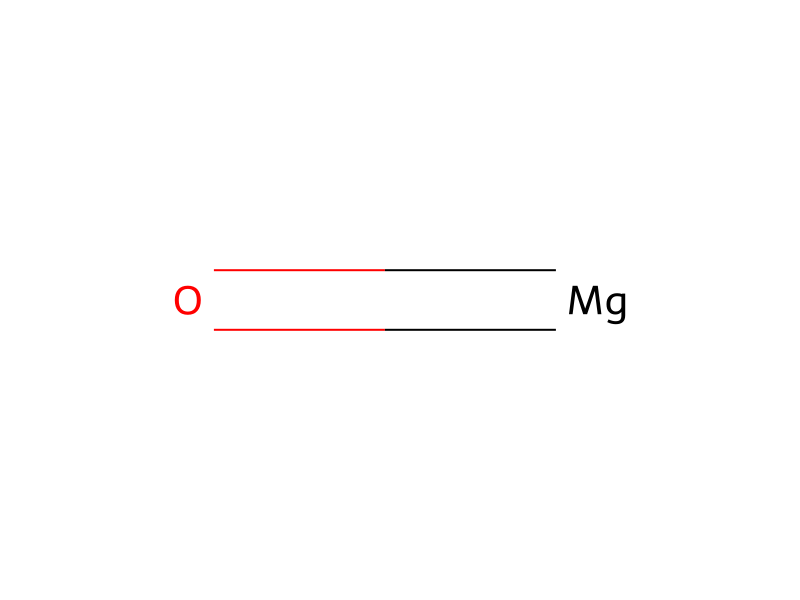
Grundinformationen
- Standard-SMILES
[O]=[Mg]- InChIKey
CPLXHLVBOLITMK-UHFFFAOYSA-N- Summenformel
- MgO
- Durchschnittliche Molmasse
- 40,305 g/mol
Überblick
Magnesium oxide appears as a white solid, often found as a powder. When fine particles of magnesium oxide are dispersed in air, whether directly or when generated by the burning or cutting of magnesium metal, the resulting magnesium oxide fume is an inhalation hazard.
Namen und Bezeichner
- Bevorzugter Name
- Magnesium Oxide
- IUPAC
- oxomagnesium
- Englischer Name
- oxomagnesium
- Summenformel
- MgO
- Molmasse
- 0
Namen und Synonyme
Weitere Namen anzeigen
Datenbank-Bezeichner
- CAS
82375-77-7- ChEMBL
CHEMBL1200572- EC Number
- 215-171-9
- Nikkaji
- J43.884G
Eigenschaften
Berechnete Struktureigenschaften
- Polarare Oberfläche (TPSA)
- 17,1 Ų
- H-Brücken-Donoren
- 0
- H-Brücken-Akzeptoren
- 1
- Frei drehbare Bindungen
- 0
- Schwere Atome
- 2
- Formalladung
- 0
- Komplexität
- 2
Experimentelle und physikochemische Eigenschaften
Density
3.58 (NIOSH, 2024) - Denser than water; will sink
3.6 g/cu cm
Relative density (water = 1): 3.6
3.58
3.6 @25 °C
3.58
Color/Form
White, very fine powder
White powder, either light or heavy depending upon whether it is prepared by heating magnesium carbonate or the basic magnesium carbonate
Colorless, transparent cubic crystals
Solubility
0.009 % at 86 °F (NIOSH, 2024)
Practically insoluble in water. Insoluble in ethanol
Soluble in acids and ammonium salt solutions
Insoluble in ethanol
In water, 86 mg/L at 30 °C
Solubility in water: poor
Human Drugs
Breast Feeding; Lactation; Milk, Human; Cathartics; Gastrointestinal Agents; Magnesium Compounds; Minerals
FDA approved drugs -> Active ingredient
FDA approved drugs -> Active ingredient
Boiling Point
6512 °F at 760 mmHg (NIOSH, 2024)
3,600 °C
3600 °C
6512 °F
3600 °C @760 [mm Hg]
6512 °F
Melting Point
5072 °F (NIOSH, 2024)
2825 °C
2800 °C
5072 °F
2825 °C
5072 °F
Vapor Pressure
0 mmHg (approx) (NIOSH, 2024)
0 mmHg (approx)
51.5 [mm Hg] @2832 °C
0 mmHg (approx)
Sicherheit und Regulatorisches
GHS-Klassifizierung
GHS Classification
Not Classified
Aggregated GHS information provided per 1807 reports by companies from 23 notifications to the ECHA C&L Inventory.
Warning
H319: Causes serious eye irritation [Warning Serious eye damage/eye irritation]
P261, P264+P265, P271, P280, P304+P340, P305+P351+P338, P319, P337+P317, P403+P233, P405, and P501 (click each P-code to see the statement)
Gefahrenhinweise
Regulatory Information
Chemical: Magnesium oxide (MgO)
Magnesium oxide (MgO) is listed on the EPA's Chemical Data Reporting (CDR) system. Manufacturers and importers of Magnesium oxide (MgO) are required to report information about their production and use of this chemical to the EPA under the Toxic Substances Control Act (TSCA). (40 eCFR Part 711)
Magnesium oxide: Does not have an individual approval but may be used under an appropriate group standard
FDA Requirements
Antacid products for over-the-counter (OTC) human use. Magnesium oxide is included on the list of magnesium-containing active ingredients.
Drug products containing certain active ingredients offered over-the-counter (OTC) for certain uses. A number of active ingredients have been present in OTC drug products for various uses, as described below. However, based on evidence currently available, there are inadequate data to establish general recognition of the safety and effectiveness of these ingredients for the specified uses: Magnesium oxide is included in weight control drug products.
Substance added directly to human food affirmed as generally recognized as safe (GRAS).
Magnesium oxide used as a general purpose food additive in animal drugs, feeds, and related products is generally recognized as safe when used in accordance with good manufacturing or feeding practice.
Magnesium oxide used as a nutrient and/or dietary supplement in animal drugs, feeds, and related products is generally recognized as safe when used in accordance with good manufacturing or feeding practice.
FIFRA Requirements
Residues of magnesium oxide are exempted from the requirement of a tolerance when used in accordance with good agricultural practice as inert (or occasionally active) ingredients in pesticide formulations applied to growing crops or to raw agricultural commodities after harvest. Use: solid diluent, carrier. Limit: none.
Residues of the following chemical substances are exempted from the requirement of a tolerance when used in accordance with good manufacturing practice as ingredients in an antimicrobial pesticide formulation, provided that the substance is applied on a semi-permanent or permanent food-contact surface (other than being applied on food packaging) with adequate draining before contact with food. (a) The following chemical substances when used as ingredients in an antimicrobial pesticide formulation may be applied to: Food-contact surfaces in public eating places, dairy-processing equipment, and food-processing equipment and utensils. Magnesium oxide is included on this list.
Residues of the following chemical substances are exempted from the requirement of a tolerance when used in accordance with good manufacturing practice as ingredients in an antimicrobial pesticide formulation, provided that the substance is applied on a semi-permanent or permanent food-contact surface (other than being applied on food packaging) with adequate draining before contact with food. ... (c) The following chemical substances when used as ingredients in an antimicrobial pesticide formulation may be applied to: Food-processing equipment and utensils. Magnesium oxide is included on this list.
Sicherheit und Schutzausrüstung
First Aid Measures
Fresh air, rest.
Remove contaminated clothes. Rinse and then wash skin with water and soap.
Rinse with plenty of water (remove contact lenses if easily possible).
Rinse mouth.
First Aid
Excerpt from NIOSH Pocket Guide for Magnesium oxide fume:
(General first aid procedures)
Disposal Methods
SRP: The most favorable course of action is to use an alternative chemical product with less inherent propensity for occupational harm/injury/toxicity or environmental contamination. Recycle any unused portion of the material for its approved use or return it to the manufacturer or supplier. Ultimate disposal of the chemical must consider: the material's impact on air quality; potential migration in soil or water; effects on animal and plant life; and conformance with environmental and public health regulations.
Preventive Measures
SRP: The scientific literature for the use of contact lenses by industrial workers is inconsistent. The benefits or detrimental effects of wearing contact lenses depend not only upon the substance, but also on factors including the form of the substance, characteristics and duration of the exposure, the uses of other eye protection equipment, and the hygiene of the lenses. However, there may be individual substances whose irritating or corrosive properties are such that the wearing of contact lenses would be harmful to the eye. In those specific cases, contact lenses should not be worn. In any event, the usual eye protection equipment should be worn even when contact lenses are in place.
Toxikologische Informationen
Interactions
...The intratracheal admin of /magnesium/ oxide inhibited lung tumor formation by /benzo(a)pyrene and diethylnitrosamine/.
... A phase I/II study /was conducted/ in patients with advanced non-small-cell lung cancer (NSCLC) to increase the therapeutic index of the cisplatin-irinotecan combination by institution of an anti-late-diarrheal program (ADP). A total of 77 chemotherapy-naive patients with advanced NSCLC were enrolled. The cisplatin dose was fixed at 60 mg /per/ sq m (Day 1). Irinotecan was escalated in 5 mg /sq m increments, starting from 60 mg/ sq m (Days 1 and 8). ADP consisted of oral sodium bicarbonate, magnesium oxide, basic water, and ursodeoxycholic acid, and was administered orally for 4 days with each dose of irinotecan. In the phase I portion, irinotecan pharmacokinetics was also examined. After the recommended dose of irinotecan with ADP was determined, a phase II study was conducted to evaluate the response. Maximum tolerated dose was reached at an irinotecan dose of 80 mg sq m (Grade 4 diarrhoea and neutropenia). Pharmacokinetic studies show that the maximum concentration and the area under the curve of both irinotecan and SN38 (active metabolite of irinotecan) tend to increase in the dose-dependent manner of irinotecan. The phase II portion of the study included 48 patients, who were treated with 75 mg/sq m of irinotecan. Grade 3/4 toxicities included neutropenia in 65%, leucopenia in 33%, and late diarrhea in 6% of the patients. During this treatment, PS did not change in 65% of patients. At the end of the chemotherapy, PS did not decline in 90% of patients. In the phase II portion, a response occurred in 63% (95% confidential interval (CI), 47-76%) of patients. Median time to progression was 19 weeks (95% CI, 15-22 weeks), and median survival was 52 weeks (95% CI, 39-64 weeks). This regimen of irinotecan and cisplatin with ADP resulted in promising efficacy with acceptable toxicity for patients with advanced NSCLC.
Experiments carried out on C57 BL mice showed marked changes in the acid base balance of animals exposed to chamber magnesite dust inhalation which simultaneously received per os pharmacological doses of sodium salicylate ... Exposed animals had permanently higher urine pH values resulting in impaired formation and secretion of salicylic acid ... Free salicylic acid was accumulated in the liver, and partially, spleen.
Syrian golden hamsters, 48 animals/group, were administered magnesium oxide by intratracheal instillation at 3 mg/wk for life. Particle size was 90%<25 um, 46%<10 um, 18%<5 um, and 1%<1 um. Necropsy of each lobe of the lung, larynx, trachea, and stem bronchi showed slight metaplasia in the tracheobronchial zone and moderate hyperplasia of the alveolar zone. Benzo[a]pyrene (1 mg/wk) administered in combination with magnesium oxide (2 mg/wk) produced similar premalignant lesions as well as squamous tumors in the upper respiratory tract. In contrast, benzo[a]pyrene administered in combination with talc (64-66% SiO2; 34-36% MgO) produced adenocarcinomas in the lower respiratory tract.
Exposure Routes
The substance can be absorbed into the body by inhalation of dust or fume.
inhalation, skin and/or eye contact
Signs and Symptoms
Cough.
Redness.
irritation eyes, nose; metal fume fever: cough, chest pain, flu-like fever
Human Toxicity Excerpts
/HUMAN EXPOSURE STUDIES/ Bronchoalveolar lavage (BAL) cell and cytokine concentrations, pulmonary function, and peripheral blood neutrophil concentrations /were quantified/ in 6 healthy volunteers 18-20 hr after inhalation of fine and ultrafine magnesium oxide particles produced from a furnace system model. ...Postexposure studies /were compared/ with control studies from the same 6 subjects. Mean +/- standard deviation (SD) cumulative magnesium dose was 4,138 +/- 2,163 min x mg/cu m. By weight, 28% of fume particles were ultrafine (<0.1 micron in diameter) and over 98% of fume particles were fine (<2.5 micron in diameter). There were no significant differences in BAL inflammatory cell concentrations, BAL interleukin (IL)-1, IL-6, IL-8, tumor necrosis factor, pulmonary function, or peripheral blood neutrophil concentrations postexposure compared with control. ... /These/ findings suggest that high-dose fine and ultrafine magnesium oxide particle exposure does not produce a measurable pulmonary inflammatory response. These findings are in marked contrast with the well-described pulmonary inflammatory response following zinc oxide particle inhalation. ... /It was concluded/ that fine and ultrafine particle inhalation does not result in toxicity in a generic manner independent of particle composition.
/HUMAN EXPOSURE STUDIES/ Ambient air particulates derived from a magnesite-processing plant contain magnesium oxide (85-90%), iron oxide (7-8%), calcium oxide (about 2.5-3%), Al- and Si oxides (0.1-0.5%) as well as additional elements in trace amounts as follows: Ni, Cr, Mn, Co, Hg, Cd, Pb, V, Ba, Ag, Cu and Sn. Magnesite clinker is manufactured from raw magnesite by baking in rotary furnaces using the Leseps-Polysius system, which represents the source of particulate pollutants entering the atmosphere. In the area heavily polluted by magnesite particles, the health impact using the data obtained from the exposed humans and animals was assessed. The reason for this study were the data on the increased frequency of respiratory diseases in children in the polluted area. In a group of children (9-10 years of age) residing in the area, the immune response to ambient air pollutants exposure in comparison to a non-exposed group living outside the polluted area was investigated. A statistically significant decrease in the amount of salivary lysozyme, SlgA, IgG and albumin in the exposed group was observed. ...
/HUMAN EXPOSURE STUDIES/ Examination of 95 workers exposed to an unspecified concentration of MgO dust revealed slight irritation of the eyes and nose. ... Conjunctivitis, nasal catarrh, and coughing up discolored sputum /was cited/ after industrial exposures, but even when such exposures doubled serum magnesium as compared to normal concentrations, no systematic effects were noted amoung these workers; however, serum calcium concentrations were elevated.
/HUMAN EXPOSURE STUDIES/ ... Four volunteers ...were exposed for 1-9 min to freshly generated /magnesium oxide/ fume at 410, 420, 430, or 580 mg/cu m. Although slight reactions were observed after <10 min of exposure at these concns, it was believed that increased exposures would lead to more severe reactions. Inhalation of magnesium oxide produced a febrile reaction and a leukocytosis, similar to metal fume fever, in the exposed subjects analogous to that caused by inhalation of zinc oxide.
For more Human Toxicity Excerpts (Complete) data for MAGNESIUM OXIDE (10 total), please visit the HSDB record page.
Artificial Pollution Sources
The production and use of magnesium compounds as refractories, as chemical intermediates, and in construction materials(1,2) result in their release to the environment through various waste streams(SRC). The production and use of magnesium compounds in environmental applications and in agriculture(1,2) results in their direct release to the environment(SRC). About 69% of the magnesium compounds used in the United States were used for refractories (e.g., olivine)(1). The remaining 31% of magnesium compounds were used in agriculture as fertilizer or animal feed (e.g, magnesium oxide, magnesium sulfate), as chemical intermediates (e.g., magnesium chloride, magnesium hydroxide, magnesium carbonate, magnesium oxide) , construction materials (e.g., magnesium oxide), environmental (e.g., magnesium oxide, magnesium hydroxide), and industrial applications (e.g., magnesium oxide)(1,2). Other uses include road dust and ice control (e.g., magnesium chloride), pulp and paper applications (e.g.,magnesium sulfate), pharmaceuticals (e.g., magnesium sulfate, magnesium carbonate, magnesium oxide), and cosmetics (e.g., magnesium carbonate)(1,2).
Sediment/Soil Concentrations
SEDIMENT: Sediment from three Antarctic lakes (collected in 1993/94) contained between 3,350 to 5,240 mg/kg dry wt magnesium(1). The mean concentration of magnesium (as MgO) in surficial sediment from Lake Ontario ranged from 2.79 to 2.85% dry weight(2). In Po river (Italy) suspended solids collected in 1989, the concentration of magnesium was 1.8%(3).
Non-Human Toxicity Excerpts
/LABORATORY ANIMALS: Acute Exposure/ Cats that inhaled the MgO fumes for 3 hr showed obvious dyspnea when removed from the exposure chamber, were decidedly cold to the touch, and were lethargic. These animals rapidly returned to normal and showed no subsequent ill effects upon cessation of MgO inhalation.
/LABORATORY ANIMALS: Acute Exposure/ Magnesium oxide, magnesium hydroxide, magnesium sulfate, magnesium trisilicate, and magnesium citrate were added to a calcium oxalate lithogenic diet in order to determine their effects in preventing lithogenesis. Male Wistar strain rats which had been fed the glycolic acid diet developed marked urinary calculi within 4 wks. Rats in the magnesium hydroxide, magnesium citrate, and magnesium trisilicate groups, however, had almost no stones in the urinary system. Rats in the magnesium oxide and magnesium sulfate groups showed significantly less effect than those in the former three groups. During the experimental period, the 24-hr urinary oxalate excretion and concentration were higher in the glycolic acid group than in the other groups. The urinary citrate excretion and concentration were the highest in the magnesium hydroxide and magnesium citrate groups and higher in the magnesium trisilicate and magnesium oxide groups than in the magnesium sulfate and glycolic acid groups. Similar trends were observed in the urinary magnesium excretion and in its concentration. The urinary calcium excretion and concentration were higher in the experimental groups than in the glycolic acid group. The urinary calcium/magnesium ratio remained mostly unchanged. Therefore, it can be concluded that alkaline magnesium salts increase the urinary calcium and magnesium concentrations, without changing the calcium/magnesium ratio, and inhibit urinary calculi formation, most likely by increasing the urinary citrate concentration.
/LABORATORY ANIMALS: Subchronic or Prechronic Exposure/ Thirty-six midlactation Holstein cows were used in a randomized incomplete block design to evaluate lactational responses to varying dietary concentrations of Mg supplemented by MgO or Mg chelate. Basal diet was 41:4:55 corn silage:cottonseed hulls:concentrate (0.21% total Mg). Magnesium oxide was added to the basal diet to give 0.32, 0.37, and 0.43% total dietary Mg, and Mg chelate was added to provide 0.23, 0.25, and 0.27% Mg, /dry matter/ (DM) basis. Dietary treatments were formulated to supply equal concentrations of bioavailable Mg from either Mg source. Dry matter intake and milk yield were greater by cows fed MgO-supplemented than Mg chelate-supplemented treatments. Milk fat percentages were not affected. Milk protein percentages increased with Mg chelate compared with protein percentages with MgO. Treatments did not affect gross efficiency (4% /fat corrected milk/ (FCM)/DM intake) or body weight change. Lack of response to Mg chelate suggested that either the bioavailability was not as high as assumed or that sufficient total bioavailable Mg was not provided in those treatments. A companion in vitro experiment showed that MgO-supplemented concentrates, with more total supplemental Mg, supplied two to three times more soluble Mg than Mg chelate-supplemented concentrates.
/LABORATORY ANIMALS: Subchronic or Prechronic Exposure/ ... Wistar rats were immunized using sheep erythrocyte suspension 4 days after the intratracheal and intravenous administration of /magnesite/ dust suspension. The antibody response was evaluated by counting PFC cells (plaque-forming cells) in the lung and spleen. The antibody response in the spleen increased significantly after intratracheal and intravenous dust administration. The increase in PFC in the lung was on the border of significance ... Total serum complement was evaluated in Wistar rats during the 2 months of chamber exposure to magnesite dust and 25 days after the end of exposure. Total serum complement (CH50) increased in the course of exposure and this increase continued during the 25 days after the end of exposure ... No significant impact was observed in the case of magnesite dust administration on the mean survival time (in days) of /ear/ skin allograft. /In/ in vitro experiments ... on the immune binding to the membrane Fc receptor of rabbit pulmonary alveolar macrophages (PAM) of sheep erythrocytes sensitized with rabbit amboreceptor ... magnesium oxide was found to produce an inhibitory effect similar to that of magnesite dust ... Experiments were carried out on inbred C57 BL mice to assess the effect of 3-month chamber exposure to magnesite dust on nonspecific antitumor immunity to inoculated syngeneic lymphoma. The growth of the tumor in exposed animals was more pronounced than in intact animals.
For more Non-Human Toxicity Excerpts (Complete) data for MAGNESIUM OXIDE (19 total), please visit the HSDB record page.
Regulatorische Informationen
FDA Requirements
Antacid products for over-the-counter (OTC) human use. Magnesium oxide is included on the list of magnesium-containing active ingredients.
Drug products containing certain active ingredients offered over-the-counter (OTC) for certain uses. A number of active ingredients have been present in OTC drug products for various uses, as described below. However, based on evidence currently available, there are inadequate data to establish general recognition of the safety and effectiveness of these ingredients for the specified uses: Magnesium oxide is included in weight control drug products.
Substance added directly to human food affirmed as generally recognized as safe (GRAS).
Magnesium oxide used as a general purpose food additive in animal drugs, feeds, and related products is generally recognized as safe when used in accordance with good manufacturing or feeding practice.
Magnesium oxide used as a nutrient and/or dietary supplement in animal drugs, feeds, and related products is generally recognized as safe when used in accordance with good manufacturing or feeding practice.
FIFRA Requirements
Residues of magnesium oxide are exempted from the requirement of a tolerance when used in accordance with good agricultural practice as inert (or occasionally active) ingredients in pesticide formulations applied to growing crops or to raw agricultural commodities after harvest. Use: solid diluent, carrier. Limit: none.
Residues of the following chemical substances are exempted from the requirement of a tolerance when used in accordance with good manufacturing practice as ingredients in an antimicrobial pesticide formulation, provided that the substance is applied on a semi-permanent or permanent food-contact surface (other than being applied on food packaging) with adequate draining before contact with food. (a) The following chemical substances when used as ingredients in an antimicrobial pesticide formulation may be applied to: Food-contact surfaces in public eating places, dairy-processing equipment, and food-processing equipment and utensils. Magnesium oxide is included on this list.
Residues of the following chemical substances are exempted from the requirement of a tolerance when used in accordance with good manufacturing practice as ingredients in an antimicrobial pesticide formulation, provided that the substance is applied on a semi-permanent or permanent food-contact surface (other than being applied on food packaging) with adequate draining before contact with food. ... (c) The following chemical substances when used as ingredients in an antimicrobial pesticide formulation may be applied to: Food-processing equipment and utensils. Magnesium oxide is included on this list.
Chemie und Industrie
Pharmakologische Informationen
ATC Code
A - Alimentary tract and metabolism
A - Alimentary tract and metabolism
A - Alimentary tract and metabolism
QA - Alimentary tract and metabolism
QA - Alimentary tract and metabolism
QA - Alimentary tract and metabolism
Bionecessity
Magnesium is an essential mineral that helps maintain normal muscle and nerve function, keeps the heart rhythm steady, and helps the bones strong. It is also involved in energy metabolism and protein synthesis. Magnesium deficiency may cause metabolic changes that contribute to heart attacks and strokes and may be a risk factor for postmenopausal osteoporosis. About half the body's magnesium stores are found inside the cells of body tissues and organs, and half are combined with calcium and phosphorus in the bone. Only 1% is found in the blood. The Recommended Dietary allowance for magnesium for adults ranges from 310 to 420 mg depending on life-stage and sex.[NIH, Facts about Dietary Supplements: Magnesium. NIH Clinical Center, Natl Inst Health
Mechanism of Action
The term "Milk of Magnesia" was first used to describe a white aqueous, mildly alkaline suspension of magnesium hydroxide formulated at about 8%w/v. Milk of magnesia is primarily used to alleviate constipation, but can also be used to relieve indigestion and heartburn. When taken internally by mouth as a laxative, the osmotic force of the magnesia suspension acts to draw fluids from the body and to retain those already within the lumen of the intestine, serving to distend the bowel, thus stimulating nerves within the colon wall, inducing peristalsis and resulting in evacuation of colonic contents. Magnesium supplements have also been shown to reduce platelet aggregation by inhibiting in the influx of calcium, a crucial component of platelet aggregation.
FDA Pharmacological Classification
MAGNESIA OXYDATA
Calculi Dissolution Agent [EPC]; Inhibition Large Intestine Fluid/Electrolyte Absorption [PE]; Osmotic Activity [MoA]; Inhibition Small Intestine Fluid/Electrolyte Absorption [PE]; Magnesium Ion Exchange Activity [MoA]; Osmotic Laxative [EPC]; Increased Large Intestinal Motility [PE]; Stimulation Large Intestine Fluid/Electrolyte Secretion [PE]
MAGNESIUM OXIDE
Inhibition Large Intestine Fluid/Electrolyte Absorption [PE]; Osmotic Activity [MoA]; Calculi Dissolution Agent [EPC]; Increased Large Intestinal Motility [PE]; Stimulation Large Intestine Fluid/Electrolyte Secretion [PE]; Inhibition Small Intestine Fluid/Electrolyte Absorption [PE]; Osmotic Laxative [EPC]; Magnesium Ion Exchange Activity [MoA]
MAGNESIUM OXIDE 400MG
Inhibition Large Intestine Fluid/Electrolyte Absorption [PE]; Osmotic Activity [MoA]; Calculi Dissolution Agent [EPC]; Increased Large Intestinal Motility [PE]; Stimulation Large Intestine Fluid/Electrolyte Secretion [PE]; Inhibition Small Intestine Fluid/Electrolyte Absorption [PE]; Magnesium Ion Exchange Activity [MoA]; Osmotic Laxative [EPC]
Absorption, Distribution and Excretion
The elimination of magnesite dust /(MgO 88.52%, Fe2O3 7.57%, CaO 2.74%, Al2O3 0.49%, SiO2 0.68%)/ from the lung was examined on Wistar rats after a single exposure (6 hr) and repeated exposure to dust (200 hr) ... After a single exposure magnesite dust was eliminated as the silica dust with an intermediate fibrogenic effect, 41% of deposited dust being eliminated. Following long-term exposure, the ability to eliminate dust diminished by 20.1% ...Serum magnesium increased moderately during exposure and returned to the initial level 25 days after the end of the exposure. There was a significant increase in magnesium excretion with urine. The findings showed that inhaled dust was gradually dissolved in the body. The magnesium content was evaluated in the reticuloendothelial organs (liver and spleen) 25 days after the last exposure and was found to increase by 20.1% in the spleen and by 15.6% in the liver. A concomitant histological exam of internal organs confirmed that the dust was retained in the lungs (without fibrotic changes), that particles were present in the spleen (sinusoid macrophages) and that the red pulp was hemorrhagic. No signs of pulmonary fibrosis were found even after 6 months after the last exposure. Dust particles were found in thickened interalveolar septa and macrophages. Proliferative histiocytic elements with particles present were found in the subcapsular sinuses and medulla of hilus lymphatic nodes. The findings showed that magnesite dust was eliminated by both blood and lymph. /Magnesite dust/
INSOLUBLE COMPOUND SUCH AS MgO ARE RETAINED FOR A LONGER PERIOD... MAGNESIUM IS RETAINED IN SKELETON, MUSCLE, AND SOFT TISSUE.
This study was conducted to evaluate the ability of the large intestine to absorb calcium (Ca) and magnesium (Mg) from their sparingly water-soluble salts, and also to determine whether fructooligosaccharides (FOS) stimulate the absorption of these minerals in rat large intestine in vivo. Rats were fed Ca- and Mg-free diets with and without 5% FOS. An aqueous suspension of CaCO3 and MgO was infused into the stomach via a gastric tube or into the cecum via an implanted catheter. Coprophagy was prevented by using wire-mesh anal cups throughout the experiment so as to exclude the re-ingestion of feces as an oral mineral source. In rats fed an FOS-free diet, the absorption degrees of Ca and Mg infused into the cecum were the same as those infused into the stomach. The absorption degree of phosphorus (P) was slightly but significantly higher in rats with the infusion of Ca and Mg into the cecum than in rats with the infusion of Ca and Mg into the stomach. FOS-feeding increased the absorption of Mg to a similar extent in either case of infusion via cecal and oral routes, while FOS-feeding did not increase the absorption of Ca in rats with infusion of Ca and Mg into the cecum. /Researchers/ ... concluded that both CaCO3 and MgO are absorbed in the large intestine, and ... ascertained that the increasing effect of FOS on the absorption of Mg took place mainly in the large intestine.
Verwendung und Herstellung
Uses
Used in medications, animal feeds, fertilizers, insulation, wallboard, electrical heating rods, crucibles, fire bricks, petroleum additives, boiler scale control agents, and food additives; [HSDB]
Farming (Feed Additives) [Category: Industry]
Both oil base and water base fracturing fluids are being used in the fracturing industry. Water base, which includes alcohol-water mixtures and low strength acids, make up the majority of treating fluids. The common chemicals added to these fluids are polymers for viscosity development, crosslinkers for viscosity enhancement, pH control chemicals, gel breakers for polymer degradation following the treatment, surfactants, clay stabilizers, alcohol, bactericides, fluid loss additives and friction reducer. /Hydraulic fracturing/
Hydraulic fracturing uses a specially blended liquid which is pumped into a well under extreme pressure causing cracks in rock formations underground. These cracks in the rock then allow oil and natural gas to flow, increasing resource production. ... Chemical Name: Magnesium oxide; Chemical Purpose: Allows a delayed break down of the gel; Product Function: Breaker.
For magnesium oxide (USEPA/OPP Pesticide Code: 009235) there are 0 labels match. /SRP: Not registered for current use in the U.S., but approved pesticide uses may change periodically and so federal, state and local authorities must be consulted for currently approved uses./
CHEM INT MEDICINALS AND OTHER CHEMS; COMPONENT OF ANIMAL FEEDS, FERTILIZERS, INSULATION, AND WALLBOARD; COMPONENT OF PETROLEUM ADDITIVES, OXYCHLORIDE AND OXYSULFATE CEMENT; AGENT IN PULP AND PAPER MFR; FOOD CHEM; RUBBER ACCELERATOR; COMPONENT OF ELECTRICAL HEATING RODS; MISC APPLICATIONS
U.S. Imports
(1972) 4.91X10+10 GRAMS (MAGNESIA, MAGNESITE)
(1975) 3.27X10+8 GRAMS
U.S. Production
2023: 1,000,000,000 - <2,500,000,000 lb
(1972) 1.82X10+11 GRAMS (MAGNESIA)
Production volumes for non-confidential chemicals reported under the Inventory Update Rule. [Table#3442]
Production volume for non-confidential chemicals reported under the 2006 Inventory Update Rule. Chemical: Magnesium oxide. Aggregated National Production Volume: 500 million to < 1 billion pounds.
Consumption Patterns
20% IS USED IN CHEMICAL MANUFACTURING; 18% IN ANIMAL FEED AND FERTILIZER; 16% FOR MEDICINALS, INSULATION AND WALLBOARD, FLUX, AND PETROLEUM ADDITIVES; 14% FOR OXYCHLORIDE AND OXYSULFATE CEMENT; 12% FOR PULP AND PAPER MANUFACTURING; 6% AS A RUBBER ACCELERATOR; 4% USED IN FOODS; 2% IN ELECTRICAL HEATING RODS; 8% FOR UNSPECIFIED USES (1972)
CHEMICAL GRADE ONLY-DERIVATIVE: ANIMAL FEEDS AND FERTILIZERS, 35%; MEDICINALS, SUGAR & WINE MAKING, 4%; CONSTRUCTION MATERIALS, 5%; PULP, PAPER AND RAYON, 18%; RUBBER, 8%; PETROLEUM ADDITIVES, 15%; MISC, 15% (1981)
/MAGNESIUM COMPOUNDS/ PRODUCTION OF BASIC REFRACTORIES USED IN HIGH-TEMP METALLURGICAL FURNACES, 80%; AND PREP OF CAUSTIC CALCINED & SPECIFIED MAGNESIA, 20% (1985)
Methods of Manufacturing
... /Dolomitic/ limestone is calcined at a high temperature under controlled conditions to produce calcined dolomite or dolime which upon reaction with magnesium chloride-rich brine produces magnesium hydroxide and calcium chloride. The insoluble magnesium hydroxide is then separated from the liquid calcium chloride carrier and calcined under controlled conditions. The various grades of magnesia range from very reactive light-burned to nonreactive dead-burned.
... Mining, crushing, sizing, and subsequent calcination of natural magnesite. The chemical purity of the magnesia produced is dependent on the mineralogical composition of the natural magnesite.
A concentrated magnesium chloride brine processed from the Dead Sea is sprayed into a reactor at about 1700 °C. The brine is thermally decomposed into magnesium oxide and hydrochloric acid. To further process the magnesia, the product is slaked to form magnesium hydroxide which is then washed, filtered, and calcined under controlled conditions to produce a variety of magnesium oxide reactivity grades.
The seawater process ... involves decarbonating limestone or dolomite to the point where all CO2 is removed without converting the resulting magnesia to a chemically inactive form. Reaction of filtered seawater, treated to remove bicarbonate and/or sulfate, and dolime is followed by seeding with magnesium hydroxide to promote crystal growth. Upon formation of magnesium hydroxide, flocculants are added and the magnesium hydroxide precipitate is allowed to settle while the spent seawater is disposed to the sea. The precipitate is washed, filtered, and dried to obtain magnesium hydroxide which is calcined to produce light-burned, hard-burned, or dead-burned magnesium oxide.
Light or heavy magnesium carbonate is exposed to red heat, whereupon CO2 and H2O are expelled, and light or heavy magnesium oxide is left. The density of the oxide also is influenced by the calcining temperature; high temperature yielding more compact forms.
Formulations/Preparations
The principal commercial forms of magnesia are dead-burned magnesia (periclase), caustic-calcined (light-burned magnesia), hard-burned magnesia, and calcined dolomite.
Table: Magnesium Oxide Preparations [Table#3440]
Use Classification
EPA Safer Chemical Functional Use Classes -> Processing Aids and Additives
Safer Chemical Classes -> Green circle - The chemical has been verified to be of low concern
Food additives
Food Additives -> ANTICAKING_AGENT -> JECFA Functional Classes
Cosmetics -> Opacifying; Absorbent; Buffering
Anbieter1 Anbieter
Zugehörige Reaktionen
Keine Reaktionsaufzeichnungen unter den aktuellen Filterkriterien.
Verknüpfte Notizen
Wird geladen…