Grundinformationen
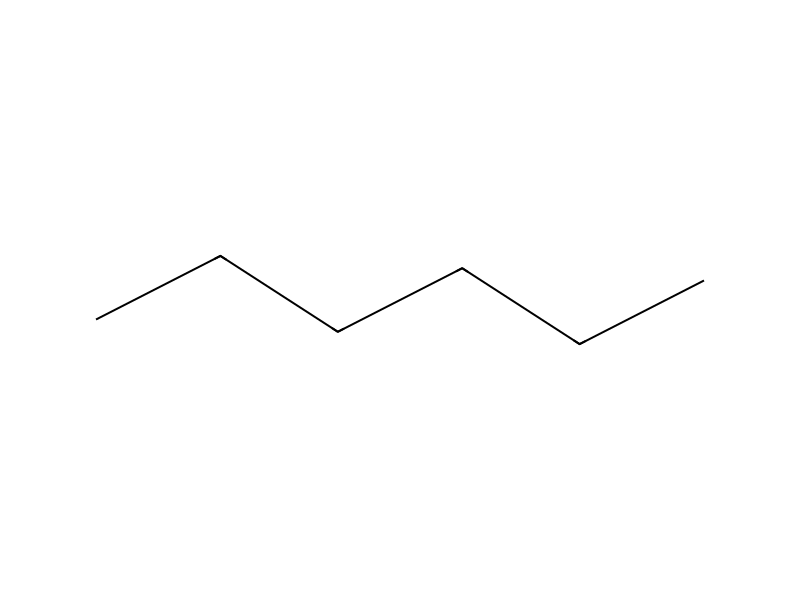
- Standard-SMILES
CCCCCC- InChIKey
VLKZOEOYAKHREP-UHFFFAOYSA-N- Summenformel
- C6H14
- Durchschnittliche Molmasse
- 86,18 g/mol
Überblick
n-Hexane is a chemical made from crude oil. Pure n-Hexane is a colorless liquid with a slightly disagreeable odor. It is highly flammable, and its vapors can be explosive. Puren-Hexane is used in laboratories. Most of then-Hexane used in industry is mixed with similar chemicals called solvents. The major use for solvents containing n-Hexane is to extract vegetable oils from crops such as soybeans. These solvents are also used as cleaning agents in the printing, textile, furniture, and shoemaking industries. Certain kinds of special glues used in the roofing and shoe and leather industries also contain n-Hexane. Several consumer products containn-Hexane, such as gasoline, quick-drying glues used in various hobbies, and rubber cement. .
Namen und Bezeichner
- Bevorzugter Name
- Hexane
- IUPAC
- hexane
- Englischer Name
- n-Hexane-1,1,1,2,2,3,3-d7
- Summenformel
- C6H14
- Molmasse
- 86.18
Namen und Synonyme
Weitere Namen anzeigen
Datenbank-Bezeichner
- CAS
32740-31-1- ChEMBL
CHEMBL15939- ChEBI
CHEBI:29021- UNII
- 2CE3AJR3M4、2DDG612ED8
- EC Number
- 203-777-6、295-570-2
- Nikkaji
- J1.977A
Eigenschaften
Berechnete Struktureigenschaften
- XLogP
- 3,9
- Polarare Oberfläche (TPSA)
- 0 Ų
- H-Brücken-Donoren
- 0
- H-Brücken-Akzeptoren
- 0
- Frei drehbare Bindungen
- 3
- Schwere Atome
- 6
- Formalladung
- 0
- Komplexität
- 12
Experimentelle und physikochemische Eigenschaften
Chemical Classes
Hazardous Air Pollutants (HAPs)
Flammable agents - 3rd degree
Volatile Organic Compound (VOC)
Pesticides
Pesticide -> EPA IRIS
Agrochemicals -> Pesticide active substances
Active substance -> EU Pesticides database: Pending
LogP
log Kow = 3.90
3.90
3.9
3.9
Density
0.659 at 68 °F (USCG, 1999) - Less dense than water; will float
0.6606 g/cu cm at 25 °C
Relative density (water = 1): 0.7
0.66
0.6606 @25 °C
0.66
Viscosity
0.377 cP at 15 °C
3.26X10⁻⁴ Pa-s at 20 °C
1.4 mm²/s
Color/Form
Liquid
Colorless, very volatile liquid
Sicherheit und Regulatorisches
GHS-Klassifizierung
GHS Classification
Danger
H225: Highly Flammable liquid and vapor [Danger Flammable liquids]
P203, P210, P233, P240, P241, P242, P243, P260, P261, P264, P270, P271, P273, P280, P301+P316, P302+P352, P303+P361+P353, P304+P340, P318, P319, P321, P331, P332+P317, P362+P364, P370+P378, P391, P403+P233, P403+P235, P405, and P501 (click each P-code to see the statement)
This chemical does not meet GHS hazard criteria for < 0.1% (2 of 4001) of reports.
Danger
H225 (98.2%): Highly Flammable liquid and vapor [Danger Flammable liquids]
Gefahrenhinweise
Regulatory Information
Chemical: Hexane
Chemical: Hexane, branched and linear
Hazard Traits - Environmental tox; Neurotoxicity; Reproductive Toxicity
Regulation (EC) No 178/2002 (amended)
Hexane is listed on the EPA's Chemical Data Reporting (CDR) system. Manufacturers and importers of Hexane are required to report information about their production and use of this chemical to the EPA under the Toxic Substances Control Act (TSCA). (40 eCFR Part 711)
Status: Active Update: 03-11-2022 https://echa.europa.eu/registration-dossier/-/registered-dossier/15741
Fire Hazards
Behavior in Fire: Vapors may explode (USCG, 1999)
· HIGHLY FLAMMABLE: Will be easily ignited by heat, sparks or flames.
Highly flammable. Vapour/air mixtures are explosive.
Fire Potential
Flammable. Flashback along vapor trail may occur.
Flammable liquid. A very dangerous fire and explosion hazard when exposed to heat or flame...
Flammable, dangerous fire risk.
Health Hazards
INHALATION causes irritation of respiratory tract, cough, mild depression, cardiac arrhythmias. ASPIRATION causes severe lung irritation, coughing, pulmonary edema; excitement followed by depression. INGESTION causes nausea, vomiting, swelling of abdomen, headache, depression. (USCG, 1999)
CAUTION: Petroleum crude oil (UN1267) may contain TOXIC hydrogen sulphide gas.
Hazards Summary
n-Hexane is a chemical made from crude oil. Pure n-Hexane is a colorless liquid with a slightly disagreeable odor. It is highly flammable, and its vapors can be explosive. Puren-Hexane is used in laboratories. Most of then-Hexane used in industry is mixed with similar chemicals called solvents. The major use for solvents containing n-Hexane is to extract vegetable oils from crops such as soybeans. These solvents are also used as cleaning agents in the printing, textile, furniture, and shoemaking industries. Certain kinds of special glues used in the roofing and shoe and leather industries also contain n-Hexane. Several consumer products containn-Hexane, such as gasoline, quick-drying glues used in various hobbies, and rubber cement. .
Hexane is used to extract edible oils from seeds and vegetables, as a special-use solvent, and as a cleaning agent. Acute (short-term) inhalation exposure of humans to high levels of hexane causes mild central nervous system (CNS) effects, including dizziness, giddiness, slight nausea, and headache. Chronic (long- term) exposure to hexane in air is associated with polyneuropathy in humans, with numbness in the extremities, muscular weakness, blurred vision, headache, and fatigue observed. Neurotoxic effects have also been exhibited in rats. No information is available on the carcinogenic effects of hexane in humans or animals. EPA has classified hexane as a Group D, not classifiable as to human carcinogenicity.
Acute exposure to 5000 ppm produces giddiness within 10 minutes and 30,000 ppm produces narcosis within 30-60 minutes. [ACGIH] Peripheral neuropathy is the main long-term adverse effect, and it has been observed after exposures in the range of 400 ppm for 45 days or 30 ppm for 2 months to 5 years. [CHEMINFO] n-Hexane is in the list of Some volatile substances which may be abused by inhalation published on the web site of the U.N. International Drug Control Programme, indicating its potential to cause narcosis in workers. [Reference #1] Vehicle repair technicians developed peripheral neuropathy while using an aerosol cleaner containing hexane, acetone, and toluene. Acetone and methyl ethyl ketone amplify the neurotoxicity of n-Hexane. [Reference #2] A skin irritant; Ingestion can cause aspiration into the lungs; Inhalation may cause lowering of consciousness; Prolonged or repeated exposure may cause polyneuropathy; May have adverse effects on human reproduction, based on animal studies; [ICSC] A skin and eye irritant; Inhalation may cause drowsiness or dizziness; An aspiration hazard by ingestion (may cause lung injury); Prolonged or repeated exposure may cause organ injury; Suspected reproductive toxicant and teratogen; Targets the peripheral nervous system, kidney, and testes; [Sigma-Aldrich MSDS]
DOT ID and Guide
1208 128
1208 128
Special Reports
Couri D, Milks M; Annu Rev Pharmacol Toxicol 22: 145-66 (1982). This is a review and discussion with 93 references on the toxicity and metab of hexacarbons incl hexane.
WHO; Environmental Health Criteria 122: n-Hexane (1991)
DHHS/NTP; Report on the Toxicity Studies of n-Hexane in B6C3F1 Mice (Inhalation Studies) NTP TOX2 (1991) NIH Pub No. 91-3121
Sicherheit und Schutzausrüstung
Fire Fighting
Excerpt from ERG Guide 128 [Flammable Liquids (Water-Immiscible)]:
Use powder, foam, carbon dioxide. In case of fire: keep drums, etc., cool by spraying with water.
First Aid Measures
Fresh air, rest. Refer for medical attention.
Remove contaminated clothes. Rinse and then wash skin with water and soap. Refer for medical attention .
First rinse with plenty of water for several minutes (remove contact lenses if easily possible), then refer for medical attention.
Rinse mouth. Do NOT induce vomiting. Rest. Refer immediately for medical attention.
Accidental Release Measures
· CALL 911. Then call emergency response telephone number on shipping paper. If shipping paper not available or no answer, refer to appropriate telephone number listed on the inside back cover.
· ELIMINATE all ignition sources (no smoking, flares, sparks or flames) from immediate area.
First Aid
EYES: First check the victim for contact lenses and remove if present. Flush victim's eyes with water or normal saline solution for 20 to 30 minutes while simultaneously calling a hospital or poison control center. Do not put any ointments, oils, or medication in the victim's eyes without specific instructions from a physician. IMMEDIATELY transport the victim after flushing eyes to a hospital even if no symptoms (such as redness or irritation) develop.
General First Aid:
(General first aid procedures)
Exposure Control and Personal Protection
· Wear positive pressure self-contained breathing apparatus (SCBA).
Biological Exposure Indices (BEI) [ACGIH] - 2,5-Hexanedione (without hydrolysis) in urine = 0.5 mg/L end of shift;
50.0 [ppm]
Fire Fighting Procedures
Stop discharge if possible. Keep people away. Shut off ignition sources and call fire department. Stay upwind and use water spray to "knock down" vapor. Isolate and remove discharged material. Notify local health and pollution control agencies.
If material on fire or involved in fire: Do not extinguish fire unless flow can be stopped or safely confined. Use water in flooding quantities as fog. Solid streams of water may spread fire. Cool all affected containers with flooding quantities of water. Apply water from as far a distance as possible. Use foam, dry chemical, or carbon dioxide.
To fight fire, use carbon dioxide, dry chemical.
Flashback along a vapor trail may occur, since the vapor is heavier than air. Fire extinguishers containing carbon dioxide, dry chemical, or foam are recommended. Water sprays should not be used, since these may cause the fire to spread, though a water spray can be used to cool containers.
Storage Conditions
Drums should be stored in a well-ventilated area in fire-resistant containers. Metal containers should be electrically-grounded, when liquid is being transferred.
Safe Storage: Fireproof. Separated from strong oxidants. Well closed.
Cleanup Methods
In the event of spillage, naked flames, sparks, and heat should be avoided; approved, efficient, protective clothing and respirators should be provided. Small-scale spillage should be absorbed on paper towels or sawdust; sand or earth can be used for larger spills. Fire-fighting foam can be used in large spillages to reduce evaporation. If possible, liquid spills should be recovered for recycling.
Disposal Methods
SRP: The most favorable course of action is to use an alternative chemical product with less inherent propensity for occupational harm/injury/toxicity or environmental contamination. Recycle any unused portion of the material for its approved use or return it to the manufacturer or supplier. Ultimate disposal of the chemical must consider: the material's impact on air quality; potential migration in soil or water; effects on animal and plant life; and conformance with environmental and public health regulations.
Hexane may be disposed of by atomizing in a suitable combustion chamber.
Spray into the furnace. Incineration will become easier by mixing with a more flammable solvent. Recommendable methods: Incineration, open burning, use as a boiler fuel, & evaporation. Not recommendable method: Landfill. Peer review: Care. Highly flammable. Evaporate only small amt. (Peer-review conclusions of an IRPTC expert consultation (May 1985))
The International Register of Potentially Toxic Chemicals recommends: "Incineration, open burning, use as a boiler fuel, evaporation. Spray into the furnace. Incineration will become easier by mixing with a more flammable solvent. Care, highly inflammable, evaporate only small amounts. Landfill is not recommended".
SRP: Wastewater from contaminant suppression, cleaning of protective clothing/equipment, or contaminated sites should be contained and evaluated for subject chemical or decomposition product concentrations. Concentrations shall be lower than applicable environmental discharge or disposal criteria. Alternatively, pretreatment and/or discharge to a permitted wastewater treatment facility is acceptable only after review by the governing authority and assurance that "pass through" violations will not occur. Due consideration shall be given to remediation worker exposure (inhalation, dermal and ingestion) as well as fate during treatment, transfer and disposal. If it is not practicable to manage the chemical in this fashion, it must be evaluated in accordance with EPA 40 CFR Part 261, specifically Subpart B, in order to determine the appropriate local, state and federal requirements for disposal.
Spillage Disposal
Remove all ignition sources. Evacuate danger area! Consult an expert! Personal protection: filter respirator for organic gases and vapours adapted to the airborne concentration of the substance. Do NOT wash away into sewer. Do NOT let this chemical enter the environment. Collect leaking liquid in sealable containers. Absorb remaining liquid in sand or inert absorbent. Then store and dispose of according to local regulations.
Toxikologische Informationen
Body Burden
n-Hexane was detected in 8 of 12 samples of mothers breast milk from the cities of Bayonne NJ, Jersey City NJ, Bridgeville PA and Baton Rouge LA(1). The air expired from humans contained n-hexane in 6.9% of the 387 samples collected from 54 subjects(2). The average n-hexane concentration of 4.7 ng/L was expressed as the geometric mean with upper and lower limits of 13.5 and 1.63 ng/L, respectively(2).
Interactions
To study the protective effects of garlic oil (GO) on the peripheral nerve injuries induced by n-hexane. Male Wistar rats were randomly divided into four groups (10 rats in each group): the control, the n-hexane treatment (2000 mg/kg), the low dose GO, and the high dose GO groups. The rats in the low and high doses of GO groups were pretreated with GO (40 and 80 mg/kg) before exposure to n-hexane (2000 mg/ kg), while the animals of the n-hexane treatment group were given normal saline and then 2000 mg/ kg n-hexane. The rats were exposed to GO and n-hexane 6 times a week for 10 weeks. The gait scores and staying time on the rotating rod for all rats were detected every two weeks. The rats were sacrificed at the end of ten weeks, then the levels of alcohol dehydrogenase (ADH), maleic dialdehyde (MDA), reduced glutathione (GSH), glutathione peroxidase (GSH-Px), total antioxidation capacity (T-AOC) and the ability of inhibition of OH in livers were examined. The gait scores increased significantly and the time staying on the rotating rod obviously decreased in rats of n-hexane treatment group, as compared with control group (P < 0.05 or P < 0.01). In the hepatic tissues of n-hexane group, the levels of MDA and ADH significantly increased, the activities of GSH-Px, T-AOC and the ability of inhibition of OH obviously decreased, as compared to control group (P < 0.05 or P < 0.01). In 2 GO groups, the gait scores and the staying time on the rotating rod were significantly improved, the levels of MDA and ADH significantly decreased, the activities of GSH-Px, T-AOC and the ability of inhibition of OH obviously increased, as compared with n-hexane group (P < 0.05 or P < 0.01). ADH could play an important role in the protective effects induced by garlic oil on the peripheral nerve injuries produced by n-hexane.
Four separate groups of 5 rats each were exposed to 1000 ppm n-hexane, 1000 ppm n-hexane plus 1000 ppm toluene, 1000 ppm n-hexane plus 1000 ppm methyl ethyl ketone (MEK), or fresh air. Distributions of n-hexane metabolites in the mixed exposure group were ... similar to that of an n-hexane-alone group. The amount of metabolites decreased to approximately 1/6 of that in the n-hexane group by co-exposure with toluene and to approximately 1/4 by co-exposure with MEK. Toluene decr the neurotoxicity of n-hexane by the inhibition of n-hexane metabolism.
Toluene at 1000 ppm exerted an antagonistic effect on n-hexane neurotoxicity in rats exposed to 1000 ppm n-hexane 12 hr/day for 16 wk. While 1000 ppm n-hexane considerably impaired the function of peripheral nerves, as measured by nerve conduction velocities in the rat tail, the combined exposure resulted in only slight impairment.
n-Hexane ... potentiates chloroform toxicity.
For more Interactions (Complete) data for N-HEXANE (6 total), please visit the HSDB record page.
Target Organs
Neurological (Nervous System), Respiratory (From the Nose to the Lungs)
Nervous
Eyes, skin, respiratory system, central nervous system, peripheral nervous system
Health Effects
Hexane mainly affects the nervous system. It causes degeneration of the peripheral nervous system (and eventually the central nervous system), starting with damage to the nerve axons. Exposure to hexane may also damage the lungs and reproductive system. (L977, L978)
Ecotoxicity Values
LC50; Species: Goldfish; Concentration: 4 mg/L for 24 hr /Conditions of bioassay not specified/
EC50; Species: Chlamydomonas angulosa (Green Algae) age 3-4 days, exponential growth phase 5x10+4 cells/mL; Conditions: static, 19 °C, pH 6.5; Concentration: 94 mmol/cu m for 3 hr; Effect: physiology, photosynthesis /formulation/
EC50; Species: Chlorella vulgaris (Green Algae) age 3-4 days, exponential growth phase 20x10+4 cells/mL; Conditions: static, 19 °C, pH 6.5; Concentration: 149 mmol/cu m for 3 hr; Effect: physiology, photosynthesis /formulation/
LC50; Species: Artemia salina (Brine Shrimp) nauplii; Conditions: saltwater, static, 20 °C; Concentration: 41 mmol/cu m for 24 hr /> or =97% purity formulation/
For more Ecotoxicity Values (Complete) data for N-HEXANE (10 total), please visit the HSDB record page.
Environmental Fate
TERRESTRIAL FATE: Based on a classification scheme(1), an estimated Koc value of 130(SRC), determined from a structure estimation method(2), indicates that n-hexane is expected to have high mobility in soil(SRC). Volatilization of n-hexane from moist soil surfaces is expected to be an important fate process(SRC) given an estimated Henry's Law constant of 1.80 atm-cu m/mole(SRC), based upon its vapor pressure, 153 mm Hg(3), and water solubility, 9.5 mg/L(4). n-Hexane is expected to volatilize from dry soil surfaces(SRC) based upon its vapor pressure(3). Utilizing the Japanese MITI test, 100% of the Theoretical BOD was reached in 4 weeks(5) suggesting that biodegradation is an important environmental fate process in soil(SRC).
AQUATIC FATE: Based on a classification scheme(1), an estimated Koc value of 130(SRC), determined from a structure estimation method(2), indicates that n-hexane is not expected to adsorb to suspended solids and sediment(SRC). Volatilization from water surfaces is expected(3) based upon an estimated Henry's Law constant of 1.80 atm-cu m/mole(SRC), derived from its vapor pressure, 153 mm Hg(4), and water solubility, 9.6 mg/L(5). Using this Henry's Law constant and an estimation method(3), volatilization half-lives for a model river and model lake are 2.7 hours and 3.7 days, respectively(SRC). According to a classification scheme(6), an estimated BCF of 170(SRC), from its log Kow of 3.90(7) and a regression-derived equation(8), suggests the potential for bioconcentration in aquatic organisms is high, provided the compound is not metabolized by the organism(SRC). Utilizing the Japanese MITI test, 100% of the Theoretical BOD was reached in 4 weeks(9) suggesting that biodegradation is an important environmental fate process in water(SRC).
ATMOSPHERIC FATE: According to a model of gas/particle partitioning of semivolatile organic compounds in the atmosphere(1), n-hexane, which has a vapor pressure of 153 mm Hg at 25 °C(2), is expected to exist solely as a vapor in the ambient atmosphere. Vapor-phase n-hexane is degraded in the atmosphere by reaction with photochemically-produced hydroxyl radicals(SRC); the half-life for this reaction in air is estimated to be 24 hours(SRC), calculated from its rate constant of 5.61X10⁻¹² cu cm/molecule-sec at 25 °C(3). n-Hexane does not contain chromophores that absorb at wavelengths >290 nm(4) and, therefore, is not expected to be susceptible to direct photolysis by sunlight(SRC).
Exposure Routes
The substance can be absorbed into the body by inhalation of its vapour and by ingestion.
inhalation, ingestion, skin and/or eye contact
Oral (L175) ; inhalation (L175) ;dermal (L175)
Toxicity Summary
IDENTIFICATION: n-Hexane is a straight chain saturated hydrocarbon obtained from certain petroleum fractions after various thermal or catalytic cracking steps. Commercial hexane may contain from 20%-85& n-Hexane and various amounts of hexane isomer, 2-methylpentane, 3-methylpentane, 2-3-dimethylbutene, cyclopentane, cyclohexane and small quantities of pentane and heptane isomers, acetone, methyl ethyl ketone, dichloromethane and trichloroethylene. Trace amounts of benzene may be present. N-Hexane is a colorless liquid and solubility in water is low. It is miscible with alcohol, chloroform and ether. Main uses are: rubber and adhesive solvent in shoe factories; extraction of soybean oil, callous seed oil and flaxseed oil. It is used in the pharmaceutical and cosmetic industries and is a cleaning agent for textiles, furniture and leather products. N-Hexane is also used for: determination of the refractive index of minerals, filling for thermometers and denaturant. HUMAN EXPOSURE: The target organs are: central nervous system and peripheral nervous system, respiratory system, heart, skin and eyes. Chemical pneumonia can occur after ingestion and and aspiration to the lungs. CNS depression, convulsions, coma and death may follow acute exposures to large concentrations. Inhalation of n-hexane usually causes eye, nose, throat and respiratory irritation, which are rapidly reversible when exposure is discontinued. Symptoms are more severe is ingestion or inhalation are associated with exposure to other hydrocarbons which may potentiate the effects. Exogenous catecholamines may precipitate a fatal ventricular arrhythmia in the sensitized myocardium. Acute exposure to considerable concentrations of n-hexane may cause cough, wheezing, bloody frothy sputum, headache, dizziness, tachycardia and fever. Gastrointestinal symptoms may result. Respiratory system: slow and shallow respiration; aspiration of n-hexane may cause pulmonary edema and chemical pneumonia. Cardiovascular system: tachycardia and ventricular dysrhythmia. Central nervous system: vertigo, giddiness, CNS depression syndrome. In heavy exposures unconsciousness may result. Peripheral nervous system: chronic exposure may produce important peripheral neuropathy (motor sensory) and CNS abnormalities. Gastrointestinal tract: nausea, vomiting and anorexia. Adults may be exposed in the workplace or in case of suicide attempts. Glue sniffing or n-hexane sniffing puts individuals at risk. There is a potential for accidental ingestion may occur in children. Laboratory workers which use the solvent for extraction procedures, chemists and pharmacists may be exposed. In the factory, glues and adhesives industry employees and those in printing and painting occupations. N-Hexane is absorbed following inhalation, ingestion or by topical application to the skin. In human volunteers about 28% of inhaled n-Hexane was taken up by the lungs. Alveolar retention is about 25% of the inhaled dose of n-hexane and the final absorption is 15%-17% in relation to the total respiratory uptake. Alveolar uptake was greater in obese individuals. Although the alveolar uptake rate decreased during physical exercise, the total uptake of n-hexane increased slightly as a result of the higher lung ventilation rate. Concentrations of n-hexane correlated with blood concentrations in industrial workers exposed to commercial hexane. It is poorly absorbed by the gastrointestinal system. Dermal absorption is very slow. Peak blood levels occur in less than 1 hour following inhalation or percutaneous exposure. N-Hexane has great affinity for high lipid content tissues and is rapidly metabolized to hydroxylated compounds before being converted to 2,5-hexanedione. The respiratory elimination of n-hexane in recently exposed workers was biphasic. The median half-lives of the fast and slow phases were 11minutes and 99 minutes. Workers exposed to n-hexane for about 7 hours/day without protective devices had the following metabolites in the urine: 2-hexanol, 2-methyl-2-pentanol, 3-methyl-2-pentanol, cyclohexanol, cyclohexane and trichloroethanol. In humans exposed to concentrations of up to 200 ppm, steady state blood levels were dose dependent; accumulation occurred in humans exposed to as little as 1 ppm. ANIMAL STUDIES: At the first step of oxidative metabolism by cytochrome p-450, the carbons 1,2,3 of n-hexane molecule are hydroxylated and form hexanols in different proportions in all species of animals. N-Hexane is metabolized by mixed function oxidase system in the liver forming alcohols which are conjugated to glucuronic acid or converted to carbon monoxide. 1-Hexanol and 3-hexonal are less toxic metabolites. The former is oxidized to hexanoic acid which undergoes the usual lipid metabolism. 2,5-Hexanedione was detected in urine. In rats exposed to n-hexane, important alterations in the quantity and composition of pulmonary surfactant in rats after short term exposure. The lungs of rats exposed to hexane at different concentrations showed a direct toxic effect on pneumocytes; fatty degeneration, change of alveolar bodies in type 2 pneumocytes and increased detachment of cells. Severe atrophy involving the seminiferous tubules with loss of the nerve growth factor in immunoreactive germ cell line of rats after 61 days of exposure was noted. Permanent testicular damage was found in some animals which had a total loss of the germ cell line lasting up to 14 months after the post exposure period. Simultaneous administration of n-hexane with toluene or xylene did not cause germ cell line alterations or testicular atrophy. In vitro toxicity of n-hexane and 2,5-hexanedione has been evaluated in the isolated perfused rabbit heart. The force of cardiac contraction was significantly reduced following 1 hour of perfusion with n-hexane or 2,5-hexanedione. Spinal neuron cell cultures exposed to n-hexane and butanone developed the neural swelling faster than when exposed to n-hexane. Animal tests have been negative for teratogenic effects. In pregnant rats showed n-hexane blood concentrations in the fetus equal to that found in maternal blood. Isopropanol enhances the induction of n-hexane metabolizing enzymes and increases the 2-hexanol concentrations in the liver and kidney. Methyl isobutyl ketone mixed with n-hexane significantly increased aniline hydroxylase and cytochrome P450 activity in the liver of exposed hens.
Hexane's toxicity is caused by it neurotoxic metabolite, 2,5-hexanedione. It damages the central and peripheral nervous system by causing axonal swelling and degeneration. 2,5-Hexanedione also reacts with lysine side-chain amino groups in axonal cytoskeletal proteins to form pyrroles. This results in neurofilament cross-linking and loss of function. (L175)
Regulatorische Informationen
Atmospheric Standards
Listed as a hazardous air pollutant (HAP) generally known or suspected to cause serious health problems. The Clean Air Act, as amended in 1990, directs EPA to set standards requiring major sources to sharply reduce routine emissions of toxic pollutants. EPA is required to establish and phase in specific performance based standards for all air emission sources that emit one or more of the listed pollutants. Hexane is included on this list.
CERCLA Reportable Quantities
Persons in charge of vessels or facilities are required to notify the National Response Center (NRC) immediately, when there is a release of this designated hazardous substance, in an amount equal to or greater than its reportable quantity of 5000 lb or 2270 kg. The toll free number of the NRC is (800) 424-8802. The rule for determining when notification is required is stated in 40 CFR 302.4 (section IV.D.3.b).
State Drinking Water Guidelines
(AZ) ARIZONA 4000 ug/L
(FL) FLORIDA 10 ug/L
(ME) MAINE 420 ug/L
(MN) MINNESOTA 400 ug/L
For more State Drinking Water Guidelines (Complete) data for N-HEXANE (6 total), please visit the HSDB record page.
Chemie und Industrie
Pharmakologische Informationen
Mechanism of Action
N-hexane ... causes peripheral polyneuropathy and testicular atrophy. The testicular toxicity is separate from its neurotoxicity. /The metabolite, 2,5-hexanedione (HD)/ produces gonadal toxicity by altering testicular tubulin. The HD testicular toxicity results from alterations in Sertoli cell microtubules and the altered microtubules result from pyrole-dependent cross-linking. HD toxicity is slow in onset. Initially, HD affects the cross-linking of cytoskeletal elements leading to altered protein secretions and trafficking in the Sertoli cell. Consequently, there is altered Sertoli cell-germ cell contacts and a loss of Sertoli cell paracrine support of the germ cells.
2,5-Hexanedione is the toxic metabolite resulting from oxidation of /n-hexane./ ... Exposure to 2,5-hexanedione or its precursors results in a slowly progressive peripheral polyneuropathy and testicular injury. The chemical basis of the injury involves reaction of 2,5-hexanedione with protein amines, such as the epsilon-amine of lysine, to form pyrroles which further react to form protein-protein crosslinks. The target cell of injury in the testis is the supportive cell in the seminiferous epithelium, the Sertoli cell. A major function of the Sertoli cell is to nurture the dependent germ cell population by secreting seminiferous tubule fluid. 2,5-Hexanedione-induced crosslinking of the microtubule subunit protein, tubulin, leads to altered Sertoli cell microtubule-dependent transport and deficient formation of seminiferous tubule fluid, compromising germ cell viability.
n-Hexane's metabolism to 2,5-hexanedione decreases phosphorylation of neurofilaments, which destroys the normal cytoskeletal matrix. Neurofilament proteins are then transported down the axon where they accumulate, crosslink, and produce the giant axonal swelling that characterizes this axonopathy.
Metabolism/Metabolites
Different levels of physical activity, namely, rest, 25 W, and 50 W (for 12 hr followed by 12 hr at rest) were simulated to assess the impact of work load on the recommended biological exposure indices: ...free (nonhydrolyzed) 2,5-hexanedione (a metabolite of n-hexane) at the end of the shift at the end of the workweek. ... Urinary 2,5-hexanedione predicted for 50 ppm was 1.07 mg/L at 50 W and 0.92 mg/L at rest (+16%). ...
Phenobarbital pre-treatment induces 2- and 3-hydroxylation /of n-hexane/ six-fold; 3,4-benzopyrene suppresses 2- and stimulates 3-hydroxylation.
The major urinary metabolite in rat is 1-hexanol.
...2,5-Hexanedione is principal metabolite of this and other 6-carbon compounds... .
For more Metabolism/Metabolites (Complete) data for N-HEXANE (8 total), please visit the HSDB record page.
Hexane has known human metabolites that include Hexanol.
Absorption, Distribution and Excretion
Hexane is absorbed through the lungs and relatively poorly absorbed through the intact skin.
Accumulation in the tissues depends on lipid content in these tissues. n-/Hexane/ is oxidized in the liver. Excretion occurs via the lungs and kidneys. ... Excretion of /hexane/ is related to dose.
The pharmacokinetics of inhaled n-hexane in rat and man were compared. In the rat metabolism was saturable. Up to 300 ppm, the metabolic rate was directly proportional to the concentration in the atmosphere, reaching 47 umol/(hr X kg). Only 17% of n-hexane was exhaled unchanged. Above 300 ppm, the amount of n-hexane in the body rose with increasing atmospheric concentrations from 1.6 up to a limiting value of 9.6, which corresponded to the thermodynamic distribution coefficient of n-hexane between the organism and the atmosphere. Up to 3000 ppm, the rate of metabolism increased to 245 umol/(hr X kg); only a slow further increase was found up to 7000 ppm (285 umol/(hr X kg). In man the steady-state concentrations of n-hexane were about 1 ppm. The metabolic clearance was 132 1/hr, and n-hexane accumulated to a factor of 2.3 in the organism. The thermodynamic distribution coefficient was calculated to be 12. Twenty per cent of n-hexane in the body was exhaled unchanged. At low concentrations the rate of metabolism of n-hexane is limited in both species by transport to the enzyme system. Under these conditions the rate of metabolism of n-hexane should not be influenced by xenobiotics which induce the n-hexane metabolizing enzyme system.
... Male Fischer 344 rats were exposed to 500, 1000, 3000 or 10,000 ppm (14)C-n-hexane for 6 hr and the elimination of radioactivity followed for 72 hr after exposure. The disposition of radioactivity was dose-dependent, with 12, 24, 38 and 62% of the acquired body burden excreted as n-hexane by the lung with increasing exposure concentration. In contrast, 38, 31, 27 and 18% of the body burden of radioactivity was recovered as expired (14)CO2 and 35, 40, 31 and 18% was recovered in the urine with increasing n-hexane concentration. Radioactivity remaining in the tissues and carcass 72 hr after exposure represented 6.1, 8.8, 7.4 and 5.4% of the body burden for the respective exposures. The dose-dependent elimination of radioactivity was apparently due in part to an inhibition of n-hexane metabolism, reflected by a decrease in total 14CO2 and urinary 14C excretion after 10,000 ppm exposure compared to the 3000 ppm exposure.
For more Absorption, Distribution and Excretion (Complete) data for N-HEXANE (6 total), please visit the HSDB record page.
Verwendung und Herstellung
Uses
The main use of hexane is as a solvent to extract edible oils from seed and vegetable crops (e.g., soybeans, peanuts, corn). Hexane is also used as a cleaning agent (degreaser) in the printing industry.
Used as a solvent, especially in the adhesive and shoe industries; abused by glue sniffers for its euphoric effects; [LaDou, p. 430] Used in shoe and furniture manufacture to dissolve glue; also used in adhesive tape manufacturing; [Sullivan, p. 1211] Fuels made from petroleum contain n-hexane. Modern blends of US gasoline contain about 3% n-hexane. [ATSDR ToxProfiles] Used as a solvent for vegetable oils, polymers, and paints; [Hawley] Used as a degreaser by vehicle repair technicians in a commercially available aerosol containing toluene, acetone, and hexane (50% n-hexane); [Reference #2] Used for determining refractive index of minerals, filling for thermometers (instead of mercury), for calibrations, as reaction medium for polymerizations and pharmaceutical manufacture, alcohol denaturant, as cleaning agent in textile, furniture, and leather industries, and as laboratory reagent; [HSDB]
Textiles (Fiber & Fabric Manufacturing) [Category: Industry]
Leather crafting [Category: Hobbies]
Determining refractive index of minerals; filling for thermometers instead of mercury, usually with a blue or red dye; extraction solvent for oilseed processing.
Solvent, especially for vegetable oils; low temperature thermometers; calibrations; polymerization reaction medium; paint diluent; alcohol denaturant.
U.S. Production
2023: 1,000,000,000 - <2,500,000,000 lb
Hexane is listed as a High Production Volume (HPV) chemical (65FR81686). Chemicals listed as HPV were produced in or imported into the U.S. in >1 million pounds in 1990 and/or 1994. The HPV list is based on the 1990 Inventory Update Rule. (IUR) (40 CFR part 710 subpart B; 51FR21438).
Production volumes for non-confidential chemicals reported under the Inventory Update Rule.[Table#268]
Production volume for non-confidential chemicals reported under the 2006 Inventory Update Rule. Chemical: Hexane. Aggregated National Production Volume: 500 million to < 1 billion pounds.
Formulations/Preparations
The technical grade is a mixture of approx 50% n-hexane and 50% isohexane and cyclohexane. Impurities are benzene (0.001%) and other aromatics (0.01%). Component of light petroleum products such as gasoline.
85%, 95%, 99%, spectro, research, and nanograde.
Household Products
Cosmetics product ingredient: n-Hexane
Information on 140 consumer products that contain Hexane in the following categories is provided:
Use Classification
Chemical Classes -> Hydrocarbons (contain hydrogen and carbon atoms), Volatile organic compounds
Food Additives -> EXTRACTION_SOLVENT -> JECFA Functional Classes
General Manufacturing Information
Not Known or Reasonably Ascertainable
Hexane: ACTIVE
Aliphatic Hydrocarbons, 1991 Production and Sales: hexane 1.72X10+8 kg in sales. /from table/
Anwendungen
Verwendenn-Hexane-1,1,1,2,2,3,3-d7 (CAS# 32740-31-1) is a useful isotopically labeled research compound.
Anbieter4 Anbieter
Zugehörige Reaktionen
Keine Reaktionsaufzeichnungen unter den aktuellen Filterkriterien.
Verknüpfte Notizen
Wird geladen…