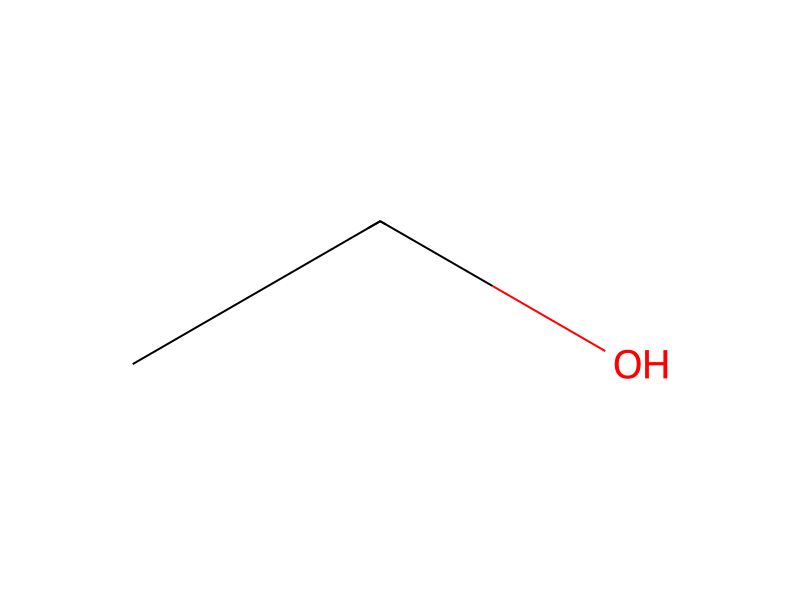
Grundinformationen
- Standard-SMILES
CCO- InChIKey
LFQSCWFLJHTTHZ-UHFFFAOYSA-N- Summenformel
- C2H6O
- Durchschnittliche Molmasse
- 46,07 g/mol
Überblick
Ethyl alcohol in alcoholic beverages can cause developmental toxicity according to an independent committee of scientific and health experts.
Namen und Bezeichner
- Bevorzugter Name
- Ethanol
- IUPAC
- ethanol
- Englischer Name
- ethanol
- Summenformel
- C2H6O
- Molmasse
- 0
Namen und Synonyme
Weitere Namen anzeigen
Datenbank-Bezeichner
- CAS
8024-45-1- ChEMBL
CHEMBL545- ChEBI
CHEBI:16236- UNII
- 3K9958V90M
- EC Number
- 200-578-6
- Nikkaji
- J1.930E
Eigenschaften
Berechnete Struktureigenschaften
- XLogP
- -0,1
- Polarare Oberfläche (TPSA)
- 20,2 Ų
- H-Brücken-Donoren
- 1
- H-Brücken-Akzeptoren
- 1
- Frei drehbare Bindungen
- 0
- Schwere Atome
- 3
- Formalladung
- 0
- Komplexität
- 2,8
Experimentelle und physikochemische Eigenschaften
Cosmetics
Cosmetics ingredient -> Fragrance; Solvent
Cosmetic ingredients (Alcohol Denat.) -> CIR (Cosmetic Ingredient Review)
Solvent
Pesticides
Agrochemicals -> Pesticide active substances
Active substance -> EU Pesticides database: Not approved
LogP
log Kow = -0.31
-0.31
-0.32
Odor
Pleasant
Fragrant odor
Alcohol odor
Weak, ethereal, vinous odor
Density
0.79 at 68 °F (USCG, 1999) - Less dense than water; will float
0.7893 g/cu cm at 20 °C
Relative density (water = 1): 0.79
< 0.810
0.79
0.7893 @ 20°C
Sicherheit und Regulatorisches
GHS-Klassifizierung
GHS Classification
Danger
H225: Highly Flammable liquid and vapor [Danger Flammable liquids]
P210, P233, P240, P241, P242, P243, P280, P303+P361+P353, P370+P378, P403+P235, and P501 (click each P-code to see the statement)
This chemical does not meet GHS hazard criteria for < 0.1% (5 of 13886) of reports.
Danger
H225 (> 99.9%): Highly Flammable liquid and vapor [Danger Flammable liquids]
Gefahrenhinweise
Regulatory Information
Chemical: Ethanol
Regulation (EC) No 1831/2003 (amended)
Ethanol is listed on the EPA's Chemical Data Reporting (CDR) system. Manufacturers and importers of Ethanol are required to report information about their production and use of this chemical to the EPA under the Toxic Substances Control Act (TSCA). (40 eCFR Part 711)
Status: No longer Valid Update: 11-01-2016 https://echa.europa.eu/registration-dossier/-/registered-dossier/6310
Ethanol: HSNO Approval: HSR001144 Approved with controls
The New Jersey Worker and Community Right to Know Act requires public and private employers to provide information about hazardous substances at their workplaces. (N.J.S.A. 34:5A-1 et. seq.)
DOT Label
Flammable Liquid
Flammable Liquid
Fire Hazards
Excerpt from ERG Guide 127 [Flammable Liquids (Water-Miscible)]:
FLAMMABLE. Flashback along vapor trail may occur. Vapor may explode if ignited in an enclosed area. (USCG, 1999)
· HIGHLY FLAMMABLE: Will be easily ignited by heat, sparks or flames.
· HIGHLY FLAMMABLE: Will be easily ignited by heat, sparks or flames.
· HIGHLY FLAMMABLE: Will be easily ignited by heat, sparks or flames.
Highly flammable. Vapour/air mixtures are explosive. Risk of fire and explosion on contact with incompatible substances. See Chemical Dangers.
Health Hazards
Excerpt from ERG Guide 127 [Flammable Liquids (Water-Miscible)]:
VAPOR: Irritating to eyes, nose and throat. LIQUID: Not harmful. (USCG, 1999)
· Inhalation or contact with material may irritate or burn skin and eyes.
· Inhalation or contact with material may irritate or burn skin and eyes.
· Inhalation or contact with material may irritate or burn skin and eyes.
Hazards Summary
Drinking alcoholic beverages is a known human carcinogen listed by the International Agency for Research in Cancer (IARC) and the National Toxicology Program (NTP). Alcohol consumption causes cancers of the oral cavity, pharynx, larynx, oesophagus, colorectum, liver (hepatocellular carcinoma) and female breast. [Reference #2] That ethyl alcohol is unlikely to be an occupational carcinogen is reflected by its classification as 5 by MAC. MAC defines 5 as, Substances with carcinogenic and genotoxic effects, the potency of which is considered to be so low that, provided the MAK and BAT values are observed, no significant contribution to human cancer risk is to be expected. Drinking alcoholic beverages is also a reproductive hazard, causing fetal alcohol syndrome. Low level occupational exposures are not likely to harm the fetus. [Frazier, p. 175-7] Inhalation of high concentrations can cause CNS depression; An eye and respiratory tract irritant; [ICSC] Suspected germ cell mutagen (3B); [MAK] Causes non-immunological contact urticaria; [Kanerva, p. 219]
DOT ID and Guide
1170 127
1987 127
1170 127
1170 127
FDA Requirements
Substance added directly to human food affirmed as generally recognized as safe (GRAS).
Ethanol is an indirect food additive for use only as a component of adhesives.
Reactive Group
Alcohols and Polyols
Alcohols and Polyols
Special Reports
Kuhn C et al; Buzzed. The Straight Facts About The Most Used and Abused Drugs From Alcohol to Ecstasy 4th ed (2014); Handbook features the most recent discoveries about drugs, including new information about biological and behavioral changes in addiction, the prescription-drug abuse epidemic, distinctive drug effects on the adolescent brain, and a perspective on legal trends.
Sato C et al; Alcohol Relat Dis Gastroenterol: p.172-84 (1985). A review with many references on the interactions of ethanol with drugs and xenobiotics. The effects of ethanol on absorption, plasma protein binding, hepatic blood flow, distribution, hepatic uptake, and phase I & II hepatic metabolism are briefly summarized and the clinical relevance of the observed changes is discussed.
Lieber CS, Leo MA; Falk Symp 39 Hepatology: 15-36 (1985). A review with 60 references on the direct effects of ethanol on vitamin A metabolism and resulting alterations of hepatic vitamin A levels even at early stages of alcohol liver injury. Implication with regard to vitamin A therapy in alcoholics and possible vitamin A toxicity were also discussed.
USEPA/Office of Pesticide Programs; Reregistration Eligibility Decision Document - Aliphaatic Alcohols, EPA 738-R-95-013 (April 1995). The RED summarizes the risk assessment conclusions and outlines any risk reduction measures necessary for the pesticide to continue to be registered in the USA.[Available from, as of October 11, 2017: http://www.epa.gov/pesticides/reregistration/status.htm]
Sicherheit und Schutzausrüstung
Fire Fighting
Excerpt from ERG Guide 127 [Flammable Liquids (Water-Miscible)]:
Excerpt from ERG Guide 127 [Flammable Liquids (Water-Miscible)]:
Use water spray, powder, alcohol-resistant foam, carbon dioxide. In case of fire: keep drums, etc., cool by spraying with water.
First Aid Measures
Fresh air, rest.
Remove contaminated clothes. Rinse skin with plenty of water or shower.
First rinse with plenty of water for several minutes (remove contact lenses if easily possible), then refer for medical attention.
Rinse mouth. Give one or two glasses of water to drink. Refer immediately for medical attention.
Accidental Release Measures
· CALL 911. Then call emergency response telephone number on shipping paper. If shipping paper not available or no answer, refer to appropriate telephone number listed on the inside back cover.
· ELIMINATE all ignition sources (no smoking, flares, sparks or flames) from immediate area.
· CALL 911. Then call emergency response telephone number on shipping paper. If shipping paper not available or no answer, refer to appropriate telephone number listed on the inside back cover.
· ELIMINATE all ignition sources (no smoking, flares, sparks or flames) from immediate area.
· CALL 911. Then call emergency response telephone number on shipping paper. If shipping paper not available or no answer, refer to appropriate telephone number listed on the inside back cover.
· ELIMINATE all ignition sources (no smoking, flares, sparks or flames) from immediate area.
First Aid
Excerpt from ERG Guide 127 [Flammable Liquids (Water-Miscible)]:
EYES: First check the victim for contact lenses and remove if present. Flush victim's eyes with water or normal saline solution for 20 to 30 minutes while simultaneously calling a hospital or poison control center. Do not put any ointments, oils, or medication in the victim's eyes without specific instructions from a physician. IMMEDIATELY transport the victim after flushing eyes to a hospital even if no symptoms (such as redness or irritation) develop.
General First Aid:
General First Aid:
General First Aid:
(General first aid procedures)
Exposure Control and Personal Protection
· Wear positive pressure self-contained breathing apparatus (SCBA).
· Wear positive pressure self-contained breathing apparatus (SCBA).
· Wear positive pressure self-contained breathing apparatus (SCBA).
27314.0 [ppm]
200.0 [ppm]
Fire Fighting Procedures
Suitable extinguishing media: Use water spray, alcohol-resistant foam, dry chemical or carbon dioxide.
Advice for firefighters: Wear self-contained breathing apparatus for firefighting if necessary.
If material on fire or involved in fire: Do not extinguish fire unless flow can be stopped. Use water in flooding quantities as fog. Solid streams of water may be ineffective. Cool all affected containers with flooding quantities of water. Apply water from as far a distance as possible. Use "alcohol" foam, dry chemical or carbon dioxide.
Storage Conditions
Keep container tightly closed in a dry and well-ventilated place. Containers which are opened must be carefully resealed and kept upright to prevent leakage. Hygroscopic. Storage class (TRGS 510): Flammable liquids
Keep tightly closed, cool and away from flame.
Storage temp: ambient. Venting: open (flame arrester) or pressure vacuum.
Protect containers against physical damage. Underground storage tanks outside the building is preferred for use of large quantities. Small amt may be stored outside the building in the original shipping containers. ... Should not be stored with perchlorates, peroxides, chromic acid and nitric acid.
Cleanup Methods
ACCIDENTAL RELEASE MEASURES: Personal precautions, protective equipment and emergency procedures: Use personal protective equipment. Avoid breathing vapors, mist or gas. Ensure adequate ventilation. Remove all sources of ignition. Evacuate personnel to safe areas. Beware of vapors accumulating to form explosive concentrations. Vapors can accumulate in low areas. Environmental precautions: Prevent further leakage or spillage if safe to do so. Do not let product enter drains. Methods and materials for containment and cleaning up: Contain spillage, and then collect with an electrically protected vacuum cleaner or by wet-brushing and place in container for disposal according to local regulations.
Land spill: Apply appropriate foam to diminish vapor and fire hazard.
Water spill: Use natural barriers or oil spill control booms to limit spill travel. Allow to aerate.
Air spill: Apply water spray or mist to knock down vapors.
Nonfire Spill Response
Excerpt from ERG Guide 127 [Flammable Liquids (Water-Miscible)]:
Excerpt from ERG Guide 127 [Flammable Liquids (Water-Miscible)]:
Disposal Methods
SRP: Recycle any unused portion of the material for its approved use or return it to the manufacturer or supplier. Ultimate disposal of the chemical must consider: the material's impact on air quality; potential migration in air, soil or water; effects on animal, aquatic and plant life; and conformance with environmental and public health regulations. If it is possible or reasonable use an alternative chemical product with less inherent propensity for occupational harm/injury/toxicity or environmental contamination.
Product: Burn in a chemical incinerator equipped with an afterburner and scrubber but exert extra care in igniting as this material is highly flammable. Offer surplus and non-recyclable solutions to a licensed disposal company. Contact a licensed professional waste disposal service to dispose of this material. Contaminated packaging: Dispose of as unused product.
SRP: Wastewater from contaminant suppression, cleaning of protective clothing/equipment, or contaminated sites should be contained and evaluated for subject chemical or decomposition product concentrations. Concentrations shall be lower than applicable environmental discharge or disposal criteria. Alternatively, pretreatment and/or discharge to a permitted wastewater treatment facility is acceptable only after review by the governing authority and assurance that "pass through" violations will not occur. Due consideration shall be given to remediation worker exposure (inhalation, dermal and ingestion) as well as fate during treatment, transfer and disposal. If it is not practicable to manage the chemical in this fashion, it must be evaluated in accordance with EPA 40 CFR Part 261, specifically Subpart B, in order to determine the appropriate local, state and federal requirements for disposal.
The following wastewater treatment technologies have been investigated for ethanol: Biological Treatment.
Spillage Disposal
Remove all ignition sources. Ventilation. Do NOT wash away into sewer. Collect leaking and spilled liquid in covered containers as far as possible. Absorb remaining liquid in inert absorbent. Wash away remainder with plenty of water. Store and dispose of according to local regulations.
Toxikologische Informationen
Treatment
If you suspect someone has alcohol poisoning, call for an ambulance to take them to a hospital. While you're waiting: try to keep them sitting up and awake, give them water if they can drink it. If they've passed out, lie them on their side in the recovery position and check they're breathing properly, keep them warm and stay with them and monitor their symptoms. Acute alcohol poisoning is a medical emergency due to the risk of death from respiratory depression and/or inhalation of vomit if emesis occurs while the patient is unconscious and unresponsive. Emergency treatment for acute alcohol poisoning strives to stabilize the patient and maintain a patent airway and respiration, while waiting for the alcohol to metabolize. Emergency treatment in a hospital can involve: 1) treating hypoglycaemia (low blood sugar) with 50 ml of 50% dextrose solution and saline flush, as ethanol induced hypoglycaemia is unresponsive to glucagon; 2) Administration of the vitamin thiamine to prevent Wernicke-Korsakoff syndrome, which can cause a seizure; 3) application of haemodialysis if the blood concentration is dangerously high (>400 mg%), and especially if there is metabolic acidosis and 4) Providing oxygen therapy as needed via nasal cannula or non-rebreather mask.
Interactions
Mass methanol poisonings present a serious problem for health systems worldwide, with poor outcome associated with delayed treatment. Positive pre-hospital serum ethanol concentration may have predictive value as the prognostic factor of the treatment outcome. We studied the effect of positive serum ethanol level on admission to hospital on survival in patients treated during the Czech methanol outbreak during 2012-2014. Cross-sectional cohort study was performed in 100 hospitalized patients with confirmed methanol poisoning. Pre-hospital ethanol was administered in 42 patients (by paramedic/medical staff to 30 patients and self-administered by 12 patients before admission); 58 patients did not receive pre-hospital ethanol. Forty-two patients had detectable serum ethanol concentration on admission to hospital [median 18.3 (IQR 6.6-32.2) mmol/cu dm]. Pre-hospital ethanol administration by paramedic/medical staff had a significant effect on survival without visual and CNS sequelae when adjusted for arterial blood pH on admission (OR 8.73; 95 % CI 3.57-21.34; p < 0.001). No patients receiving pre-hospital ethanol died compared with 21 not receiving (p < 0.001). Positive serum ethanol concentration on admission to hospital was a predictor for survival without health sequelae when adjusted for arterial blood pH (OR 8.10; 95 % CI 2.85-23.02; p < 0.001). The probability of visual and CNS sequelae in survivors reduced with increasing serum ethanol concentration on admission.
Most cocaine abusers also abuse alcohol, but little is known about interactions that promote co-abuse. These experiments in rhesus monkeys determined the effects of >8 weeks of ethanol(EtOH) consumption on cocaine self-administration (n=6), effects of dopamine (DA) receptor antagonists on cocaine reinforcement (n=3-4 per drug) and the ability of the D2-like DA receptor agonist quinpirole to elicit yawning (n=3). Monkeys self-administered cocaine (0.0-1.0mg/kg/injection, i.v.) under a 300-s fixed-interval schedule and the above-listed variables were measured before EtOH exposure. Next, monkeys consumed a sweetened, 4% EtOH solution in the home cage under binge-like conditions: 1 hr, 5 days/week with daily intake equaling 2.0 g/kg EtOH. After approximately 8 weeks, measures were re-determined, then EtOH drinking was discontinued. Finally, acute effects of EtOH on cocaine self-administration were determined by infusing EtOH (0.0-1.0g/kg. i.v.) prior to cocaine self-administration sessions (n=4). In five of six monkeys, EtOH drinking increased self-administration of low cocaine doses but did not alter reinforcing effects of higher doses. Self-administration returned to baseline after EtOH access was terminated (n=3). Effects of DA receptor antagonists on cocaine self-administration were not consistently altered after EtOH consumption, but the ability of quinpirole to induce yawning was enhanced in two of three monkeys. Acute EtOH infusions only decreased self-administration of lower cocaine doses. Taken together, the data suggest that long-term EtOH exposure can increase sensitivity to cocaine, possibly by increasing D3 receptor sensitivity. Data do not support a role for acute pharmacological interactions in promoting cocaine/EtOH co-abuse.
Binge drinking is a common pattern of ethanol consumption among young people. Binge drinkers are especially susceptible to brain damage when other substances are co-administered, in particular 3,4 methylendioxymethamphetamine (MDMA). The aim of the present work was to study the mechanisms implicated in the adaptive changes observed after administration of these drugs of abuse. So, we have evaluated the cardiac sympathetic activity and the expression and activation of heat shock protein 27 (HSP27), after voluntary binge ethanol consumption, alone and in combination with MDMA. Both parameters are markers of stressful situations and they could be modified inducing several alterations in different systems. Adolescent mice received MDMA, ethanol or both (ethanol plus MDMA). Drinking in the dark (DID) procedure was used as a model of binge. Noradrenaline (NA) turnover, tyrosine hydroxylase (TH), TH phosphorylated at serine 31 and HSP27 expression and its phosphorylation at serine 82 were evaluated in adolescent mice 48 hr, 72 hr, and 7 days after treatments in the left ventricle. NA and normetanephrine (NMN) were determined by high-performance liquid chromatography (HPLC); TH and HSP27 expression and phosphorylation were measured by quantitative blot immunollabeling using specific antibodies. Ethanol and MDMA co-administration increased NA turnover and TH expression and phosphorylation versus the consumption of each one of these drugs. In parallel with the described modifications in the cardiac sympathetic activity, our results showed that binge ethanol+MDMA exposure is associated with an increase in HSP27 expression and phosphorylation in the left ventricle, supporting the idea that the combination of both drugs exacerbates the cellular stress induced by ethanol or MDMA alone.
Factors affecting vitamin D metabolism may preclude anti-carcinogenic effects of its active metabolite calcitriol. Chronic ethanol consumption is an etiological factor for breast cancer that affects vitamin D metabolism; however, the mechanisms underlying this causal association have not been fully clarified. Using a murine model, we examined the effects of chronic moderate ethanol intake on tumoral and renal CYP27B1 and CYP24A1 gene expression, the enzymes involved in calcitriol synthesis and inactivation, respectively. Ethanol (5% w/v) was administered to 25-hydroxyvitamin D3-treated or control mice during one month. Afterwards, human breast cancer cells were xenografted and treatments continued another month. Ethanol intake decreased renal Cyp27b1 while increased tumoral CYP24A1 gene expression. Treatment with 25-hydroxyvitamin D3 significantly stimulated CYP27B1 in tumors of non-alcohol-drinking mice, while increased both renal and tumoral CYP24A1. Coadministration of ethanol and 25-hydroxyvitamin D3 reduced in 60% renal 25-hydroxyvitamin D3-dependent Cyp24a1 upregulation (P<0.05). We found 5 folds higher basal Cyp27b1 than Cyp24a1 gene expression in kidneys, whereas this relation was inverted in tumors, showing 5 folds more CYP24A1 than CYP27B1. Tumor expression of the calcitriol target cathelicidin increased only in 25-hydroxyvitamin D3-treated non-ethanol drinking animals (P<0.05). Mean final body weight was higher in 25-hydroxyvitamin D3 treated groups (P<0.001). Overall, these results suggest that moderate ethanol intake decreases renal and tumoral 25-hydroxyvitamin D3 bioconversion into calcitriol, while favors degradation of both vitamin D metabolites in breast cancer cells. The latter may partially explain why alcohol consumption is associated with vitamin D deficiency and increased breast cancer risk and progression.
For more Interactions (Complete) data for Ethanol (137 total), please visit the HSDB record page.
Health Effects
Acute: At 0.1% blood alcohol levels individuals experience CNS depression, nausea, possible vomiting, impaired cognition and impaired motor and sensory function. Accidents or injury can also occur due to the side effects of loss of coordination, slowed reaction time, sleepiness and impaired judgment. At >0.14% blood alcohol levels there is decreased blood flow to the brain. At greater than 0.3% blood alcohol there is a marked degree of stupefaction and possible unconsciousness. At levels greater than 0.4% there is a risk of death. Acute consumption leading to blood alcohol levels greater than 0.5% is almost universally fatal. Chronic: high levels of alcohol consumption are associated with an increased risk of alcoholism, malnutrition, chronic pancreatitis, alcoholic (fatty) liver disease, and cancer. Frequent drinking of alcoholic beverages has been shown to be a major contributing factor in cases of elevated blood levels of triglycerides. In addition, damage to the central nervous system and peripheral nervous system can occur from chronic alcohol abuse. The long-term use of alcohol is capable of damaging nearly every organ and system in the body. The developing adolescent brain is particularly vulnerable to the toxic effects of alcohol. In addition, the developing fetal brain is also vulnerable, and fetal alcohol syndrome (FAS) may result if pregnant mothers consume alcohol. The net effect of alcohol consumption on global human health is quite detrimental, with an estimated 3.8% of all global deaths and 4.6% of global disability-adjusted life-years attributable to alcohol. Ethanol is considered a teratogen (causing fetal alcohol syndrome) and a Group 1 carcinogen because of the carcinogenicity of acetaldehyde (a major metabolite of alcohol).
Ecotoxicity Values
Toxicity Threshold (Cell Multiplication Inhibition Test) Scenedesmus quadricauda (green algae) 5000 mg/L
Toxicity Threshold (Cell Multiplication Inhibition Test) Microcystis aeruginosa (algae) 1450 mg/L
Toxicity Threshold (Cell Multiplication Inhibition Test): Uronema parduczi Chatton-Lwoff (protozoa) 6120 mg/L
Toxicity Threshold (Cell Multiplication Inhibition Test) Entosiphon sulcatum (protozoa) 65 mg/L
For more Ecotoxicity Values (Complete) data for Ethanol (53 total), please visit the HSDB record page.
Environmental Fate
TERRESTRIAL FATE: Based on a classification scheme(1), a log Koc value of 0.20(2), indicates that ethanol is expected to have very high mobility in soil. Volatilization of ethanol from moist soil surfaces is expected(SRC) given a Henry's Law constant of 5.0X10⁻⁶ atm-cu m/mole(3). Ethanol is expected to volatilize from dry soil surfaces(SRC) based upon a vapor pressure of 59.3 mm Hg at 25 °C(4). Ethanol, present at 100 mg/L, reached 89% of its Theoretical BOD in 2 weeks using an activated sludge inoculum at 30 mg/L in the Japanese MITI test(5). Ethanol, present at 100 mg/L, was completely degraded in 5-8 days in an aerobic sandy soil/groundwater microcosm(6).
AQUATIC FATE: Based on a classification scheme(1), a log Koc value of 0.20(2), indicates that ethanol is not expected to adsorb to suspended solids and sediment(SRC). Volatilization from water surfaces is expected(3) based upon a Henry's Law constant of 5.0X10⁻⁶ atm-cu m/mole(4). Using this Henry's Law constant and an estimation method(3), volatilization half-lives for a model river and model lake are 5 and 39 days, respectively(SRC). Ethanol is not expected to undergo hydrolysis in the environment due to the lack of functional groups that hydrolyze under environmental conditions(3). According to a classification scheme(5), an estimated BCF of 3(SRC), from its log Kow of -0.31(6) and a regression-derived equation(7), suggests the potential for bioconcentration in aquatic organisms is low. Biodegradation of ethanol in water is expected based on degradation half-lives on the order of a few days in aquatic studies conducted using microcosms constructed with a low organic sandy soil and groundwater(8).
ATMOSPHERIC FATE: According to a model of gas/particle partitioning of semivolatile organic compounds in the atmosphere(1), ethanol, which has a vapor pressure of 59.3 mm Hg at 25 °C(2), is expected to exist solely as a vapor in the ambient atmosphere. Vapor-phase ethanol is degraded in the atmosphere by reaction with photochemically-produced hydroxyl radicals(SRC); the half-life for this reaction in air is estimated to be 5 days(SRC), calculated from its rate constant of 3.27X10⁻¹² cu cm/molecule-sec at 25 °C(3). Ethanol does not contain chromophores that absorb at wavelengths >290 nm(4) and, therefore, is not expected to be susceptible to direct photolysis by sunlight(SRC).
Food Survey Values
Ethanol was identified, not quantified, as a volatile plant isolate in soy beans(1). Ethanol was detected at levels of 250-980 ppb (common beans), 4900 ppb (split peas) and 2900 ppb (lentils)(2). Ethanol was identified, not quantified, as a volatile flavor component in fried bacon(3) and mountain Beaufort cheese (French Alps, summer and winter)(4). Ethanol was detected at levels of 140 to 890 mg/kg in fermented soybean curds(5). Ethanol was identified, not quantified, as a volatile component of pine sprout tea and pine needle tea(6). Ethanol is produced in the manufacture of alcohol, whiskey and gin(7). A standard drink in the US is equal to 14.0 grams (0.6 ounces) of pure alcohol as typically found in 12-ounces of beer (5% alcohol); 8-ounces of malt liquor (7% alcohol); 5-ounces wine (12% alcohol); 1.5-ounces or a "shot" of 80-proof distilled spirits or liquor (e.g. , gin, rum, vodka, or whiskey)(8). In 14 honey spirit samples collected from market or artisan Portuguese producers, the alcohol concentration was 28.0-53.0%, most of this alcohol is reported as ethanol(9).
Ethanol concentration was measured using two different methods in nine different wine styles with the following results(1):[Table#230]
Ethanol is ... present to extent of 3-6% by vol in naturally fermented beers and ales, 10-12% in wines and 20-60% in distilled beverages.
Adverse Effects
Neurotoxin - Acute solvent syndrome
During the liver's conversion of ethanol to acetaldehyde, the electron carrier NAD+ donates 2 electrons to this reaction. In the process, NAD+ is reduced to NADH, increasing the NADH/NAD+ ratio in the hepatocytes.
Exposure Routes
The substance can be absorbed into the body by inhalation of its vapour and by ingestion.
inhalation, ingestion, skin and/or eye contact
Oral, rapidly absorbed. Blood alcohol level and the time necessary to achieve it are controlled largely by the rapidity and extent of ethanol consumption. (T10)
Toxicity Summary
The CIR Expert Panel concluded that Alcohol Denat.... denatured with t-Butyl Alcohol, Denatonium Benzoate, Diethyl Phthalate, or Methyl Alcohol are safe in the practices of use and concentration as described in this safety assessment, and, that Denatonium Benzoate is safe as a denaturant. The CIR Expert Panel concluded that the available data are insufficient to support the safety of Alcohol Denat.... denatured with Quassin, Brucine, and Brucine Sulfate in cosmetic products, and that the available data are insufficient to support the safety of Quassin, Brucine, and Brucine Sulfate as denaturants.
Ingredients for which the data are insufficient and their use in cosmetics is not supported
IDENTIFICATION AND USE: Ethanol is a clear, colorless, very mobile liquid. It is used in alcoholic beverages in suitable dilutions, and as a reagent in synthetic organic chemistry and chromatography, as well as industrial and laboratory organic solvent. Other uses are in manufacture of denatured alcohol, pharmaceuticals (rubbing compounds, lotions, tonics, colognes), in perfumery. Octane booster in gasoline. Pharmaceutic aid (solvent). HUMAN STUDIES: Ethanol is a central nervous system (CNS) depressant. It enhances the inhibitory effects of gamma-aminobutyric acid (GABA) at the GABA-A receptor and competitively inhibits the binding of glycine at the N-methyl-d-aspartate receptor (it disrupts excitatory glutaminergic neurotransmission). Ethanol also stimulates release of other inhibitory neurotransmitters, such as dopamine and serotonin. The most common clinical signs of ethanol toxicosis are ataxia, lethargy, vomiting, and recumbency. In more severe cases, hypothermia, disorientation, vocalization, hypotension, tremors, tachycardia, acidosis, diarrhea, respiratory depression, coma, seizures, and death may occur. Alcohol is directly irritating to the stomach and causes vomiting. High ethanol blood levels also stimulate emesis. The concern with vomiting during intoxication is that at high blood ethanol concentrations, the muscles that control the epiglottis become slow to react or even paralyzed. This increases the risk for aspiration. Ethanol intoxication reduces peripheral oxygen delivery and metabolism and causes mitochondrial oxidative dysfunction, potentially resulting in shock or hypoxia in an acutely intoxicated patient. Hypothermia may result from multiple mechanisms. Peripheral vasodilation, CNS depression, ethanol interference with the thermoregulator mechanism, and/or impaired behavioral responses to a cold environment all lead to a lowered body temperature. Moderate ethanol intake appears to reduce the risk of myocardial infarction and other heart diseases. However, high spirits consumption was associated with increased risk of cancer mortality in women. Consumption of alcoholic beverages (beer, in particular) is associated with an increased risk for rectal but not colon cancer. Beer is a commonly consumed alcoholic beverage among reproductive-age adults. Beer drinking males have an increased risk of contributing to pregnancy waste. Women consume beer before and after pregnancy recognition. Binge drinking appears to be a common drinking behavior, and those who binge drink have an increased risk of impaired fetal growth and offspring behavior. Beer consumption by lactating women might temporarily impair motor function of nursing infants. The rate of ethanol metabolism varies among individuals. Studies of twins indicate that interindividual variability in the rate of ethanol metabolism may be genetically controlled. The main pathway for ethanol oxidation in humans is to acetaldehyde via alcohol dehydrogenase pathway. Acetaldehyde is oxidized further to acetic acid by aldehyde dehydrogenase. Asians are known to be sensitive to the health effects of ethanol; the sensitivity has been attributed to different forms of the enzyme acetaldehyde dehydrogenase. Alcohol ingestion by Asians resulted in marked elevations of blood acetaldehyde levels ranging from 0.4 to 3 mg/L, and individuals developed facial flushing and tachycardia as a direct consequence of elevated blood acetaldehyde levels. ANIMAL STUDIES: A drop full-strength ethanol on rabbit eyes causes reversible injury graded only 3 on a scale of 10 after 24 hr. Application of 70% alcohol to rabbit corneas injures and temporarily loosens the corneal epithelium, but the recovery is complete. When rats were dosed with ethanol by oral gavage with 8 to 15 g/kg/day over 4 months and fed a diet containing 25% of total calories as fat, focal necrosis, inflammation, and fibrosis were observed in the liver. Nine baboons fed ethanol at 50% of total calories developed fatty liver, and four animals developed hepatitis within 9 to 12 months. Rabbits exposed to saturated vapors of ethanol for periods ranging from 25 to 365 days developed cirrhosis of the liver. Rats were given a single intraperitoneal dose of diethylnitrosamine followed by treatment with ethanol in drinking water for 12 to 18 months. Ethanol was an effective promoter of liver tumors. Cynomolgus monkeys administered up to 5 g/kg bw ethanol daily on gestation days 20-150 revealed an increase in pregnancy wastage (abortions and still births) but no structural malformation or facial change. Ethanol, and not acetaldehyde, has been implicated as the causative agent of the teratogenic effects in laboratory animals. Oral coadministration of 100 mg/kg of 4-methylpyrazole, an inhibitor of alcohol dehydrogenase, with 6 g/kg of ethanol intraperitoneally on gestation day 10 dramatically increased the embryotoxicity of ethanol in mice. Ethanol is not mutagenic in Salmonella typhimurium strains TA 97, TA 98, TA 100, TA 1535, TA 1537, or TA 1538 in the presence or absence of metabolic activation. In the presence of a metabolic activation system, ethanol is slightly mutagenic to Salmonella strain TA 102, a strain considered to respond to the presence of oxygen radicals. Ethanol did not induce mutations in mouse lymphoma L5178Y TK+/- cells and did not induce micronuclei in Chinese hamster V79 cells in the absence of metabolic activation. No chromosomal aberrations or sister chromatid exchanges were observed in Chinese hamster ovary cells treated with ethanol. ECOTOXICITY STUDIES: The zebrafish were exposed to different concentrations (control, 0.01, 0.1, and 1%) of ethanol from blastula stage to 144 hour-post-fertilization (hpf). No effect on survival was observed except the 1% ethanol group suffered 89% mortality during 108-120 hpf. No developmental defects were observed at the 0.01 and 0.1% concentrations, but significantly higher deformity rates occurred with 1% ethanol. Hyperactivity and less tortuous swimming paths were observed in all ethanol concentrations.
Alcohol intoxication causes CNS depression by enhancing the inhibitory effect of GABA on its receptors. Alcohol also inhibits the effects of glutamate on NMDA receptors, resulting in disinhibition and a blunted mental state. Ethanol intoxication manifests as slurred speech, stupor, and gait abnormalities. Severe intoxication may even result in a coma.
Alcohol binds to the GABA(A) receptors (delta subunit), NMDA receptors, Glycine receptors, Serotonin receptors, Acetylcholine receptors, L-channel calcium channels and GIRK channels. Ethanol acts in the central nervous system primarily by binding to the GABAA receptor, increasing the effects of the inhibitory neurotransmitter GABA. Ethanol within the human body is converted into acetaldehyde by alcohol dehydrogenase. Acetaldehyde is linked to most of the clinical effects of alcohol. It has been shown to increase the risk of developing cirrhosis of the liver and multiple forms of cancer. During the metabolism of alcohol via the respective dehydrogenases, NAD (Nicotinamide adenine dinucleotide) is converted into reduced NAD. Normally, NAD is used to metabolise fats in the liver, and as such alcohol competes with these fats for the use of NAD. Prolonged exposure to alcohol means that fats accumulate in the liver, leading to the term 'fatty liver'. Continued consumption (such as in alcoholism) then leads to cell death in the hepatocytes as the fat stores reduce the function of the cell to the point of death. These cells are then replaced with scar tissue, leading to the condition called cirrhosis.
Ecotoxicity Excerpts
/AQUATIC SPECIES/ Ethanol and dimethylsulfoxide (DMSO) are commonly used as carrier solvents for lipophilic chemicals in aquatic toxicity bioassays. However, very little information has been reported on the behavioral effects of these solvents. In this study, /the authors/ examined the effects of ethanol and DMSO on development and locomotor activity by a zebrafish embryo-larval bioassay. The zebrafish were exposed to different concentrations (control, 0.01, 0.1, and 1%) of ethanol or DMSO from blastula stage to 144 hour-post-fertilization (hpf). Hatchability, survival, and abnormalities were monitored every 12 hr, and locomotor activity of the larvae was analyzed at 144 hpf. Hatchability was not affected by the ethanol or DMSO treatments. No effect on survival was observed except the 1% ethanol group suffered 89% mortality during 108-120 hpf. No developmental defects were observed in any of the solvents at the 0.01 and 0.1% concentrations, but significantly higher deformity rates occurred with 1% ethanol and DMSO groups. Hyperactivity and less tortuous swimming paths were observed in all ethanol and DMSO concentrations. ...
/AQUATIC SPECIES/ 24-hr LC50 value for rainbow trout in flow-through bioassay system at 10 °C was 11200 mg/L. Ethanol at about 0.26 of the fingerling LC50, affected cardiovascular and respiratory system in adults. Slight ventilation rate and buccal pressure amplitude depression occurred in initial stages of 24 hr exposure. Q-T interval decreased.
Regulatorische Informationen
FDA Requirements
Substance added directly to human food affirmed as generally recognized as safe (GRAS).
Ethanol is an indirect food additive for use only as a component of adhesives.
FIFRA Requirements
Residues of ethyl alcohol are exempted from the requirement of a tolerance when used in accordance with good agricultural practice as inert (or occasionally active) ingredients in pesticide formulations applied to growing crops or to raw agricultural commodities after harvest. Use: solvent, cosolvent. Limit: None.
Residues of ethyl alcohol are exempted from the requirement of a tolerance when used in accordance with good agricultural practice as inert (or occasionally active) ingredients in pesticide formulations applied to animals. Use: Solvent, cosolvent. Limit: None.
Residues of the following chemical substances are exempted from the requirement of a tolerance when used in accordance with good manufacturing practice as ingredients in an antimicrobial pesticide formulation, provided that the substance is applied on a semi-permanent or permanent food-contact surface (other than being applied on food packaging) with adequate draining before contact with food. (a) The following chemical substances when used as ingredients in an antimicrobial pesticide formulation may be applied to: Food-contact surfaces in public eating places, dairy-processing equipment, and food-processing equipment and utensils. Ethanol is included on this list. Limits: None.
Residues of the following chemical substances are exempted from the requirement of a tolerance when used in accordance with good manufacturing practice as ingredients in an antimicrobial pesticide formulation, provided that the substance is applied on a semi-permanent or permanent food-contact surface (other than being applied on food packaging) with adequate draining before contact with food. ... (c) The following chemical substances when used as ingredients in an antimicrobial pesticide formulation may be applied to: Food-processing equipment and utensils. Ethanol is included on this list. Limits: None.
For more FIFRA Requirements (Complete) data for Ethanol (6 total), please visit the HSDB record page.
Atmospheric Standards
This action promulgates standards of performance for equipment leaks of Volatile Organic Compounds (VOC) in the Synthetic Organic Chemical Manufacturing Industry (SOCMI). The intended effect of these standards is to require all newly constructed, modified, and reconstructed SOCMI process units to use the best demonstrated system of continuous emission reduction for equipment leaks of VOC, considering costs, non air quality health and environmental impact and energy requirements. Ethanol is produced, as an intermediate or a final product, by process units covered under this subpart.
Chemie und Industrie
Pharmakologische Informationen
ATC Code
D08AX08
V - Various
D - Dermatologicals
V - Various
QV - Various
QD - Dermatologicals
Pharmacodynamics
Alcohol produces injury to cells by dehydration and precipitation of the cytoplasm or protoplasm. This accounts for its bacteriocidal and antifungal action. When alcohol is injected in close proximity to nerve tissues, it produces neuritis and nerve degeneration (neurolysis). Ninety to 98% of ethanol that enters the body is completely oxidized. Ethanol is also used as a cosolvent to dissolve many insoluble drugs and to serve as a mild sedative in some medicinal formulations. Ethanol also binds to GABA, glycine, NMDA receptors and modulates their effects. Ethanol is also metabolised by the hepatic enzyme alcohol dehydrogenase.
Mechanism of Action
Ethanol affects the brain’s neurons in several ways. It alters their membranes as well as their ion channels, enzymes, and receptors. Alcohol also binds directly to the receptors for acetylcholine, serotonin, GABA, and the NMDA receptors for glutamate. The sedative effects of ethanol are mediated through binding to GABA receptors and glycine receptors (alpha 1 and alpha 2 subunits). It also inhibits NMDA receptor functioning. In its role as an anti-infective, ethanol acts as an osmolyte or dehydrating agent that disrupts the osmotic balance across cell membranes.
... Ethanol is known to affect a large number of membrane proteins that participate in signaling pathways such as neurotransmitter receptors, enzymes, and ion channels, and there is extensive evidence that ethanol interacts with a variety of neurotransmitters. The major actions of ethanol involve enhancing the inhibitory effects of gamma-aminobutyric acid (GABA) at GABAa receptors and blockade of the N-methyl-D-aspartate (NMDA) subtype of glutamate, an excitatory amine acid (EAA) receptor. Animal studies indicate that the acute effects of ethanol result from competitive inhibition of glycine binding to NMDA receptor and disruption of glutamatergic neurotransmission by inhibiting the response of the NMDA receptor. Persistent glycine antagonism and attenuation of glutamatergic neurotransmission by chronic ethanol exposure results in tolerance to ethanol by enhancing EAA neurotransmission and NMDA receptor upregulation. The latter appears to involve selective increases in NMDA R2B subunit concentrations and other molecular changes in specific brain loci. The abrupt withdrawal of ethanol thus produces a hyperexcitable state that leads to the ethanol withdrawal syndrome and excitotoxic neuronal death. GABA-mediated inhibition, which normally acts to limit excitation, is eliminated during ethanol withdrawal syndrome and further intensifies this excitation. In addition, NMDA receptors function to inhibit the release of dopamine in the nucleus accumbens and mesolimbic structures, which modulate the reinforcing action of addictive xenobiotics such as ethanol. By inhibiting NMDA receptor activity, ethanol could increase dopamine release from the nucleus accumbens and ventral tegmental area and could thus create dependence. Chronic ethanol administration also results in tolerance, dependence, and an ethanol withdrawal syndrome, mediated, in part, by desensitization and or downregulation of GABAa receptors.
The development of alcoholic ketoacidosis (AKA) requires that a combination of physical and physiologic events occur. The normal response to starvation and depletion of hepatic glycogen stores is for amino acids to be converted to pyruvate. Pyruvate can serve as a substrate for gluconeogenesis, be converted to acetyl-CoA, which can enter the Krebs cycle or can be utilized in various biosynthetic pathways (eg, fatty acid, ketone bodies, cholesterol, and acetylcholine) ... Ethanol metabolism generates NADH, resulting in an excess of reducing potential. This high redox state favors the conversion of pyruvate to lactate, diverting pyruvate from being a substrate for gluconeogenesis. To compensate for the lack of normal metabolic substrates, the body mobilizes fat from adipose tissue and increased fatty acid metabolism as an alternative source of energy. This response is mediated by a decrease in insulin and an increased secretion of glucagon, catecholamines, growth hormone, and cortisol. Fatty acid metabolism results in the formation of acetyl-CoA and it combines with the excess acetate that is generated from ethanol metabolism to form acetoacetate. Most of the acetoacetate is reduced to beta-hydroxybutyrate due to the excess reducing potential or high redox state of the cell. Volume depletion interferes with the renal elimination of acetoacetate and beta-hydroxybutyrate, and contributes to the acidosis. An elevated lactate concentration may result from shunting from pyruvate or from hypoperfusion or infection that may coexist with the underlying ketoacidosis.
Adenosine may mediate many of the acute and chronic motor effects of ethanol on the brain. Ethanol, probably through its metabolite, acetate, prevents adenosine uptake, raising synaptic adenosine concentrations. Excessive stimulation of several adenosine receptors in the cerebellum may explain much of the motor impairment from low ethanol concentrations. In fact, animals made tolerant to ethanol develop cross-tolerance to adenosine agonists. In mice, adenosine receptor agonists increase ethanol-induced incoordination while adenosine antagonists decrease this intoxicating response.
Chronic ethanol (alcohol) administration has been associated with alterations in the binding and function of the gamma-aminobutyric acid (GABAA) receptor. To evaluate the mechanism underlying these changes, /the authors/ measured the steady state levels of the mRNAs for the alpha 1, alpha 2, alpha 3, alpha 5, and alpha 6 subunits of the GABAA receptor after chronic ethanol administration to rats and ethanol withdrawal for 24 hr. The results indicated that chronic ethanol administration resulted in a 61% decline in the level of the GABAA receptor alpha 1 subunit mRNAs [3.8 and 4.3 kilobases (kb)] in the cerebral cortex in rats. The levels of the alpha 2 subunit mRNAs (6 and 3 kb) and the alpha 5 subunit mRNA (2.8 kb) were also reduced, by 61, 45, and 51%, respectively, whereas there was no change in the level of the alpha 3 subunit mRNA (3 kb). Furthermore, the ethanol-induced decrease in receptor mRNA levels persisted for 24 hr, after withdrawal of ethanol and returned to control values at 36 hr of withdrawal. alpha 1 mRNA levels in cerebellum also decreased by 28%. The level of the alpha 6 subunit mRNA, which selectively encodes Ro15-4513 binding sites, was found to be increased by approximately 76% in the cerebellum. Also, the photoaffinity labeling studies using [3H]Ro15-4513 indicated an increase in the levels of various protein components of the GABAA receptor, in the cerebellum and the cerebral cortex (e.g., 50- and 55-kDa proteins in the cerebellum and 41- and 50-kDa proteins in the cortex), after chronic ethanol treatment. The increase in alpha 6 mRNA in the cerebellum might be related to the increased labeling of the 55-kDa (approximately 56-kDa) protein and partially responsible for the increased binding ... . Because the alpha 6 subunit is not expressed in cortex, involvement of an as yet unknown subunit in this region cannot be ruled out. The effect of chronic ethanol treatment appears to be specific for GABAA receptor subunit mRNAs, because the same treatment did not alter the levels of glyceraldehyde-3-dehydrogenase mRNA or poly(A)+ RNA. In summary, these data indicate that chronic ethanol treatment results in an alteration in the regulation of expression of GABAA receptor subunit-encoding mRNAs, which could be due to alterations in transcription or mRNA stability.
For more Mechanism of Action (Complete) data for Ethanol (8 total), please visit the HSDB record page.
Biological Half-Life
... The concentrations of ethanol and methanol in blood were determined indirectly by analysis of end-expired alveolar air. In the morning when blood-ethanol dropped below the Km of liver alcohol dehydrogenase (ADH) of about 100 mg/L (2.2 mM), the disappearance half-life of ethanol was 21, 22, 18 and 15 min. in 4 test subjects respectively. ...
Metabolism/Metabolites
Hepatic. Metabolized by cytochrome P450 enzyme CYP2E1.
Ethanol metabolism in hepatocytes causes the generation of reactive oxygen species, endoplasmic reticulum stress and alterations in mitochondrial energy and REDOX metabolism. In ethanol-exposed liver disease, autophagy not only acts as a cleanser to remove damaged organelles and cytosolic components, but also selectively clears specific targets such as lipid droplets and damaged mitochondria. Moreover, ethanol appears to play a role in protecting hepatocytes from apoptosis at certain concentrations. This article describes the evidence, function and potential mechanism of autophagy in ethanol-exposed liver disease and the controversy surrounding the effects of ethanol on autophagy.
There have been allegations in the courtroom that elevated serum lactic acid in trauma victims can yield a falsely elevated serum ethanol assay. Most hospitals utilize an indirect method of ethanol measurement where a serum sample is added to a mix of alcohol dehydrogenase and oxidized nicotinamide adenine dinucleotide (NAD+). This allows any ethanol in the patient's serum to be metabolized to acetaldehyde, and in the process results in the reduction of NAD+ to NADH. NADH is then measured using spectrophotometry. The courtroom allegation stems from the concept that oxidation of lactate to pyruvate by lactate dehydrogenase (LDH) results in the same molar-for-molar reduction of NAD+ to NADH, and could therefore theoretically cause patients with elevated lactate and LDH to have a falsely elevated ethanol concentration. Patients with elevated lactic acid and LDH concentrations who presented to a university hospital from 20 April 2015 to 13 December 2015 were identified to provide possible test specimens. If a sufficient amount of serum was available, the sample was used to re-run the lactate and LDH concentration simultaneously with an enzymatic ethanol assay. Any samples that had elevated lactic acid and LDH concentrations on this retesting, and also yielded a positive ethanol concentration, were sent for confirmatory gas chromatography testing of ethanol concentrations. A control group of 20 samples with normal lactate and LDH were included. A total of 37 samples were included in the final analysis. Only 4 patients had an elevated enzymatic ethanol concentration, and all 4 also had a measurable GC ethanol concentration. The lactate in this dataset ranged from 2.4 to 24.2 mmol/L, with a mean of 6.53 mmol/L (normal value 0.5-2.2). The LDH ranged from 242 to 8838 U/L with a mean of 1695 U/L (normal value 122-225 U/L). Twenty control samples were run on patients with normal lactate and LDH, none of which yielded a positive enzymatic ethanol result. This data does not support the contention that an elevated LDH and lactate can yield a false positive serum ethanol result as run by enzymatic ethanol assay in live patients presenting to the emergency department.
Ethanol is metabolized largely by sequential hepatic oxidation, first to acetaldehyde by alcohol dehydrogenase (ADE) and then to acetic acid by aldehyde dehydrogenase (ALDH). Each metabolic step requires NAD+; thus oxidation of 1 mol ethanol (46 g) to 1 mol acetic acid requires 2 mol NAD+ in the liver; indeed, NAD+ availability limits ethanol metabolism to about 8 gr or 10 mL (approximately 170 mmol) per hour in a 70-kg adult, or approximately 120 mg/kg per hour. Thus hepatic ethanol metabolism functionally saturates at relatively low blood levels compared with the high blood ethano levels (BELs) achieved, and ethanol metabolism is a zero-order process (constant amount per unit time). Small amounts of ethanol are excreted in urine, sweat, and breath, but metabolism to acetate accounts to 90-98% of ingested ethanol, mostly owing to hepatic metabolism by ADH and ADLH.
Metabolism of ethanol, propanol, isopropanol, butanol, isobutanol, sec-butanol, and tert-butanol was studied after oral administration in rabbits. Blood pH was on the acid side with propanol, butanol, and isobutanol, and on the alkaline side with isopropanol and sec-butanol, but no change was observed with ethanol and tert-butanol. Butanol and isobutanol had the lowest rate of urinary excretion. Acetaldehyde and acetic acid were detected as the urinary metabolites of ethanol and propanol, whereas isobutyraldehyde and isovaleric acid were the metabolites of isobutanol.
For more Metabolism/Metabolites (Complete) data for Ethanol (13 total), please visit the HSDB record page.
FDA Pharmacological Classification
LOTION
Skin Barrier Activity [PE]
MeSH Pharmacological Classification
Substances used on humans and other animals that destroy harmful microorganisms or inhibit their activity. They are distinguished from DISINFECTANTS, which are used on inanimate objects.
A very loosely defined group of drugs that tend to reduce the activity of the central nervous system. The major groups included here are ethyl alcohol, anesthetics, hypnotics and sedatives, narcotics, and tranquilizing agents (antipsychotics and antianxiety agents).
Liquids that dissolve other substances (solutes), generally solids, without any change in chemical composition, as, water containing sugar. (Grant & Hackh's Chemical Dictionary, 5th ed)
Absorption, Distribution and Excretion
Rapidly absorbed.
After oral administration, ethanol is absorbed rapidly into the bloodstream from the stomach and small intestines and distributes into total body water (0.5-0.7 L/kg). Peak blood levels occur about 30 minutes after ingestion of ethanol when the stomach is empty. Because absorption occurs more rapidly from the small intestine than from the stomach, delays in gastric emptying (owing, e.g., to the presence of food) slow ethanol absorption. ... After oral consumption of alcohol, first-pass metabolism by gastric and liver alcohol dehydrogenase enzymes leads to lower blood alcohol levels than would be obtained if the same dose were administered intravenously.
The distribution of alcohol between alveolar air and blood depends on its speed of diffusion, and its vapor pressure at the prevailing temp and concentration of alcohol in the lung capillaries. Empirical determinations have yielded rather different values for this distribution ratio, but a commonly accepted value is 1:2100.
Venous blood (orbital sinus) and brain ethanol levels were measured in long sleep and short sleep mice within the first 30 min following ethanol administration (2.5 to 6.0 g/kg). Ethanol was administered ip or intragastrically. For both lines of mice and for every dose, brain ethanol concentrations were significantly greater (as much as 100 mg/dL) than blood ethanol levels for the first 6 min, and peak blood and brain ethanol levels were reached 4 to 6 min after dosing. Approx 6 to 10 min (depending on dose and line of mouse) was required for blood and brain concn to reach equilibrium. At the time of loss of the righting response brain ethanol levels were significantly higher than blood ethanol levels. These results indicate that within the first 6 min after administration of ethanol, blood ethanol level is not suitable for the assessment of brain ethanol content.
The method of Pohorecky and Brick was modified for determination of ethanol concn in rebreathed air of rats. Female Sprague Dawley rats were injected with different doses (1 to 2 g/kg) of ethanol and both arterial blood and rebreathed air samples were collected at various time intervals (15 to 120 min) after administration. A good correlation (r= 0.96) was found between ethanol concn in arterial blood and in rebreathed air; the blood/breath conversion factor was 3241 + or - 55.
For more Absorption, Distribution and Excretion (Complete) data for Ethanol (31 total), please visit the HSDB record page.
Verwendung und Herstellung
Uses
CIR ingredient: Alcohol Denat.
Clear, colorless liquid rapidly absorbed from the gastrointestinal tract and distributed throughout the body. It has bactericidal activity and is used often as a topical disinfectant. It is widely used as a solvent and preservative in pharmaceutical preparations as well as serving as the primary ingredient in ALCOHOLIC BEVERAGES. [ChemIDplus]
Painting (Solvents) [Category: Paint]
For ethanol (USEPA/OPP Pesticide Code: 001501) ACTIVE products with label matches. /SRP: Registered for use in the U.S. but approved pesticide uses may change periodically and so federal, state and local authorities must be consulted for currently approved uses./
Most ethyl alcohol is used in alcoholic beverages in suitable dilutions. Reagent in synthetic organic chemistry and chromatography. Industrial and laboratory organic solvent. Other uses are in manufacture of denatured alcohol, pharmaceuticals (rubbing compounds, lotions, tonics, colognes), in perfumery. Octane booster in gasoline. Pharmaceutic aid (solvent).
... Use as a solvent, a germicide, a beverage, an antifreeze, a fuel, a depressant, and a chemical intermediate for other organic chemicals. ... The main uses for industrial ethanol are as an intermediate for the production of other chemicals and as a solvent.
Impurities
...The purpose of this study was to compare aluminum levels in fresh, and stored, canned beer representative of U.S. quality draft. ...two brands of beer, A and B, held at two different temperatures of 23 °C (room temperature) and 5 °C (refrigerated) over a period of 5 months. Room temperature beer was found to contain more aluminum (108 ug/L) than refrigerated beer and brand A at room temperature had significantly more aluminum content (546 ug/L) than brand B (414 ug/L) at the end of the duration of storage period. Aluminum content changes from day 0 to day 150 were significant.
U.S. Exports
(1978) 2.18X10+10 G (NOT INCL BEVERAGE)
(1983) 7.53X10+9 G (NOT INCL BEVERAGE)
(1985) 3.24X10+6 gal
(1987) 1.04X10+6 gal
(1988) 4.59X10+5 gal
U.S. Imports
(1977) 5.9X10+10 G (NOT INCL BEVERAGE)
(1982) 1.09X10+11 G (NOT INCL BEVERAGE)
(1985) 1.62X10+11 gal (for nonbeverage purposes)
(1986) 1.57X10+8 gal
U.S. Production
2023: 95,000,000,000 - <100,000,000,000 lb
(1977) 8.42X10+11 G (NOT INCL BEVERAGE)
(1982) 9.33X10+11 G (NOT INCL BEVERAGE)
(1984) 5.43X10+8 gal /estimate/
(1985) 6.49X10+8 lb /Synthetic only for non-beverage purposes/
For more U.S. Production (Complete) data for Ethanol (14 total), please visit the HSDB record page.
Consumption Patterns
MOTOR FUEL SUPPLEMENT, 25%; SOLVENT FOR: TOILETRIES & COSMETICS, 11%; COATINGS, INKS & PROPRIETARY BLENDS, 11%; DETERGENTS, DISINFECTANTS & FLAVORINGS, 7%; PROCESSING, 5%; PHARMACEUTICALS, 2%; OTHER SOLVENT USES, 2%; CHEM INTERMED FOR: GLYCOL ETHERS, 6%; ETHYL ACRYLATE, 6%; ETHYL AMINES, 5%; ETHYL ACETATE, 3%; ACETALDEHYDE, 3%; OTHER USES, 4% (1981 NON-BEVERAGE USE)
Chemicals manufacture, 40%; vinegar, 8%; solvents: coatings and inks, 15%; solvents: cosmetics and toiletries, 15%; solvents: foods flavors, and pharmaceuticals, 12%; other solvents, 5%; miscellaneous, 5% (1984 estimate)
CHEMICAL PROFILE: Synthetic ethanol: chemical intermediate (for ethyl acetate, ethyl acrylate, glycol ethers, ethylamines and other), 30%; toiletries and cosmetics, 20%; coatings solvent, 15%; vinegar, 10%; household cleaners, 7%; detergents, 5%; pharmaceuticals, 5%; printing inks, 3%; miscellaneous, 5%. Fermentation ethanol: fuel component, 90%; beverages, 8%; industrial (chemical and solvent) uses, 2% (1988).
CHEMICAL PROFILE: Ethanol. Demand: Synthetic/1987: 210 million gallons; 1988: 215 million gallons; 1992 /projected/: 230 million gallons. (Includes 15 to 20 million gallons of synthetic ethanol imports; exports are negligible). Fermentation/1987: 860 million gallons; 1988: 950 million gallons; 1992 /projected/: 1,150 million gallons (Foreign trade is minimal) (1988).
Uses /in 2003/ for industrial ethanol were: solvents, 60% (toiletries and cosmetics, 33%; coatings and inks, 30% detergents and household cleaners, 15%; processing solvents, 10%; external pharmaceuticals, 7%, miscellaneous, 5%) and chemical intermediates, 40% (ethyl acrylate, 27%; distilled vinegar, 25%; ethylamines, 13%; ethyl acetate, 10%; glycol ethers, 8%; miscellaneous 17%). Uses for fermentation ethanol were: fuels, 92%; industrial solvents and chemicals, 4%; beverages, 4%.
Methods of Manufacturing
Direct catalytic hydration of ethylene. ... Ethylene and deionized water (molar ratio range 1:0.3 -1:0.8) are heated to 250 - 300 °C at 6-8 MPa by passage through a heat exchanger and a superheater. Since hydration is exothermic, the gaseous reaction products leave the reactor at a temperature 10-20 °C higher than when they entered and thus are used as a source of heat in the heat exchanger. Some phosphoric acid is entrained by the gas stream and is neutralized by injecting a dilute solution of sodium hydroxide. After condensation and separation of the liquid reaction products, the gas is freed from residual ethanol by water washing and then recompressed and recycled to the reactor. The phosphoric acid lost by entrainment and evaporation is replaced continuously or periodically by spraying it on the catalyst bed. Crude product collects in the sump of the washer and contains ca. 10-25 wt% ethanol. It is decompressed to recover the dissolved ethylene, which is recycled. The ethanol is then purified, ideally by extractive distillation followed by rectification, to obtain a 95 vol% ethanol-water azeotrope. The azeotrope can be dehydrated by azeotropic distillation to give anhydrous ethanol.
Indirect hydration of ethylene ... The feed gas must contain a minimum of 35 vol% ethylene and only inert gases such as methane and ethane. ... The absorption of ethylene increases almost linearly with pressure. Operating pressure is generally 1-3.5 MPa, the higher pressure being used when the ethylene level in the feed is low. Each mole of sulfuric acid absorbs up to 1.4 mol of ethylene. The absorption is carried out with 94 - 98 wt % sulfuric acid in wash towers at 65 - 85 C. ... The resulting liquid is agitated for several hours under pressure to complete the reaction. Hydrolysis is usually performed in two stages. First, diethyl sulfate is hydrolyzed at a low temperature (70 °C) in the presence of less than the equivalent amount of water. Then more water is added gradually, and the temperature is raised to ca. 100 °C. Hydrolysis is complete within 1 hr, and the sulfuric acid is then diluted to 40-55 wt%. The ethanol formed is recovered, together with the diethyl ether byproduct, in a stripping column. The product mixture is then washed with sodium hydroxide solution to neutralize any acid, and the diethyl ether is removed in the ether distillation column. The ethanol is purified by distillation and concentrated to give a 95 vol% ethanol-water azeotrope.
Manufactured by fermentation of starch, sugar, and other carbohydrates; from ethylene, acetylene, sulfite waste liquors, and synthesis gas (CO + H); by hydrolysis of ethyl sulfate, and oxidation of methane.
a) From ethylene by direct catalytic hydration or with ethyl sulfate as intermediate; b) fermentation of biomass, especially agricultural wastes; c) enzymatic hydrolysis of cellulose.
Wet milling /of corn/ is used to produce many products besides fuel ethanol ... high fructose corn syrup, biodegradable plastics, food additives such as citric acid and xanthan gum, corn oil (cooking oil) and livestock feed
Formulations/Preparations
Specially denatured alcohols (SDA) are formulations of ethanol containing denaturant substances that generally render them unfit for beverage use but do not limit their use in specified applications.
The National Pesticide Information Retrieval System (NPIRS) identifies 32 companies with active labels for products containing the chemical ethanol. To view the complete list of companies, product names and percent ethanol in formulated products click the following url and enter the CAS Registry number in the Active Ingredient field.
Pheno-Cen Spray Disinfectant/Deodorant (Central Solutions, Inc.): Active ingredient: ethanol 69.623%; o-phenylphenol 0.21%.
Spraypak Spray Disinfectant/Lubricant (Chase Products Co.): Active ingredient: ethanol 63.2%; o-phenylphenol 0.1%.
For more Formulations/Preparations (Complete) data for Ethanol (28 total), please visit the HSDB record page.
Household Products
Cosmetics product ingredient: Ethyl alcohol in alcoholic beverages (Ethanol in alcoholic beverages)
Information on 2721 consumer products that contain SD Alcohol 38B in the following categories is provided:
Use Classification
EPA Safer Chemical Functional Use Classes -> Antimicrobial Actives;Solvents
Safer Chemical Classes -> Green circle - The chemical has been verified to be of low concern
Fragrance Ingredients
Flavouring Agent -> FLAVOURING_AGENTFood Additives -> CARRIER_SOLVENT; EXTRACTION_SOLVENT -> JECFA Functional Classes
Flavoring Agents -> JECFA Flavorings Index
Flavouring Agent -> FLAVOURING_AGENTFood Additives -> CARRIER_SOLVENT; EXTRACTION_SOLVENT -> JECFA Functional Classes
Anbieter1 Anbieter
Zugehörige Reaktionen
Keine Reaktionsaufzeichnungen unter den aktuellen Filterkriterien.
Verknüpfte Notizen
Wird geladen…