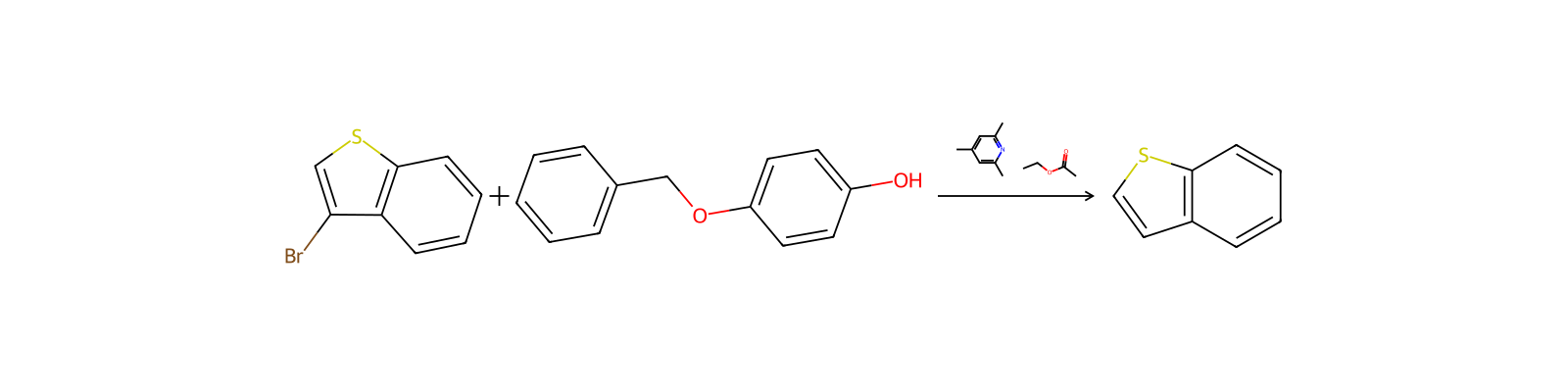
Grundinformationen
- Standard-SMILES
Oc1ccc(OCc2ccccc2)cc1- InChIKey
VYQNWZOUAUKGHI-UHFFFAOYSA-N- Summenformel
- C13H12O2
- Durchschnittliche Molmasse
- 200,23 g/mol
- Monoisotopische Masse
- 200,08372962
Überblick
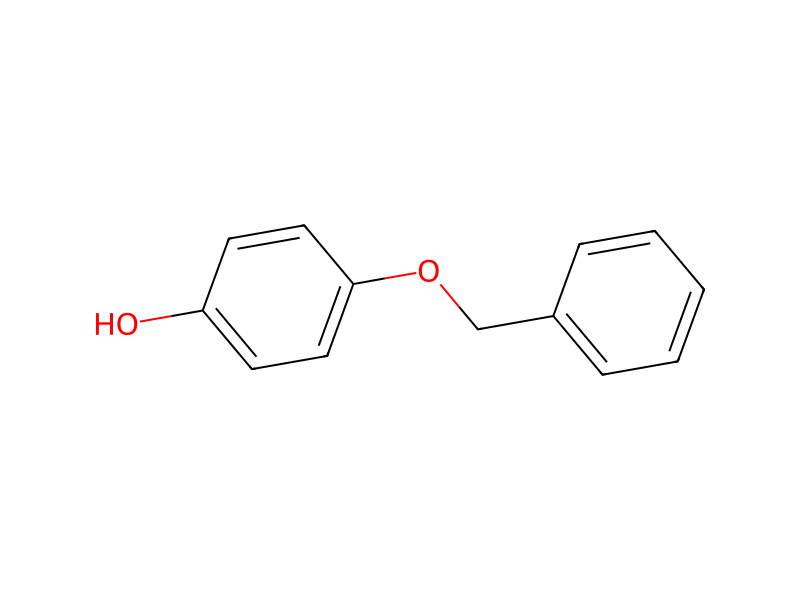
Monobenzone is the monobenzyl ether of hydroquinone. It is used as a topical drug for medical depigmentation. It has a role as a dermatologic drug, an allergen and a melanin synthesis inhibitor. It is functionally related to a hydroquinone.
Namen und Bezeichner
- Bevorzugter Name
- Monobenzone
- IUPAC
- 4-phenylmethoxyphenol
- Lokaler Name
- Monobenzon
- Englischer Name
- Monobenzone
- Summenformel
- C13H12O2
- Molmasse
- 200.23
Namen und Synonyme
Monobenzone103-16-24-(Benzyloxy)phenolHydroquinone monobenzyl etherBenoquinP-(BENZYLOXY)PHENOLBenzoquinDepigmanLeucodinineMonobenzonMonobenzyl hydroquinoneSuperlite
Weitere Namen anzeigen
PBPMonobenzone powder4-BENZYLOXYPHENOLAlbaP-BENZYLOXYPHENOLBenzyl hydroquinone
PigmexAgerite alba4-(Phenylmethoxy)phenol4-(Benzyloxyl)phenolHydroquinone benzyl etherDermochinonaCarmifalp-Hydroxyphenyl benzyl ether
Datenbank-Bezeichner
- CAS
103-16-2- PubChem CID
- 7638
- DTXSID
DTXSID2020717- ChEMBL
CHEMBL1388- ChEBI
CHEBI:34380- UNII
- 9L2KA76MG5
- EC Number
- 203-083-3
- Nikkaji
- J5.012A
Eigenschaften
Berechnete Struktureigenschaften
- XLogP
- 3,4
- Polarare Oberfläche (TPSA)
- 29,5 Ų
- H-Brücken-Donoren
- 1
- H-Brücken-Akzeptoren
- 2
- Frei drehbare Bindungen
- 3
- Schwere Atome
- 15
- Formalladung
- 0
- Komplexität
- 167
Experimentelle und physikochemische Eigenschaften
Chemical ClassesOther Classes -> Other Aromatic Compounds
DrugsPharmaceuticals -> Listed in ZINC15
SpringerMaterials PropertiesChemical diffusion
LogP3.2
OdorODORLESS
Density1.26
Color/Form
LUSTROUS LEAFLETS FROM WATER
WHITE CRYSTALLINE POWDER
Solubility
SOLUBILITY IN BOILNG WATER ABOUT 1.0 G/100 ML; SOL IN ALC, ETHER, BENZENE
INSOL IN WATER
FREELY SOL IN ACETONE
Practically insoluble in petroleum hydrocarbons, very soluble in benzene and alkalies.
3.92e-02 g/L
Human Drugs
FDA approved drugs -> Active ingredient
FDA approved drugs -> Active ingredient
Endocrine DisruptorsPotential endocrine disrupting compound
Melting Point
122.5 °C
110 - 118 °C
Vapor Pressure0.0000225 [mmHg]
Physikochemische Eigenschaften
- Schmelzpunkt
- 119 · 119-120 °C (lit.)
- Siedepunkt
- 297.96 °C · 297.96°C (rough estimate)
- Dichte
- 1 · 1,26 g/cm3
- Brechungsindex
- 1.5906 · 1.5906 (estimate)
- storage temp.
- 30 °C · Store below +30°C.
- Löslichkeit
- Chloroform (Slightly), DMSO (Slightly), Methanol (Slightly)
- pka
- 10.29 · 10.29±0.15(Predicted)
- Aggregatzustand
- Powder, Crystals, and/or Chunks
- Farbe
- Off-white to beige to brown
- Biologische Quelle
- rabbit
- Wasserlöslichkeit
- slightly soluble
- Merck
- 14 · 14,6248
- BRN
- 1958305 · 1958305
- InChI
- 1S/C13H12O2/c14-12-6-8-13(9-7-12)15-10-11-4-2-1-3-5-11/h1-9,14H,10H2
- InChIKey
- VYQNWZOUAUKGHI-UHFFFAOYSA-N
- SMILES
- Oc1ccc(OCc2ccccc2)cc1
- LogP
- 2.651 · 2.651 (est)
- CAS Datenbank
- 103 · 103-16-2(CAS DataBase Reference)
- NIST chemische Informationen
- Monobenzone(103-16-2)
- EPA chemische Informationen
- Monobenzone (103-16-2)
Sicherheit und Regulatorisches
GHS-Klassifizierung
GHS Classification
Warning
H317: May cause an allergic skin reaction [Warning Sensitization, Skin]
P261, P264+P265, P272, P280, P302+P352, P305+P351+P338, P321, P333+P317, P337+P317, P362+P364, and P501 (click each P-code to see the statement)
Warning
H317 (100%): May cause an allergic skin reaction [Warning Sensitization, Skin]
P261, P264+P265, P272, P280, P302+P352, P305+P351+P338, P321, P333+P317, P337+P317, P362+P364, and P501 (click each P-code to see the statement)
Gefahrenhinweise
Regulatory InformationChemical: Phenol, 4-(phenylmethoxy)-
Hazards Summary
A tumorigen and mild skin irritant; Intraperitoneal LD50 (rat) = 4500 mg/kg; [RTECS] Emergency treatment: symptomatic chemical dermal exposure; Reported skin sensitizer in the rubber industry; [HSDB] An eye irritant; May cause skin sensitization; [ESIS] A strong eye irritant; May cause skin sensitization; [Alfa Aesar MSDS]
Hazard Classes and Categories
Skin Sens. 1 (100%)
Eye irritation - category 2
Eye Irrit. 2
Sicherheit und Schutzausrüstung
Disposal Methods
SRP: At the time of review, criteria for land treatment or burial (sanitary landfill) disposal practices are subject to significant revision. Prior to implementing land disposal of waste residue (including waste sludge), consult with environmental regulatory agencies for guidance on acceptable disposal practices.
Toxikologische Informationen
Adverse EffectsSkin Sensitizer - An agent that can induce an allergic reaction in the skin.
Human Toxicity Excerpts
UNTOWARD EFFECTS, INCL MILD ERYTHEMA, DERMATITIS, & ECZEMATOUS REACTIONS, HAVE BEEN REPORTED. ... SYSTEMIC TOXICITY HAS NOT BEEN OBSERVED AFTER ITS LOCAL APPLICATION.
SUMMARY TOXICITY STATEMENT: ACUTE... LOW... LOW= CAUSES READILY REVERSIBLE TISSUE CHANGES WHICH DISAPPEAR AFTER EXPOSURE STOPS; CAUSES SOME DISCOMFORT.
... Many cases of dermatitis and leucoderma that were evidently caused by skin contact with rubber that contained hydroquinone monobenzyl ether as an antioxidant /have been reported/.
Non-Human Toxicity Excerpts
... No toxic changes were observed in guinea pigs ingesting this compound at the level of 160 mg/kg daily for 2 months for a total dose of 4.37 g. The only change noted was a depigmentation of the hair.
... No toxic changes were observed in mice that were injected ip with 600 mg/kg of hydroquinone monobenzyl ether daily for 3 weeks.
... A 5 percent concentration of hydroquinone monobenzyl ether in ethanol ... was nonsensitizing /to guinea pigs/.
Probable Routes of Human ExposureIN RUBBER INDUSTRY, NUMBER OF CHEMICAL AGENTS USED IN PREPARING RUBBER CAN SENSITIZE EXPOSED WORKERS. THESE INCL...ANTIOXIDANT, MONOBENZYL ETHER OF HYDROQUINONE...
Non-Human Toxicity ValuesLD50 Rat oral >3.2 g/kg /Hydroquinone monobenzyl ether (Sodium salt/
Sicherheitsdaten
- wgk
- 2
- tsca
- TSCA listed
- hs_code
- 29095090
- RTECS-Nr.
- SJ7700000
- risk_code
- 36-43
- Toxizität
- LD50 i.p. in mice: >600 mg/kg (Takahashi)
- hazard_code
- Xi
- hazard_note
- Irritant
- safety_code
- 24/25-26-37
- Speicherklasse
- 11 - Combustible Solids
- Giftige Stoffe Daten
- 103-16-2(Hazardous Substances Data)
- Hazard Classifications
- Eye Irrit. 2Skin Sens. 1
Chemie und Industrie
Pharmakologische Informationen
ATC Code
D - Dermatologicals
QD - Dermatologicals
Pharmacodynamics
Monobenzone is the monobenzyl ether of hydroquinone. Monobenzone, applied topically to the skin, is used as a depigmenting agent inhibitting melanin produced by polymerization of oxidation products of tyrosine and dihydroxyphenyl compounds. Monobenzone works by permanently removing color from normal skin located around skin with vitiligo.
Mechanism of Action
Monobenzone is a depigmenting agent whose mechanism of action is not fully understood. It is proposed that it increases the excretion of melanin from the melanocytes. This effect is erratic and may take one to four months to occur while existing melanin is lost with normal sloughing of the stratum corneum. Hyperpigmented skin appears to fade more rapidly than does normal skin, and exposure to sunlight reduces the depigmenting effect of the drug. Following skin depigmentation after topical application of monobenzone, the histological studies indicate similar results as that seen in vitiligo, where the epidermis is intact but with the absence of identifiable melanocytes.
...INTERFERES WITH BIOSYNTHESIS OF MELANIN. IT INHIBITS ENZYME TYROSINASE & THEREBY PREVENTS CONVERSION OF TYROSINE TO DIHYDROXYPHENYLALANINE, PRECURSOR OF MELANIN.
Metabolism/Metabolites... Predicted by its low chronic toxicity ... hydroquinone monobenzyl ether may readily be metabolized in the same manner as phenol.
FDA Pharmacological Classification
9L2KA76MG5
MONOBENZONE
Physiologic Effects [PE] - Depigmenting Activity
Established Pharmacologic Class [EPC] - Depigmenting Agent
Mechanisms of Action [MoA] - Melanin Synthesis Inhibitors
Monobenzone is a Depigmenting Agent. The mechanism of action of monobenzone is as a Melanin Synthesis Inhibitor. The physiologic effect of monobenzone is by means of Depigmenting Activity.
Cellular LocationsCytoplasm
Verwendung und Herstellung
Uses
Used as a solvent and in perfumes, soap, plastics, and pharmaceuticals; [Hawley] Used as an antioxidant (rubber, paraffins, and polyvinyl chloride), stabilizer, polymerization inhibitor, intermediate, and depigmentor to treat hyperpigmentation of the skin; [HSDB]
ANTIOXIDANT FOR PARAFFINS AND POLYVINYL CHLORIDE, POLYPROPYLENE AND POLYPROPYLENE OXIDE; CHEM INT IN ORGANIC SYNTHESIS
Rubber antioxidant, stabilizer, polymerization inhibitor, chemical intermediate.
MEDICATION
MEDICATION (VET)
U.S. Production
(1974) PROBABLY GREATER THAN 4.54X10+5 GRAMS
(1975) PROBABLY GREATER THAN 4.54X10+5 GRAMS
Methods of Manufacturing
REACTION OF SODIUM PHENOXIDE WITH BENZYL CHLORIDE; REACTION OF HYDROQUINONE AND BENZYL BROMIDE IN ALCOHOLIC POTASSIUM HYDROXIDE
PREPD IN VARIOUS WAYS. ONE METHOD INVOLVES CONDENSING SODIUM P-NITROPHENOLATE WITH BENZYL CHLORIDE TO PRODUCE BENZYL P-NITROPHENYL ETHER FOLLOWED BY 1) REDUCTION OF NITRO TO AMINO, 2) DIAZOTIZATION OF AMINO, & 3) HYDROLYTIC DECOMP OF DIAZONIUM CMPD TO CORRESPONDING PHENOL.
Formulations/PreparationsIT IS MARKETED AS MONOBENZONE LOTION, NF, 5% SOLN IN ISOPROPYL ALCOHOL & PROPYLENE GLYCOL, & MONOBENZONE OINTMENT, NF, WHICH CONTAINS 20% OF ACTIVE INGREDIENT IN SUITABLE BASE.
General Manufacturing InformationPhenol, 4-(phenylmethoxy)-: ACTIVE
Anwendungen
Beschreibung4-(Benzyloxy)phenol, also called monobenzone and monobenzyl ether of hydroquinone (MBEH) is an organic chemical in the phenol family with chemical formula C6H5CH2OC6H4OH. It is used as a topical drug for medical depigmentation. Monobenzone occurs as a white, almost tasteless crystalline powder, soluble in alcohol and practically insoluble in water.The topical application of monobenzone in animals, increases the excretion of melanin from the melanocytes. The same action is thought to be responsible for the depigmenting effect of the drug in humans.
Verwenden4-Benzyloxyphenol is used in the synthesis of bis(4-benzyloxyphenoxy)phenyl phosphine oxide. It plays an essential role in the preparation of hetaryl-azophenol dyes via heterocyclic amines in nitrosyl sulphuric acid. It is also used for polyester fiber dyeing and in rubber industry. It acts as a depigmenting agent.
Darstellung
synthetische4-Benzyloxyphenol Synthesis: Add 2.63g (0.028mol) of hydroquinone to a 100mL conical flask, weigh 1.12g (0.028mol) of sodium hydroxide, add 8mL of water, wait for the sodium hydroxide to dissolve and add dropwise to the conical flask with hydroquinone, shake well, then add 15mL of DMF and 2.52g (0.02mol) of benzyl chloride, under microwave radiation power of 320W The reaction was cooled to room temperature at the end of the reaction. The reaction was first adjusted to alkalinity with 10% sodium hydroxide, filtered, and the filtrate was washed with 10% sodium hydroxide until the filtrate was colorless (the filtrate was hydroquinone bis(benzyl ether), which could be recycled). The filtrate was acidified with hydrochloric acid to make Monobenzone completely precipitated, and then washed by filtration and ice water, recrystallized with alcohol and water, and decolorized by activated carbon to obtain 2.55g of white solid, the yield was 63.79%.
Vor- und nachgelagerte Produkte
Vorgelagerte Rohstoffe
Nachgelagerte Produkte
Anbieter1 Anbieter
ETA SCIENTIFIC Co.,Ltd[email protected]
Ergänzende Hinweise
DefinitionChEBI: Monobenzone is the monobenzyl ether of hydroquinone. It is used as a topical drug for medical depigmentation. It has a role as a melanin synthesis inhibitor, a dermatologic drug and an allergen. It derives from a hydroquinone.
Zugehörige Reaktionen
338


Verknüpfte Notizen
Wird geladen…