Reaktionsgleichung
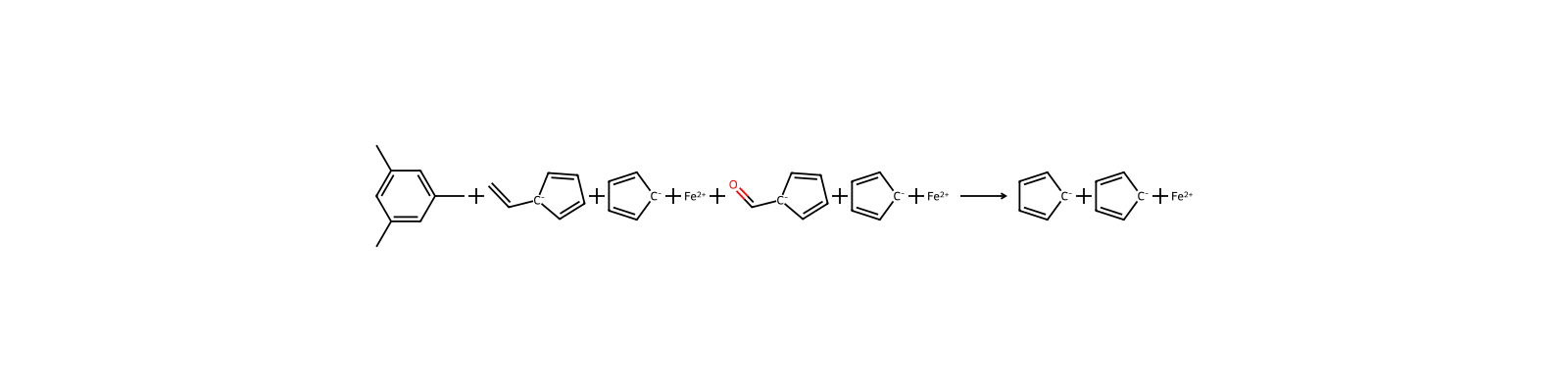
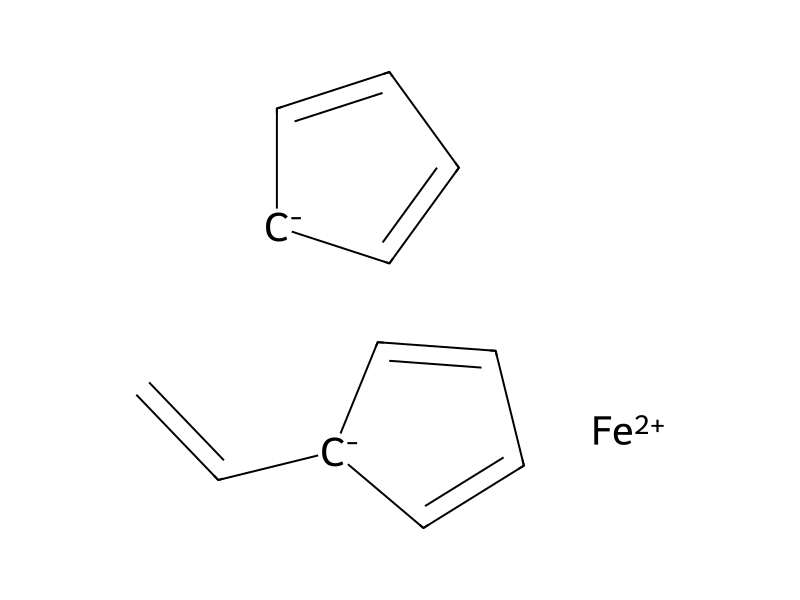
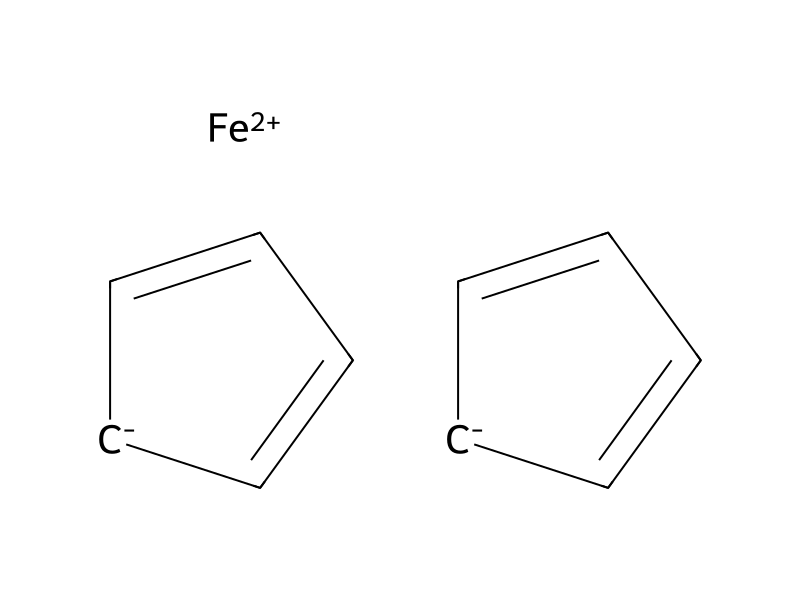
[C:1]1([CH3:9])[CH:6]=[C:5]([CH3:7])C=C(C)C=1.C([C-:12]1[CH:16]=[CH:15][CH:14]=[CH:13]1)=C.[CH-]1C=CC=C1.[Fe+2:22].[C-]1(C=O)C=CC=C1.[CH-]1C=CC=C1.[Fe+2]>>[CH-:5]1[CH:6]=[CH:1][CH:9]=[CH:7]1.[CH-:12]1[CH:16]=[CH:15][CH:14]=[CH:13]1.[Fe+2:22]Komponenten


Reaktionsbedingungen
- Temperatur
- 150 °C
Versuchsvorschrift
Approximately 10 mmol mesitylene solution of vinylferrocene (VFc) or ferrocenecarboxaldehyde (FcA) was put in a round bottom flask and bubbled with nitrogen or argon gas for at least 30 min. A piece of the H-terminated silicon substrate was then immersed in the solution and allowed to react with VFc or FcA for about 12 h under reflux at about 150° C. in an oil bath. During the reaction, the solution was also purged with nitrogen (or argon) to eliminate dissolved oxygen and to prevent the substrate from being oxidized. After the reaction, the substrate derivatized with VFc or FcA was rinsed with dichloromethane, acetonitrile and methanol, and dried under a stream of nitrogen gas. The derivatization of the H-terminated surface with ferrocene moieties as described in Example 2 is illustrated in FIG. 5.
Aufarbeitung
- custombubbled with nitrogen or argon gas for at least 30 min
- customto react with VFc or FcA for about 12 h
- customDuring the reaction
- customthe solution was also purged with nitrogen (or argon)
- dissolutionto eliminate dissolved oxygen
- customAfter the reaction
- washwas rinsed with dichloromethane, acetonitrile and methanol
- customdried under a stream of nitrogen gas
Quellen und Nachweise
- ORD-Eintrag
- ord-d6ce1df1970a418291ecdd71c526c1f8
- Quelldatensatz
- uspto-grants-2013_08
- Patentnummer
- US08506779B2
Verknüpfte Notizen
Wird geladen…