
Basic information
- Standard SMILES
CC(C)c1cc(C(C)C)c(-c2ccccc2P(C2CCCCC2)C2CCCCC2)c(C(C)C)c1- InChIKey
UGOMMVLRQDMAQQ-UHFFFAOYSA-N- Molecular formula
- C33H49P
- Average molar mass
- 476.7 g/mol
- Monoisotopic mass
- 476.35718856
Names & identifiers
- Preferred name
- 2-Dicyclohexylphosphino-2',4',6'-triisoprophylbiphenyl
- IUPAC
- dicyclohexyl-[2-[2,4,6-tri(propan-2-yl)phenyl]phenyl]phosphane
- English name
- X-PHOS
- Molecular formula
- C33H49P
- Molecular weight
- 476.72
Names & synonyms
564483-18-7X-PhosXphos phosphine ligand [MI]2-Dicyclohexylphosphino-2',4',6'-triisoprophylbiphenylR271FU23T8(2',4',6'-triisopropyl-1,1'-biphenyl-2-yl)dicyclohexylphosphineBuchwald phosphine ligands, xphos phosphine ligand-DTXSID504571262-(DICYCLOHEXYLPHOSPHINO)-2',4',6'-TRI(ISOPROPYL)BIPHENYLPhosphine, dicyclohexyl(2',4',6'-tris(1-methylethyl)(1,1'-biphenyl)-2-yl)-PHOSPHINE, DICYCLOHEXYL[2',4',6'-TRIS(1-METHYLETHYL)[1,1'-BIPHENYL]-2-YL]-RefChem:471294
Show more names
dicyclohexyl(2',4',6'-triisopropyl-[1,1'-biphenyl]-2-yl)phosphane2-(Dicyclohexylphosphanyl)-2',4',6'-tris(isopropyl)biphenyl5-BROMO-4-CHLORO-3-INDOLYL PHOSPHATE2-Dicyclohexylphosphino-22-Dicyclohexylphosphino-2,4,6-triisopropylbiphenylDicyclohexyl(2',4',6'-triisopropylbiphenyl-2-yl)phosphineX-PH0Sdicyclohexyl-[2-[2,4,6-tri(propan-2-yl)phenyl]phenyl]phosphane
XPHOS PHOSPHINE LIGANDDTXCID10407945XPhos2-(Dicyclohexylphosphino)-2',4',6'-triisopropylbiphenyl2-(Dicyclohexylphosphino)-2',4',6'-tri-i-propyl-1,1'-biphenyl2-Dicyclohexylphosphino-2',4',6'-triisopropylbiphenylMFCD04117682dicyclohexyl(2',4',6'-triisopropyl-[1,1'-biphenyl]-2-yl)phosphine
Database identifiers
- CAS
564483-18-7- PubChem CID
- 11155794
- DTXSID
DTXSID50457126- UNII
- R271FU23T8
- EC Number
- 611-387-6
- Nikkaji
- J1.911.682D、J3.650.095F
Properties
Computed structural properties
- XLogP
- 10.1
- Topological polar surface area
- 0 Ų
- Hydrogen bond donors
- 0
- Hydrogen bond acceptors
- 0
- Rotatable bonds
- 7
- Heavy atoms
- 34
- Formal charge
- 0
- Complexity
- 545
Physicochemical properties
- Melting point
- 187 · 187-190 °C(lit.)
- Boiling point
- 569.8 · 569.8±50.0 °C(Predicted)
- storage temp.
- Inert atmosphere,Room Temperature
- solubility
- Benzene (Slightly)
- form
- Powder
- color
- white
- Sensitive
- Air Sensitive
- Stability
- Air Sensitive
- InChI
- 1S/C33H49P/c1-23(2)26-21-30(24(3)4)33(31(22-26)25(5)6)29-19-13-14-20-32(29)34(27-15-9-7-10-16-27)28-17-11-8-12-18-28/h13-14,19-25,27-28H,7-12,15-18H2,1-6H3
- InChIKey
- UGOMMVLRQDMAQQ-UHFFFAOYSA-N
- SMILES
- P(C1CCCCC1)(C1CCCCC1)C1=CC=CC=C1C1=C(C(C)C)C=C(C(C)C)C=C1C(C)C
- CAS DataBase Reference
- 564483 · 564483-18-7(CAS DataBase Reference)
- FDA UNII
- 271 FU23T8 · R271FU23T8
- UNSPSC Code
- 12352200 · 12352200
- NACRES
- 82 · NA.82
- Symbol(GHS)
- 8 · GHS08
- Signal word
- Warning
- Hazard statements
- 351 · H351
- Precautionary statements
- 280 · P280
- PPE
- 95 · Eyeshields, Gloves, type N95 (US)
- Hazard Codes
- Xn
- Risk Statements
- 36 · 36/37/38-22-40
- Safety Statements
- 37 · 37/39-26-36/37
- WGK Germany
- 3 · 3
- TSCA
- No
- HS Code
- 29319090 · 29319090
- Storage Class
- 13 · 13 - Non Combustible Solids
Safety & regulation
GHS classification
GHS Classification
This chemical does not meet GHS hazard criteria for 35.2% (38 of 108) of reports.
Warning
H302+H312+H332 (21.3%): Harmful if swallowed, in contact with skin or if inhaled [Warning Acute toxicity, oral; acute toxicity, dermal; acute toxicity, inhalation];H302 (26.9%): Harmful if swallowed [Warning Acute toxicity, oral];H312 (21.3%): Harmful in contact with skin [Warning Acute toxicity, dermal];H315 (59.3%): Causes skin irritation [Warning Skin corrosion/irritation];H319 (59.3%): Causes serious eye irritation [Warning Serious eye damage/eye irritation];H332 (21.3%): Harmful if inhaled [Warning Acute toxicity, inhalation];H335 (58.3%): May cause respiratory irritation [Warning Specific target organ toxicity, single exposure; Respiratory tract irritation];H413 (25.9%): May cause long lasting harmful effects to aquatic life [Hazardous to the aquatic environment, long-term hazard]
P261, P264, P264+P265, P270, P271, P273, P280, P301+P317, P302+P352, P304+P340, P305+P351+P338, P317, P319, P321, P330, P332+P317, P337+P317, P362+P364, P403+P233, P405, and P501 (click each P-code to see the statement)
Aggregated GHS information provided per 108 reports by companies from 15 notifications to the ECHA C&L Inventory. Each notification may be associated with multiple companies.;Reported as not meeting GHS hazard criteria per 38 of 108 reports by companies.;There are 13 notifications provided by 70 of 108 reports by companies with hazard statement code(s).;Information may vary between notifications depending on impurities, additives, and other factors. The percentage value in parenthesis indicates the notified classification ratio from companies that provide hazard codes. Only hazard codes with percentage values above 10% are shown. For more detailed information, please visit ECHA C&L website.
Hazard information
Hazard Classes and CategoriesAcute Tox. 4 (26.9%);Acute Tox. 4 (21.3%);Skin Irrit. 2 (59.3%);Eye Irrit. 2 (59.3%);Acute Tox. 4 (21.3%);STOT SE 3 (58.3%);Aquatic Chronic 4 (25.9%)
Safety data
- PPE
- Eyeshields, Gloves, type N95 (US)
- wgk
- 3
- tsca
- No
- hs_code
- 29319090
- risk_code
- 36/37/38-22-40
- Signal word
- Warning
- Symbol(GHS)
- GHS08
- hazard_code
- Xn
- safety_code
- 37/39-26-36/37
- Storage Class
- 13 - Non Combustible Solids
- Hazard statements
- H351
- Precautionary statements
- P280
Chemistry & industry
Applications
Usessuzuki reaction
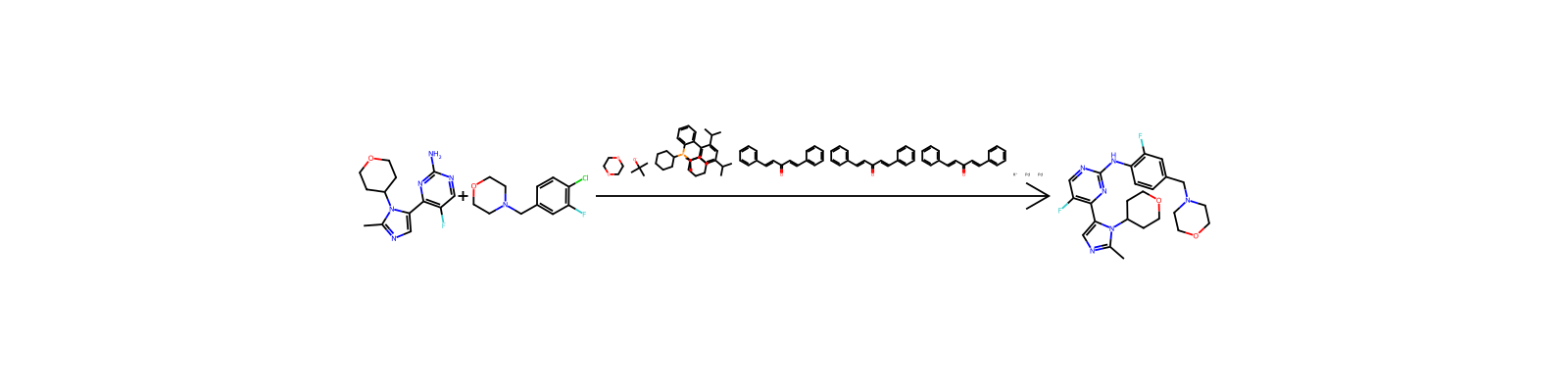
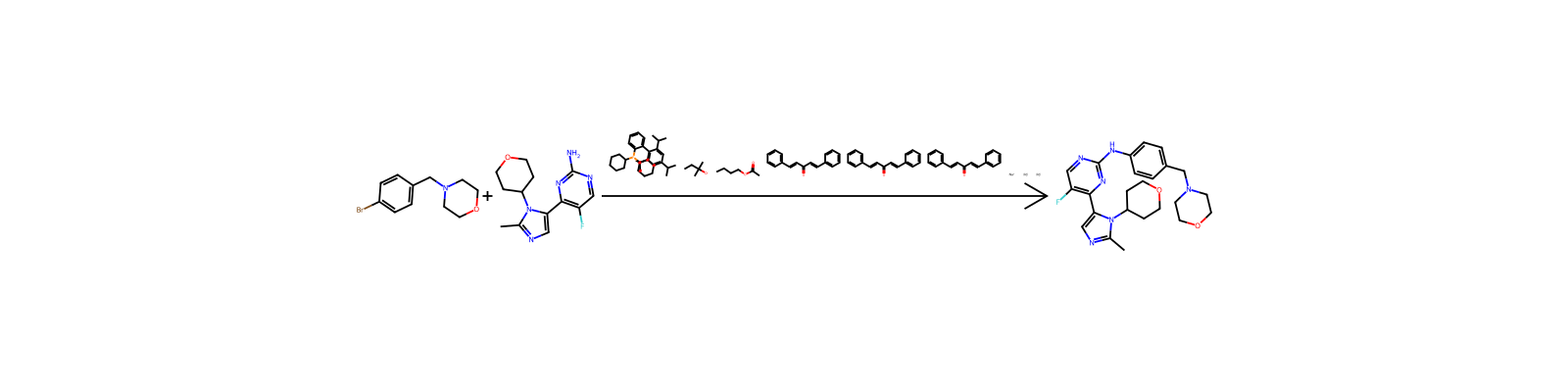
UsesExceptional ligands for Pd-catalyzed amination and amidation of aryl sulfonates. XPHOS is used as a regent in the synthesis of novel [1,2,4]triazolo[4,3-a]pyrazine derivatives as potential selective c-met inhibitors with improved pharmacokinetic properties.
General DescriptionThis product has been enhanced for catalytic efficiency.
Upstream & downstream products
Upstream raw materials
Downstream products
Suppliers50 total
国药集团化学试剂有限公司86-21-63210123 · [email protected]
梯希爱(上海)化成工业发展有限公司021-67121386 · [email protected]
上海阿拉丁生化科技股份有限公司400-6206333 13167063860 · [email protected]
INTATRADE GmbH+49 3493/605464 · [email protected]
韶远科技(上海)有限公司021-50795510 4000665055 · [email protected]
科瑞迪化学400-821-5857 021-64326257 · [email protected]
上海迈瑞尔生化科技有限公司4006356688 18621169109 · [email protected]
宇瑞(上海)化学有限公司02150456736 18602143071 · [email protected]
武汉易泰科技有限公司上海分公司18930552037 · [email protected]
宁波亿诺化学品有限公司86-574-27787657 · [email protected]
阿法埃莎(中国)化学有限公司400-6106006 · [email protected]
上海德默医药科技有限公司400-021-7337 2355568890 · [email protected]
北京亿思研科技开发中心010-56645598 13366904824 · [email protected]
上海柏卡化学技术有限公司400-026-1533/(021) 6478-0600 · [email protected]
上海瀚鸿科技股份有限公司021-54306202 13764082696 · [email protected]
上海萃森医药科技有限公司13472757003
上海相辉医药科技有限公司13761987713 · [email protected]
江苏欣诺科催化剂股份有限公司0512-67216630 67216634 · [email protected]
上海景颜化工科技有限公司13817811078 · [email protected]
嘉兴市艾森化工有限公司0573-85285100 18627885956 · [email protected]
维赛诺化学技术(北京)有限公司13811761079 · [email protected]
上海隆盛化工有限公司58099637 13585536065 · [email protected]
陕西瑞科新材料股份有限公司0917-8888777 18691786767
武汉丰泰威远科技有限公司027-87465837 19945049750 · [email protected]
石家庄科诺达科技有限公司0311-85461665 13784393231 · [email protected]
杭州东帆化学有限公司86-0571-85151182
孝感深远化工有限公司15527621225; 15527621225 · [email protected]
唐山默内德贸易有限公司0315-8309571 15633399667 · [email protected]
四川库利南科技有限公司400-1166-196 18981987031 · [email protected]
天津希恩思生化科技有限公司400 638 7771 · [email protected]
湖南汇百侍生物科技有限公司0731-85526065 13308475853 · [email protected]
南京维奥化工有限公司Please Send Email 18652950785 · [email protected]
南京辛西亚生物科技有限公司0550-5618439 15951861180 · [email protected]
武汉杂环科技有限公司027-88041443 13072715837 · [email protected]
上海源叶生物科技有限公司13636370518 · [email protected]
武汉泰宇凯尚科技有限公司027-027-87680032 18963957250 · [email protected]
上海琅迪信息科技中心13816752554
苏州思变化学技术有限公司0512-65617459 18915409046 · [email protected]
赛默飞世尔科技(中国)有限公司800-810-5118 · [email protected]
北京伊诺凯科技有限公司400-810-7969 010-59572699 · [email protected]
天津尚德药缘科技有限公司13132578992 · [email protected]
江苏艾康生物医药研发有限公司025-66113011 13913916777 · [email protected]
上海健超生物科技有限公司150-2103-5486 18017383231 · [email protected]
上海茵凯化学科技有限公司021-57603038 13601791340;13818007232 · [email protected]
TCI AMERICA800-4238616 · [email protected]
TOKYO CHEMICAL INDUSTRY CO., LTD.03-36680489 · [email protected]
TCI Europe320-37350700 · [email protected]
深圳康特腾科技有限公司86-0755-86635001 · [email protected]
越林试剂021-62960152 · [email protected]
广州爱纯医药科技有限公司020-39119399 18927568969 · [email protected]
Related reactions
4,253 records






Linked notes
Loading…