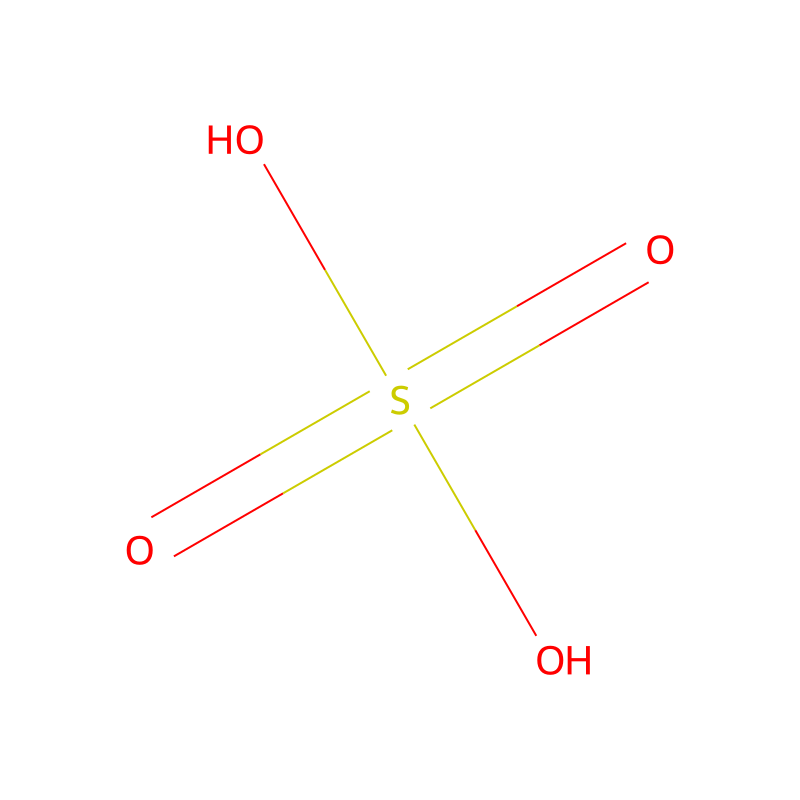
| GHS classification | DangerH314: Causes severe skin burns and eye damage [Danger Skin corrosion/irritation]P260, P264, P280, P301+P330+P331, P302+P361+P354, P304+P340, P305+P354+P338, P316, P321, P363, P405, and P501 (click each P-code to see the statement)This chemical does not meet GHS hazard criteria for < 0.1% (1 of 8811) of reports.H314 (> 99.9%): Causes severe skin burns and eye damage [Danger Skin corrosion/irritation] |
|---|
| Regulatory information | Chemical: Sulfuric acidHazard Traits - CarcinogenicityRespiratory ToxicityList II Chemical: A chemical, other than a List I chemical, specified by regulation that, in addition to legitimate uses, is used in manufacturing a controlled substance in violation of the Act. (21 eCFR 1310.02)Regulation (EC) No 1333/2008 (amended)Sulfuric acid is listed on the EPA's Chemical Data Reporting (CDR) system. Manufacturers and importers of Sulfuric acid are required to report information about their production and use of this chemical to the EPA under the Toxic Substances Control Act (TSCA). (40 eCFR Part 711)2008/937 |
|---|
| Other safety information | IMAP assessments - Sulfuric acid: Environment tier I assessment |
|---|
| DOT label | Corrosive |
|---|
| Fire hazards | It is highly reactive and capable of igniting finely-divided combustible materials on contact. When heated, it emits highly toxic fumes. Avoid heatwater and organic materials. Sulfuric acid is explosive or incompatible with an enormous array of substances. Can undergo violent chemical change at elevated temperatures and pressure. May react violently with water. When heated, it emits highly toxic fumes. Hazardous polymerization may not occur. (EPA, 1998)Excerpt from ERG Guide 137 [Substances - Water-Reactive - Corrosive]:· EXCEPT FOR ACETIC ANHYDRIDE (UN1715), THAT IS FLAMMABLE, some of these materials may burn, but none ignite readily.· Non-combustible, substance itself does not burn but may decompose upon heating to produce corrosive and/or toxic fumes.Not combustible. Many reactions may cause fire or explosion. Gives off irritating or toxic fumes (or gases) in a fire. Risk of fire and explosion on contact with bases, combustible substances, reducing agents, water or organic materials. |
|---|
| Fire potential | Not combustible. Strong dehydrating agent, which may cause ignition of finely divided materials on contact. Reaction with metals may produce hydrogen gas. Oxides of sulfur may be produced in fire. |
|---|
| Health hazards | Corrosive to all body tissues. Inhalation of vapor may cause serious lung damage. Contact with eyes may result in total loss of vision. Skin contact may produce severe necrosis. Fatal amount for adult: between 1 teaspoonful and one-half ounce of the concentrated chemical. Even a few drops may be fatal if the acid gains access to the trachea. Chronic exposure may cause tracheobronchitis, stomatitis, conjunctivitis, and gastritis. Gastric perforation and peritonitis may occur and may be followed by circulatory collapse. Circulatory shock is often the immediate cause of death. Those with chronic respiratory, gastrointestinal, or nervous diseases and any eye and skin diseases are at greater risk. (EPA, 1998)Contact with eyes or skin causes severe burns, the severity depending on the strength of the acid. Ingestion can cause severe irritation of mouth and stomach. (USCG, 1999)· CORROSIVE and/or TOXICinhalation, ingestion or contact (skin, eyes) with vapors, dusts or substance may cause severe injury, burns or death.· TOXIC and/or CORROSIVE |
|---|
| Hazards summary | 77%-98% acid causes second or third degree burns after short contact[CHRIS] Solutions <30% are corrosivesolutions >30% are highly corrosive[Quick CPC] Human carcinogen designation refers to sulfuric acid contained in strong inorganic acid mists. A corrosive substance that can cause pulmonary edema[ICSC] May cause erosion of teeth enamel[HSDB] See Strong inorganic acid mists. |
|---|
| DOT ID and guide | 1832 1372796 1571830 1371831 137(fuming)1832 137(spent) |
|---|
| FDA requirements | The ingredient is used as a pH control agent as defined in part 170.3(o)(23) of this chapter and processing aid as defined in part 170.3(o)(24) of this chapter. ... The ingredient is used in food at levels not to exceed good manufacturing practice in accordance with part 184.1(b)(1). Current good manufacturing practice results in a maximum level, as served, of 0.014% for alcoholic beverages as defined in part 170.3(n)(2) of this chapter and 0.0003% for cheeses as defined in part 170.3(n)(5) of this chapter. |
|---|
| Reactive group | Acids, Strong Oxidizing |
|---|
| EC classification | Symbol: CR: 35S: (1/2)-26-30-45Note: B |
|---|
| UN classification | UN Hazard Class: 8UN Pack Group: II |
|---|
| Fire fighting | Fight fire from safe distance or from protected location. Use care as water applied directly to this acid results in evolution of heat and causes spattering. Cool containers that are exposed to flames with streams of water until fire is out. Wear positive pressure breathing apparatus and special protective clothing.Excerpt from ERG Guide 137 [Substances - Water-Reactive - Corrosive]:NO water. In case of fire in the surroundings, use appropriate extinguishing media. In case of fire: keep drums, etc., cool by spraying with water. NO direct contact of the substance with water. |
|---|
| First aid measures | Fresh air, rest. Half-upright position. Artificial respiration may be needed. Refer immediately for medical attention.Wear protective gloves when administering first aid. First rinse with plenty of water for at least 15 minutes, then remove contaminated clothes and rinse again. Refer immediately for medical attention.Rinse with plenty of water for several minutes (remove contact lenses if easily possible). Refer immediately for medical attention.Rinse mouth. Give nothing to drink. Do NOT induce vomiting. Refer immediately for medical attention. |
|---|
| Accidental release measures | · CALL 911. Then call emergency response telephone number on shipping paper. If shipping paper not available or no answer, refer to appropriate telephone number listed on the inside back cover.· Do not touch damaged containers or spilled material unless wearing appropriate protective clothing.· ELIMINATE all ignition sources (no smoking, flares, sparks or flames) from immediate area. |
|---|
| First aid | Caution: Sulfuric acid is extremely corrosive. Caution is advised.Excerpt from NIOSH Pocket Guide for Sulfuric acid:General First Aid:(General first aid procedures) |
|---|
| Safe storage | Dry. Separated from food and feedstuffs and incompatible materials. See Chemical Dangers. Store only in original packaging. |
|---|
| Exposure control and personal protection | · Wear positive pressure self-contained breathing apparatus (SCBA).TIH (Toxic Inhalation Hazard) - Term used to describe gases and volatile liquids that are toxic when inhaled. Some are TIH materials themselves, e.g., chlorine, and some release TIH gases when spilled in water, e.g., chlorosilanes. [ERG 2016].0.1 [mg/m3], inhalable fraction[German Research Foundation (DFG)] |
|---|
| Fire fighting procedures | Suitable extinguishing media: Use water spray, alcohol-resistant foam, dry chemical, or carbon dioxide.Advice for firefighters: Wear self-contained breathing apparatus for firefighting if necessary.Extinguish fire using agents suitable for nearby fires. Use water spray only to keep fire-exposed containers cool.No water. In case of fire in the surroundings: powder, foam, carbon dioxide.In case of fire: keep drums, etc., cool by spraying with water but NO direct contact with water. |
|---|
| Storage conditions | Keep container tightly closed in a dry and well-ventilated place. Containers which are opened must be carefully resealed and kept upright to prevent leakage.Keep tightly closedSmoking, open lights, flames, and spark-producing tools shall not be permitted near sulfuric acid carboys, drums, tank cars, or metal storage tanks because of the possible production of explosive mixtures of hydrogen during storage.Store in cool, dry, well-ventilated location. Separate from combustibles, and other reactive materials. Separate from carbides, chlorates, fulminates, nitrates, picrates, and powdered metals. |
|---|
| Cleanup methods | SRP: Wastewater from contaminant suppression, cleaning of protective clothing/equipment, or contaminated sites should be contained and evaluated for subject chemical or decomposition product concentrations. Concentrations shall be lower than applicable environmental discharge or disposal criteria. Alternatively, pretreatment and/or discharge to a permitted wastewater treatment facility is acceptable only after review by the governing authority and assurance that "pass through" violations will not occur. Due consideration shall be given to remediation worker exposure (inhalation, dermal and ingestion) as well as fate during treatment, transfer and disposal. If it is not practicable to manage the chemical in this fashion, it must be evaluated in accordance with EPA 40 CFR Part 261, specifically Subpart B, in order to determine the appropriate local, state and federal requirements for disposal.ACCIDENTAL RELEASE MEASURES: Personal precautions, protective equipment and emergency procedures: Wear respiratory protection. Avoid breathing vapors, mist or gas. Ensure adequate ventilation. Evacuate personnel to safe areas. Environmental precautions: Do not let product enter drains. Methods and materials for containment and cleaning up: Soak up with inert absorbent material and dispose of as hazardous waste. Keep in suitable, closed containers for disposal.Consult an expert! Evacuate danger area! Do NOT absorb in saw-dust or other combustible absorbents ... Do NOT let this chemical enter the environment.On Land: For small spills, cover the contaminated area with sodium bicarbonate or a mixture of soda ash/slaked lime (50/50) and mix. Shovel the neutralized residues into containers for disposal. If neutralizing agent is not available, cover the area with sand or earth to absorb the liquid and shovel into containers for disposal.For more Cleanup Methods (Complete) data for Sulfuric acid (7 total), please visit the HSDB record page. |
|---|
| Nonfire spill response | Excerpt from ERG Guide 137 [Substances - Water-Reactive - Corrosive]: |
|---|
| Disposal methods | SRP: Recycle any unused portion of the material for its approved use or return it to the manufacturer or supplier. Ultimate disposal of the chemical must consider: the material's impact on air qualitypotential migration in air, soil or watereffects on animal, aquatic and plant lifeand conformance with environmental and public health regulations. If it is possible or reasonable use an alternative chemical product with less inherent propensity for occupational harm/injury/toxicity or environmental contamination.SRP: Wastewater from contaminant suppression, cleaning of protective clothing/equipment, or contaminated sites should be contained and evaluated for subject chemical or decomposition product concentrations. Concentrations shall be lower than applicable environmental discharge or disposal criteria. Alternatively, pretreatment and/or discharge to a permitted wastewater treatment facility is acceptable only after review by the governing authority and assurance that "pass through" violations will not occur. Due consideration shall be given to remediation worker exposure (inhalation, dermal and ingestion) as well as fate during treatment, transfer and disposal. If it is not practicable to manage the chemical in this fashion, it must be evaluated in accordance with EPA 40 CFR Part 261, specifically Subpart B, in order to determine the appropriate local, state and federal requirements for disposal.Product: Offer surplus and non-recyclable solutions to a licensed disposal company. Contact a licensed professional waste disposal service to dispose of this material. Dissolve or mix the material with a combustible solvent and burn in a chemical incinerator equipped with an afterburner and scrubberContaminated packaging: Dispose of as unused product.Sulfuric acid may be placed in sealed containers or absorbed in vermiculite, dry sand, earth, or a similar material ... It may also be diluted and neutralized.Add slowly to soln of soda ash and slaked lime with stirring. ... (Peer-review conclusions of an IRPTC expert consultation (May 1985)) |
|---|
| Spillage disposal | Evacuate danger area! Consult an expert! Personal protection: chemical protection suit including self-contained breathing apparatus. Do NOT let this chemical enter the environment. Do NOT absorb in saw-dust or other combustible absorbents. Collect leaking liquid in sealable containers. Absorb remaining liquid in dry sand or inert absorbent. Then store and dispose of according to local regulations. Cautiously neutralize remainder with lime or soda ash. |
|---|
| Treatment | The mainstay of treatment of any acid burn is copious irrigation with large amounts of tap water. To be most effective, treatment should be started immediately after exposure, preferably before arrival in the emergency department. Remove any contaminated clothing. Do not attempt to neutralize the burn with weak reciprocal chemicals (i.e. alkali for acid burns), because the heat generated from the chemical reaction may cause severe thermal injury. |
|---|
| Interactions | The effects of a combination of sulfuric acid mist at 8 mg/cu m and sulfur dioxide at 89 ppm on growth, lung pathology, and respiratory response were reported. In 8 pigs exposed for 8 hr, weight had decreased the day following exposure and growth was slower to resume than was observed for either agent administered separately. Two guinea pigs were exposed 72 hr following the initial exposure to the same concn for another 8 hr. In these reexposed animals, growth ceased entirely during the period of observation following reexposure. Pathologic lung changes were also more extensive than that observed for either agent alone, consisting of large areas of complete consolidation and hepatization involving entire lobes in all cases. In the reexposed animals, extensive hemorrhage and consolidation were present. It was commented that the general ill health of the animals was very likely related to the presence of the extensive lung damage. Labored breathing was very pronounced, continuing for 24 to 48 hr after exposure. In contrast, there were no noticeable respiratory effects in guinea pigs exposed to 8 mg/cu m sulfuric acid mist alone. Restlessness and annoyance initially appeared in animals exposed to 89 ppm sulfur dioxide alone, but disappeared after approximately 5 to 10 min exposure. It was therefore concluded that effects on growth, lung changes, and respiration were much more marked than would have been predicted from the use of either agent alone. |
|---|
| Target organs | Eyes, skin, respiratory system, teeth |
|---|
| Health effects | Sulfuric acid at a high concentration can cause very serious damage upon contact, as it not only causes chemical burns via hydrolysis, but also secondary thermal burns via dehydration. It burns the cornea and can lead to permanent blindness if splashed onto eyes. Accordingly, it rapidly attacks the cornea and can induce permanent blindness if splashed onto eyes. If ingested, it damages internal organs irreversibly and may even be fatal. Inhalation of sulfuric acid spray mist may produce severe irritation of respiratory tract, characterized by coughing, choking, or shortness of breath. Sulfuric acid is also a known carcinogen. Sulfuric acid may be toxic to kidneys, lungs, heart, cardiovascular system, upper respiratory tract, eyes and teeth. |
|---|
| Ecotoxicity values | LC50Species: Brachydanio rerio (fresh water fish)Conditions: staticConcentration: 82 mg/L for 24 hrConcentration: > 500 mg/L for 96 hrSpecies: Carassius auratus (fresh water fish)Conditions: static, 18-23 °C, oxygen concentration 6-7 mg/L in hard water, pH 4.5Concentration: 134 mg/mL for 96 hrConditions: static, 18-23 °C, oxygen concentration 6-7 mg/L, very soft water, pH 4.5Concentration: 17 mg/L for 96 hrFor more Ecotoxicity Values (Complete) data for Sulfuric acid (13 total), please visit the HSDB record page. |
|---|
| Environmental fate | TERRESTRIAL FATE: The pKa of sulfuric acid is 1.92 at 25 °C(1), indicating that this compound will exist almost entirely in anion form in the environment (as the sulfate ion). Sulfuric acid dissociates readily in water to form sulfate ions and hydrated protonsat pH 3.92 the dissociation is 99%(1). Sulfuric acid is totally miscible in water(1) suggesting a low Koc value(2) and high mobility in soil(3). The ionization of sulfuric acid also implies that sulfuric acid, itself, will not adsorb on particulate material or soil surfaces(1). Volatilization of sulfuric from moist soil surfaces is not expected to be an important fate process due to dissociation(SRC) and a very low measured Henry's Law constant of 9.9X10⁻¹⁵ atm-cu m/mole at 25 °C(4). Sulfuric acid is not expected to volatilize from dry soil surfaces(SRC) based upon a vapor pressure of 5.93X10⁻⁵ mm Hg at 25 °C(5). Anaerobic bacteria in sediments and soil can reduce sulfate to sulfur and hydrogen sulfide(6). In moist conditions, the sulfate anion may associate with cations including calcium, magnesium, and aluminum(6).AQUATIC FATE: The pKa of sulfuric acid is 1.92 at 25 °C(1), indicating that this compound will exist almost entirely in anion form in the environment (as the sulfate ion). Sulfuric acid dissociates readily in water to form sulfate ions and hydrated protonsat pH 3.92 the dissociation is 99%(1). The ionization of sulfuric acid implies that sulfuric acid, itself, will not adsorb on particulate material(1). Ions do not volatilize from water, therefore, volatilization from surface waters is not expected to be an important fate process(SRC). Although nearly totally ionized at environmental pHs, sulfuric acid has a measurable Henry's Law constant of 9.9X10⁻¹⁵ atm-cu m/mole at 25 °C(2). This Henry's Law constant also indicates that sulfuric acid is expected to be essentially nonvolatile from water surfaces(3). Its ionization implies that sulfuric acid, itself, will not accumulate in living tissues(1). Anaerobic bacteria in sediments can reduce sulfate to sulfur and hydrogen sulfide(4). In water, the sulfate anion may associate with cations including calcium, magnesium, and aluminum(4).Aquatic Fate: Since sulfuric acid is miscible with water, the presence of water in the soil or falling as precipitation at the time of the spill will influence the rate of chemical movement in the soil. ... Dilution through mixture with water will decrease the viscosity more than the mass density. This will have the net effect of increasing the velocity of downward movement in the soil. ... Upon reaching the groundwater table, the acid will continue to move in the direction of groundwater flow and downward since its mass density exceeds that of water. A contaminated plume will be produced, with diffusion and dispersion serving to reduce the acid concn somewhat.Aquatic Fate: Sulfuric acid will ultimately react with calcium and magnesium in water to form sulfate salts.For more Environmental Fate (Complete) data for Sulfuric acid (8 total), please visit the HSDB record page. |
|---|
| Adverse effects | Dermatotoxin - Skin burns. |
|---|
| Exposure routes | Serious local effects by all routes of exposure. The substance can be absorbed into the body by inhalation of its aerosol.inhalation, ingestion, skin and/or eye contactDermalEyes |
|---|
| Toxicity summary | IDENTIFICATION AND USE: Sulfuric acid is a colorless, oily liquid. It is used in manufacture of fertilizers, explosives, dyestuffs, other acids, parchment paper, glue, purification of petroleum, pickling of metal. HUMAN EXPOSURE AND TOXICITY: Sulfuric acid is corrosive to the skin, eyes and mucous membranes. Sulfuric acid is not considered as an allergen by skin contact in humans. Acute exposure of human volunteers to 100 ug/cu m of sulfuric acid resulted in increased mucociliary clearance of particles from the large proximal airwaysat higher levels 100 ug/cu m, the opposite occurred. Clearance from the distal airways was reduced at both levels. Eye damage as a result of contact with sulfuric acid from car batteries has been reported. The most common injuries were conjunctival and corneal chemical burns, and iritis. Death can occur from dermal burns from sulfuric acid exposure. Adult respiratory distress syndrome was reported in a man accidentally exposed to high concentrations of sulfuric acid fumes. Ten patients with sulfuric acid ingestion were studied. The extent and severity of upper gastrointestinal tract injury was determined by fiberoptic endoscopy and necropsy. All patients had esophageal and gastric involvement but the duodenum was spared in the majority. Complications and mortality occurred in patients with severe injury. Several epidemiological studies have suggested a relationship between exposure to inorganic acid mists containing sulfuric acid and an increased incidence of laryngeal cancer. IARC has concluded that occupational exposure to strong inorganic mists containing sulfuric acid is carcinogenic for humans. ANIMAL STUDIES: The LC50 values for sulfuric acid aerosol observed in acute inhalation studies conducted in different species are low and are most likely due to the corrosive/irritant effect of this chemical. For guinea pigs, the LC50 (8 hoursparticle size approximately 1 um) ranges from 0.018 to 0.050 mg/L, depending on the age of the animals. Depending on the duration of exposure, the LC50 ranges from 0.37 to 0.42 mg/L in rats, 0.6 to 0.85 mg/L in mice and 1.47 to 1.61 mg/L in rabbits. Acute oral toxicity study indicated an LD50 of 2140 mg/kg in the rat. Sulfuric acid is corrosive to the skin, eyes and mucous membranes. 10% solutions of sulfuric acid appear not to be irritating to the skin in different species. Conflicting results (not irritating or severely irritating) are observed in eye irritation studies using 10% sulfuric acid, depending on the protocol used (OECD/EU or US). In numerous repeated inhalation studies with sulfuric acid aerosol, toxicity was confined to changes in the structure and function of the respiratory tract, suggesting that it has a local effect and no systemic effects. The observed changes are related to the irritant properties of sulfuric acid and are most likely due to the H+ ion. In a 28-day inhalation study in the rat exposed to sulfuric acid aerosol, minimal squamous metaplasia was observed in the laryngeal epithelium following exposure to the lowest concentration used (0.3 mg/cu m). This effect was fully reversible. Exposure to 1.38 mg/cu m caused more severe metaplasia accompanied by cell proliferation. Sulfuric acid has been shown to be without effect in the Ames test using various strains of S. typhimurium (pH 4 to 9) and E. coli (0.002 to 0.005%), both with and without metabolic activation. It has been shown to cause chromosomal aberrations in CHO cells (pH 3.5 to 7.4, both with and without metabolic activation), and in a non-standard assay in developing sea urchin embryos (pH 5 - without metabolic activation). No carcinogenic effect was observed in carcinogenicity studies conducted by inhalation with sulfuric acid aerosol using 3 different animal species. Small increases in tumor incidence were reported in rats and mice after chronic gastric intubation or intratracheal instillation of sulfuric acid solution, but no clear conclusion can be drawn from these studies. Because sulfuric acid is a direct-acting toxicant, and because it is unlikely to reach the reproductive organs, reproductive effects in mammals are not likely to occur following exposure to sulfuric acid by any route. In a developmental toxicity/teratogenicity study conducted by inhalation with sulfuric acid aerosol, the NOAEL for maternal toxicity appears to be 20 mg/cu m in mice and rabbits. No evidence of fetotoxicity or teratogenicity was seen in either species. ECOTOXICITY STUDIES: The toxicity of sulfuric acid to aquatic life is a function of the resulting pH. A pH of 4.0 gave pronounced gill irritation and 3.5 caused death of sunfish, bass, and carp. The concentration of hydrogen ion which caused 50% mortality of bluegill in 96 hr (96 hr LC50) was between 3.5 and 3.0. In fish the major causes of toxicity seem to be related to disruption of sodium balance and respiration.Many strong acids cause tissue burns through the denaturation of proteins and partial hydrolysis of proteins. Most proteins denature at pH values of less than 3-4. The large-scale denaturation of proteins, de-esterification of lipids and subsequent desiccation of tissues leads to chemical burns. Symptoms include itching, bleaching or darkening of skin or tissues, blistering and burning sensations. More specifically, sulfuric acid readily decomposes proteins and lipids through amide hydrolysis and ester hydrolysis upon contact with living tissues. In addition, it exhibits a strong dehydrating property on carbohydrates, liberating extra heat and causing secondary thermal burns. The strong oxidizing property may also extend its corrosiveness on the tissue. Because of such reasons, damage posed by sulfuric acid is potentially more severe than that caused by other comparable strong acids, such as hydrochloric acid and nitric acid. |
|---|
| Ecotoxicity excerpts | /BIRDS and MAMMALS/ One study was submitted to EPA showing that birds sprayed directly in field pens with both dilute (about 2.1 Molar solution) and undiluted (about 7.03 Molar solution) forms of Enquik (N-TAC, Sulfuric Acid, Monourea adduct) exhibited dermal toxicity effects to areas that were not covered by feathers. Specifically, the eyes and feet were burned by the sulfuric acid released. The birds also showed a significant increase in hemorrhagic enteritis (a severe irritation of the gastrointestinal tract). another pen study showed dermal toxicity effects to birds after varying reentry times following spraying on alfalfa with dilute Enquick. /Enquik, mixture//AQUATIC SPECIES/ The toxicity of sulfuric acid to aquatic life is a function of the resulting pH ... A pH of 4.0 gave pronounced gill irritation and 3.5 caused death of sunfish, bass, and carp./AQUATIC SPECIES/ Simultaneous measurements of whole body proton flux and both unidirectional and net ion fluxes together with assessment of the blood acid-base, respiratory gas, electrolyte, and lactate status were performed in white suckers originating from a natural soft water lake (0.18 milliequivalent Ca2+/L) in Ontario, Canada. Fish were examined under control (pH approximately 6.8) and acidic conditions (pH approximately 4.3) in natural soft water at 19-20 °C. Resting blood composition was similar to that previously reported for this species in natural hard water except for a marked enhancement of both plasma pH and HCO3- levels. Acute acid exposure promoted a net influx of protons (or loss of base) concomitant with a plasma acidosis of mixed origin (metabolic plus respiratory) as well as whole-body Na+, Cl-, Ca+2, and K+ losses. Circulating ion levels in plasma were partially conserved by intracellular ion depletion. Radiotracer studies showed that net body losses of Na+ and Cl- ensured largely through stimulation of efflux components and, to a lesser extent, inhibition of inward transport. Cl- loss eventually exceeded that of Na+, suggesting transport of an unmeasured substance to maintain electroneutrality. A markedly reduced blood PO2, enhanced plasma PCO2, elevated blood lactate levels, and hemoconcn were also observed ... Thus, disturbances in acid-base regulation, ion regulation, and respiratory function may all contribute to acid toxicity in white suckers in natural soft water. /Acids//AQUATIC SPECIES/ The concn of hydrogen ion which caused 50% mortality of bluegill in 96 hr (96 hr LC50) was between 3.5 and 3.0 for 4 acids: sulfuric, nitric, phosphoric and hydrochloric. Any contribution by the anions of these acids to fish toxicity may be similar. This suggests that the quantity rather than the quality of acids is the primary factor in fish toxicity brought about by acid precipitation.For more Ecotoxicity Excerpts (Complete) data for Sulfuric acid (14 total), please visit the HSDB record page. |
|---|
| Plant Concentrations | Sulfuric acid has reportedly been detected in tobacco plants(1).Sulfuric acid occurrence in plants(1).[Table#3615] |
|---|
| Signs and Symptoms | Cough. Sore throat. Burning sensation. Shortness of breath. Laboured breathing.Redness. Pain. Blisters. Serious skin burns.Redness. Pain. Severe burns.Burns in mouth and throat. Burning sensation behind the breastbone. Abdominal pain. Vomiting. Shock or collapse.irritation eyes, skin, nose, throatpulmonary edema, bronchitisemphysemaconjunctivitisstomatisdental erosioneye, skin burnsdermatitisSkin contact can cause redness, pain, blisters and severe skin burns. Sulfuric acid may cause severe burns to the eye and permanent eye damage. Severe and rapid corrosive burns of the mouth, gullet and gastrointestinal tract will result if sulfuric acid is swallowed. Symptoms include burning, choking, nausea, vomiting and severe pain. |
|---|
| FIFRA requirements | (a) Residues of sulfuric acid are exempted from the requirement of a tolerance when used in accordance with good agricultural practice when used as a herbicide in the production of garlic and onions, and as a potato vine dessicant in the production of potatoes. (b) Residues of sulfuric acid are exempted from the requirement of a tolerance in cattle, meatgoat, meathog, meathorse, meatsheep, meatpoultry, fatpoultry, meatpoultry, meat, byproductseggmilkfish, shellfish, and irrigated crops when it results from the use of sulfuric acid as an inert ingredient in a pesticide product used in irrigation conveyance systems and lakes, ponds, reservoirs, or bodies of water in which fish or shellfish are cultivated. The sulfuric acid is not to exceed 10% of the pesticide formulation (non-aerosol formulations only).Residues of sulfuric acid are exempted from the requirement of a tolerance when used in accordance with good agricultural practice as inert (or occasionally active) ingredients in pesticide formulations applied to growing crops or to raw agricultural commodities after harvest. Use: pH control agent. Limit: Not to exceed 10% of the pesticide formulationnon-aerosol formulations only.Residues of the following chemical substances are exempted from the requirement of a tolerance when used in accordance with good manufacturing practice as ingredients in an antimicrobial pesticide formulation, provided that the substance is applied on a semi-permanent or permanent food-contact surface (other than being applied on food packaging) with adequate draining before contact with food. (a) The following chemical substances when used as ingredients in an antimicrobial pesticide formulation may be applied to: Food-contact surfaces in public eating places, dairy-processing equipment, and food-processing equipment and utensils. Sulfuric acid is included on this list. Limit: Food-contact surfaces in public eating places, dairy-processing equipment, and food-processing equipment and utensils in antimicrobial formulations. Not to exceed 600 ppm.Based on the reviews of the generic data for the active ingredients mineral acids /hydrogen chloride, phosphoric acid, sodium bisulfate and sulfuric acid/, the Agency has sufficient information on the health effects of mineral acids and on its potential for causing adverse effects in fish and wildlife and the environment. Therefore, the Agency concludes that products, labeled and used as specified in this Reregistration Elegibility Decision, containing mineral acids for all uses except for the use of sulfuric acid on potato vines, are eligible for reregistration.As the federal pesticide law FIFRA directs, EPA is conducting a comprehensive review of older pesticides to consider their health and environmental effects and make decisions about their continued use. Under this pesticide reregistration program, EPA examines newer health and safety data for pesticide active ingredients initially registered before November 1, 1984, and determines whether the use of the pesticide does not pose unreasonable risk in accordance to newer safety standards, such as those described in the Food Quality Protection Act of 1996. Pesticides for which EPA had not issued Registration Standards prior to the effective date of FIFRA '88 were divided into three lists based upon their potential for human exposure and other factors, with List B containing pesticides of greater concern than those on List C, and with List C containing pesticides of greater concern than those on List D. Sulfuric acid is found on List D. Case No: 4064Pesticide type: fungicide, herbicide, antimicrobialCase Status: RED Approved 2/94OPP has made a decision that some/all uses of the pesticide are eligible for reregistration, as reflected in a Reregistration Eligibility Decision (RED) document .Active ingredient (AI): sulfuric acidData Call-in (DCI) Date(s): 2/23/94, 10/13/95AI Status: OPP has completed a Reregistration Eligibility Decision (RED) for the case/AI. |
|---|
| CERCLA reportable quantities | Persons in charge of vessels or facilities are required to notify the National Response Center (NRC) immediately, when there is a release of this designated hazardous substance, in an amount equal to or greater than its reportable quantity of 1000 lb or 454 kg. The toll free number of the NRC is (800) 424-8802. The rule for determining when notification is required is stated in 40 CFR 302.4 (section IV.D.3.b).Releases of CERCLA hazardous substances are subject to the release reporting requirement of CERCLA section 103, codified at 40 CFR part 302, in addition to the requirements of 40 CFR part 355. Sulfuric acid is an extremely hazardous substance (EHS) subject to reporting requirements when stored in amounts in excess of its threshold planning quantity (TPQ) of 1000 lbs. |
|---|
| Clean Water Act requirements | Sulfuric acid is designated as a hazardous substance under section 311(b)(2)(A) of the Federal Water Pollution Control Act and further regulated by the Clean Water Act Amendments of 1977 and 1978. These regulations apply to discharges of this substance. This designation includes any isomers and hydrates, as well as any solutions and mixtures containing this substance. |
|---|