
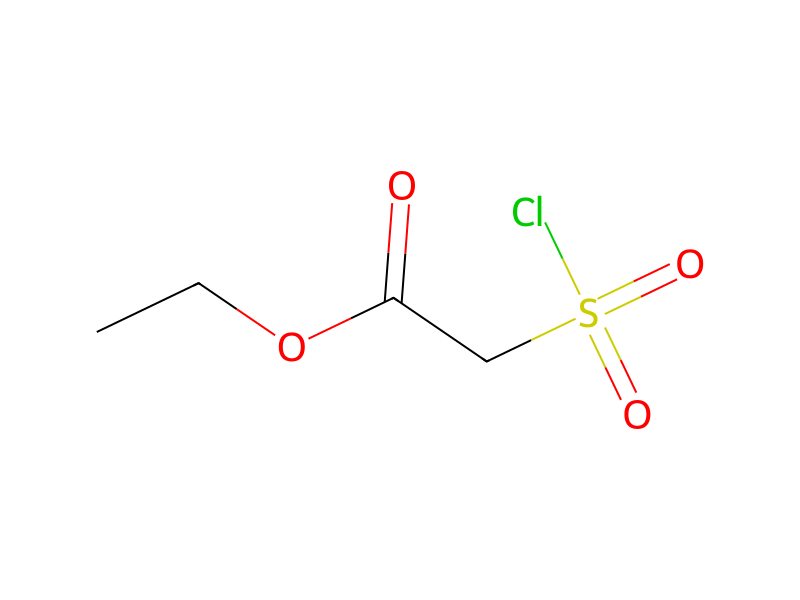
Basic information
- Standard SMILES
CCOC(=O)CS(=O)(=O)Cl- InChIKey
DWCZKKQRUBQFIB-UHFFFAOYSA-N- Molecular formula
- C4H7ClO4S
- Average molar mass
- 186.61 g/mol
- Monoisotopic mass
- 185.97535738
Names & identifiers
- Preferred name
- Ethyl (chlorosulfonyl)acetate
- IUPAC
- ethyl 2-chlorosulfonylacetate
- English name
- Ethyl 2-(Chlorosulfonyl)acetate
- Molecular formula
- C4H7ClO4S
- Molecular weight
- 186.61
Names & synonyms
ethyl (chlorosulfonyl)acetateDTXSID40481258RefChem:1084694DTXCID4043206855896-93-0Ethyl 2-(chlorosulfonyl)acetateethyl 2-chlorosulfonylacetateCHLOROSULFONYL ACETIC ACID ETHYL ESTERMFCD08458866ethyl chlorosulfonylacetateethyl2-(chlorosulfonyl)acetateAcetic acid, (chlorosulfonyl)-, ethyl ester
Show more names
ETHANOIC ACIDACITIC ACIDC2ETHYLIC ACIDFEMA 2006ACETIC ACIDEMETHANECARBOXYLIC ACIDVINEGAR ACIDACETIC ACID R
Ethyl(chlorosulfonyl)acetateSCHEMBL977691ethyl 2-chlorosulfonyl acetateethyl-2-(chlorosulfonyl)acetateDWCZKKQRUBQFIB-UHFFFAOYSA-Nethoxycarbonylmethylsulfonyl chlorideSBB066453chlorosulfonyl-acetic acid ethyl ester
Database identifiers
- CAS
55896-93-0- PubChem CID
- 12225100
- DTXSID
DTXSID40481258- EC Number
- 818-924-5
- Nikkaji
- J2.419.166D
Properties
Computed structural properties
- XLogP
- 0.7
- Topological polar surface area
- 68.8 Ų
- Hydrogen bond donors
- 0
- Hydrogen bond acceptors
- 4
- Rotatable bonds
- 4
- Heavy atoms
- 10
- Formal charge
- 0
- Complexity
- 202
Physicochemical properties
- Melting point
- 16.2 °C · 16.2 °C(lit.)
- Boiling point
- 117 · 117-118 °C(lit.)
- Density
- 1.049 g/mL · 1.049 g/mL at 25 °C(lit.)
- vapor density
- 2.07 · 2.07 (vs air)
- vapor pressure
- 11.4 mm · 11.4 mm Hg ( 20 °C)
- refractive index
- 20 · n20/D 1.371(lit.)
- Flash point
- 104 °F · 104 °F
- storage temp.
- 2 · Inert atmosphere,2-8°C
- solubility
- Benzene, Chloroform
- pka
- 4.76 · 4.76(at 25℃)
- form
- Liquid
- color
- Colorless
- Odor
- Characteristic vinegar, pungent; vinegar-like; sharp.
- Relative polarity
- 0.648 · 0.648
- Exposure limits
- 10 ppm; · ACGIH: TWA 10 ppm; STEL 15 ppmOSHA: TWA 10 ppm(25 mg/m3)NIOSH: IDLH 50 ppm; TWA 10 ppm(25 mg/m3); STEL 15 ppm(37 mg/m3)
- Stability
- Moisture Sensitive, Hygroscopic
- CAS DataBase Reference
- 55896 · 55896-93-0(CAS DataBase Reference)
- Symbol(GHS)
- 7 · GHS07
- Signal word
- Warning
- Hazard statements
- 315 · H315-H319
- Precautionary statements
- 264 · P264-P280-P302+P352-P337+P313-P305+P351+P338-P362+P364-P332+P313
- Hazard Codes
- C,Xi
- Risk Statements
- 34 · 34-41
- Safety Statements
- 23 · 23-26-45-39
- RIDADR
- 2790 · UN 2790 8/PG 2
- WGK Germany
- 1 · 1
- RTECS
- 1225000 · AF1225000
- HazardClass
- 8 · 8
- PackingGroup
- III
- HS Code
- 2915907098 · 2915907098
Safety & regulation
GHS classification
GHS Classification
Danger
H314 (100%): Causes severe skin burns and eye damage [Danger Skin corrosion/irritation]
P260, P264, P280, P301+P330+P331, P302+P361+P354, P304+P340, P305+P354+P338, P316, P321, P363, P405, and P501 (click each P-code to see the statement)
Aggregated GHS information provided per 2 reports by companies from 1 notifications to the ECHA C&L Inventory.
Hazard information
Hazard Classes and CategoriesSkin Corr. 1B (100%)
Safety data
- wgk
- 1
- rtecs
- AF1225000
- ridadr
- UN 2790 8/PG 2
- hs_code
- 2915907098
- risk_code
- 34-41
- Signal word
- Warning
- Symbol(GHS)
- GHS07
- hazard_code
- C,Xi
- safety_code
- 23-26-45-39
- hazard_class
- 8
- packing_group
- III
- Hazard statements
- H315-H319
- Precautionary statements
- P264-P280-P302+P352-P337+P313-P305+P351+P338-P362+P364-P332+P313
Chemistry & industry
Applications
UsesUsed in the manufacture of vinyl acetate monomer (VAM), this accounts for one-third of acetic acid consumption. As a food additive (condiment, ingredient) or as a preservative, it is found in Vinegar solutions, usually between 3-9% in concentration. In the production of various synthetic materials, acetic acid is a precursor and solvent for various glues and plastics such as polyvinyl acetate, cellulose acetate, nylon and dimethyl terephthalate. As an agent widely used in the manufacture of organic compounds which are constituent parts of food ingredients, various dye stuffs and perfumes, Rayon fibre, synthetic fibres and textiles, inks and dyes, soft drinks bottles, rubbers and plactics, and pesticides. In waste water treatment, acetic acid may be dosed to correct highly alkaline pH from where caustic soda has been dosed to the fluid stream. For testing blood in clinical laboratory For the treatment of outer ear infections from the growth of fungus and bacteria
UsesPharmaceutic aid (acidifying agent).
UsesAcetic Acid is an acid produced chemically from the conversion of alcohol to acetaldehyde to acetic acid. it is the principal component of vinegar which contains not less than 4 g of acetic acid in 100 cm3 at 20°c. the approved salts include sodium acetate, calcium acetate, sodium diacetate, and calcium diacetate. it is used as a preservative, acidulant, and flavoring agent in catsup, mayonnaise, and pickles. it can be used in conjunction with leavening agents to release carbon dioxide from sodium bicarbonate.
UsesColorless liquid prepared by the distillation of wood or the oxidation of dilute ethyl alcohol. Acetic acid has a very pungent smell, and the vapors are flammable. When obtained in full strength (99 percent), it congeals as an ice-like solid at 16.7°C. For this reason the term glacial is also used to describe this acid. It is soluble in water, alcohol, ether, chloroform, and gelatin. Acetic acid was used as a restrainer for the physical development of calotypes, Niépceotypes, and collodion plates. Photographers also used it to retard non-image reduction of these processes by adding it to the silver nitrate solution. Acetic acid is used as a stop bath and as a solvent for gelatin.
Upstream & downstream products
Upstream raw materials
Downstream products
Suppliers50 total
上海康恩博医药科技有限公司17510465506 · [email protected]
上海阿拉丁生化科技股份有限公司400-6206333 13167063860 · [email protected]
Hebei Chuanghai Biotechnology Co., Ltd+86-17732866630 · [email protected]
Hebei Zhuanglai Chemical Trading Co Ltd+86-16264648883 · [email protected]
上海麦克林生化科技股份有限公司021-50706066 15221275939 · [email protected]
合肥翰刚医药科技有限公司+8618062405514 · [email protected]
武汉布林科技有限公司3456065315 13260619011 · [email protected]
杭州摩库生物医药科技有限公司+86-057181025280; +8617767106207 · [email protected]
安徽合诺生物科技有限公司0555-2761852
Hebei Yanxi Chemical Co., Ltd.+86-17531190177 · [email protected]
韶远科技(上海)有限公司021-50795510 4000665055 · [email protected]
Aladdin Scientific[email protected]
毕佳索(上海毕得医药科技股份有限公司)400-6005915 · [email protected]
Syntechem Co.,Ltd[email protected]
北京索莱宝科技有限公司010-50973130 17801761073 · [email protected]
武汉易泰科技有限公司上海分公司18930552037 · [email protected]
安耐吉化学&3A(安徽泽升科技有限公司)021-58432009 400-005-6266 · [email protected]
阿法埃莎(中国)化学有限公司400-6106006 · [email protected]
浙江泽天精细化工有限公司18957127338 · [email protected]
广东方信生物科技有限公司0751-2838688 13376594225 · [email protected]
河北缤享新材料科技有限公司+8618633865755 · [email protected]
西安泽邦生物科技有限公司[email protected]
上海相辉医药科技有限公司13761987713 · [email protected]
南京诺利斯医药科技有限公司13901585132 · [email protected]
武汉丰泰威远科技有限公司+86-27-8746-5837 +86-18627785180 · [email protected]
武汉丰泰威远科技有限公司027-87465837 19945049750 · [email protected]
河北茹麒科技有限公司176-03256889 17603256889 · [email protected]
Hebei Zhuanglai Chemical Trading Co.,Ltd13343047651 · [email protected]
上海心语生物科技有限公司13301728348 · [email protected]
湖南汇百侍生物科技有限公司0731-85526065 13308475853 · [email protected]
上海健超生物科技有限公司150-2103-5486 18017383231 · [email protected]
上海贤鼎生物科技有限公司4009209199 · [email protected]
北京环宇世纪化学科技有限公司hysj_bj.com
北京奥秘佳得医药科技有限公司+86-13522808617 · [email protected]
成都零六生物科技有限公司400-1166-196 13458535857 · [email protected]
陕西缔都医药化工有限公司029-81024372 17792795018 · [email protected]
上海兴鲁化工科技有限公司02120970332 · [email protected]
武汉贝乐叶生物医药科技有限公司18086118078 · [email protected]
池州凯隆进出口贸易有限公司[email protected]
天津荣燊化工有限公司18317763565; 18317763565 · [email protected]
南京益冉生物医药科技有限公司13770809694 · [email protected]
Accela ChemBio Inc.+1(858) 699-3322 · [email protected]
上海皓之翔生物科技有限公司(原上海拓青化工有限公司)526763801 13301653310 · [email protected]
邯郸统溢新材料科技有限公司17330042575 · [email protected]
Henan Alfa Chemical Co., Ltd+8618339805032 · [email protected]
上海谱振生物科技有限公司4001650900 13817534909 · [email protected]
广东翁江化学试剂有限公司0751-2815987 13927875076 · [email protected]
HANGZHOU LEAP CHEM CO., LTD.+86-571-87711850 +86-15355479329 · [email protected]
嘉兴市德亿化工有限公司0573-85866609 13325730825 · [email protected]
Alfa Chemistry+1-5166625404 · [email protected]
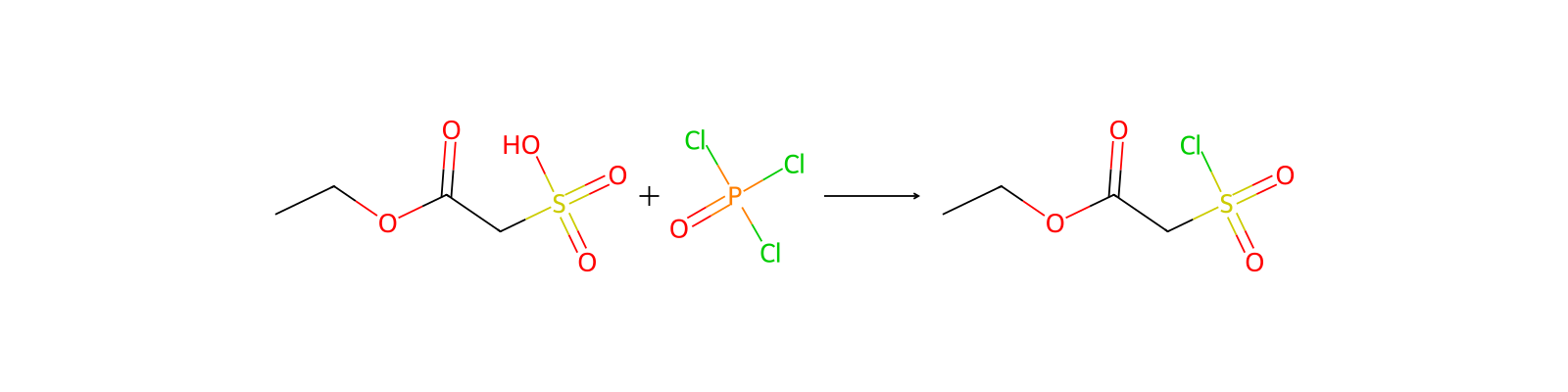
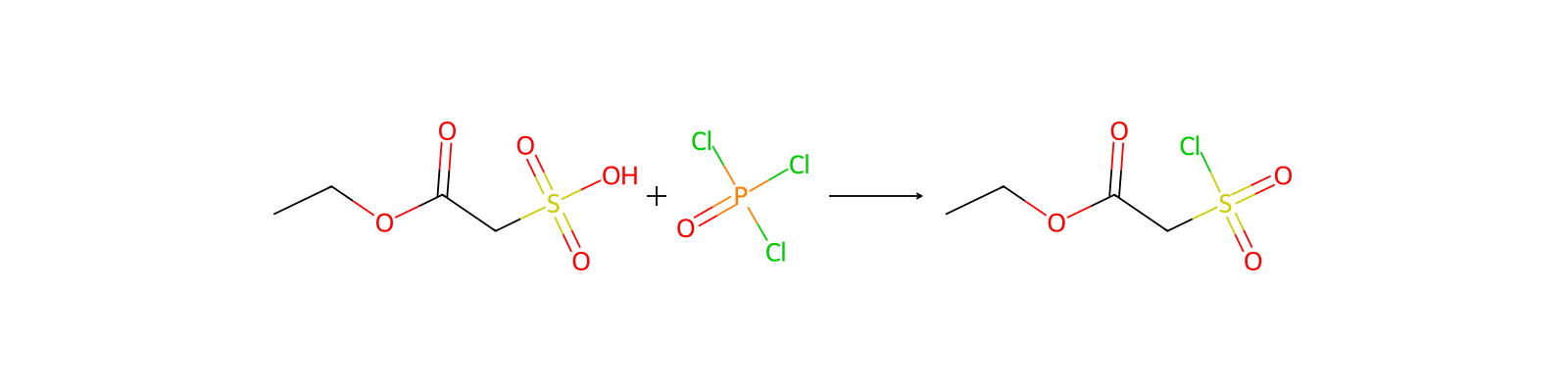
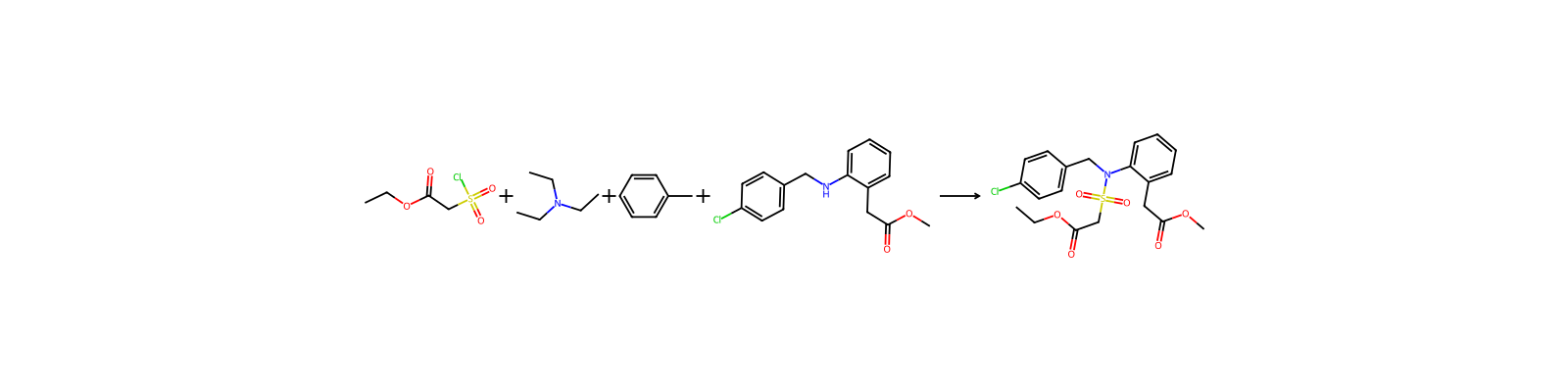
Related reactions
23 records



Linked notes
Loading…