Levonorgestrel
Levonorgestrel-D6 · D-NORGESTREL · sh850 · wy3707 · sh70850 · monovar · Neogest · Ovrette
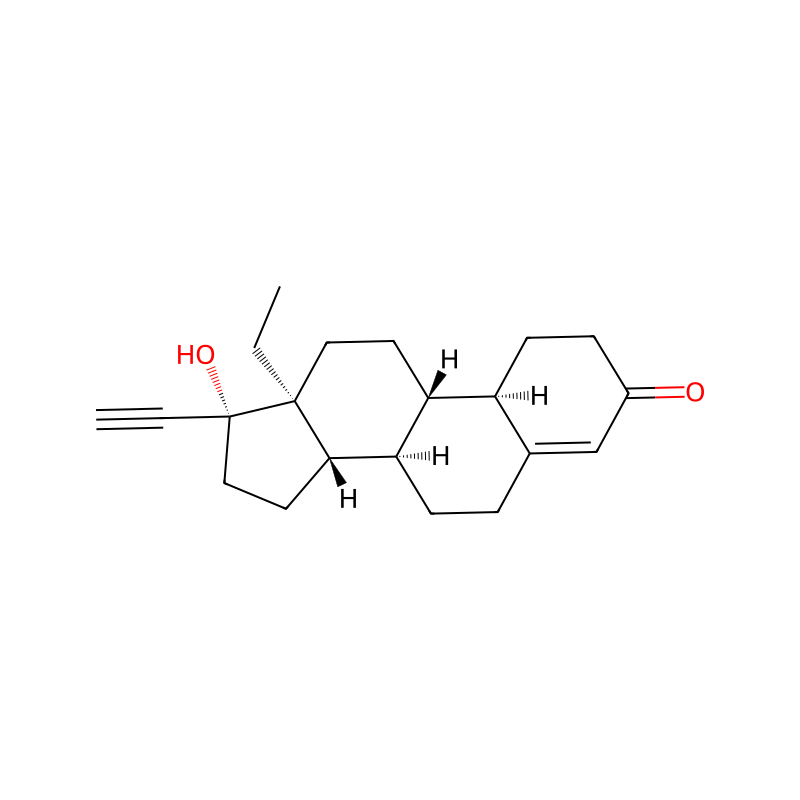
Identifiers & Physical Properties
| CAS No. | 6533-00-2 |
|---|---|
| Molecular formula | C21H28O2 |
| Average molar mass | 312.4 g/mol |
| Monoisotopic mass | 312.20893013 g/mol |
| SMILES | C#C[C@]1(O)CC[C@H]2[C@@H]3CCC4=CC(=O)CC[C@@H]4[C@H]3CC[C@@]21CC |
| InChIKey | WWYNJERNGUHSAO-XUDSTZEESA-N |
| PubChem CID | 13109 |
| ChEMBL | CHEMBL1389 |
| ChEBI | CHEBI:6443 |
| EC No. | 212-349-8 |
Chemical & Physical Properties
| XLogP | 3.3 |
|---|---|
| Topological polar surface area | 37.3 |
| Hydrogen bond donors | 1 |
| Hydrogen bond acceptors | 2 |
| Rotatable bonds | 2 |
| Heavy atoms | 23 |
| Formal charge | 0 |
| Complexity | 609 |
| LogP (partition coefficient) | 3.8 |
| LogS | -4.7 |
| Odor | Odorless |
| Color/Form | Crystals from methanolCrystals from diethyl ether-hexaneWhite...crystalline powder |
| Solubility | 2.05In water, 1.73 mg/L, temp not stated.Soluble in ethanol (1 in 120), chloroform (1 in 15), diethyl ether (1 in 400) and dioxane.5.83e-03 g/LChloroform (Slightly, Sonicated), Dichloromethane (Slightly), Methanol (Slightly) |
| Boiling point | 459.1392.36°C (rough estimate) |
| Decomposition | When heated to decomposition, it emits acrid smoke and irritating fumes.When heated to decomposition it emits acrid smoke and irritating fumes. |
| Melting point | 232-239205-207 °C206 °C240 °C239-241 °C(lit.) |
| Optical Rotation | Crystals, mp 238-232 °C. Specific optical rotation: +40.7 deg at 25 °C/D (CHCl3) /Norgetrel (+)-form/Specific optical rotation: -324 deg at 20 °C/D (c = 0.496 in CHCl3) |
| Physical Description | Solid |
| Dissociation Constants | 17.91,-1.5 |
| Collision Cross Section | 206.0 Ų [M+Na]+ [CCS Type: DTBuffer gas: N2Ionization: ESI+Dataset: TOXCASTSource Identifier: DTXSID3047477]178.6 Ų [M+H]+ [CCS Type: TWMethod: calibrated with polyalanine and drug standards]177.66 Ų [M+H]+ [CCS Type: TW167.85 Ų [M+H-H2O]+ [CCS Type: TW173.03 Ų [M+K]+ [CCS Type: TW |
| Density | 1.0697 (rough estimate) |
| Refractive index | 1.4900 (estimate) |
| Storage conditions | 2-8°C |
| Physical state | Solid |
| pKa (acidity coefficient) | 13.09±0.40(Predicted) |
| Color | Crystals from diethyl ether-hexane |
| Henry's law constant | 1.3×10⁴ mol/(m3Pa) at 25℃, HSDB (2015) |
| Exposure limits | PC-TWA: 0.5 mg/m3PC-STEL: 2 mg/m3 |
| InChI | InChI=1/C21H28O2/c1-3-20-11-9-17-16-8-6-15(22)13-14(16)5-7-18(17)19(20)10-12-21(20,23)4-2/h2,13,16-19,23H,3,5-12H2,1H3/t16-,17+,18+,19-,20-,21-/s3 |
| InChIKey | WWYNJERNGUHSAO-XUDSTZEESA-N |
| SMILES | [C@]12(CC)CC[C@]3([H])[C@@]4([H])CCC(=O)C=C4CC[C@@]3([H])[C@]1([H])CC[C@@]2(O)C#C |&1:0,5,7,17,19,23,r| |
| CAS DataBase Reference | 6533-00-2(CAS DataBase Reference) |
| FDA UNII | 3J8Q1747Z2 |
| Proposition 65 List | Norgestrel |
| NCI Drug Dictionary | Norplant |
| EPA Substance Registry System | Norgestrel (6533-00-2) |
| GHS pictogram | GHS07,GHS08 |
| Signal word | Danger |
| GHS hazard statements | H315-H319-H360FD |
| GHS precautionary statements | P202-P264-P280-P302+P352-P305+P351+P338-P308+P313 |
| Hazard symbols | Xn |
| Risk statements (R) | 20/21/22-40 |
| Safety statements (S) | 22-36 |
| Water hazard class (WGK) | 3 |
| RTECS number | JF8259000 |
| Customs code | 2937230000 |
| Hazardous substances data | 6533-00-2(Hazardous Substances Data) |
| Toxicity | LD50 oral in rat: 5010mg/kg |
Safety & Regulations
| GHS classification | DangerH302 (20.2%): Harmful if swallowed [Warning Acute toxicity, oral]H312 (61.8%): Harmful in contact with skin [Warning Acute toxicity, dermal]H332 (61.8%): Harmful if inhaled [Warning Acute toxicity, inhalation]H351 (97.8%): Suspected of causing cancer [Warning Carcinogenicity]H360 (94.4%): May damage fertility or the unborn child [Danger Reproductive toxicity]H362 (31.5%): May cause harm to breast-fed children [Reproductive toxicity, effects on or via lactation]P203, P260, P261, P263, P264, P270, P271, P280, P301+P317, P302+P352, P304+P340, P317, P318, P321, P330, P362+P364, P405, and P501 (click each P-code to see the statement)Aggregated GHS information provided per 89 reports by companies from 11 notifications to the ECHA C&L Inventory. Each notification may be associated with multiple companies.Information may vary between notifications depending on impurities, additives, and other factors. The percentage value in parenthesis indicates the notified classification ratio from companies that provide hazard codes. Only hazard codes with percentage values above 10% are shown. For more detailed information, please visit ECHA C&L website. |
|---|---|
| Regulatory information | Hazard Traits - Reproductive ToxicityAuthoritative List - Prop 65Report - regardless of intended function of ingredient in the productHazard Traits - Developmental Toxicity |
| Other safety information | IMAP assessments - 18,19-Dinorpregn-4-en-20-yn-3-one, 13-ethyl-17-hydroxy-, (17.alpha.)-: Environment tier I assessmentIMAP assessments - 18,19-Dinorpregn-4-en-20-yn-3-one, 13-ethyl-17-hydroxy-, (17.alpha.)-: Human health tier I assessment |
| FDA requirements | The Approved Drug Products with Therapeutic Equivalence Evaluations identifies currently marketed prescription drug products, including norgestrel, approved on the basis of safety and effectiveness by FDA under sections 505 of the Federal Food, Drug, and Cosmetic Act. /In combination with Ethinylestradiol/The Approved Drug Products with Therapeutic Equivalence Evaluations identifies currently marketed prescription drug products, including levonorgestrel, approved on the basis of safety and effectiveness by FDA under sections 505 of the Federal Food, Drug, and Cosmetic Act. |
| Toxic Combustion Products | Emits toxic fumes under fire conditions. |
| Hazard Classes and Categories | Skin Irrit. 2 (11.1%)Eye Irrit. 2 (11.1%)Carc. 2 (92.6%)Repr. 1A (88.9%)Lact. (88.9%)Aquatic Acute 1 (88.9%)Aquatic Chronic 1 (88.9%)Acute Tox. 4 (20.2%)Acute Tox. 4 (61.8%)Carc. 2 (97.8%)Repr. 1A (94.4%)Lact. (31.5%) |
| Fire fighting procedures | Water spray, dry chemical, carbon dioxide, or foam as appropriate for surrounding fire and materials. ... As with all fires, evacuate personnel to a safe area. Firefighters should use self-contained breathing equipment and protective clothing. |
| Storage conditions | Store at controlled room temperature 15 °C to 25 °C (59 °F to 77 °F).Store in tight, light-resistant container as defined in the USP-NF. This material should be handled and stored per label instructions to ensure product integrity.Store levonorgestrel tablets at 20 to 25 °C (68 to 77 °F)The levonorgestrel-releasing intrauterine system should be stored at a temperature of 25 °C but may be exposed to temperatures ranging from 15-30 °C. The system is supplied as a sterile device and should not be resterilized. The device should not be used if the inner package is damaged or has been opened.Estrogen-progestin combinations generally should be stored at room temperature in a well-closed container, unless otherwise specified by the manufacturer. Commercially available oral contraceptives are provided in mnemonic (memory-aid) dispensing packages which are exempted from the child-safety packaging requirements of the US Poison Prevention Packaging Act of 1970. |
| Cleanup methods | Wear approved respiratory protection, chemically compatible gloves, and protective clothing. Wipe up spillage or collect spillage using a high-efficiency vacuum cleaner. Avoid breathing dust. Wash spill site. Place spillage and all contaminated cleanup materials in a thick plastic hazardous waste disposal bag or leakproof container and label it CAUTION: HAZARDOUS CHEMICAL WASTE. |
| Disposal methods | SRP: Expired or waste pharmaceuticals shall carefully take into consideration applicable DEA, EPA, and FDA regulations. It is not appropriate to dispose by flushing the pharmaceutical down the toilet or discarding to trash. If possible return the pharmaceutical to the manufacturer for proper disposal being careful to properly label and securely package the material. Alternatively, the waste pharmaceutical shall be labeled, securely packaged and transported by a state licensed medical waste contractor to dispose by burial in a licensed hazardous or toxic waste landfill or incinerator.SRP: At the time of review, regulatory criteria for small quantity disposal are subject to significant revision, however, household quantities of waste pharmaceuticals may be managed as follows: Mix with wet cat litter or coffee grounds, double bag in plastic, discard in trash. |
| Preventive Measures | As a general rule, when handling USP Reference Standards, avoid all contact and inhalation of dust, mists, and/or vapors associated with the material. Wash thoroughly after handling.This material is assumed to be combustible. As with all dry powders, it is advisable to ground mechanical equipment in contact with dry material to dissipate the potential buildup of static electricity.Engineering controls such as exhaust ventilation are recommended.SRP: Contaminated protective clothing should be segregated in such a manner so that there is no direct personal contact by personnel who handle, dispose, or clean the clothing. The completeness of the cleaning procedures should be considered before the decontaminated protective clothing is returned for reuse by the workers. Contaminated clothing should not be taken home at the end of shift, but should remain at employee's place of work for cleaning.For more Preventive Measures (Complete) data for NORGESTREL (6 total), please visit the HSDB record page. |
| Personal Protective Equipment (PPE) | Use a NIOSH-approved respirator, if it is determined to be necessary by an industrial hygiene survey involving air monitoring. In the event a respirator is not required, an approved dust mask should be used. Gloves: Chemically compatible. Eye Protection: Safety goggles or glasses. Protective clothing: Protect exposed skin. |
| Interactions | The metabolism of estrogens and progestagens may be increased by concomitant use of substances known to induce drug-metabolising enzymes, specifically cytochrome P450 enzymes, such as anticonvulsants (eg phenobarbital, phenytoin, carbamazepine), and anti-infectives (eg rifampicin, rifabutin, nevirapine, efavirenz).Ritonavir and nelfinavir, although known as strong inhibitors, by contrast exhibit inducing properties when used concomitantly with steroid hormones.Herbal preparations containing St John's Wort (Hypericum Perforatum) may induce the metabolism of estrogens and progestagens.Phenytoin and rifampin increase the serum concentrations of sex hormone-binding globulin (SHBG)this significantly decreases the serum concentration of free drug for some progestins, which is a special concern in patients using progestins for contraception. /Progestins/Drug interaction data are not available for rifabutin, but because its structure is similar to that of rifampin, similar precautions with its use with progestins may be warranted. ... /Progestins/Significant changes (increase or decrease) in the plasma levels of the progestin have been noted in some cases of coadministration with HIV protease inhibitors or with non-nucleoside reverse transcriptase inhibitors. |
| Environmental fate | TERRESTRIAL FATE: Based on a classification scheme(1), an estimated Koc value of 8,100(SRC), determined from a structure estimation method(2), indicates that norgestrel is expected to be immobile in soil(SRC). Volatilization of norgestrel from moist soil surfaces is not expected to be an important fate process(SRC) given an estimated Henry's Law constant of 7.7X10⁻¹⁰ atm-cu m/mole(SRC), using a fragment constant estimation method(3). Norgestrel is not expected to volatilize from dry soil surfaces(SRC) based upon an estimated vapor pressure of 1.0X10⁻⁹ mm Hg at 25 °C(SRC), determined from a fragment constant method(4). Biodegradation data in soil were not available(SRC, 2011).AQUATIC FATE: Based on a classification scheme(1), an estimated Koc value of 8100(SRC), determined from a structure estimation method(2), indicates that norgestrel is expected to adsorb to suspended solids and sediment(SRC). Volatilization from water surfaces is not expected(3) based upon an estimated Henry's Law constant of 7.7X10⁻¹⁰ atm-cu m/mole(SRC), developed using a fragment constant estimation method(4). According to a classification scheme(5), an estimated BCF of 91(SRC), from an estimated log Kow of 3.48(6) and a regression-derived equation(7), suggests the potential for bioconcentration in aquatic organisms is moderate(SRC). Biodegradation data in water were not available(SRC, 2011).ATMOSPHERIC FATE: According to a model of gas/particle partitioning of semivolatile organic compounds in the atmosphere(1), norgestrel, which has an estimated vapor pressure of 1.0X10⁻⁹ mm Hg at 25 °C(SRC), determined from a fragment constant method(2), is expected to exist solely in the particulate phase in the ambient atmosphere. Particulate-phase norgestrel may be removed from the air by wet or dry deposition(SRC). Norgestrel contains chromophores that absorb at wavelengths >290 nm(4), and therefore may be susceptible to direct photolysis by sunlight(SRC).TERRESTRIAL FATE: Based on a classification scheme(1), an estimated Koc value of 8,100(SRC), determined from a structure estimation method(2), indicates that levonorgestrel is expected to be immobile in soil(SRC). Volatilization of levonorgestrel from moist soil surfaces is not expected to be an important fate process(SRC) given an estimated Henry's Law constant of 7.7X10⁻¹⁰ atm-cu m/mole(SRC), using a fragment constant estimation method(3). Levonorgestrel is not expected to volatilize from dry soil surfaces(SRC) based upon an estimated vapor pressure of 3.92X10⁻¹⁰ mm Hg at 25 °C(SRC), determined from a fragment constant method(4). Biodegradation data in soil were not available(SRC, 2011).AQUATIC FATE: Based on a classification scheme(1), an estimated Koc value of 8,100(SRC), determined from a structure estimation method(2), indicates that levonorgestrel is expected to adsorb to suspended solids and sediment(SRC). Volatilization from water surfaces is not expected(3) based upon an estimated Henry's Law constant of 7.7X10⁻¹⁰ atm-cu m/mole(SRC), developed using a fragment constant estimation method(4). According to a classification scheme(5), an estimated BCF of 92(SRC), from an estimated log Kow of 3.48(6) and a regression-derived equation(7), suggests the potential for bioconcentration in aquatic organisms is moderate(SRC). Biodegradation data in water were not available(SRC, 2011).ATMOSPHERIC FATE: According to a model of gas/particle partitioning of semivolatile organic compounds in the atmosphere(1), levonorgestrel, which has an estimated vapor pressure of 3.9X10⁻¹⁰ mm Hg at 25 °C(SRC), determined from a fragment constant method(2), is expected to exist solely in the particulate phase in the ambient atmosphere. Particulate-phase levonorgestrel may be removed from the air by wet or dry deposition(SRC). Levonorgestrel contains chromophores that absorb light at <290 nm(3) and therefore may be susceptible to direct photolysis by sunlight(SRC). |
| Adverse effects | For the emergency contraceptive, the timing of when patients ingest the drug plays a significant role in its efficacy in preventing pregnancythis means the adverse effect of pregnancy occurring becomes greater when the patient waits over 48 to 72 hours or longer to take the drug, as well as when taking the medication during an ovulation cycle. Many studies have shown a reduction in efficacy in women with a BMI greater than 30 kg/m², but this difference is not significant enough to restrict the use of levonorgestrel in this subset of patients. This appears to be due to the lower bioavailability of a standard 1.5 mg dose of levonorgestrel, which is free plus albumin-bound, in these patients. The most common adverse effects are menstrual abnormalities, amenorrhea, dysmenorrhea, oligomenorrhea, headaches, and acne. Other adverse effects that can occur are nausea and vomiting. Importantly, this drug does not protect any patient from sexually transmitted infections and diseases, and the advice to patients is to use condoms for protection.For the intrauterine device, 0.1% of pregnancies occur within the first year of use. The intrauterine device most commonly causes menstrual irregularities, including amenorrhea and oligomenorrhea. Other adverse effects of the intrauterine device are similar to those of the combined oral contraceptive pill route, such as ovarian cysts, weight gain, depression, acne, and low libido.Levonorgestrel oral emergency contraception is generally well tolerated, with most adverse effects being common and non-serious. Rare serious events such as ectopic pregnancy, stroke, and anaphylaxis have been reported, although infrequently.Subdermal implants are associated with higher risks of acne, weight gain, dissatisfaction, and removal due to adverse effects compared to levonorgestrel intrauterine systems in reproductive-aged women. These differences may influence contraceptive choice based on individual tolerance and preferences.Drug-Drug Interactions* The following may diminish the therapeutic effect of progestins: acitretin, anticoagulants, antidiabetic agents, barbiturates, carbamazepine, fosphenytoin, griseofulvin, mifepristone, phenytoin, primidone, retinoic acid derivatives, and St. John's wort.* The following may decrease the serum concentration of progestins: aprepitant, artemether, bexarotene, bile acid sequestrants, bosentan, brigatinib, clobazam, CYP3A4 inducers, dabrafenib, darunavir, efavirenz, encorafenib, eslicarbazepine, exenatide, felbamate, fosaprepitant, ixazomib, lamotrigine, lesinurad, lixisenatide, lopinavir, lorlatinib, lumacaftor, metreleptin, mycophenolate, nelfinavir, nevirapine, oxcarbazepine, perampanel, rifamycin derivatives, saquinavir, sugammadex, and topiramate.* The following may increase the serum concentration of progestins: atazanavir, cobicistat, tipranavir, and voriconazole.* The following may enhance the thrombogenic effect of progestins: C1-inhibitors and carfilzomib. |
| Exposure routes | Levonorgestrel is not subjected to a "first-pass" effect and is virtually 100% bioavailable. |
| Milk Concentrations | Small amounts of oral contraceptive steroids have been identified in the milk of nursing mothers and a few adverse effects on the child have been reported, including jaundice and breast enlargement. In addition, oral contraceptives given in the postpartum period may interfere with lactation by decreasing the quantity and quality of breast milk. If possible, the nursing mother should be advised not to use oral contraceptives but to use other forms of contraception until she has completely weaned her child.EXPERIMENTAL: ... Twelve healthy exclusively breastfeeding volunteers received 1.5 mg levonorgestrel (LNG). Women refrained from nursing for 72 hr after dosing and fed their infants with milk frozen beforehand. Serial blood and milk samples were collected for 120 hr and assayed for LNG and sex hormone binding globulin. LNG concentrations peaked in plasma and in milk 1-4 hr and 2-4 hr after dosing, respectively. Concentrations in milk (M) paralleled those in plasma (P) but were consistently lower (mean M:P ratio 0.28). Estimated infant exposure to LNG is 1.6 ug on the day of dosing (1 ug in the first 8 hr), 0.3 ug on the second day and 0.2 ug on the third day. Nursing mothers may need EC. These results suggest that to limit infant exposure to the period of maximum LNG excretion in milk, mothers should discontinue nursing for at least 8 hr, but not more than 24 hr, after EC. |
| Toxicity summary | Signs and Symptoms of OverdoseThere is a lack of research regarding the toxic levels and effects in humans. While there could be toxicity seen in patients with liver disease, there is not enough research to support this. More human trial studies will be necessary. There have been studies that show LD50 to be over 5000 mg/kg in rats when given orally, with a significant decrease in white blood cell counts. There is a lack of human data regarding acute overdose of levonorgestrel.Management of OverdoseThe management is supportive. Poison control center should be contacted for levonorgestrel overdose for the latest recommendations.Binds to the progesterone and estrogen receptors. Target cells include the female reproductive tract, the mammary gland, the hypothalamus, and the pituitary. Once bound to the receptor, progestins like levonorgestrel will slow the frequency of release of gonadotropin releasing hormone (GnRH) from the hypothalamus and blunt the pre-ovulatory LH (luteinizing hormone) surge. |
| Ecotoxicity excerpts | /AQUATIC SPECIES/ ...The effects of two progestins currently marketed in contraceptive formulations, levonorgestrel (LNG) and drospirenone (DRSP), were investigated in adult fathead minnows (Pimephales promelas) following an OECD 21-day fish reproduction screening assay draft protocol with additional end points. Levonorgestrel was tested at measured concentrations of 0.8, 3.3, and 29.6 ng/L, and DRSP at concentrations of 0.66, 6.5, and 70 uL. Both tested progestins caused an inhibition of reproduction. For LNG, this occurred at concentrations of 2:0.8 ng/L, no no-observed-effect concentration (NOEC) could be defined. Higher concentrations resulted in masculinization of females with de novo synthesis of nuptial tubercles. Drospirenone treatment, however, affected the reproductive success of fathead minnow at concentrations of 6.5 uL and higher with a clear dose-response relationship and a NOEC of 0.66 uL, which is above environmentally relevant concentrations. |
| Effluent Concentrations | Levonorgestrel was detected in effluent from the Eysines Sewage Treatment Plant (northern suburbs, Bordeaux, France) at mean concentrations of <5.0, <2.0, and <2.0 ng/L in July 2003, September 2003, and February 2004, respectively (detection limit = 5.0, 2.0, and 2.0, respectively)(1). The compound was tested for but not detected (detection limit = 2-100 ng/L) in effluent samples from sewage treatment plants in the vicinity of Barcelona, Spain, sampled from April to June, 1999(2). |
| Soil Adsorption/Mobility | Using a structure estimation method based on molecular connectivity indices(1), the Koc of norgestrel can be estimated to be 8,100(SRC). According to a classification scheme(2), this estimated Koc value suggests that norgestrel is expected to be immobile in soil.Using a structure estimation method based on molecular connectivity indices(1), the Koc of levonorgestrel can be estimated to be 8,100(SRC). According to a classification scheme(2), this estimated Koc value suggests that levonorgestrel is expected to be immobile in soil. |
| Human Toxicity Excerpts | /HUMAN EXPOSURE STUDIES/ The growth hormone, insulin, and blood glucose values were measured during a glucose tolerance test in 12 women before and after 3 months' use of a sequential contraceptive (11 pills containing .05 mg D-norgestrel and .05 mg ethinyl estradiol and 10 pills containing .05 mg D-norgestrel and .05 mg ethinyl estradiol). Neither fasting blood glucose nor glucose tolerance are altered during administration of the contraceptive steroids. Conversely, the reactive insulin level is significantly increased in comparison to the basal value, thus showing the signs of hyperinsulinemia. Both the gestagens and the estrogens appear to contribute to this disturbance of insulin secretion. Presumably the hyperinsulinemia is an expression of decreased sensitivity of the peripheral tissue to insulin. The growth hormone, a so-called insulin antagonist, is not responsible for the insulin resistance observed. The values measured after administration of the contraceptive do not significantly differ from the basal values./SIGNS AND SYMPTOMS/ Serious ill effects have not been reported following acute ingestion of large doses of oral contraceptives by young children. Overdosage may cause nausea, and withdrawal bleeding may occur in females./CASE REPORTS/ ... Presented is the case of a 45-year-old US woman with right lower quadrant pain and a 5-year history of use of a combined oral contraceptive (OC) containing 0.35 ug ethinyl estradiol and 0.35 ug norgestrel. At presentation, the uterus was enlarged to a size corresponding to 12-14 gestational weeks, with a mass at the right fundal margin. Pelvic ultrasonography revealed a large dominant leiomyoma 7.2 x 5.8 x 5.5 cm and several smaller tumors. OC use was discontinued and, 4 months later, the uterus was a size of 8-10 gestational weeks and a single serosal leiomyoma 5.9 x 4.6 x 4.4 cm remained. The leiomyoma volume had decreased by 47% after OC discontinuation, to 63 cu cm. Pelvic sonography 12 months after OC discontinuation revealed no further changes in myoma volume. In OC users with clinically significant uterine leiomyomas, discontinuation of combined OCs should be considered as a low-risk intervention with the potential to decrease uterine volume./CASE REPORTS/ /Investigators/ report a 41-year-old Caucasian woman with polycystic liver and kidney disease, and a 9-year history of severe cyclical urticaria related to her menses. The urticaria was not adequately controlled by antihistamines or Prempak-C (conjugated oestrogens and norgestrel). Intradermal testing with progesterone was strongly positive at 30 min and 18 hr. Buserelin, administered intranasally at doses of up to 800 ug daily, controlled the urticaria within 4 weeks, and she was completely symptom-free thereafter. She had therapy-induced amenorrhea and occasional hot flushes. Unfortunately, her liver cysts progressively enlarged, and a right hepatectomy was performed in June 1992, but she died after complications 3 weeks later. Prior to this she had been free of urticaria for 6 months after starting buserelin. Buserelin, a gonadotrophin-releasing hormone analogue, may be useful in the management of progesterone-induced urticaria, in patients in whom conjugated estrogens are contraindicated or unhelpful.For more Human Toxicity Excerpts (Complete) data for NORGESTREL (33 total), please visit the HSDB record page./CASE REPORTS/ ...This case describes a 39-year-old multiparous patient who visited the gynecology outpatient department at a district general hospital with a history of heavy, prolonged periods for 1 year. Hysteroscopy and biopsy specimen revealed benign nonsecretory endometrium and a levonorgestrel-releasing IUS was inserted. The patient visited again 4 years later with an 8-month history of prolonged bleeding. Endometrial biopsy specimen confirmed well-differentiated endometrioid adenocarcinoma. This is the first case report, to our knowledge, where hysteroscopy was performed before levonorgestrel-releasing IUS insertion with conclusive evidence of initial negative malignancy followed by development of endometrial cancer 4 years after insertion. This case raises the question of the safety of levonorgestrel-releasing IUS for the prevention and treatment of endometrial hyperplasia and carcinoma. |
| Artificial Pollution Sources | Norgestrel's production and use as in oral contraceptive formulations(1) may result in its release to the environment through various waste streams(SRC).Levonorgestrel's production and use as an oral contraceptive component(1) may result in its release to the environment through various waste streams(SRC). |
| Carcinogen Classification | Norgestrel: Group 2B, possibly carcinogenic to humans. (L135) |
| Water hazard class (WGK) | 3 |
| RTECS number | JF8259000 |
| Customs code | 2937230000 |
| Toxicity | LD50 oral in rat: 5010mg/kg |
| Risk statements (R) | 20/21/22-40 |
| Signal word | Danger |
| GHS pictogram | GHS07,GHS08 |
| Hazard symbols | Xn |
| Safety statements (S) | 22-36 |
| GHS hazard statements | H315-H319-H360FD |
| GHS precautionary statements | P202-P264-P280-P302+P352-P305+P351+P338-P308+P313 |
| Hazardous substances data | 6533-00-2(Hazardous Substances Data) |
Applications & Uses
Description
Norgestrel is a synthetic progestin and a racemic mixture of dextronorgestrel and levonorgestrel , of which levonorgestrel is the biologically active component. In vivo, norgestrel administered via intrauterine device (IUD) prevents pregnancy in rats. Formulations containing nogestrel have been used as contraceptives.
Uses
Progestogen; oral contraceptive. The bioactive enantiomer is levorotatory
Uses
A metabolite of Norgestrel.
Uses
Protected D-(-)-Norgestrel
Uses
A glucuronide metabolite of Levonorgestrel.
Uses
An intermediate to the glucuronide metabolite of Levonorgestrel.
Uses
analgesic, antipyretic
Uses
It is an excellent progestational and ovulation inhibiting steroid. The bioactive enantiomer is levorotatory. Progestogen; oral contraceptive.
General Description
Norgestrel, (17α)-(±)-13-ethyl-17-hydroxy-18,19-dinorpregn-4-en-20-yn-3-one, and levonorgestrel, (17α)-(-)-13-ethyl-17-hydroxy-18,19-dinorpregn-4-en-20-yn-3-one,have a C13 ethyl group instead of the C13 methyl but haveprogestational properties similar to those of norethindrone,with decreased androgenic effects. The ethyl group apparentlyprovides unfavorable steric interactions with the ARthat reduce the affinity compared with that with the PRs.Norgestrel is a racemic mixture, while levonorgestrel is thesingle active levorotatory enantiomer. Norgestrel is usedonly in oral contraceptives. Levonorgestrel is used in bothoral combination birth control products and polymeric implantsthat provide contraception for up to 5 years.