Sodium Hydroxide
NaOH · Caustic soda · Caustic Soda flakes · NaOH 28 (aq) · Caustic soda pearl · Natriumhydroxid · CAUSTIC FLAKES · IODINE SOLUTION
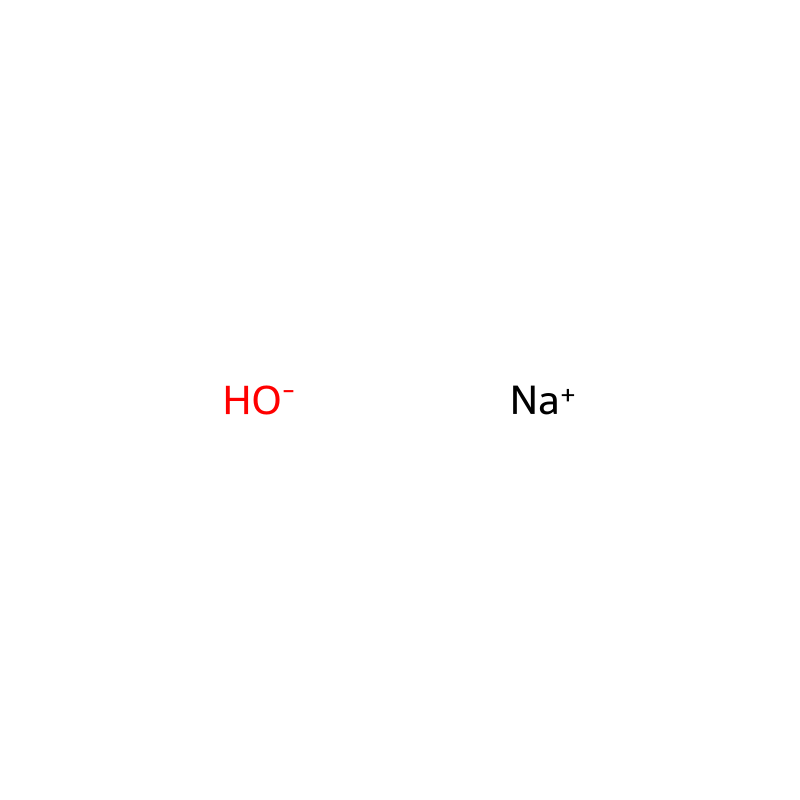
Identifiers & Physical Properties
| CAS No. | 1310-73-2 |
|---|---|
| Molecular formula | HNaO |
| Average molar mass | 39.997 g/mol |
| Monoisotopic mass | 39.99250893 g/mol |
| SMILES | [Na+].[OH-] |
| InChIKey | HEMHJVSKTPXQMS-UHFFFAOYSA-M |
| PubChem CID | 14798 |
| ChEMBL | CHEMBL2105794 |
| ChEBI | CHEBI:32145 |
| EC No. | 215-185-5 |
| DTXSID | DTXSID0029634 |
Chemical & Physical Properties
| Topological polar surface area | 1 |
|---|---|
| Hydrogen bond donors | 1 |
| Hydrogen bond acceptors | 1 |
| Rotatable bonds | 0 |
| Heavy atoms | 2 |
| Formal charge | 0 |
| Complexity | 2 |
| pH | Strongly alkaline (1 % solution)pH of a 0.05% wt/wt solution about 120.5% solution about 135% solution about 1410.98(1 mM solution)11.95(10 mM solution)12.88(100 mM solution) |
| Odor | ... Odorless ... |
| Taste | Detection - the minimum physical intensity detection by a subject where he or she is not required to identify the stimulus but just detect the existence of the stimulus - in water: 8.00X10⁻³ mol/L. |
| Density | 1.5 at 68 °F (USCG, 1999) - Denser than waterwill sink2.13 at 68 °F (USCG, 1999) - Denser than water2.13 g/cu cm 25 °C70-73 % solution: MP 62 °CDensity = 2.0 at 15.5 °C2.1 g/cm³1.515 g/mL at 20 °C |
| Viscosity | 4.0 cP at 350 °C |
| Color/Form | White, orthogonal crystalsColorless to white ... solid (flakes, beads, granular form).Brittle, white, translucent crystalline solid |
| Solubility | 111 % (NIOSH, 2024)easily soluble in cold water, hot waterVery soluble in water. Freely soluble in ethanol1 g dissolves in 7.2 mL absolute alcohol, 4.2 mL methanolalso soluble in glycerol1 g dissolves in 0.9 mL water, 0.3 mL boiling waterSolubility in water, g/100ml at 20 °C: 109 (very good)H2O: 1 M at 20 °C, clear, colorless |
| Corrosivity | Very corrosive (caustic) to ... aluminum metal in presence of moisture |
| Boiling point | greater than 266 °F at 760 mmHg (USCG, 1999)Very high (USCG, 1999)13881388 °C2534 °F1390°C |
| Decomposition | When heated to decomposition it emits toxic fumes of /sodium oxide/.176-178 ºC |
| Melting point | 604 °F (USCG, 1999)323323 °C318 °C605 °F681 °C(lit.) |
| Polymerization | SRP4: Not polymerized |
| Vapor density | <1 (vs air) |
| Vapor pressure | 1 mm Hg ( 745 °C) |
| Refractive index | 1,473-1,475 |
| Flash point | 176-178°C |
| Storage conditions | room temp |
| Physical state | beads |
| Color | White |
| Specific gravity | 2.13 |
| PH Range | 13 - 14 |
| Specific heat capacity | Cp(crystal): 1.49 J/(g·K)Cp(gas): 1.2 J/(g·K), at 25℃ |
| λmax | λ: 260 nm Amax: 0.015λ: 280 nm Amax: 0.01 |
| Sensitivity | Air Sensitive & Hygroscopic |
| Merck | 14,8627 |
| Dielectric constant | 57.5(25℃) |
| Exposure limits | ACGIH:TLV-CEILING 2 mg/m3OSHA:PEL-TWA 2 mg/m3NIOSH:REL-Ceiling 2 mg/m3 |
| Stability | hygroscopic |
| Cosmetics Ingredients Functions | DENATURANTBUFFERING |
| InChI | 1S/Na.H2O/h1H2/q+1/p-1 |
| InChIKey | HEMHJVSKTPXQMS-UHFFFAOYSA-M |
| SMILES | [OH-].[Na+] |
| Substances Added to Food (formerly EAFUS) | SODIUM HYDROXIDE |
| FDA 21 CFR | 173.310176.170176.180176.210177.1600177.2800 |
| SCOGS (Select Committee on GRAS Substances) | Sodium hydroxide |
| CAS DataBase Reference | 1310-73-2(CAS DataBase Reference) |
| EWG's Food Scores | 1-4 |
| FDA UNII | 55X04QC32I |
| NIST Chemistry Reference | Sodium hydroxide(1310-73-2) |
| EPA Substance Registry System | Sodium hydroxide (1310-73-2) |
| Cosmetics Info | Sodium Hydroxide |
| UNSPSC Code | 12352316 |
| NACRES | NB.22 |
| GHS pictogram | GHS05,GHS08 |
| Signal word | Danger |
| GHS hazard statements | H314-H370-H402 |
| GHS precautionary statements | P501-P273-P260-P270-P264-P280-P308+P311-P303+P361+P353-P301+P330+P331-P363-P304+P340+P310-P305+P351+P338+P310-P405 |
| Hazard symbols | C,Xi |
| Risk statements (R) | 36/38-35-34 |
| Safety statements (S) | 26-45-37/39-24/25-36/37/39 |
| UN transport number | UN 1823 8/PG II (SODIUM HYDROXIDE, SOLID) |
| Occupational exposure limit (OEL) | Ceiling: 2 mg/m3 |
| Water hazard class (WGK) | 1 |
| RTECS number | TT2975000 |
| F | 8 |
| TSCA inventory status | TSCA listed |
| Customs code | 2815 11 00 |
| Hazard class | 8Eye Dam. 1Met. Corr. 1Skin Corr. 1A |
| Packing group | II |
| Storage class | 8B - Non-combustible corrosive hazardous materials |
| Hazardous substances data | 1310-73-2(Hazardous Substances Data) |
| Toxicity | LD orally in rabbits: 500 mg/kg (10% soln) (Fazekas) |
| Immediately dangerous to life or health concentration | 10 mg/m3 |
| REACH registrations | Active |
| Limited quantities | 1.0 L (0.3 gallons) (liquid) or 1 Kg (2.2 lbs) (solid) |
| Excepted quantities | Max Inner Pack (30g or 30ml) and Max Outer Pack (500g or 500ml) |
Safety & Regulations
| GHS classification | DangerH314: Causes severe skin burns and eye damage [Danger Skin corrosion/irritation]P260, P264, P280, P301+P330+P331, P302+P361+P354, P304+P340, P305+P354+P338, P316, P321, P363, P405, and P501 (click each P-code to see the statement)This chemical does not meet GHS hazard criteria for < 0.1% (4 of 6949) of reports. |
|---|---|
| Regulatory information | Chemical: Sodium hydroxide (Na(OH))Hazard Traits - DermatotoxicityOcular ToxicityRespiratory ToxicityAuthoritative List - OEHHA RELsReport - if used as a fragrance or flavor ingredientRegulation (EC) No 1831/2003 (amended)Sodium hydroxide (Na(OH)) is listed on the EPA's Chemical Data Reporting (CDR) system. Manufacturers and importers of Sodium hydroxide (Na(OH)) are required to report information about their production and use of this chemical to the EPA under the Toxic Substances Control Act (TSCA). (40 eCFR Part 711)2004/129/ECStatus: Active Update: 11-05-2023 https://echa.europa.eu/registration-dossier/-/registered-dossier/15566Status: Active Update: 13-07-2021 https://echa.europa.eu/registration-dossier/-/registered-dossier/24304Status: Cease Manufacture Update: 29-05-2013 https://echa.europa.eu/registration-dossier/-/registered-dossier/7515 |
| Other safety information | IMAP assessments - Sodium hydroxide (Na(OH)): Environment tier I assessmentIMAP assessments - Sodium hydroxide: Human health tier II assessment |
| DOT label | Corrosive |
| Fire hazards | Excerpt from ERG Guide 154 [Substances - Toxic and/or Corrosive (Non-Combustible)]:Non-combustible, substance itself does not burn but may decompose upon heating to produce corrosive and/or toxic fumes. Some are oxidizers and may ignite combustibles (wood, paper, oil, clothing, etc.). Corrosives in contact with metals may evolve flammable hydrogen gas. Containers may explode when heated. For electric vehicles or equipment, ERG Guide 147 (lithium ion or sodium ion batteries) or ERG Guide 138 (sodium batteries) should also be consulted. (ERG, 2024)· Non-combustible, substance itself does not burn but may decompose upon heating to produce corrosive and/or toxic fumes.· Some are oxidizers and may ignite combustibles (wood, paper, oil, clothing, etc.).· Corrosives in contact with metals may evolve flammable hydrogen gas.· Containers may explode when heated.· For electric vehicles or equipment, GUIDE 147 (lithium ion or sodium ion batteries) or GUIDE 138 (sodium batteries) should also be consulted. |
| Fire potential | Not combustible. |
| Health hazards | Causes severe burns of eyes, skin, and mucous membranes. (USCG, 1999)Strong corrosive action on contacted tissues. INHALATION: dust may cause damage to upper respiratory tract and lung itself, producing from mild nose irritation to pneumonitis. INGESTION: severe damage to mucous membranessevere scar formation or perforation may occur. EYE CONTACT: produces severe damage. (USCG, 1999)· TOXIC and/or CORROSIVEinhalation, ingestion or skin contact with material may cause severe injury or death.· Contact with molten substance may cause severe burns to skin and eyes.· Avoid any skin contact.· Fire may produce irritating, corrosive and/or toxic gases.· Runoff from fire control or dilution water may be corrosive and/or toxic and cause environmental contamination. |
| Hazards summary | At room temperature, sodium hydroxide is a white crystalline odorless solid that absorbs moisture from the air. It is a manufactured substance. When dissolved in water or neutralized with acid it liberates substantial heat, which may be sufficient to ignite combustible materials. Sodium hydroxide is very corrosive. It is generally used as a solid or a 50% solution. Other common names include caustic soda and lye. Sodium hydroxide is used to manufacture soaps, rayon, paper, explosives, dyestuffs, and petroleum products. It is also used in processing cotton fabric, laundering and bleaching, metal cleaning and processing, oxide coating, electroplating, and electrolytic extracting. It is commonly present in commercial drain and oven cleaners.Liquid causes second or third degree burns after short contact[CHRIS] In studies using rabbits, instillation by oral intubation caused within 10 seconds: erosion into the stomach muscle with 12% solutionsperforation with 28% solutionsand no damage with 1% solutions. Application to the skin of a 5% solution caused severe necrosis after 4 hours. Application of a 1% solution to the eyes caused no damage if the eyes were immediately irrigated. [ACGIH] Solutions > 30% are highly corrosive to skin. [Quick CPC] Inhalation of the aerosol can cause pulmonary edema. [ICSC] |
| DOT ID and guide | 1824 1541823 1541823 154(dry, solid)1824 154(solution) |
| FDA requirements | Substance added directly to human food affirmed as generally recognized as safe (GRAS).Sodium hydroxide used as a general purpose food additive in animal drugs, feeds, and related products is generally recognized as safe when used in accordance with good manufacturing or feeding practice. |
| Reactive group | Bases, StrongWater and Aqueous Solutions |
| EC classification | Symbol: CR: 35S: (1/2)-26-37/39-45 |
| UN classification | UN Hazard Class: 8UN Pack Group: II |
| Fire fighting | Excerpt from ERG Guide 154 [Substances - Toxic and/or Corrosive (Non-Combustible)]:SMALL FIRE: Dry chemical, CO2 or water spray.LARGE FIRE: Dry chemical, CO2, alcohol-resistant foam or water spray. If it can be done safely, move undamaged containers away from the area around the fire. Dike runoff from fire control for later disposal.FIRE INVOLVING TANKS, RAIL TANK CARS OR HIGHWAY TANKS: Fight fire from maximum distance or use unmanned master stream devices or monitor nozzles. Do not get water inside containers. Cool containers with flooding quantities of water until well after fire is out. Withdraw immediately in case of rising sound from venting safety devices or discoloration of tank. ALWAYS stay away from tanks in direct contact with flames. (ERG, 2024)In case of fire in the surroundings, use appropriate extinguishing media. |
| First aid measures | Fresh air, rest. Refer immediately for medical attention.Remove contaminated clothes. Rinse skin with plenty of water or shower for at least 15 minutes. Refer immediately for medical attention.First rinse with plenty of water for several minutes (remove contact lenses if easily possible), then refer for medical attention.Rinse mouth. Do NOT induce vomiting. If within a few minutes after ingestion, one small glass of water may be given to drink. Refer immediately for medical attention. |
| Accidental release measures | · CALL 911. Then call emergency response telephone number on shipping paper. If shipping paper not available or no answer, refer to appropriate telephone number listed on the inside back cover.· Keep unauthorized personnel away.· Stay upwind, uphill and/or upstream.· Ventilate closed spaces before entering, but only if properly trained and equipped.· ELIMINATE all ignition sources (no smoking, flares, sparks or flames) from immediate area.· Do not touch damaged containers or spilled material unless wearing appropriate protective clothing.· Stop leak if you can do it without risk.· Prevent entry into waterways, sewers, basements or confined areas.· Absorb or cover with dry earth, sand or other non-combustible material and transfer to containers.· DO NOT GET WATER INSIDE CONTAINERS. |
| First aid | (Act quickly)EYES: flush with water at once for at least 15 min.SKIN: flush with water, then rinse with dilute vinegar (acetic acid).INGESTION: give water and milk. Do NOT induce vomiting. Call physician at once, even when injury seems to be slight. (USCG, 1999)Excerpt from NIOSH Pocket Guide for Sodium hydroxide:Eye: IRRIGATE IMMEDIATELY - If this chemical contacts the eyes, immediately wash (irrigate) the eyes with large amounts of water, occasionally lifting the lower and upper lids. Get medical attention immediately.Skin: WATER FLUSH IMMEDIATELY - If this chemical contacts the skin, immediately flush the contaminated skin with water. If this chemical penetrates the clothing, immediately remove the clothing and flush the skin with water. Get medical attention promptly.Breathing: RESPIRATORY SUPPORT - If a person breathes large amounts of this chemical, move the exposed person to fresh air at once. If breathing has stopped, perform artificial respiration. Keep the affected person warm and at rest. Get medical attention as soon as possible.Swallow: MEDICAL ATTENTION IMMEDIATELY - If this chemical has been swallowed, get medical attention immediately. (NIOSH, 2024)General First Aid:· Call 911 or emergency medical service.· Ensure that medical personnel are aware of the material(s) involved, take precautions to protect themselves and avoid contamination.· Move victim to fresh air if it can be done safely.· Administer oxygen if breathing is difficult.· If victim is not breathing:-- DO NOT perform mouth-to-mouth resuscitationthe victim may have ingested or inhaled the substance.-- If equipped and pulse detected, wash face and mouth, then give artificial respiration using a proper respiratory medical device (bag-valve mask, pocket mask equipped with a one-way valve or other device).-- If no pulse detected or no respiratory medical device available, provide continuous compressions. Conduct a pulse check every two minutes or monitor for any signs of spontaneous respirations.· Remove and isolate contaminated clothing and shoes.· For minor skin contact, avoid spreading material on unaffected skin.· In case of contact with substance, remove immediately by flushing skin or eyes with running water for at least 20 minutes.· For severe burns, immediate medical attention is required.· Effects of exposure (inhalation, ingestion, or skin contact) to substance may be delayed.· Keep victim calm and warm.· Keep victim under observation.· For further assistance, contact your local Poison Control Center.· Note: Basic Life Support (BLS) and Advanced Life Support (ALS) should be done by trained professionals.Specific First Aid:· For corrosives, in case of contact, immediately flush skin or eyes with running water for at least 30 minutes. Additional flushing may be required. |
| Safe storage | Separated from food and feedstuffs, strong acids and metals. Store only in original container. Dry. Well closed. Store in an area without drain or sewer access. |
| Exposure control and personal protection | · Wear positive pressure self-contained breathing apparatus (SCBA).· Wear chemical protective clothing that is specifically recommended by the manufacturer when there is NO RISK OF FIRE.· Structural firefighters' protective clothing provides thermal protection but only limited chemical protection. |
| Fire fighting procedures | Extinguish fire using agent suitable for surrounding fire. Use water spray to keep fire-exposed containers cool.If material on fire or involved in fire: Extinguish fire using agent suitable for type of surrounding fire. (Material itself does not burn or burns with difficulty.) Use "alcohol" foam, dry chemical or carbon dioxide. Keep run-off water out of sewers and water sources. |
| Storage conditions | CONTAINERS SHOULD BE STORED IN ROOMS WITH TRAPPED FLOOR DRAINS TOWARDS WHICH FLOORS SHOULD BE SLANTED. WHERE FLOOR DRAINS ARE NOT PROVIDED, CURBS OR DRAINED GUTTER, COVERED WITH ... GRILL, SHOULD BE CONSTRUCTED @ DOOR OPENINGS.Volumetric sodium hydroxide soln used in laboratory must be protected from air to avoid formation of carbonate.Store in a cool, dry, well-ventilated location. Separate from organic and oxidizing materials, acids, metal powders. Immediately remove and properly dispose of any spilled material. |
| Cleanup methods | On/in soil (solid): Construct barriers to convert or divert to impervious surface. Promptly shovel into steel containers.Soil, Liquid: Absorb small amounts of spill with sand, vermiculite or other inert absorbant materialShovel into steel containers. May also remove material with vacuum equipment.Environment considerations - Land spill:: Dig a pit, pond, lagoon, or holding area to contain liquid or solid material. Dike surface flow using soil, sand bags, foamed polyurethane, or foamed concrete. Absorb bulk liquid with fly ash of cement powder.Environmental considerations - Water spill: Use natural barriers or oil spill control booms to limit spill travel. Neutralize with dilute acid.For more Cleanup Methods (Complete) data for SODIUM HYDROXIDE (6 total), please visit the HSDB record page. |
| Nonfire spill response | Excerpt from ERG Guide 154 [Substances - Toxic and/or Corrosive (Non-Combustible)]:ELIMINATE all ignition sources (no smoking, flares, sparks or flames) from immediate area. Do not touch damaged containers or spilled material unless wearing appropriate protective clothing. Stop leak if you can do it without risk. Prevent entry into waterways, sewers, basements or confined areas. Absorb or cover with dry earth, sand or other non-combustible material and transfer to containers. DO NOT GET WATER INSIDE CONTAINERS. (ERG, 2024) |
| Disposal methods | SRP: The most favorable course of action is to use an alternative chemical product with less inherent propensity for occupational harm/injury/toxicity or environmental contamination. Recycle any unused portion of the material for its approved use or return it to the manufacturer or supplier. Ultimate disposal of the chemical must consider: the material's impact on air qualitypotential migration in soil or watereffects on animal and plant lifeand conformance with environmental and public health regulations.Following neutralization either at the spill site or at a waste management facility, the resultant sludge can be disposed of in a secure landfill.SRP: Wastewater from contaminant suppression, cleaning of protective clothing/equipment, or contaminated sites should be contained and evaluated for subject chemical or decomposition product concentrations. Concentrations shall be lower than applicable environmental discharge or disposal criteria. Alternatively, pretreatment and/or discharge to a permitted wastewater treatment facility is acceptable only after review by the governing authority and assurance that "pass through" violations will not occur. Due consideration shall be given to remediation worker exposure (inhalation, dermal and ingestion) as well as fate during treatment, transfer and disposal. If it is not practicable to manage the chemical in this fashion, it must be evaluated in accordance with EPA 40 CFR Part 261, specifically Subpart B, in order to determine the appropriate local, state and federal requirements for disposal.Put into large vessel containing water. Neutralize with HCL /hydrochloric acid/. Discharge into the sewer with sufficient water. Recommendable methods: Neutralization & discharge to sewer. Peer review: Dilute greatly (< pH 9) before discharge. (Peer-review conclusions of an IRPTC expert consultation (May 1985)) |
| Spillage disposal | Personal protection: chemical protection suit including self-contained breathing apparatus. Do NOT let this chemical enter the environment. Sweep spilled substance into covered plastic containers. Carefully collect remainder. Then store and dispose of according to local regulations. |
| Interactions | An experimental study was conducted to investigate the effects of erythropoietin on the acute phase of esophageal burn damage induced by sodium hydroxide. A standard esophageal alkaline burn was produced by the application of 10% sodium hydroxide to the distal esophagus in an in vivo rat model. Fifty-six female rats were allocated into three groups: Group BC (baseline control, n = 8) rats were uninjured and untreated, Group PC (positive control, n = 24) rats were injured but untreated and Group EPO (erythropoietin-treated, n = 24) rats were injured and given subcutaneous erythropoietin (1,000 IU/kg per day), 15 min, 24, and 48 hr after administration of the NaOH solution. Six animals from Group PC and six from Group EPO were killed at 4, 24, 48, and 72 hr after application of NaOH to the esophagus. All of animals in Group BC were killed 4 hr after exposure to 0.9% NaCl. Oxidative damage was assessed by measuring levels of malondialdehyde (MDA) and nitric oxide (NO), and activities of superoxide dismutase (SOD) and catalase (CAT) in homogenized samples of esophageal tissue. Histologic damage to esophageal tissue was scored by a single pathologist blind to groups. MDA levels in the BC and EPO groups were significantly lower than those in the PC group (p < 0.05). CAT and SOD activities, and NO levels in the BC and EPO groups were significantly higher than in the PC group (p < 0.05). Esophageal tissue damage measured at 4, 24, 48, and 72 hr after NaOH application was significantly less in the EPO group than in the PC group (p < 0.05). When administered early after an esophageal burn induced by 10% sodium hydroxide in this rat model, erythropoietin significantly attenuated oxidative damage, as measured by biochemical markers and histologic scoring.SRP4: Interacts with acid salts to form bases.... Esophageal burns were induced in male rats by the administration of 10% sodium hydroxide. Lipid peroxidation (LPO) products were then measured at the following times: 0, 1, 6, 24, 48 and 72 hr after treatment. Tissue hydroxyproline (HP) concentrations in the injured area were assessed at 14 days after the administration of sodium hydroxide. The groups received either systemic melatonin or normal saline. There were two, non-ischemic, sham control groups treated with or without melatonin. LPO products, malondialdehyde (MDA) and 4-hydroxyalkenal (4-HDA), increased immediately after the administration of sodium hydroxidethis indicates the participation of free radicals in the development of damage. Melatonin diminished the oxidative response and the amount of HP in the late phase of the lesion. Melatonin reduced oxidative damage in the early phase of the esophageal burns induced by sodium hydroxide./SRP: Experimental/ The gastric damaging effects of necrotizing concn of sodium hydroxide were strongly reduced by paracetamol. ... Paracetamol might be protective by stimulating the biosynthesis of prostaglandins in the stomach wall.For more Interactions (Complete) data for SODIUM HYDROXIDE (6 total), please visit the HSDB record page. |
| Target organs | Eyes, skin, respiratory system |
| Ecotoxicity values | EC50Species: Ceriodaphnia dubia (Water Flea) age <24 hr neonateConditions: freshwater, static, 23 °CConcentration: 40380 ug/L for 48 hr (95% confidence interval: 34590-47130 ug/L)Effect: intoxication, immobilization /100% purity/LC50Species: Carassius auratus (Goldfish)Conditions: freshwater, staticConcentration: 160000 ug/L for 24 hrLC100Species: Cyprinus carpioConcentration: 180 ppm for 24 hr at 25 °C /Conditions of bioassay not specified in source examined/Species: Poecilia reticulata (Guppy) age 3-4 week young organismsConditions: saltwater, renewal, 24 °C, pH >9.8-<10.0, salinity 2.8%, dissolved oxygen > or =70% saturatedConcentration: 209000 ug/L for 24 hr (95% confidence interval: 153000-286000 ug/L) /98.6% purity/For more Ecotoxicity Values (Complete) data for SODIUM HYDROXIDE (6 total), please visit the HSDB record page. |
| Environmental fate | AQUATIC FATE: In the case of a solid, anhydrous sodium hydroxide spill on soil, ground water pollution will occur if precipitation occurs prior to clean up. Precipitation will dissolve some of the solid (with much heat given off) and create an aqueous solution of sodium hydroxide, which then would be able to infiltrate the soil. However, prediction of the concentration and properties of the solution produced would be difficult. |
| Adverse effects | Dermatotoxin - Skin burns.Toxic Pneumonitis - Inflammation of the lungs induced by inhalation of metal fumes or toxic gases and vapors. |
| Exposure routes | Serious local effects by all routes of exposure.inhalation, ingestion, skin and/or eye contact |
| Toxicity summary | The CIR Expert Panel concluded that ... Sodium Hydroxide is safe in hair straighteners and depilatories under conditions of recommended useusers should minimize skin contact. These ingredients are safe for all other present practices of use and concentration described in this safety assessment when formulated to be nonirritating.Safe for use in cosmetics, with qualifications |
| Ecotoxicity excerpts | /AQUATIC SPECIES/ Concentration 20-100 mg/L in water kills some species of aquatic wildlife due to increase in pH./AQUATIC SPECIES/ Chronic exposure of guppies to sodium hydroxide (> or =25 mg/L) decreased their survival rate and weight gain, and caused either late or premature sexual maturity resulting in decreased fertility. |
| Signs and Symptoms | Cough. Sore throat. Burning sensation. Shortness of breath.Redness. Pain. Serious skin burns. Blisters.Redness. Pain. Blurred vision. Severe burns.Abdominal pain. Burns in mouth and throat. Burning sensation in the throat and chest. Nausea. Vomiting. Shock or collapse.irritation eyes, skin, mucous membranepneumonitiseye, skin burnstemporary loss of hair |
| Effluent Concentrations | Estimated emissions of sodium hydroxide as one of the typical pollutants released from the synthetic organic chemical manufacturing industry (production/processing) may range from (unit process, product): alkylation, ethylbenzene, 1.9 to 21.5condensation, polyethylene terephthalate, 0.065 to 23.1dehydrogenation, isoprene, 0.5 to 19dehydrohalogenation, vinylidene chloride, 45.5 to 605.5polymerization, polyethylene terephthalate, 0.1 to 23.1 (all in g/kg produced)(1). The compound was spilled at an estimated 3,500 gallons into the Newark Bay on October 1991 from the Gist Brocades facility(2). Sodium hydroxide was involved in 2.6% of 6,928 chemical accidents in the US over a 5 year period up to 1985 at a reportable quantity of 2200 kg(3). |
| ICSC Environmental Data | This substance may be hazardous to the environment. Special attention should be given to aquatic organisms. |
| Medical Surveillance | The skin, eyes, and respiratory tract should receive special attention in any placement or periodic examination. NIOSH recommends that workers subject to sodium hydroxide exposure have comprehensive preplacement medical examinations. Medical examinations shall be made available promptly to all workers with signs or symptoms of skin, eye, or upper respiratory tract irritation resulting from exposure to sodium hydoxide. |
| FIFRA requirements | Residues of sodium hydroxide are exempted from the requirement of a tolerance when used in accordance with good agricultural practice as inert (or occasionally active) ingredients in pesticide formulations applied to growing crops or to raw agricultural commodities after harvest. Use: neutralizer. Limit: none.Residues of sodium hydroxide are exempted from the requirement of a tolerance when used in accordance with good agricultural practice as inert (or occasionally active) ingredients in pesticide formulations applied to animals. Use: neutralizer. Limit: none.The Agency has completed its review of all available information, and has determined that the data are sufficient to support reregistration of products containing sodium hydroxide. ... The Agency therefore finds that products containing sodium hydroxide as an active ingredient are eligible for reregistration. ... Although the Agency has found that certain products containing sodium hydroxide are eligible for registration, it should be understood that the Agency may take appropriate regulatory action, and/or require the submission of additional data to support the registration of products containing sodium hydroxide, if new information comes to the Agency's attention or if the data requirements for reregistration (or the guidelines for generating such data) change.As the federal pesticide law FIFRA directs, EPA is conducting a comprehensive review of older pesticides to consider their health and environmental effects and make decisions about their continued use. Under this pesticide reregistration program, EPA examines newer health and safety data for pesticide active ingredients initially registered before November 1, 1984, and determines whether the use of the pesticide does not pose unreasonable risk in accordance to newer saftey standards, such as those described in the Food Quality Protection Act of 1996. Pesticides for which EPA had not issued Registration Standards prior to the effective date of FIFRA '88 were divided into three lists based upon their potential for human exposure and other factors, with List B containing pesticides of greater concern than those on List C, and with List C containing pesticides of greater concern than those on List D. Sodium hydroxide is found on List D. Case No: 4065Pesticide type: fungicide, herbicide, antimicrobialCase Status: RED Approved 09/92OPP has made a decision that some/all uses of the pesticide are eligible for reregistration, as reflected in a Reregistration Eligibility Decision (RED) document .Active ingredient (AI): sodium hydroxideData Call-in (DCI) Date(s): 09/30/92AI Status: OPP has completed a Reregistration Eligibility Decision (RED) document for the case/AI. |
| CERCLA reportable quantities | Persons in charge of vessels or facilities are required to notify the National Response Center (NRC) immediately, when there is a release of this designated hazardous substance, in an amount equal to or greater than its reportable quantity of 1000 lb or 454 kg. The toll free number of the NRC is (800) 424-8802. The rule for determining when notification is required is stated in 40 CFR 302.4 (section IV.D.3.b). |
| Clean Water Act requirements | Sodium hydroxide is designated as a hazardous substance under section 311(b)(2)(A) of the Federal Water Pollution Control Act and further regulated by the Clean Water Act Amendments of 1977 and 1978. These regulations apply to discharges of this substance. This designation includes any isomers and hydrates, as well as any solutions and mixtures containing this substance. |
| F | 8 |
| Occupational exposure limit (OEL) | Ceiling: 2 mg/m3 |
| Water hazard class (WGK) | 1 |
| Immediately dangerous to life or health concentration | 10 mg/m3 |
| TSCA inventory status | TSCA listed |
| RTECS number | TT2975000 |
| UN transport number | UN 1824 8/PG II/III (SODIUM HYDROXIDE SOLUTION) |
| Customs code | 2815 11 00 |
| Toxicity | LD orally in rabbits: 500 mg/kg (10% soln) (Fazekas) |
| Risk statements (R) | 36/38-35-34 |
| Signal word | Danger |
| GHS pictogram | GHS05,GHS08 |
| Hazard symbols | C,Xi |
| Safety statements (S) | 26-45-37/39-24/25-36/37/39 |
| Hazard class | 8Eye Dam. 1Met. Corr. 1Skin Corr. 1A |
| Storage class | 8B - Non-combustible corrosive hazardous materials |
| Packing group | II |
| GHS hazard statements | H314-H370-H402 |
| Limited quantities | 1.0 L (0.3 gallons) (liquid) or 1 Kg (2.2 lbs) (solid) |
| Excepted quantities | Max Inner Pack (30g or 30ml) and Max Outer Pack (500g or 500ml) |
| REACH registrations | Active |
| GHS precautionary statements | P501-P273-P260-P270-P264-P280-P308+P311-P303+P361+P353-P301+P330+P331-P363-P304+P340+P310-P305+P351+P338+P310-P405 |
| Hazardous substances data | 1310-73-2(Hazardous Substances Data) |
Applications & Uses
Uses
Sodium hydroxide (NaOH) is one of the most useful industrial sodium compounds. It is also known as lye or caustic soda and is one of the strongest base alkalis (high pH value) on the household market. It is used as a drain and oven cleaner, and it saponifies fats in the manufacture of soap. It must be used with care because it is also capable of producing serious skin burns.
Description
Sodium hydroxide, also known as lye and caustic soda, is a highly caustic substance that is used used in small amounts in cosmetics to establish and hold the pH of a product.Sodium Hydroxide is a extremely important compound in our lives because it has so many uses. It is a very common base used in the chemical industry and is used for many things, many of which occur in our daily lives. One of the most well known uses of Sodium Hydroxide is its use in unclogging drains. It comes in many different brands of drain cleaners, but one of the most common is Drano. It also comes in the form of lye soap which can be used to wash practically anything, from the dishes to your face. sodium hydroxide structure At room temperature, sodium hydroxide is a white crystalline odorless solid that absorbs moisture from the air. It is a manufactured substance. Sodium Hydroxide is an inorganic compound used to control the pH levels or serve as a buffering agent in cosmetics and personal care products. It was historically used in the formulation of soaps, but is currently seen in a variety of formulas, including bath products, cleansing products, fragrances, foot powders, hair dyes and colors, makeup, nail products, personal cleanliness products, shampoos, shaving products, depilatories, skin care products, and suntan products, as well as chemical hair straighteners and hair wave sets. It is also a popular ingredient in industrial solvents as a chemical base for soaps, oven cleaners, detergents and drain cleaners because of its ability to dissolve grease, oils, fats and protein based deposits, according to Wikipedia. Less frequently, Sodium Hydroxide is seen as an ingredient in toothpastes. Sodium Hydroxide is FDA approved, and has received the GRAS (Generally Recognized as Safe) rating as a direct food additive. However, it is primarily used in the washing and chemical peeling of produce. It is approved for use in cosmetics and personal care products in varying concentrations: 5% by weight in nail cuticle solvents, 2% by weight in hair straighteners for general use, 4.5% by weight in hair straighteners for professional use, up to a pH 12.7 in depilatories, and up to pH 11 in other uses as a pH adjuster. References https://pubchem.ncbi.nlm.nih.gov/compound/sodium_hydroxide http://sodiumhydroxide.weebly.com/uses.html
Uses
Caustic soda is one of the most widely usedchemicals. It is used to neutralize acids; tomake sodium salts; to precipitate metals astheir hydroxides; in petroleum refining; in thesaponification of esters; in the treatment ofcellulose, plastics, and rubber; and in numeroussynthetic and analytical applications.
Uses
Sodium hydroxide is sold commercially as anhydrous flakes or pellets or as 50% or 73% aqueous solutions. It has countless industrial uses and is one of the top 10 chemical in terms of production and use on a global scale. Approximately 15 million tons of sodium hydroxide is used annually. Its largest use, consuming about half of its production, is as a base in producing other chemicals. It is used to control pH and neutralize acids in chemical processes. The paper industry makes extensive use of sodium hydoxide in the pulping process. Sodium hydroxide is used to separate fibers by dissolving the connecting lignin. It is used in a similar fashion in the production of rayon from cellulose. Sodium hydroxide is a key chemical in the soap industry.In the saponification process, triglycerides obtained from animal and plants are heated in abasic solution to give glycerol and soap:Sodium hydroxide is used in the textile industry for bleaching and treating textiles to makethem dye more readily. The petroleum industry uses sodium hydroxide in drilling muds and asa bactericide. Sodium hypochlorite (NaOCl) is used extensively for cleaning and as a disinfectant.Common household bleach consists of about 5% sodium hypochlorite solution. Sodiumhypochlorite is prepared by reacting chlorine with sodium hydroxide: Cl2(g) + 2NaOH(aq) →NaOCl(aq) + NaCl(aq) + H2O(l). Sodium hydroxide is used in the food industry for cleaningand peeling fruits and vegetables. Sodium hydroxide is a minor ingredient in many commonhousehold products, but in a few it may constitute more than half of the product. Dranocrystals contain between 30% and 60% sodium hydroxide and some drain cleaners can consistof 100% sodium hydroxide.
Uses
sodium hydroxide is used to adjust a product pH to make it more acceptable to the skin. It is commonly referred to as caustic soda, and often serves as a chemical reagent when making soap. If too concentrated it may cause severe skin irritation.
Uses
Sodium Hydroxide is an alkali that is soluble in water, having a solubility of 1 g in 1 ml of water. it is used to destroy the bitter chemicals in olives that are to become black olives. it also functions to neutralize acids in various food products.
Uses
Sodium hydroxide is one of the most important industrial chemicals. In volume, it is in the top ten chemicals produced in the United States. It is used in manufacturing a large number of compounds including several sodium salts, in treating cellulose for producing rayon and cellophane, and in manufacturing soaps, detergents, pulp, and paper. Sodium hydroxide is a common neutralizing agent for acids in acid-base titrations and petroleum refining. Another major application is extracting metals from their ores where alkali fusion, such as fusion with caustic soda, often is applied to open the ores. Additionally, sodium hydroxide is used to precipitate metals as hydroxides. Other uses are in reclaiming rubber, dissolving casein in plastics production, refining vegetable oils, processing textiles, as an eluant in ion chromatography, etching and electroplating, and as a laboratory reagent. Sodium hydroxide also is used as a strong base in many organic synthesis and base-catalyzed reactions.
Uses
NaOH solutions are used to neutralize acids and make sodium salts, e.g., in petroleum refining to remove sulfuric and organic acids; to treat cellulose in making viscose rayon and cellophane; in reclaiming rubber to dissolve out the fabric; in making plastics to dissolve casein. NaOH solutions hydrolyze fats and form soaps; they precipitate alkaloids (bases) and most metals (as hydroxides) from water solutions of their salts. Pharmaceutic aid (alkalizer).
General Description
A white solid. Corrosive to metals and tissue. Used in chemical manufacturing, petroleum refining, cleaning compounds, drain cleaners.
Preparation & Synthesis
Preparation
Sodium hydroxide is manufactured together with chlorine by electrolysis of sodium chloride solution. Various types of electrolytic cells are used commercially. They include the mercury cell, the diaphragm cell, and the membrane cell. A saturated solution of brine is electrolyzed. Chlorine gas is liberated at the anode and sodium ion at the cathode. Decomposition of water produces hydrogen and hydroxide ions. The hydroxide ion combines with sodium ion forming NaOH. The overall electrolytic reactions may be represented as: 2Na+ + 2Cl-+ 2H2O → Cl2 (g) + H2 (g) + 2NaOH (aq) The mercury cell proceeds in two stages that occur separately in two cells. The first is known as the brine cell or the primary electrolyzer in which sodium ion deposits on the mercury cathode forming amalgam, while chlorine gas is liberated at the anode: Na+ + Cl–→ Na-Hg (cathode) + ½Cl2(g) (anode) In the second cell, known as the decomposer cell, a graphite cathode is used while sodium amalgam serves as the anode. Water reacts with the sodium metal of the amalgam in the decomposer: Na-Hg + H2O → Na+ + OH– + ½H2↑ + Hg In chlor-alkali diaphragm cells, a diaphragm is employed to separate chlorine liberated at the anode from the sodium hydroxide and hydrogen generated at the cathode. Without a diaphragm, the sodium hydroxide formed will combine with chlorine to form sodium hypochlorite and chlorate. In many cells, asbestos diaphragms are used for such separation. Many types of diaphragm cells are available. Sodium hydroxide is produced either as an anhydrous solid or as a 50% aqueous solution.