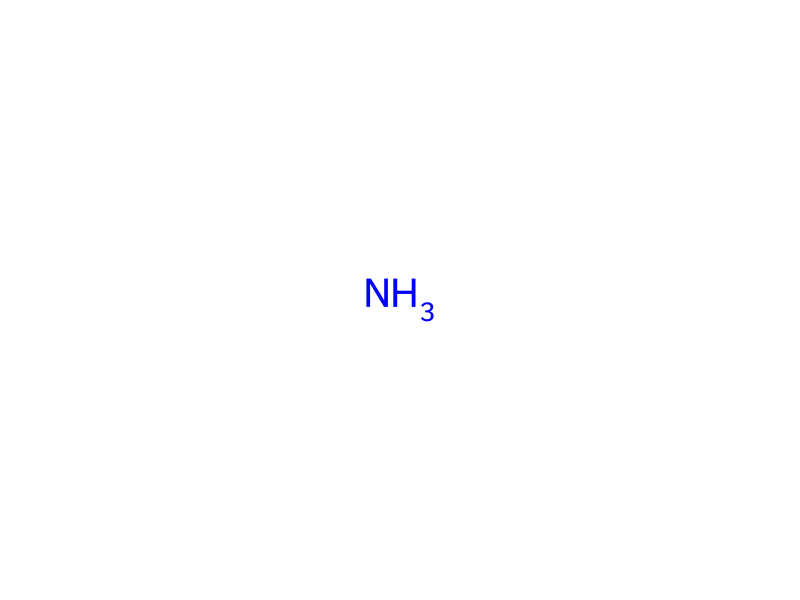
Basic information
- Standard SMILES
N- InChIKey
QGZKDVFQNNGYKY-UHFFFAOYSA-N- Molecular formula
- H3N
- Average molar mass
- 17.031 g/mol
Overview
Ammonia occurs naturally and is produced by human activity. It is an important source of nitrogen which is needed by plants and animals. Bacteria found in the intestines can produce ammonia. Ammonia is a colorless gas with a very distinct odor. This odor is familiar to many people because ammonia is used in smelling salts, many household and industrial cleaners, and window-cleaning products. Ammonia gas can be dissolved in water. This kind of ammonia is called liquid ammonia or aqueous ammonia. Once exposed to open air, liquid ammonia quickly turns into a gas. Ammonia is applied directly into soil on farm fields, and is used to make fertilizers for farm crops, lawns, and plants. Many household and industrial cleaners contain ammonia.
Names & identifiers
- Preferred name
- Ammonia
- IUPAC
- azane
- English name
- azane
- Molecular formula
- C2H7NO2
- Molecular weight
- 17.03
Names & synonyms
Show more names
Database identifiers
- CAS
92206-38-7- ChEMBL
CHEMBL1160819- ChEBI
CHEBI:16134- UNII
- 5138Q19F1X
- EC Number
- 231-635-3、913-720-3、921-643-1
- Nikkaji
- J3.748F
Properties
Computed structural properties
- XLogP
- -0.7
- Topological polar surface area
- 1 Ų
- Hydrogen bond donors
- 1
- Hydrogen bond acceptors
- 1
- Rotatable bonds
- 0
- Heavy atoms
- 1
- Formal charge
- 0
- Complexity
- 0
Experimental & physicochemical properties
Chemical Classes
Toxic Gases & Vapors -> Corrosive Gases
Corrosives
-> NIOSH Emergency Response Categories
Nutrient
Cosmetics
Cosmetics ingredient -> Buffering/pH Adjusting
Cosmetic ingredients (Ammonia) -> CIR (Cosmetic Ingredient Review)
Buffering
Odor
Sharp, cloying, repellent
Pungent, suffocating odor
Sharp, intensely irritating odor
Very pungent odor (characteristic of drying urine).
Density
0.6818 at -28.03 °F (EPA, 1998) - Less dense than water; will float
0.696 g/L (liquid)
Density of liquid: 0.6818 at -33.35 °C, 1 atm; 0.6585 at -15 °C, 2.332 atm; 0.6386 at 0 °C, 4.238 atm; 0.6175 at 15 °C, 7.188 atm; 0.5875 at 35 °C, 13.321 atm
Density of aqueous solutions at 20 °C/4 °C: 0.9939 (1%), 0.9811 (4%), 0.9651 (8%), 0.9362 (16%), 0.9229 (20%), 0.9101 (24%), 0.8980 (28%)
Density: 0.7710 g/L (gas); 0.89801 g/L at 20 °C (28% aqueous solution)
Relative density (water = 1): 0.7 (-33 °C)
Color/Form
Colorless gas
Colorless gas or compressed liquid (compressed under its own pressure)
Solubility
34 % (NIOSH, 2024)
In water, 4.82X10+5 mg/L at 24 °C
In water, 47% at 0 °C; 38% at 15 °C; 34% at 20 °C; 31% at 25 °C; 28% at 30 °C; 18% at 50 °C
Soluble in water forming alkaline solutions; soluble in oxygenated solvents.
15% in 95% alcohol at 20 °C; 11% in alcohol at 30 °C
For more Solubility (Complete) data for Ammonia (7 total), please visit the HSDB record page.
Safety & regulation
GHS classification
GHS Classification
Danger
H221: Flammable gas [Danger Flammable gases]
P210, P260, P261, P264, P271, P273, P280, P301+P330+P331, P302+P361+P354, P304+P340, P305+P354+P338, P316, P321, P363, P377, P381, P391, P403, P403+P233, P405, and P501 (click each P-code to see the statement)
This chemical does not meet GHS hazard criteria for < 0.1% (1 of 3570) of reports.
Danger
H221 (87.8%): Flammable gas [Danger Flammable gases]
Hazard information
Regulatory Information
Chemical: Ammonia
Hazard Traits - Environmental tox; Neurotoxicity; Ocular Toxicity; Respiratory Toxicity
Commission Regulation (EC) No 1565/2000 (Repealed by Com. Implementing Reg. (EU) No 872/2012)
Ammonia is listed on the EPA's Chemical Data Reporting (CDR) system. Manufacturers and importers of Ammonia are required to report information about their production and use of this chemical to the EPA under the Toxic Substances Control Act (TSCA). (40 eCFR Part 711)
Status: Active Update: 12-05-2023 https://echa.europa.eu/registration-dossier/-/registered-dossier/15557
Ammonia, anhydrous: HSNO Approval: HSR001035 Approved with controls
Other Safety Information
IMAP assessments - Ammonia and Ammonium hydroxide: Human health tier II assessment
- Indoor Air: Ammonia can be released into indoor air as a liquid spray (aerosol) or as a vapor.
DOT Label
Non-Flammable Gas
Non-Flammable Gas (domestic) Inhalation Hazard (Special Provision 13) (domestic) Poison Gas (international) Corrosive (international)
Corrosive
Fire Hazards
Excerpt from ERG Guide 125 [Gases - Toxic and/or Corrosive]:
Mixing of ammonia with several chemicals can cause severe fire hazards and/or explosions. Ammonia in container may explode in heat of fire. Incompatible with many materials including silver and gold salts, halogens, alkali metals, nitrogen trichloride, potassium chlorate, chromyl chloride, oxygen halides, acid vapors, azides, ethylene oxide, picric acid and many other chemicals. Mixing with other chemicals and water. Hazardous polymerization may not occur. (EPA, 1998)
Excerpt from ERG Guide 154 [Substances - Toxic and/or Corrosive (Non-Combustible)]:
· Some may burn but none ignite readily.
Flammable. Cylinder may explode in heat of fire. Gas/air mixtures are explosive.
Health Hazards
Excerpt from ERG Guide 125 [Gases - Toxic and/or Corrosive]:
Vapors cause irritation of eyes and respiratory tract. Liquid will burn skin and eyes. Poisonous; may be fatal if inhaled. Contact may cause burns to skin and eyes. Contact with liquid may cause frostbite. (EPA, 1998)
Excerpt from ERG Guide 154 [Substances - Toxic and/or Corrosive (Non-Combustible)]:
· TOXIC and/or CORROSIVE; may be fatal if inhaled, ingested or absorbed through skin.
Hazards Summary
Ammonia occurs naturally and is produced by human activity. It is an important source of nitrogen which is needed by plants and animals. Bacteria found in the intestines can produce ammonia. Ammonia is a colorless gas with a very distinct odor. This odor is familiar to many people because ammonia is used in smelling salts, many household and industrial cleaners, and window-cleaning products. Ammonia gas can be dissolved in water. This kind of ammonia is called liquid ammonia or aqueous ammonia. Once exposed to open air, liquid ammonia quickly turns into a gas. Ammonia is applied directly into soil on farm fields, and is used to make fertilizers for farm crops, lawns, and plants. Many household and industrial cleaners contain ammonia.
Liquid causes first degree burns on short exposure; [CHRIS] Ammonia gas and liquid are corrosive to skin. [Quick CPC] Ingestion of industrial strength ammonia (27-30%) causes esophageal burns with liquefaction necrosis and the possibility of later perforation and stricture formation. Inhalation of concentrated ammonia can cause acute lung injury. Household ammonia (5-10%) is not likely to cause serious burns. [HSDB] The concentration of aqueous ammonia solutions for household use is typically 5% to 10% (weight:volume), but solutions for commercial use may be 25% (weight:volume) or more and are corrosive. [ATSDR Medical Management] Listed as one of major irritant airborne toxicants; [LaDou, p. 563] The following chemicals can release ammonia when spilled in water: Lithium nitride & Magnesium diamide. Ammonia solutions with more than 50% ammonia are classified as TIH (Toxic Inhalation Hazard). [ERG 2016] Ammonia is fibrogenic to the lungs in the context of an acute inhalation exposure complicated by bronchiolitis obliterans.
The major hazards encountered in the use and handling of ammonia stem from its toxicologic properties and reactivity. Exposure to this colorless gas (liquid, if compressed or in aqueous solution) may occur from its use as a fertilizer, chemical intermediate, alkalizer, metal treating/extraction agent, and common household cleaner. Ammonia is hazardous by all routes (ie, dermal, ingestion, inhalation), with the liquid capable of burning the skin, causing permanent eye damage, or corroding the digestive tract upon contact; and the gas capable of causing severe eye damage, pulmonary edema, and even death from spasm, inflammation, and edema of the larynx. OSHA has established an ammonia Permissible Exposure Level (PEL) of 50 ppm as an 8-hr time-weighted average (TWA). The ACGIH recommends an 8-hr TLV-TWA of 25 ppm. Ammonia levels should be controlled through process enclosure and the use of local exhaust and dilution ventilation, as necessary. While its offensive odor may serve as a warning, to assure against ammonia exposure, workers should wear chemical protective clothing composed of butyl rubber, natural rubber, neoprene, nitrile rubber, or polyvinyl chloride (not Viton), gloves, face protection, and, in emergency situations, a self-contained breathing apparatus. Facilities for quick-drenching the body, as well as eye-wash fountains, should be immediately at hand for the worker. Clothing that becomes wet with liquid ammonia should be placed in closed containers until it can be discarded. While this substance does not burn or ignite readily (autoignition temp: 1204 °F), containers of ammonia may explode in the heat of a fire. For small fires involving ammonia, extinguish with dry chemical or CO2, and for large fires, use water spray, fog, or foam, taking care to prevent fire control or dilution water from causing pollution. More hazardous than its fire potential is ammonia's reactivity with halogens, interhalogens, and oxidizers. These reactions may be violent and/or may form explosive products. Ammonia should be stored in a cool, well-ventilated location, away from sources of ignition, and separate from other chemicals, particularly oxidizing gases (chlorine, bromine, and iodine) and acids. Aqueous ammonia is commonly containerized in steel drums. Anhydrous ammonia is stored and shipped (prohibited in passenger planes) in pressurized containers, fitted with pressure-relief safety devices, and bearing the label, "Nonflammable Compressed Gas". For small spills of ammonia, isolate 80 feet in all directions from the spill, ventilate the area, and allow vapor or gas to disperse. For large spills, evacuate the area for 160 feet in all directions, and dike to contain the spill for later recovery or disposal and to prevent runoff from causing pollution. Stay upwind and wear positive-pressure breathing apparatus and full protective clothing, as necessary.
DOT ID and Guide
1005 125
1005 125(anhydrous)
2672 154(10-35% solution)
2073 125(>35-50% solution)
1005 125(>50% solution)
Reactive Group
Bases, Weak
Bases, Weak
Bases, Weak
Safety & protection
Fire Fighting
Excerpt from ERG Guide 125 [Gases - Toxic and/or Corrosive]:
Wear positive pressure breathing apparatus and full protective clothing.
Excerpt from ERG Guide 154 [Substances - Toxic and/or Corrosive (Non-Combustible)]:
In case of fire in the surroundings, use appropriate extinguishing media. In case of fire: keep cylinder cool by spraying with water.
- Ammonia is flammable.
First Aid Measures
Fresh air, rest. Half-upright position. Administration of oxygen may be needed. Refer immediately for medical attention.
Rinse skin with plenty of water or shower for at least 15 minutes. ON FROSTBITE: rinse with plenty of water, do NOT remove clothes. Refer immediately for medical attention .
Rinse with plenty of water for several minutes (remove contact lenses if easily possible). Refer immediately for medical attention.
Accidental Release Measures
· CALL 911. Then call emergency response telephone number on shipping paper. If shipping paper not available or no answer, refer to appropriate telephone number listed on the inside back cover.
· Do not touch or walk through spilled material.
First Aid
Excerpt from ERG Guide 125 [Gases - Toxic and/or Corrosive]:
Warning: Ammonia is extremely corrosive to the skin, eyes, and mucous membranes. Contact with the liquified gas may cause frostbite. Caution is advised.
Excerpt from ERG Guide 154 [Substances - Toxic and/or Corrosive (Non-Combustible)]:
General First Aid:
(General first aid procedures)
Firefighting Hazards
Under prolonged exposure to fire or intense heat the containers may rupture violently and rocket.
Presence of oil or other combustible materials will increase the fire hazard.
Exposure Control and Personal Protection
· Wear positive pressure self-contained breathing apparatus (SCBA).
TIH (Toxic Inhalation Hazard) - Term used to describe gases and volatile liquids that are toxic when inhaled. Some are TIH materials themselves, e.g., chlorine, and some release TIH gases when spilled in water, e.g., chlorosilanes. [ERG 2016].
303.0 [ppm]
20.0 [ppm]
Fire Fighting Procedures
Suitable extinguishing media: Use water spray, alcohol-resistant foam, dry chemical or carbon dioxide.
Advice for firefighters: Wear self-contained breathing apparatus for firefighting if necessary.
Use water spray to cool unopened containers.
Firefighting gear (including SCBA) does not provide adequate protection ... If exposure occurs, remove and isolate gear immediately and thoroughly decontaminate personnel. Move container from fire area if you can do it without risk. Vapors are heavier than air and will collect in low areas. Vapors in confined areas may explode when exposed to fire. Vapors may travel long distances to ignition sources and flash back. Storage containers and parts of containers may rocket great distances, in many directions. If material or contaminated runoff enters waterways, notify downstream users of potentially contaminated waters. Notify local health and fire officials and pollution control agencies. Do not put water on liquid ammonia: will increase evaporation. Small fires: dry chemical or carbon dioxide. Large fires: water spray, fog, or foam. Apply water gently to the surface. Do not get water inside container. From a secure explosion-proof location, use water spray to cool exposed containers. If cooling streams are ineffective (venting sound increased in volume and pitch, tank discolors or shows any signs of deforming), withdraw immediately to a secure position. Isolate until gas has dispersed.
For more Fire Fighting Procedures (Complete) data for Ammonia (7 total), please visit the HSDB record page.
Storage Conditions
Keep container tightly closed in a dry and well-ventilated place. Contents under pressure. Storage class (TRGS 510): Gases
Before entering confined space where this chemical may be present, check to make sure that an explosive concentration does not exist. Protect against physical damage. Outside or detached storage is preferred. Inside storage should be in a cool, well-ventilated, noncombustible location, preferably with automatic monitoring systems, away from all possible sources of ignition. Separate from other chemicals, particularly oxidizing gases, chlorine, bromine, iodine, and acids.
SRP: Operations involving entry into tanks or closed vessels, and emergency situations, require consideration of potentially oxygen deficient, or "immediately dangerous to life and health" IDLH environments. This may necessitate use of a self-contained breathing apparatus (SCBA), or a positive pressure supplied air respirator.
Separate from other chemicals, particularly oxidizing materials, acids, and halogens. Store in a cool, dry, well-ventilated location.
For more Storage Conditions (Complete) data for Ammonia (7 total), please visit the HSDB record page.
Cleanup Methods
ACCIDENTAL RELEASE MEASURES: Personal precautions, protective equipment and emergency procedures: Wear respiratory protection. Avoid breathing vapors, mist or gas. Ensure adequate ventilation. Remove all sources of ignition. Evacuate personnel to safe areas. Beware of vapors accumulating to form explosive concentrations. Vapors can accumulate in low areas. Environmental precautions: Prevent further leakage or spillage if safe to do so. Do not let product enter drains. Discharge into the environment must be avoided. Methods and materials for containment and cleaning up: Contain spillage, and then collect with an electrically protected vacuum cleaner or by wet-brushing and place in container for disposal according to local regulations.
SRP: Wastewater from contaminant suppression, cleaning of protective clothing/equipment, or contaminated sites should be contained and evaluated for subject chemical or decomposition product concentrations. Concentrations shall be lower than applicable environmental discharge or disposal criteria. Alternatively, pretreatment and/or discharge to a permitted wastewater treatment facility is acceptable only after review by the governing authority and assurance that "pass through" violations will not occur. Due consideration shall be given to remediation worker exposure (inhalation, dermal and ingestion) as well as fate during treatment, transfer and disposal. If it is not practicable to manage the chemical in this fashion, it must be evaluated in accordance with EPA 40 CFR Part 261, specifically Subpart B, in order to determine the appropriate local, state and federal requirements for disposal.
Wear a self-contained breathing apparatus, eye protection, laboratory coat, and nitrile rubber gloves (and rubber boots or overshoes if spillage is large). Cover the spill with a 1:1:1 mixture by weight of sodium carbonate or calcium carbonate, clay cat litter (bentonite), and sand. Scoop the mixture into a plastic pail and, in the fume hood, add to a pail of cold water. Neutralize the mixture with 5% hydrochloric acid, let stand overnight, and then pour liquid into the drain. Dispose of any solid with normal refuse. Wash area of the spill with plenty of water.
Spill handling: evacuate and restrict persons not wearing protective equipment from area of spill or leak until cleanup is complete. Remove all ignition sources. Establish forced ventilation to keep levels below explosive limit. Ventilate area of spill or leak. Stop the flow of gas if it can be done safely. Stay upwind; keep out of low areas. Wear positive pressure breathing apparatus and full protective clothing. If the leak is a cylinder and the leak cannot be stopped in place, remove the leaking cylinder to a safe place in the open air and repair the leak or allow the cylinder to empty. For small liquid spills, neutralize with hydrochloric acid. Wipe or mop or use water aspirator. Drain into sewer with sufficient water. It may be necessary to contain and dispose of this chemical as a hazardous waste. If material or contaminated runoff enters waterways, notify downstream users of potentially contaminated waters. Contact your Department of Environmental Protection or your regional office of the federal EPA for specific recommendations. Initial isolation and protective action distances: distances shown are likely to be affected during the first 30 min after materials are spilled and could increase with time. If more than one tank car, cargo tank, portable tank, or large cylinder involved in the incident is leaking, the protective action distance may need to be increased ... Small spills (from a small package or a small leak from a large package): First isolate in all directions 100 ft. Then protect persons downwind 0.1 mile (day), 0.1 mile (night). Large spills (from a large package or from many small packages): First isolate in all directions 200 ft. Then protect persons downwind 0.4 miles (day), 1.4 miles (night).
For more Cleanup Methods (Complete) data for Ammonia (8 total), please visit the HSDB record page.
Nonfire Spill Response
Excerpt from ERG Guide 125 [Gases - Toxic and/or Corrosive]:
Excerpt from ERG Guide 125 [Gases - Toxic and/or Corrosive]:
Excerpt from ERG Guide 154 [Substances - Toxic and/or Corrosive (Non-Combustible)]:
Disposal Methods
SRP: Recycle any unused portion of the material for its approved use or return it to the manufacturer or supplier. Ultimate disposal of the chemical must consider: the material's impact on air quality; potential migration in air, soil or water; effects on animal, aquatic and plant life; and conformance with environmental and public health regulations. If it is possible or reasonable use an alternative chemical product with less inherent propensity for occupational harm/injury/toxicity or environmental contamination.
SRP: Wastewater from contaminant suppression, cleaning of protective clothing/equipment, or contaminated sites should be contained and evaluated for subject chemical or decomposition product concentrations. Concentrations shall be lower than applicable environmental discharge or disposal criteria. Alternatively, pretreatment and/or discharge to a permitted wastewater treatment facility is acceptable only after review by the governing authority and assurance that "pass through" violations will not occur. Due consideration shall be given to remediation worker exposure (inhalation, dermal and ingestion) as well as fate during treatment, transfer and disposal. If it is not practicable to manage the chemical in this fashion, it must be evaluated in accordance with EPA 40 CFR Part 261, specifically Subpart B, in order to determine the appropriate local, state and federal requirements for disposal.
Product: Burn in a chemical incinerator equipped with an afterburner and scrubber but exert extra care in igniting as this material is highly flammable. Offer surplus and non-recyclable solutions to a licensed disposal company. Contact a licensed professional waste disposal service to dispose of this material. Contaminated packaging: Dispose of as unused product.
Solutions of ammonia can be highly diluted with water, or alternatively, diluted with water and neutralized with HCl and then routed to the sewer system. The amount released to the receiving stream should not exceed the established limits for ammonia. Limited amounts of gaseous ammonia may be discharged to the atmosphere. Federal, state, and local guidelines should be consulted before disposal. Disposal of liquefied ammonia or of large quantities of gaseous or aqueous ammonia directly into water is not desirable, because of the large amount of heat generated. This generation of heat could increase exposure to personnel involved in the process. Recovery of ammonia from aqueous waste solutions is a viable option for many industries.
For more Disposal Methods (Complete) data for Ammonia (6 total), please visit the HSDB record page.
Toxicology
Treatment
Acute Exposure: EYES: irrigate opened eyes for several minutes under running water. INGESTION: do not induce vomiting. Rinse mouth with water (never give anything by mouth to an unconscious person). Seek immediate medical advice. SKIN: should be treated immediately by rinsing the affected parts in cold running water for at least 15 minutes, followed by thorough washing with soap and water. If necessary, the person should shower and change contaminated clothing and shoes, and then must seek medical attention. INHALATION: supply fresh air. If required provide artificial respiration. Chronic Exposure: Intravenous arginine (argininosuccinase deficiency), sodium phenylbutyrate and sodium benzoate (ornithine transcarbamoylase deficiency) are pharmacologic agents commonly used as adjunctive therapy to treat hyperammonemia in patients.
Interactions
The present study investigated the simultaneous influence of particulate matter (PM10) and ammonia (NH3) on performance, lung lesions and the presence of Mycoplasma hyopneumoniae (M. hyopneumoniae) in finishing pigs. A pig herd experiencing clinical problems of M. hyopneumoniae infections was selected. In total, 1095 finishing pigs of two replicates in eight compartments each were investigated during the entire finishing period (FP). Indoor PM10 and NH3 were measured at regular intervals during the FP with two Grimm spectrometers and two Graywolf Particle Counters (PM10) and an Innova photoacoustic gas monitor (NH3). Average daily weight gain (ADG) and mortality were calculated and associated with PM10 and NH3 during the FP. Nasal swabs (10 pigs/compartment) were collected one week prior to slaughter to detect DNA of M. hyopneumoniae with nested PCR (nPCR). The prevalence and extent of pneumonia lesions, and prevalence of fissures and pleurisy were examined at slaughter (29 weeks). The results from the nasal swabs and lung lesions were associated with PM10 and NH3 during the FP and the second half of the FP. In the univariable model, increasing PM10 concentrations resulted in a higher odds of pneumonia lesions (second half of the FP: OR=8.72; P=0.015), more severe pneumonia lesions (FP: P=0.04, second half of the FP: P=0.009), a higher odds of pleurisy lesions (FP: OR=20.91; P<0.001 and second half of the FP: OR=40.85; P<0.001) and a higher number of nPCR positive nasal samples (FP: OR=328.00; P=0.01 and second half of the FP: OR=185.49; P=0.02). Increasing NH3 concentrations in the univariable model resulted in a higher odds of pleurisy lesions (FP: OR=21.54; P=0.003) and a higher number of nPCR positive nasal samples (FP: OR=70.39; P=0.049; second half of the FP: OR=8275.05; P=0.01). In the multivariable model, an increasing PM10 concentration resulted in a higher odds of pleurisy lesions (FP: OR=8.85; P=0.049). These findings indicate that the respiratory health of finishing pigs was significantly affected by PM10.
Ammonia is metabolized by the liver and has established neurological effects. The current study examined the possibility that ammonia contributes to the neurotoxic effects of methamphetamine (METH). The results show that a binge dosing regimen of METH to the rat increased plasma and brain ammonia concentrations that were paralleled by evidence of hepatotoxicity. The role of peripheral ammonia in the neurotoxic effects of METH was further substantiated by the demonstration that the enhancement of peripheral ammonia excretion blocked the increases in brain and plasma ammonia and attenuated the long-term depletions of dopamine and serotonin typically produced by METH. Conversely, the localized perfusion of ammonia in combination with METH, but not METH alone or ammonia alone, into the striatum recapitulated the neuronal damage produced by the systemic administration of METH. Furthermore, this damage produced by the local administration of ammonia and METH was blocked by the GYKI 52466 [4-(8-methyl-9H-1,3-dioxolo[4,5-h][2,3]benzodiazepin-5-yl)-benzamine hydrochloride], an AMPA receptor antagonist. These findings highlight the importance of ammonia derived from the periphery as a small-molecule mediator of METH neurotoxicity and more broadly emphasize the importance of peripheral organ damage as a possible mechanism that mediates the neuropathology produced by drugs of abuse and other neuroactive molecules.
Ammonia is a bi-product of protein metabolism in the body. It is able to cross the blood-brain barrier and elevated ammonia levels are toxic to the brain. Rats with hyperammonemia showed impaired learning ability and impaired function of the glutamate-nitric oxide-cyclic guanosine monophosphate (glutamate-NO-cGMP) pathway in the brain. Chronic treatment with sildenafil restored learning ability. We therefore tested the hypothesis that sildenafil has a protective effect on the brains of hyperammonemic rats. Hyperammonemia was induced in male rats by daily intraperitoneal (i.p.) injection of ammonium chloride (100 mg/kg body weight) for 8 weeks. Sildenafil citrate was administered intraperitoneally (10 mg/kg body weight/3 days) for 8 weeks. Treatment with sildenafil resulted in a significant reduction in plasma liver enzymes, lipid profile as well as brain lipid peroxidation and caspase-3 mRNA. Meanwhile, plasma NO as well as cGMP, antioxidants and endothelial nitric oxide synthase (eNOS) gene expression were significantly elevated in the brains of hyperammonemic rats. Our results showed that sildenafil exerts a protective effect on the brain by reversing oxidative stress during hyperammonemia and this could be due to (i) cytoprotective, antioxidant and anti-apoptotic effects (ii) increasing cGMP and enhancing the proper metabolism of fats which could suppress oxygen radical generation and thus preventing oxidative damage in the brain. The exact protective mechanism of sildenafil has to be still investigated ... Consequently, therapeutic modulation of the NO/cGMP pathway might have important clinical applications to improve brain functions in patients with hyperammonemia or clinical hepatic encephalopathy. /Hyperammonemia/
Ammonia is a key toxin in the precipitation of hepatic encephalopathy (HE), a neuropsychiatric disorder associated with liver failure. In response to ammonia, various toxic events are triggered in astroglial cells, and alterations in brain glutamate communication are common. Resveratrol is a polyphenolic compound that has been extensively studied in pathological events because it presents several beneficial effects, including some in the central nervous system (CNS). We previously described that resveratrol is able to significantly modulate glial functioning and has a protective effect during ammonia challenge in vitro. In this study, we addressed the mechanisms by which resveratrol can protect C6 astroglial cells from glutamatergic alterations induced by ammonia. Resveratrol was able to prevent all the effects triggered by ammonia: (i) decrease in glutamate uptake activity and expression of the EAAC1 glutamate transporter, the main glutamate transporter present in C6 cells; (ii) increase of glutamate release, which was also dependent on the activation of the Na(+)-K(+)-Cl(-) co-transporter NKCC1; (iii) reduction in GS activity and intracellular GSH content; and (iv) impairment of Na(+)K(+)-ATPase activity. Interestingly, resveratrol, per se, also positively modulated the astroglial functions evaluated. Moreover, we demonstrated that heme oxygenase 1 (HO1), an enzyme that is part of the cellular defense system, mediated some of the effects of resveratrol. In conclusion, the mechanisms of the putative protective role of resveratrol against ammonia toxicity involve the modulation of pathways and molecules related to glutamate communication in astroglial cells.
For more Interactions (Complete) data for Ammonia (13 total), please visit the HSDB record page.
Target Organs
Dermal (Skin), Neurological (Nervous System), Ocular (Eyes), Respiratory (From the Nose to the Lungs)
Respiratory
Eyes, skin, respiratory system
Health Effects
Acute exposure to high levels of ammonia in air may be irritating to skin, eyes, throat, and lungs and cause coughing and burns. Lung damage and death may occur after exposure to very high concentrations of ammonia. Swallowing concentrated solutions of ammonia can cause burns in mouth, throat, and stomach. Splashing ammonia into eyes can cause burns and even blindness. (L958) Chronically high levels of ammonia in the blood are associated with nearly 20 different inborn errors of metabolism including: 3-Hydroxy-3-Methylglutaryl-CoA Lyase Deficiency, Argininemia, Argininosuccinic Aciduria, Beta-Ketothiolase Deficiency, Biotinidase deficiency, Carbamoyl Phosphate Synthetase Deficiency, Carnitine-acylcarnitine translocase deficiency, Citrullinemia Type I, Hyperinsulinism-Hyperammonemia Syndrome, Hyperornithinemia-hyperammonemia-homocitrullinuria syndrome, Isovaleric Aciduria, Lysinuric Protein Intolerance, Malonic Aciduria, Methylmalonic Aciduria, Methylmalonic Aciduria Due to Cobalamin-Related Disorders, Propionic acidemia, Pyruvate carboxylase deficiency and Short Chain Acyl CoA Dehydrogenase Deficiency (SCAD Deficiency). Hyperammonemia is one of the metabolic derangements that contribute to hepatic encephalopathy.
Ecotoxicity Values
LC50; Species: Campostoma anomalum (stoneroller); Concentration: 1.72 mg/L for 96 hr /Conditions of bioassay not specified/
LC50; Species: Carassius auratus (goldfish); Concentration: 2-2.5 mg/L for 24-96 hr /Conditions of bioassay not specified/
LC50; Species: Carassius auratus (goldfish); Concentration: 7.2 mg/L for 24 hr /Conditions of bioassay not specified/
LC50; Species: Catostomus commersoni (White sucker); Concentration: 0.79 mg/L for 96 hr /Conditions of bioassay not specified/
For more Ecotoxicity Values (Complete) data for Ammonia (126 total), please visit the HSDB record page.
Environmental Fate
TERRESTRIAL FATE: In soil, ammonia may either volatilize to the atmosphere, adsorb to particulate matter, or undergo microbial transformation to nitrate or nitrite anions(1). Volatilization of ammonia from moist soil surfaces is expected to be an important fate process(SRC) given a Henry's Law constant of 1.61X10⁻⁵ atm-cu m/mole(2). Ammonia is a gas with a vapor pressure of 7500 mm Hg at 25 °C and atmospheric pressure(3), and therefore, is expected to volatilize from dry soil surfaces(SRC). In soil, ammonia can serve as a nutrient source for plants, which can be taken up by plants and microorganisms and converted to organic-nitrogen compounds(1). Ammonia in soil can be rapidly transformed to nitrate by the microbial population through nitrification(1). The nitrate formed will either leach through the soil or be taken up by plants or other microorganisms(1). Ammonia at natural concentrations in soil is not believed to have a very long half-life. If ammonia is distributed to soil in large concentrations (such as following an ammonia-containing fertilizer application), the natural biological transformation processes can be overwhelmed, and the environmental fate of ammonia will become dependent upon the physical and chemical properties of ammonia, until the ammonia concentration returns to background levels(1).
AQUATIC FATE: Ammonia is lost from water by volatilization(1) and volatilization is expected(2) based upon a Henry's Law constant of 1.61X10⁻⁵ atm-cu m/mole(3). Using this Henry's Law constant and an estimation method(2), volatilization half-lives for a model river and model lake are 1.4 and 12 days, respectively(SRC). In water, ammonia is in equilibrium with the ammonium ion (NH4+), and the ammonia-ammonium ion equilibrium is dependent on the pH(4). The pKa of ammonia is 9.25(5). The proportion of un-ionized ammonia in water increases with increasing temperature and pH, but decreases with increasing salinity(1). At pH 8.5, the proportion of un-ionized ammonia is approximately 10 times that at pH 7.5 and, for every 9 °C increase in temperature, the proportion of un-ionized ammonia approximately doubles(1). In surface water, groundwater, or sediment, ammonia can undergo sequential transformation by two processes in the nitrogen cycle, nitrification and denitrification, which would produce ionic nitrogen compounds, and from these, elemental nitrogen(4). The ionic nitrogen compounds formed from the aerobic process of nitrification (nitrate and nitrite anions) can leach through the sediment or be taken up by aquatic plants or other organisms(4). Removal of ammonium from water can also occur by adsorption to sediments or suspended organic material(4).
ATMOSPHERIC FATE: According to a model of gas/particle partitioning of semivolatile organic compounds in the atmosphere(1), ammonia, which has a vapor pressure of 7500 mm Hg at 25 °C(2), is expected to exist solely as a gas in the ambient atmosphere. Gas-phase ammonia is degraded in the atmosphere by reaction with photochemically-produced hydroxyl radicals(SRC); the half-life for this reaction in air is estimated to be 100 days(SRC), calculated from its rate constant of 1.60X10⁻¹³ cu cm/molecule-sec at 25 °C(3). Gas-phase ammonia is also degraded in the atmosphere by reaction with nitrate radicals(SRC); the half-life for this reaction in air is estimated to be 54 days(SRC), calculated from its rate constant of 5.99X10⁻¹⁶ cu cm/molecule-sec at 25 °C(3). Ammonia reacts rapidly in the atmosphere with both sulfuric and nitric acids to form fine particles(4). In most of the US the majority of aerosol ammonium is associated with sulfate ion(4). Once released into the atmosphere, ammonia is returned to the surface as either gaseous ammonia or as an ammonium ion(4). The ammonium ion can be associated with nitrate, sulfate, or some other anion and incorporated into an aerosol or as part of the ionic mix found in cloud and raindrops(4). Ammonia can dissolve in the water in the atmosphere and form clouds or fog(5). The half-life for ammonia in the atmosphere has been estimated to be a few days; the reaction with acidic substances in the air results in the formation of ammonium aerosols that can be removed by wet or dry deposition(5). Vapor deposition of ammonia from air to surface (to vegetation, soil, etc) also occurs(4). Ammonia does not absorb at wavelengths >290 nm(6) and, therefore, is not expected to be susceptible to direct photolysis by sunlight(SRC).
Food Survey Values
The US FDA states that the levels of ammonia and ammonium compounds normally found in food do not pose a health risk(1). Maximum allowable ammonia levels in processed foods are as follows: 0.04-3.2% ammonium bicarbonate in baked goods, grain, snack foods, and reconstituted vegetables; 2.0% ammonium carbonate in baked goods, gelatins, and puddings; 0.001% ammonium chloride in baked goods and 0.8% in condiments and relishes; 0.6-0.8% ammonium hydroxide in baked goods, cheeses, gelatins, and puddings; 0.01% monobasic ammonium phosphate in baked goods; and 1.1% dibasic ammonium phosphate in baked goods, 0.003% in nonalcoholic beverages, and 0.012% in condiments and relishes(1).
Exposure Routes
The substance can be absorbed into the body by inhalation.
inhalation, ingestion (solution), skin and/or eye contact (solution/liquid)
Ammonia can be absorbed into the body by inhalation, ingestion, eye contact, and skin contact. Ingestion is an uncommon route of exposure. Absorption by eye contact may be limited by severe corrosive injury and/or by significant spasmodic blinking (blepharospasm), even with mild exposures.
Oral (L958) ; inhalation (L958) ; dermal (L958)
Toxicity Summary
The CIR Expert Panel concluded that Ammonia and Ammonium Hydroxide are safe as used in hair dyes and colors and safe in cosmetics applied directly to the skin in the present practices of use and concentration described in the safety assessment when formulated to be non-irritating.
Safe for use in cosmetics, with qualifications
IDENTIFICATION AND USE: Ammonia is a colorless gas or liquid. Ammonia is used in the production of ammonium sulfate and ammonium nitrate for fertilizers; and in the manufacture of nitric acid, soda, synthetic urea, synthetic fibers, dyes, and plastics. Ammonia, or dissociated ammonia, is used in such metal treating operations as nitriding, carbo-nitriding, bright annealing, furnace brazing, sintering, sodium hydride descaling, atomic hydrogen welding, and other applications where protective atmospheres are required. The petroleum industry utilizes anhydrous ammonia in neutralizing the acid constituents of crude oil and in protecting equipment such as bubble plate towers, heat exchangers, condensers, and storage tanks from corrosion. It is also used as medication. Ammonia in an aqueous environment exists in equilibrium between ionized ammonium cation and the non-ionized ammonia. This equilibrium can be affected by buffers, pH, temperature, and salinity. Thus, in many cases it is not possible to assign the associated toxicity to the ionized or non-ionized form of the ammonia-nitrogen. HUMAN EXPOSURE AND TOXICITY: Studies using low levels of ammonia show that inhaled ammonia is temporarily dissolved in the mucus of the upper respiratory tract, and then a high percentage of it is released back into the expired air. Following exposure to 500 ppm ammonia for 10-27 min, healthy male subjects eliminated 70-80% of the inspired ammonia by this route. Short term exposure: eye or skin contact with ammonia can cause irritation, burns, frostbite (anhydrous), and permanent damage. Irritates the respiratory tract causing coughing, wheezing, and shortness of breath. Higher exposure can cause pulmonary edema, a medical emergency, that can be delayed for several hours and is life-threatening. Exposure can cause headache, loss of sense of smell, nausea, and vomiting. Inhalation: nose and throat irritation have been reported at 72 ppm after 5 min exposure. Exposures of 500 ppm for 30 min have caused upper respiratory irritation, tearing, increased pulse rate, and blood pressure. Death has been reported after an exposure to 10,000 ppm for an unknown duration. Skin: Solutions of 2% ammonia can cause burns and blisters after 15 min of exposure. These burns may be slow to heal. Anhydrous ammonia may cause skin to freeze. Eyes: Levels of 70 ppm (gas) have caused eye irritation. If not flushed with water immediately, contact with eye may cause partial or complete blindness. Ingestion: ammonia will cause pain if swallowed and burning of the throat and stomach. May cause vomiting. One teaspoon of 28% aqua ammonia may cause death. Long term exposure: repeated exposure can cause chronic eye, nose, and throat irritation. Repeated lung irritation can result in bronchitis with coughing, shortness of breath, and phlegm. Analysis of blood samples from 22 workers exposed to ammonia in a fertilizer factory and 42 control workers not exposed to ammonia showed increased frequency of chromosomal aberrations (CAs) and sister chromatid exchanges (SCEs), increased mitotic index (MI), and increased frequency of CAs and SCEs with increasing length of exposure. ANIMAL STUDIES: Analysis of endogenous ammonia levels in the expired air of rats showed concentrations ranging from 10-353 ppb (mean = 78 ppb) in nose-breathing animals. The quantitative difference between inspired and expired ammonia suggests that small amounts are absorbed across the nasopharyngeal membranes into the systemic circulation. Absorbed ammonia is excreted by the kidneys as urea and urinary ammonium compounds, as urea in feces, and as components of sweat. Toxic levels do not develop as a result of chronic inhalation exposure because the body has multiple effective mechanisms for detoxifying and excreting it. Cardiovascular changes that may be analogous to those observed in humans have been observed in rabbits exposed to high concentrations of ammonia. Bradycardia was seen at 2,500 ppm, and hypertension and cardiac arrhythmias leading to cardiovascular collapse followed acute exposures to concentrations exceeding 5,000 ppm. Pathological correlates for these effects have not been demonstrated. Atrophy of pericardial fat has been observed in mice exposed to 4,000 ppm ammonia. Hepatic effects are usually not seen in animals exposed to ammonia gas. Liver necrosis has been observed following acute lethal exposure of mice to 3,440 ppm ammonia for 1 hour. Levels of 170 ppm of ammonia vapor caused mild changes in the spleens, kidneys, and livers of guinea pigs. Static exposures of cats and rabbits for 1 hr at 7000 mg/cu m resulted in the death of approx 50%. Postmortem exam showed severe effects on the upper respiratory tract. Less severe effects in the lower respiratory tract included damage to bronchioles and alveolar congestion, edema, atelectasis, hemorrhage, emphysema, and fluid. The search for the peripheral toxins responsible for the CNS impairment present in hepatic encephalopathy has shown that the administration of ammonia in normal rats reproduced behavioral and electrophysiological changes similar to those seen in galactosamine induced encephalopathy. No statistically significant differences were noted in ovarian or uterine weights of pigs exposed to about 7 or 35 ppm ammonia for 6 weeks. Female pigs that were continuously exposed to about 35 ppm ammonia from 6 weeks before breeding until day 30 of gestation had no statistically significant differences in age at puberty, number of live fetuses, or fetus-to-corpus luteum ratio compared to pigs exposed to only about 7 ppm. No unexposed controls were included in that study. No statistically significant difference in fetal length was evident at 30 days of gestation in offspring of pig dams that were continuously exposed to about 7 or 35 ppm ammonia from 6 weeks before breeding until day 30 of gestation. The mutagenicity of anhydrous ammonia was investigated in a Ames test in S. typhimurium TA98, TA100, TA1535, TA1537 and TA1538, and in E. coli WP2uvrA. The test method was modified appropriately to investigate a volatile test substance. Studies were performed in duplicate in the presence and absence of an exogenous metabolic activation system. No evidence of mutagenicity was seen under the conditions of this assay. ECOTOXICITY STUDIES: Ammonia is an environmental pollutant that is toxic to all aquatic animals. The major sources for atmospheric NH3 are agricultural activities and animal feedlot operations, followed by biomass burning (including forest fires) and to a lesser extent fossil fuel combustion. Close to its sources, acute exposures to NH3 can result in visible foliar injury on vegetation.
The topical damage caused by ammonia is probably due mainly to its alkaline properties. Its high water solubility allows it to dissolve in moisture on the mucous membranes, skin, and eyes, forming ammonium hydroxide. Ammonium hydroxide causes saponification of cell membrane lipids, resulting in cell disruption and death. Additionally, it extracts water from the cells and initiates an inflammatory response, which further damages the surrounding tissues. Excess circulating levels of ammonia (hyperammonemia) can cause serious neurological effects. This is thought to involve the alteration of glutamate metabolism in the brain and resultant increased activation of NMDA receptors, which causes decreased protein kinase C-mediated phosphorylation of Na+/K+ ATPase, increased activity of Na+/K+ ATPase, and depletion of ATP. Ammonia can chemically interact with an internal thiolester bond of complement 3 (C3). This causes a conformation change in C3, which activates the alternative complement pathway, causing the release of chemoattractants and the assembly of the membrane attack complex of complement. The altered C3 can also bind directly to phagocyte complement receptors, which causes the release of toxic oxygen species. (L958)
Regulatory information
FIFRA Requirements
New Active Ingredients ... includes chemicals not previously registered as pesticides, as well as pesticide active ingredients initially registered after November 1, 1984 and that currently have active product registrations. By law, these pesticides must meet new safety standards, such as those described in the Food Quality Protection Act of 1996 and, if new safety standards are met, will be reviewed again on a 15-year cycle. Ammonia is designated by EPA as a New Pesticide Active Ingredient. Active Ingredient Number: 005302; Type of Pesticide: insecticide; Use Site: non-food use; Year: 1994.
CERCLA Reportable Quantities
Persons in charge of vessels or facilities are required to notify the National Response Center (NRC) immediately, when there is a release of this designated hazardous substance, in an amount equal to or greater than its reportable quantity of 100 lb or 45.4 kg. The toll free number of the NRC is (800) 424-8802. The rule for determining when notification is required is stated in 40 CFR 302.4 (section IV. D.3.b).
Releases of CERCLA hazardous substances are subject to the release reporting requirement of CERCLA section 103, codified at 40 CFR part 302, in addition to the requirements of 40 CFR part 355. Ammonia is an extremely hazardous substance (EHS) subject to reporting requirements when stored in amounts in excess of its threshold planning quantity (TPQ) of 500 lbs.
Clean Water Act Requirements
Ammonia is designated as a hazardous substance under section 311(b)(2)(A) of the Federal Water Pollution Control Act and further regulated by the Clean Water Act Amendments of 1977 and 1978. These regulations apply to discharges of this substance. This designation includes any isomers and hydrates, as well as any solutions and mixtures containing this substance.
DHS Chemicals of Interest (COI)
Ammonia (anhydrous)
1
10000
Toxic chemical that can be released at a facility.
Ammonia (conc. 20% or greater)
20.00
Chemistry & industry
Pharmacology
Mechanism of Action
Renal excretion and metabolism of ammonia is critical in regulation of acid-base balance by generating bicarbonate ions and promoting renal net acid excretion, both under basal conditions and in response to acid-base disturbances. There is evidence that acute ammonia exposure activates NMDA receptor signalling pathways, and high concentrations of ammonia resulting from urea cycle enzyme deficiencies are associated with changes in astrocyte morphology due to glutamine accumulation, changes in the expression of key astrocyte proteins, and increased concentrations of neuroactive L-tryptophan metabolites.
... Ammonia plays a key role in the pathogenesis of hepatic encephalopathy, which manifests as a neuropsychiatric syndrome accompanying acute and chronic liver failure. One consequence of ammonia action on the brain is astrocyte swelling, which triggers the generation of oxidative/nitrosative stress at the level of NADPH oxidase, nitric oxide synthases and the mitochondria. A self-amplifying signaling loop between oxidative stress and astrocyte swelling has been proposed. Consequences of the ammonia-induced oxidative/nitrosative stress response are protein modifications through nitration of tyrosine residues and oxidation of astrocytic and neuronal RNA. Nitrosative stress also mobilizes zinc from intracellular stores with impact on gene expression. These alterations may at least in part mediate cerebral ammonia toxicity through disturbances of intracellular and intercellular signaling and of synaptic plasticity. Oxidative/nitrosative stress and a low-grade cerebral edema as key events in the pathogenesis of ammonia toxicity and hepatic encephalopathy may offer potential new strategies for treatment. Ammonia-induced oxidation of RNA and proteins may impair postsynaptic protein synthesis, which is critically involved in learning and memory consolidation. RNA oxidation offers a novel explanation for multiple disturbances of neurotransmitter systems and gene expression and the cognitive deficits observed in hepatic encephalopathy.
SRP: Ammonia in an aqueous environment exists in equilibrium between ionized ammonium cation and the non-ionized ammonia. This equilibrium can be affected by buffers, pH, temperature, and salinity. Thus in many cases it is not possible to assign the associated toxicity to the ionized or non-ionized form of the ammonia-nitrogen. /Aqueous ammonia/
Mechanisms involved in hepatic encephalopathy (HE) still remain poorly understood. It is generally accepted that ammonia plays a major role in this disorder, and that astrocytes represent the principal target of ammonia neurotoxicity. In recent years, studies from several laboratories have uncovered a number of factors and pathways that appear to be critically involved in the pathogenesis of this disorder. Foremost is oxidative and nitrosative stress (ONS), which is largely initiated by an ammonia-induced increase in intracellular Ca(2+). Such increase in Ca(2+) activates a number of enzymes that promote the synthesis of reactive oxygen-nitrogen species, including constitutive nitric oxide synthase, NADPH oxidase and phospholipase A2. ONS subsequently induces the mitochondrial permeability transition, and activates mitogen-activated protein kinases and the transcription factor, nuclear factor-kappaB (NF-kappaB). These factors act to generate additional reactive oxygen-nitrogen species, to phosphorylate various proteins and transcription factors, and to cause mitochondrial dysfunction. This article reviews the role of these factors in the mechanism of HE and ammonia toxicity with a focus on astrocyte swelling and glutamate uptake, which are important consequences of ammonia neurotoxicity....
A new model for ammonia excretion in freshwater fish and its variable linkage to Na(+) uptake and acid excretion /is proposed/. In this model, /the Rhesus protein/ Rhag facilitates NH(3) flux out of the erythrocyte, Rhbg moves it across the basolateral membrane of the branchial ionocyte, and an apical Na(+)/NH (+)(4) exchange complex consisting of several membrane transporters (Rhcg, V-type H(+)-ATPase, Na(+)/H(+) exchanger NHE-2 and/or NHE-3, Na(+) channel) working together as a metabolon provides an acid trapping mechanism for apical excretion. Intracellular carbonic anhydrase (CA-2) and basolateral Na(+)/HCO (-)(3) cotransporter (NBC-1) and Na(+)/K(+)-ATPase play indirect roles. These mechanisms are normally superimposed on a substantial outward movement of NH(3) by simple diffusion, which is probably dependent on acid trapping in boundary layer water by H(+) ions created by the catalyzed or non-catalyzed hydration of expired metabolic CO2 ...
For more Mechanism of Action (Complete) data for Ammonia (9 total), please visit the HSDB record page.
Biological Half-Life
In normal rat brain, blood-derived ammonia was rapidly converted to glutamine, indicating very short half-life of less than 3 seconds.
Whole body (following ingestion): 1-2 days; [TDR, p. 88]
... The rate of turnover of blood derived ammonia to glutamine in normal rat brain is extremely rapid (half-life < or = 3 s), but is slowed in the brains of chronically (12-14 wk portacaval shunted) or acutely (urease treated) hyperammonemic rats (half-life < or = 10 s). ...
Metabolism/Metabolites
Healthy hepatocytes detoxify ammonia where hepatic glutaminase, glutamine synthetase and the urea cycle enzymes act as major enzymes for ammonia metabolism. Ammonia is converted to urea in the liver and other tissues. Glutaminase and glutamine synthetase catalyze the condensation of ammonia with glutamate to glutamine, which is a common nontoxic carrier of ammonia. In case of hepatic dysfunction or impairment, detoxification capacity decreases and may cause severe pathologies from hyperammonemia, such as hepatic encephalopathy.
Human adults produce around 1000 mmol of ammonia daily. Some is reutilized in biosynthesis. The remainder is waste and neurotoxic. Eventually most is excreted in urine as urea, together with ammonia used as a buffer. In extrahepatic tissues, ammonia is incorporated into nontoxic glutamine and released into blood. Large amounts are metabolized by the kidneys and small intestine. In the intestine, this yields ammonia, which is sequestered in portal blood and transported to the liver for ureagenesis, and citrulline, which is converted to arginine by the kidneys. The amazing developments in NMR imaging and spectroscopy and molecular biology have confirmed concepts derived from early studies in animals and cell cultures. The processes involved are exquisitely tuned. When they are faulty, ammonia accumulates. Severe acute hyperammonemia causes a rapidly progressive, often fatal, encephalopathy with brain edema. Chronic milder hyperammonemia causes a neuropsychiatric illness. Survivors of severe neonatal hyperammonemia have structural brain damage. Proposed explanations for brain edema are an increase in astrocyte osmolality, generally attributed to glutamine accumulation, and cytotoxic oxidative/nitrosative damage. However, ammonia neurotoxicity is multifactorial, with disturbances also in neurotransmitters, energy production, anaplerosis, cerebral blood flow, potassium, and sodium. Around 90% of hyperammonemic patients have liver disease. Inherited defects are rare. They are being recognized increasingly in adults. Deficiencies of urea cycle enzymes, citrin, and pyruvate carboxylase demonstrate the roles of isolated pathways in ammonia metabolism. Phenylbutyrate is used routinely to treat inherited urea cycle disorders, and its use for hepatic encephalopathy is under investigation. /Hyperammonemia/
The inhibitory effects of ammonia on two different degradation pathways of methanogenic acetate were evaluated using a pure culture (Methanosaeta thermophila strain PT) and defined co-culture (Methanothermobacter thermautotrophicus strain TM and Thermacetogenium phaeum strain PB), which represented aceticlastic and syntrophic methanogenesis, respectively. Growth experiments with high concentrations of ammonia clearly demonstrated that sensitivity to ammonia stress was markedly higher in M. thermophila PT than in the syntrophic co-culture. M. thermophila PT also exhibited higher sensitivity to high pH stress, which indicated that an inability to maintain pH homeostasis is an underlying cause of ammonia inhibition. Methanogenesis was inhibited in the resting cells of M. thermophila PT with moderate concentrations of ammonia, suggesting that the inhibition of enzymes involved in methanogenesis may be one of the major factors responsible for ammonia toxicity. Transcriptomic analysis revealed a broad range of disturbances in M. thermophila PT cells under ammonia stress conditions, including protein denaturation, oxidative stress, and intracellular cation imbalances. The results of the present study clearly demonstrated that syntrophic acetate degradation dominated over aceticlastic methanogenesis under ammonia stress conditions, which is consistent with the findings of previous studies on complex microbial community systems. Our results also imply that the co-existence of multiple metabolic pathways and their different sensitivities to stress factors confer resiliency on methanogenic processes.
Recently, spatial-temporal/metabolic mathematical models have been established that allow the simulation of metabolic processes in tissues. We applied these models to decipher ammonia detoxification mechanisms in the liver. An integrated metabolic-spatial-temporal model was used to generate hypotheses of ammonia metabolism. Predicted mechanisms were validated using time-resolved analyses of nitrogen metabolism, activity analyses, immunostaining and gene expression after induction of liver damage in mice. Moreover, blood from the portal vein, liver vein and mixed venous blood was analyzed in a time dependent manner. Modeling revealed an underestimation of ammonia consumption after liver damage when only the currently established mechanisms of ammonia detoxification were simulated. By iterative cycles of modeling and experiments, the reductive amidation of alpha-ketoglutarate (alpha-KG) via glutamate dehydrogenase (GDH) was identified as the lacking component. GDH is released from damaged hepatocytes into the blood where it consumes ammonia to generate glutamate, thereby providing systemic protection against hyperammonemia. This mechanism was exploited therapeutically in a mouse model of hyperammonemia by injecting GDH together with optimized doses of cofactors. Intravenous injection of GDH (720 U/kg), alpha-KG (280 mg/kg) and NADPH (180 mg/kg) reduced the elevated blood ammonia concentrations (>200 uM) to levels close to normal within only 15 min. If successfully translated to patients the GDH-based therapy might provide a less aggressive therapeutic alternative for patients with severe hyperammonemia. /Hyperammonemia/
The rodent liver eliminates toxic ammonia. In mammals, three enzymes (or enzyme systems) are involved in this process: glutaminase, glutamine synthetase and the urea cycle enzymes, represented by carbamoyl phosphate synthetase. The distribution of these enzymes for optimal ammonia detoxification was determined by numerical optimization. This in silico approach predicted that the enzymes have to be zonated in order to achieve maximal removal of toxic ammonia and minimal changes in glutamine concentration. Using 13 compartments, representing hepatocytes, the following predictions were generated: glutamine synthetase is active only within a narrow pericentral zone. Glutaminase and carbamoyl phosphate synthetase are located in the periportal zone in a non-homogeneous distribution. This correlates well with the paradoxical observation that in a first step glutamine-bound ammonia is released (by glutaminase) although one of the functions of the liver is detoxification by ammonia fixation. The in silico approach correctly predicted the in vivo enzyme distributions also for non-physiological conditions (e.g. starvation) and during regeneration after tetrachloromethane (CCl4) intoxication. Metabolite concentrations of glutamine, ammonia and urea in each compartment, representing individual hepatocytes, were predicted. Finally, a sensitivity analysis showed a striking robustness of the results. These bioinformatics predictions were validated experimentally by immunohistochemistry and are supported by the literature. In summary, optimization approaches like the one applied can provide valuable explanations and high-quality predictions for in vivo enzyme and metabolite distributions in tissues and can reveal unknown metabolic functions.
For more Metabolism/Metabolites (Complete) data for Ammonia (17 total), please visit the HSDB record page.
Absorption, Distribution and Excretion
Ammonia can be absorbed via oral or inhalation route. Inhales ammonia is temporarily dissolved in the mucus of the upper respiratory tract, however the majority of the gas is released back into the air via expiration. In healthy male subjects under exposure to 500 ppm ammonia for 10-27 minutes, about 70-80% of total inspired ammonia was expired. In extrahepatic tissues such as the intestine, ammonia is incorporated into nontoxic glutamine and released into blood, where it is transported to the liver for ureagenesis.
It is mainly excreted through expired air or renal elimination.
Studies suggest that ammonia can be absorbed by the inhalation and oral routes of exposure, but there is less certainty regarding absorption through the skin. Absorption through the eye has been documented. Most of the inhaled ammonia is retained in the upper respiratory tract and is subsequently eliminated in expired air. Almost all of the ammonia produced endogenously in the intestinal tract is absorbed. Exogenous ammonia is also readily absorbed in the intestinal tract. Ammonia that reaches the circulation is widely distributed to all body compartments although substantial first pass metabolism occurs in the liver where it is transformed into urea and glutamine. Ammonia or ammonium ion reaching the tissues is taken up by glutamic acid, which participates in transamination and other reactions. The principal means of excretion of ammonia that reaches the circulation in mammals is as urinary urea; minimal amounts are excreted in the feces and in expired air.
Experiments with volunteers show that ammonia, regardless of its tested concentration in air (range, 57-500 ppm), is almost completely retained in the nasal mucosa (83-92%) during short-term exposure, i.e., up to 120 sec. However, longer-term exposure (10-27 min) to a concentration of 500 ppm resulted in lower retention (4-30%), with 350-400 ppm eliminated in expired air by the end of the exposure period, suggesting an adaptive capability or saturation of the absorptive process. Nasal and pharyngeal irritation, but not tracheal irritation, suggests that ammonia is retained in the upper respiratory tract. Unchanged levels of blood-urea-nitrogen (BUN), non-protein nitrogen, urinary-urea, and urinary-ammonia are evidence of low absorption into the blood. Exposure to common occupational limits of ammonia in air (25 ppm) with 30% retention (and assuming this quantity is absorbed into the blood stream) would yield an increase in blood ammonium concentration of 0.09 mg/L. This calculated rise is only 10% above fasting levels.
Animal data provide supporting evidence for high-percentage nasal retention, thus protecting the lower respiratory tract from exposure (rabbit, dog). Continuous exposure of rats for 24 hr to concentrations up to 32 ppm resulted in significant increase in blood ammonia levels. Exposures to 310-1,157 ppm led to significantly increased blood concentrations of ammonia within 8 hr of exposure initiation, but blood ammonia returned to pre-exposure values within 12 hr of continuous exposure and remained so over the remaining of the 24 hr exposure period. This suggests an adaptive response mechanism may be activated with longerterm exposure.
Absorption data from human inhalation exposure suggest that only small amounts of ammonia are absorbed into the systemic circulation. Initial retention of inhaled ammonia in the mucus of the upper respiratory tract may be 80% or more, but after equilibrium is established (within 30 min) 70-80% of inspired ammonia is expired in exhaled air. The lack of change in blood nitrogen compounds and urinary-ammonia compounds lends further support to a limited absorption into the systemic circulation. Toxic effects reported from inhalation exposure suggest local damage, or changes resulting from necrotic tissue degradation, rather than the presence of elevated levels of NH4+, per se, in tissues other than the respiratory/pharyngeal tissues. Information on the distribution of endogenously-produced ammonia suggests that any NH4+ absorbed through inhalation would be distributed to all body compartments via the blood, where it would be used in protein synthesis or as a buffer, and that excess levels would be reduced to normal by urinary excretion, or converted by the liver to glutamine and urea. If present in quantities that overtax these organs, NH4+ is distributed to other tissues and is known to be detoxified in the brain. /NH4+/
Uses & manufacturing
Uses
CIR ingredient: Ammonia
About 80% is used in fertilizers; it also is used as a refrigerant gas, and in the manufacture of plastics, explosives, pesticides, detergents, and other chemicals. Small amounts of ammonia occur naturally from decomposition of organic matter. [ATSDR Medical Management] Also used in illicit methamphetamine labs; Anhydrous ammonia is the most commonly reported agent in accidental spill or release incidents. [PMID 19225422]
Molding and Core Making [Category: Foundry]
Lithography printing [Category: Hobbies]
For ammonia (USEPA/OPP Pesticide Code: 005302) ACTIVE products with label matches. /SRP: Registered for use in the U.S. but approved pesticide uses may change periodically and so federal, state and local authorities must be consulted for currently approved uses./
/Ammonia/ is used in the production of ammonium sulfate and ammonium nitrate for fertilizers; and in the manufacture of nitric acid, soda, synthetic urea, synthetic fibers, dyes, and plastics.
U.S. Exports
(1972) 6.46 X 10+11 g (anhydrous and aqueous)
(1975) 2.95 X 10+11 g (anhydrous)
(1985) 4.54 X 10+11 g
(1987) 1.80 X 10+3 content ton (aq)
For more U.S. Exports (Complete) data for Ammonia (7 total), please visit the HSDB record page.
U.S. Imports
(1972) 3.50 X 10+11 g (Anhydrous)
(1975) 7.33 X 10+11 g (Anhydrous)
(1985) 2.27 X 10+12 g
(2000) 3.9 million metric tons
For more U.S. Imports (Complete) data for Ammonia (7 total), please visit the HSDB record page.
U.S. Production
2023: 40,000,000,000 - <45,000,000,000 lb
(1972) 1.42 X1 0+13 g (Anhydrous)
(1975) 1.49 X 10+13 g (Anhydrous)
(1985) 1.47 X 10+13 g
(1986) 1.70 X 10+4 metric ton
For more U.S. Production (Complete) data for Ammonia (17 total), please visit the HSDB record page.
Consumption Patterns
Fertilizer, 80%; Polymers, 7%; Exports, 6%; Explosives, 3%; Animal feeds, 2%; Other, 2% (1985)
Chemical Profile: Ammonia. Direct application fertilizer, 27%; urea, 21%; ammonium phosphates, 14%; nitric acid, 11%; ammonium nitrate, 8%; exports, 6%; ammonium sulfate, 3%; other, 10%.
Chemical Profile: Ammonia. Demand: July 1987-June 1988: 16.4 million tons; 1988-1989: 17.7 million tons; 1992-1993 /projected/: 18.4 million tons. (Includes exports, but not imports, which totaled 3.2 million tons in 1987-1988.)
Chemical Profile: Ammonia. Direct application fertilizer, 25%; urea, 25%; ammonium phosphates, 17%; nitric acid, 12%; ammonium nitrate, 8%; acrylonitrile, 3%; ammonium sulfate, 4%; other, 6%.
Chemical Profile: Ammonia. Demand: (1993) 17.2 million tons; (1994) 17.9 million tons; (1998) /projected/: 20.9 million tons. (Includes exports of 507,000 tons in 1993, but not imports, which totaled 2.84 million tons.)
Methods of Manufacturing
Ammonia is produced as a by-product in coal distillation and by the action of steam on calcium cyanamide, and from the decomposition of nitrogenous materials.
Ammonia is manufactured primarily by a modified Haber reduction process using atmospheric nitrogen and a hydrogen source, for example, methane, ethylene or naphtha, at high temperatures (400 to 6500 °C) and pressures (100 to 900 atm) in the presence of an iron catalyst.
From synthesis gas, a mixture of carbon monoxide, hydrogen, carbon dioxide, and nitrogen (from air) obtained by steam reforming or by partial combustion of natural gas (U.S.). or from the action of steam on hot coke (Haber-Bosch process).
Manufactured from water gas (obtained by blowing steam through incandescent coke) as source of hydrogen, and from producer gas (obtained from steam and air through incandescent coke), as source of nitrogen by the Haber-Bosch process.
Formulations/Preparations
Grades: Commercial 99.5%; refrigerant 99.97%.
Aqueous soln of ammonia ... is often referred to & labeled as a soln of ammonium hydroxide /although there is little ammonium hydroxide present/. In commerce, ammonia is avail ... in form of aqueous soln of varying concn, or as anhydrous ammonia furnished in liquefied form ... . Ammonia in household use contains 10% ammonia & is ... known as 16 deg ammonia (referring to density in degrees Baume, a concn term).
Shipping grades or purity: Commercial, industrial, refrigeration, electronic, and metallurgical grades all have purity greater than 99.5%.
Ammonia solution, more than 10% and not more than 35% ammonia.
For more Formulations/Preparations (Complete) data for Ammonia (8 total), please visit the HSDB record page.
Household Products
Cosmetics product ingredient: Ammonia, Total
Information on 181 consumer products that contain Ammonia in the following categories is provided:
General Manufacturing Information
Pesticide, Fertilizer, and Other Agricultural Chemical Manufacturing
Ammonia: ACTIVE
Ammonia in solution ... in varying concentration is used in variety of products such as cleaning agents, liniments, and aromatic spirits. Ammonia solution are sometimes used as fertilizers ... Fresh household ammonia ranges in concentration from 5 to 10% NH3, but a 54% solution is also available commercially. /Ammonium hydroxide/
... Usually marketed in liquefied form in steel cylinders or as ammonia water (aqua ammonia, ammonium hydroxide) in drums and bottles.
Related reactions
No reaction records under the current filter.
Linked notes
Loading…