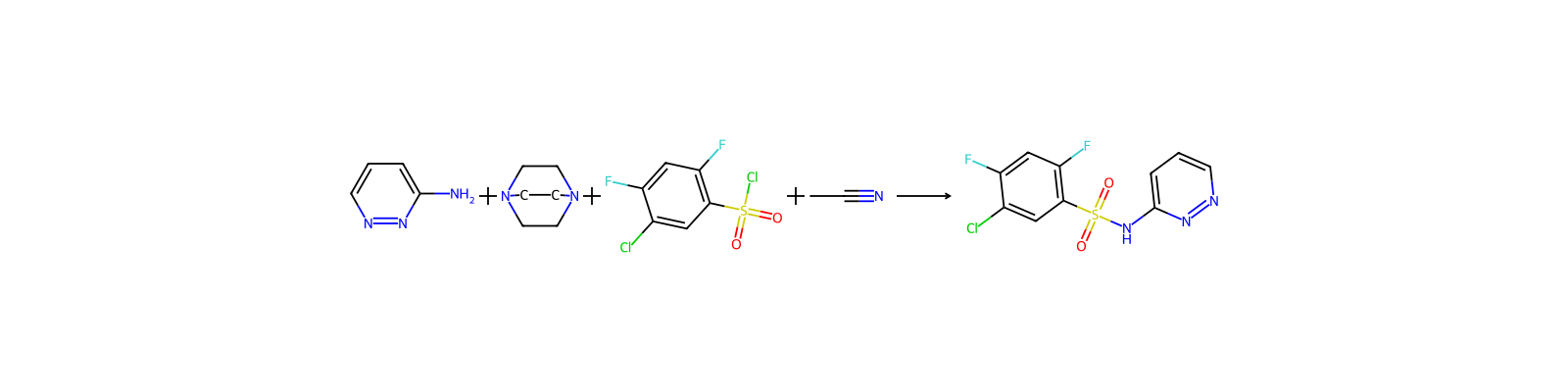
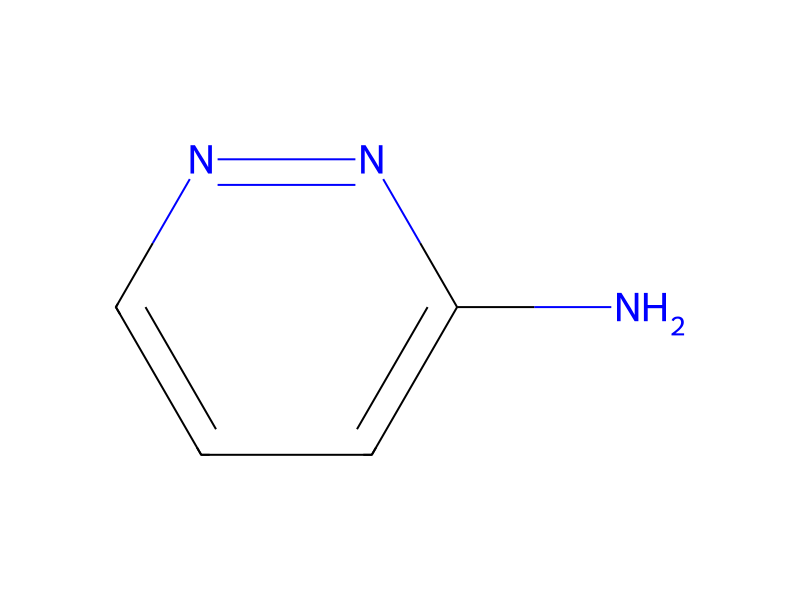
Basic information
- Standard SMILES
Nc1cccnn1- InChIKey
LETVJWLLIMJADE-UHFFFAOYSA-N- Molecular formula
- C4H5N3
- Average molar mass
- 95.1 g/mol
- Monoisotopic mass
- 95.04834717
Names & identifiers
- Preferred name
- Aminopyridazine
- IUPAC
- pyridazin-3-amine
- English name
- Pyridazin-3-amine
- Molecular formula
- C4H5N3
- Molecular weight
- 95.1
Names & synonyms
aminopyridazineRefChem:4977873-Aminopyridazinepyridazin-3-amine5469-70-53-PYRIDAZINAMINEpyridazin-3-ylamineMFCD01529869imino-pyridazinePyridazine, 3-amino-(Pyridazin-3-yl)amineNSC25228
Show more names
Pyridazine-3-amine2-AMINOPYRIDAZINEPyridazin-2-amine3-Amino pyradizine3-amino-1,2-diazine
NSC-25228YQP8QA3E57CHEMBL5170155BCP22422BP-21190AM20100349XGVpyridazineamine
Database identifiers
- CAS
5469-70-5- PubChem CID
- 230373
- DTXSID
DTXSID30282256- ChEMBL
CHEMBL5170155- UNII
- YQP8QA3E57
- EC Number
- 639-365-1
- Nikkaji
- J81.045B
Properties
Computed structural properties
- XLogP
- -1.2
- Topological polar surface area
- 51.8 Ų
- Hydrogen bond donors
- 1
- Hydrogen bond acceptors
- 3
- Rotatable bonds
- 0
- Heavy atoms
- 7
- Formal charge
- 0
- Complexity
- 54
Physicochemical properties
- Melting point
- 171 °C · 171 °C
- Boiling point
- 326.2 · 326.2±15.0 °C(Predicted)
- Density
- 1.216 · 1.216±0.06 g/cm3(Predicted)
- storage temp.
- Keep in dark place,Sealed in dry,Room Temperature
- solubility
- soluble in Methanol
- pka
- 4.88 · 4.88±0.10(Predicted)
- form
- Solid
- color
- White to pale yellow
- InChI
- InChI=1S/C4H5N3/c5-4-2-1-3-6-7-4/h1-3H,(H2,5,7)
- InChIKey
- LETVJWLLIMJADE-UHFFFAOYSA-N
- SMILES
- C1(N)=NN=CC=C1
- CAS DataBase Reference
- 5469 · 5469-70-5(CAS DataBase Reference)
- UNSPSC Code
- 12352100 · 12352100
- NACRES
- 22 · NA.22
- Symbol(GHS)
- 7 · GHS07
- Signal word
- Warning
- Hazard statements
- 302 · H302-H319
- Precautionary statements
- 264 · P264-P270-P280-P301+P312-P305+P351+P338-P337+P313
- Hazard Codes
- Xi,Xn
- Risk Statements
- 22 · 22-36
- Safety Statements
- 26 · 26-24/25
- WGK Germany
- 3 · 3
- HazardClass
- IRRITANT
- HS Code
- 29339900 · 29339900
- Storage Class
- 11 · 11 - Combustible Solids
- Hazard Classifications
- 4 OralEye · Acute Tox. 4 OralEye Irrit. 2
Safety & regulation
GHS classification
GHS Classification
Warning
H302 (91.3%): Harmful if swallowed [Warning Acute toxicity, oral];H319 (100%): Causes serious eye irritation [Warning Serious eye damage/eye irritation]
P264, P264+P265, P270, P280, P301+P317, P305+P351+P338, P330, P337+P317, and P501 (click each P-code to see the statement)
Aggregated GHS information provided per 46 reports by companies from 5 notifications to the ECHA C&L Inventory. Each notification may be associated with multiple companies.;Information may vary between notifications depending on impurities, additives, and other factors. The percentage value in parenthesis indicates the notified classification ratio from companies that provide hazard codes. Only hazard codes with percentage values above 10% are shown. For more detailed information, please visit ECHA C&L website.
Hazard information
Hazard Classes and CategoriesAcute Tox. 4 (91.3%);Eye Irrit. 2A (100%)
Safety data
- wgk
- 3
- hs_code
- 29339900
- risk_code
- 22-36
- Signal word
- Warning
- Symbol(GHS)
- GHS07
- hazard_code
- Xi,Xn
- safety_code
- 26-24/25
- hazard_class
- IRRITANT
- Storage Class
- 11 - Combustible Solids
- Hazard statements
- H302-H319
- Hazard Classifications
- Acute Tox. 4 OralEye Irrit. 2
- Precautionary statements
- P264-P270-P280-P301+P312-P305+P351+P338-P337+P313
Chemistry & industry
Applications
UsesIt is an important raw material and intermediate used in organic synthesis, pharmaceuticals, agrochemicals and dyestuffs.
Upstream & downstream products
Upstream raw materials
Downstream products
Suppliers50 total
梯希爱(上海)化成工业发展有限公司021-67121386 · [email protected]
上海阿拉丁生化科技股份有限公司400-6206333 13167063860 · [email protected]
VladaChem GmbH+49-7246-3082843 +86-18411632868 · [email protected]
T&W GROUP021-61551611 13296011611 · [email protected]
爱斯特(成都)生物制药股份有限公司+86-28-85122536 85324413 · [email protected]
北京安司莫森技术有限公司010-82954736 13391601435 · [email protected]
科瑞迪化学400-821-5857 021-64326257 · [email protected]
Ark Pharm, Inc.847-367-3680 · [email protected]
上海迈瑞尔生化科技有限公司4006356688 18621169109 · [email protected]
南部县诚信科技有限公司0838-5675166 15883665058 · [email protected]
安耐吉化学&3A(安徽泽升科技股份有限公司)400-0056266 · [email protected]
常州安轩化工有限公司13912302692 · [email protected]
上海恩诺生物科技有限公司+86 (21) 6435-5022
上海瀚鸿科技股份有限公司021-54306202 13764082696 · [email protected]
上海景颜化工科技有限公司13817811078 · [email protected]
嘉兴市艾森化工有限公司0573-85285100 18627885956 · [email protected]
Pure Chemistry Scientific Inc.001-857-928-2050 or 1-888-588-9418 · [email protected]
郑州药领医药科技有限公司13526569071 · [email protected]
上海常丰生物医药科技有限公司+86-021-61727342 13611721451 · [email protected]
杰达维(上海)医药科技发展有限公司/J & W PharmLab021-64340559 · [email protected]
杭州东帆化学有限公司86-0571-85151182
苏州施亚生物科技有限公司86(512)5235 8471 17715136450 · [email protected]
skychemical Co.Ltd021-20958197 20965099 · [email protected]
上海钰康生物科技有限公司15618758386 15618758386 · [email protected]
南京斯贝源医药科技有限公司+86-25-68710855, +86-25-68710897 · [email protected]
湖南汇百侍生物科技有限公司0731-85526065 13308475853 · [email protected]
苏州思变化学技术有限公司0512-65617459 18915409046 · [email protected]
江苏艾康生物医药研发有限公司025-66113011 13913916777 · [email protected]
上海健超生物科技有限公司150-2103-5486 18017383231 · [email protected]
TCI AMERICA800-4238616 · [email protected]
TOKYO CHEMICAL INDUSTRY CO., LTD.03-36680489 · [email protected]
TCI Europe320-37350700 · [email protected]
上海贤鼎生物科技有限公司4009209199 · [email protected]
深圳康特腾科技有限公司86-0755-86635001 · [email protected]
越林试剂021-62960152 · [email protected]
上海睿升化工科技有限公司+86-021-50935922
上海伯韵医药科技有限公司13817873692 · [email protected]
无锡中坤生化科技有限公司+86 0510-85629785
上海汇凯化学科技有限公司021-61995394 18916691159 · [email protected]
嘉兴凯瑞生物科技有限公司18258318278 · [email protected]
杭州迈世腾药物科技有限公司0571-82896630 18969958410 · [email protected]
上海贺康生物技术有限公司17721021104 18939837085 · [email protected]
上海将来实业股份有限公司021-61552785 · [email protected]
常州艾菲森化工科技有限公司18136598690 18136597130
HBCChem, Inc.+1-510-219-6317 · [email protected]
上海毕得医药科技股份有限公司400-164-7117 18317119277 · [email protected]
Labnetwork lnc.+86-27-50766799 +86-18062016861 · [email protected]
郑州萃智医药科技有限公司19943855286 · [email protected]
上海御略医药科技有限公司021-60345187 13671753212 · [email protected]
南京一番化成生物科技有限公司025-025-52700520 18914499889
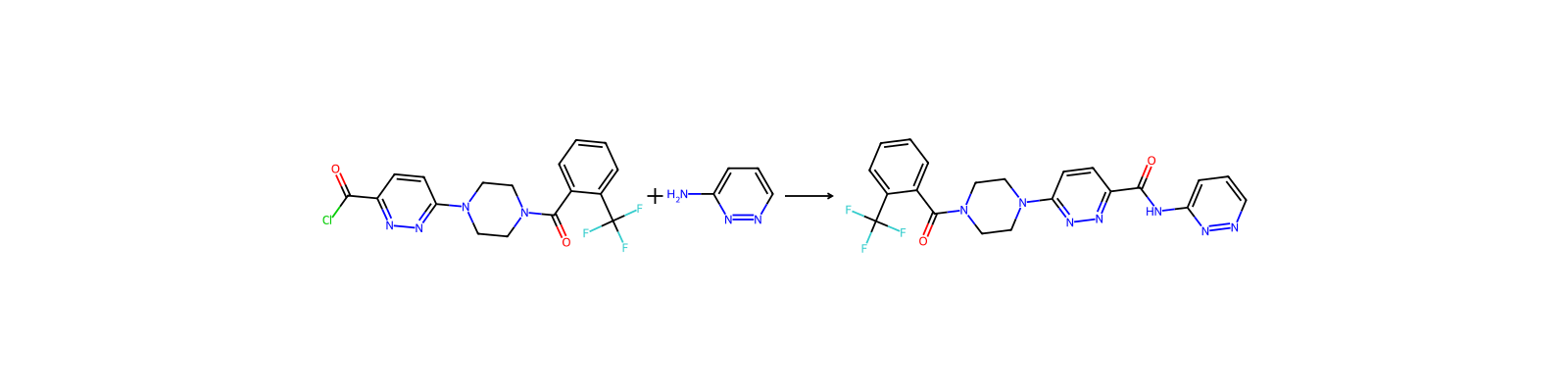
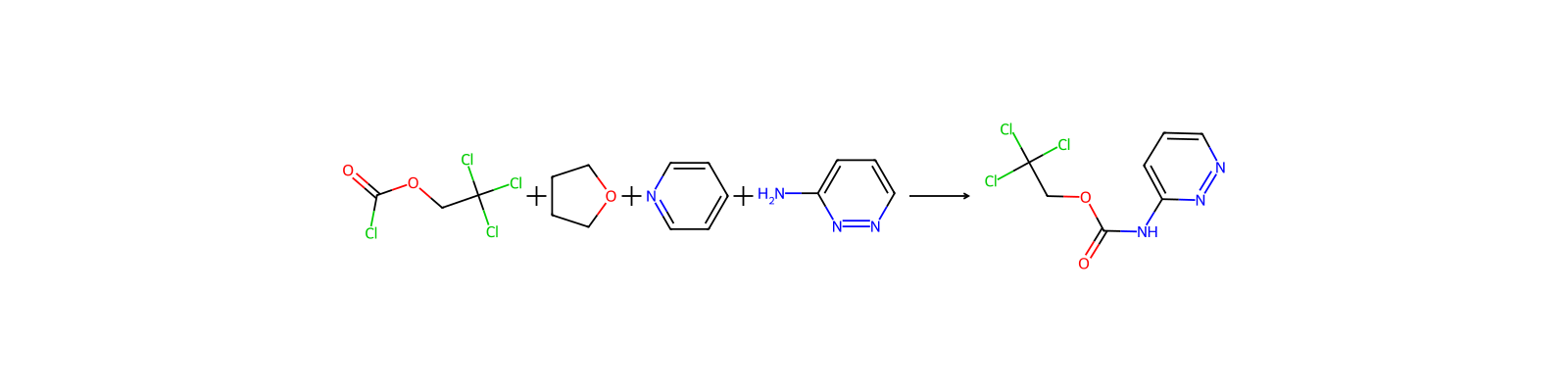
Related reactions
58 records


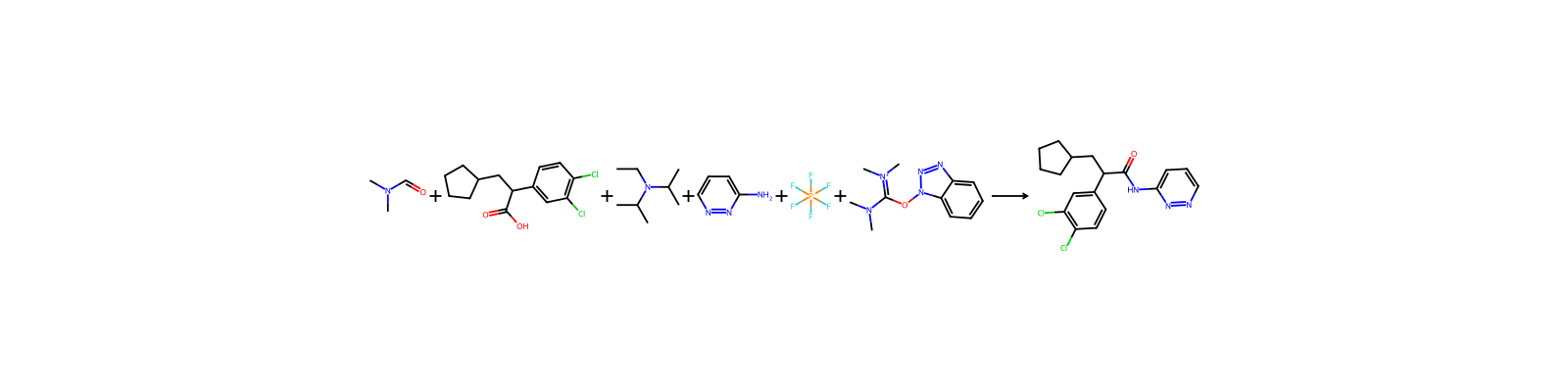


Linked notes
Loading…