

Basic information
- Standard SMILES
[Br-].c1ccc([P+](CCC2OCCCO2)(c2ccccc2)c2ccccc2)cc1- InChIKey
XETDBHNHTOJWPZ-UHFFFAOYSA-M- Molecular formula
- C24H26BrO2P
- Average molar mass
- 457.3 g/mol
- Monoisotopic mass
- 456.0853788
Names & identifiers
- Preferred name
- 2-(1,3-Dioxan-2-yl)ethyltriphenylphosphonium bromide
- IUPAC
- 2-(1,3-dioxan-2-yl)ethyl-triphenylphosphanium bromide
- English name
- 2-(1,3-Dioxan-2-yl)ethyltriphenylphosphonium bromide
- Molecular formula
- C24H26BrO2P
- Molecular weight
- 457.35
Names & synonyms
2-(1,3-Dioxan-2-yl)ethyltriphenylphosphonium bromideEINECS 274-189-5RefChem:450414274-189-569891-92-5(2-(1,3-Dioxan-2-yl)ethyl)triphenylphosphonium bromide[2-(1,3-DIOXAN-2-YL)ETHYL]TRIPHENYLPHOSPHONIUM BROMIDEMFCD000120002-(1,3-dioxan-2-yl)ethyl-triphenylphosphanium;bromideSCHEMBL667642DTXSID60990170XQAUPNAYCIKWCT-UHFFFAOYSA-M
Show more names
Wittig reagentLABOTEST-BB LT00233223DIOXANETHYLTRIPHENYLPHOSPHONIUMBROMIDE2-(1,3-dioxan-2-yl)ethyl-triphenylphosphanium2-(1,3-Dioxan-2-yl)ethyltriphenylphosphanium bromide2-(1,3)-DIOXANE-2-YL)ETHYLTRIPHENYLPHOSPHONIUM BROMIDE2-(1,3-Dioxan-2-yl)Ethylütriphenylphosphonium bromide2-(1,3-Dioxan-2-yl)ethyltriphenylphosphoniumBromide>Phosphonium, [2-(1,3-dioxan-2-yl)ethyl]triphenyl-, bromide
MSK168129AKOS015833066CS-W009647SY060198D1655NS00063129ST504087561,3-dioxan-2-ylethyltriphenylphosphinebromide
Database identifiers
- CAS
69891-92-5- PubChem CID
- 2724168
- DTXSID
DTXSID60990170- EC Number
- 274-189-5
Properties
Computed structural properties
- Topological polar surface area
- 18.5 Ų
- Hydrogen bond donors
- 0
- Hydrogen bond acceptors
- 3
- Rotatable bonds
- 6
- Heavy atoms
- 28
- Formal charge
- 0
- Complexity
- 371
Physicochemical properties
- Melting point
- 193 · 193-195 °C (lit.)
- storage temp.
- Keep in dark place,Inert atmosphere,Room temperature
- Water Solubility
- Soluble in water
- form
- solid
- color
- White to Light yellow
- Sensitive
- Moisture Sensitive
- BRN
- 4117571 · 4117571
- InChI
- InChI=1S/C24H26O2P.BrH/c1-4-11-21(12-5-1)27(22-13-6-2-7-14-22,23-15-8-3-9-16-23)20-17-24-25-18-10-19-26-24;/h1-9,11-16,24H,10,17-20H2;1H/q+1;/p-1
- InChIKey
- XETDBHNHTOJWPZ-UHFFFAOYSA-M
- SMILES
- [P+](C1C=CC=CC=1)(C1C=CC=CC=1)(C1C=CC=CC=1)CCC1OCCCO1.[Br-]
- CAS DataBase Reference
- 69891 · 69891-92-5(CAS DataBase Reference)
- UNSPSC Code
- 12352005 · 12352005
- Symbol(GHS)
- 7 · GHS07
- Signal word
- Warning
- Hazard statements
- 315 · H315-H319-H335
- Precautionary statements
- 261 · P261-P280a-P304+P340-P305+P351+P338-P405-P501a
- PPE
- 95 · dust mask type N95 (US), Eyeshields, Gloves
- Hazard Codes
- Xi
- Risk Statements
- 36 · 36/37/38
- Safety Statements
- 26 · 26-36
- WGK Germany
- 3 · 3
- F
- 10 · 10-21
- HS Code
- 2931599090 · 2931599090
- Storage Class
- 11 · 11 - Combustible Solids
Safety & regulation
GHS classification
GHS Classification
Warning
H315 (100%): Causes skin irritation [Warning Skin corrosion/irritation]
P261, P264, P264+P265, P271, P280, P302+P352, P304+P340, P305+P351+P338, P319, P321, P332+P317, P337+P317, P362+P364, P403+P233, P405, and P501 (click each P-code to see the statement)
Aggregated GHS information provided per 39 reports by companies from 2 notifications to the ECHA C&L Inventory. Each notification may be associated with multiple companies.
Hazard information
Hazard Classes and CategoriesSkin Irrit. 2 (100%)
Safety data
- F
- 10-21
- PPE
- dust mask type N95 (US), Eyeshields, Gloves
- wgk
- 3
- hs_code
- 2931599090
- risk_code
- 36/37/38
- Signal word
- Warning
- Symbol(GHS)
- GHS07
- hazard_code
- Xi
- safety_code
- 26-36
- Storage Class
- 11 - Combustible Solids
- Hazard statements
- H315-H319-H335
- Precautionary statements
- P261-P280a-P304+P340-P305+P351+P338-P405-P501a
Chemistry & industry
Applications
Uses[2-(1,3-Dioxan-2-yl)ethyl]triphenylphosphonium Bromide is used in synthesis of leukotrienes.
Uses2-(1,3-Dioxan-2-yl)ethyltriphenylphosphonium bromide can be used:As a three-carbon homologating agent used to prepare α,β- or β,γ- unsaturated compounds.In the olefination of methyl 5-oxopentanoate to yield methyl 7-(1,3-dioxan2-yl)hept-(5Z)-enoate.As a cathode interfacial layer material in polymer solar cells.
Suppliers50 total
上海康恩博医药科技有限公司17510465506 · [email protected]
梯希爱(上海)化成工业发展有限公司021-67121386 · [email protected]
上海阿拉丁生化科技股份有限公司400-6206333 13167063860 · [email protected]
南通润丰石油化工有限公司66017690 19952660367 · [email protected]
毕佳索(上海毕得医药科技股份有限公司)400-6005915 · [email protected]
上海麦克林生化科技股份有限公司021-50706066 15221275939 · [email protected]
武汉欣扬瑞和化学科技有限公司18171205315; 18171205315 · [email protected]
上海毕得医药科技股份有限公司400-1647117 13681763483 · [email protected]
上海仲因实业有限公司2537653158 16621191650 · [email protected]
Dayang Chem (Hangzhou) Co.,Ltd.+86-0571-88938639 17705817739 · [email protected]
河北枫嘉新材料科技有限公司+86-0311-87836622 +86-18712993135 · [email protected]
Aladdin Scientific[email protected]
上海迈瑞尔生化科技有限公司4006356688 18621169109 · [email protected]
北京索莱宝科技有限公司010-50973130 17801761073 · [email protected]
天津中信凯泰化工有限公司022-66880623 · [email protected]
上海颖心实验室设备有限公司021-59178156 17002132182 · [email protected]
北京东华力拓科技发展有限公司010-88425576 · [email protected]
阿法埃莎(中国)化学有限公司400-6106006 · [email protected]
安耐吉化学&3A(安徽泽升科技股份有限公司)400-0056266 · [email protected]
广东元丰化学试剂有限公司0751-2829979 13318593351 · [email protected]
上海瀚鸿科技股份有限公司021-54306202 13764082696 · [email protected]
常州市淇奥化工有限公司0519-85607258
广东方信生物科技有限公司0751-2838688 13376594225 · [email protected]
烟台盛凯伦生物制品有限公司13356901049 · [email protected]
湖南汇百侍生物科技有限公司0731-85526065 13308475853 · [email protected]
南京维奥化工有限公司Please Send Email 18652950785 · [email protected]
上海昊锐医药生物科技有限公司021-58388037;21-58388037 13472507714 · [email protected]
广东元丰化学试剂有限公司0751-2829979 13376591640 · [email protected]
常州康瑞医药科技有限公司+86-0519-85485169 +86-13961161173 · [email protected]
江苏艾康生物医药研发有限公司025-66113011 13913916777 · [email protected]
上海健超生物科技有限公司150-2103-5486 18017383231 · [email protected]
TCI AMERICA800-4238616 · [email protected]
TOKYO CHEMICAL INDUSTRY CO., LTD.03-36680489 · [email protected]
TCI Europe320-37350700 · [email protected]
Qingdao Dexin Chemical Co., Ltd+86-15553333686 · [email protected]
安徽科迪达化工有限公司0554-2106669 · [email protected]
HBCChem, Inc.+1-510-219-6317 · [email protected]
上海毕得医药科技股份有限公司400-164-7117 18317119277 · [email protected]
成都零六生物科技有限公司400-1166-196 13458535857 · [email protected]
北京福源坊科技有限公司010-57903446 15869909019 · [email protected]
上海御略医药科技有限公司021-60345187 13671753212 · [email protected]
杭州杰恒化工有限公司0571-87396432 · [email protected]
上海孚一生物科技有限公司+86 (21) 61124340
成都润泽本土化工有限公司13096311329 028-88469284 616445927 · [email protected]
Sigma-Aldrich西格玛奥德里奇(上海)贸易有限公司021-61415566 800-8193336 · [email protected]
天津荣燊化工有限公司18317763565; 18317763565 · [email protected]
九鼎化学(上海)科技有限公司4009209199 · [email protected]
厦门志信化学有限公司+86-5922680277 +86-13806087780 · [email protected]
郑州阿尔法化工有限公司0371-53765687 18937137882 · [email protected]
成都润泽本土化工有限公司028-88469284 18000562381 · [email protected]
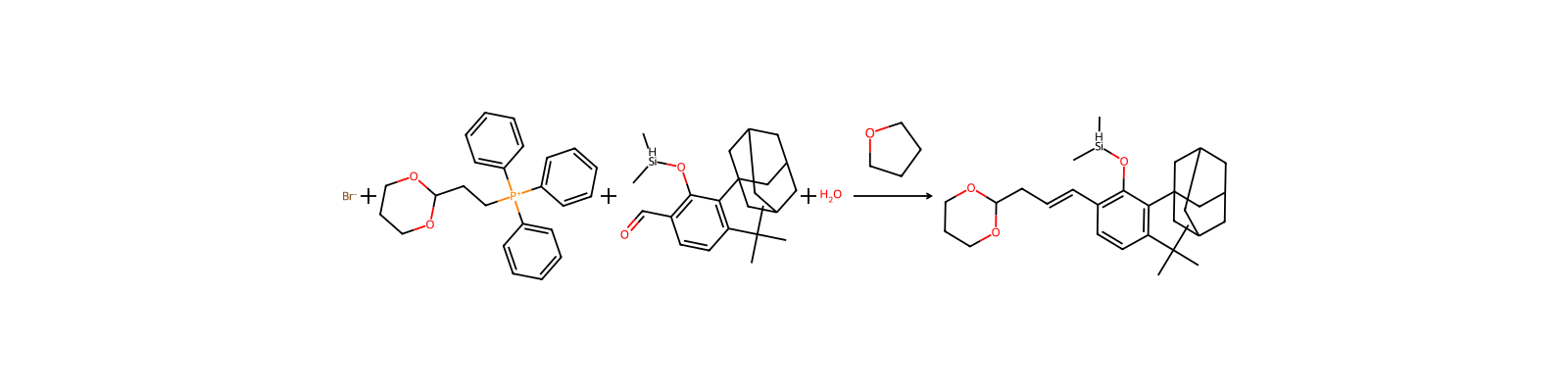
Related reactions
38 records




Linked notes
Loading…