
Basic information
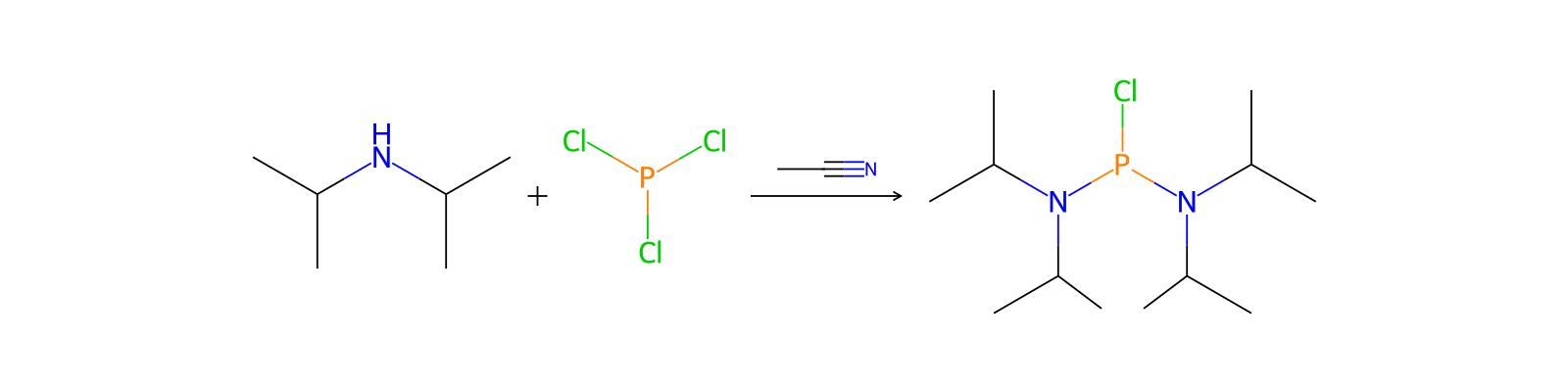
- Standard SMILES
CC(C)N(C(C)C)P(Cl)N(C(C)C)C(C)C- InChIKey
FEHUTHGOLLQBNW-UHFFFAOYSA-N- Molecular formula
- C12H28ClN2P
- Average molar mass
- 266.79 g/mol
- Monoisotopic mass
- 266.1678636
Names & identifiers
- Preferred name
- Bis(diisopropylamino)chlorophosphine
- IUPAC
- N-[chloro-[di(propan-2-yl)amino]phosphanyl]-N-propan-2-ylpropan-2-amine
- English name
- BIS(DIISOPROPYLAMINO)CHLOROPHOSPHINE
- Molecular formula
- C12H28ClN2P
- Molecular weight
- 266.79
Names & synonyms
Bis(diisopropylamino)chlorophosphine56183-63-2DTXSID00369907RefChem:569062DTXCID10320943628-718-5MFCD00061482N-[chloro-[di(propan-2-yl)amino]phosphanyl]-N-propan-2-ylpropan-2-aminePhosphorodiamidous chloride, tetrakis(1-methylethyl)-C12H28ClN2PSCHEMBL1117784bisdiisopropylaminochlorophosphine
Show more names
Bis(diisopropyamino)chlorophosphineChlorobis(N,N-diisopropylamino)phosphineSKL629Bis(diisopropylaminodiisopropylaMino)phosphineChlorbis(diisopropylamino)phosphanChloro-di-N-(diisopropyl)-phosphiteBIS(DI-I-PROPYLAMINO)CHLOROPHOSPHINE
FEHUTHGOLLQBNW-UHFFFAOYSA-NGCA18363Bis(di-isopropylamino)chlorophosphineChloro(bis(diisopropylamino))phosphaneAKOS015910528bis(N,N-diisopropylamino)chlorophosphinebis-(N,N-diisopropylamino)chlorophosphineBP-14118
Database identifiers
- CAS
56183-63-2- PubChem CID
- 2733425
- DTXSID
DTXSID00369907- EC Number
- 628-718-5
- Nikkaji
- J1.175.515A
Properties
Computed structural properties
- XLogP
- 4.4
- Topological polar surface area
- 6.5 Ų
- Hydrogen bond donors
- 0
- Hydrogen bond acceptors
- 2
- Rotatable bonds
- 6
- Heavy atoms
- 16
- Formal charge
- 0
- Complexity
- 159
Physicochemical properties
- Melting point
- 100 · 100-104 °C(lit.)
- Boiling point
- 291 ℃ · 291℃
- Flash point
- 130 ℃ · 130℃
- storage temp.
- Store under inert gas
- form
- Powder
- pka
- 4.5 · 4.50±0.70(Predicted)
- color
- white to off-white
- Sensitive
- air sensitive, moisture sensitive
- InChI
- InChI=1S/C12H28ClN2P/c1-9(2)14(10(3)4)16(13)15(11(5)6)12(7)8/h9-12H,1-8H3
- InChIKey
- FEHUTHGOLLQBNW-UHFFFAOYSA-N
- SMILES
- P(N(C(C)C)C(C)C)(N(C(C)C)C(C)C)Cl
- CAS DataBase Reference
- 56183 · 56183-63-2(CAS DataBase Reference)
- UNSPSC Code
- 12352001 · 12352001
- NACRES
- 22 · NA.22
- Symbol(GHS)
- 5 · GHS05
- Signal word
- Danger
- Hazard statements
- 314 · H314
- Precautionary statements
- 260 · P260-P280-P301+P330+P331-P303+P361+P353-P304+P340+P310-P305+P351+P338
- PPE
- 3 · Eyeshields, Faceshields, Gloves, type P3 (EN 143) respirator cartridges
- Hazard Codes
- C
- Risk Statements
- 14 · 14-34
- Safety Statements
- 26 · 26-27-28-36/37/39-45
- RIDADR
- 3261 · UN 3261 8/PG 1
- WGK Germany
- 3 · 3
- HazardClass
- 8 · 8
- PackingGroup
- II
- HS Code
- 29310099 · 29310099
- Storage Class
- 8 A · 8A - Combustible corrosive hazardous materials
- Hazard Classifications
- 1 Skin · Eye Dam. 1Skin Corr. 1B
Safety & regulation
GHS classification
GHS Classification
Danger
H314 (100%): Causes severe skin burns and eye damage [Danger Skin corrosion/irritation];H318 (97.6%): Causes serious eye damage [Danger Serious eye damage/eye irritation]
P260, P264, P264+P265, P280, P301+P330+P331, P302+P361+P354, P304+P340, P305+P354+P338, P316, P317, P321, P363, P405, and P501 (click each P-code to see the statement)
Aggregated GHS information provided per 42 reports by companies from 4 notifications to the ECHA C&L Inventory. Each notification may be associated with multiple companies.;Information may vary between notifications depending on impurities, additives, and other factors. The percentage value in parenthesis indicates the notified classification ratio from companies that provide hazard codes. Only hazard codes with percentage values above 10% are shown. For more detailed information, please visit ECHA C&L website.
Hazard information
Hazard Classes and CategoriesSkin Corr. 1B (100%);Eye Dam. 1 (97.6%)
Safety data
- PPE
- Eyeshields, Faceshields, Gloves, type P3 (EN 143) respirator cartridges
- wgk
- 3
- ridadr
- UN 3261 8/PG 1
- hs_code
- 29310099
- risk_code
- 14-34
- Signal word
- Danger
- Symbol(GHS)
- GHS05
- hazard_code
- C
- safety_code
- 26-27-28-36/37/39-45
- hazard_class
- 8
- Storage Class
- 8A - Combustible corrosive hazardous materials
- packing_group
- II
- Hazard statements
- H314
- Hazard Classifications
- Eye Dam. 1Skin Corr. 1B
- Precautionary statements
- P260-P280-P301+P330+P331-P303+P361+P353-P304+P340+P310-P305+P351+P338
Chemistry & industry
Applications
DescriptionBis(diisopropylamino)chlorophosphine is a white to off-white powder to crystalline organophosphorus compound, mainly used as an organic synthetic raw material or reaction reagent. It can be used in the synthesis of mixed phosphorothioate and methylenephosphine derivatives, etc. It is commonly used in chemical production and laboratory research.
UsesBis(diisopropylamino)chlorophosphine has been used in the synthesis of tert-butyl tetraisopropylphosphorodiamidite ligand for palladium-catalyzed Buchwald–Hartwig amination reaction.It is also can be used to synthesize:acyclic N-phosphonio imine catalyst for selective epoxidationsboryl-substituted methylenephosphonium derivatives
Upstream & downstream products
Upstream raw materials
Suppliers50 total
绍兴赜军生物医药科技有限公司0575-82126188 15395856318
上海莉凯化工技术有限公司16628776521 · [email protected]
天津瑞德法莫科技有限公司13821803402 · [email protected]
Hong Kong Tiansheng New Material Trading Co., Ltd+8617320695765 · [email protected]
河南多贝化工有限公司0370-6999054 17550096163 · [email protected]
郑州汇聚化工有限公司13393710386 · [email protected]
INTATRADE GmbH+49 3493/605464 · [email protected]
Suzhou ARTK Medchem Co., Ltd.+86-18168183658 · [email protected]
Dayang Chem (Hangzhou) Co.,Ltd.+86-0571-88938639 17705817739 · [email protected]
Syntechem Co.,Ltd[email protected]
上海迈瑞尔生化科技有限公司4006356688 18621169109 · [email protected]
SelectLab Chemicals GmbH+49-(0)2383-919350 · [email protected]
安耐吉化学&3A(安徽泽升科技股份有限公司)400-0056266 · [email protected]
上海瀚鸿科技股份有限公司021-54306202 13764082696 · [email protected]
Protheragen-ING+86-15618352007 · [email protected]
上海博路生物科技有限公司13062875887 · [email protected]
上海相辉医药科技有限公司13761987713; 13761987713 · [email protected]
济南德迈医药科技有限公司18669728830 15806766175 · [email protected]
上海景颜化工科技有限公司13817811078 · [email protected]
上海梅凯科技有限公司021-68689288 15300790979 · [email protected]
湖北广奥生物科技有限公司027-02702759223056 18162699093 · [email protected]
武汉丰泰威远科技有限公司+86-27-8746-5837 +86-18627785180 · [email protected]
上海常丰生物医药科技有限公司+86-021-61727342 13611721451 · [email protected]
武汉丰泰威远科技有限公司027-87465837 19945049750 · [email protected]
吉林中科研伸科技有限公司18143011203 · [email protected]
山东西亚化学有限公司13355009207 13355009207 · [email protected]
上海舒盟医药科技有限公司021-54540637 18621091017 · [email protected]
河南多贝化工有限公司0370-2785118 17550508557 · [email protected]
赛默飞世尔科技(中国)有限公司800-810-5118 · [email protected]
TCI AMERICA800-4238616 · [email protected]
TOKYO CHEMICAL INDUSTRY CO., LTD.03-36680489 · [email protected]
TCI Europe320-37350700 · [email protected]
深圳康特腾科技有限公司86-0755-86635001 · [email protected]
上海亚毓生物医药有限公司021-54370211 18051886391 · [email protected]
安徽科迪达化工有限公司0554-2106669 · [email protected]
成都零六生物科技有限公司400-1166-196 13458535857 · [email protected]
上海麦克林生化科技股份有限公司15221275939 15221275939 · [email protected]
南京恰风和医药科技有限公司025-57018978 18251899859 · [email protected]
江苏艾康生物医药研发有限公司025-66028182 17714375163 · [email protected]
新乡市润宇新材料科技有限公司166-166-37336996 15690792173 · [email protected]
Sigma-Aldrich西格玛奥德里奇(上海)贸易有限公司021-61415566 800-8193336 · [email protected]
盘锦研峰科技有限公司400-1062016 18612996721 · [email protected]
九鼎化学(上海)科技有限公司4009209199 · [email protected]
北京禾兴源科技有限公司18511709189 · [email protected]
西安美川生物科技有限公司029-89275612 +8618991951683 · [email protected]
HANGZHOU LEAP CHEM CO., LTD.+86-571-87711850 +86-15355479329 · [email protected]
广东翁江化学试剂有限公司0751-2886766 13927870850 · [email protected]
河南誉康卓宁进出口有限公司13393721940 · [email protected]
R&D Scientific Inc.+1-2266000236 · [email protected]
上海阿拉丁生化科技股份有限公司6206333 13167063860 · [email protected]
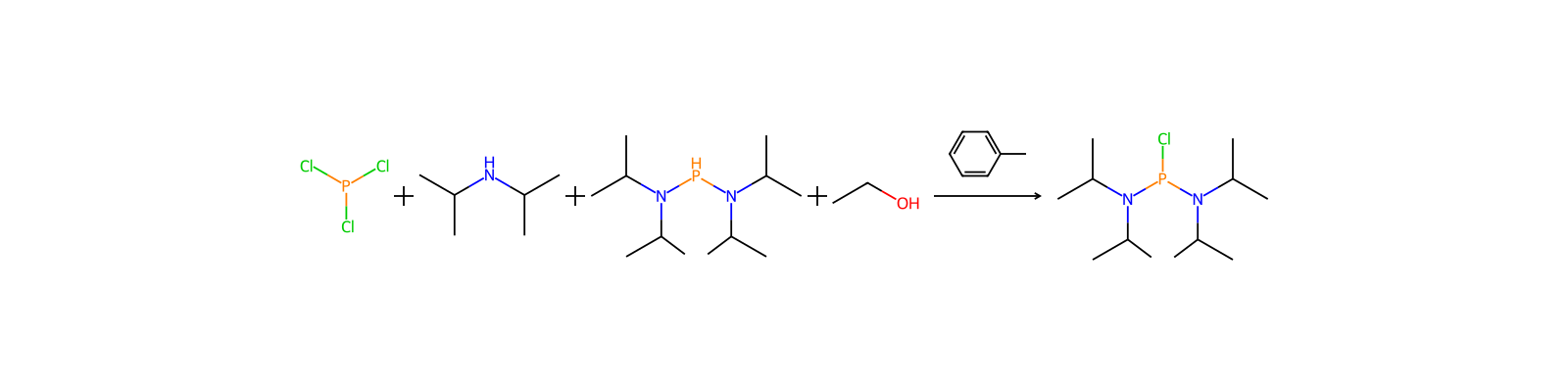
Related reactions
20 records


Linked notes
Loading…