

Basic information
- Standard SMILES
NCc1cccc(-c2ccccc2)c1- InChIKey
WKHABRRJMGVELW-UHFFFAOYSA-N- Molecular formula
- C13H13N
- Average molar mass
- 183.25 g/mol
- Monoisotopic mass
- 183.10479942
Names & identifiers
- Preferred name
- 3-(Aminomethyl)biphenyl
- IUPAC
- (3-phenylphenyl)methanamine
- English name
- 3-PHENYLBENZYLAMINE
- Molecular formula
- C13H13N
- Molecular weight
- 183.25
Names & synonyms
3-(Aminomethyl)biphenylRefChem:494132671-211-93-Phenylbenzylamine177976-49-7[1,1'-Biphenyl]-3-ylmethanamine(3-phenylphenyl)methanamine[1,1'-Biphenyl]-3-methanamineMFCD00270124CHEMBL4162063(3-phenylphenyl)methylamineBiphenyl-3-methanamine HCl
Show more names
TIMTEC-BB SBB007527RARECHEM AL BW 08853-Phenylbenzylamine ,98%3-(Aminomethyl)biphenyl 95%1,1'-Biphenyl]-3-methanamine
3-phenyl benzylamine3-phenyl-benzylamine3-phenylbenzyl aminebiphenyl-3-methanamine3-(phenyl)benzyl amine(biphenyl-3-y)methylamine1-Biphenyl-3-ylmethanamineC-Biphenyl-3-yl-methylamine
Database identifiers
- CAS
177976-49-7- PubChem CID
- 2760368
- DTXSID
DTXSID70375136- ChEMBL
CHEMBL4162063- EC Number
- 671-211-9
- Nikkaji
- J2.283.183F
Properties
Computed structural properties
- XLogP
- 2.4
- Topological polar surface area
- 26 Ų
- Hydrogen bond donors
- 1
- Hydrogen bond acceptors
- 1
- Rotatable bonds
- 2
- Heavy atoms
- 14
- Formal charge
- 0
- Complexity
- 161
Physicochemical properties
- Melting point
- 28 °C · 28 °C
- Boiling point
- 128 °C · 128 °C
- Density
- 1.048 · 1.048±0.06 g/cm3(Predicted)
- storage temp.
- 2 · under inert gas (nitrogen or Argon) at 2–8 °C
- pka
- 9 · 9.00±0.10(Predicted)
- form
- solid
- Appearance
- 29 °C · Colorless to off-white 29°C Liquid
- Sensitive
- Air Sensitive
- InChI
- 1S/C13H13N/c14-10-11-5-4-8-13(9-11)12-6-2-1-3-7-12/h1-9H,10,14H2
- InChIKey
- WKHABRRJMGVELW-UHFFFAOYSA-N
- SMILES
- NCc1cccc(c1)-c2ccccc2
- UNSPSC Code
- 12352116 · 12352116
- NACRES
- 21 · NA.21
- Symbol(GHS)
- 7 · GHS07
- Signal word
- Warning
- Hazard statements
- 302 · H302
- Precautionary statements
- 280 · P280-P305+P351+P338
- target organs
- Respiratory system
- Hazard Codes
- T,Xi,N
- Risk Statements
- 36 · 36/37/38-50-41-37/38
- Safety Statements
- 26 · 26-36/37/39-61-39
- WGK Germany
- 3 · WGK 3
- HazardClass
- IRRITANT, IRRITANT-HARMFUL
- HS Code
- 2921490090 · 2921490090
- Storage Class
- 11 · 11 - Combustible Solids
- Hazard Classifications
- 1 Aquatic · Aquatic Acute 1Aquatic Chronic 1Eye Dam. 1Skin Irrit. 2STOT SE 3
Safety & regulation
GHS classification
GHS Classification
Danger
H314 (25%): Causes severe skin burns and eye damage [Danger Skin corrosion/irritation]
P260, P261, P264, P264+P265, P271, P273, P280, P301+P330+P331, P302+P352, P302+P361+P354, P304+P340, P305+P351+P338, P305+P354+P338, P316, P317, P319, P321, P332+P317, P337+P317, P362+P364, P363, P391, P403+P233, P405, and P501 (click each P-code to see the statement)
Aggregated GHS information provided per 4 reports by companies from 4 notifications to the ECHA C&L Inventory. Each notification may be associated with multiple companies.
Hazard information
Hazard Classes and CategoriesSkin Corr. 1B (25%)
Safety data
- wgk
- WGK 3
- hs_code
- 2921490090
- risk_code
- 36/37/38-50-41-37/38
- Signal word
- Warning
- Symbol(GHS)
- GHS07
- hazard_code
- T,Xi,N
- safety_code
- 26-36/37/39-61-39
- hazard_class
- IRRITANT, IRRITANT-HARMFUL
- Storage Class
- 11 - Combustible Solids
- target organs
- Respiratory system
- Hazard statements
- H302
- Hazard Classifications
- Aquatic Acute 1Aquatic Chronic 1Eye Dam. 1Skin Irrit. 2STOT SE 3
- Precautionary statements
- P280-P305+P351+P338
Chemistry & industry
Applications
Uses3-Phenylbenzylamine is used as a reagent for the preparation of N-bis[3-(2-arylethynyl)benzyl]-N''-isopropylureas. Based on biological studies, N-bis[3-(2-arylethynyl)benzyl]-N''-isopropylureas is considered a potent and selective microsomal prostaglandin E synthase (mPGES-1) inhibitors.
Upstream & downstream products
Upstream raw materials
Suppliers46 total
上海康恩博医药科技有限公司17510465506 · [email protected]
Career Henan Chemica Co+86-0371-86658258 +86-13203830695 · [email protected]
毕佳索(上海毕得医药科技股份有限公司)400-6005915 · [email protected]
Sichuan Biosynce Pharmatech Co., Ltd.[email protected]
杭州摩库生物医药科技有限公司+86-057181025280; +8617767106207 · [email protected]
Aladdin Scientific[email protected]
上海迈瑞尔生化科技有限公司4006356688 18621169109 · [email protected]
上海辅欣医药科技有限公司+86-021-021-50872116 · [email protected]
Hangzhou Sage Chemical Co., Ltd.+86057186818502 13588463833 · [email protected]
安耐吉化学&3A(安徽泽升科技有限公司)021-58432009 400-005-6266 · [email protected]
武汉凯威斯科技有限公司86-027-67849912 · [email protected]
孟成科技(上海)有限公司400-820-6829 · [email protected]
韶远科技(上海)有限公司021-50795510 4000665055 · [email protected]
成都海品信医药科技有限公司85114309 18982182443 · [email protected]
Clearsynth Labs Limited+91-22-26355700 · [email protected]
陕西麟邦实业有限公司17709134430 · [email protected]
苏州爱玛特生物科技有限公司0512-56316828 4008675858 · [email protected]
上海毕得医药科技股份有限公司400-164-7117 18317119277 · [email protected]
上海安米克化学品有限公司微信 17321281695 18019252918 · [email protected]
上海闯欣医药科技有限公司13621615409 · [email protected]
北京蓝博特科技有限公司010-56330744 18310155299 · [email protected]
北京汇科盈生物科技有限公司15210661751 · [email protected]
北京伊万景瑞生物科技有限公司15866847540 · [email protected]
启源(广东)医药化工有限公司18026564465 · [email protected]
郑州阿尔法化工有限公司0371-53765687 18937137882 · [email protected]
上海源叶生物科技有限公司13636370518 · [email protected]
上海贤鼎生物科技有限公司021-021-52271985 17721149837 · [email protected]
北京索莱宝科技有限公司010-50973130 17801761073 · [email protected]
河北博新生物科技有限公司19131160546 · [email protected]
深圳市丽晶生化科技有限公司0755-85201366 18938635012 · [email protected]
江苏艾康生物医药研发有限公司025-58851090 13913916777 · [email protected]
苏州诺欧曼生物科技有限公司15026866316 · [email protected]
ATK CHEMICAL COMPANY LIMITED+undefined-21-51877795 · [email protected]
上海吉至生化科技有限公司021-4009004166/18616739031 18616739031 · [email protected]
广东翁江化学试剂有限公司0751-2815688 13927872512 · [email protected]
上海芸联医药科技有限公司13120563767 · [email protected]
上海皓鸿生物医药科技有限公司400-8210725 4008210725 · [email protected]
陕西国槐硕海医药科技有限公司029-13279368192 13279368192 · [email protected]
上海捷世凯生物科技有限公司021-57520305 13795461237 · [email protected]
重庆卡兰医药有限公司[email protected]
上海相辉医药科技有限公司13611835272 13611835272 · [email protected]
北京百灵威科技有限公司18210857532 18210857532 · [email protected]
上海锐谱医药科技有限公司15895968936 · [email protected]
禹州焓碳医药科技有限公司19963477321; 19963477321 · [email protected]
珠海奥博凯生物医药技术有限公司400-0628126 · [email protected]
上海信旗医药科技有限公司+86-21-54098501 · [email protected]
Related reactions
44 records
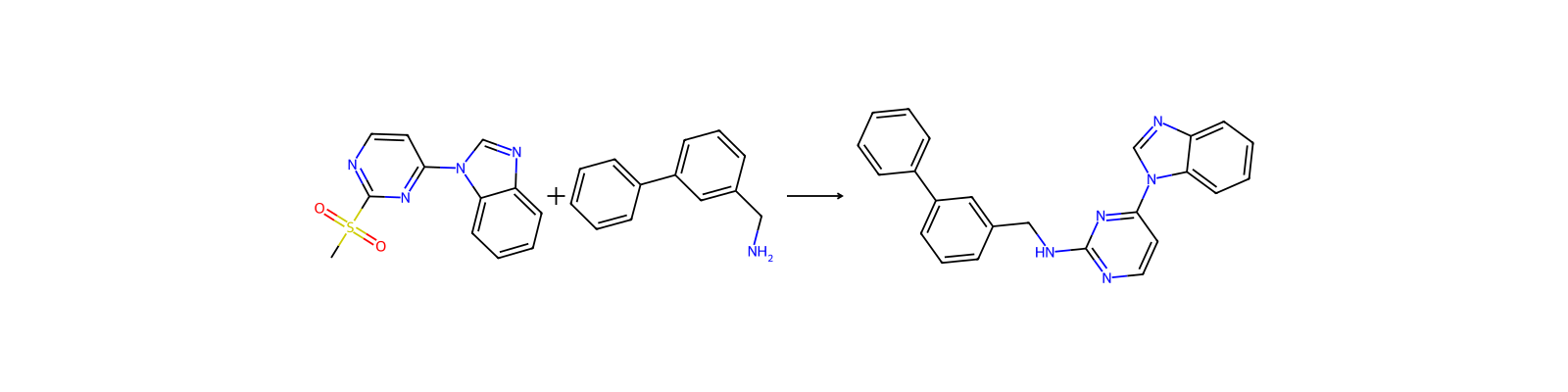


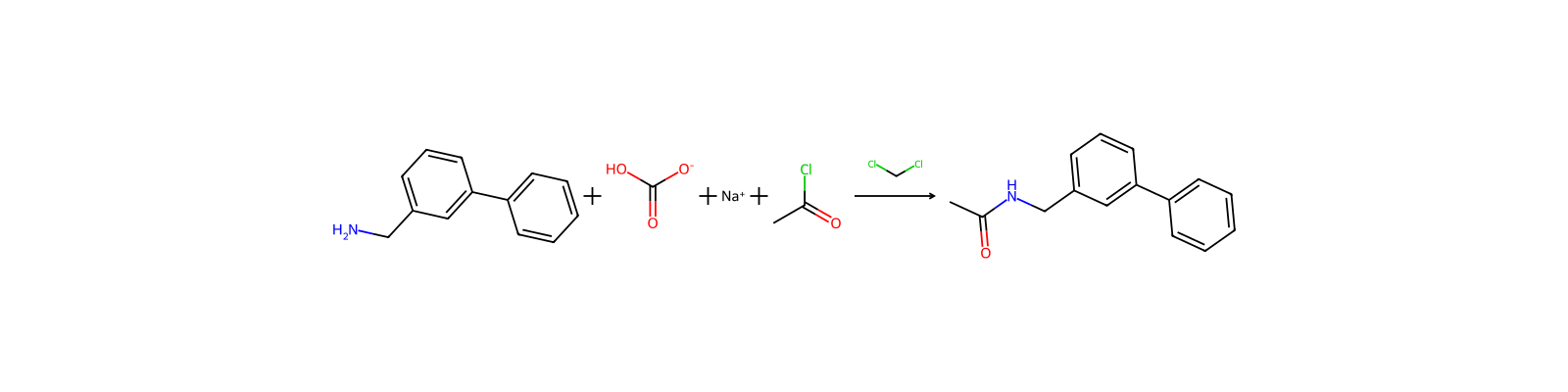
Linked notes
Loading…