
Basic information
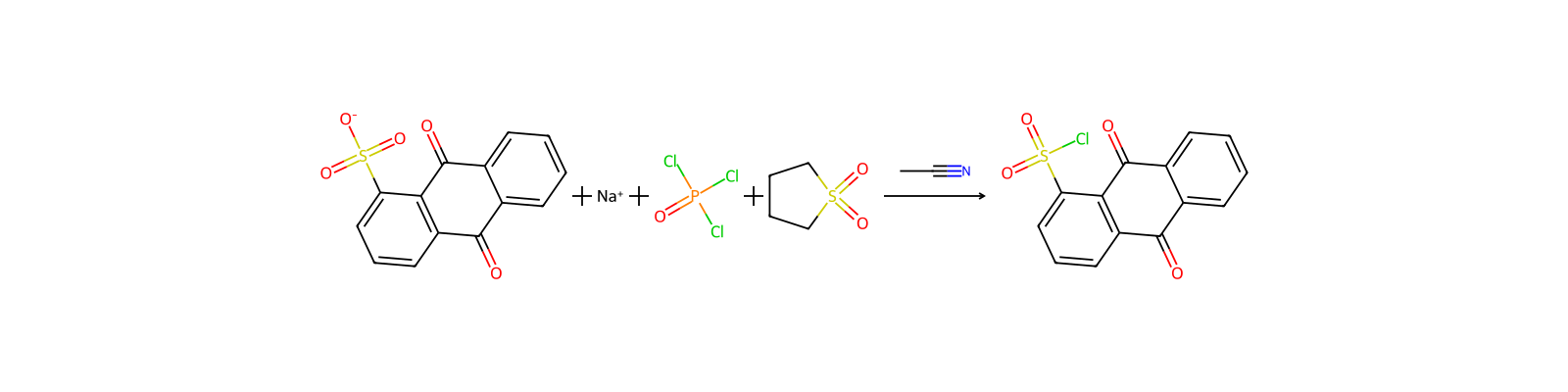
- Standard SMILES
O=C1c2ccccc2C(=O)c2c1cccc2S(=O)(=O)[O-].[Na+]- InChIKey
SDKPSXWGRWWLKR-UHFFFAOYSA-M- Molecular formula
- C14H7NaO5S
- Average molar mass
- 310.26 g/mol
- Monoisotopic mass
- 309.9911886
Names & identifiers
- Preferred name
- Sodium anthraquinone-1-sulfonate
- IUPAC
- sodium 9,10-dioxoanthracene-1-sulfonate
- English name
- 1-Anthraquinonesulfonic acid sodium salt
- Molecular formula
- C14H9NaO5S
- Molecular weight
- 312.27
Names & synonyms
SODIUM ANTHRAQUINONE-1-SULFONATE1-Anthraquinonesulfonic acid sodium saltSodium anthraquinone-alpha-sulfonate1-Anthracenesulfonic acid, 9,10-dihydro-9,10-dioxo-, sodium saltHSDB 6386NSC 7575EINECS 204-894-5Anthrachinon-1-sulfonan sodny1-Anthracenesulfonic acid, 9,10-dihydro-9,10-dioxo-, sodium salt (1:1)Anthrachinon-1-sulfonan sodny [Czech]DTXSID508833209,10-Anthraquinone-1-sulfonate sodium salt
Show more names
goldsaltgoldensaltanthrachinon-1-sulfonansodnySODIUM β-ANTHRAQUINONESULFONATESODIUM ANTHRAQUINONE A-SULFONATESODIUMANTHRAQUINONEALPHA-SULPHONATEanthrachinon-1-sulfonansodny(czech)Anthraquinone-1-Sulfonic Acid Sodium
9,10-Dihydro-9,10-dioxo-1-anthracenesulfonic acid sodium saltAnthrachinon-1-sulfonan sodny (Czech)RefChem:887263Anthrachinon1sulfonan sodnySodium anthraquinonealphasulfonateDTXCID1010228581Anthraquinonesulfonic acid sodium salt9,10Anthraquinone1sulfonate sodium salt
Database identifiers
- CAS
128-56-3- PubChem CID
- 517266
- DTXSID
DTXSID50883320- UNII
- F8Q2GUT8LB
- EC Number
- 204-894-5
- Nikkaji
- J79.453H
Properties
Computed structural properties
- Topological polar surface area
- 99.7 Ų
- Hydrogen bond donors
- 0
- Hydrogen bond acceptors
- 5
- Rotatable bonds
- 1
- Heavy atoms
- 21
- Formal charge
- 0
- Complexity
- 538
Experimental & physicochemical properties
Chemical ClassesDyes -> Anthraquinone Dyes
Solubility1-Mono anthraquinonesulfonic acid, sodium salt, has a water solubility of 1000 mg/100 ml water at 18 °C.
Physical DescriptionLight yellow crystalline powder; [MSDSonline]
Other Experimental PropertiesAnthraquinonesulfonic acids are strong acids which are readily soluble in water. /Anthraquinonesulfonic acids/
Physicochemical properties
- storage temp.
- Store at room temperature
- form
- powder to crystal
- color
- Light orange to Yellow to Green
- Water Solubility
- MODERATELY SOLUBLE
- InChI
- InChI=1S/C14H8O5S.Na.H/c15-13-8-4-1-2-5-9(8)14(16)12-10(13)6-3-7-11(12)20(17,18)19;;/h1-7H,(H,17,18,19);;
- InChIKey
- QEVFVAYERYFCBR-UHFFFAOYSA-N
- SMILES
- S(C1=CC=CC2C(C3=CC=CC=C3C(=O)C1=2)=O)(O)(=O)=O.[NaH]
- CAS DataBase Reference
- 128 · 128-56-3(CAS DataBase Reference)
- EPA Substance Registry System
- -1 · Sodium anthraquinone-1-sulfonate (128-56-3)
- Symbol(GHS)
- 7 · GHS07
- Signal word
- Warning
- Hazard statements
- 302 · H302-H315-H319-H335
- Precautionary statements
- 261 · P261-P301+P312-P302+P352-P304+P340-P305+P351+P338
- Safety Statements
- 24 · 24/25
- RTECS
- 1095540 · CB1095540
- TSCA
- TSCA listed
- HS Code
- 29143990 · 29143990
- Hazardous Substances Data
- 128 · 128-56-3(Hazardous Substances Data)
- Toxicity
- 50 · guinea pig,LD50,oral,32gm/kg (32000mg/kg),LIVER: LIVER FUNCTION TESTS IMPAIREDKIDNEY, URETER, AND BLADDER: RENAL FUNCTION TESTS DEPRESSED,Gigiena i Sanitariya. For English translation, see HYSAAV. Vol. 45(3), Pg. 73, 1980.
Safety & regulation
Hazard information
Hazards Summary
Anthraquinones are toxic by ingestion: vomiting, diarrhea, kidney and liver damage, and coma; Deaths have been reported after children ingested Rhamnus berries; [HSDB] Oral LD50 (rat) = 20,000 mg/kg; Effects include altered kidney and liver function tests; [ChemIDplus] An irritant; [MSDSonline]
Safety & protection
Disposal Methods
SRP: At the time of review, criteria for land treatment or burial (sanitary landfill) disposal practices are subject to significant revision. Prior to implementing land disposal of waste residue (including waste sludge), consult with environmental regulatory agencies for guidance on acceptable disposal practices.
Toxicology
Adverse EffectsOccupational hepatotoxin - Secondary hepatotoxins: the potential for toxic effect in the occupational setting is based on cases of poisoning by human ingestion or animal experimentation.
Human Toxicity ExcerptsChronic neurotoxic effects include vision disturbances. /From table; Quinones/
Non-Human Toxicity ExcerptsAcute neurotoxic effects reported in animals include convulsions; medullary paralysis. /From table; Quinones/
Safety data
- tsca
- TSCA listed
- rtecs
- CB1095540
- hs_code
- 29143990
- Toxicity
- guinea pig,LD50,oral,32gm/kg (32000mg/kg),LIVER: LIVER FUNCTION TESTS IMPAIREDKIDNEY, URETER, AND BLADDER: RENAL FUNCTION TESTS DEPRESSED,Gigiena i Sanitariya. For English translation, see HYSAAV. Vol. 45(3), Pg. 73, 1980.
- Signal word
- Warning
- Symbol(GHS)
- GHS07
- safety_code
- 24/25
- Hazard statements
- H302-H315-H319-H335
- Precautionary statements
- P261-P301+P312-P302+P352-P304+P340-P305+P351+P338
- Hazardous Substances Data
- 128-56-3(Hazardous Substances Data)
Chemistry & industry
Pharmacology
Metabolism/MetabolitesQuinones (ie, 6,12-dione) have been shown to undergo oxidation-reduction cycles involving quinone, hydroquinone, and molecular oxygen, resulting in the formation of oxygen radicals and semiquinone radicals. /Quinones/
Uses & manufacturing
Uses
Anthraquinonesulfonic acids have commercial value because the sulfonic acid group can be replaced by many nucleophiles; [HSDB]
Anthraquinonesulfonic acids are commercially important ... major value is due to the relatively easy replacement of the sulfonic acid group by many nucleophiles affording economically valuable intermediates which are difficult to obtain by other methods. /Anthraquinonesulfonic acids/
Methods of Manufacturing
K salt, also called diamant salt, is prepared by sulfonation in the presence of, eg, 0.5% mercury in 20% oleum, an amount of SO3 adequate for the sulfonation of about 60% of the charge. The reaction is controlled in such a manner that about 50% of the anthraquinone remains unsulfonated. After mercury is precipitated as the sulfide, the unreacted anthraquinone is precipitated by dilution and is collected by filtration. After washing and drying, it is recirculated as "reclaimed quinone". Mercury is removed completely from the filtrate, and the anthraquinone-1-sulfonic acid is then precipitated as the potassium salt. /Anthraquinone-1-sulfonic acid, potassium salt/
Sodium salt, also called silver salt, is prepared by sulfonation of anthraquinone in the absence of mercury. The acid also can be obtained from the 1,6- (or 1,7-) disulfonic acid by desulfonation at the alpha position in dilute sulfuric acid. /Anthraquinone-2-sulfonic acid, sodium salt/
General Manufacturing Information1-Anthracenesulfonic acid, 9,10-dihydro-9,10-dioxo-, sodium salt (1:1): ACTIVE
Applications
UsesSodium Anthraquinone-1-sulfonate (cas# 128-56-3) is a compound useful in organic synthesis.
Upstream & downstream products
Downstream products
Suppliers50 total
湖北鑫立恒化工有限公司13164644252
梯希爱(上海)化成工业发展有限公司021-67121386 · [email protected]
上海阿拉丁生化科技股份有限公司400-6206333 13167063860 · [email protected]
Hebei Zhuanglai Chemical Trading Co Ltd+86-16264648883 · [email protected]
上海麦克林生化科技股份有限公司021-50706066 15221275939 · [email protected]
上海毕得医药科技股份有限公司400-1647117 13681763483 · [email protected]
苏州市森菲达化工有限公司18796480002 18796480002 · [email protected]
湖北云镁科技有限公司027-59206672 18995657604 · [email protected]
爱斯特(成都)生物制药股份有限公司+86-28-85122536 85324413 · [email protected]
上海仲因实业有限公司2537653158 16621191650 · [email protected]
Dayang Chem (Hangzhou) Co.,Ltd.+86-0571-88938639 17705817739 · [email protected]
毕佳索(上海毕得医药科技股份有限公司)400-6005915 · [email protected]
上海迈瑞尔生化科技有限公司4006356688 18621169109 · [email protected]
北京索莱宝科技有限公司010-50973130 17801761073 · [email protected]
Nantong Honglong Chemical Co., Ltd+86-86-13078814179 +8619052560825 · [email protected]
安耐吉化学&3A(安徽泽升科技股份有限公司)400-0056266 · [email protected]
梯希爱(上海)化工贸易有限公司021-61109150 · [email protected]
上海泰坦科技股份有限公司400-6009262 15618770481 · [email protected]
吉林中科研伸科技有限公司18143011203 · [email protected]
Aceschem Inc.+1-817863-6948 +1-(817)863-6948 · [email protected]
山东西亚化学有限公司13355009207 13355009207 · [email protected]
广东大小化工有限公司1866-171603 18666171603 · [email protected]
玛雅试剂+86 (573) 82222445 (0)18006601000 452520369 · [email protected]
四川库利南科技有限公司400-1166-196 18981987031 · [email protected]
上海耐士化工科技有限公司400-188-0725 +86 21 34310725 13611771617
北京伊诺凯科技有限公司15652467323 · [email protected]
艾科试剂4008-755-333 18080918076 · [email protected]
江苏艾康生物医药研发有限公司025-66113011 13913916777 · [email protected]
TCI AMERICA800-4238616 · [email protected]
TOKYO CHEMICAL INDUSTRY CO., LTD.03-36680489 · [email protected]
TCI Europe320-37350700 · [email protected]
河南赢创生物科技有限公司15672878902 · [email protected]
湖北楚盛威化工有限公司87891008 18971625309 · [email protected]
上海丽康新材料有限公司+86-16631818819 +86-17736933208 · [email protected]
上海将来实业股份有限公司021-61552785 · [email protected]
安徽科迪达化工有限公司0554-2106669 · [email protected]
上海毕得医药科技股份有限公司400-164-7117 18317119277 · [email protected]
上海创赛科技有限公司400-6087598 15021221957 · [email protected]
上海鑫圭生物科技有限公司15121041756 · [email protected]
陕西缔都医药化工有限公司029-81024372 17792795018 · [email protected]
青岛海智微元生物科技有限公司18317699790 18317699790 · [email protected]
郑州科豫隆化工产品有限公司17319789407 17319789407 · [email protected]
九鼎化学(上海)科技有限公司4009209199 · [email protected]
上海谱振生物科技有限公司4001650900 13817534909 · [email protected]
HANGZHOU LEAP CHEM CO., LTD.+86-571-87711850 +86-15355479329 · [email protected]
武汉沃轩科技有限公司13322067656 · [email protected]
湖北川合化工有限公司187-7130-7593 18672969259 · [email protected]
上海西陇生化科技有限公司021-52907766-8042
上海源叶生物科技有限公司13636370518 · [email protected]
上海颖心实验室设备有限公司021-021-59178156 15300768757 · [email protected]
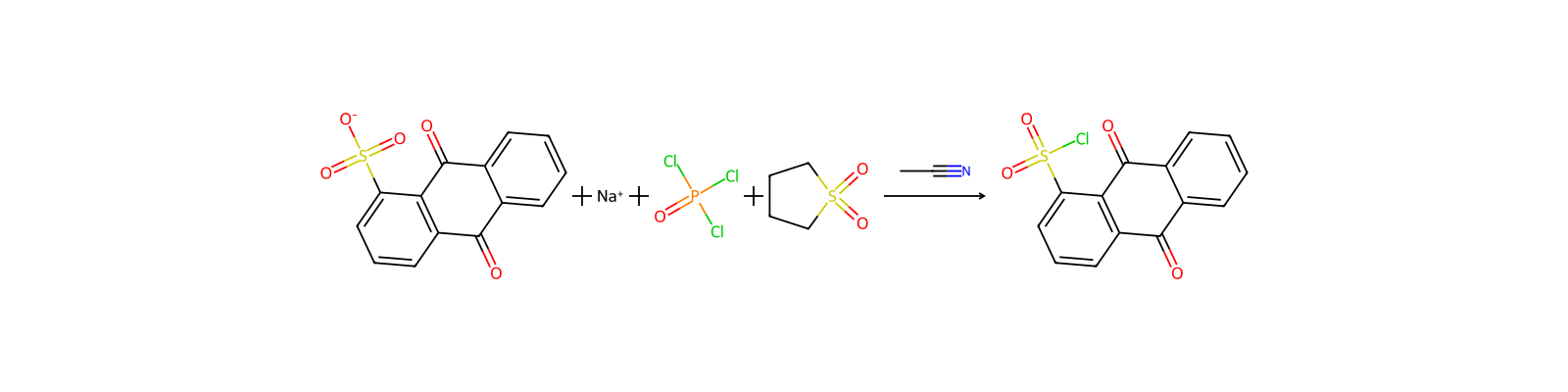
Related reactions
6 records



Linked notes
Loading…